Content warning – trans abuse, suicide.
Affinity
Art, Fun, & Nonsense.

Content warning – trans abuse, suicide.

Norma Bright Carson. The Fairy Housekeepers. Illustrations by Hazeltine Fewsmith. Boston, Lothrop, Lee & Shepard co., 1917.
I fell in love with this book! There is only 1 coloured illustration in it, however, the plain drawings are charming and delightful and entirely typical of the Art Nouveau Period. I’ve included all of the full-page illustrations, plus a few others, but if you get a chance I encourage you to check out the entire book. (The address is at the end) There are small illustrations on most pages and the story is a sweet look at how the fairies work as the seasons progress.

No, Mommy, I will not look at you. ©voyager, all rights reserved
It’s always challenging to get decent photos of Jack when we’re on a walk. To begin with, he usually walks ahead of me, which is better than behind me because I can see what he’s doing, but it means I get a lot of bum photos. Secondly, Jack doesn’t like to pose, so if I stop and make a point of taking his picture, he gets restless and wanders away before I can focus, or he resents that I won’t let him walk away, and he refuses to look at me. I can usually snap one or two photos before he gets too irritable, but today Jack simply wouldn’t let me get a nice picture of him, no way, no how. Here he is this morning, studiously surveying a tree growing in the distance, which is obviously more compelling than me. It didn’t help that I’d given Jack the last cookie in my pocket about 10 minutes before this and he knew it. I called him as sweetly as I could, “Hey Bubba. Look at me. Bubba… Bubbs. Over here, look at me, Jack. Look at me. Jack… Bubba… Bubbs. I’ll stop at Tim’s on the way home (which is Canadian for coffee and donuts), I’ll share an old-fashioned plain with you.” Nope, Jack wasn’t having any of it today. Apparently, the promise of a donut is not a good enticement, especially if you don’t have a milk bone handy to back it up. So, no smiling Jack today. But, if you look closely on Jack’s side, just above his Rt. hip, you can see Lenny the Lump. Lenny is the brother to Larry the Lump, who was removed from Jack’s armpit several years ago, and Lenny’s starting to get big. This is the first time I’ve been able to see him in a photo, but unlike the armpit, he has plenty of room to grow on Jack’s side and will probably never have to be removed. Labs are prone to getting fatty cysts, and Jack has a few other smaller ones on his chest and neck, but they aren’t large enough yet to warrant a name. Lenny is now about the size of an orange and is still growing, but the only time it bothers Jack is when the vet or I palpate it, and that’s only because he thinks it’s weird that we’re squeezing him there. I understand that; I’d think it was weird if someone cupped their hand and squeezed me in that spot, too. The vet did try to explain it once to Jack, but he heard the word “fatty” and thought the Dr. was telling him to lose weight again and stopped listening. Yep, I understand that too, Jack.
My personal view of the coronavirus is that outside of China, the mortality rate might significantly rise above what it has now (which is already several times higher than influenza), just as it did with the swine flu pandemic in 2009 (which my sister barely survived, but luckily nobody else in the family got). My reasoning for this is – people in China were probably at least somewhat exposed to the said virus in its non-human-infectious form, or some of its less dangerous relatives, which would give them at least partial immunity. Once the virus spreads to populations that have no immunity to its or to viruses similar to it, it will become much worse.
Since it is a pulmonary disease, our whole family is especially susceptible and in danger, since all of us have asthma, my parents are elderly, my sister has already damaged lungs and my brother is a heavy smoker. I certainly hope not to encounter it, I already had viral bronchitis this year for two weeks and I did not enjoy it in the least.
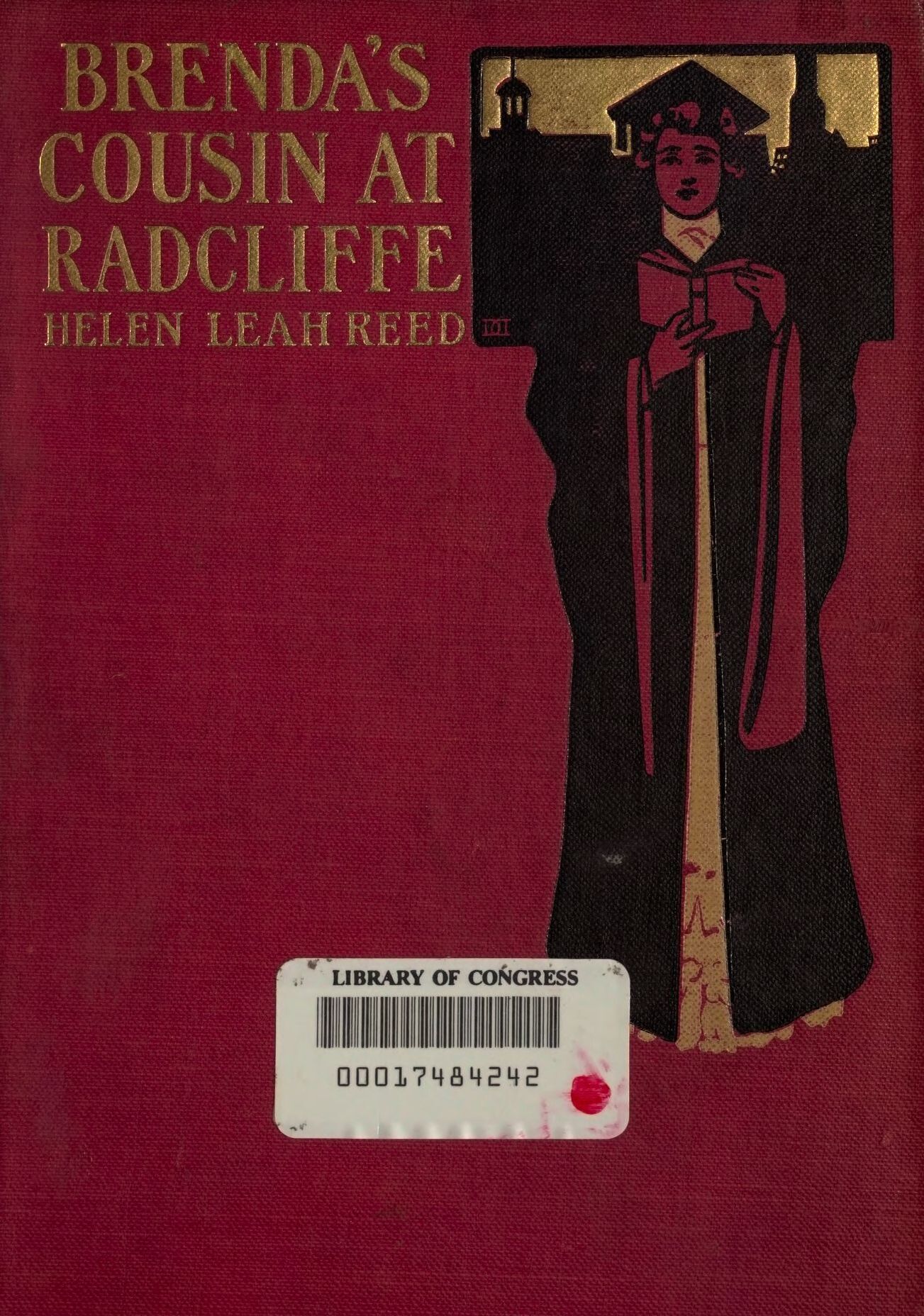
Helen Leah Reed. Brenda’s Cousin at Radcliffe. Boston, Little, Brown, and company, 1907.
Lofty is back out on his bike and has sent us some photos of the early stages of recovery in fire-ravaged Australia,
Our bike club has returned to the fire ground as the roads are safe and the local bakeries need customers. Here are a few pictures of survival and recovery one month after the visit from the fire breathing dragon of climate change.

Merely a flesh wound, ©Lofty, all rights reserved

Oasis, ©Lofty, all rights reserved

Rain brings green, ©Lofty, all rights reserved

Tour down under, ©Lofty, all rights reserved

©voyager, all rights reserved
Just a pretty picture today.
Last time I was working on this project, I had some very bad results from quench. This week I have finally managed to test one idea of correcting the problem and maybe prevent it from ever happening again in the future. And I am glad to say that it did work. Not perfectly, but the new process is definitively worth to use instead of the old one.
 Here is first the comparison of the three worst blades before and after. As you can see, there are still some curls in there, but they are noticeably less pronounced and one blade is almost completely straight. They will still come smaller than intended out of the polishing process, I will still have to remove some material from the edge until I get to the straight part, but I estimate it to be about 1/2-1/3 of what it was before. On the worst blade, the curls went about 10-15 mm from the edge towards the spine, whilst now it is about 3-5 mm. That is a significant improvement, and I think that had the blades been quenched from a straight form, they would never have curled in the first place.
As I alluded to previously, the process that I wanted to use for correcting the blades is called plate-quench. It cannot be used for simple carbon steels. Only so-called deep hardening steels can be thus quenched, and N690 is such steel, according to some articles I found on the internet. Nevertheless, it is better to not have the internet at all than to believe everything you can read on it – the manufacturer recommends oil quenching.
So I have tested the process first on one blade that I accidentally broke when correcting an ever so slight banana-bend. When the broken blade hardened properly – which I have confirmed not only by scratching with my gauges, but also by breaking off a tiny piece of it – I went on with the curly ones. On one of these, I confirmed the hardening too by breaking off a tiny piece of the tip, with the remaining two I was satisfied with the scratch test only.
For the plate-quench are used two flat plates from either alluminium or copper. These two metals have very high heat conductivity and thus can cool down some steels fast enough for them to turn into martensite. Luckily I got quite a few nice slabs of alluminium on hand. And because I wanted to make the process a bit faster (despite not making time-measurements this time), I have made a simple prototype quench-jig.
It consists of two identical pieces of alluminium with a small hinge, and locking pliers. The hot blade went out of the forge between the plates with the edge towards the hinge. Then it was firmly clamped by the pliers to hold it straight. When it stopped glowing near the tang – indicating a temperature well bellow 600 °C – I dunked the whole thing in a bucket of cold water just to be sure. And just as last time, because it costs nothing, I have put the blades into a freezer straightway for a few hours before tempering them. None of the three blades cracked.

Not an actual quench, staged photo – sometimes I miss having third hand greatly. © Charly, all rights reserved. Click for full
It worked reasonably well and quick. I will definitively improve it and build a proper jig when the weather is nicer and I do not freeze my nuts off in my workshop. I will add a more stable hinge(s) and maybe even screw one of the plates to the pliers.
Another advantage of this process is no burnt oil gunk on the blade, no flames and no stinking oil fumes.
I had this visitor a few weeks ago, but the light was bad and I was unable to identify the species. Luckily my biologist friend was able to forward it to an ornithologist who was so very kind and identified the bird for me. So when yesterday they returned in good light, I knew what I am looking at.
The ornithologist also sent some bad news with the identification. He confirmed my subjective observation that there are significantly fewer birds. Some species are actually becoming rare – the whole genus Carduelis for example (greenfinches, goldfinches, siskins). This winter I have not seen a single specimen of these three species, whereas in previous years greenfinches and siskins came in flocks counting dozens.

© Charly, all rights reserved. Click for full

© Charly, all rights reserved. Click for full

© Charly, all rights reserved. Click for full
And yes, we finally had a few cms of snow. This week seems to have been the actual winter, what we had before was merely agonizingly long and dark fall.
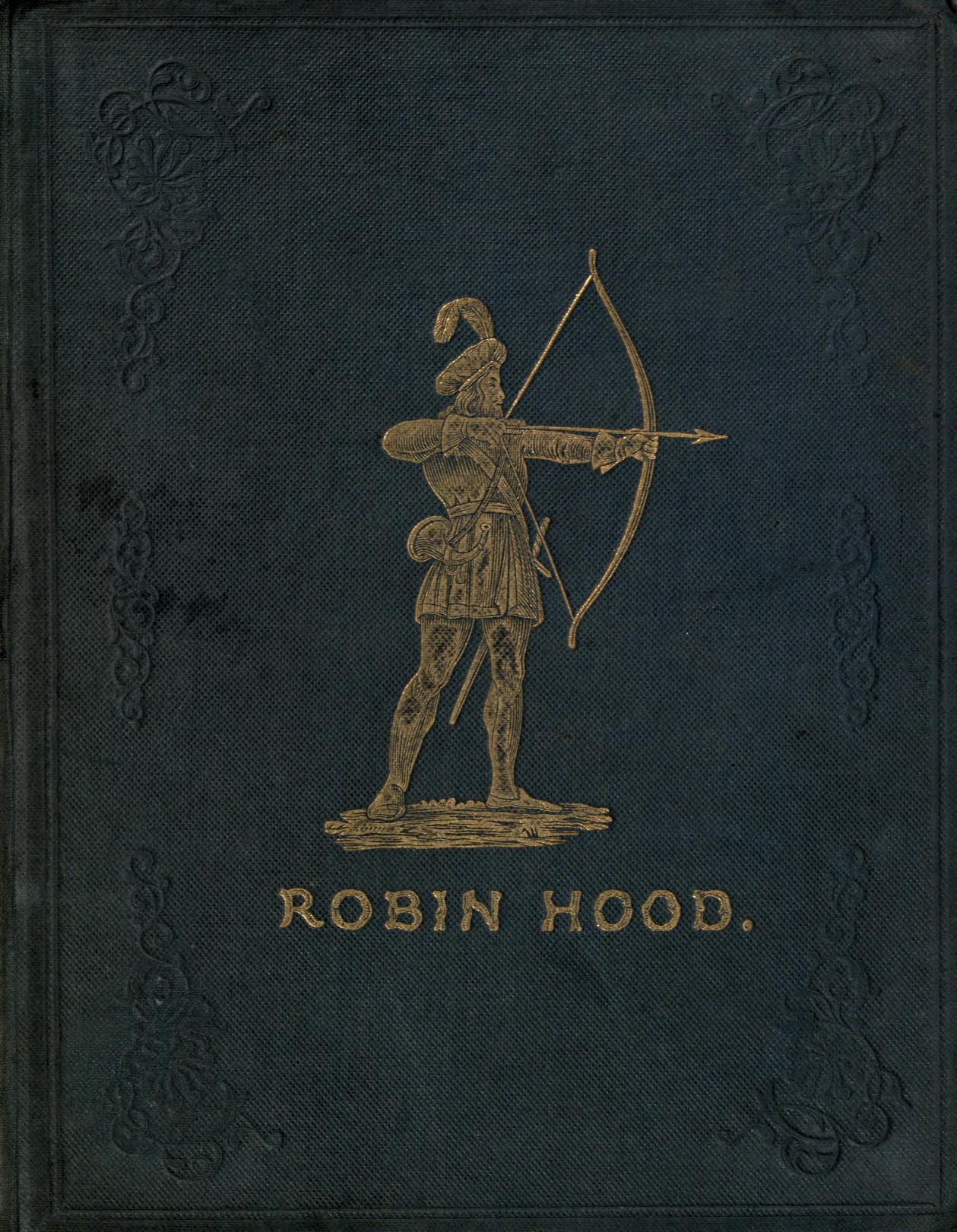
Stephen Percy. Robin Hood and his Merry Foresters. London : Tilt and Bogue, Fleet Street, 1841.
via: The Internet Archive

©voyager, all rights reserved
The weather has turned cold again and the mud has firmed up into ridges that catch the edge of your boots. This morning on our walk I tripped a few times but managed to avoid falling, a feat few of my friends will believe, but I swear is true. It was all a bit jarring, though, and I did come home with a few aches in unusual places.
After our walk, I went for an x-ray of my spine that involved a few “problematic” positions and by the time I got home again, I was in pain and feeling the strain of extra gravity. The pain is better now that I’m supine and resting, but the gravity isn’t easing. I suspect it’s related to the storm that’s moving in tonight. They’re calling for a mix of freezing rain and snow to start around midnight and end around 7 a.m., just in time for everyone’s morning commute. I hope it’s mostly snow. Some of our trees are in early bud and a load of ice on their branches right now could be disastrous.
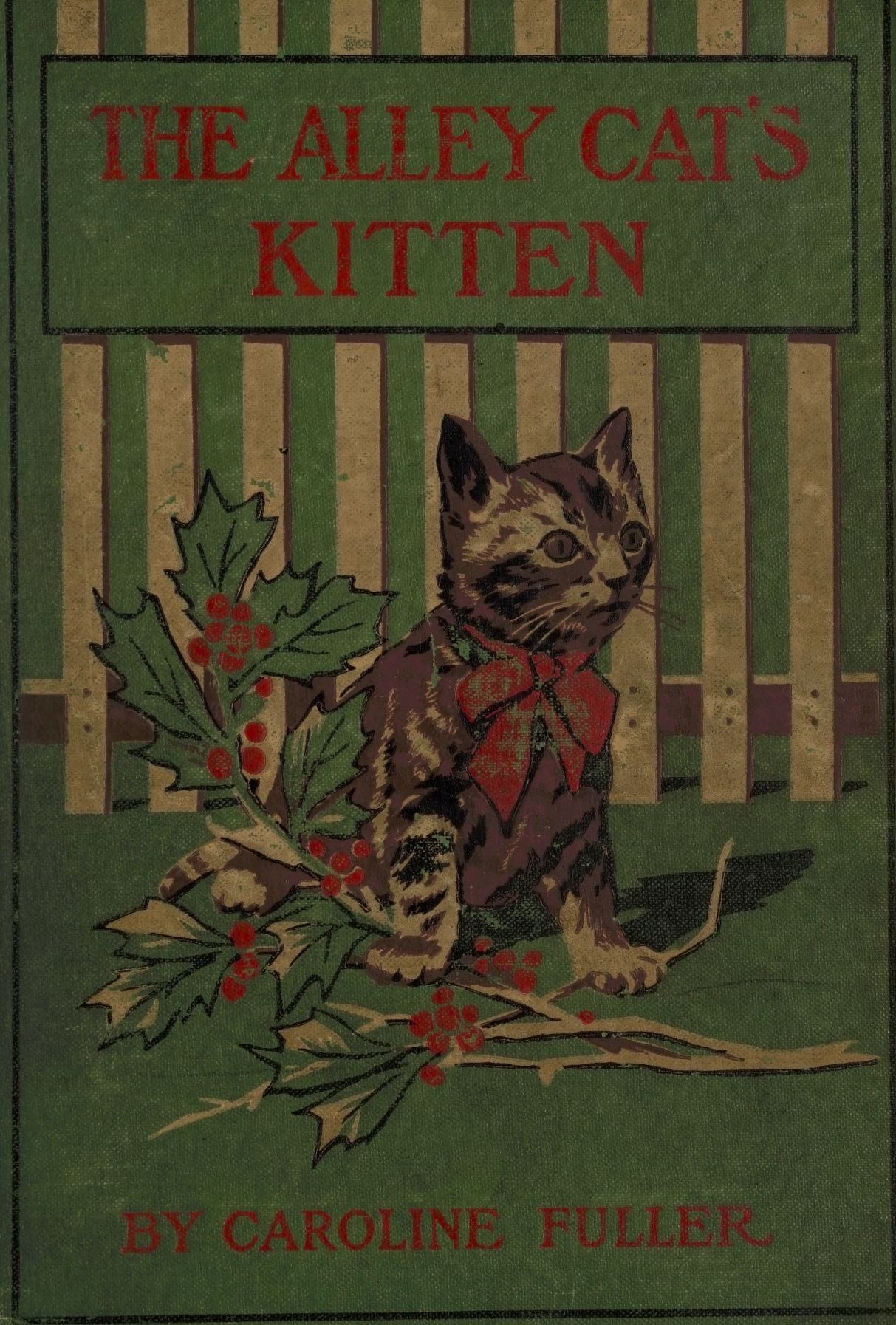
Caroline Fuller. The Alley Cat’s Kitten. Boston, Little Brown, 1904.

Jack waiting for a treat ©voyager, all rights reserved
Jack and I went to our wee forest for a walk today, and we were surprised to find it was covered with snow. Yesterday was a melting day in town, and most of our snow again vanished into the soggy ground or ran in rivulets down the sewers, but Trillium Woods was still wearing its blanket of snowy white. The snow was soft and wet, and you could see that some melting had taken place, but not the amount that we experienced in the city just a few miles away.
We did notice a lot of tiny footprints all over the forest, and Jack told me that the animals had been helping the little folk gather up sticks and stones and bits of plant debris to shore up their tunnels. Jack went to a few of the entrances to their world but said everyone has finally gone back to sleep. I asked if they were safe, and he said yes, that he could smell damp, but not too much mould and no open water. At the last entrance he checked (somewhere around Big Bob Oak), Jack said he heard Tom Ticktock snoring then he laughed and trotted away. I called after him and he hesitated for a moment before flicking his tail at me and continuing on. I think that’s a bit rude, don’t you?