The Greater Gardening of 2026 – Part 24 – Green Growth

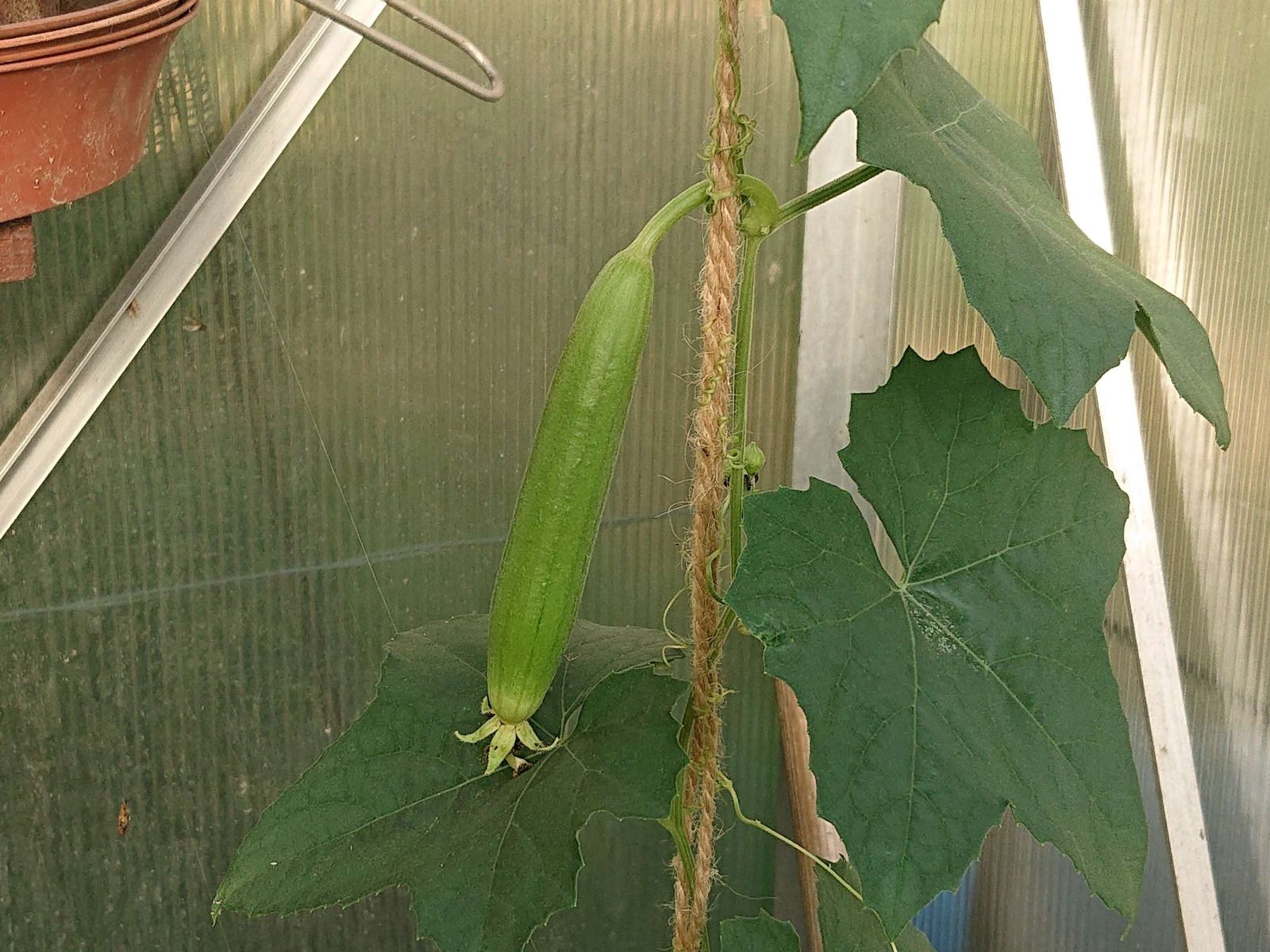
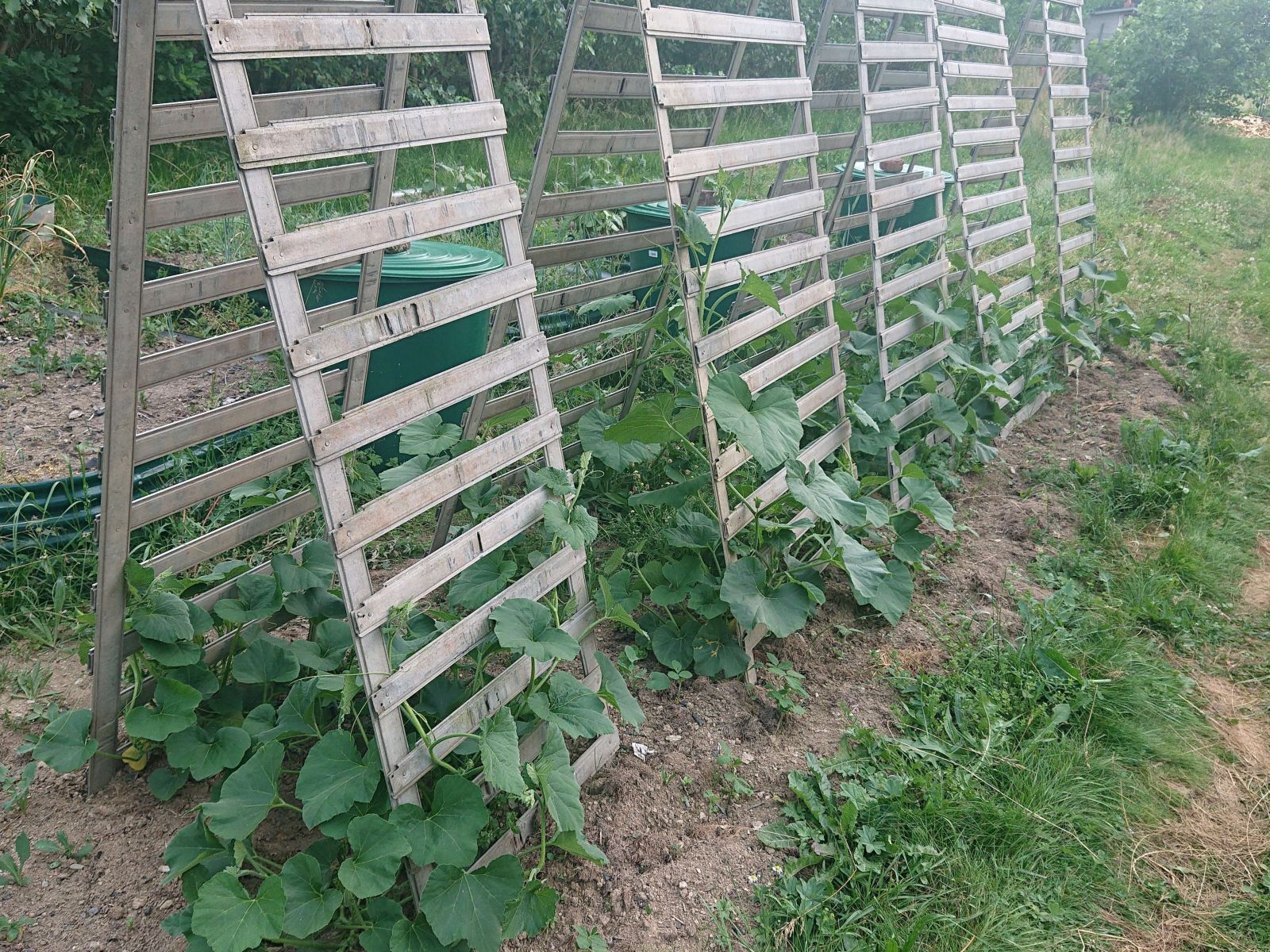
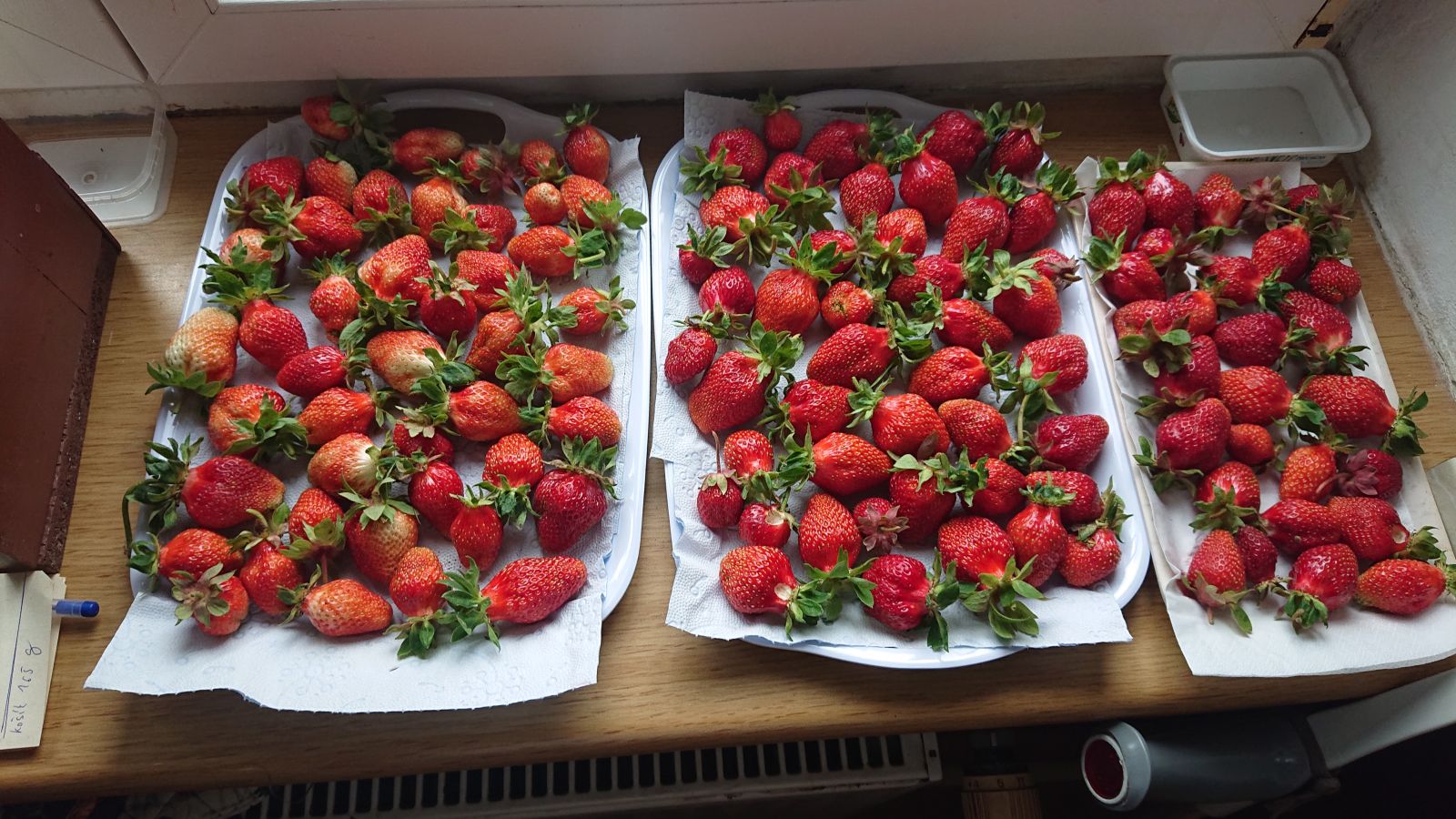
Now that we have warm weather, the garden is growing fast. There is a visible difference from one day to the next.

© Charly, all rights reserved. Click for full size.

The oats are just about to bloom, and it does look promising, even though about a third of the patch has visibly lower growth due to poor soil quality.

© Charly, all rights reserved. Click for full size.

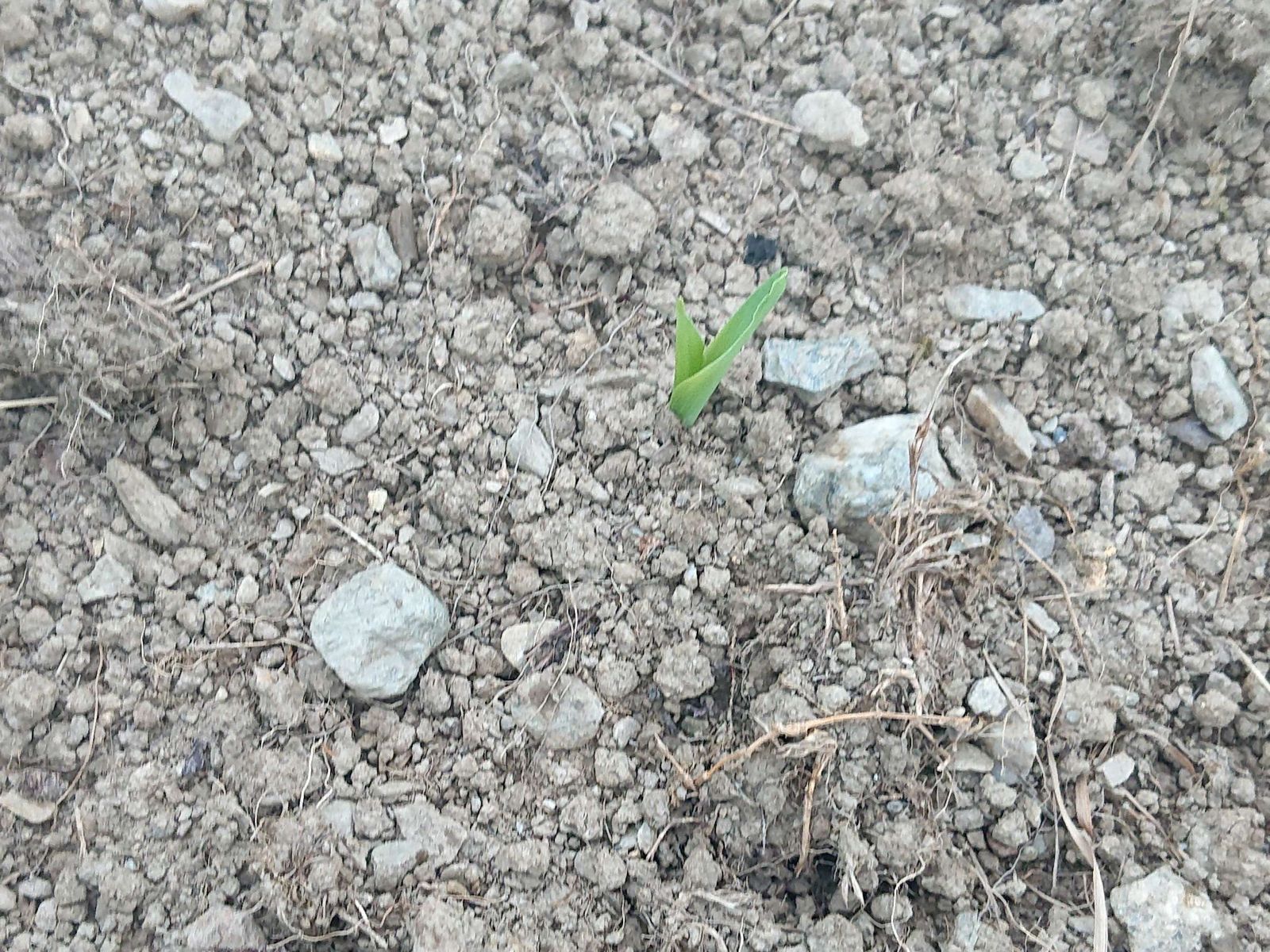
Yesterday, I was worried about whether the Painted Mountain corn would germinate, and today the first plants started to poke out of the soil. If we have a warm September and a frost-free autumn until at least the first week in October, they might even fully ripen.

© Charly, all rights reserved. Click for full size.

There are a few soybean plants here and there. I will wait about a month until they are all visible well, and then I will sow green peas in areas where they failed. If the weather stays warm long enough, I might get some of my own seed for next year, although most definitely not enough to actually eat. Next year, I will not grow soy in rows, but in clusters of 5 plants. That way I can try to start enough plants in cups early and plant them outdoors once the frost risk is over, as I do with other beans. It won’t allow for large-scale growing like direct sowing in rows does, but it should still allow me to cover a reasonably large patch.

© Charly, all rights reserved. Click for full size.

The green peas that I intend to let fully ripen to get my own seeds for next year are very lush and vigorous. I hope this continues and I get a few kg of viable seeds, because this variety grows very fast and is thus suitable not only for food, but also for improving, protecting, and fertilizing the soil as a cover crop.

The green peas intended for actual harvest for food look nowhere near as lush, but I should still get my work’s worth out of the patch.

© Charly, all rights reserved. Click for full size.

The yellow peas look vigorous and healthy too, albeit the growth has bald spots due to a poor germination rate (only about 50%). These were actually sold as a green fertilizer, but they grow slower than the green peas, and they apparently need higher temperatures to start growing. However, I would like to get my own seeds for the future, because these peas are more suitable for producing dry seed for long-term storage.

© Charly, all rights reserved. Click for full size.

Alfalfa is growing, but it is not what is in the picture. This is bush vetch Vicia sepum.

© Charly, all rights reserved. Click for full size.

The seeds are very small, but the pods are big enough for manual harvest and shelling. So this year, I decided to mow my lawn around these and to collect as many seeds as possible. If I succed to get reasonable amount, then next year I will till a patch dedicated to these to get even more seed. The plant is not edible, but it is an excellent nitrogen fixer. And unlike alfalfa or peas, it is a local plant – it is guaranteed to thrive here. I only need to help it spread more than it is capable of doing on its own.

TNET 50: Gothic Remake

Gothic was the first RPG PC game that I bought and then played on a PC that I built back in 2001. I did not like it at first; in fact, I rage-quit after about half an hour because there was no tutorial and I could not figure out the controls. I gave it another try after I cooled off a bit, and somehow, I got hooked. I played the game several times in several different ways, I played the sequel, and when the third game came out, I somehow ended up on one Czech gaming forum when trying to sort out a technical issue, and I became a moderator and then an admin on that forum for several years. That experience taught me some things that proved to be useful in other aspects of life too, and in fact, in a roundabout way it also led to me discovering Richard Dawkins’ writing and later Pharyngula.

I am not playing games now that much. The last game that I played and really enjoyed was Witcher 3, and I only played that because I liked the books on which the game was based.

However, I might be purchasing the Gothic Remake and have a major nostalgia attack later this year.

Open thread, talk whatever, just do not be an ass.

The Greater Gardening of 2026 – Part 23 – Potatoes Petals

Da potatoes are a’ growin’. Some of it is good, some of it is bad, some of it is even ugly. But they all started to flower, and the flowers aren’t ugly. It also means that about a month from now I will probably be able to harvest the early varieties.

© Charly, all rights reserved. Click for full size.

The indeterminate variety “Agrie” has white flowers, and it is the one that contains most of the “ugly” plants, unfortunately. Some plants have dark green, curled-up leaves, which might be a sign of too much nitrogen. In all probability, I did not spread the fertilizer wide enough in some areas. About 70% of the plants look normal, so it is not a total catastrophe. We will see what comes of it.

© Charly, all rights reserved. Click for full size.

The second indeterminate variety “Dali” has white flowers too, and all plants look healthy.

Both indeterminate varieties could do with some more hilling up, but I do not have the material to do so. Which is unfortunate; a few plants were damaged by strong winds. They are just too tall and frail due to how abnormally quickly they grew. I am not experienced in applying fertilizer, and it seems my soil was more fertile than I thought.

© Charly, all rights reserved. Click for full size.

The very early variety “Bellarosa” has light pink flowers and light green leaves. These are grown in the Ruth Stout method, which is not conducive to over-fertilizing, but it is very good for slugs. Whenever it rains, I collect quite a few of them in this growth. The slug infestation is nowhere near as severe as it was two years ago, but I still suspect the tubers will be damaged by them as well.

© Charly, all rights reserved. Click for full size.

The early variety “Camel” has flowers of an even darker shade of pink. Even the green parts have a reddish tint to them, and the growth is thus distinctly darker than the adjacent “Bellarosa”. They are also smaller and sturdier than all the other varieties. These were damaged by voles or mice, so there are a few bald patches in the growth and a few plants are stunted. However, the rest took off well, and they look healthy.

Overall, potatoes do look promising, albeit not perfect. I will not be satisfied if I get anything less than 300 kg, but if I get more than 200 kg, it will be worth the effort.

This weekend, they all get a second dose of fungicide to prevent blight. These varieties should all be resistant, but it is better to be safe than sorry. I was successful in keeping my potatoes blight-free for years, and I do not want to break the streak.


The Greater Gardening of 2026 – Part 22 – Still Sowing

Some plants are taking off and looking promising.

© Charly, all rights reserved. Click for full size.

Alfalfa is almost knee-high, and even the bald patches have some plants here and there. The yellow peas (on the far end of the photo) also look healthy, albeit they still have not started to bloom.

© Charly, all rights reserved. Click for full size.

The first patch of green peas is full of pods now, and they are beginning to swell. I hope to get several kg of canned/frozen green peas from this. And I still have three 0,25 kg packets of green peas to sow during the summer if something else fails and I have spare space. Which I shall have because…

© Charly, all rights reserved. Click for full size.

The soy beans failed spectacularly. There might be a soybean plant somewhere in this picture, but I cannot find it. I can find several plants in the field, but they are very small and sickly. The reasons are several.

  1. The seeds themselves had only about a 60% germination rate when tested separately. And even some of those that sprouted looked weird; the roots had no proper tip for burrowing into the soil and curled in on themselves like a pig’s tail.
  2. Some seeds sprouted, grew several cm long, and suddenly the whole seedling emerged above the ground, lay flat, and died due to exposure. I am completely dumbfounded by this; I have never seen anything like that, ever.
  3. Many seedlings were damaged by slugs, because their emergence from the ground coincided with cold and wet weather.
  4. This bout of cold weather was really cold, below 10°C at night in June, which is weird and not really good for the garden.

There are some soybean plants here and there, but overall, I will be lucky if I get a handful of unripe soybeans at the end of the year. Great disappointment. If I get some viable ripe seeds, I will be really surprised. Lesson learned – I might be able to grow a few soybean plants if I pre-grow them in pots as seedlings and put them outdoors when they are tall-ish. Or to grow them in the greenhouse. But my location does not allow for large-ish scale growing.

© Charly, all rights reserved. Click for full size.

The white and brown bush beans do not look much better; the seeds mostly rotted away (0% germination when tested separately indoors!), but at least enough emerged so it does look like I might get enough plants to get my own quality seeds for subsequent years. To sow them directly into the soil for large-ish-scale growing, I will probably have to do so in the first week of June at the earliest. Thus, I need to find some variants with a short vegetation period, and that might take some time. On that front, we get to the title of today’s post.

I mentioned to my nephew the poor germination rate of bean seeds these last two years, and he told me about a webshop with a money-back guarantee for seeds that do not germinate. They also purposely sell variants that allow saving one’s own seeds for the future, heirloom varieties, and genetically diverse mixes that allow for one’s own selective breeding. The seeds are expensive, but I bought 48 seeds of an old bush bean variety that should have a short vegetation span. I planted them in pots to get them started quicker in the greenhouse, and I hope to have some plants to grow outside once the cold spell subsides and the summer begins in earnest.

© Charly, all rights reserved. Click for full size.

And to plant them, I had to make a new vegetable patch. Luckily enough, I was making hot compost again, and it burned this ca 3×3 square in my lawn. The burned parts were really easy to till with a garden fork, because the composting not only killed all the grass, it completely dissolved its roots. The hardest work was around the edges, where there was still live, tough grass. I wish I could make huge compost heaps to kill grass on large areas.

However, 3×3 m is a small patch for my garden, but it is a bit much for a handful of beans. But I did not buy only beans; I also bought several other seeds for the next year, and I am especially excited about these:

© Charly, all rights reserved. Click for full size.

I wanted to try this crop for years; I knew it existed, but I did not know the exact name of the variety, so I could not find seeds. And coincidentally, this supplier had them, and they were not prohibitively expensive. So I bought 300 seeds, and I sowed 60 of them today to test them.

It is the variety “Painted Mountain,” and it should be exactly what I need at my elevation – hardy and with short vegetation. Ideally, it should have been sown last month, but it still might fully ripen if the fall is frost-free until the middle of October. Which is not a guarantee, but it might happen. And whilst it will not be as sweet as a modern sweet corn variety, it still should be perfectly edible and tasty for an early harvest. In any case, I soaked the seeds in water overnight to expedite germination by a few days.

So now I have a 3×3 square sown with corn, and around the edges I will plant the bush beans. A two-sister patch, if you like.

I already have another corn variety sown in the garden, as does my neighbor, so there might be some cross-pollination, but probably not much, and it should not affect the quality for an early harvest (and I won’t need to save my own seeds this year). And for next year, I have already discussed the issue with my neighbors, and we will both grow only this variety.


And to finish today, I harvested the first significant amount of strawberries this year, 1850 g. There were nearly no slugs on them, which surprised me, though I am definitely not complaining. If the weather gets warm and sunny now, I might look forward to a substantial harvest this year. I hope I get one; we already ate all the marmalade and dehydrated strawberries from two years ago, and we need to refresh our stock.

The wee gardening of 2026

When we bought our house 10 years ago, we knew that the garage would need to be replaced. The house and garage are built against a hillside. What’s the groundfloor on the street side is the first floor on the garden side. The garage is 2 storeys, which is pretty handy as it gives you a room to store the garden stuff. The hill is rock, but at the lower end it’s just the ground. The pleople who built the garage were incompetent. One part is built on the solid rock, the other part was just 5cm of concrete on sand. Yeah. Of course the sand gave way, there were tears and gaps that got always bigger and last year the tension finally started to tear the roof apart. At that point we needed to act and had the old one torn down and a new one built. The people who tore down the old garage had it fall into the greenhouse. The people who built the garage had to trample a lot of our terracing.

©Giliell, all rights reserved
The now defunct greenhouse. After 9 months and several angry phone calls the dude finally called his insurance.

©Giliell, all rights reserved
The sad remains of the terraces.

There was absolutely no time to repair the damage this year. Maybe next year, if we get the fence put up this year. As a result, I didn’t even attempt to plant a lot. I grew some courgettes and Hokaido squash. The courgettes were interesting. They germinated quickly and grew into beautiful plants, so I repotted them when it was time. They all died. A few late seeds were still in the tray, so I let those grow and then planted them in the ground. They all but one died. The remaining one has grown past the size where the slugs will eat it and hopefully give more than enough courgettes.

©Giliell, all rights reserved
My courgette

The squash was more successful, I now have 4 nice plants.

©Giliell, all rights reserved

I dind’t grow my own tomatoes but just bought some young plants. They’re in pots so they can be moved should it be a rainy summer.

©Giliell, all rights reserved

Oh, and I planted some sunflowers. Let’s see how they grow.

I Got My Voter ID Today…

… and I honestly do not know how many times I have had to renew it since I was 15, when I got it first.

WTF am I babbling about?

Well, I am not a US citizen, and the ID is not exactly a voter ID; it is just that, as I was picking up my government-issued piece of plastic with my picture on it today, it reminded me again of the voter ID controversy that has been brewing in the USA over the last decade or so. A controversy that was completely incomprehensible to my european mind at first, and still is, to be honest.

When an average European who is not overly informed about the minutiae of US politics hears that laws are being proposed in some states in the USA to require voters to provide picture ID when casting a vote, in all probability their first reaction will be profound befuddlement. “What? They do NOT have such requirements already? And why would anybody oppose such laws?” And the more said European learns about the voting systems in the USA, the more said befuddlement will probably grow, until they throw their hands up in the air and say something along the lines, “The US so called “Democracy” is completely idiotic, undemocratic, and the voting laws and systems make no sense whatsoever”. That was my reaction, and it was also the reaction of at least two of my friends. I admit that a sample of three is not particularly representative, but a plural of anecdotes is still data (it is just not conclusive data).

Here is how the system works in CZ, which, AFAIK, is relatively representative of how things work in EU countries:

At 15 years of age, every citizen is required by law to apply for a citizen’s ID at a local district office. There, they will be issued a picture ID, free of charge, that is valid for a fixed period (said period gets longer with each iteration). When the ID is close to its expiration, the citizen is then required to apply for a new one, and they are officially reminded of that requirement. As long as they do so within a reasonable time period, it is renewed free of charge. The only time a fee is charged is when someone loses their ID and needs to apply for a new one outside of the regular renewal period. The fees are high enough that people do not want to pay them frivolously, but not so big as to punish someone for having their wallet stolen – 8-40€, depending on how fast one wants to have a new ID issued.

Registering for voting is nonexistent, or to be more precise, it is automatic. By applying for an ID, one confirms their formal residence and citizen status. Whenever a vote is due, local, state, or EU-wide, voting ballots are delivered by post to said residence in advance, so everyone can read them and decide at their leisure.

Voting lasts two days – Friday and Saturday – so everyone who wants can cast their vote no matter what work they do and what shift they are assigned. People with mobility issues can request to have their vote collected at their residence. There is a system for voting by mail, but I never looked into it since I did not need it.

When casting the vote at the county office, every person shows their picture ID, and a clerk checks their name and address against a list. If someone forgets to bring their ballots from home, they can get a new set at the office. Then they go to a voting booth where they can choose and fill out their chosen ballot, put it in a grey envelope, and then cast it in the ballot box.

The votes are usually counted within hours and known to the public the next day.

If you are a USAmerican, you can now imagine the depth and width of the cultural chasm here. In the EU, the system is set up to make voting as easy and convenient as possible, although in my opinion, it would be greatly improved by making voting mandatory, at least for state-wide and EU-wide elections. In the USA, the system is set up to make voting confusing, difficult, and the system is for many people downright impossible to navigate.

Yet the American Mango in Chief, his Vice Couch-Fucker, and his minister Kegsbreath have the audacity to lecture us in the EU about freedom and democracy. To which I say, fuck’em.


The Greater Gardening of 2026 – Part 21 – Testing Tomato Trellises

I had such a surplus of tomato plants this year that I decided to make another makeshift shelter to grow them outside the greenhouses.

© Charly, all rights reserved. Click for full size.

I used the portable trellises to do so by wiring five pairs slightly offset to stand in an A-shape and then using the last pair for a roof to support the plastic foil. I then planted the tomatoes between the A-shapes so when they start to grow in height, they can lean on the trellises. We shall see how this goes. The biggest problem could be temperature. If the summer is too cold, tomatoes won’t grow outdoors fast enough. The second big problem could be sunshine. This area gets only about 6-8 hours of direct sunshine; the first half of the day it is in shade. In my experience, tomatoes do not actually need direct sunshine to thrive; temperature is more important. But like all plants, they need enough light to photosynthesise, and I am not entirely certain they will get it here. Well, we shall at least see if these trellises work for this purpose.

The Greater Gardening of 2026 – Part 20 – Deeply Depressed

Arrrgh.

We got the much-needed rain, but that also meant that slugs came out. There aren’t many, but it was enough to wipe off nearly a month of work – almost all my pumpkins, except butternut, are dead. This is because they were weakened by the stupidly cold and dry May (we basically had April weather in May, and then it went straight into June), and did not manage to take root and grow fast enough after being planted outside. I will be lucky to have any zucchini or Hokkaido at all.

My mood took a nosedive.