The Greater Gardening of 2026 – Part 46 – Some Slight Soybean Success?

You might remember that I hoped to get at least some soybeans, despite the bought seeds’ abysmal germination rate. And it looks like I might have.
© Charly, all rights reserved. Click for full size.

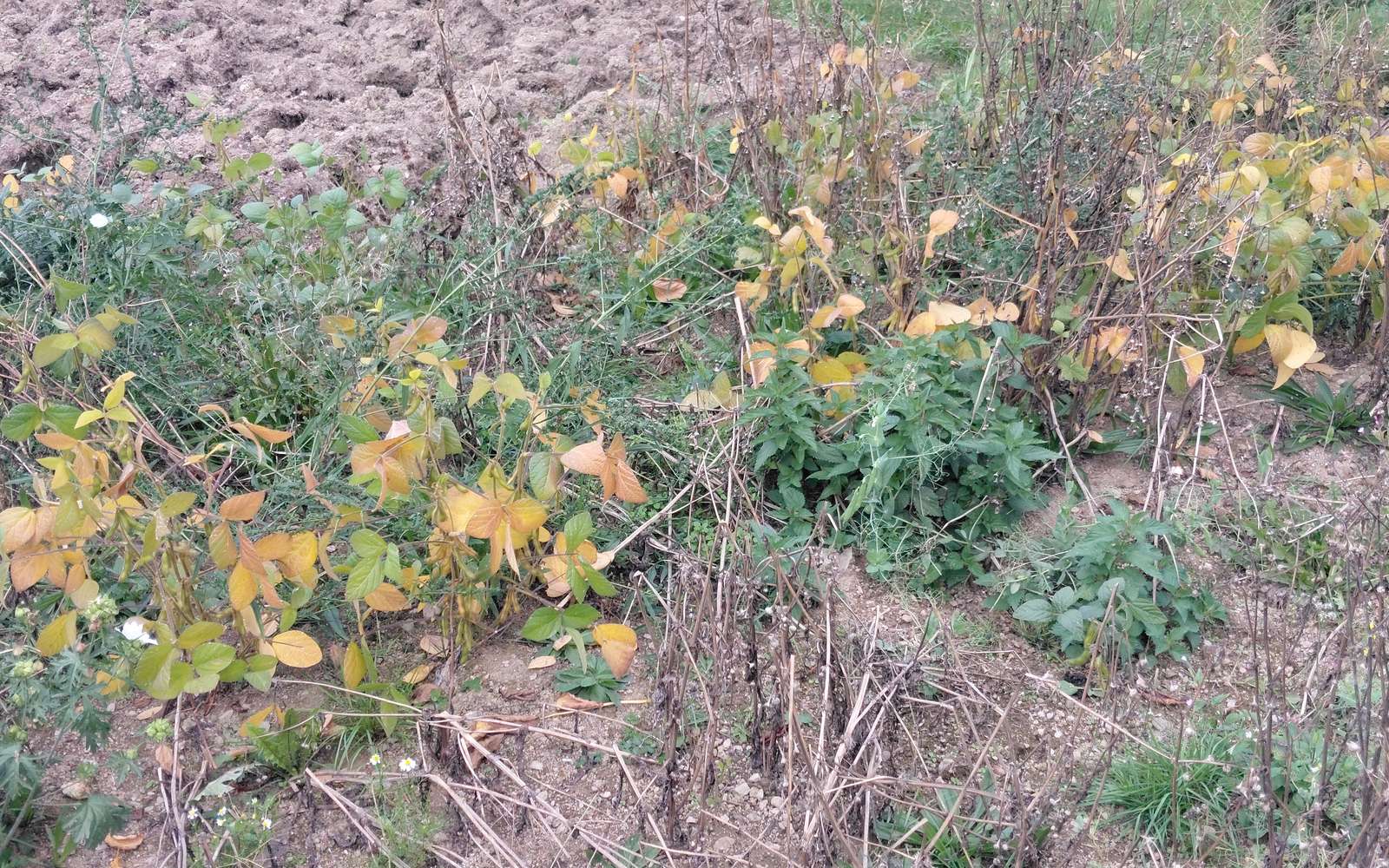
The annual weeds that have overgrown everything died off, but the soybean plants still managed to cling to life. And this week, they started to turn yellow. We might get a frost any day now, so I decided to call it quits and harvest them all. I need to mow all of the garden and prepare the beds for winter anyway, so I cannot wait much longer.
© Charly, all rights reserved. Click for full size.

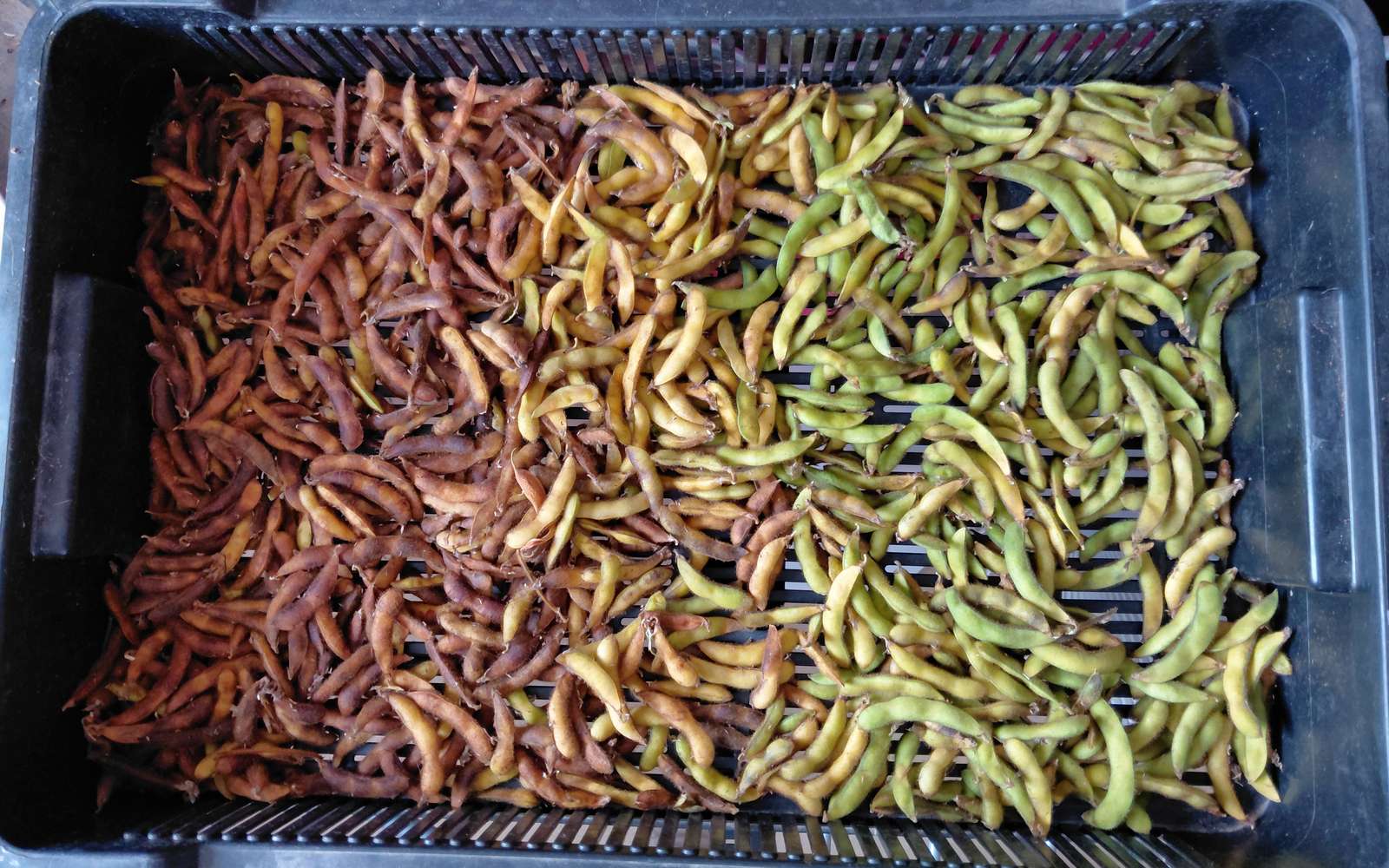
I put all the harvested pods into a tray, and I am drying them slowly indoors at room temperature. If they behave like other legumes with which I have experience, most of these should fully ripen now and be viable. After they dry, my father will shell them, and I will run a germination rate test. If they fail the test, they should still be good to eat. And if they germinate at a reasonable rate, I will have my own seed for the future. Which would be great. I will tell you the results, when that time comes.

The Greater Gardening of 2026 – Part 45 – Pumpkins & Pattypans

I harvested my summer squash a few weeks ago.

© Charly, all rights reserved. Click for full size.

There are 12 kg of produce in that picture, and only the white pattypan squash are worth speaking of. We converted them mostly into ersatz sauerkraut. One measly zucchini, two small marrows, and a handful of apple-sized green pattypan squash are all I got from the rest. The single yellow pattypan plant made a lot of female flowers, but they were all infertile for some reason, so any fruit that started to develop quickly started to rot.

I had not a single Hokkaido squash. All the plants remained stunted the whole summer, if they survived at all.

Luckily, all that failure was compensated by the butternut squash.

© Charly, all rights reserved. Click for full size.

The plants covered the trellises from top to bottom and produced, on average, almost two fruits per plant.

© Charly, all rights reserved. Click for full size.

I harvested nearly all of them this week. The plants started to die off due to powdery mildew, an inevitable outcome of the way-too-hot summer. I did not do much to try to combat it; it wasn’t necessary, since most of the fruit was at full size already.

© Charly, all rights reserved. Click for full size.

I got 37 squash so far, with a total weight of 56 kg. There are probably still about 4 kg of unripe squash outside, still somewhat growing, so I will probably get to 60 kg total. We already ate some, and we gave some away too, since there is no way we can manage to eat and process all this.

© Charly, all rights reserved. Click for full size.

I got two huge baskets of mushrooms in exchange for four of them, which is nice. I made smaženice from those in the picture (mostly blushers and parasols). The rest were mostly boletes, which I dehydrated. I do not have time to go mushroom picking this year, so this came in handy. Our stockpile of dehydrated mushrooms was starting to dwindle, and this replenished it for at least two years.

Now I will probably have to quickly process some of the remaining butternuts too, because about 50% developed brown spots on the skin. I have no experience with these, and I cannot find reliable information on how they affect their shelf life. Thus, I will probably do my best to freeze, dehydrate, or can all the affected fruits ASAP, with setting one perhaps aside to see how it goes.

Salmon Steak With Butternut Squash

I wasn’t planning to write about this, but when I arranged the final product on my plate, I thought I might want to share it, so I snapped a quick picture with my phone.

© Charly, all rights reserved. Click for full size.

After eating the meal, I obviously decided to share it, since you are reading this. I really enjoyed it; I will definitely cook it again, and I’ll improve it. Here is the recipe:

Squash: Cut the fruit lengthwise, deseed, and peel it. Cut into ca. 12 mm (Ann Halfaninch) slices. Cook until soft on low/medium heat in steam to prevent it from dissolving into mush. This will take about 20 minutes, about the time it takes to make all the rest.

Horseradish paste: Wet dehydrated horseradish powder with freshly squeezed lime juice to make a very thin paste. A teaspoon of horseradish powder is enough for two steaks.

Salmon Steak: Salt both sides, wait a bit for it to release juice, then sprinkle both sides with equal amounts of crushed Basil, Rosemary, and Oregano, as much as can stick to the surface. Heat olive oil in a pan to ~180°C (356 Freedummheit), sear on both sides, then lower heat to medium/low and slowly fry both sides until cooked through, without overtly charring the outside. A lot of the spices will fall off; that is why an excess was added at the beginning. Once the steak is done, put it on a warm plate, skin-down, and spread the horseradish paste on the surface while it is still hot.

Sauce: Finely cut small red onions and brown them in hot olive oil. Add a few cut cherry tomatoes, salt, about a spoon of soy sauce, and a sprinkle of white pepper, and stir on medium heat until the tomatoes dissolve. Thicken the sauce with one small slice of cooked squash.

Serving: Put the squash slice and sauce on the plate beside the steak. Pour a bit of olive oil on the squash and sprinkle with salt. Enjoy!

I did enjoy it indeed; that’s why I am sharing it. But I think it could be significantly improved. Butternut squash is a bit bland, and olive oil with a bit of salt didn’t quite cut it; the accompanying sauce was good, but still too mild-flavored for the squash. So next time, I will add a fifth part to the dish – aioli.

The Greater Gardening of 2026 – Part 44 – Black Beans?!

This is what standard runner beans from plants with red flowers look like:

© Charly, all rights reserved. Click for full size.

There is also a variety with white flowers and pure white beans. I tried to grow a few of those last year, but the germination rate was very poor, and I got barely fifty white seeds to plant this year, hoping to get more for the future. However, as readers will remember, last year I was growing the ordinary variety too, to fill the empty space due to the aforementioned poor germination of bought seeds. I was aware that I would get some hybridization, because I had that before. The result of hybridization last time was plants with half red, half white flowers, and seeds that looked just like the standard, except the pink/lilac colored parts were light brown/beige.
This year, I only planted white seeds, and I was surprised to get some plants with full red flowers from them. Well, I am even more surprised now.

© Charly, all rights reserved. Click for full size.

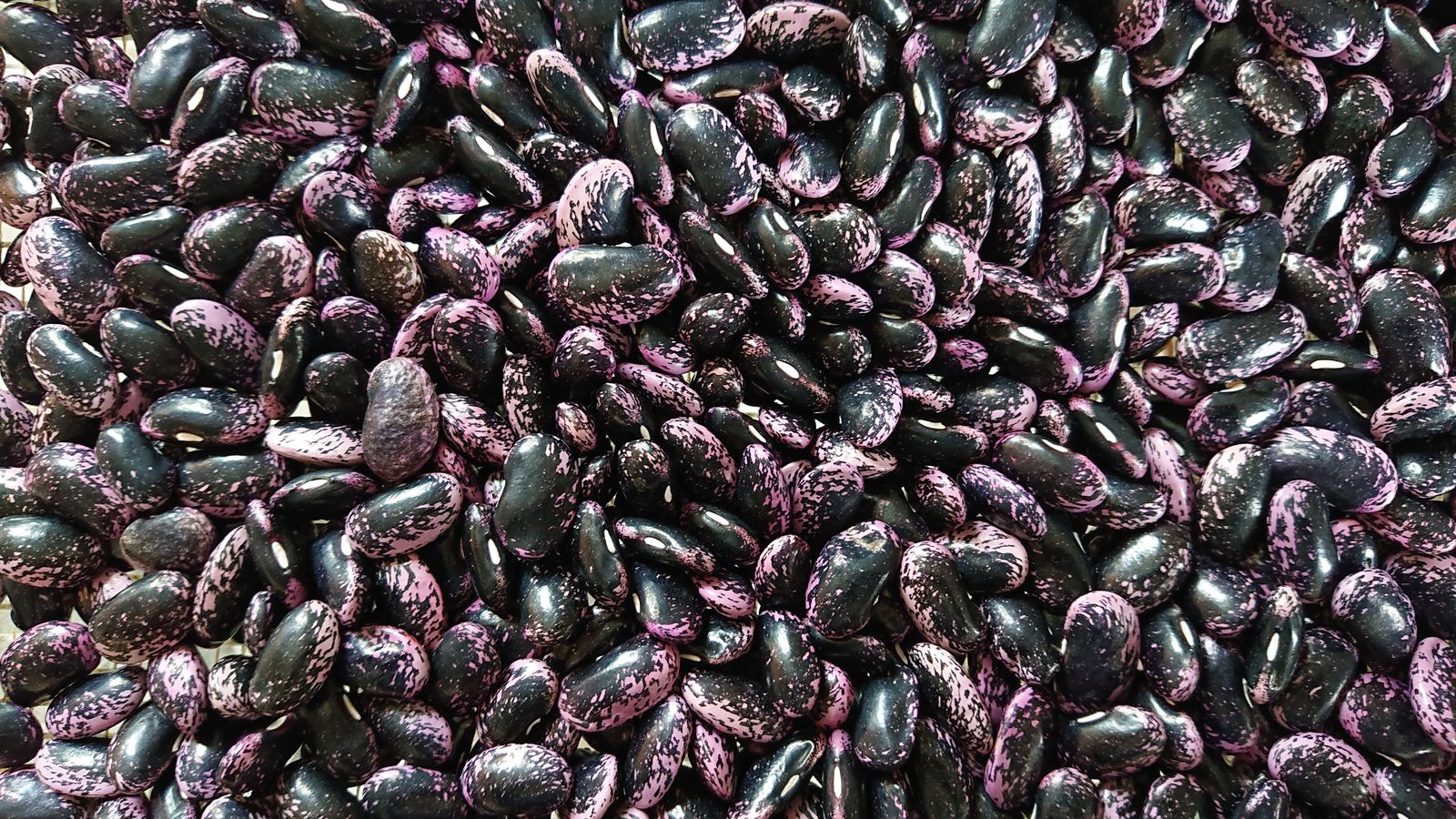
So far, I got a handful of “standard” lilac-black seeds, a lot of pure white seeds, and a bunch of pure black seeds. I have never seen pure black runner beans before, so I asked Google. Varieties with this color do exist, but on a cursory search, they are only grown in the UK and not sold in CZ.

Which is curiouser and curiouser. If I get enough black seeds, then next year I will sow only them, and we shall see what comes of it. I will probably have enough white seeds to save for the future. I also might try to grow all three varieties at once, each in a different part of the garden. That will reduce cross-pollination, but it will not eliminate it. It is a bugger. I wanted to grow two runner bean variants – white and red – in alternate years. And now I have one pure red strain in the cellar, white seeds that are somewhat unpredictable mongrels, and an intriguing new black variety that will probably throw some unexpected curveballs too.

I know that my pure red strain should remain viable in the jars in the cellar for at least two more years, so there is no big rush to renew those. I think I can afford to experiment. Especially since no matter what I do, the remaining beans will be perfectly edible. The worst that can happen is I won’t get pure color strains, but a technicolor seed roulette.


Sock’s Adventures: Meet the Pack

When not on holidays, we go on walks with a loose group of neighbours. When we’re all together we’Re quite an impressive pack (which means that we must take good care lest we scare some other doggo), so let me introduce them.

Meet Mistral

Big red flatcoated retriever standing behind a tree stump. Behind him is the forest floor

©Giliell, all rights reserved

Giliell: This calf sized flat coated retriever is Mistral. He’s very chill, but will steal treats from a baby. If he were a human, he’d be everybody’s favourity uncle who shows up to every family gathering, but nobody knows exactly how he’s related to anybody else. His human has to work very hard to maintain his weight, because he’s for sure not doing it.

Socks: My pal. Always up for chasing balls, but sometimes he’ll push me out of the way and steal my treats. Still love him.

Here’s Ylvie

A big flat coated retriever, a small withe mutt and a medium black mutt standing on a tree trunk

©Giliell, all rights reserved

Giliell: Ylvie is a small mutt with a lot of mischief in her little head. She and Socks love each other and will play, but currently Socks is a bit dominant at times and she’s bad at telling him “nope”.

Socks: I love Ylvie. I could gobble her up! But somehow everybody objects to my attempts of doing so.

Her brother Paul

A medium white mutt

©Giliell, all rights reserved

Giliell: Sweet Paul. If you think that’s a cute haircut: it covers the missing eye on his left side. Like many white dogs with blue eyes, he’s suffering from glaucoma and lost his left eye three years ago. If the happens, the prognosis is not good. The second eye will follow, usually within a year. Paul was lucky, he got three, but two weeks ago he went blind. It’s a big adjustment, especially for his humans. While his dad knew that this would happen, he’s still in shock. But Paul is doing quite well. He curled up for a day, but then started to explore again and now goes on walks again.

Socks: Paul is my buddy. When we first met, he did not like me. His humans said it was because I was running around so much. But now we’re buddies. He even gives me kisses!

Here’s Rougette

A black and white dog sitting, looking at the camera, licking its nose

©Giliell, all rights reserved

Giliell: Rougette should be a mess. Can you even guess what went into her? She’s a Dalmatian, Husky, Rhodesian Ridgeback mix who spent her first 6 months locked up in a basement with her parents and litter mates. But still she became a very gently dog, who’s only second to Mistral when it comes to begging for treats. She gets scared of strange men, but when Mr once joined us for a walk, she was easily bribable with treats.

Socks: Rougette is ok, but sometimes she wants too much of mum’s attention or my treats. Then I’ll snap at her. But this morning she actually wanted to play with me. That’s nice

And her big sister Kira:

A German Shepherd standing in front of her toy, tongue hanging out

©Giliell, all rights reserved

Giliell: Oh Jazzlet, you would love Kira. She’s a working line GSD, always in action. She’s full power and elegance and when you see her waiting for you to kick her ball or throw her toy, you can see the wolves in her ancestry. She’s usually not very interested in other dogs, but she’s fiercely protective of her pack. If any other dog is unkind to one of hers she’ll sure teach them the errors of their ways, which can get dangerous because, well, look at that dog.. Socks is absolutely smitten with her, I think she’s his big idol. There’s no toys like Kiras toys, even when we have the exact same toys. Running next to her is heaven, but usually she just ignores him. But then last weekend something happened that none of us expected: Kira initiated playing with Socks. Her human and I were both confused and for a moment we didn’t even realise what was happening. Socks hadn’t nicked her toy or was bothering her, but suddenly she turned around, the started play bows and initiated play. And off they went. The rest of the group was a bit further along the way and when they arrived they tried to stop them, because nobody realised they were playing.

Socks: Isn’t she amazing? When I grow up, I want to be like Kira. She’s the bestest! She also never steals treats. Perfectest dog!

Their little sister Luna:

A small black and white mutt with short hair.

©Giliell, all rights reserved

Giliell: And finally Luna, a very small (just 4 kg) rescue mutt, probably with a lot of Jack Russell. She’s keen, she’s fierce, and she can be an absolute asshole. Remember when I told you that Kira is fiercely protective? So Luna will start shit with Rougette and the Kira will intervene and discipline poor Rougette. She’s also a black hole for treats. When going for walks together or playing at the waterhole, I’ll use the opportunity to train Socks’ recall. Seem’s like I’ve also trained Rougette and Luna.

Socks: Luna is ok, I guess. Bit small for playing but man that girl can eat!

And last but not least: Benny!

A brown mutt looking like a short legged GSD

©Giliell, all rights reserved

Giliell: Benny is another rescue from Romania, I guess that’s why he and Socks get along like a house on fire. He looks like one of those infamous Corgie mixes that always look like the other breed but with a Corgie’s short legs. Benny looks like a GSD with short legs except that he has the most human eyes I’ve ever seen in a dog. His human is somewhat elderly, so he won’t walk the whole distance with us, but walk the opposite direction and meet us towards the end. When we meet, there’s no stopping the boys.

Socks: My BFF! Did you have to leave him for last? Benny’s the best. He smells nice (Giliell: he’s neutered, which seems to smell like a juicy lady) and he likes running and I like running and then we run.

Giliell: Yeah, first there were two dogs, then there are no dogs, but a lot of noise in the underbush. As long as you always come back…

The Greater Gardening of 2026 – Part 43 – Disappointing Dali

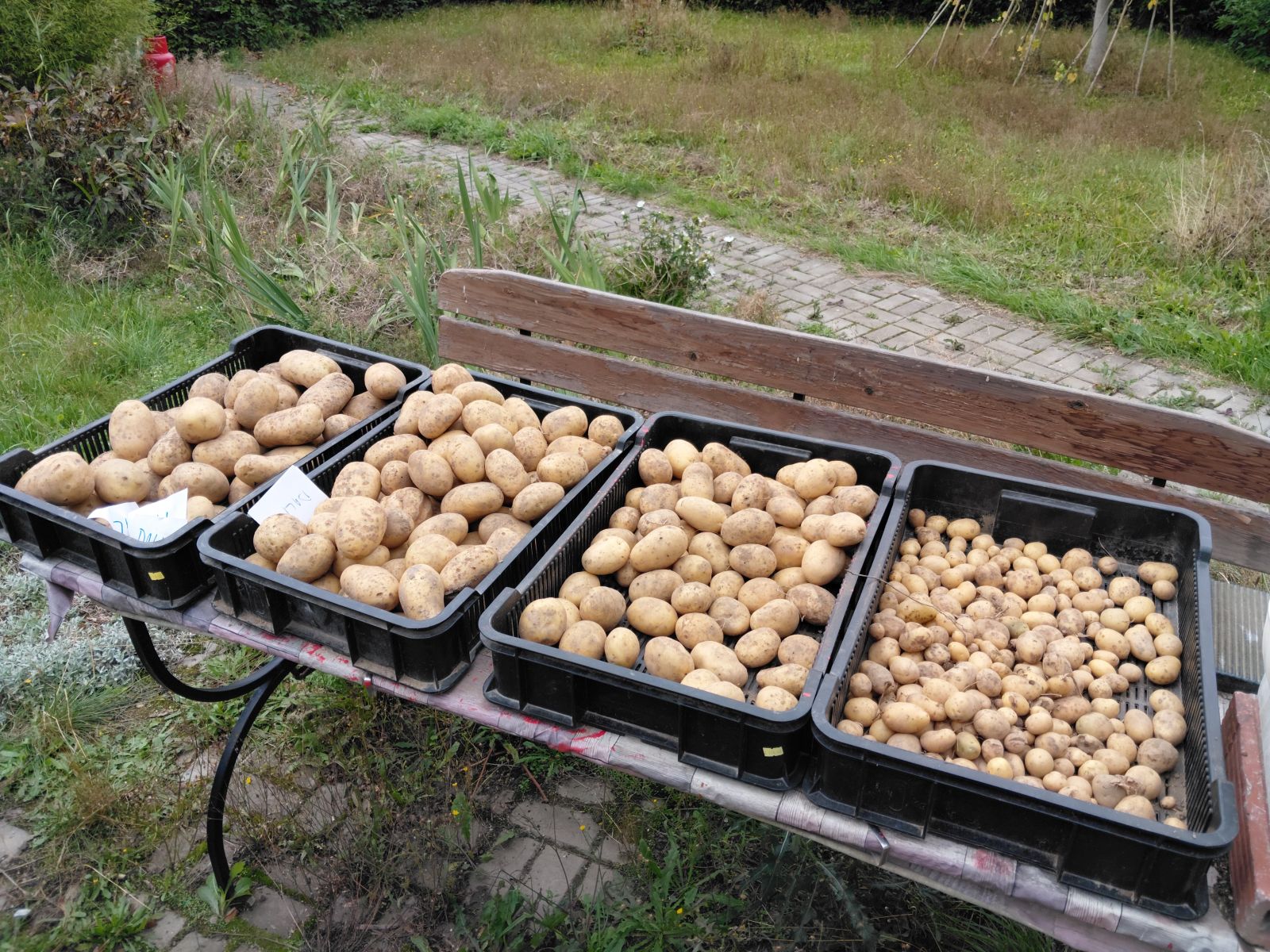
I harvested the third potato variety that I grew this year, and as the title says, I was disappointed.

© Charly, all rights reserved. Click for full size.

There were a lot of big tubers in there and an acceptable amount of small & tiny ones; the size distribution was not an issue. In fact, I could barely put aside 100 pieces of ~50 g seed potatoes for next year since most tubers were significantly bigger. I am still not fully decided if I will plant this variety next year, but since it does reasonably well in the Ruth-Stout method too, I am still considering it. If I decide against it, we can eat those taters too.

© Charly, all rights reserved. Click for full size.

The worse-than-expected problem was pest damage. Not only did I get approx. 9 kg of tubers damaged badly enough that they need to be processed asap; there were several spots with dead stalks above the ground, but no tubers underneath. They were all eaten by mice/voles. Based on how often that happened, I estimate the damage to be 10-15 kg, plus whatever we will have to cut and throw out of this bucket.

There is no late blight on the tubers; they look mostly reasonably nice and healthy. But the overall harvest was less than expected.

© Charly, all rights reserved. Click for full size.

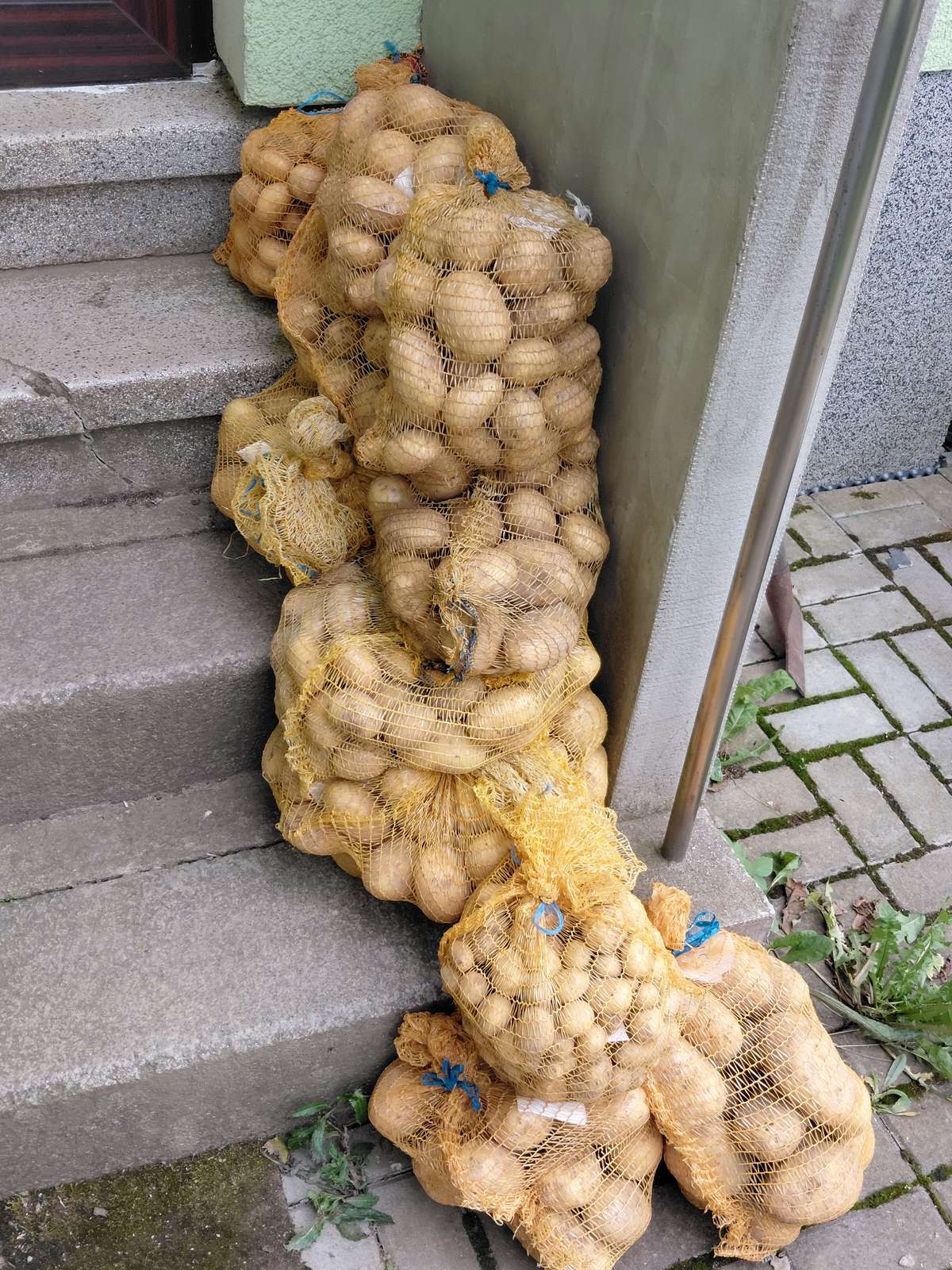
I got circa 65 kg of tubers for storage. This is about the same yield per seed as what I got from Bellarosa and Camel, despite longer vegetation time. And I can confidently blame it all on effing rodents.

BTW, you can see a mouse trap under the weighed bucket. I’ve already caught two mice in my garden shed, and I’ll probably need to set traps more aggressively during the winter. A working cat would help a bit, but then I would need to buy feed for the cat, so the savings would be essentially nil.

Socks’ Adventures: Walking the Wadden

Giliell’s Notes: The Wadden is a national treasure and national park and an area with imense biodiversity, despite its occasionally bleak looks. It’s fascinating, it’s interesting, but also very dangerous. The difference between low and high tide can be several metres of water in hight and some kilometres in area. The dangerous parts are the tidal creeks. They are like rivers in the Wadden, up to several metres deep in some places, but deceptively shallow in others. At low tide, it’s no problem to cross them and walk up the the water’s edge. When the tide is turning, the edge doesn’t move much, so you might not even notice that it has changed. During the first two hours the water just fills the tidals creeks. Then they run over and the tide climbs in earnest, up to 2cm per minute. If you’re still behind the tidal creeks, you’re now trapped, as the water is now coming from both sides and the current in the creeks is strong and dangerous. That is the moment you call 110 and get to know a lot of people who will now think badly of you. If you want to experience the Wadden, go on a guided tour. If you don’t wnat to spend money, wait until the guided tours set out and stay behind them.

Socks:

They told me we were going on an adventure, but then they put me in the car. Why do all adventures have to start with the car? Anyway, we went to a different place and walked to the big water, only that the big water was gone, but instead there were people and they all went for a walk with me. That’s nice, I like going on walks. I also like the sand and the mud. You can dig in there or do wormies. I love doing wormies, but mum insists on giving me a shower afterwards. Spoilsport.

A small black and brown dog digging in the sand

©Giliell, all rights reserved


A small black brown dog rolling over in the sand. You can see the pattern of last tide's waves in the sand

©Giliell, all rights reserved

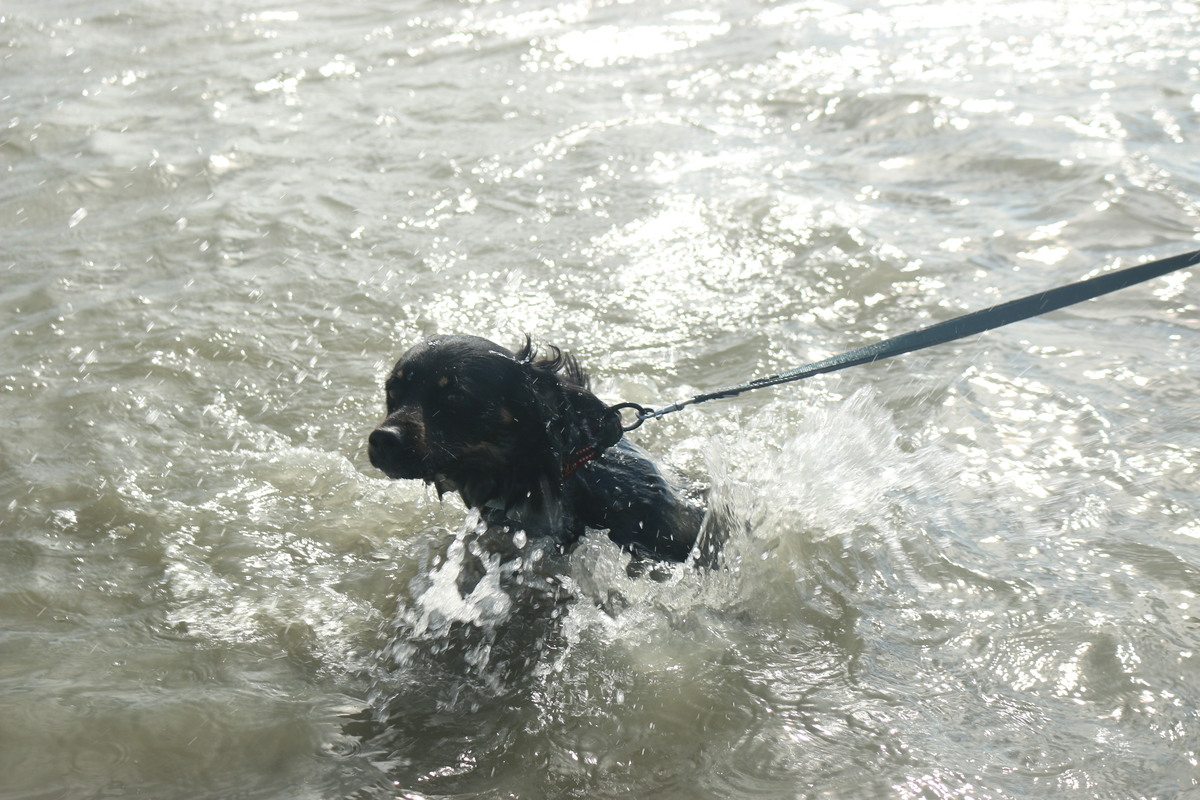
Things were fine for a while until we came to a creek and the nice lady who was walking with us said: “Hmpf, I thoight the water would be lower by now. There’s no help for it, we need to walk through.” And by walking, she meant swimming. Not for the twoleggers, but for poor small doggies. I can swim. I just don’t like it a lot.

Small dog swimming in the sea

©Giliell, all rights reserved

On we went and I must say, there were a lot of interesting things, but mum, cruel as she is, didn’t let me have them. No live crabs, no crab shells, no crab shells with half rotten crab parts in them. That was mean! I also wasn’t allowed to chase all them birdies.

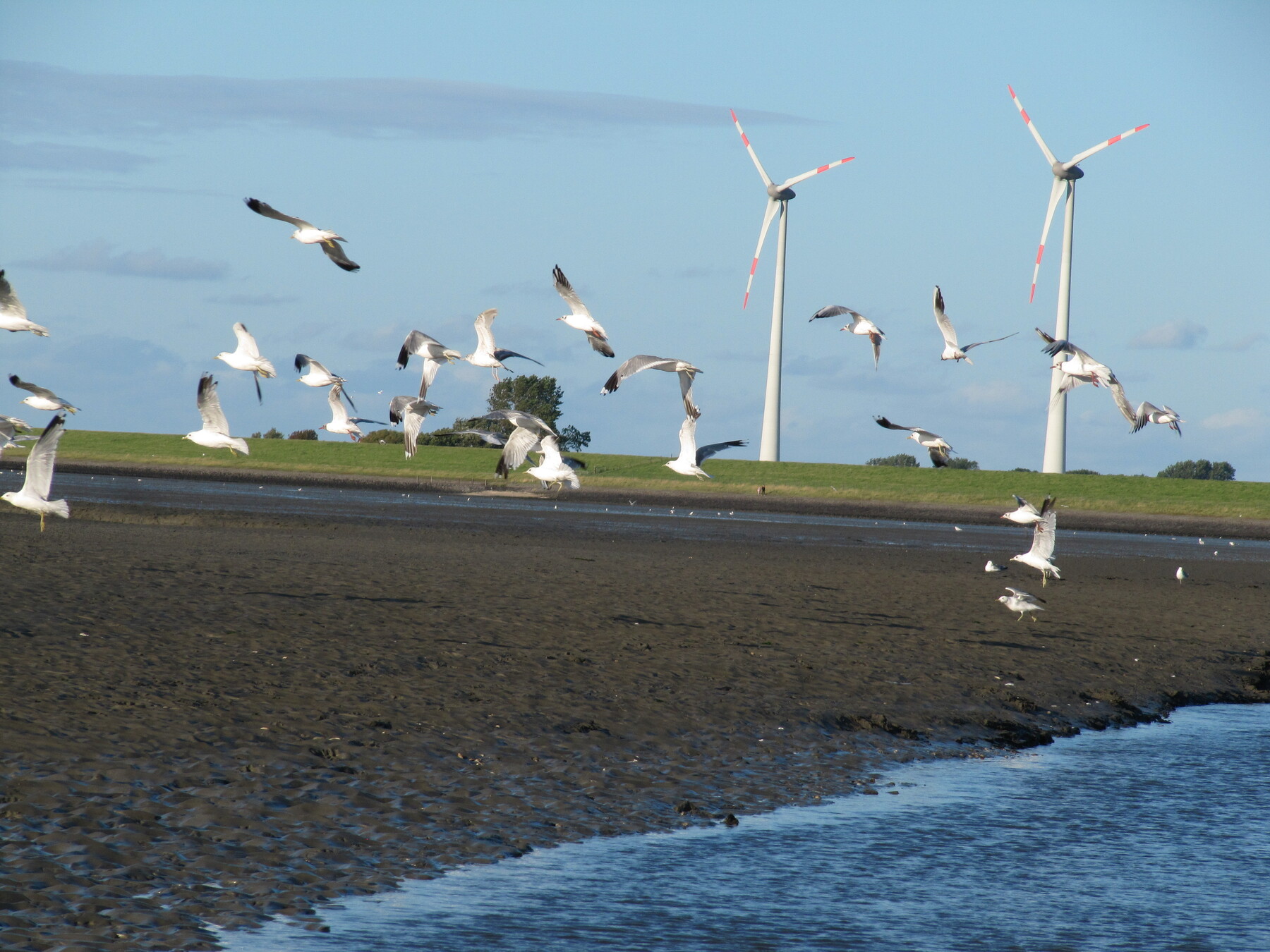
Seagulls flying over a tidal creek and exposed sand, with wind turbines in the back

©Giliell, all rights reserved

At some point the twoleggers got very excited, claiming to have spotted some sea dogs (German for seals). Hearing that, I was very excited, too. Would they be nice? Did they want to play? I can tell you, it was very disappointing. The so called sea dogs turned out to be blobs on the far away shore. Not okay.

View across the water towards the opposite shore. On the beach you can see several brown blobs. They're real seals, promise

©Giliell, all rights reserved 

Another thing I don’t understand ist the twoleggers obsession with walking to things. The things are never intersting stuff like a nice lady’s pee puddle or a delicious dead animal or something. No, in this case it was a big metal thingy surrounded by water. You know, I wouldn’t have minede it the thing had been on the sand and not in the water, because at that point I really needed to pee, but there was nowhere to pee against.

A red withe tower in the Wadden

©Giliell, all rights reserved

Giliell’s notes: What you can see is the lower range light of a pair of guiding lights. While a lighthouse is typically telling ships where not to go, these tell ypu where to go: You line up the lower range light and the upper range light and keep them straight. Right next to it is the channel towards Bremerhaven, which is deep enough for some of the world’s biggest ships to pass through.

Anther fun thing was the water. Thankfully I didn’t need to swim again on the way back, but the ground was always wet. That’s OK, but can somebody please tell me how I got wet all over? I can’t remember having agreed to any of that!

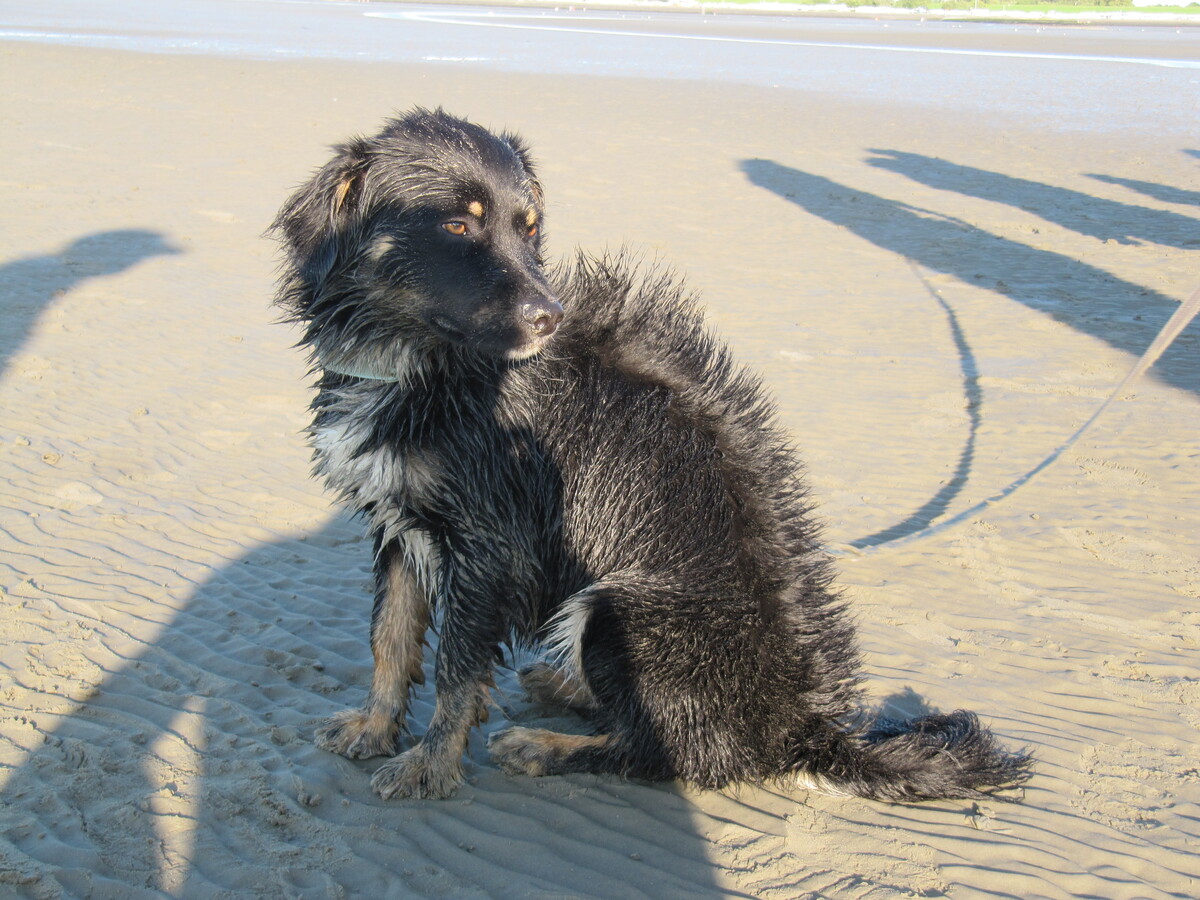
A small black and brown dog is sitting on the sand. His wet fur is plastered against his body, except for a line of hair on his ridge, standing up like a mohawk

©Giliell, all rights reserved

Finally we returned to the land and boy was I glad! I ran towards the first tufts of grass and peeeeeeeeeeeeeeeed. 3.5 hours with no peeing is no fun, I can tell you. So if you ever go to the Wadden, remember to bring your own tree, because they’re really lacking in the tree department there. I wonder how those sea dogs are doing it.

Evening view of the Wadden

©Giliell, all rights reserved