Socks’ Adventures: Fun with Friends

You know what I ablosutely loved about the holidays? The whole pack was together. You see, there’s the family pack, they’re almost always here. I love them to bits, but they’re all of the big two legged dogs variety that gets upset when you want to sniff their butts. And there is also the framily pack. Mum calls them  that. Framily, not pack and says that’s the combination of friends and family. The framily pack consists of more of the twoleggers, but it also has some sensible people who walk on four legs. Well, mostly sensible.

The big fellow Loki can get a bit grumpy when I run too much. Actually, scratch that, he gets grumpy when I run. I really do love him, but I wished he’d relax a bit. The little one is Penny. She’s always up for a run. And for chewing my ears. Don’t know why, they seem to be tasty.


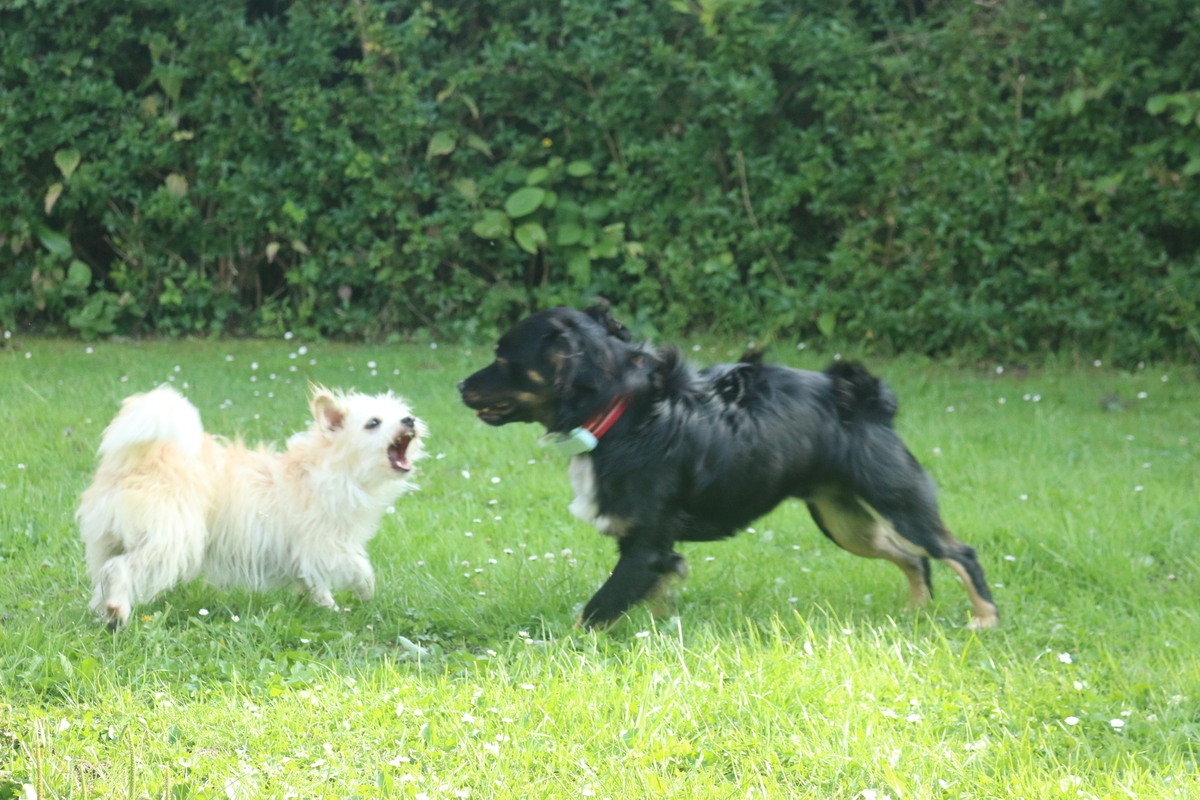
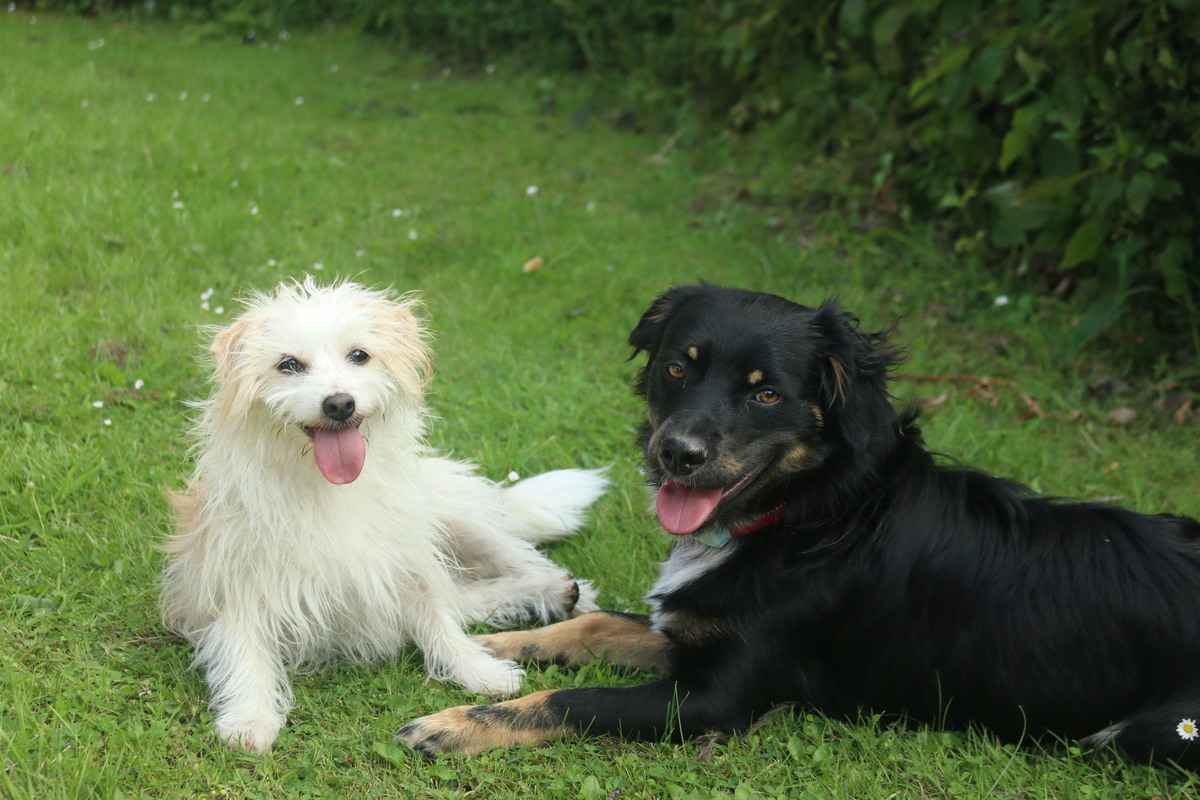
A small white dog and a somewhat bigger, but not big black and brown dog are playing.

©Giliell, all rights reserved

Dad always says he has to look away because we look and sound like we’re about to kill each other, but that’s the problem with two legged dogs: they have no sense on how to play. I love rough and tumble play, but I also love chilling together afterwards.


A small white dog and a somewhat larger black and brown dog are lying on the grass next to each other, their tongues hanging out

©Giliell, all rights reserved

Socks’ Adventures: Fly like a bird!

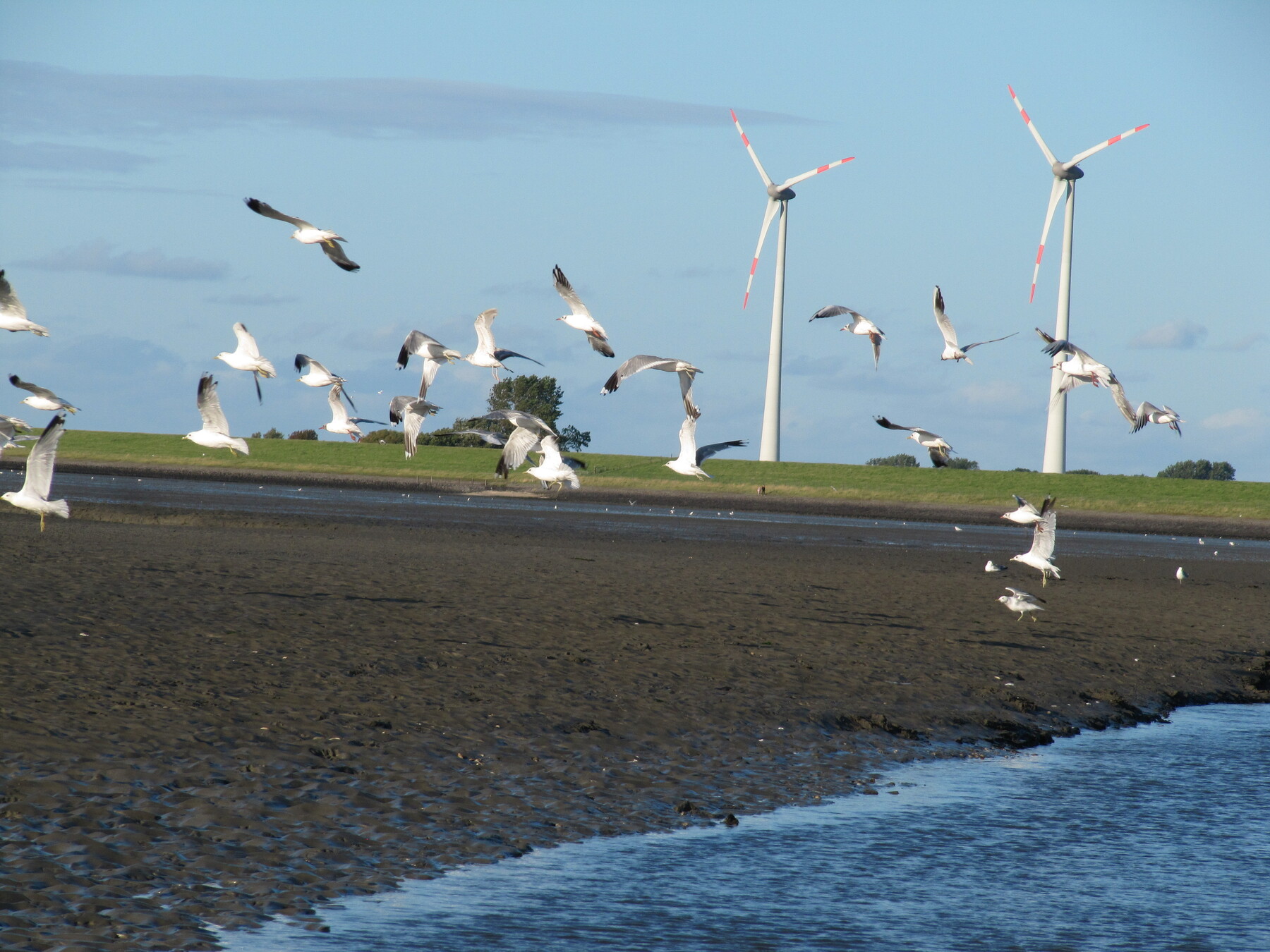
Did you know that birds can fly? Like really fly? I was always suspicious of them being able to pull some kind of trick, because at home, those evil bastards hop around on the forest path and when I get there, they’re suddenly somewhere higher up. At home there’s a lot of trees. And a lot of birds. In trees. What there is not is a lot of open space. At the North Sea, it’s different. They’re really lacking in the tree department. BTW, mum, that was a dirty trick, promising that on holiday, I’d get a treat at every tree when you knew that there were very few trees. Anyway, back to the birds. They’re mean, and they can fly. Long distances. Fast. Especially the swallows. I really, really wanted to play catch with them, but mum said no. That was not cool. The stupid swallows kept teasing me and I was still on the lead.

Then one day, when I was trying to get to the swallows really hard, I head mum say something like “Gods, he’s pulling so much, I’m going to secure him around my body”. I didn’t understand exactly what she meant, but I knew it was now or never. While she was fumbling with the snap link, I took my chance, gave a good pull and there I was, running free. Into the Wadden, chasing those swallows. Wel, lots of yelling and running later I did come back, but man, that was good.

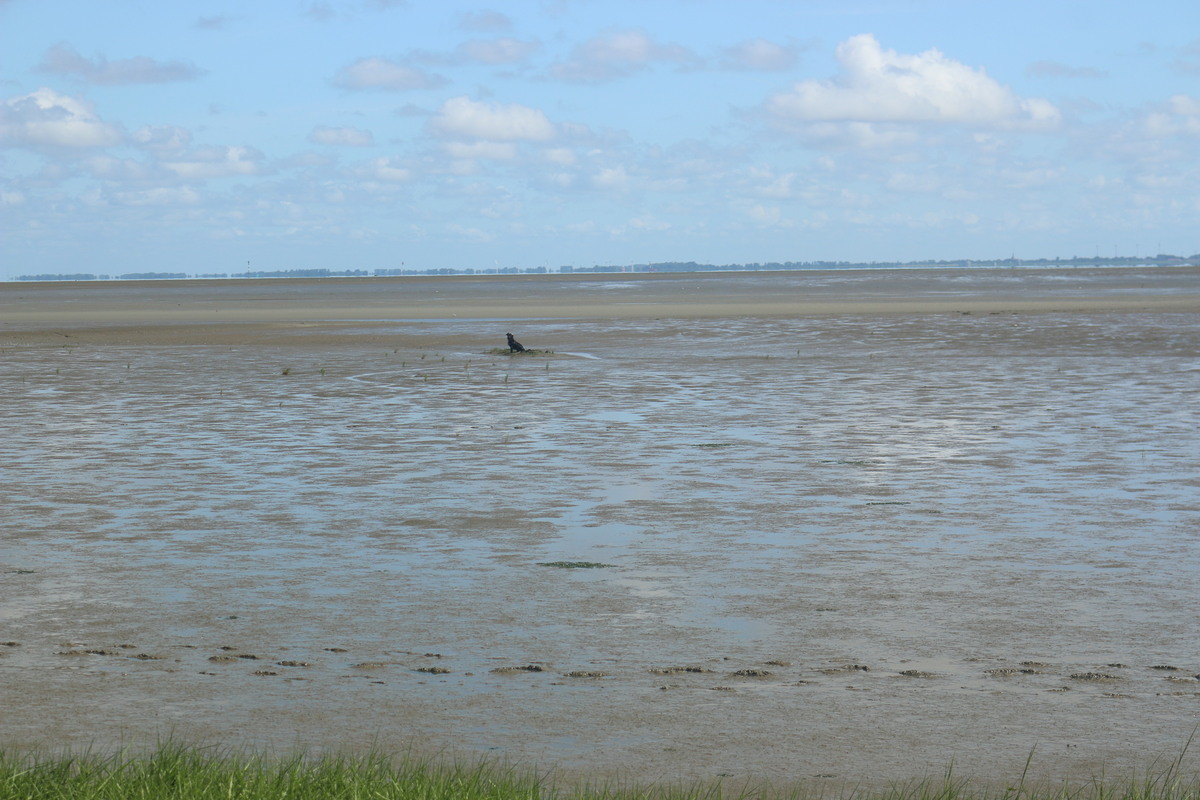
A small dog sitting far off in the distance in the Wadden at low tide

©Giliell, all rights reserved

Did I run away even thogh I knew I shouldn’t? Yes!

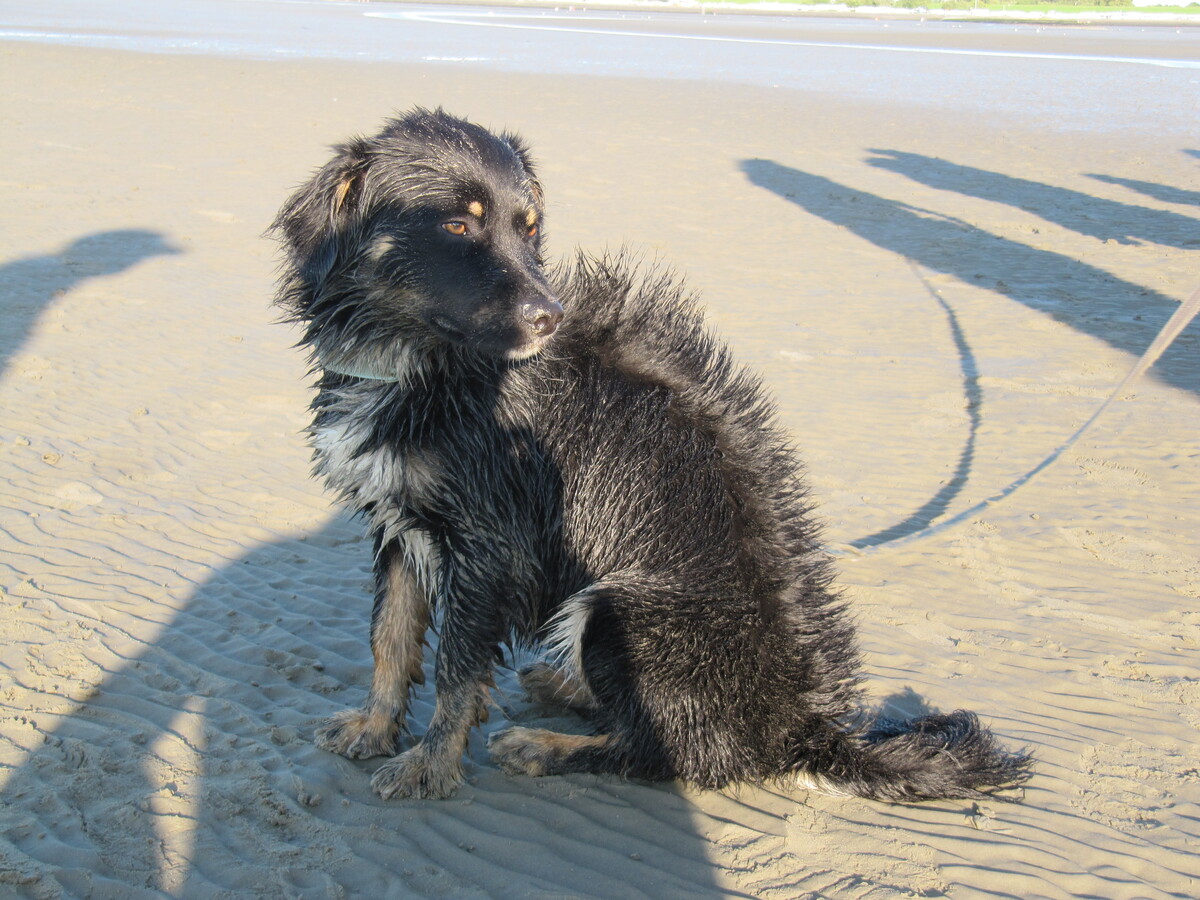
Did I get dirty as fuck and need a shower? Also yes!

Did I get all that muck over mum as well? You bet!

Do I regret anything? Absolutely not!

A very dirty small black and brown dog sitting in the sun, looking very proud of himself

©Giliell, all rights reserved

Adopt, Don’t Shop! – and its Limitations

I’m a big fan of adopting rescues and very critical of most modern dog breeding.

The rescue part you might have already guessed from Socks being, well, a rescue dog. The goodest rescue dog.

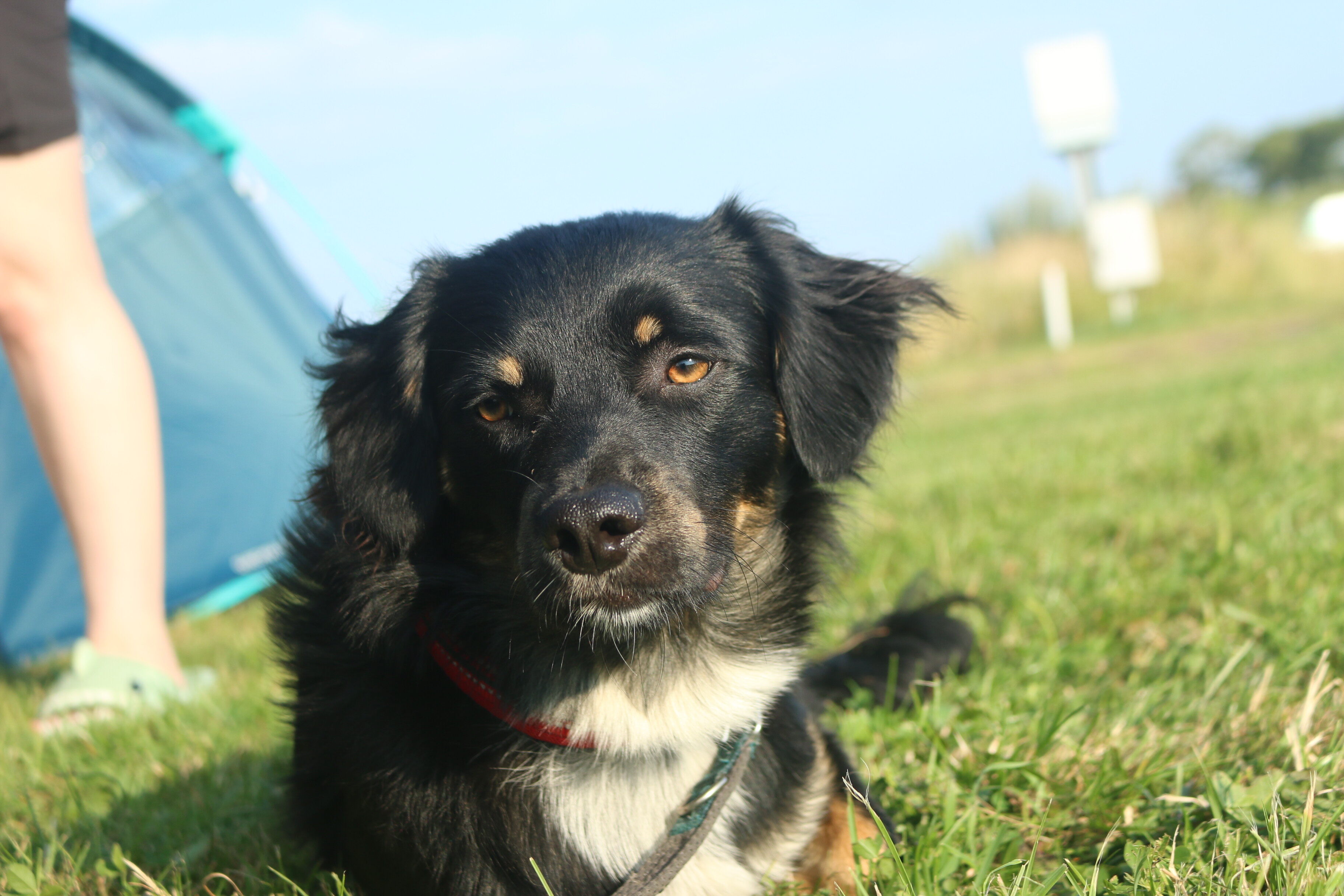
front view of a tricolour small dog lying on the grass

©Giliell, all rights reserved

You might have also guessed that I’m not the biggest fan of most modern breeding, with varying degrees from hatred for puppy mill owners and people who breed dog breeds that are inherently unhealthy (German has the apt word “Qualzucht”, torture breeding) like Frenchies over people who breed dogs that are mostly not suitable as family dogs but being sold mostly to families (Border Collies and Aussies, anybody?) to being mildly critical to dog breeds that need more genetic diversity to counter (manageable) health issues but who aren’t getting any due to stupid breed standards.

I’m not going to call everybody who gets a puppy from a breeder names, just a lot of them, so let’s look at the arguments being made in favour of getting a purebred puppy and which ones hold up, but also at the arguments pro and against getting a rescue.

First of all some necessary information before we start talking past each other:

In Germany and other wealthier European countries there exist two parallel rescue systems. The first one is the local shelters, which are all no kill and will take in pets that are surrendered but also pets that are confiscated or abandoned. The second system is foreign adoption from Eastern and Southern European countries with low animal welfare and kill shelters. Both have their pros and cons and I’ll talk about those as well.

First argument: But I love breed X!

This is the one I can simultaneously understand the most but that also infuriates me the most. Dog breeds have been created over centuries for specific purposes with specific goals in mind, so members of a breed are very likely to not only share a look, but also certain character traits. I mean, who doesn’t love a Golden Retriever? There’s still reasons I don’t have one. So there are people who either want a dog for a specific purpose (i. e. hunting) and get a specific working breed, or there are people who are really looking into which breed fits their lives and get those and I can understand that.

Unfortunately, most people don’t look at all aspects of a breed, they look at the optics or the image. They get a breed that has been popularized by media or celebrities. Border Collies are one of those breeds, as are Dalamtians and most tragically, French Bulldogs. Fuck Lady Gaga, The Rock and the rest of them who popularized Frenchies. In Germany there’s a huge problem with breeds like the Belgian Malinois or Kangals: Both dogs that require experienced owners, lots of attention and real good training, not to mention the right living conditions. But people will watch three videos on the internet and go “awwwww” and now German shelters are full with them, as well as the assorted bully breeds. This is a huge problem and ties in with argument #2.

Second argument: They wouldn’t let me have a rescue dog!

Congrats, so you went to a backyeard breeder, because if you didn’t get a rescue, then no responsible breeder would sell you a puppy. Now, I know that some local shelters can be a bit over the top, but most are not, if you’re being reasonable as to which dog you want. And often there will be no dog available that fits you, because see #1. When we looked for a doggo, we also looked at the local shelters. They had German Shepherds, Malinois, Bullies, their mixes and a very sick pug. These dogs need knowledgeable people and nobody should have given me any of them, should I have applied. Which I didn’t. I went to a (reputable) rescue organisation and yeah, me, a first time dog owner full time working person got a dog. But one that fit our lives.

Third argument: I don’t want a traumatised dog /surprise box that is a rescue

Another argument that holds a bit of truth, but not much. Just like those dogs from the local shelters who are often already demanding breeds now with added issues from bad keeping, a lot of foreign rescue dogs come with trauma and trust issues. Those dogs also need expereinced people willing to work with them and put up with a lot (anybody remember Caine’s half coyote who would keep its bones in her bed? Not everybody’s cup of tea) and should also only be given to such people. Me, I’m not that people. I still found a rescue dog. Socks isn’t the biggest fan of tall men and strangers, but he’s affectionate, smart and very easy to train. It’s also not like every individual of a certain breed will be a perfect example of that breed. The one dog in our doggy school group that had the most issues and the least progress was a Golden Retriever.

Also, as I mentioned, people go for looks and images, but not actual breed behaviour. They get a Dachshund (you shouldn’t) and are surprised that it’s stubborn as fuck. Those doggos were bred to hunt badgers, alone in the dark. They do their own thinking. They get any kind of shepherd and are surprised the dog is herding and nipping. They get a lifestock guarding dog and are surprised that their dog doesn’t listen at all because for centuries those dogs have stayed with the herds without seeing a human for days.

That’s also something you have to take into account when getting a rescue mutt. Pay attention to the telltale guarding dog looks. So yeah, getting arescue requires you to do some thinking and careful choice of dog, but so does getting a purebred.

Fourth argument: I want a dog that was socialised well

It’s one I will let somewhat stand. A good breeder does a lot of work to make sure the puppies have a good start. They will be carefully introduced to stimuli, socialised, and will have some basic connection to humans. It certainly gives you a headstart with your dog. But it also doesn’t mean that you don’t have to work with the dog. As mentioned before, Socks and I go to doggy school. We’re in a group of dogs the same age and have been for the last 6 months. At the start, Socks had some catching up to do, since he didn’t have any training before he was adopted, and was also new to a lot of situations. But by now he has well caught up and is often ahead of the well socialised purebred classmates.

Fifth argument: Good breeders health test their dogs

Another two sided sword. Yeah, good breeders will health test their dogs to some extent before breeding them, but this opens a whole can of worms: Breed specific health issues, fucked up breed standards and genetic diversity. Many popular breeds have so little genetic diversity that all individuals are genetically as close as siblings or first cousins. It’s no use that their pedigree shows no direct inbreeding, they simply don’t have a large enough gene pool. Now taking out individuals with certain traits will further decrease the gene pool. This is why many breeds simply cannot remove certain unhealthy traits by no longer breeding those individuals. Apart from creating more suffering, it’s not possible to create healthier Frenchies by breeding longer snout individuals. It’s only now that we’re beginning to understand how certain things are related. Did you know that white coats and being deaf is related? For decades breed standards demanded a colour that also carried a high risk of deafness, but now breeds like Dalmatians have lost all other healthy allels. Back to the Goldie? I love them, but their hips are fucked. People joke about them eating everything, but just like Labradors most of them are missing the gene that regulates hunger and being full. While the assorted retrievers are not among them, honestly a lot of breeds simply need to go. The giants and the teacups, the brachycephalic dogs, and many many more. No amount of health testing will solve issues that are breed standards, especially if there isn’t a viable population without those issues. They would need to cross in other dogs nad that will never happen. Not only would it change their beloved standards, it would also mean investing money and not making it (that’s also the reason why doodles won’t become breeds).

Does a rescue guarantee a healthy dog? Nope. After all, their gene pool is the same fucked up mess, you’re just combining more. Our neighbours have a lovely rescue mutt who’s going blind. White coat, blue eyes, high probability. But it means that you’re not supporting a sick system.

Sixth (and for now final) argument: Foreign rescues are just puppy mills in disguise / they clogg local shelters 

Again one that has some truth to it. With foreign rescues being pretty popular, it attracts two types of unethical players.

Type one: The puppy mill. They always have cute puppies for adoption. They’re all mutts, so nobody suspects a puppy mill at first and they will tell you some sob story. A good rescue will have all kinds of dogs. They will occasionally have puppies, but you will also be able to get the spayed momma dog after the puppies are weaned.

Type two: The Good Samaritians Without a Plan. While Type one is in for the money, these people are in for feeling good themselves. Their goal is to get as many dogs out as possible without actually making sure that those dogs go to good homes. They will often allow people to adopt just after having seen a cute pic and heard a sorry tale, they will not check before, they will brush over issues and have absolutely no plan B. They do significantly contribute to the local shelter population.

If you ever look into getting a foreign rescue, these are the signs of a reputable organisation:

-There are dogs you cannot adopt. Not all dogs will adjust to a family life. Some are too traumatised to ever trust humans again. You can sponsor them, and they get to live the rest of their days in peace, fed, safe and cared for.

-They work locally. That’s like the biggest point. A good rescue organisation wants to make itself unnecessary. They offer spaying and neutering for the locals, they educate people on how to prevent unwanted litters, thus reducing the number of animals that need them.

-They have foster places where the dogs can adjust and you can get to know the dogs. While they may also do direct adoptions where you get the dog without it having lived with a foster family, they do so responsibly

-They check on you and won’t just give you a dog. The foster lady we got Socks from is a friend of my friends, so we already had a good reputation by hearsay, but she still had us fill out all the forms, talked about problems that may happen and checked us at home to see if our data was correct, the same way a good breeder does.

-They have a plan B. Even with a careful adoption process, things can go wahoonie-shaped. A goood rescue still feels responsible for the dog. Our contract states that we cannot sell or surrender the dog without their approval, if they disapprove the dog goes back to them. That’s an important point. It also means that they’re a lot more careful about whom they give which dog. They want things to work, because otherwise the dog becomes their problem again.

-They never apply emotional pressure to make you adopt a dog. No sob story. No “if you don’t take it, it will be killed”. They may ask for your money (I swear, in the end you pay as much for the rescue as you pay for a purebred, just that you pay a little every once in a while), but never for you to adopt more dogs than you can handle.

-They are honest. If you llok at their website and find dogs with trust issues, there’s a good chance that you can also get one without trust issues and not one who is deeply traumatised but has been lied about.


As you see, I’m not at all unsympathetic to people who responsibly get a certain breed, and I won’t claim that rescue dogs are for everybody, but I’m so sick and tired of those bullshit arguments.

Socks’ Adventures: The Big Water

Socks:

Did you know there’s different types of water? I didn’t! I mean, water and me, we go way back. Like, I practically started drinking that stuff when I was a puppy. But the Fam showed me that you can even use it to get your paws wet? I’m still not the biggest fan of swimming. Usually we go to a small waterhole where the water is always cold and tastes really good. Mum and the Fam insist on throwing my toys in there when they could just throw them in the meadow, but I will admit that it does cool down. Also you can rub yourself dry in the dirt afterwards. Mum loves that.

Small black and white dog in the "Watt"

©Giliell, all rights reserved

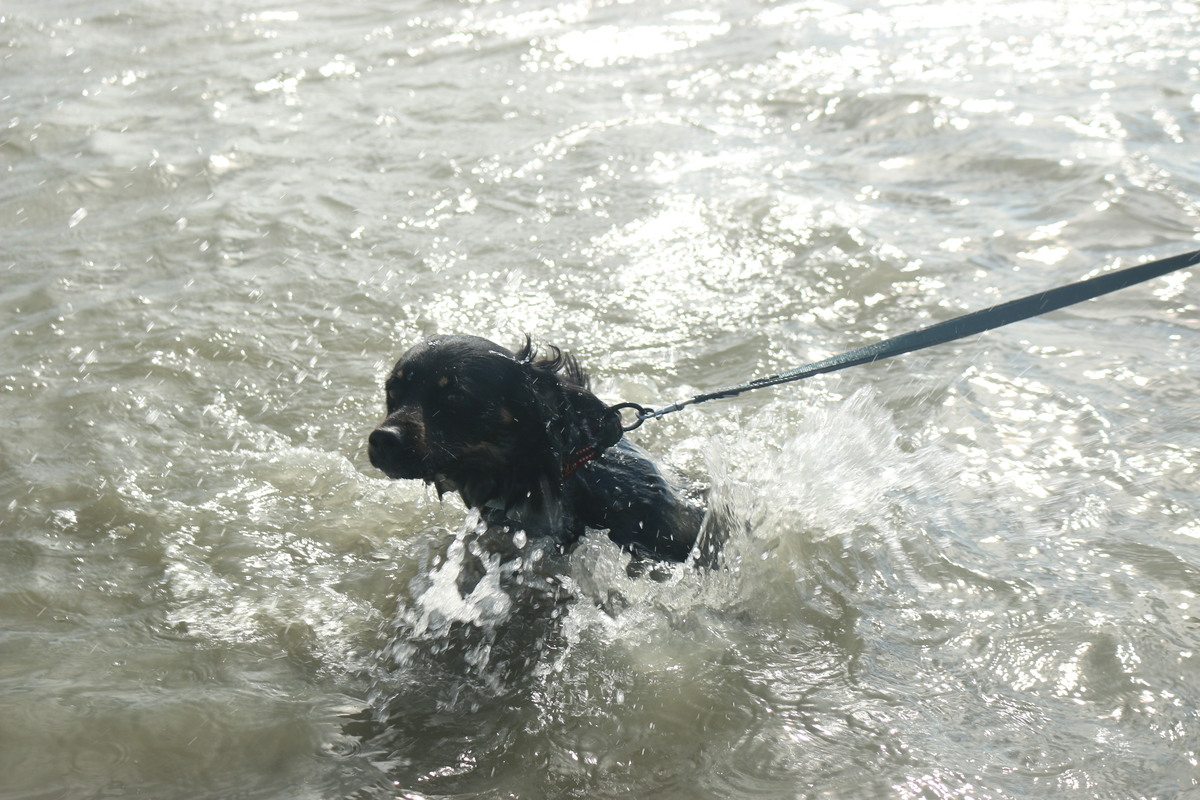
Now, where was I? Right, water. There was a big water there. Like real big. But only sometimes. Sometimes there was a lot of mud. Mud is cool. The Fam took me there the first evening. There were puddles and mud and I quite liked that, but that water tasted really bad. I tried it and it was way too salty. And I tried again and it still hadn’t bettered its ways. Not even the third, fouth and whatever numbers come after that time. Stupid water.

Small dog swimming in the sea

©Giliell, all rights reserved Help!!!


Socks’ Adventures: Holidays

In memory of the unforgotten “Jack’s Walks”

Holidays are a curious human invention. We pack up our lives to go and live them somewhere else for a while. Socks, with his glorious 13 months had no idea what they are.

Socks:

I knew that something was up. One day, they brought a big box home. A bit like a car (I don’t like riding cars), but not quite, so when the fam offered me treats, I was willing to enter. They praised me a lot, but really, I don’t know why. It smelled like the fam, but old. Whatever. Then they started putting a lot of boxes where they don’t belong. Really, mum, I know you’re not the best housekeeper, but clothes in the kitchen? As this went on, I got more and more nervous until finally, one day, you guessed it, they put me into the car. I don’t like riding cars! But there was a lot of treats (Leberwurst!) and actually there weren’ many stops or those wiggly things where your body moves without you doing anything, so I decided to take a nap.

A small black and brown dog napping in a doggy car seat

©Giliell, all rights reserved

A couple of naps later we arrived somewhere strange. It smelled very different, a bit like fish. I like fish! And the trees were gone. What did they do to the trees? But at least there was green grass and it wasn’t as hot as it was at home. There the grass is turning brown. I don’t like that. It doesn’t taste good, either. I was a bit confused as to what we were doing there, but hey, I thoght, now we live in the box on the green grass.


A small black an brown dog lying on the bed in the caravan

©Giliell, all rights reserved

To be continued….


Of Boomers and dogs

Before you “not all men” me: of course, not all boomers…

A small tricolour dog is trying to steal a colourful sheet from the couch

©Giliell, all rights reserved
Putting fresh sheets on the couch actually requires zero dogs….

Boomers largely grew up with dogs. They were something you just had, much the same way you had kids and they were treated much alike: they were supposed to be quiet, well behaved and functioning, and the means to achieve that was violence. Becoming adults, many of them stopped having dogs but not children, but the children were still raised much the same. Maybe the belt was replaced by the bare hand, but violence was still very much the preferred method of “teaching” kids. Gen X and Millenials mostly put a stop to this, making grandparents catch up with the 21st century or cutting them off and protecting their children.

While not every popular trend in current child rearing is actually good, today’s parents are much more consciously thinking about how they want to raise their children. Many read books or go to parenting classes. While they may not always achieve it, they do want to raise their children without violence and trauma. And actually, much the same is happening with dog training. We don’t just expect dogs to function. We see them as creatures with both needs and also somelevel of understanding. We actively learn how to interpret their body language correctly. A wagging tail does not mean a happy dog. A wagging tail means an excited dog, but not whether he’s positively excited or actually upset. (With Socks you can tell a genuinly happy wag by the fact that he’ll also wag his entire butt. Which is extremely cute.)

If the boomers didn’t choose to keep dogs, there was no such pressure on them to catch up with the time. Or as my dad said: “We didn’t have doggy school back then and we didn’t need it. You kids these days.” Enter my father in law, who is like the poster boy for a certain kind of old white man. Not the virulently capital letters Racist or Misogynist, just the ordinary type. A guy who got through life by simply ignoring things he didn’t like, who got his family to not contradict him or have fights with him by being loud. A guy who never had his beliefs challenged. Back to the topic: a guy who thinks he knows how to handle dogs, even though he hasn’t kept dogs in 60 years.

Socks is still learning many things and one of them is to tolerate people in “his” space. He’s a rescue who has finally found his safe place, a rescue who, like almost all rescues, has an issue with big loud men, and a kokoni, who was bred over two millenia to protect the home. This means that when people enter our home who have not been added to his expanding list of trustworthy humans, he is often insecure. That means barking and keeping his distance, but it also means giving warning signs. Growling, showing teeth, snapping at the air. Which my father in law all takes to mean “please keep getting closer, especially reaching over me with your big hands and try to touch me, preferrably on my head”. And no matter what you say, he’ll keep doing it. The father in law, not the dog. The dog is much more teachable. This is the way biting happens, but of course it’s the dog who gets blamed then.

Training Dogs: Gender Gap

©Giliell, all rights reserved
Every dog whenever the task at hand requires zero dogs.

Patriarchy doesn’t even leave our pets alone. Cats are clearly female coded: they’re domestic, clean, elegant, and also you can become a crazy old cat lady. Dogs, with the exception of certain small breeds, are male coded: outdoors, action, dirt! In children’s media a cat character is most likely to be female, a dog character is male. Even without gendered nouns (in German “cat” is female and “dog” is male), English speaking kids often think that “cats are girls and dogs are boys”. With this in mind, you should think that I’m the lone woman in a group of men at doggy school, right?

Nope. There’s occasionally a guy, but the main human partner for most dogs is a woman. Since I doubt that most dogs are a “I made puppy eyes at my husband until he thought it was easier living with a dog than with a wife who wants a dog” situation like ours, something doesn’t add up and I took it totally scientifically to Mastodon for a poll.

I know that the results are not in any way representative, but there was a tendency that I find interesting:

If the dog went to doggy school, the main person responsible was almost always a woman. If the couple was fine without doggy school, the dog duties were more equal. In no group did men do the majority of care and training.

What was also interesting were the conversations in the comments below. One guy remarked that most doggy schools are run by women and apparently men do have a huge problem with going to a woman and admit that they need her expertise. He furthermore counted that his wife is indeed a certified dog trainer, and he is not, but that when he’s around for some reason, the men will flock to him and ask him for his opinion, but argue with his wife.

There’s a saying that men want children like children want a dog. Apparently men also want dogs like children like dogs

Teacher’s Corner: Teaching kids and training dogs

Small tri colour dog lying on his back in a fluffy bed

©Giliell, all rights reserved

Socks has been living with us for two months now, and after he settled in, I took him to doggy school. While we were absolutely lucky in getting a dog with very few behavioural issues who’s keen to learn, he needs training. He was abandoned as a puppy and grew up in the shelter, so he never had any of the usual training. As a teacher, I don’t like badly raised kids and poorly trained dogs. I love my friends’ dogs, but seriously, they’re a nightmare trainig wise, only being manageable by either having a gentle nature (big dog) or being a prototypical small dog (no manners but easily controllable). I also would like Socks to become a school dog one day and therefore he needs a solid basis. So I’ve been taking him to doggy school for the last weeks, for general training and for recall. Right now it’s breeding season anyway, so dogs need to be on a lead, but hopefully once that’s over we’ll have a solid recall so he can have more freedom.

In recall training (and in general training), we mostly work with classic conditioning: Desired behaviour is rewarded. I’m very happy to live in a country where it’s illegal to torture your dog in the name of training with prong collars or worse electric collars. So for recall, our first job was to find out what our dogs love the most. Not only did we have to test what their favourite snacks are, but also what others things could motivate them to abandon whatever they’re doing elsewhere and to come back to us. So each team in the group came back with different answers, which got me thinking: Now, of course children are not dogs. I can’t explain to Socks why it’s important that he doesn’t just run into the street because there’s a blackbird on the other side. He’s got all the understanding of a toddler. Instead I teach him that sitting down and waiting for me the lead the way gets him a reward. But children are similar to dogs in that they’re all different and want and need different things. And unlike with my dog, I can’t sit down and analyse those things for 250 different kids. And I can’t implement them for 25 different kids in a classroom. The ressource “teacher” is spread a lot more thinly than the resource “dog owner”. But we thoght it would be fun to try and throw them a cheese cube every time they gave the correct answer…

Please meet Socks

With all the horrors going on in the world, let’s have something positive. Please meet the newest member of the Giliell family: Socks

©Giliell, all rights reserved

I’ve always wanted a dog. I wanted a dog before I could write “dog”, but of course my parents said “no”. Later the circumstances weren’t right. First I was a poor college student, then I had two small kids in a small flat, then I had long commutes. Now the kids are mostly grown, we live in a house next to the woods and my commute is 10 – 20 minutes. The only other obstacle was my beloved not wanting a dog, but over the last 2 years the kids and I wore him down. Now the question was “What dog and when”? The “what was pretty easy. We wanted a small to medium mixed breed rescue and went with a rescue that brings in street dogs and dogs from kill shelters in Romania. Now, when you get your dog from a foreign rescue you have to be careful about some things, just like when you get your dog from a breeder, “breeder” or local shelter. We went with one that had a couple of decades of history, makes sure they visit prospective adopters and most importantly where the local contact / foster mum is a personal friend of our BFF’s mum.

Why not a local shelter? Two problems: First, someof them have unrealistic expectations like you mustn’t work outside the home and leave the dog alone. Second: German shelters are 80% populated by dogs that people shouldn’t have gotten in the first place: dogs listed as potentially dangerous like staffies, bullies, etc and their cross breeds and high need dogs like Malinois or Kangal. I can’t do a high need dog, which is what I also told the rescue lady, so we worked together. Our initial plan was to look for a dog that would then go on the March transport. She would foster until the start of the easter break and then we’d have 2 weeks to get used to each other.

Then she got a foster dog on the January transport and told me: “Come look at this one, I thinks that’s the onbe for you”, so we went for a first visit. The dog we met was still very shy and had to be carried across the doorstep because he was afraid, but we instantly fell in love. The little guy even matched the name my daughter had already picked back when we first decided to get a dog: Socks.

Small tri colour dog being carried, looking very shy

©Giliell, all rights reserved

Look at how shy he was back then!

Within days we agreed on a “test” day and then a few days later went to pick him up. He very quickly lost all that shyness once he realised that finally had a family.

The doggie lying on his back with his mouth open next to a leg. You can see a hand giving belly rubs. He looks cheeky.

©Giliell, all rights reserved

Did I mention that we’d wanted a mixed breed? Joke’s on me.

The rescue guessed that he was an Australian Shepherd mix, which, if you look at pics of tri colour Aussies does make some sense.

Tri colour Aussie in a field of flowers

By Wikimedia Commons

But some things didn’t quite add up:

  • He’s looking very much like an Aussie, except for his build. He’s relatively short legged and pretty small. If one of his parents was an Aussie for those Aussie looks, what was the other parent?
  • No characteristic double coat.
  • None of the herding behaviour I remember from our friends’ Aussie mix
  • Digging. He loves digging so much

Last weekend somebody said: “He looks like a Kokoni” and I was “he looks like a what?” Please meet the Kokoni, one of the world’s most ancient dog breeds. They’re thankfully not a recognised breed by any kennel club, but they have been around in Greece for probably 3.000 years, while being rarely known outside of Greece (but it’s not too far away from Romania where he was found). I looked the breed up and sure there was my dog. Not only were there pictures that looked exactly like him, the breed description also describes his character to a T. Thankfully since nobody has ever come up with any breed standards, they have no known breed specific health issues. They’re friendly, active, loyal and smart and they’re also used to keep mice and rats away. That explains the digging.

So how’s life with a dog? Of course it’s work. My day now starts at 5:30 so I can walk the dog before I go to work. But you know what? It’s doing me good. Getting up has always been my nemesis, and I’ve been known to hit the snooze way too often. Guess what? The dog doesn’t have a snooze button, so I get up at 5:30 and then we get ready and I arrive at work without being in a hurry. Also the first week or so I was totally exhausted because I wasn’t used to walk 5-7 km each day, but I’ve built up the stamina and also my jeans fit much better. But the best of all ist coming home and being greeted like I’d gone to Antarktca in a Tshirt and still came back.

Have some Sheep

It’s been a week and a half since school started and I really could do with some holidays. It’s not the kids, it’s being new at with a new class. Having to do all the administration while significantly lacking in knowing how to is a drag. Each school has their perfect system and, well. It’s also funny what is pretty normal at one school but an absolute no go at another. Because I need a holiday, you get some holiday pictures.

A white sheep on green grass in front of the blue sea

©Giliell, all rights reserved

Sheep are vital in maintaining the dikes. Their hooves put just enough pressure on the ground to make it hard enough, their grazing is just right to encourage the grass to grow deep and strong. Cows are too heavy, goats are too greedy.  Sheep are also cute. While most will run away when humans approach, there’s always one or two that enjoy cuddles. Yes, I cuddled a sheep. It was very fluffy.

So enjoy your fluffy holiday break.

white sheep on a green dike. The sea is far in the back

©Giliell, all rights reserved


Here Be Dragons

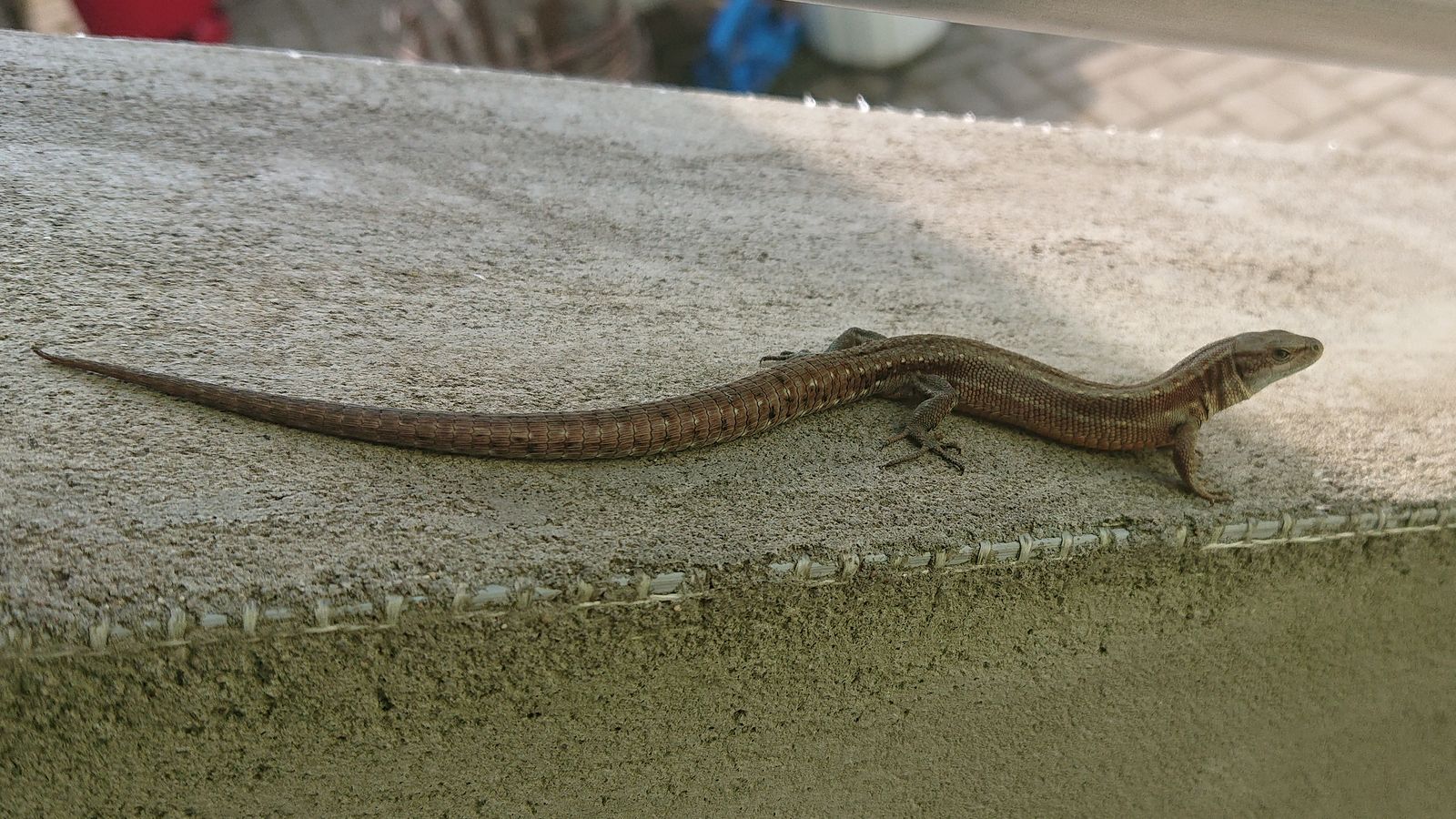
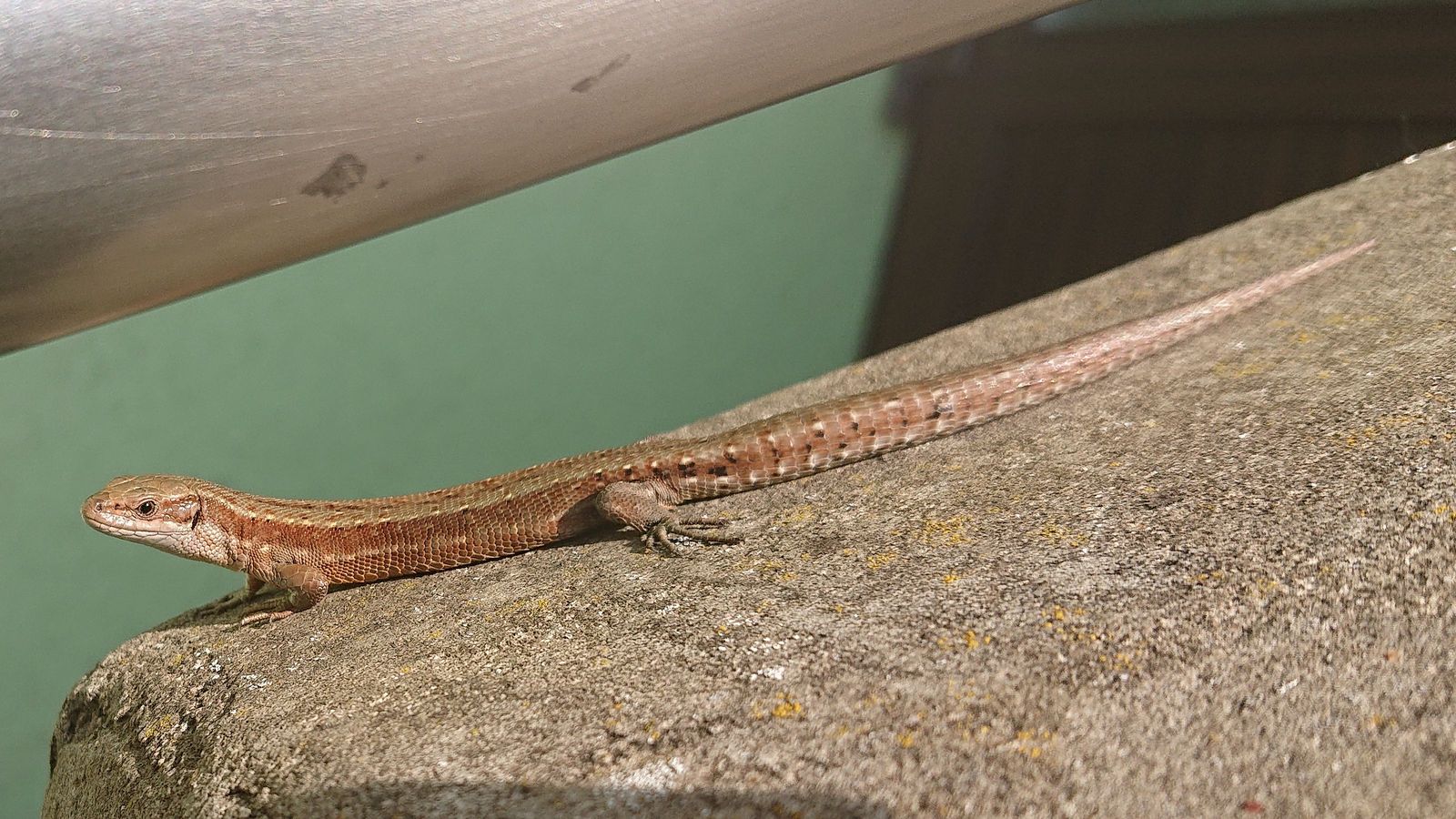
When I went on to water my greenhouses in the afternoon, this little fellow was on the wall just below the handrail.

© Charly, all rights reserved. Click for full size.

I suspect she was just as surprised as I was and she did stay still while I was trying to snap a few pictures with my phone without spooking her. After I came back from watering the tomatoes, she was still there, just a few cm further.

© Charly, all rights reserved. Click for full size.

She eyed me suspiciously and after I snapped a few more pictures in a better light, she finally got fed up with the strange giant who kept putting a big black rectangular thing near her and she jumped straight down (about 140 cm) and scuttled near the wall. She kept watching me warily from there and I did not snap more pictures because I did not want to stress her. When I went by again a few minutes later, she was away.

I have always liked lizards, I consider them to be beautiful. It lightens my mood to meet one in my garden, I like to know they are around.

Holidays with Hindrances 4: Muckross House, Farm and Abbey

Welcome back. I hope you’re having a nice weekend before we all go in for another round tomorrow.

While in Killarney we didn’t actually visit Killarney House, but went to Muckross House instead, since that was just 5km from our campsite, so we went there on foot, visiting Muckross Abbey on our way.

View over the lake

©Giliell, all rights reserved

A beautiful hike past the lake.

Ruin of an abbey in between green trees

©Giliell, all rights reserved

Muckross Abbey is a very pretty ruin, but the graveyard has been in use since at least the 2000s.

Tree growing in a small courtyard in the ruin of the abbey

©Giliell, all rights reserved

That one looked amazing. I’m sure there’s a message in the tree long surviving the religious building.

grey brown manor house. On the hedge in front there#s a plush opossum

©Giliell, all rights reserved

Welcome to Muckross House. Our plush of the day is Opossible, who enjoyed his trip a lot.

Richly furnished room with a golden harp

©Giliell, all rights reserved

“Ireland was a poor country” my ass…

Portrait of a strict looking lady

©Giliell, all rights reserved

According to legend, Lady Catherine died at 140 when she fell out of an apple tree. Life goals!

Plae pink cosmea flower

©Giliell, all rights reserved

The gardens were truly beautiful.

Muckross Farm is an open air museum depicting rural life in Ireland in the 1950s. Yes, you read that right. Apart from trades like the blacksmith they have three farmhouses showing a poor family farm, a middle class family farm and a well off family farm. Remember that nice room in the picture above? In the 1950s people in rural Ireland lived like they hadn’t lived on  the continent for at least 50 years. no running water, no electricity. Good old medieval “1 room for sleeping, 1 room for living and sleeping” conditions. But the animals were very cute.

Middle aged fat woman with a horse.

©Giliell, all rights reserved

This year I did something new: I shamelessly took selfies and asked people to take pics of me. Am I young and pretty? No. Am I alive? Yes. the person with the camera rarely ends up in pics themself, but I realised that if I died tomorrow, my family would probably forget what I look like in a week because there’s no pics. Here they are. That horse was amazing.

Holidays with Hindrances 2: Killarney, the Gap of Dunloe

The county Killarney, the town of the same name and its national park are probably one of the most prototypically Irish places. You got it all: The soft green hills, the mountains, the old abbeys, castles and churches, the lakes. It’s beautiful. It’s also one of the oldest tourist attractions in Ireland, going all back to Queen Victoria and the invention of “trips” as such. One thing to do is to explore the “Gap of Dunloe”, a pass between the Purple Mountain and the MacGillycuddy’s Reeks. There’s different options on how to do that, nd I#ll list them worst to best.

Worst: By car. The road is narrow, there’s tons of other people on it, it’s 15 km, so the whole thing will be over in 30 minutes max and most of what you saw is people being angry with you.

Second worst: By jaunting car. Yes, this is probably very traditional and tons of local folks earn their money that way, but having horses run on asphalt all day is just cruelty to animals. You can actually see a dent in the middle of the road, worn down by horseshoes and you can imagine what this will do to the poor animals’ feet. It’s probably amazing for the people in the car and I think few people know enough about horses to understand why it#s not ok.

Bad: motorcycle. Horses, pedestrians, sheep, narrow roads, curves where you don’t see shit. Do I have to elaborate?

Good: bike. Now, I wouldn’t recommend going by regular bike if you are not very fit and good at biking, though there was one guy who passed us uphill and still had the breath to wish us a good day. But nowadays you can rent ebikes everywhere and there were lots of groups with little physical fitness who managed. I’d say that if you don’t have a lot of stamina, that’s probably the best option.

Equally good: on foot. That’s what we did. I’ll admit that we didn’t walk the whole Gap. As you can see below, the traditional hike starts at Kate Kearney’s Cottage, leads through the Gap, down to Lord Brandon’s Cottage. You can book a boat back to Killarney from there, but that’s little use if your car is back at Kate Kearney’s Cottage. We made it to the top of the Gap and then some hundred metres downhill for a nice view before we returned. Now, Wikipedia claims that this walk was just 6km and can be done in about an hour, but the author is lying. We’re neither athletes nor comatose sloths and sure, we did take breaks, but getting up to the Gap is quite some hillclimbing. The way down to Lord Brandon’s cottage is shorter, but we decided that going down there meant having to go up again, so we turned back and enjoyed the walk instead of being completely done. The whole trip was 17 km and took a bit more than 4 hours, with the way back being much easier as it was mostly downhill.   So, enjoy the views!

Map of the national park and hiking trails

©Giliell, all rights reserved: You start at the red square, walk the white road down. We turned around shortly after the orange dot

More pics below the fold

[Read more…]