Jack’s Walk

Mammoth tusks? ©voyager, all rights reserved

Our polar exploration has finally found success. This morning the normally low-key Jack Brown returned to camp in a state of total excitement. His face and beard were full of frost and his cheeks were pale with cold, but he was highly animated and his words came out in a breathless flurry. “North, near, big” were all that we could make out at first, but as Jack began to warm-up in the relative comfort of our hut his tale took on more sense. North of camp and a mile or so past the temporary weather station that we’d cobbled together, Jack had sighted what appeared to be 2 large tusks almost completely free of ice and above the snow line. The news quickly generated much excitement and in a matter of minutes the ennui that has plagued this mission had lifted totally and a happy buzz of commotion took over. Maps suddenly found their way to our makeshift table and everyone began to ready themselves for the march out to Jack’s discovery. Scientific instruments of all sorts were located, checked and packed on our smallest sledge. There was a small area of deep sastrugi between our camp and the site and I thought that the small sledge would best traverse the accursed peaks and dips. The day was dull, but thankfully polar night is still ahead of us and Jack’s tracks made navigation to the site easy. Within an hour the team was ready to go and we set out into the day full of happy anticipation. It was a short march and within 3 hours we could see the tusks from the eastern cliffs. When the tusks were first sighted Ned Barkley let out a whoop of excitement and the entire team became re-energized. A few hours of difficult descent later and we were all standing gaping in awe at Jack’s find. The tusks are massive and confirm my hypothesis that woolly mammoths did indeed migrate this far north. The head of the beast is partially exposed and should not be difficult to excavate. I ordered that a temporary camp be erected and sent Jason Digger and Ned back to our permanent camp with orders to pack up as much equipment and food as possible and relocate it to this new site. The hut and a supply of food will be left behind for our return journey, but the ponies are to be used to drag the sledges as far as possible and are then to be slaughtered and butchered. The men will then don the harnesses and drag the sledges the rest of the way. The find is so exhilarating that the entire team seems barely aware of the deep exhaustion that will set in soon. I have already begun taking measurements and am quite excited to begin the process of documenting this find for the Royal Society.

(With a nod to Sir Ernest Shackleton, the greatest polar explorer of all time.)

Harakka in Autumn: Chapter 5

It’s time to take a walk again with Ice Swimmer who’s here with the next chapter in his series.

Chapter 5 – Sunday in the West of Harakka

Railing and Autumn Colours ©Ice Swimmer, all rights reserved

A look back north to the path that goes to the western cliffs. The Artists’ Building is in the right behind the earthworks. [Read more…]

Jack’s Walk

Even Buddha is confused by the weather ©voyager, all rights reserved

We had some very strange weather overnight. Let’s see…at 9 pm the temp was -2º C with light freezing rain and everything was covered in a heavy layer of ice. By midnight the temp had climbed to +11º C with heavy pouring rain and over the next few hours the heavy accumulation of ice just melted away. By 6 am almost all of the ice was gone, the rain had stopped and the temp had plummeted back down to -6º C with high winds and intermittent bouts of fine snow. If I hadn’t checked the forecast I would have woken this morning to temps colder than when I went to bed and I would have been completely baffled about the disappearance of so much ice.


Fossil Find

An interesting find from Avalus.

I found this little piece of (oil) shale next to roadway currently under maintenance/construction. It is the imprint of a fern and something else. The stone might have come from the near Saar-region, where coal was dug up from the ground. The ‘waste-rocks’ are used as road-gravel.

‘We are walking on history’ gets a deeper meaning here, I guess.

(I need to take a picture of the fossil fern next to a living fern in spring :) )

schieferfossil, ©Avalus, all rights reserved

Jack’s Walk

Japanese Maple, ©voyager, all rights reserved

It’s been raining here most of the day and with the temp hovering between -1º C and +1º C all that rain has been freezing and accumulating. Just stepping out of the house is dangerous. I slipped several times going down my front stairs and once I was at the bottom there was no-where I could go beyond a small patch of grass. Every surface is coated with about 1.5 cm of ice. Even poor low to the ground and 4-footed Jack fell twice going out to pee. The schools are closed, city buses have been canceled and I haven’t seen a single car drive past my house all day. The big, heavy trees are groaning and cracking under the weight and my birch tree has already lost a sizable limb. The forecast says it should all melt soon though, with temps expected to warm up overnight and reach a high of +12º C tomorrow. I hope they’re right.

Another Look from Mt. Lofty

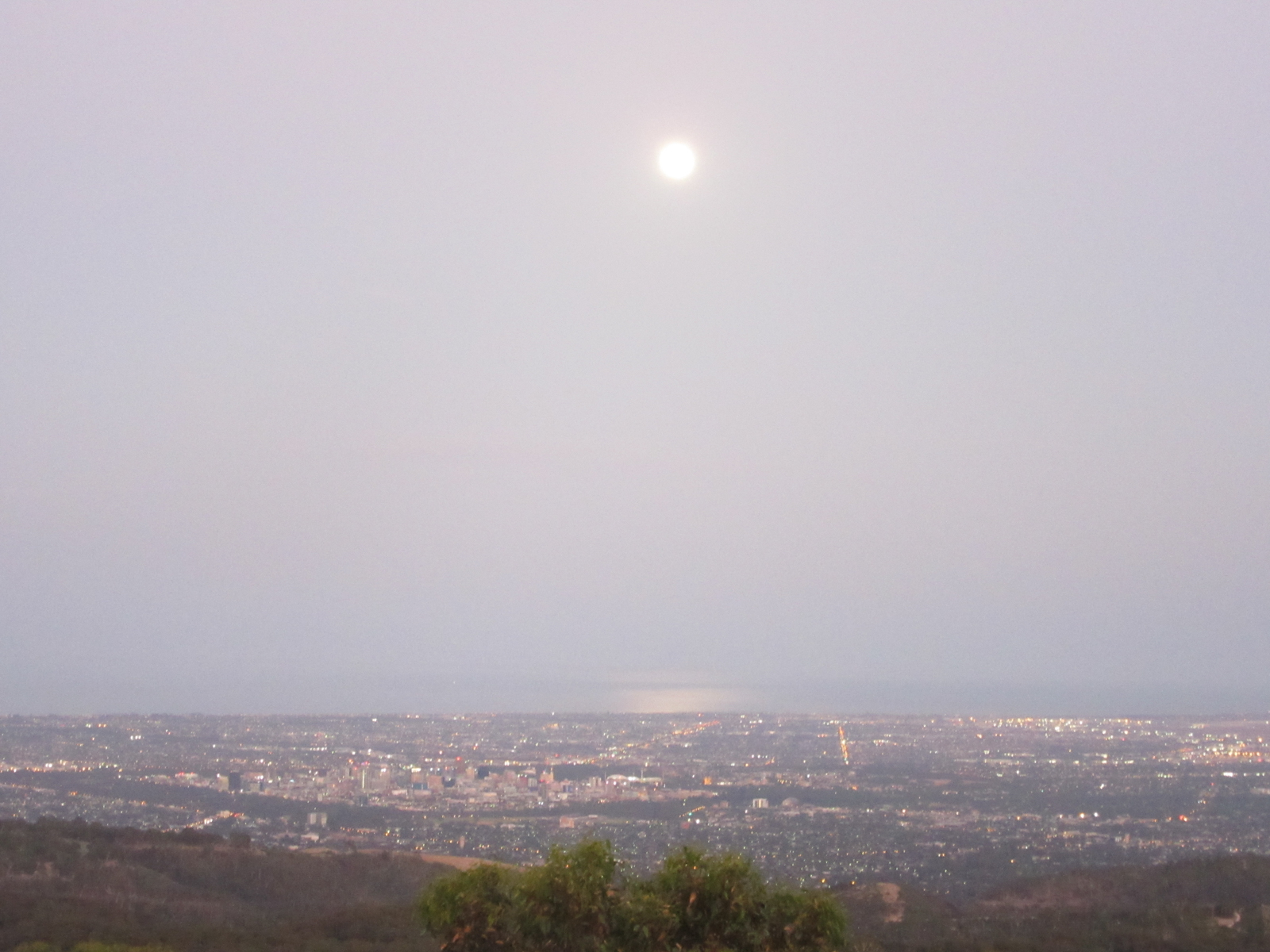
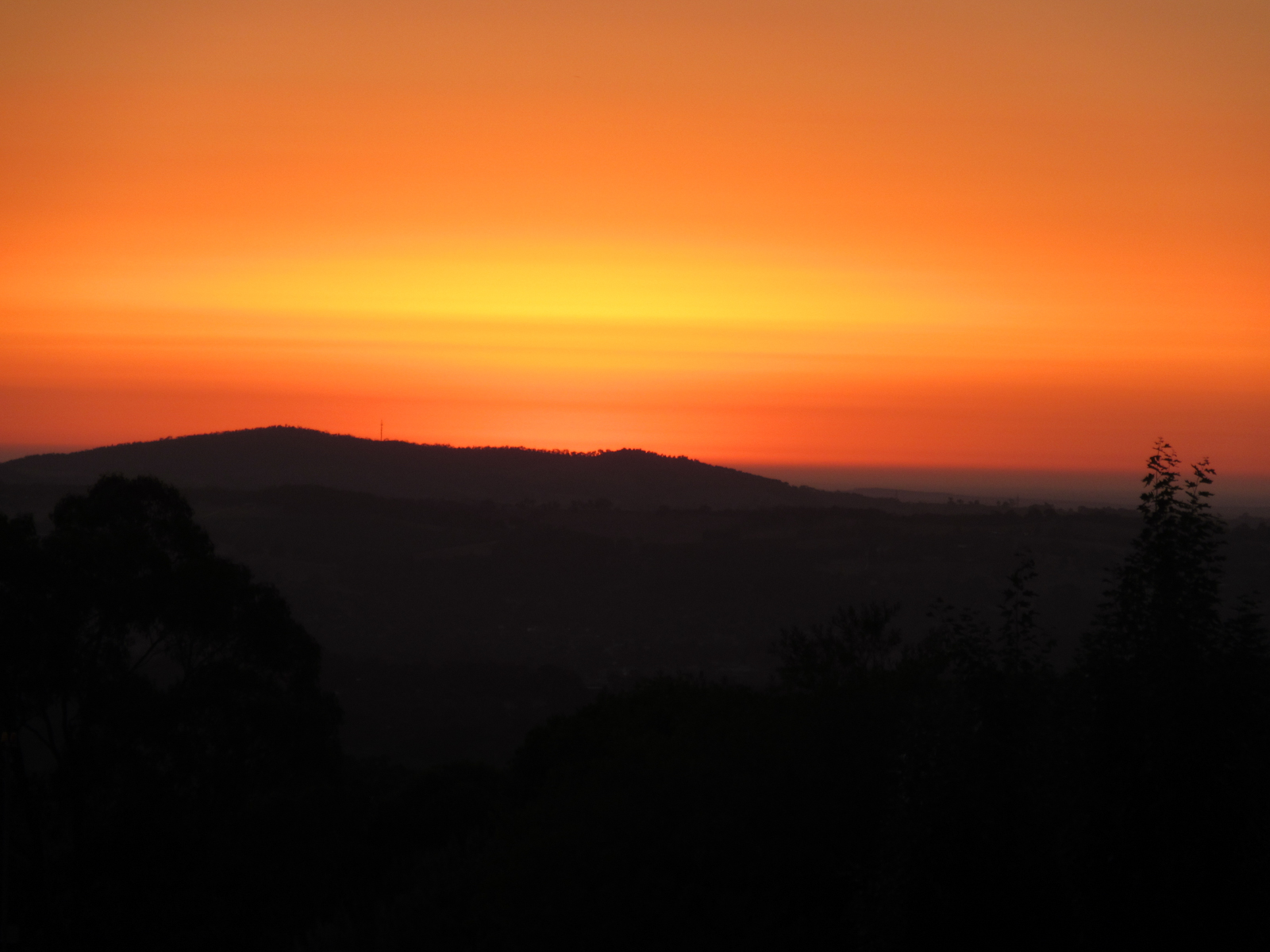
Lofty has sent us a few follow-up photos to his post  of January 21/19, Mt. Lofty.

Here are some pictures taken from Mt Lofty on the morning of the day after the super Bloody Full Moon Eclipse Thingy. The first shot is of moonset over the city, the second and third are of the sun about to rise over Mt Barker, the next little mountain to the ESE. They only vary in zoom and where the auto exposure is pointed. The building on the right of the picture is Mt Lofty House, nowadays an upmarket hotel. Notice how they are taking fire safety seriously, with a row of large water tanks set below the main entrance.

©Lofty, all rights reserved

©Lofty, all rights reserved

©Lofty, all rights reserved

Beautiful shots, Lofty. Thanks for sharing.

Jack’s Walk

Fishing at the Creek, ©voyager, all rights reserved

What do you do when the creek is full and flowing and there’s not a speck of ice in sight? You go fishing, of course. That’s what Jack is doing in this photo in case it’s not immediately obvious. He’s still hoping to repeat his lucky catch of a few years ago. Meanwhile, I stand onshore explaining to curious onlookers why my dog is standing up to his chest in cold water, not moving a muscle and staring at something that no-one else sees.

Tree Tuesday

Last week we looked at the oldest living clonal tree Old Tjikko in Sweden. This week we’re featuring the world’s oldest living individual tree, a 4,850 year old Bristlecone pine in California named Methuselah.

Named, obviously, after the Biblical figure that lived for 969 years, the Methuselah Tree grows in the Methuselah Grove, which is in Inyo National Forest’s “Forest of Ancients,” where it is surrounded by other ancient trees. The exact location of the tree, though, is kept secret to protect it against vandalism.

Methuselah has an estimated germination date of 2832 BCE, making it older than the pyramids of Egypt. The tree doesn’t exactly live under ideal conditions either. Bristlecone Pines live at high elevation with minimal soil and harsh winds, but they are perfectly suited for survival in this unwelcoming environment. Photos of the Methuselah Pine are not published and its location is kept a closely guarded secret due to concerns about possible damage by humans. The photo above is of a 3,500 year old specimen, just a youngster by comparison. There was an even older Bristlecone Pine named Prometheus that was accidentally destroyed by a grad student in 1964 while taking a core sample. That is a very big OOPS!

The story and more photos can be found at Atlas Obscura.