Lamb – What Makes Us Human. Lyrics below the fold.
Affinity
Art, Fun, & Nonsense.

Lamb – What Makes Us Human. Lyrics below the fold.

Pois De Senteur (Sweet Pea). J.J. Grandville, Les fleurs animées.
A fledgling Gray Catbird, who wanted his/her parents very much. The little one was very attracted to the shutter noise, which brought them closer to me. Click for full size.






© C. Ford.
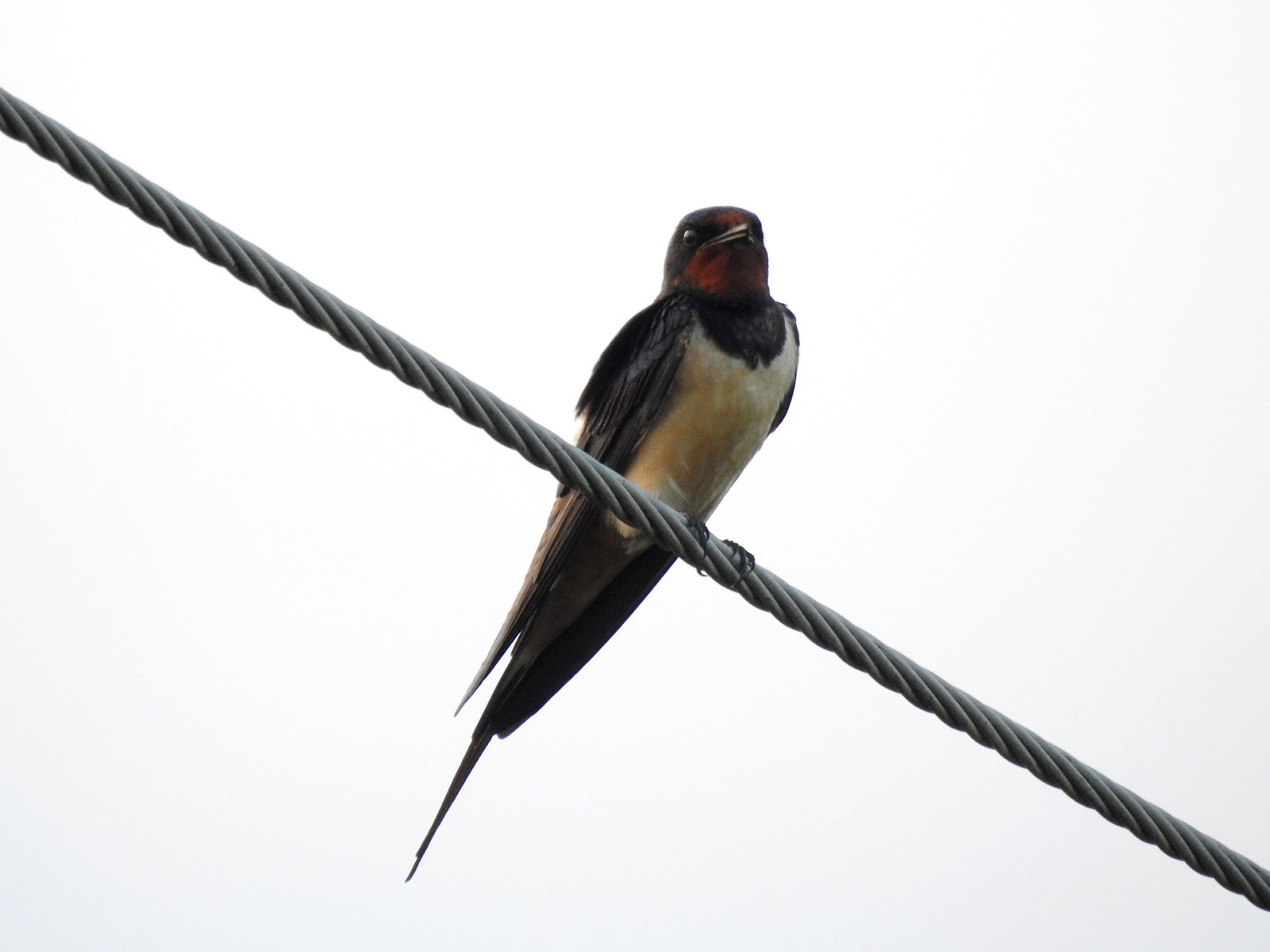
Swallows and Crows, from Charly, click for full size!



© Charly, all rights reserved.
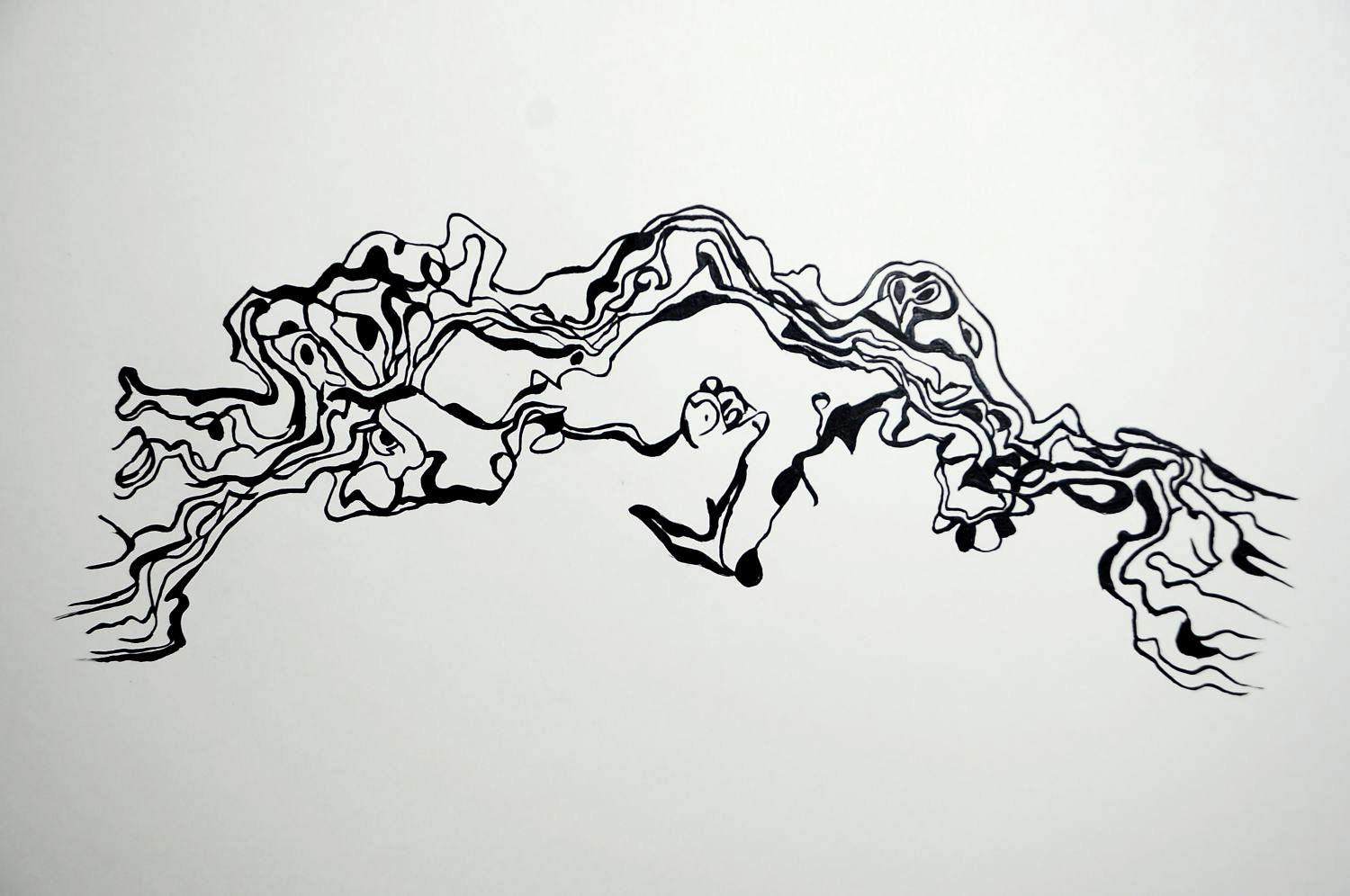
See? :D Brush and Ink.
© C. Ford, all rights reserved.
I always end up with something vaguely geographical and map like:

© C. Ford.
The magic of Albert Janzen’s lines elude me. That said, I still love doing lines, so I’m going to do more.

Self-styled “prophet” Mark Taylor is at it again, this time loaded with all kinds of war vernacular, made to appeal to asshole christians. This time, it’s the, um, tactic of stealth prayer, which is rather like the texting version of prayer. Shorthand prayer, mumbled here, there, and everywhere. Christians seem to be under the impressing this idiocy works, and stealth prayer is often combined with war terms, like bombing and bombers. Or one could say its often combined with the vocabulary of terrorism.
Taylor revealed that God had recently given him a prayer that allows him to “jam the enemy’s radar” so that the prayer campaign being waged by his team of spiritual warriors cannot be detected while they repent on behalf off all the states that voted for Hillary Clinton in the last election.
“We want to ambush the enemy,” he said. “We’re trying to do guerilla-style spiritual warfare.”
Y’know, there are actual wars going on, if you want to be a patriot warrior so badly, Mr. Taylor. Perhaps you should pitch your idea to the pentagon, and they could send you and your crack team of prayer bombers to a strategic place in an ongoing war zone. Best to be where the action is, right? You’d get cool costumes and everything!
Trump’s election was the result of a national prayer and repentance effort, Taylor said,
Oh the fuck it was. It was the result of meddling in the election by interested parties, you dipshit doucheweasel.
but now God has given him a “blueprint” to guide the effort to remove the demonic “territorial spirits” that control all the states that voted for Clinton.
I really have to wonder if idiots like Mr. Taylor think the blue/red business means that actual states voted, or that every single inhabitant of any given state voted exactly the same way.
“If you want to know the territories where you can go after the enemy, get the electoral map,” he said, explaining that the states that voted for Trump in 2016 had repented but those that went for Clinton had not and are therefore still being controlled by demonic spirits.
Uh huh. Going by that, I’m safe from you idiots because I live in a red state. That did not stop me from voting blue. Bluuuuue.
“This is not about Republican or Democrat,” Taylor claimed, “this is about globalism versus patriotism, it’s about stopping the New World Order, this is about stopping the Enemy’s timeline. That’s why the Enemy is so angry right now, because his timeline has been stopped. God is saying, ‘No, I’m denying the Enemy’s timeline and we’re going by my timeline.’ And right now, it’s time for us to push back the Enemy through this generational repentance on the land, on the people and you will see, as we push the Enemy back, the Gospel will go forth.”
Repentance on the land, eh? Here’s a thought, Mr. Taylor: how about you dumbfucks repent enough to get the hell out of Turtle Island, and give it back to its rightful people? I’m good with that one.
“The blue zones represent depressed areas, the red zones represent the blood of Jesus,” he concluded. “So what we want to do is take those depressed areas, so to speak, and turn them into the blood of Christ.”
:Snort: Boy, do you ever have that one wrong. It’s most of the red states which are seriously depressed economically, and in most other ways, too. Living in a lake of blood sounds messy. And sticky. I’ll pass.
Via RWW.

A depiction of a 15th-century bed. Public Domain.
Blankets, sheets. Most people have trouble sleeping without them. I have a love/hate thing for them outside of the winter months, when I can’t pile enough of them on.
[…] Blankets are common, but not universal, to humans during sleep, at least in the modern day. But historically, the effort involved in weaving large sheets put blankets at much too high a price point for most to afford. From the linen bedsheets of Egypt around 3500 B.C. to wool sheets during the Roman empire straight through to cotton in medieval Europe, bed coverings were for the wealthy.
By the Early Modern period in Europe, which followed the Middle Ages, production had increased enough so that more middle-class people could afford bedding, though not easily. “The bed, throughout Western Europe at this time, was the most expensive item in the house,” says Roger Ekirch, a historian at Virginia Tech who has written extensively about sleep. “It was the first major item that a newly married couple, if they had the wherewithal, would invest in.” The bed and bedding could make up about a third of the total value of an entire household’s possessions, which explains why bedsheets frequently showed up in wills.
In place of blankets and sheets, other sources of heat were common at night, usually from multiple people sharing a bed, or often livestock.
You can read all about this fascinating need shared by most people, and the reasons why, at Atlas Obscura.

Narcisse (Narcissus). J.J. Grandville, Les fleurs animées.
Árstíðir – Ljóð í sand. Lyrics and translation are here.
A not so charming Petroleum propaganda piece from 1956.
Produced at the height of the Cold War, and made at the behest of the American Petroleum Institute (still the biggest lobby for the U.S. oil and gas industry), this great little promotional film from John Sutherland Studios champions not only the wonders of oil as might be expected, but also free-market capitalism. The surprisingly humorous cartoon tells the story of how the suspiciously Stalin-like leader of Mars, named Ogg, sends a rather calamity-prone citizen to Earth to find a better power source for his poorly-running “state limousine”. The exploring Martian, of course, lands in the United States and soon discovers the many and myriad delights of petroleum, and that, in contrast to his home planet, competition between companies is rife. His take-home lesson (and one drilled into the viewer on numerous occasions) is that “competing for the customer’s dollar” is key to the success of the oil industry and, of course, the thriving country as a whole. Delivering the news to Ogg back on Mars, the leader replies defiantly that “competition is downright un-Martian”, but the ordinary Martians are not to be deterred and soon rise up to overthrow Ogg and set up a thriving oil industry (and capitalist culture) of their own — the short ending with the slogan “destination unlimited” writ proudly across the screen.
I have no doubt that if someone were to show this to the Tiny Tyrant, he’d be enthralled, and probably want to meet with Martians right away. Via The Public Domain, and the video can be downloaded at archive.org.

© Albert Janzen.

© Albert Janzen.
I know there will be at least one person who sees these, and thinks to themselves, “oh c’mon, anyone could do that!” The truth is not anyone can do that, and while it might look simple and easy to do, it isn’t. Go ahead, get some paper, grab a ballpoint pen or marker, and go for it.
I love all these pieces, and yes, I have tried this sort of thing before, I don’t have the knack. My attempts are a mess.
After studying Philosophy and Mathematics in Berlin, London and Amsterdam, he decided to follow his artistic path while he discovered his love for the line. In 2015 Albert won the Luxembourg Art Prize 2015 whilst finishing his Masters in Logic at the University of Amsterdam. Inspired by the autonomous work of Cy Twombly, Gerhard Richter and Zao Wou-Ki, Janzen’s line drawings represent themselves as an independent entity. The lines are very simple and basic, so various patterns can be constructed. The ultimate simplicity of the line manifests its independent aesthetics. Albert draws lines not to make simple drawings, but to draw lines that create art by themselves. The shapes and patterns occurring in Janzen’s drawings have no other purpose than to reveal the movements of lines.
You can see more of Albert Janzen’s work at iGNANT, or his website.
A beautiful Herring Gull from Raucous Indignation, click for full size!


© Raucous Indignation, all rights reserved.
