
Bram Stoker. The Mystery of the Sea. London, W. Heinemann, 1902.
via: The Internet Archive

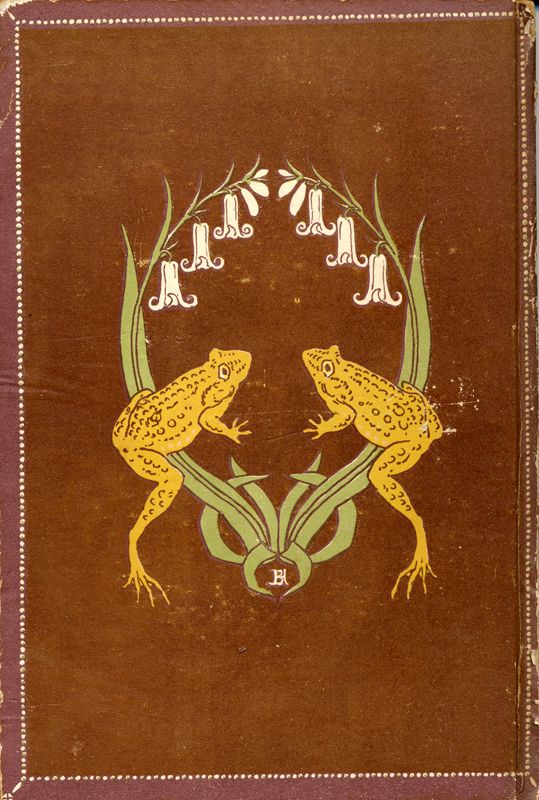
Flowerchild Fairytale of Good and Evil, by G. van der Hoeven. Cover design by J.B. Heukelom, 1901.
via: Indigo Dreams
Avalus has sent us some wonderful photos of a spider he found in his parent’s garden. Photos are under the fold and you can click for full size.
…Then there was this spider, patiently waiting for prey.

Henry Van Dyke. The Blue Flower. Illustrated by A. Heming. Binding designed by Margaret Neilson Armstrong. New York. Charles Scribner’s Sons, 1892.
The illustrator of this book, Arthur Henry Howard Heming, comes from a small town near me called Paris, Ontario.

Jonathan Swift. Voyages de Gulliver dans des contrées lointaines. Paris: Delarue, 1855 — Source.
A particularly charming French version of Gulliver’s Travels.
Our tree this week comes from Avalus and I think it’s pretty special.
I have no idea how the smaller trunk grew that way, but it looks to me like the two trees are dancing.

The Bender. ©Avalus, all rights reserved
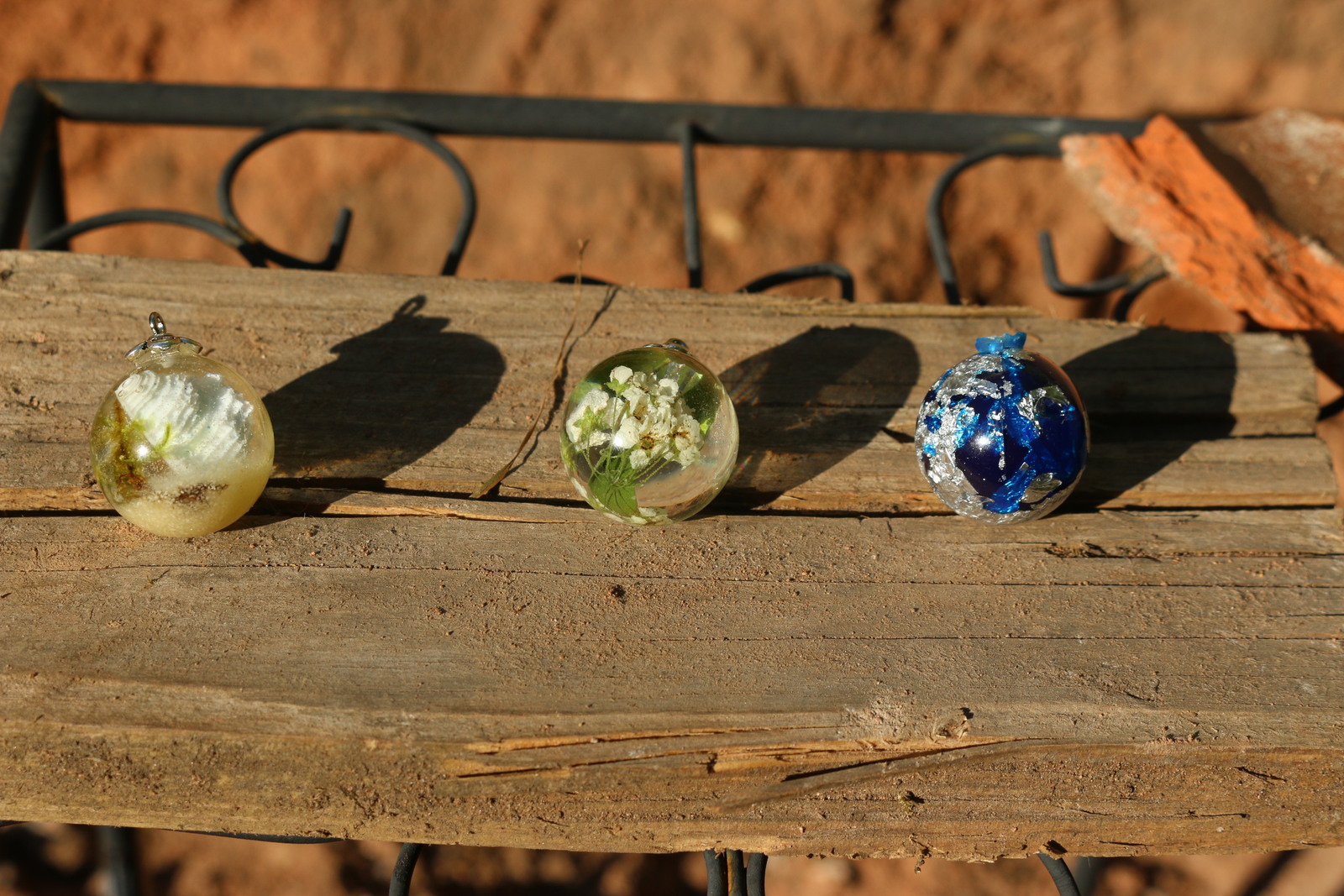
On of the things Marcus sent was a mould to make 4 resin balls, each about 1″ across. I think Marcus made them himself and I love them. They have enough space and a big opening to put things inside and give cool results. I’ve been having lots of fun here.
©Giliell, all rights reserved
Lots more beneath the fold

John Kendrick Bangs. A Houseboat on the Styx. U.S., Harper & Brothers, 1895.
Today’s book is extra-special because it belongs to our very own Anne, Cranky Cat Lady. It’s also my very first reader submission for this column and I thank Anne for that very much. She tells me this book belonged to her parents and I can see that it’s landed in a good next home with someone who recognizes that the value of a book is more than just as a repository for stories.
Often when I post a lovely, old book I wonder what it feels like in your hand. What are its textures, its weight and its point of balance? What of the thickness of its papers and the feel of its edging as you turn a page? I wonder how the binding sounds as you open the book and what is the faint fragrance of its paper and glue and incense of ink. Modern e-readers are fine, functional things and I use one myself sometimes, but a book, a real book, is a treat for the senses and not just the mind.
If you have a real book that you’d like to share, I’d like to see it. Just e-mail me at the link on the sidebar. Thanks again, Anne, for sharing your A Houseboat on the Styx.
Hello there. I know, I’ve been very absent recently. Work was pretty demanding, the Damokles’ Sword of not knowing whether my contract will be renewed hanging over my head* and life being busy as usual.
Last weekend we first had #1’s “culture workshop”, which is an evening when all the groups in her school can present their projects, including her class. It was an amazing evening and the kids are really damn talented, from the chubby boy with the glasses doing a kick ass rap presentation to the Syrian girls reciting poetry about their home town Aleppo.
The next day was the little one’s school festival, which usually means the very same people working a lot. It#s the same everywhere. My colleague was totally stressed out because she was organising things for her kid’s festival the same weekend. Or as Pratchett noted: if you want to get something done, give it to somebody who is already busy.
And the works in the garden have finally begun. There’s nothing like coming home with a migraine and having people use heavy machinery around the house.
As a result, we used this long weekend (holiday on Thursday, “bridge day” on Friday) to lick our wounds and recover and spend some very quiet time together, going for walks etc.
But I also got some resin art done over the weeks, especially after Marcus’ latest parcel.
Some of this will be up for sale/auction for the FtB legal defence fund, so if you set your eye on something, just let me know.
*I’m pretty positive that I won’t be unemployed come next term, but that’s not the same as knowing and I’ve noticed that it has been slowly wearing me down.
First of all, this is what the garden looks like now:

©Giliell, all rights reserved
In tearing down the old stuff they found tons of unreasonable concrete which they have to get our somehow.
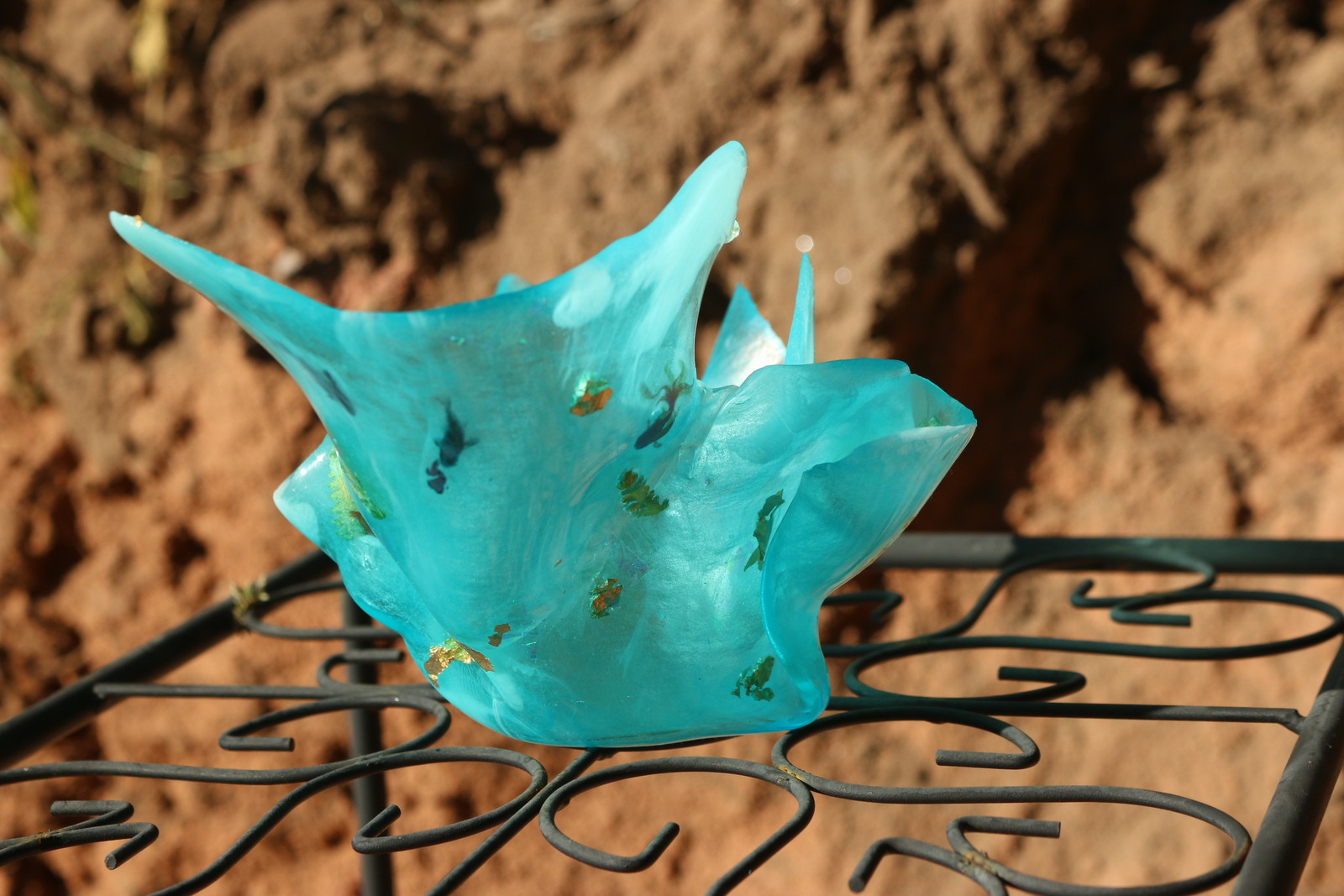
First project: tealight holder:
©Giliell, all rights reserved
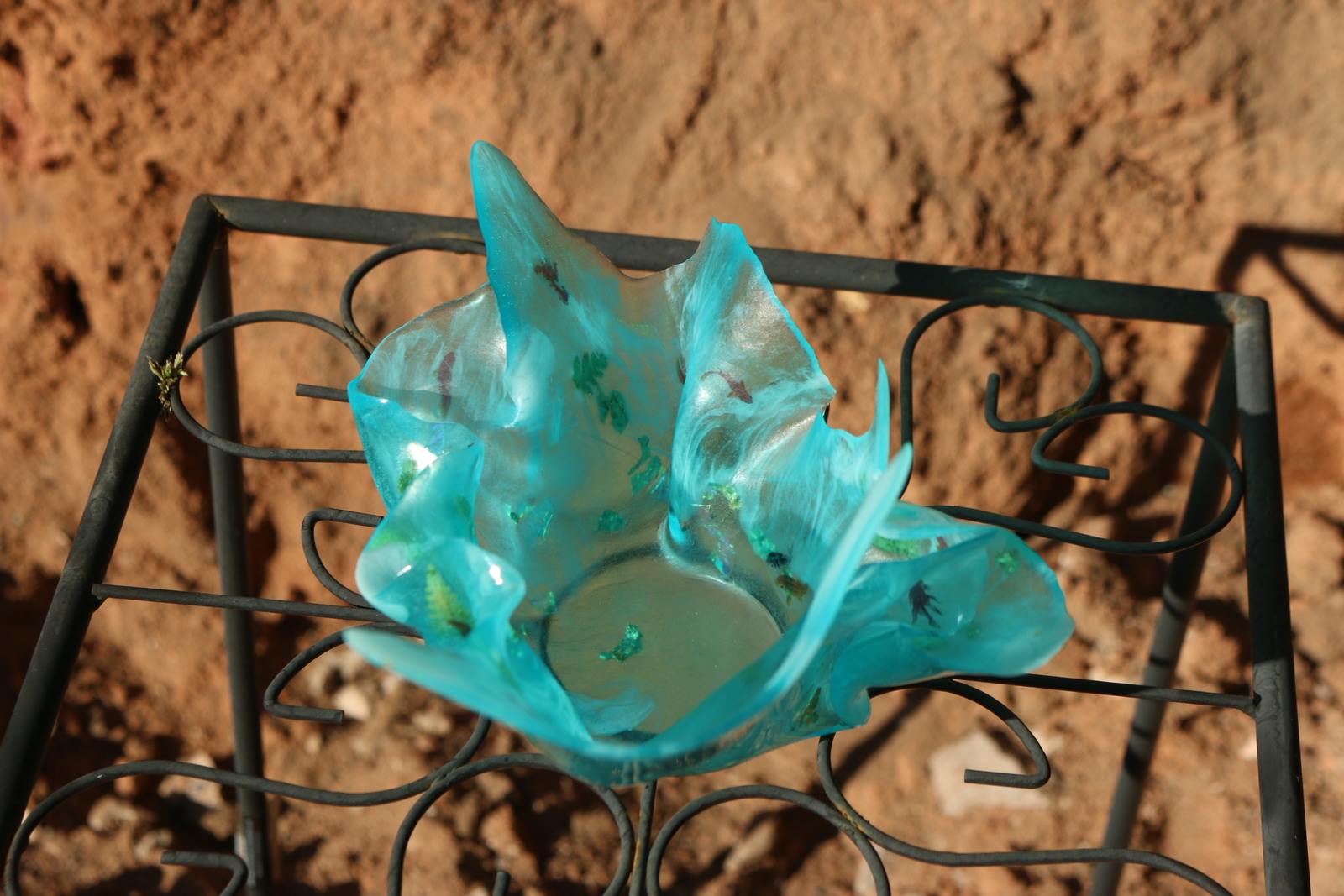
These look very complicated but are actually dead easy and I’d say the perfect project if you want to do something with resin but not invest a lot of money in moulds and stuff: Just pour your resin onto wax paper, let cure for about 12 hours, fold over a glass, fix with a rubber and cure completely.
©Giliell, all rights reserved

©Giliell, all rights reserved
The fish are printed again, though I bought the sheet this time.
Next projects are under the fold:

Mary & Elizabeth Kirby. Humming Birds. London ; New York : T. Nelson, 1874.
via: The Internet Archive

Bianco, Margery Williams; Illustrations by Nicholson, William, Sir. London, Heinemann, 1922.
This is the original cover from the first publication of the book in 1922. I’ve included a few interior plates to showcase the simple, tender artwork that brings the story to life.

Bianco, Margery Williams; Illustrations by Nicholson, William, Sir. London, Heinemann, 1922.

Bianco, Margery Williams; Illustrations by Nicholson, William, Sir. London, Heinemann, 1922.

Bianco, Margery Williams; Illustrations by Nicholson, William, Sir. London, Heinemann, 1922.
via: The Internet Archive

Aleister Crowly. The Book of Lies, which is also falsely called Breaks. The Wanderings or falsifications of The One Thought of Frater Perdurabo which Thought is itself Untrue. London, Wieland & Co. 1913
According to Wikipedia, Crowly was,
…an English occultist, ceremonial magician, poet, painter, novelist, and mountaineer. He founded the religion of Thelema, identifying himself as the prophet entrusted with guiding humanity into the Æon of Horus in the early 20th century. A prolific writer, he published widely over the course of his life.
In the Wiki article specifically about The Book of Lies, the author says,
“This book deals with many matters on all planes of the very highest importance. It is an official publication for Babes of the Abyss, but is recommended even to beginners as highly suggestive.”[1]
The book consists of 91 chapters,[2][3] each of which consists of one page of text. The chapters include a question mark, poems, rituals, instructions, and obscure allusions and cryptograms. The subject of each chapter is generally determined by its number and its corresponding Qabalistic meaning
Well, that clear up everything.
via: The Pulp Girls

Ignatius Donnelly. Ragnarok: The Age of Fire and Gravel. New York, D. Appleton and Company, 1883 — Source.
An interesting book about geological drift, or the movement of rocks and sediment across the earth.