May Light

It’s that wonderful time of month when Nightjar shares her photo essay about the conditions of light.

I confess that I haven’t been as inspired lately, and that’s in part because light is becoming too bright and harsh for my taste already. I find autumn’s golden light and winter’s low and cool light so much more interesting to work with. But May is the month of flowers and bugs, and you can never go wrong with a random assortment of flowers and bugs under May sunlight, right?

©Nightjar, all rights reserved

[Read more…]

The Art of Book Design: A Book about Bees

Jenyns, Charles Fitzgerald Gambier. A book about bees. Their history, habits, and instincts; together with the first principles of modern beekeeping for young readers.
London, W. Gardner, Darton, & co., 1886.

I thought this book was a nice complement to Nightjar’s Bee Orchids of earlier today.


via: The Internet Archive

Wild Orchids

We have something special from Nightjar today.

Remember this (https://freethoughtblogs.com/affinity/2019/01/16/surrounded-by-rocks-an-exploration-series-chapter-5/) when I said that visiting that limestone hill during Spring would be more interesting because of all the wild orchids? Well, this month I did just that and managed to find 4 species of wild orchids! The Bee and Yellow Bee orchids I found mostly on my way up, while the Pyramidal and Mirror orchids were everywhere at the roadside verges around the hill. I was thrilled to find so many Mirror orchids this year, they are among my favourite wild flowers just because of how glossy and shiny they are. Mirror orchids are pollinated exclusively by a single species of solitary wasp and I love how far their mimicry goes, eyes and everything!

Bee Orchid – Ophrys apifera 1 ©Nightjar, all rights reserved
[Read more…]

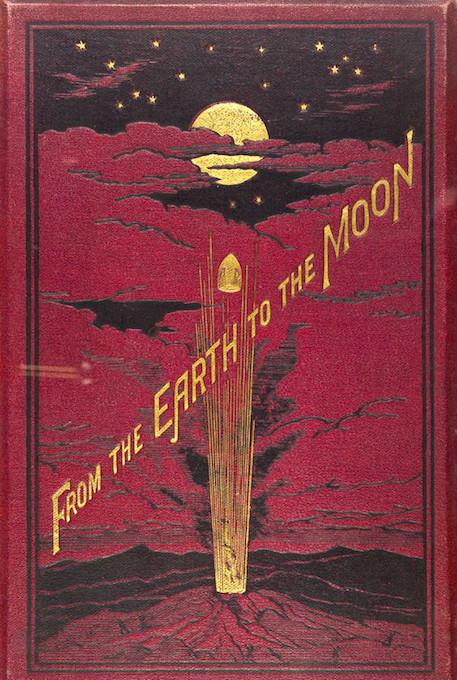
The Art of Book Design: From the Earth to the Moon

Jules Verne. From the Earth to the Moon. London, Sampson Low, Marston, Low, and Searle, 1873 — Source.

Our book today comes from the fertile imagination of Jules Verne and the cover is eerily reminiscent of the modern rocket technology that actually did take man to the moon nearly 100 years after this book was written.


via: The Public Domain Review

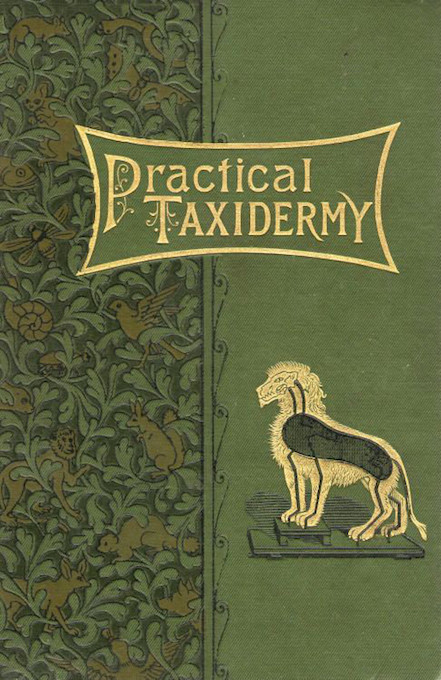
The Art of Book Design: Practical Taxidermy

Montague Browne. Practical Taxidermy. London: “The Bazaar” Office, 1878 — Source.

I have mixed feelings about taxidermy. On the one hand, it’s an interesting art form. It involves a lot of sculpture and the artist needs a good understanding of anatomy and the nature of the animal when it was animate. Taxidermists strive to make the animal look as natural as possible, even if they place it in an unnatural pose or place. It’s very multi-media and there are all sorts of little tricks they use to put things together and make them stay put. Fascinating, eh?

On the other hand, I think that displaying “trophy animals” on the wall or floor is disgusting. I once had a client who was a big game hunter. He had a tiger skin rug and a polar bear skin ‘throw’ on his sofa and hanging on his walls were the skulls of several big game animals. I know there was a moose and a big horn sheep, but I can’t remember what the others were. It was so sad and totally creepy and very unnerving and I had the devil of a time doing the assessment. On my way to the next home visit I had to pull over and catch my breath because I felt like throwing up. He was a pleasant enough man, but when I got back to the office I traded his case with a colleague who didn’t mind the taxidermy.


via: The Public Domain Review

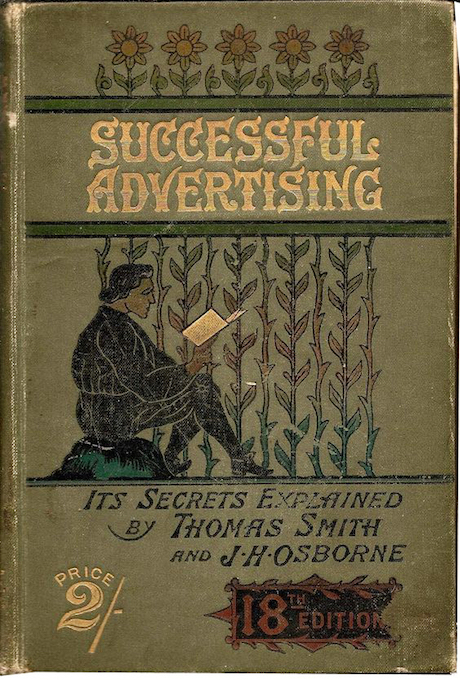
The Art of Book Design: Successful Advertising

Thomas Smith and J.H. Osborne. Successful Advertising: It’s Secrets Explained. London: Smith’s Printing, Publishing and Advertising Agency, 1897 — Source.

As far back as the late 1800’s, businesses were looking for creative ways to get people to part with their money. I wonder what Smith & Osborne would think about the pervasive nature of ads in our modern world?


via: The Public Domain Review

A Marcus Solution for Ronja and Other Hairy Beasts


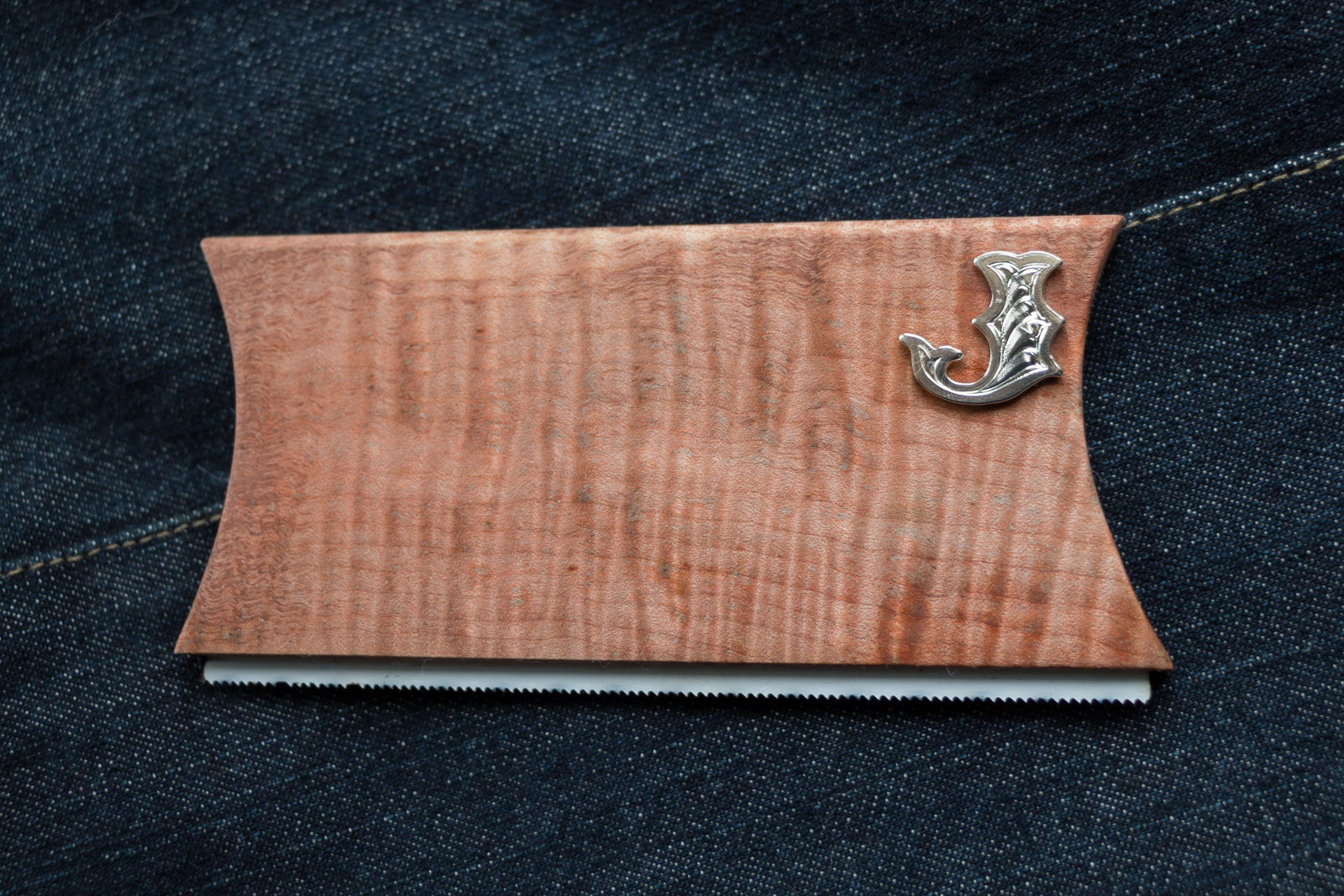
The Marcus Tactical Dog Brush

A few weeks back, Jack and I received a very special gift from Marcus. It’s a dog brush, but not just any dog brush. This little gizmo is the most practical dog grooming tool that we’ve ever used and it has a few little secrets that I hope Marcus won’t mind my sharing. I suppose the best part is the actual grooming surface which is very simply a hacksaw blade. It’s amazing. It pulls out hairs that are still only thinking about coming out and it never clogs. The hair just flies out in a big cloud and I don’t have to stop and de-clog the thing which means that I can keep going as long as my arm holds out and Jack doesn’t have a chance to get restless and wander away. It works so well that it’s an outdoor tool only at our house. I used it inside the first time we tried it and it took days to vacuum up all the hair it set loose. The hacksaw blade also makes the tool useful for lots of other situations such as an unexpected need to escape or sever an artery (hopefully not your own) and I think it’s accurate to call it a “tactical dog brush.”

It’s also a damned good scratcher for an itchy dog. Jack has seasonal allergies and some days his tablets don’t control the itch as well as others. If I see Jack scratching a lot we grab the Marcus tool and out we go for a few passes that send Jack into fits of pleasure. He leans into it, dances from one back foot to the other and gets this sweet, goofy grin that makes me happy, too.

The other good bits of the tool might be harder to replicate. Marcus has taken a beautiful piece of maple shaped it and cut a slot with his bandsaw for the blade. Then he carved a perfect hand-hold groove on the backside. The wood was then smoothed to perfection by the artist and resin impregnated for durability. It’s a joy to hold and sometimes I find myself just stroking the thing because I’m tactile and I like the way it feels. It was then fitted with a perfect silver ‘J’ and sent to Jack.

I’m pretty sure there are easier ways to make a hacksaw into a dog grooming tool, but there are certainly no better ways to do it. Thanks again, Marcus.