Avalus has sent this absolutely gorgeous picture of a fly thawing of frost in the early morning sun.
Now try to find the fly in this picture (solution below the fold).
Avalus has sent this absolutely gorgeous picture of a fly thawing of frost in the early morning sun.
Now try to find the fly in this picture (solution below the fold).
I do not remember ever seeing a thistle flower with frost on it. Hereabouts they are generally all ripe and fluffy when the frost comes.
With or without frost, thistles are surely beautiful.
Just like avalus, I have no clue whatsoever what flower this is. And I also agree that it is beautiful, both with the ice crystals as well when covered with tiny water droplets after they melt.
Avalus went on a walk one frosty morning and he was kind enough to take his camera and make some beautiful pictures. So let’s begin with some moody shots of colorful fall landscapes.
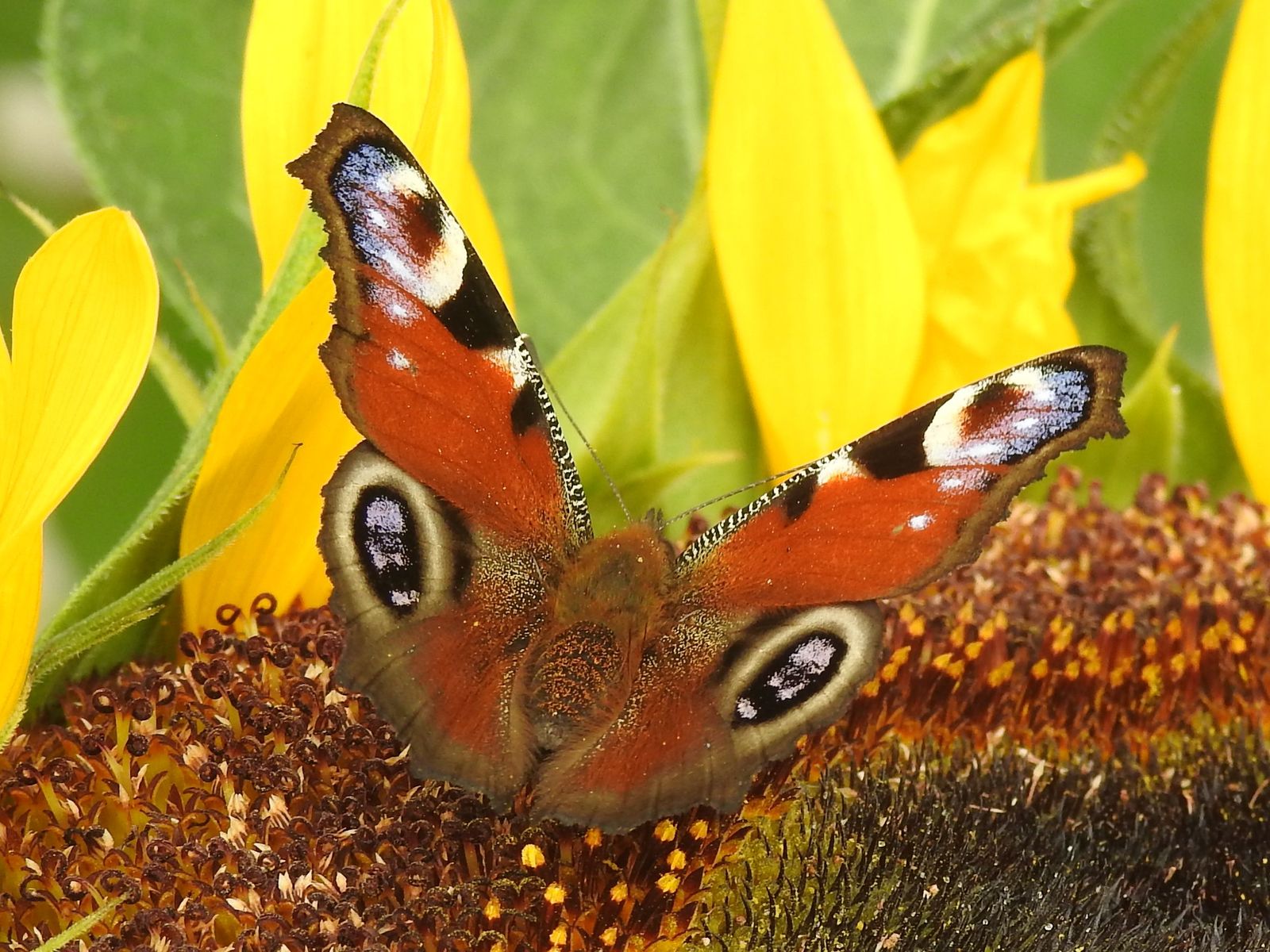
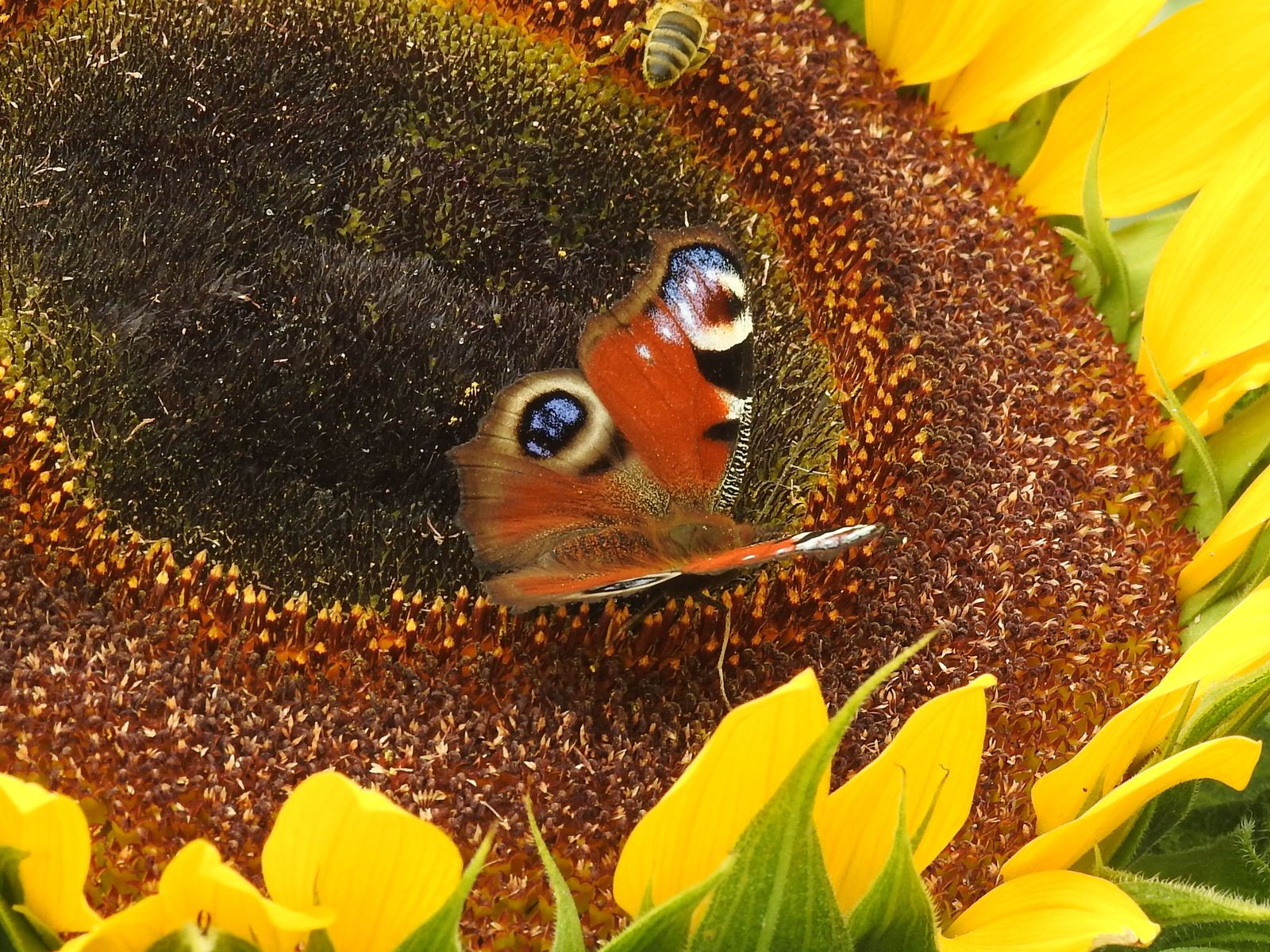
This is the last post of this series this year. I was saving up something special – Aglais io, the peacock butterfly. These butterflies are so ridiculously beautiful that some of the pictures look fake.
Guest post by Ice Swimmer.
These pictures are from the wetland in Harakka. The summer has been dry and the wetland wasn’t as wet as I had seen it before. Still, it looked quite lush.
These three pictures (two behind the fold) feature, apart from gudgeons, a small turbot. See if you can spot the turbot in the first picture.
Two weeks ago Mr and I went to our local woods for the first time this year. Living next to swamp and marshland has its advantages, but it also meant that for most of this year the paths were unwalkable, unless you wanted to recreate that child-traumatising scene from the Neverending Story where Ayax drowns in the moor. It was nice, apart from the fact that the mosquitos must have been starved before they got us.
We found lots of common earthballs (though I really like the name “pigskin poison puffball”, which would make an amazing name for a band), which are nice to look at, but not good for eating if you value your survival.
And I met a frog. I don’t think that they are poisonous.
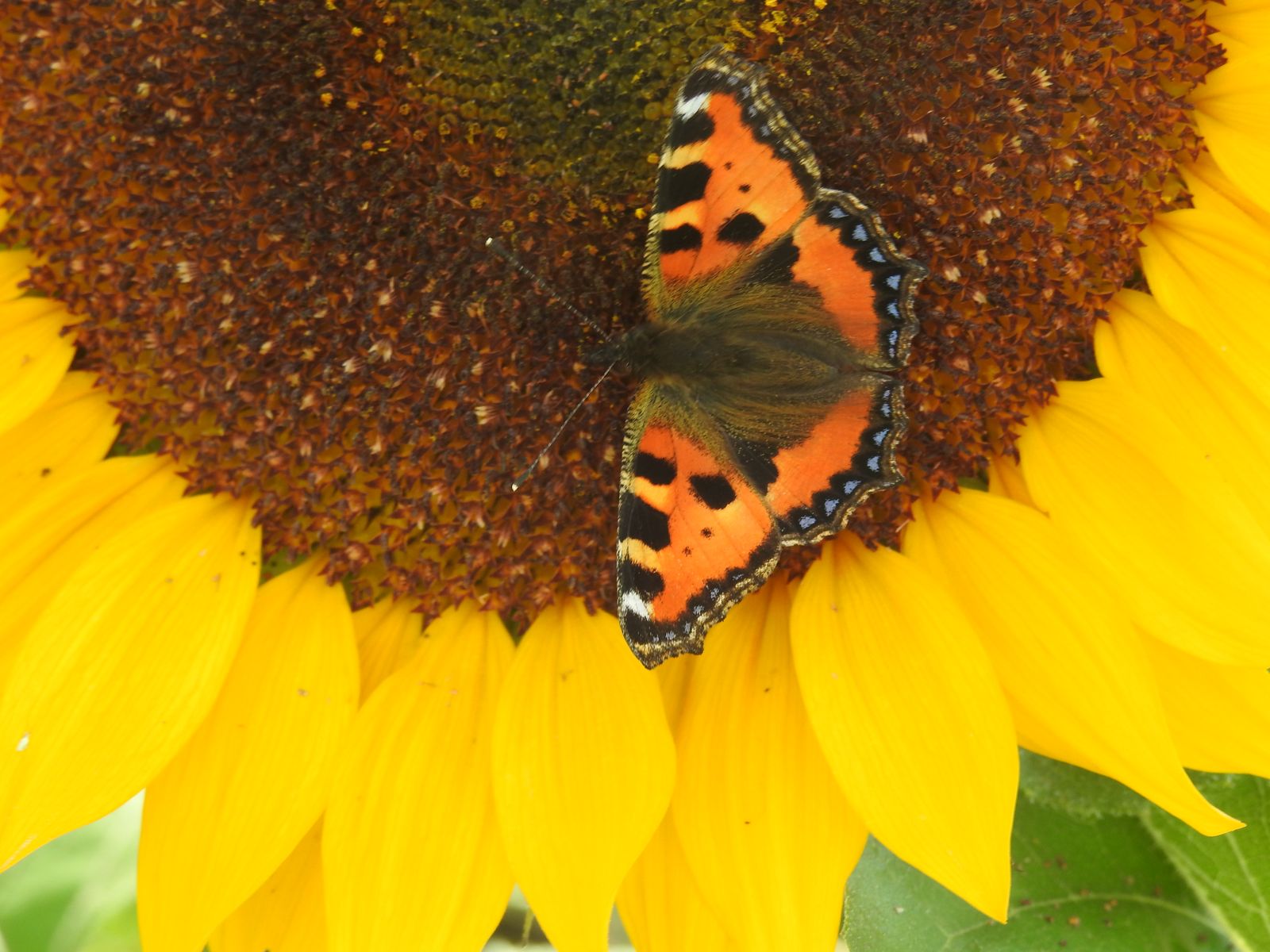
This series is nearing slowly its end. Had I had time and strength to post more often, it would probably be already over – the sunflowers are now mostly dead, at least most of the main blossoms are. All that remains are some smaller secondary blossoms that might or might not go to seed, depending on how soon/late the frost comes.
Anyhoo, today two pictures of butterflies who both buggered off before I could take a second picture closer-up, and neither of them obliged to open their wings so I get a good view, let alone a shot off, their upper side.
I do at least know that this one is a member of the family Satyridae, very probably meadow brown Maniola jurtina, which is a very common species around here. I ain’t no butterflyist, but I do think I got the species correctly.
This little bugger is also common here, common brimstone Gonepteryx rhamni. It is one of the first butterflies that show up after winter, sometimes even when there is still snow to be found on the north side of buildings and in the forests.
Although when I say these two species are common, it only means that they are still here in numbers big enough to see them. They are rare compared to what used to be here when I was a kid.
Autumn is sneaking in, which means that it will soon be time to say goodbye to the lush colours of the garden. But before we leave for winter, things are still growing.
There are finally some butternut squash. they’re pretty late, but this is the second one we ate and there’s a couple more. My corn (not pictured) was a mixed success. While the regular sweetcorn was ok (but I only had four stalks), the black popcorn maize put out cobs way too late and didn’t grow tall either. I doubt that it will still ripen and I’m a bit at loss as to why that happened. Can’t be the soil or anything I did, since both varieties were planted next to each other…
I will have way more chilis than anybody can wish for…
Somebody must have told this one a dirty joke, it’s turning red.
And last but not least: asters. They’re about the last food the bees get in autumn and aren’t they just amazing?
Guest posts by Ice Swimmer
There is a brackish water fish exhibit on the island Harakka. The fishes, caught from the Gulf of Finland, spend their summer in aquariums and they are released back to the sea in the Autumn. In the Baltic Sea, both freshwater tolerant of some salinity and marine tolerant of low salinity species live next to each other.
The fish pictured here are less typical or well-known in Finnish waters.
In the first picture, a tench can be seen. In Fínnish, it’s called suutari, which means cobbler or shoemaker (but the name may have nothing to do with making shoes, the fish is called sutare in Swedish and shoemaker is skomakare in Swedish). The tenches were rather inactive in the aquarium. The tench is freshwater fish.
There are some pipefishes in the Baltic Sea. The pipefishes are relatives of sea horses. This broadnosed pipefish is one of them. The broadnosed pipefish is called särmäneula (edge needle, neula = needle) in Finnish. The “edges” are lengthwise bony plates under the skin, which make fish look “edgy” according to Finnish Wikipedia. Broadnosed pipefish is a marine species that’s tolerant of brackish water.
In the third picture, we see a round goby. It is an invasive species from the Black Sea Area.
In the second aquarium post, we shall be playing a game inspired by “Spot the lizard!”.