Bonsai Tree – Persimmon Still Mysterious

Previous post.

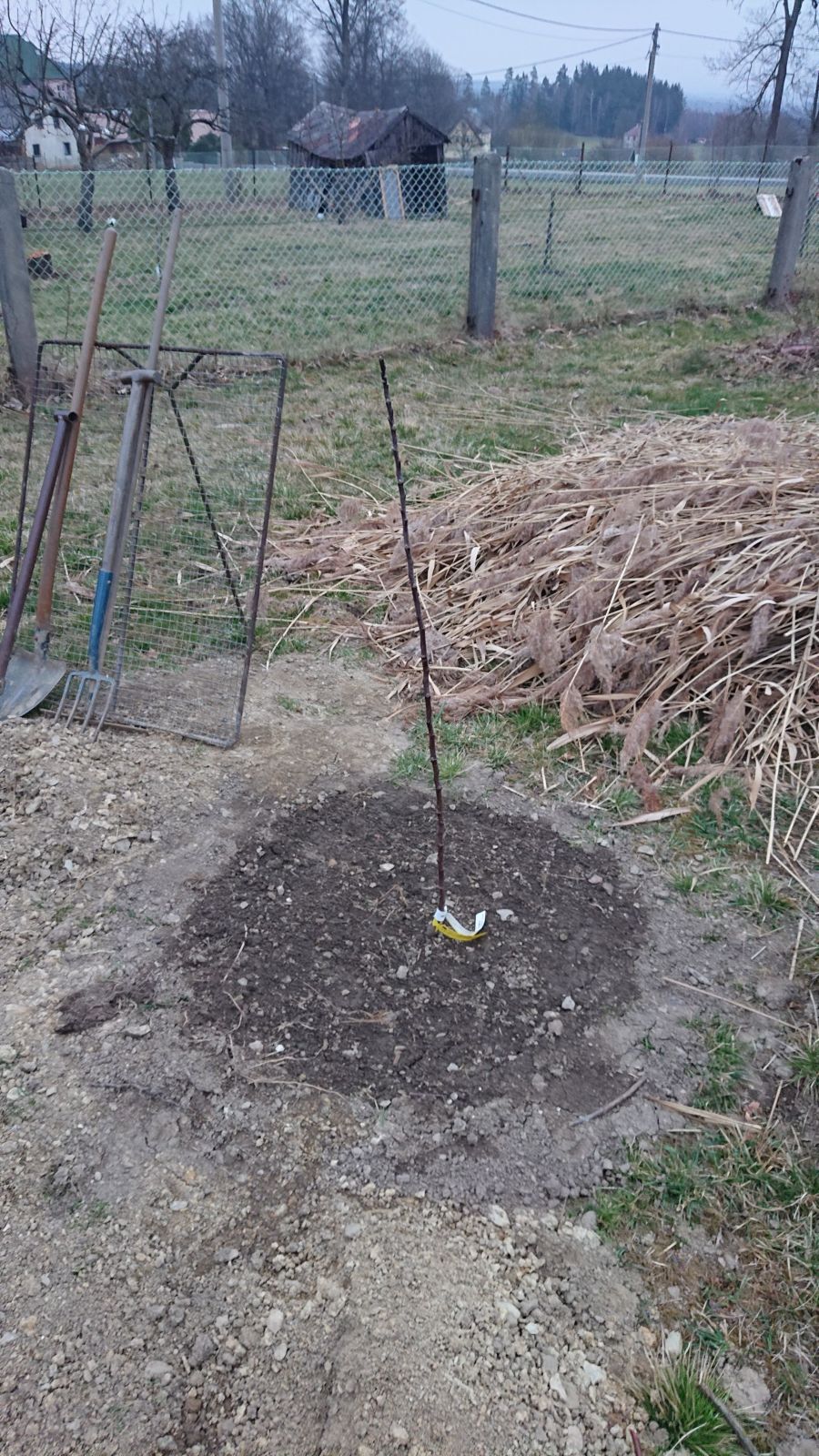
This year the tree took its time to start growing – it only started a few days ago, at the beginning of May. I was already worrying again since this is the only specimen that I have and if it dies, it is unlikely I would ever be able to replace it – it took about ten years to find one seed, dammit. But it started to grow, finally. and it looks promising.

© Charly, all rights reserved. Click for full size.

Last year it grew three branches on the main stem in the end. I cut them all down this year and they all are sprouting 2-3 buds so it is branching out, which is good.

We shall see what form the tree chooses. Preliminarily it appears to be suitable for formal broom style. I am reluctant to use wire on this wood at all, it grows relatively fast in thickness and length so there is a great risk of ingrowth, plus it is a very hard and strong wood so it would probably be prone to breaking when stressed incorrectly. And broom style often does not require the use of wire, just judicious pruning. And spreading the soft twigs apart early in the spring, which can be done by simply inserting a piece of cardboard between them as a temporary spacer. Which I did last year and I probably will have to do this year again since the tree still has a very strong tendency to grow straight upwards. That is normal for seedlings and it should slow down as it matures.

I have also worked on my other bonsai, repotting them. When they are picture-worthy again, I hope to write a few more articles about species suitable for beginners. Right now, I am very tired. A bit more than usual because in addition to re-planting the trees, I have also built a shade over them. It was necessary because my trees suffered greatly these last few years when it rained very sparsely and the summer heat was abnormally intense. I had to, on occasion, put some trees manually into the shade near the house, so I have decided this year to bring shade to all of them right from the start. I hope it will also mean I will need less water for the trees during the summer.

© Charly, all rights reserved. Click for full size.

I have re-purposed welded U-poles for a clothesline that we used to have in our garden before we got an electric clothes dryer. I put the poles over the bonsai bench and instead of clotheslines, I spanned between them thick 4 mm wires. And instead of hanging up clothes, I spanned a shading net between those wires, using our old clothespins. Should the clothespins not hold up to windy weather, I will sew the net to the wires with a rope. Although I do hope the clothespins will suffice because I will need to take the nets off again before winter.

Bonsai for Beginners – Part 9 – Larch

Previous post.

I hope to have the spoons to write at least a few posts about bonsai trees again and today I will write a bit about one genus that I consider very suitable for beginners – larches. Among coniferous trees, larches have several huge advantages.

  1. They are deciduous and create brachyblasts with terminal buds that can almost always grow into twigs/branches for several years, thus they are one of the very few conifers that can be scaled back significantly and kept at a small size for decades with minimal effort.
  2. The roots tend to grow very fast in length but they also respond very well to cutting back, branching out from the cut, and above it.
  3. The seeds germinate reasonably reliably and can be collected from grown trees. Seedlings sprout everywhere around a grown tree, being a de-facto weed in nearby gardens.
  4. Larches are very sturdy and can survive adverse conditions like frost or short drought reasonably well. They can also survive slightly rougher handling than other trees and have a reasonably large time window when they can be re-potted safely.
  5. They create very dramatic and dynamic shapes even without the use of a wire. Two of my three larch trees were never wired.
  6. They need porous and airy substrate but if put into a well-drained pot they will tolerate almost anything except maybe wet heavy clay.

You have already seen one of my larch trees in the past. And today I have made pictures of the rest and I will write something about how to care for them.

First, the tree that was in the previous post, how it looks this year before re-poting.

© Charly, all rights reserved. Click for full size.

As you can see, it has grown slightly bigger, but not that much considering it’s been six years. And it is flowering again, showing that it is indeed a mature tree and not just a few years old seedling. But it had to be put in a slightly bigger pot because there is a limit to how much back the crown can be cut – new twigs can only sprout from brachyblasts, they cannot be cut back beyond them, and the roots must be of adequate size for the crown to prosper. So with a larch tree, either start with an oversized pot or expect to increase pot size every few years ever so slightly. The base of the trunk has visible roots and is covered with moss and lichen – as it should be.
The next tree demonstrates the sturdiness of larches.

© Charly, all rights reserved. Click for full size.

Initially, it was very similar to the first tree (and they both are from seeds planted in the same year). But two years ago, most of this tree’s crown has not survived dry summer followed by a tough winter. But it bounced back remarkably from a lower branch and as you can see, it has acquired quite a character in just two years. To help the tree to recover its strengths, I have put it into a slightly larger and deeper pot and I will continue to do so for another year/two depending on how it fares. But it looks quite well and the dead wood is now part of the composition. And the tree has now a genuine story behind it – it was not my deliberate destruction that created it but nature itself. Such dead wood is oftentimes part of a composition of a bonsai tree and it needs to be preserved. I am soaking it once/twice a year with an antifungal polysulfidic sulfur solution. It will slowly preserve and also somewhat bleach the wood. If I decide I do not like the dead branch, it can be cut and it will heal in a year or two.
And the best for last.

First, a picture from 2003, shortly (several years) after I acquired the tree.

© Charly, all rights reserved. Click for full size.

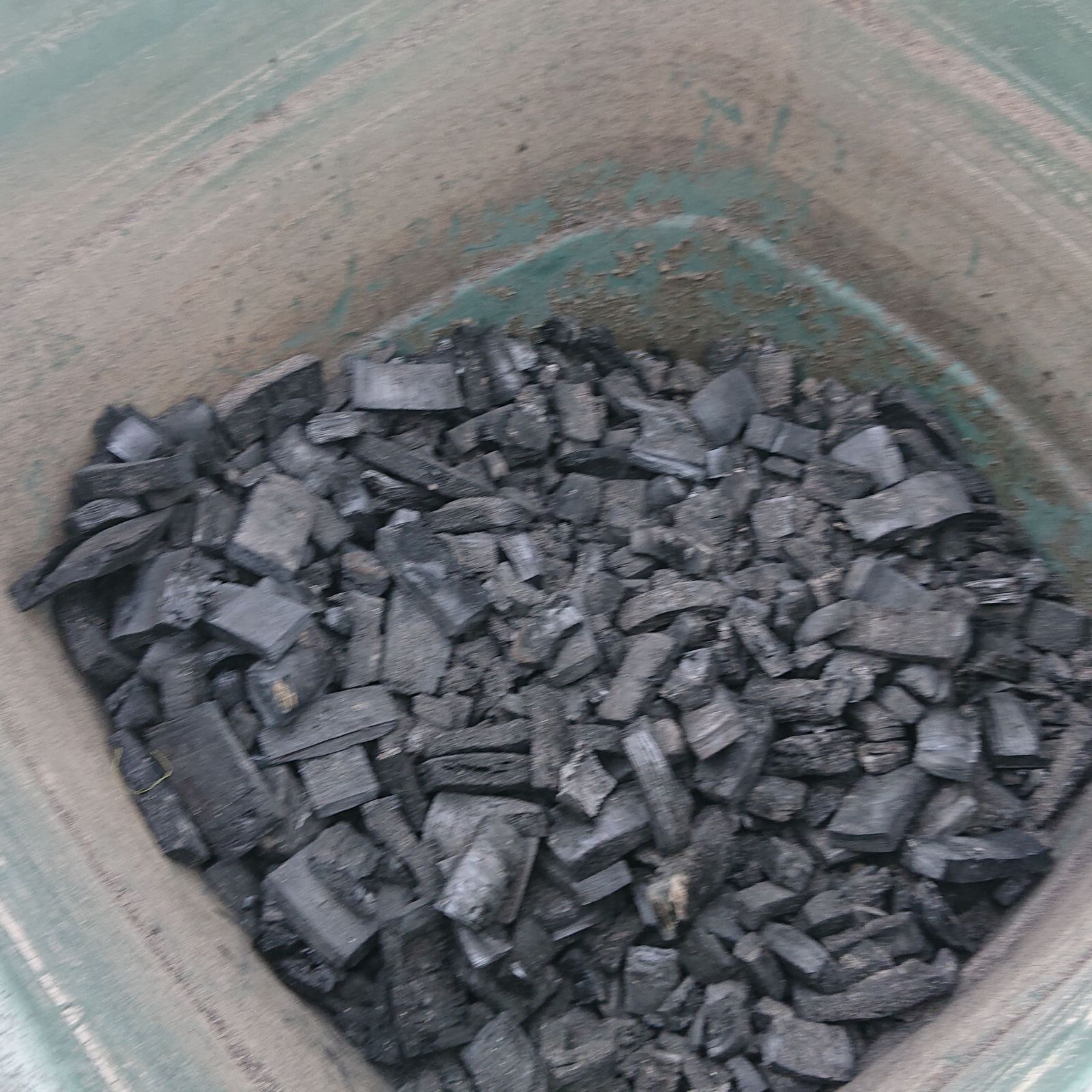
Originally, the tree grew near railroad tracks, on a rocky slope, in an orientation that was turned about 90° CCW to how it is in this picture. It was cut down at least four times – you can see where the trunk suddenly ends (cut 1), then there is one dead branch (cut 2), a living branch that suddenly ends (cut 3), and a thinner branch that overgrew all the rest from under until it too was cut. It was clear to me that the tree will ultimately be destroyed so I poached it from its location with a clear conscience and re-planted it in my garden. Because it grew in a rocky location, I could not get a nice rootball with it, just two long thin roots and a stump of the main root that I had to cut. That was the beginning of several years-long journey of restoring the tree’s roots. Each year I have cut back the roots a bit so they branch out, treating the cuts with crushed charcoal, and as it developed thinner roots nearer and nearer the trunk, I have slowly shortened the stump of the main root until it was completely gone. After about five years or so the tree could be planted in a pot, originally as you see it above.

The tree also had an unseemly hollow in the trunk where the original first tip was cut and that had to be filled. I treated the hollow with fungicide, then with a bit of resin I glued in a piece of cork and waited for several years too. The tree developed a callus over the cork and the trunk healed and developed nice bark. And now, after two decades, it is a pride of my collection. It is also the only tree that prompted me to give it a name – The Reclining Dragon.

© Charly, all rights reserved. Click for full size.

As you can see, I have in the end completely changed the direction in which the tree grows, and instead of a windswept informal standing style it has a windswept semi-cascade style. A tree like this should be grown in a different pot according to Japanese bonsai rules but I like the way it looks now. I am searching for a suitably big stone to make a pot even better suiting its dramatic looks.

It is flowering this year too, so it is now covered in beautiful teensy red (female) and yellow (male) cones.

© Charly, all rights reserved. Click for full size.

If you wish to start growing bonsai trees, you cannot go wrong with larch if they prosper in your climate. The one major downside they have is that they are susceptible to being infested with aphids, especially wooly aphids. But they respond well to being treated with insecticides.

Starlings and Potatoes

It’s not a dish, it’s that time of the year. Today was the first day I saw starlings in my garden and I managed to snap a few pics too, although I could not open the window – firstly they would whoosh and secondly I would need to remove several plats from the windowsill first.

© Charly, all rights reserved. Click for full size.

© Charly, all rights reserved. Click for full size.

© Charly, all rights reserved. Click for full size.

© Charly, all rights reserved. Click for full size.

Shame that I could not make better pictures, the light was just right to show the green metallic sheen on their feathers.
And since the ground unfroze and it is unlikely to freeze again, I have taken out the moldy remnants of last year’s potato harvest and sorted out about 100 tiny sprouting potatoes.

© Charly, all rights reserved. Click for full size.

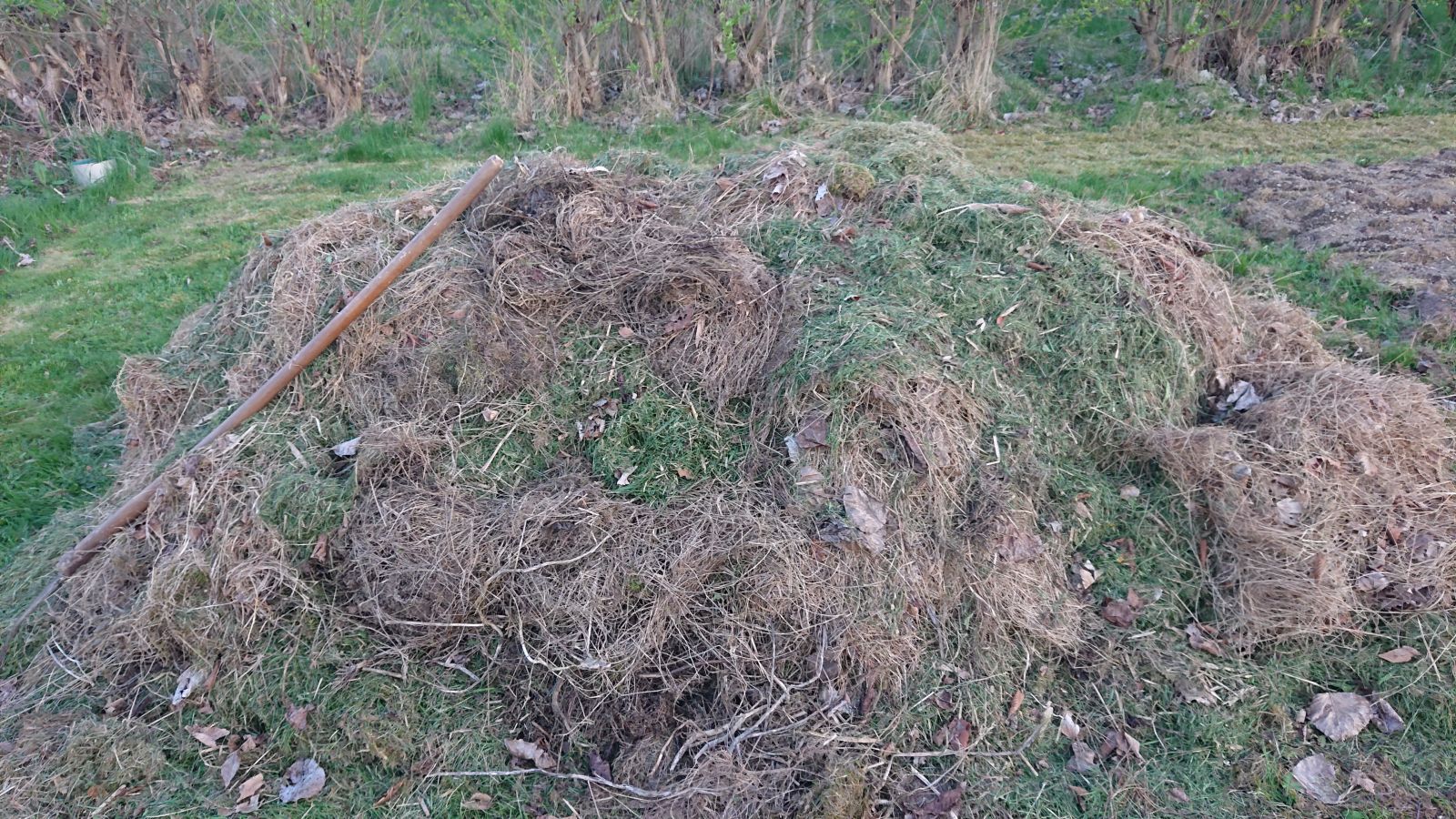
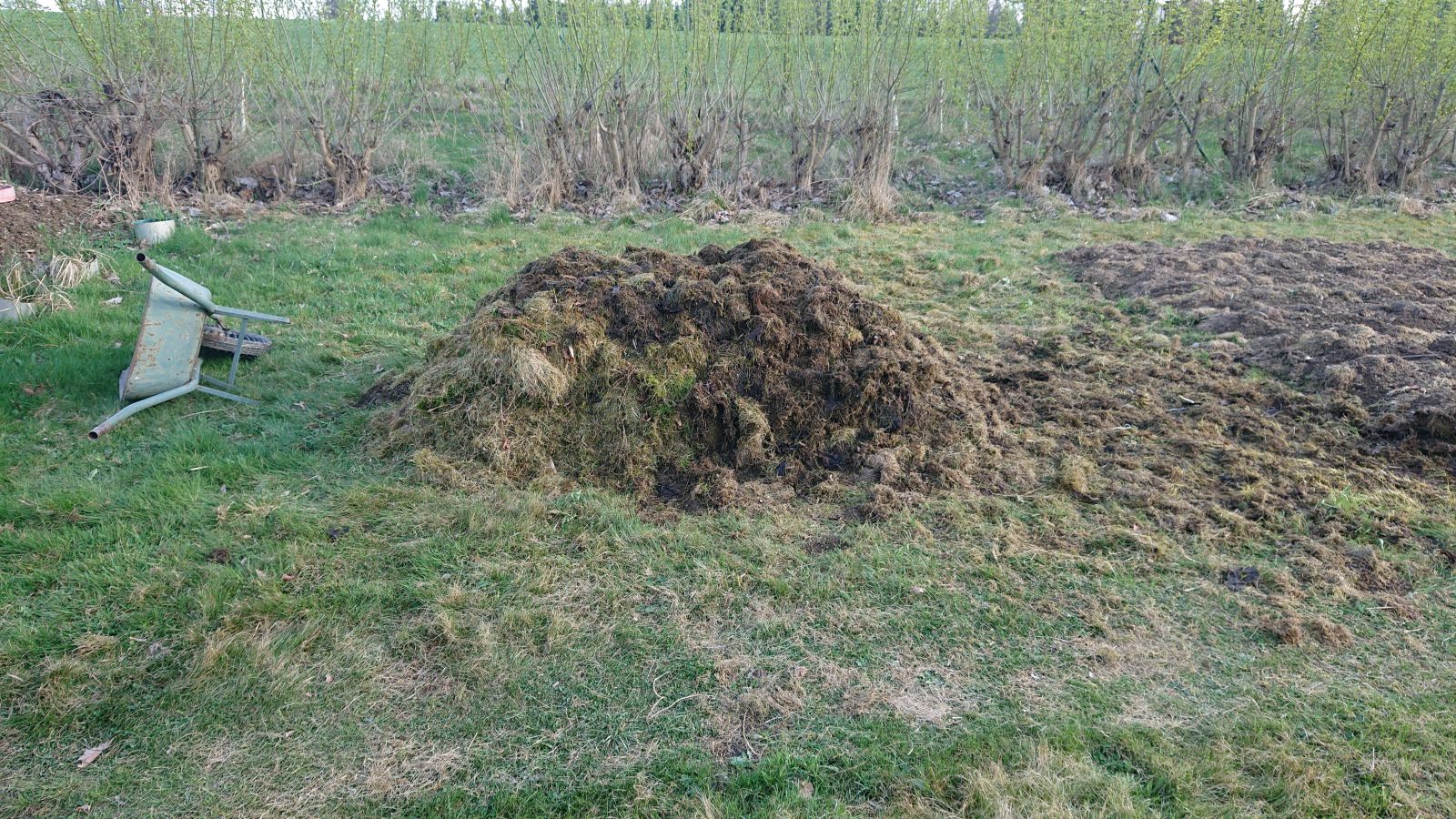
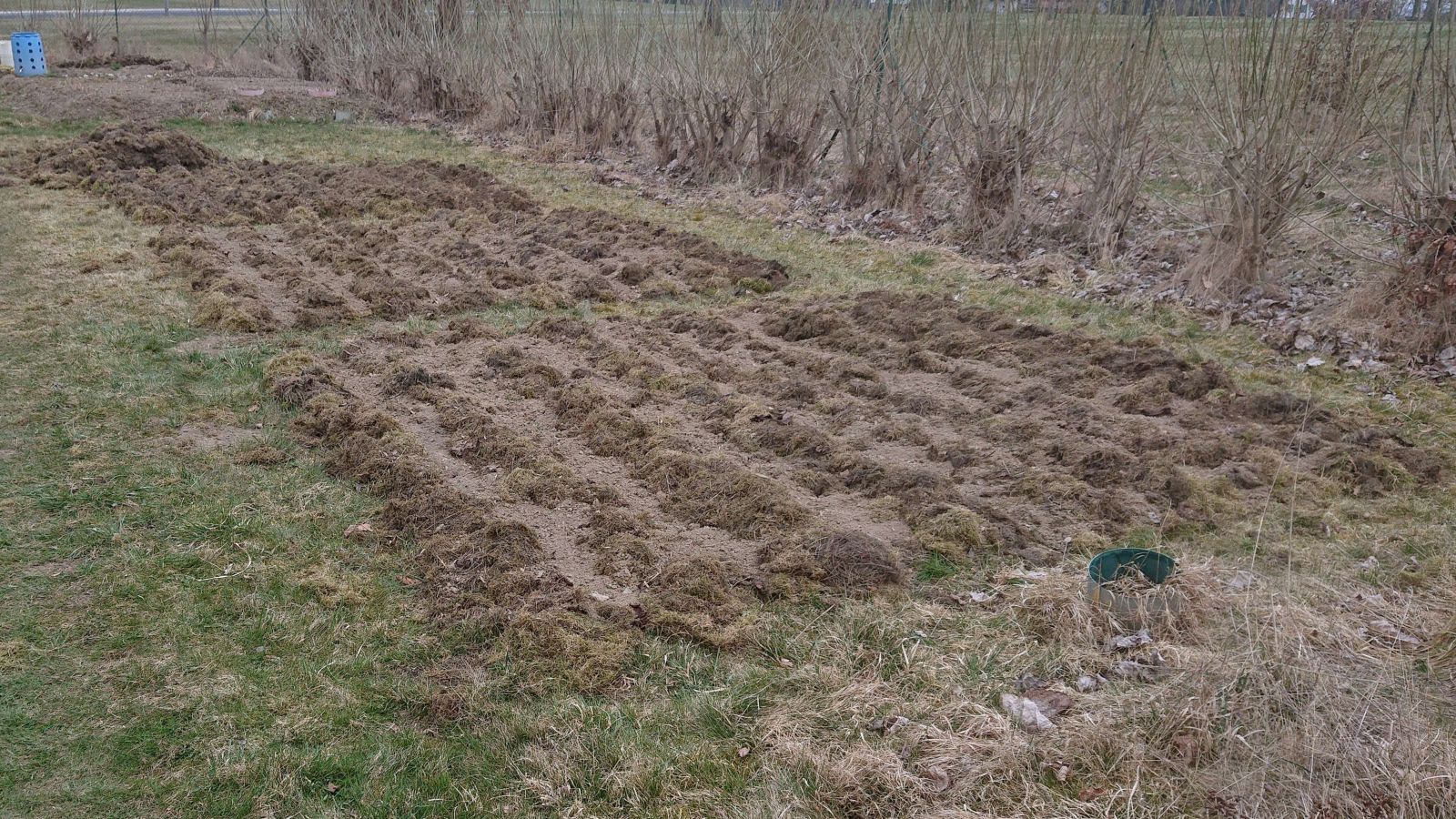
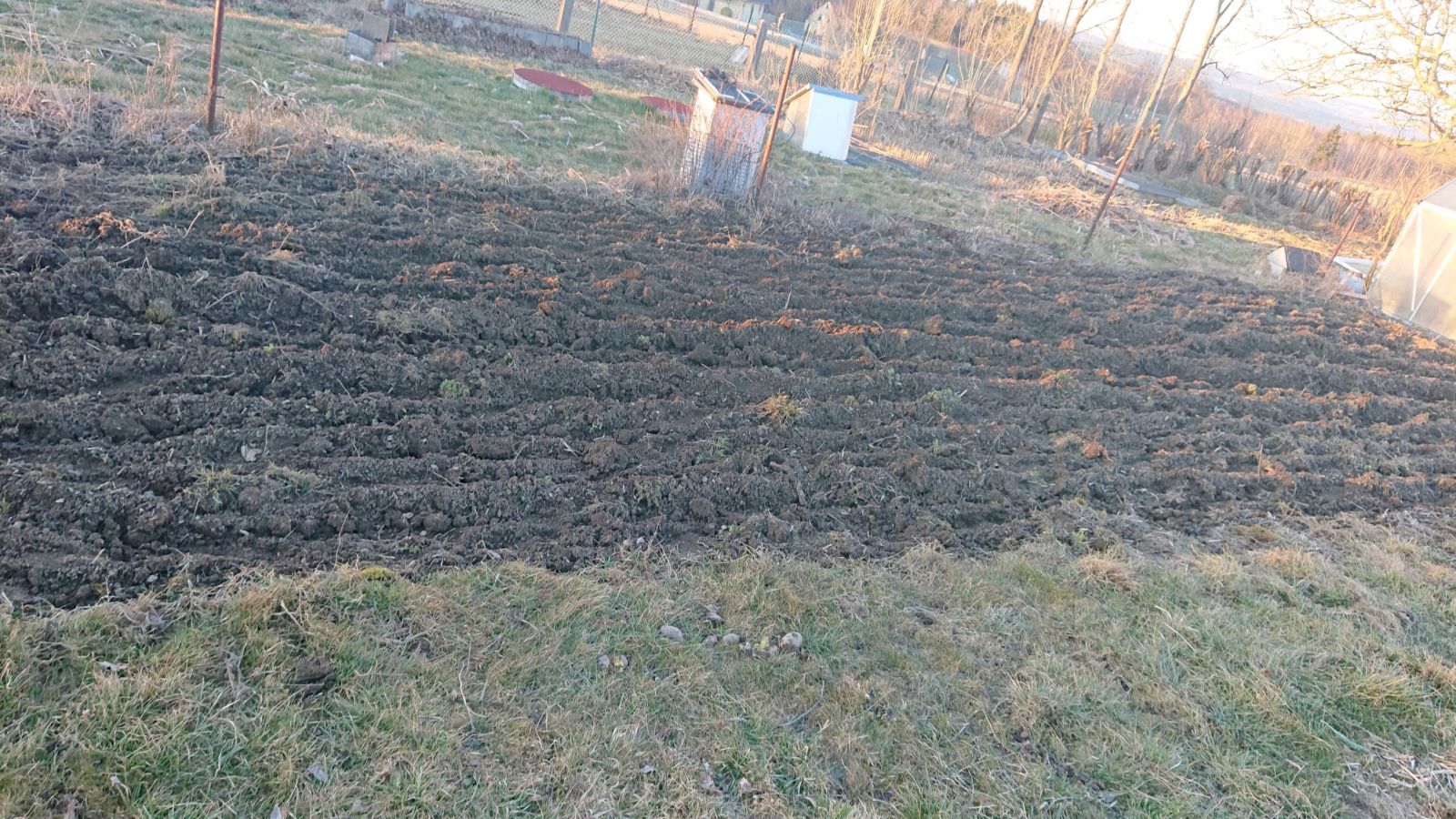
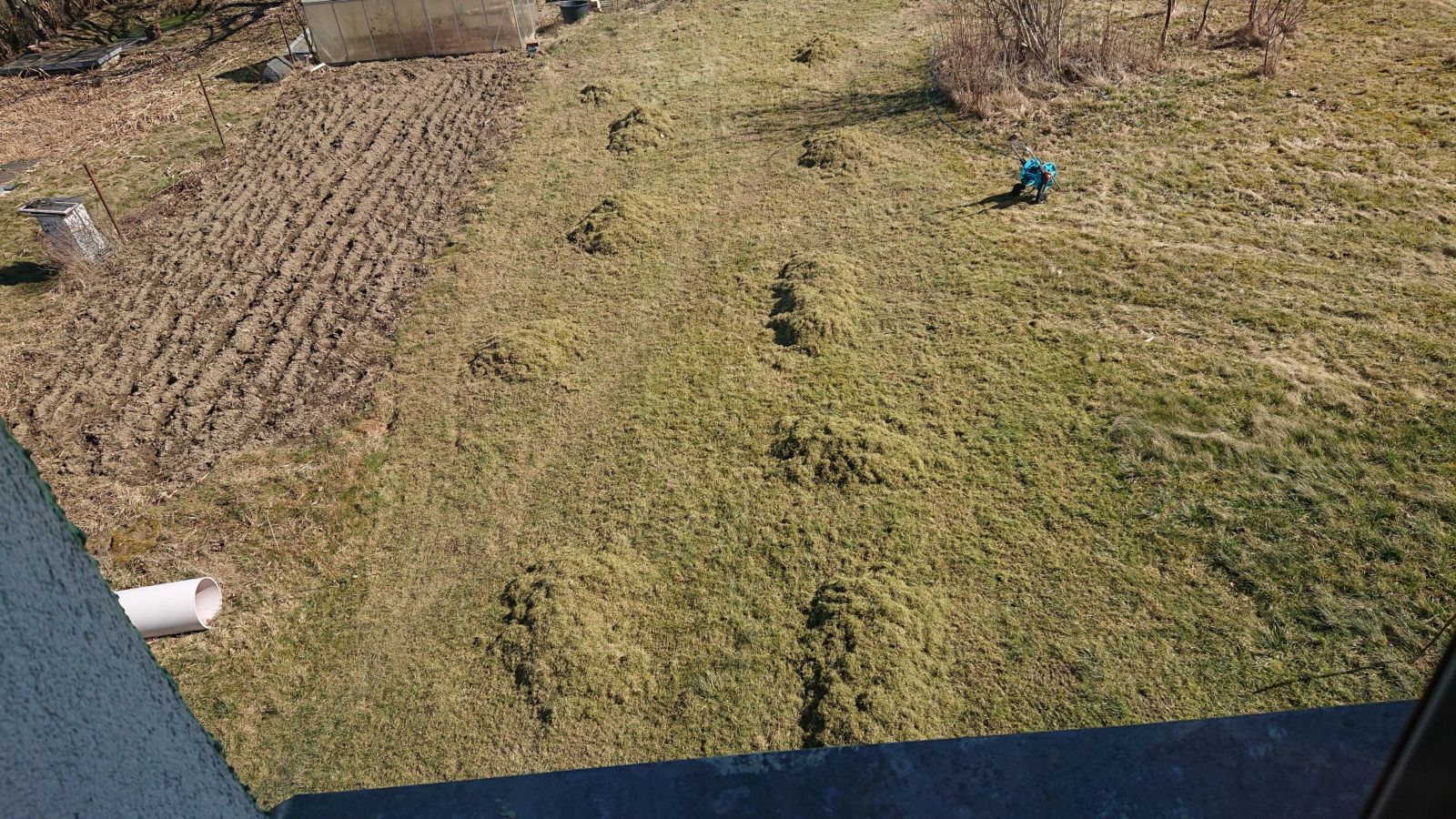
I did not plant them in the regular vegetable patch though. I have prepared a small plot in the fall by covering it with mown and dried grass and I put these tiny potatoes on top of the soil below the rotting grass.

© Charly, all rights reserved. Click for full size.

It is an experiment to check how (whether) they will prosper. Even if they fail, the mated grass cover has at least succeeded in suffocating all other plant life below it (grass and moss) and that portion of the garden will thus be prepared for flattening and rejuvenating the lawn. The potatoes were really tiny, as you can see, so no matter what, no big harvest is to be expected. Best case scenario – I get bigger seeding potatoes for the regular vegetable patch for next year.

The regular patch will this year be covered with beans, sunflowers, corn, and maybe beets and onions. Now that the weather is warm, I will have about a month of busywork in the garden and only after that I will be able to go back to making knives again.

Coppice Harvest

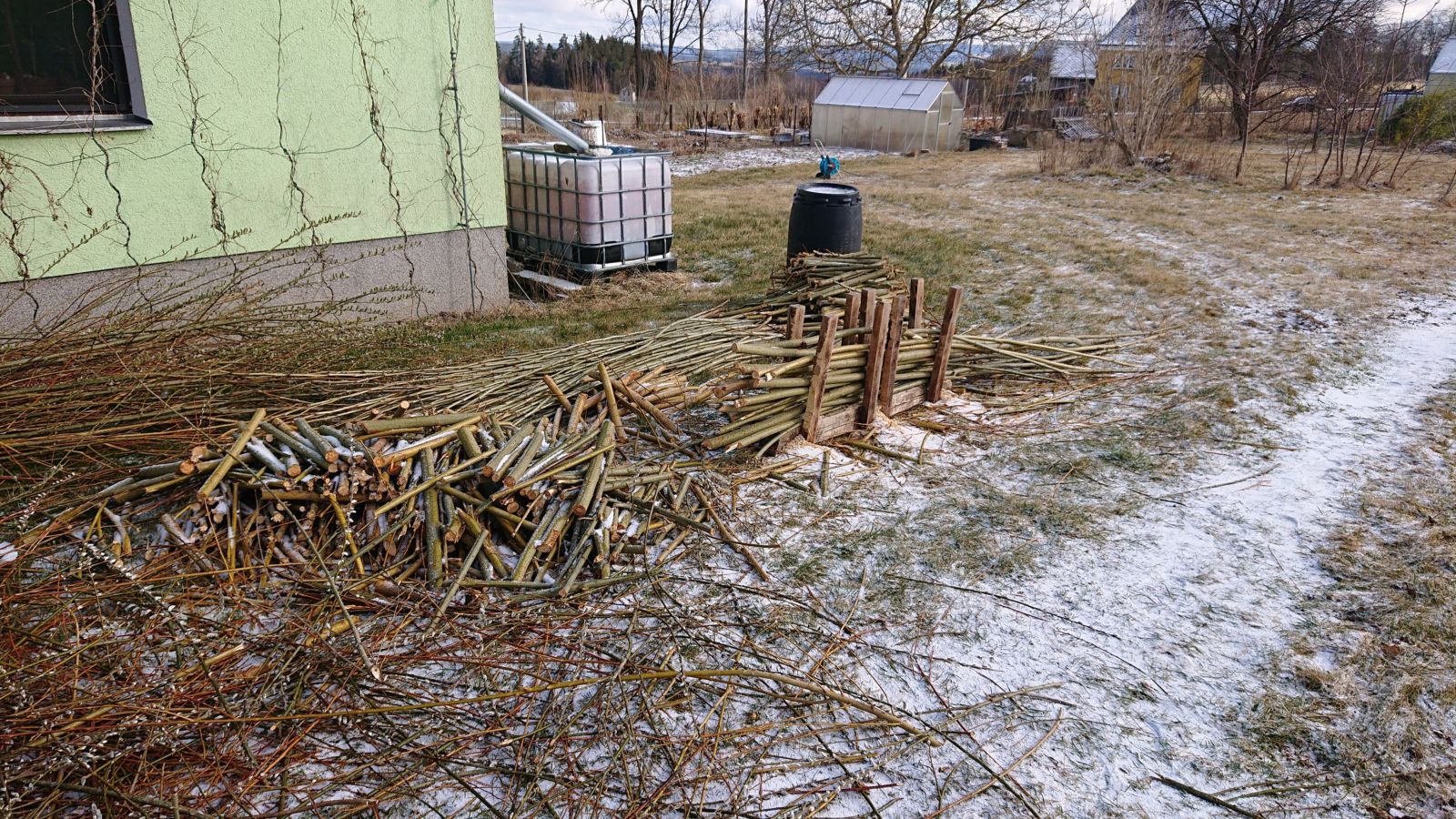
I wrote previously that I am trying to use my needlessly big garden to grow firewood in a coppice. It would be a great success if not for water voles who are a sworn enemy of anyone growing any trees for any purpose. However, these last few days were warm-ish for winter and thus I had the opportunity to not be an utterly useless lump of meat for a few days – I cut down the coppiced/pollarded trees and sorted most of the wood into piles. Twigs for the shredder, thinner trunks for growing beans in the summer and being cut into firewood afterwards, and thicker and/or crooked trunks to be cut into logs right away.

© Charly, all rights reserved. Click for full size

It looks more than it really is, the volume will be significantly reduced once the twigs go through the shredder. I estimate it to be approximately 10-15% of my yearly use of firewood. Blast the voles, without them, it would be probably around 50%. They even destroyed multiple of my established 3-5-year-old trees, so the coppice did not in fact grow bigger since 2019 at all and it is entirely due to voles. They destroyed approx 70% of the planted hornbeams, and nearly 100% of the poplars this area of my garden is not wet enough for the willows to prosper so it is still useless land that needs to be mown and is of no real use to anybody. I have started to plant local maples, ashes, birches, and hazels instead of the poplars but those get often destroyed by voles too and they do not grow even remotely as fast. Fuck the little fuckers. Did I say I hate water voles? I hate water voles.

But the work made me feel well. I really needed to go outside and do something during daylight.

Greening the Balcony – Part 3

Avalus continues his balcony gardening adventures and he has shared some more thoughts and pictures. This is from somewhere mid-summer, I only got now to actually publishing it.


The Blooming Buzzing Balcony
Things are establishing, the tomato plants are continually exploding and I get a bowl of salad every day, although with late June, it gets so hot that the salads are racing to bloom. And they are not alone. So today we look at colorful hot plant sexy bits.
First, a quick overview of what changed in the meantime.

© avalus, all rights reserved. Click for full size.

Yes, more green, tomatoes racing up, and the added board gets really bent by all the pots. Time for a support beam. A yes, parts of an old alu camping bed will be perfect!

© avalus, all rights reserved. Click for full size.

On the other side, my usual chaos, more greens, a rescued kumquat bush hiding behind the table, on the table more plants waiting to be potted. The tomatoes on this side take their time. In previous years, these would grow much faster. Both pots got fresh earth so it is probably down to the variety.

© avalus, all rights reserved. Click for full size.

Enjoy!

© avalus, all rights reserved. Click for full size.

Nasturtium. The camera really struggles with their red shine. I really like putting these in salads or on just bread with cheese and butter. Yum-yum!

© avalus, all rights reserved. Click for full size.

Sweet potato with an extra earth bee. Sadly the other won’t bloom and all the flowers fall off. I really would have been interested in growing them from my own seeds next year.

© avalus, all rights reserved. Click for full size.

Ornamental Pea. I have them in a wide variety of colors but they grew down the outside of the balcony and I can’t get a good image (I am very afraid of dropping my camera).

© avalus, all rights reserved. Click for full size.

A very prickly aubergine, I think I will need to cut most of them off, as the plant is still pretty tiny and I don’t think it could support the many flowers it produces.

© avalus, all rights reserved. Click for full size.

Fiery red climbing bean, green leaves, blue sky. Contrast!

© avalus, all rights reserved. Click for full size.

Tomatoes. I can’t wait for tomato season, my sister is already drowning in fruits.

© avalus, all rights reserved. Click for full size.

Cucumber. They had a slow start and are not as sprawling as the years before. Maybe it is because of old seeds.

© avalus, all rights reserved. Click for full size.

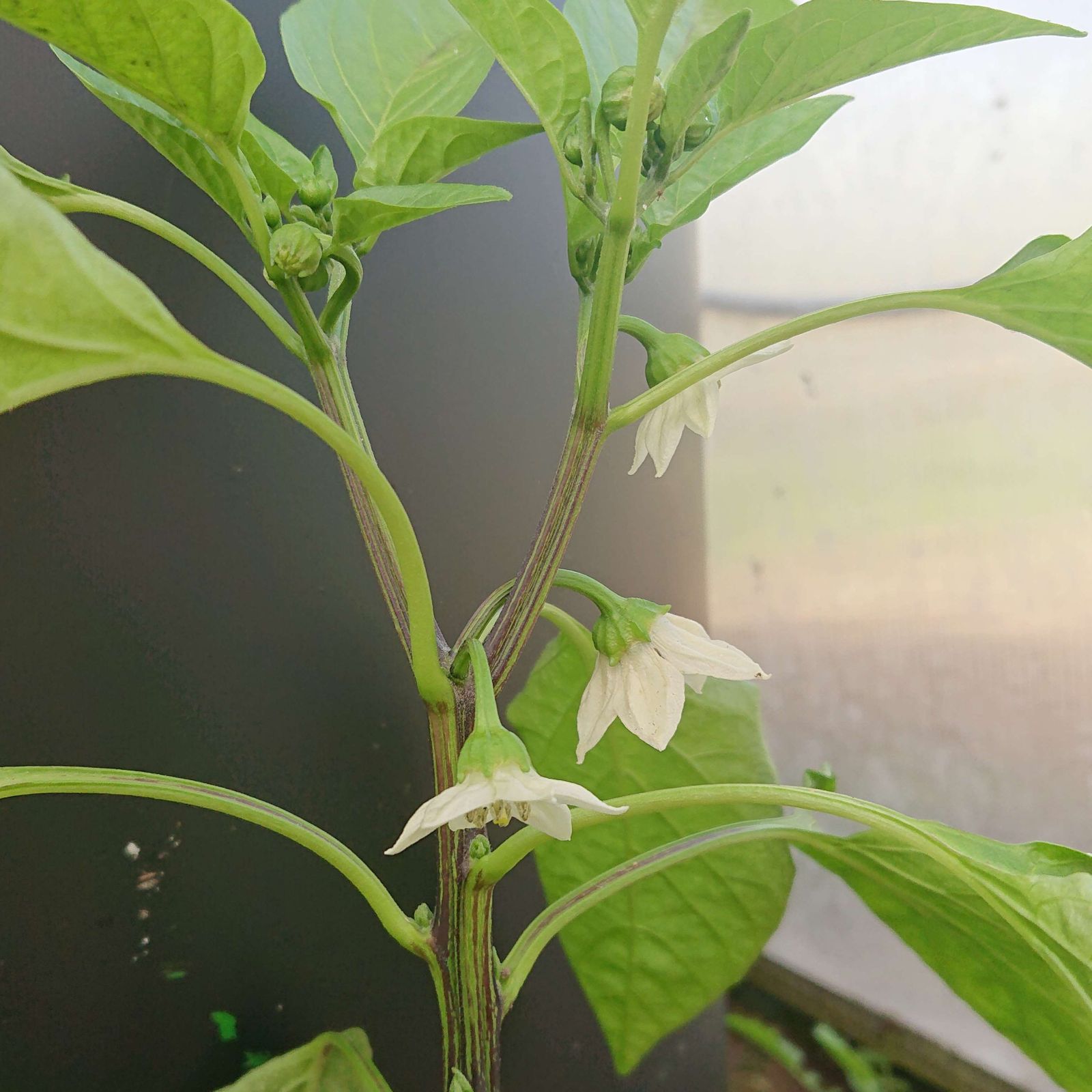
Mystery capsicums, probably sweet peppers. This one I bought but the tag had fallen off.

© avalus, all rights reserved. Click for full size.

Tagetes, bumble bees really love them.

© avalus, all rights reserved. Click for full size.

Strawberries, a monthly variety that steadily produces new fruit and is nearly as expansive with its shoots as the non-blooming sweet potato.

© avalus, all rights reserved. Click for full size.

Stalked celery. Somehow, the wasps really love these flowers.

© avalus, all rights reserved. Click for full size.

Sage, this is a very small steppe variety. I bought this to attract more pollinators to the balcony. I think it worked and the smell is fantastic.

© avalus, all rights reserved. Click for full size.

Red cloves or small onions, leftover from last year.

© avalus, all rights reserved. Click for full size.

And more Beans to close it off.
Soon there will be more. The Echinacea paradoxa is still growing, as are the sunflowers and the calendula. Then there is the thyme and one of the salads I left standing.
Overall, I notice a distinct lack of honey bees on the balcony (and in general) this year, the bumble and earth bees are also few and far between. On the other hand, I get several types of wasps that crawl all over my balcony (and occasionally me, which is a bit unnerving). The climbing beans have had dozens of flowers but so far only three have started to fruit, all the others just fell off, which is disappointing. The tomatoes fared better, but a number were stung by stinking bugs and developed a rot. But these are acceptable losses, one should never expect to have 100% success while gardening.

Next time, I think I will take a closer look at my “exotics” – tropical and half-tropical plants and my experiences. Because I really just can’t throw out avocado and mango pits, or pass by sprouting ginger in a shop … .

Runner Beans Riches

Our south wall used to be shaded by a rabbit shed, later converted to a chicken hoop. Ever since I demolished that, the sun was directly blazing at it. It does not heat the house much because it is well insulated, but I felt somehow that the space is wasted. After some thinking, I have decided that it would be an ideal space for growing runner beans, one row, close to the wall. Runner beans do not mind the low-quality soil, so they do not need to be fertilized and thus there is no risk of polluting our well which is down the slope exactly on the opposite side of the house.

Last year was somewhat poor, the beans did not grow that much. There was enough rain, but not enough sun for them to really prosper. Even so, the harvest was big enough that we still did not eat it all.

© Charly, all rights reserved. Click for full size

This year the weather was extremely hot and dry again. However, we managed to collect enough rainwater in the spring to be able to water the beans the whole time sufficiently, so they prospered enormously and covered the whole wall.

© Charly, all rights reserved. Click for full size

They are still blooming and they will continue to grow until the first frost.  I will probably wait for two more weeks, then I will harvest all green immature pods and clip the plants so they do not waste energy on growing and instead mature the remaining pods quicker. But maybe I won’t bother. The harvest looks extremely promising even so, I will have to convince my mother to cook beans more often. I like them better than chicken anyway.

© Charly, all rights reserved. Click for full size

I am thinking about buying seeds of other vine beans and planting them next year en masse on the vegetable patch where this year grew potatoes. But I like runner beans the best because they are big and thus they require the least work per weight when shelling. We used to have white runner beans too, but  I haven’t seen them in shops for a long time. I could not put seeds consistently aside, because the white and red beans hybridized and after two-three years I had neither white nor purple beans but a mish-mash.

Greening the Balcony – Part 2

Avalus continues his balcony gardening adventures and he has shared some more thoughts and pictures.


Visitors from the Past and Visitors I want to go past!

(This is from about the middle to the end of May.)

Content warning: A spider at the very end!

Green stuff is growing and exploding everywhere!

© avalus, all rights reserved. Click for full size.

Salads, tomatoes, nostrums, herbs, and potatoes.

© avalus, all rights reserved. Click for full size.

More salads, cucumbers, strawberries, and radishes. One sweet potato in the middle for good measure. The climbers will be led along the different rails or suspended on strings dangling down from the piece of wood, that also serves as an extension to the rails for balcony boxes.

© avalus, all rights reserved. Click for full size.

And on the other end of the balcony climbing beans, mangold, more potatoes, more salad and tomatoes On the bottom you can see capsicums. These really did not want to germinate this year, they took over four months to get this tiny.

© avalus, all rights reserved. Click for full size.

In the boxes, the bush beans are coming up, the ones on the right were from very old seeds, most did not germinate. The ones on the left are from new seeds. I did not take a picture of the broccoli box, but you can see, that it is still blooming. At a later date, it will sadly fall victim to tragedy.

© avalus, all rights reserved. Click for full size.

This year, I used up a lot of old seeds I collected over the years, just to see if they were any good. I did not expect much and was proven right, out of around sixty seeds I got three snowpeas and four to five weak bush beans. Then I got rid of the rest of the old seeds by digging them deep under the soil and, surprisingly, I was greeted by fresh pea sprouts three weeks later. Of course, this was after I bought and planted fresh seeds. Well, more peas!

I just really like peas! The trellis is made from hazelnut sticks I gathered in the surrounding area. It looks very flimsy but held up to a massive storm already.

Also, notice something odd about this sweet potato?

© avalus, all rights reserved. Click for full size.

There is a pumpkin, either muskat or hokkaido, growing on the left. How did it get there? Last fall I peeled pumpkin seeds and threw the supposedly empty shells in the empty bin and then later planted a sweet-potato shoot on top of the chaff. I very carefully removed the pumpkin plant. It will travel to my parent’s garden and will get a nice spot in their old compost pile. You can see the extracted plant in one of the pictures above.

© avalus, all rights reserved. Click for full size.

This spring I cut down my sage (it was getting constant mildew and was too sprawling) and decided to try and multiply it via cuttings. So, I used some paper pots I had left over from last spring, trying to grow some kind of tomatoes. Nothing came of these seeds, the pots have been completely dry for a year. And this year, of course, three tomatoes germinated! I wonder what kind they will be.

With greens, there are aphids.

© avalus, all rights reserved. Click for full size.

Especially my capsicums were hit hard, with leaves getting all curly or falling off altogether. As of writing in mid June, they are still very weak.

© avalus, all rights reserved. Click for full size.

But with aphids, there come fierce predators! Here is a ladybug hunting on basilicum.

© avalus, all rights reserved. Click for full size.

I have no idea what caterpillar/larva this is, but the empty aphid husks tell a gruesome story of brutal murder.

© avalus, all rights reserved. Click for full size.

The same goes for these bright orange larvae that are dining on the aphids. Probably some kind of wasp?

Sadly, with aphids also come ants.

© avalus, all rights reserved. Click for full size.

In a garden, I like to have them around but on the balcony, they sadly have to go. That is the one time I use poison to get rid of creatures, but in past years I learned the hard way that ants become a huge problem in compact spaces, herding aphids and eventually invading the apartment.

© avalus, all rights reserved. Click for full size.

Here is a very different caterpillar, happily munching on a cabbage. The cabbage itself was a result of an experiment: What would happen, if I were to just plonk the centrepiece of a cabbage I ate in a glass of water? It grew and has given me some nice leaves so far. I have no real plans for the cabbage other than pick some leaves every now and then, so the caterpillar can stay. Enjoy your meal!

And for PZ, a newly hatched batch of tiny cute orb weaver spiders and their mom hiding in the rosemary. There are many of them around on the balcony, their nets are getting filled with winged aphids!

[Read more…]

Frog Chillin’

Today I was watering bonsai trees in my bonsai hospital (where my last Japanese maple tree already probably succumbed to the heatwave). I am using the water from the pond at the end of my sewage cleaning facility for that. And this is the sight that greeted me today.

© Charly, all rights reserved. Click for full size.

Every day when I come there I hear several splashes as the frogs sitting around the edges of the pool jump into the water when I disturb them. Today I got lucky and this one was just chilling in the water and did not scamper until I plunged my watering can into the water.

I take this as a sign that my sewage cleaning facility works well, despite the official tests coming just on the edge with regard to ammonia content. I haven’t seen any tadpoles, unfortunately, but I do have happy frogs every year, plenty of dragonfly larvae and water beetles, an occasional water mollusk, and as you can see, the water is so clear that one can see right down to the bottom of the pond. It will get a bit worse in the fall when the trees shed leaves, especially the walnut tree, but that has nothing to do with the sewage cleaning efficacy.

Fig Season Starts

© Charly, all rights reserved. Click for full size.

I picked over 800 g of fresh figs today. It is figs and yogurt for dinner tonight. Eating them all before they spoil will be challenging – this variety is supposed to be eaten fresh and these first ones are extremely sweet. It never ceases to amaze me that I can harvest figs in my garden.

More Summer Content

Don’t worry, there’ll be some more serious content soon, and for once it’s good news. But for now, let me take you on a tour of the garden. This year, somehow, growing the seedlings on my window sill didn’t work. Don’t ask me why, but there’s no peppers this year. The tomatoes are way behind schedule. But we’ll see how it works out.

Let’s start with the potatoes:

Beet with potatoe plants

©Giliell, all rights reserved

This looks more dense than it is, I think for the future, the beet can sustain twice the amount of plants.

Next: peas

Beet with pea plants

©Giliell, all rights reserved

I planted sugar snaps and normal peas, though the latter were disappointing, too. They’re strictly for snacking, something the kids greatly appreciate. They’re mostly done now, so I plante a courgette in between. We may possibly drown in courgettes come a few weeks.

Beet with tomatoe plants

©Giliell, all rights reserved

As you can see, the tomatoes are still too small. The metal boughs are leftovers from the old trampoline so i can cover them should it rain too much.

beet with corn, beans and squash

©Giliell, all rights reserved

And a “three sisters planting”, this year hopefully with the right kind of beans. Again, I tried to pregrow my corn, and then when it didn’t take off I just sowed more outdoors.  Those plants are much stronger now than the few pregrown.

That was the “serious” gardening, now for the fun part: Flowers!

Purple mallow plants

©Giliell, all rights reserved

I always throw a few hands of flower seeds on the wild side of the garden. Last year, there were a few purple mallows. This year there are a lot of purple mallow plants. I love them.

Red lilies

©Giliell, all rights reserved

Lilies, I think. I know I planted them last year, but too late to bloom. They’re so pretty.

And last but not least, the Hollyhock. I love hollyhock. I planted those last year as well, the need two years anyway. Let’s just hope that they’ll just reseed themselves like the mallow.

Red hollyhock flower

©Giliell, all rights reserved

Pink hollyhock flower

©Giliell, all rights reserved

Black hollyhock flower

©Giliell, all rights reserved


Greening the Balcony – Part 1

Guest post by Avalus. I am looking forward to the continuation(s) and once again I render my robe and put ashes on my head, this should go up a month ago.


A new project by me, Avalus. I use my balcony each year to grow veggies and some flowers, but I never thought about sharing this. Charly encouraged me to do so, so thank you very much for this opportunity! Similar to Full Fish Ahead, this will be some poorly held together train of thought with many pictures that will be written at random intervals and you all hopefully find interesting and worth your time reading. Comments are very welcome, as I learn something new every year I change my balcony in a lush green jungle (or in 2018, more like a dry brown savannah). Also, I hope to inspire people to green up their spaces, if they can!

So, this is my balcony, roughly 2 by 5 meters, facing south on the lofty hight of seventh floor and as of now, already pretty full of plants!

© avalus, all rights reserved. Click for full size.

© avalus, all rights reserved. Click for full size.

But how did I get there?

I started in late winter and early spring with the pregrowing the slower plants. Tomates and peppers mostly but also some older seeds that I expected would not germinate anymore were put in the earth*. For pregrowth I use these 2 old fishtanks that I got from a garbage pile, the seeds are planted in egg cartons and some leftover paper pots, as soil I use cocosshell soil. This foto is from late march, you can also see a sprouting avocado and a taro plant grown from a leftover from cooking.

© avalus, all rights reserved. Click for full size.

*That is why there are some beans growing on the right. Also, the old cucumber seeds just took some four weeks to germinate, in between I bought new ones and they just took four days and now my friends with gardens and family will get gifts of cucumber plants. XD

From last year, a broccoli and two romanesco plants have endured the winter. I thought about tearing them out but then they began to bloom and instantly attracted pollinators, so they stay and I decided to side the broccoli with pansies. Later, this one will be used as a support for peas, that I planted around it.

© avalus, all rights reserved. Click for full size.

© avalus, all rights reserved. Click for full size.

Then, in early April I got to work cleaning the old pots out. I kept about half of the soil but mixed it topped it off with newly bought earth. For that I use peat-free planting soil although one really needs to look at the content table, as I found out a few years ago. And in the past years, this was also more expensive but this year they did cost the same. All hauling was done from a local garden centre with a hand drawn trolley, which was exhausting as I needed some 240 litres and I don’t own a car. If I lived somewhere else or was not as able bodied this would be a major problem and I would definitively need the help of friends.

© avalus, all rights reserved. Click for full size.

My main growbeds are these half transparent outdoor boxes, I bought some six years ago in a large hardware store. They are mostly in the shade and have held up wonderfully. The lowest 5 cm are filled with porous ceramic balls to store water, on the backside I drilled a line of small holes at 10 cm as an overflow.

© avalus, all rights reserved. Click for full size.

Others are just large planting pots, buckets or plain balcony boxes and we will see more of them later this year.

Now, at the start of May, the tomatoes are finally gaining strength, as do the mangolds and the cucumbers. Both of which I apparently did not photograph in their boxes. Planting all of these will have wait though until the ice-saints, a series of days around 15th of May, where temperatures might fall deep here in central Germany. Most of the tomatoes will be given away as well, I will just keep nine of them, as that is usually enough to satisfy my tomatic needs.

© avalus, all rights reserved. Click for full size.

So, what will I grow? Tomatoes, peppers, aubergine, cucumbers, strawberries, lettuce, carrots, radishes, beans, onions, garlic, peas, sweet potatoes and potatoes along with a load of different herbs and some flowers for the bumbles and the bees like tagetes, sunflowers and calendula. From th last years there is Indian canna and lavender. This sounds like a heck of a lot, but the last years showed that with the right combinations these plants work well under the conditions of my balcony in summer. Over the months there will be changes as plants ripen and get collected and replacements will be seeded, grown and planted.

Why do I do it? This is of course not enough to sustain me by a long margin, but I very much do enjoy having plants around me and growing at least a bit of sustenance. It also helps me to appreciate much work goes into farming at least a little more. I cannot collect my own rainwater and the soil is bought, so there are some environmental impacts, of course, even if I try to minimize them. All in all, it just makes me very happy to eat my own grown food and gaze upon thriving plants.

And to finish this instalment, here sprout the first beans, nasturtiums and peas!

© avalus, all rights reserved. Click for full size.

Happy planting, everyone!

Strawberry Madness

First I must apologize to those who have sent submissions to affinity. I was busy with a lot of things and I completely forgot to check that e-mail address for over a month by now. And one of those things I was busy with were (are) strawberries.

Last year I had a successful strawberry harvest, we got slightly over 8 kg of strawberries. So this year I have decided to take a lax approach to my strawberry patches and not spend too much time on them. I have removed some of the old leaves and overgrowth from last year, I tossed some crushed reed stalks between them, and that was it. No replanting or similar. About one day’s worth of work in between repotting my bonsai trees. When the strawberries began to bloom, I thought it looks promising and I estimated that this year’s harvest might be even slightly higher than last year, like 12 kg or so.

© Charly, all rights reserved. Click for full size.

Boy was I wrong. Very ronk.

For over a week by now, I spend just shy over an hour picking strawberries, then laying them down on a windowsill to finish ripening (this reduces the ants and slugs damage significantly, and they also become more aromatic that way). Then I had to weigh and clean them and put them in the freezer where they slowly accumulated to a dangerous degree. With 1-2 kg of strawberries daily, the freezer got filled up in a week and was threatening to burst. I had to play Tetris every time I wanted to take a popsicle out of there. It looked like I would have to stop doing everything else for a few days and start making marmalade.

© Charly, all rights reserved. Click for full size.

Luckily my mother returned from the hospital last week. She has reduced mobility in her right leg, but she does not have the intensive pains she used to have anymore and thus is relatively fit. So she could start making marmalade. preventing me from getting to be totally overwhelmed by the red menace. For a few days now she is every day using up all the freshly collected strawberries and she even managed to take a few bags out of the freezer already. Approximately 4 kg strawberries go into this huge pot together with some other sekrit ingredients.

© Charly, all rights reserved. Click for full size.

Today’s worth of work is several huge marmalade jars filled to the brim. And on the right side of this picture you can see the up-to-date tally – 18724 g! Nearly 19 kg, so with what I see in the patches from my windows, today evening we should cross 20 kg harvest easily. That is officially insane.

© Charly, all rights reserved. Click for full size.

When the jars cool, we check whether the lid created a proper vacuum seal or not, and those that did get labeled and go into the cellar. You can read the secret ingredients on the labels if you wish. I do not know the exact proportions, I think my mother has them written somewhere. Other than these, she also adds pectin and Aronia juice (which makes the marmalade less sweet and gives it a slightly darker color).

© Charly, all rights reserved. Click for full size.

So I expected to have about 50% higher harvest than last year, instead, I got 150% higher one and still counting. We have enough marmalade to last us for years at our normal consumption rate (which is about a spoon a day). I am this year spending significantly more time harvesting than I have spent actually caring.

I am slowly starting to wish they would stop so I can do other things with my time, like being lazy.

How to Sharpen a Scythe

The clicking and whispering of whetstone on a scythe blade is a sound that still evokes memories of early childhood in me. My father used to breed rabbits and he made hay twice a year. That, of course, clashed horribly with my allergies, so later on he moved to ducks, turkeys, and geese who kept the grass in our rather big garden in check during the summer on their own, and hay was not needed. Nowadays my allergies are much better than they used to be, we no longer keep any animals that eat the grass so we have to keep it in check by mowing. And the lawnmower does not reach all nooks and crannies, nor is it suitable for mowing grass that has overgrown a bit. And thus a scythe has to be used again.

My father has one and I have my own. We were both using one, but I got terrible back ache from it because the handle was just a tiny bit shorter than I need. For a long time, I could not find a suitably long scythe handle anywhere, so I even started to season ash wood to make my own. Luckily my parents saw a TV advert for a company that sells adjustable scythes so I bought one, adjusted it accordingly and I use it for two years by now and my back no longer aches (apart from normal tiredness that is). And I get to make my own clink-whoosh sounds with whetstone on the blade.

But there comes a time when the whetstone actually destroys the blade – when the cutting edge becomes as sharp as that of a knife. Yus, that is correct, a scythe blade that is as sharp as a knife is of no use. Here is a picture of my scythe this morning, when work with it became finally too difficult and it was bending the grass a lot without cutting it. It would cut yer leg off in a blink, but it was no longer good at cutting grass.

© Charly, all rights reserved. Click for full size.

You can see the edge is laid on a tiny peening anvil fixed to a small wooden horse so when one sits on it, the blade can lay on the anvil and be supported by knees on either side to stabilize it. The left hand holds the blade to move the edge across the anvil, and the right hand beats the crap out of the edge with a hammer.

Scythes are hardened, but they are tempered back to springiness, so the material is somewhat ductile – up to a point. The hammering has thus several effects. It draws out the material a bit, so the scythe becomes a mm or so wider and thinner at the edge.  The second effect is the so-called work hardening of the steel, the thinned drawn-out edge becomes harder. And the third effect, completely undesirable in a knife blade but essential in a scythe, is that the edge becomes all wavy and even cracked in places. Look at a hammered blade.

© Charly, all rights reserved. Click for full size.

For a knife, that looks absolutely terrible. But for a scythe, this is a must. Grass is a mixture of soft and hard fibers, yielding and tough. The jagged edge is much better at cutting it than a smooth knife-like one. My father even tells an anecdote about a former colleague of his who never hammered his scythe and has sharpened it as a knife – and as a result, he had difficulty cutting grass with it.

After the blade is hammered out, a few passes with whetstone are sufficient to straighten it a bit and break off some wire edge and thin it just a tiny bit more than the hammering has done. And that maintenance with whetstone should now suffice for a few months, then it will be hammer time again. A properly sharpened scythe should be able to cut grass that is just a few cm high with a light pass.

© Charly, all rights reserved. Click for full size.

Yes, I am wearing socks in sandals. I think not doing so is just stupid and fashion be damned, especially in my garden.