More Summer Content

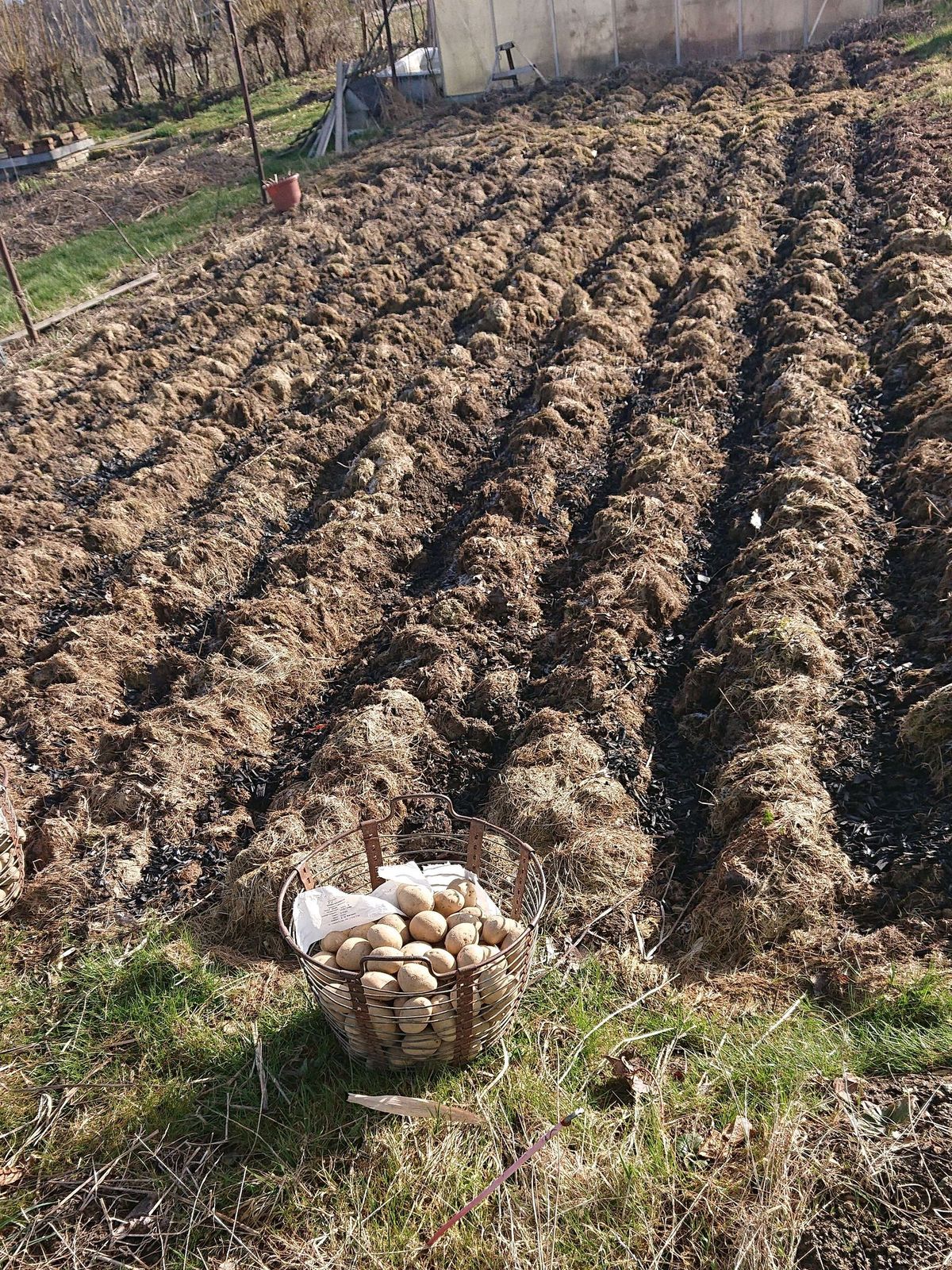
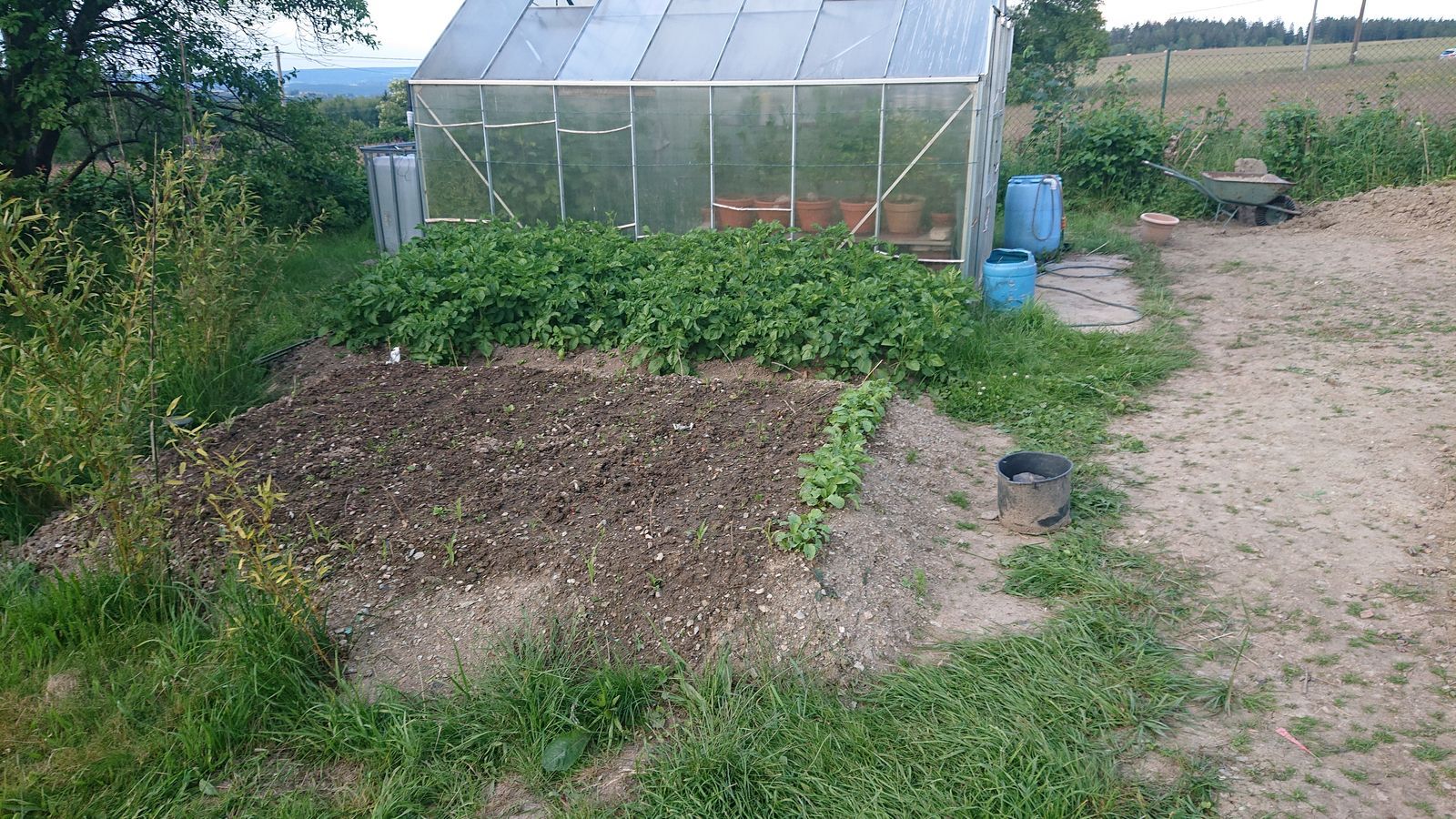
Don’t worry, there’ll be some more serious content soon, and for once it’s good news. But for now, let me take you on a tour of the garden. This year, somehow, growing the seedlings on my window sill didn’t work. Don’t ask me why, but there’s no peppers this year. The tomatoes are way behind schedule. But we’ll see how it works out.

Let’s start with the potatoes:

Beet with potatoe plants

©Giliell, all rights reserved

This looks more dense than it is, I think for the future, the beet can sustain twice the amount of plants.

Next: peas

Beet with pea plants

©Giliell, all rights reserved

I planted sugar snaps and normal peas, though the latter were disappointing, too. They’re strictly for snacking, something the kids greatly appreciate. They’re mostly done now, so I plante a courgette in between. We may possibly drown in courgettes come a few weeks.

Beet with tomatoe plants

©Giliell, all rights reserved

As you can see, the tomatoes are still too small. The metal boughs are leftovers from the old trampoline so i can cover them should it rain too much.

beet with corn, beans and squash

©Giliell, all rights reserved

And a “three sisters planting”, this year hopefully with the right kind of beans. Again, I tried to pregrow my corn, and then when it didn’t take off I just sowed more outdoors.  Those plants are much stronger now than the few pregrown.

That was the “serious” gardening, now for the fun part: Flowers!

Purple mallow plants

©Giliell, all rights reserved

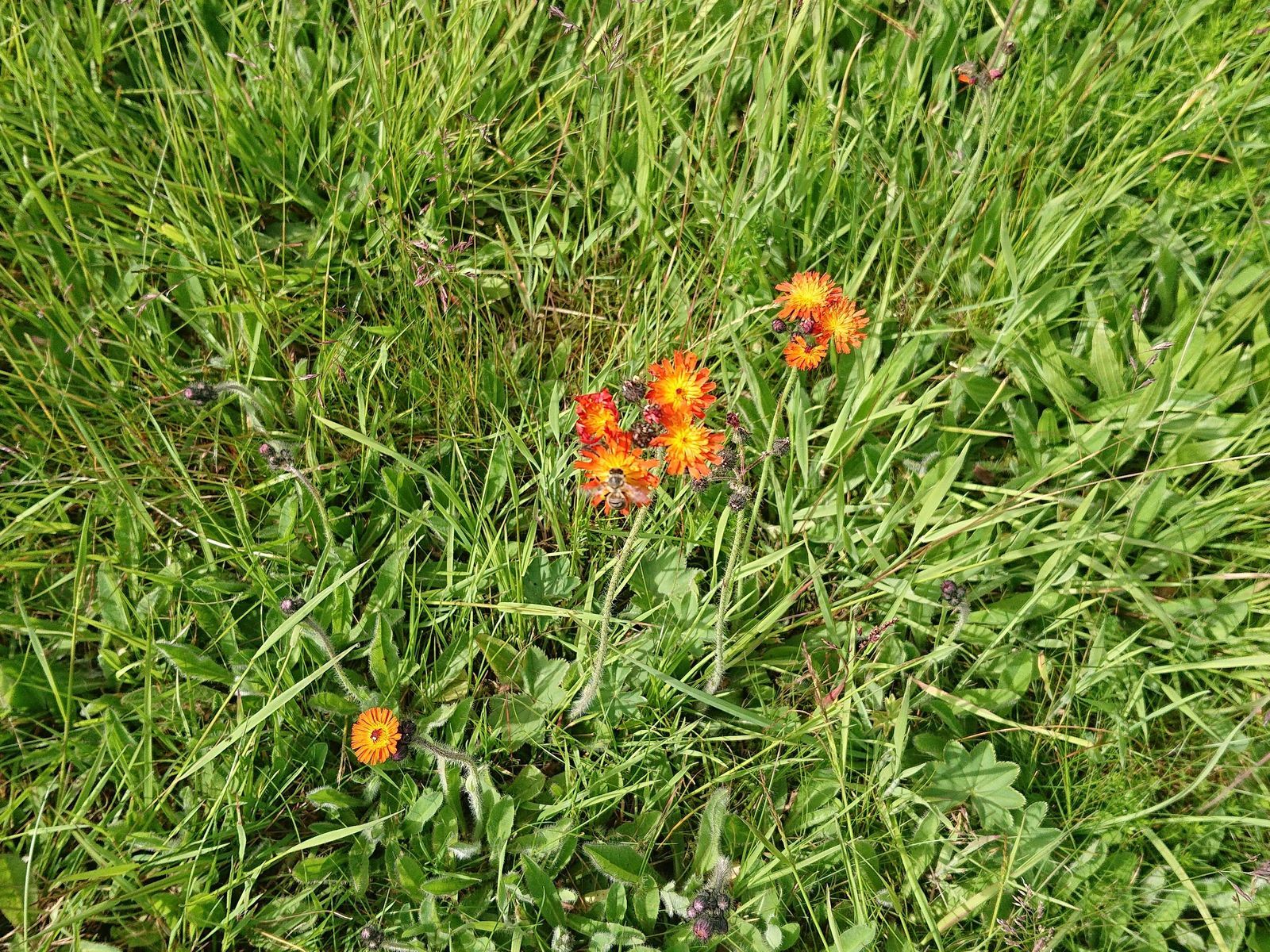
I always throw a few hands of flower seeds on the wild side of the garden. Last year, there were a few purple mallows. This year there are a lot of purple mallow plants. I love them.

Red lilies

©Giliell, all rights reserved

Lilies, I think. I know I planted them last year, but too late to bloom. They’re so pretty.

And last but not least, the Hollyhock. I love hollyhock. I planted those last year as well, the need two years anyway. Let’s just hope that they’ll just reseed themselves like the mallow.

Red hollyhock flower

©Giliell, all rights reserved

Pink hollyhock flower

©Giliell, all rights reserved

Black hollyhock flower

©Giliell, all rights reserved


Greening the Balcony – Part 1

Guest post by Avalus. I am looking forward to the continuation(s) and once again I render my robe and put ashes on my head, this should go up a month ago.


A new project by me, Avalus. I use my balcony each year to grow veggies and some flowers, but I never thought about sharing this. Charly encouraged me to do so, so thank you very much for this opportunity! Similar to Full Fish Ahead, this will be some poorly held together train of thought with many pictures that will be written at random intervals and you all hopefully find interesting and worth your time reading. Comments are very welcome, as I learn something new every year I change my balcony in a lush green jungle (or in 2018, more like a dry brown savannah). Also, I hope to inspire people to green up their spaces, if they can!

So, this is my balcony, roughly 2 by 5 meters, facing south on the lofty hight of seventh floor and as of now, already pretty full of plants!

© avalus, all rights reserved. Click for full size.

© avalus, all rights reserved. Click for full size.

But how did I get there?

I started in late winter and early spring with the pregrowing the slower plants. Tomates and peppers mostly but also some older seeds that I expected would not germinate anymore were put in the earth*. For pregrowth I use these 2 old fishtanks that I got from a garbage pile, the seeds are planted in egg cartons and some leftover paper pots, as soil I use cocosshell soil. This foto is from late march, you can also see a sprouting avocado and a taro plant grown from a leftover from cooking.

© avalus, all rights reserved. Click for full size.

*That is why there are some beans growing on the right. Also, the old cucumber seeds just took some four weeks to germinate, in between I bought new ones and they just took four days and now my friends with gardens and family will get gifts of cucumber plants. XD

From last year, a broccoli and two romanesco plants have endured the winter. I thought about tearing them out but then they began to bloom and instantly attracted pollinators, so they stay and I decided to side the broccoli with pansies. Later, this one will be used as a support for peas, that I planted around it.

© avalus, all rights reserved. Click for full size.

© avalus, all rights reserved. Click for full size.

Then, in early April I got to work cleaning the old pots out. I kept about half of the soil but mixed it topped it off with newly bought earth. For that I use peat-free planting soil although one really needs to look at the content table, as I found out a few years ago. And in the past years, this was also more expensive but this year they did cost the same. All hauling was done from a local garden centre with a hand drawn trolley, which was exhausting as I needed some 240 litres and I don’t own a car. If I lived somewhere else or was not as able bodied this would be a major problem and I would definitively need the help of friends.

© avalus, all rights reserved. Click for full size.

My main growbeds are these half transparent outdoor boxes, I bought some six years ago in a large hardware store. They are mostly in the shade and have held up wonderfully. The lowest 5 cm are filled with porous ceramic balls to store water, on the backside I drilled a line of small holes at 10 cm as an overflow.

© avalus, all rights reserved. Click for full size.

Others are just large planting pots, buckets or plain balcony boxes and we will see more of them later this year.

Now, at the start of May, the tomatoes are finally gaining strength, as do the mangolds and the cucumbers. Both of which I apparently did not photograph in their boxes. Planting all of these will have wait though until the ice-saints, a series of days around 15th of May, where temperatures might fall deep here in central Germany. Most of the tomatoes will be given away as well, I will just keep nine of them, as that is usually enough to satisfy my tomatic needs.

© avalus, all rights reserved. Click for full size.

So, what will I grow? Tomatoes, peppers, aubergine, cucumbers, strawberries, lettuce, carrots, radishes, beans, onions, garlic, peas, sweet potatoes and potatoes along with a load of different herbs and some flowers for the bumbles and the bees like tagetes, sunflowers and calendula. From th last years there is Indian canna and lavender. This sounds like a heck of a lot, but the last years showed that with the right combinations these plants work well under the conditions of my balcony in summer. Over the months there will be changes as plants ripen and get collected and replacements will be seeded, grown and planted.

Why do I do it? This is of course not enough to sustain me by a long margin, but I very much do enjoy having plants around me and growing at least a bit of sustenance. It also helps me to appreciate much work goes into farming at least a little more. I cannot collect my own rainwater and the soil is bought, so there are some environmental impacts, of course, even if I try to minimize them. All in all, it just makes me very happy to eat my own grown food and gaze upon thriving plants.

And to finish this instalment, here sprout the first beans, nasturtiums and peas!

© avalus, all rights reserved. Click for full size.

Happy planting, everyone!

Strawberry Madness

First I must apologize to those who have sent submissions to affinity. I was busy with a lot of things and I completely forgot to check that e-mail address for over a month by now. And one of those things I was busy with were (are) strawberries.

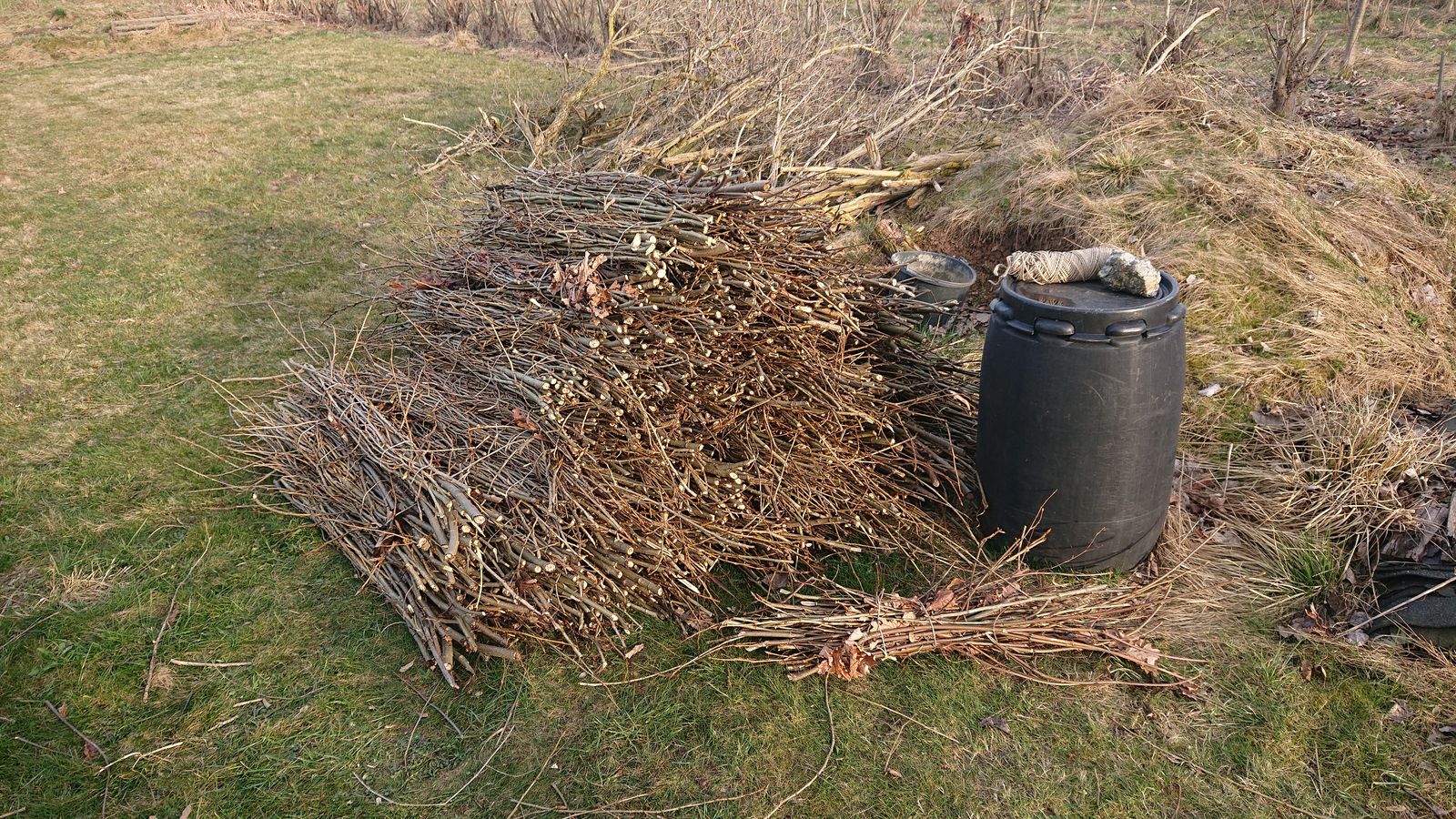
Last year I had a successful strawberry harvest, we got slightly over 8 kg of strawberries. So this year I have decided to take a lax approach to my strawberry patches and not spend too much time on them. I have removed some of the old leaves and overgrowth from last year, I tossed some crushed reed stalks between them, and that was it. No replanting or similar. About one day’s worth of work in between repotting my bonsai trees. When the strawberries began to bloom, I thought it looks promising and I estimated that this year’s harvest might be even slightly higher than last year, like 12 kg or so.

© Charly, all rights reserved. Click for full size.

Boy was I wrong. Very ronk.

For over a week by now, I spend just shy over an hour picking strawberries, then laying them down on a windowsill to finish ripening (this reduces the ants and slugs damage significantly, and they also become more aromatic that way). Then I had to weigh and clean them and put them in the freezer where they slowly accumulated to a dangerous degree. With 1-2 kg of strawberries daily, the freezer got filled up in a week and was threatening to burst. I had to play Tetris every time I wanted to take a popsicle out of there. It looked like I would have to stop doing everything else for a few days and start making marmalade.

© Charly, all rights reserved. Click for full size.

Luckily my mother returned from the hospital last week. She has reduced mobility in her right leg, but she does not have the intensive pains she used to have anymore and thus is relatively fit. So she could start making marmalade. preventing me from getting to be totally overwhelmed by the red menace. For a few days now she is every day using up all the freshly collected strawberries and she even managed to take a few bags out of the freezer already. Approximately 4 kg strawberries go into this huge pot together with some other sekrit ingredients.

© Charly, all rights reserved. Click for full size.

Today’s worth of work is several huge marmalade jars filled to the brim. And on the right side of this picture you can see the up-to-date tally – 18724 g! Nearly 19 kg, so with what I see in the patches from my windows, today evening we should cross 20 kg harvest easily. That is officially insane.

© Charly, all rights reserved. Click for full size.

When the jars cool, we check whether the lid created a proper vacuum seal or not, and those that did get labeled and go into the cellar. You can read the secret ingredients on the labels if you wish. I do not know the exact proportions, I think my mother has them written somewhere. Other than these, she also adds pectin and Aronia juice (which makes the marmalade less sweet and gives it a slightly darker color).

© Charly, all rights reserved. Click for full size.

So I expected to have about 50% higher harvest than last year, instead, I got 150% higher one and still counting. We have enough marmalade to last us for years at our normal consumption rate (which is about a spoon a day). I am this year spending significantly more time harvesting than I have spent actually caring.

I am slowly starting to wish they would stop so I can do other things with my time, like being lazy.

How to Sharpen a Scythe

The clicking and whispering of whetstone on a scythe blade is a sound that still evokes memories of early childhood in me. My father used to breed rabbits and he made hay twice a year. That, of course, clashed horribly with my allergies, so later on he moved to ducks, turkeys, and geese who kept the grass in our rather big garden in check during the summer on their own, and hay was not needed. Nowadays my allergies are much better than they used to be, we no longer keep any animals that eat the grass so we have to keep it in check by mowing. And the lawnmower does not reach all nooks and crannies, nor is it suitable for mowing grass that has overgrown a bit. And thus a scythe has to be used again.

My father has one and I have my own. We were both using one, but I got terrible back ache from it because the handle was just a tiny bit shorter than I need. For a long time, I could not find a suitably long scythe handle anywhere, so I even started to season ash wood to make my own. Luckily my parents saw a TV advert for a company that sells adjustable scythes so I bought one, adjusted it accordingly and I use it for two years by now and my back no longer aches (apart from normal tiredness that is). And I get to make my own clink-whoosh sounds with whetstone on the blade.

But there comes a time when the whetstone actually destroys the blade – when the cutting edge becomes as sharp as that of a knife. Yus, that is correct, a scythe blade that is as sharp as a knife is of no use. Here is a picture of my scythe this morning, when work with it became finally too difficult and it was bending the grass a lot without cutting it. It would cut yer leg off in a blink, but it was no longer good at cutting grass.

© Charly, all rights reserved. Click for full size.

You can see the edge is laid on a tiny peening anvil fixed to a small wooden horse so when one sits on it, the blade can lay on the anvil and be supported by knees on either side to stabilize it. The left hand holds the blade to move the edge across the anvil, and the right hand beats the crap out of the edge with a hammer.

Scythes are hardened, but they are tempered back to springiness, so the material is somewhat ductile – up to a point. The hammering has thus several effects. It draws out the material a bit, so the scythe becomes a mm or so wider and thinner at the edge.  The second effect is the so-called work hardening of the steel, the thinned drawn-out edge becomes harder. And the third effect, completely undesirable in a knife blade but essential in a scythe, is that the edge becomes all wavy and even cracked in places. Look at a hammered blade.

© Charly, all rights reserved. Click for full size.

For a knife, that looks absolutely terrible. But for a scythe, this is a must. Grass is a mixture of soft and hard fibers, yielding and tough. The jagged edge is much better at cutting it than a smooth knife-like one. My father even tells an anecdote about a former colleague of his who never hammered his scythe and has sharpened it as a knife – and as a result, he had difficulty cutting grass with it.

After the blade is hammered out, a few passes with whetstone are sufficient to straighten it a bit and break off some wire edge and thin it just a tiny bit more than the hammering has done. And that maintenance with whetstone should now suffice for a few months, then it will be hammer time again. A properly sharpened scythe should be able to cut grass that is just a few cm high with a light pass.

© Charly, all rights reserved. Click for full size.

Yes, I am wearing socks in sandals. I think not doing so is just stupid and fashion be damned, especially in my garden.

My Auntie’s Garden – Part 11 – Finale

Not a grand finale I am afraid. Just a few more pictures of trees.

First, the view that meets people upon entering the garden.

© Charly, all rights reserved. Click for full size.

That huge Chamaecyparis pissifera on the left is absolutely gorgeous. It is over thirty years old. And the small birch in the center originally just happened to sprout there as a weed towards the end of my university studies, so it is somewhere around 24 years old. At that time I was really getting into growing bonsai trees and my aunt has seen some when she was visiting. And it gave her the idea to let the birch live and just prune it so it does not grow into a full-sized tree but remains small-ish, like bonsai. She seems to be fond of the tree.

And the last picture that I have is of a blooming Magnolia hugging the southern wall.

© Charly, all rights reserved. Click for full size.

I took lots more pictures during this trip, but not in my aunt’s garden. That will be another series – stay tuned.

My Auntie’s Garden – Part 10 – Fruit Trees

My aunt has a huge pear tree behind the house. She does not have very many pears though, because she has a lot of junipers in her garden, and junipers and pears in the same spot do not match – Gymnosporium sabinae abounds and is impossible to eradicate. But the tree still grows and blooms every spring.

© Charly, all rights reserved. Click for full size.

© Charly, all rights reserved. Click for full size.

Then there are several small apple trees. I love apple tree blossoms, they are my favorite. And when uploading these, I found out that FtB is broken, and deleting and replacing once uploaded wrong image with a different one of the same name does not work for whatever reason. FtB retains the old image even when I “delete permanently” it.

© Charly, all rights reserved. Click for full size.

© Charly, all rights reserved. Click for full size.

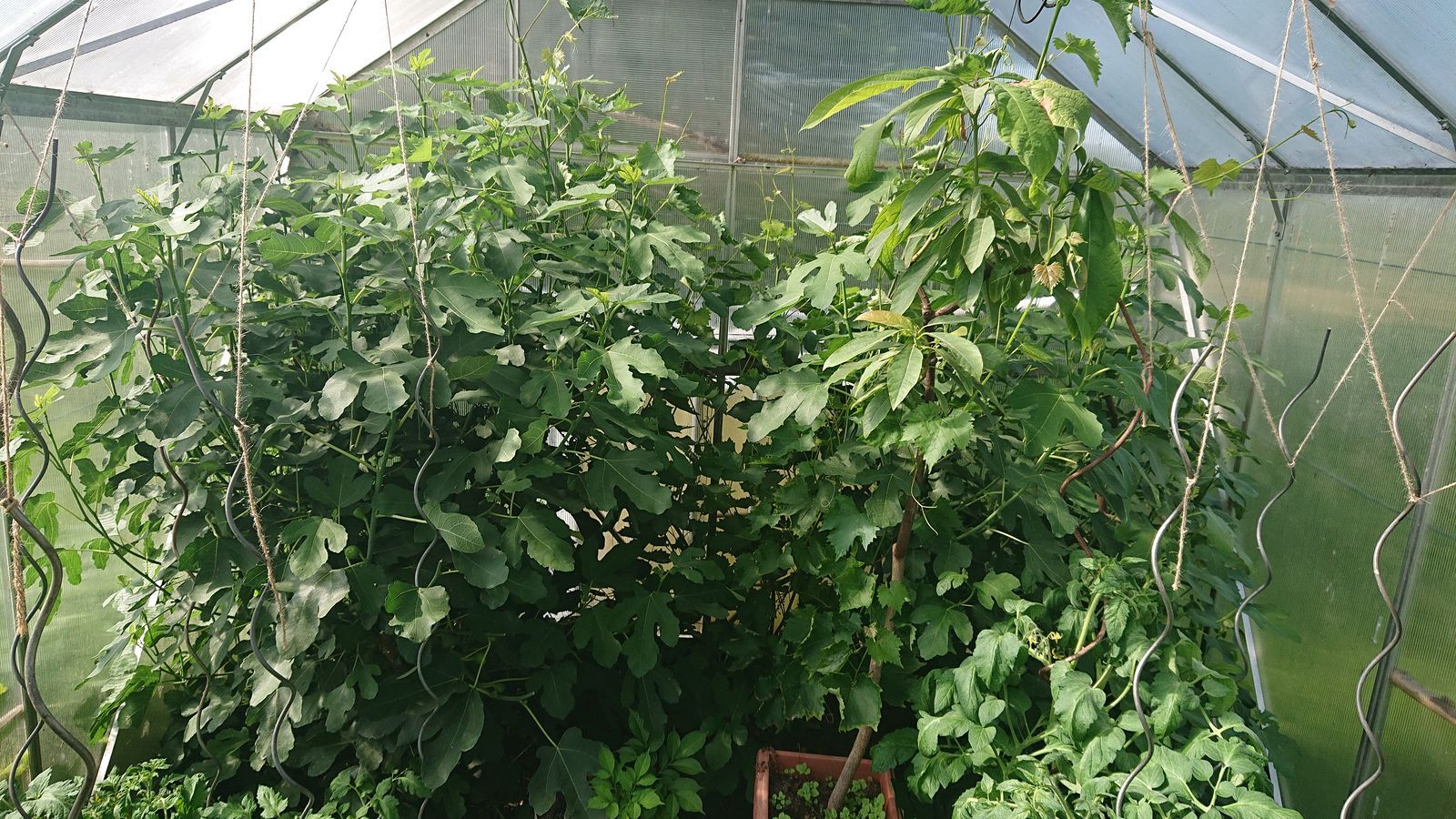
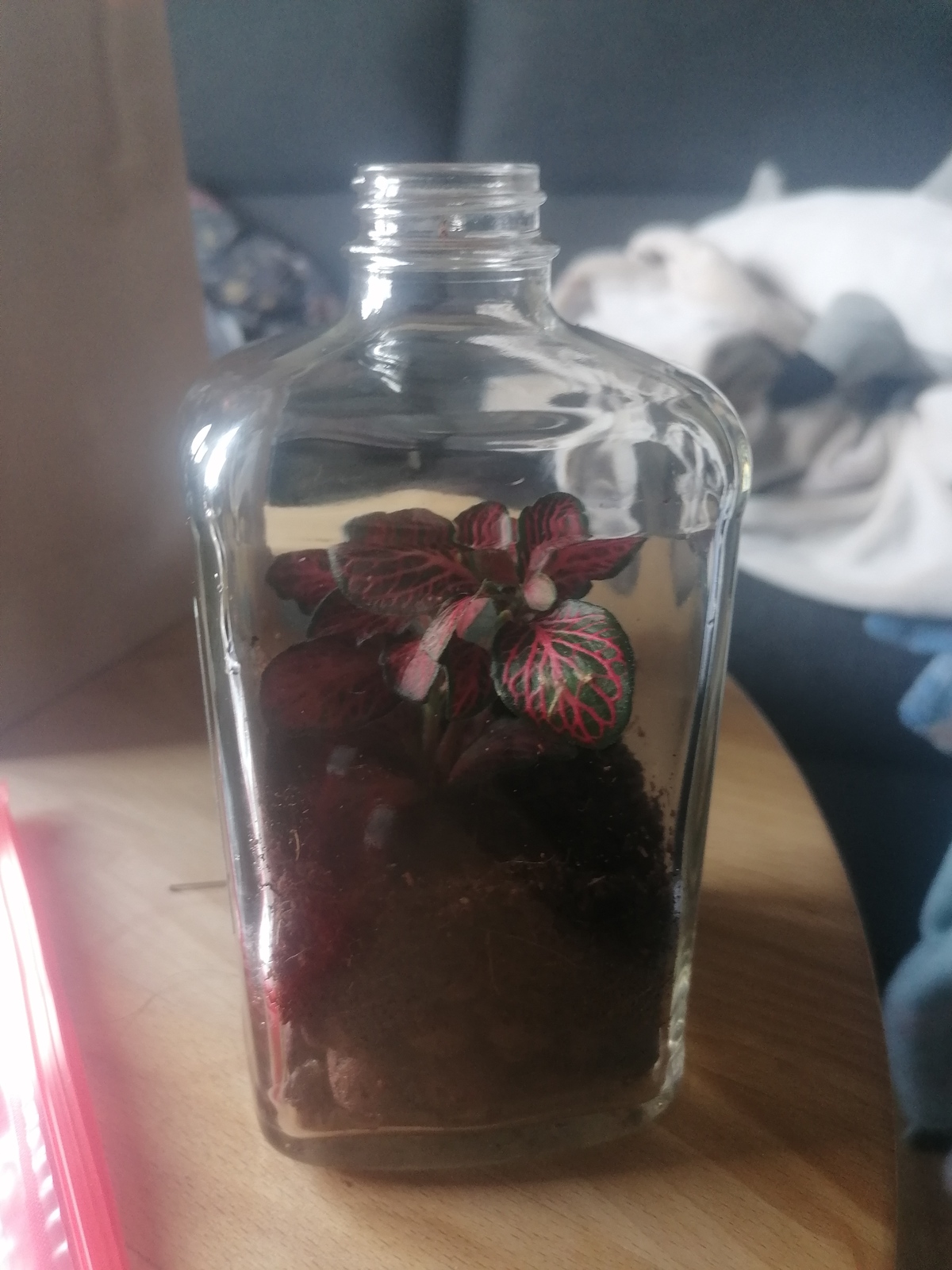
Then there is the one issue where I am far more successful than my aunt. And in part, it is due to the unfavorable climate. I live at a much higher elevation where the winter temperatures are very low. That is why my fig trees are in greenhouses, where they have a higher chance of surviving winter in good enough shape to bear fruit in the summer. In fact, these last two years I had several kg of late lower quality figs each October and at least a few dkg of fresh high-quality figs in the summer. This year looks extremely promising, my fig trees are covered in nearly golfball-sized green figs already, but my aunt is not so lucky. Her fig tree, although a clone of the same stock as mine (I am the one who obtained them from one university professor during my studies) does bear very little fruit and very inconsistently, and this year during my visit she only had a few bare twigs. When looking closer you can see that the tree almost every year freezes down to the roots and sprouts anew, something that happens to me once in a while too, but to my aunt, it happens more often. Because hers is outdoors and central Europe is just too cold even at its warmest.
© Charly, all rights reserved. Click for full size.

I forgot to ask whether she got any apricots from her young and tiny apricot tree yet. I have seen no sign of blooms or fruit this spring.

© Charly, all rights reserved. Click for full size.

And last not a tree but a bush – red currant that looks recently planted. We used to have many bushes around the garden, red and black currant. My grandfather made wine out of them, but my father was strongly recommended to not drink it after he passed a kidney stone. And passing a kidney stone is an unpleasant enough experience to not want to repeat it, so the winemaking stopped after my grandfather died. The bushes lingered on for a few years still, but then caught some disease and started dying off, so they were all dug up and our garden no longer has any currants in it. The same happened to our neighbour’s currants.

© Charly, all rights reserved. Click for full size.

My Auntie’s Garden – Part 9 – Suculents

There are several colors of sempervivum around the garden, and this red cluster near the old well is particularly beautiful in combination with its surroundings.

© Charly, all rights reserved. Click for full size.

Then there is this bowl with what looks like sempervivum but is a different species whose name completely skipped my mind. That is the reason why it is in a bowl – unlike sempervivum, this one is not frost-hardy species.

© Charly, all rights reserved. Click for full size.

There are also several clusters of various sedum species, but I did not make extra pictures of those since they are tiny. What is not tiny, however, is this little opuntia. The fruit (“prickly pear”) is edible, although not particularly tasty according to my aunt. There are only several cacti species that are frost resistant enough to survive the winter here, even in the much milder winters in the area where my aunt lives. And if frost does not kill them, then the overabundance of water will. This one has survived several decades under the careful care of my aunt and it looks healthier than mine in a flower pot.

© Charly, all rights reserved. Click for full size.

My Auntie’s Garden – Part 8 – Shrubbery or Bush or Both?

I am not finished with this magic place where I played as a child, but I am still working my way through the woodpile, and together with other things, there is not much time at the PC left when I have the strength to sit down and write. There will be more.

Between the garage and the house is a big mahonia bush and it was right in bloom, all green and gold.

© Charly, all rights reserved. Click for full size.

© Charly, all rights reserved. Click for full size.

Two huge ericas add different colors to the garden elsewhere.

© Charly, all rights reserved. Click for full size.

© Charly, all rights reserved. Click for full size.

Various rhododendrons and azaleas are not blossoming yet, so they are unfortunately still just indistinct green blobs in the background somewhere. I think there will be more than one color here in due time.

© Charly, all rights reserved. Click for full size.

I do not know what this is, but it is taller than me.

© Charly, all rights reserved. Click for full size.

Hugging the south wall is this miniature almond. I have tried to grow it as a bonsai, but it did not prosper very much in the much colder climate where I live and after several years of barely surviving and not growing very much it unfortunately died. Maybe it would fare better now, the last five years were markedly and measurably warmer than normal.

© Charly, all rights reserved. Click for full size.

Nearby is also frost-hardy rosemary. I did not have any luck with that either. Last year I got three clippings, all died before Christmas and I have no idea why. It was not even planted outside yet, I was wintering it with my laurels and citruses.

© Charly, all rights reserved. Click for full size.

My Auntie’s Garden – Part 7 – Still Some More Small Flowers

There will also be posts with other things, but I am not done with the flowers yet. You probably understand by now why I love this garden, especially in the spring. Nobody knows how many species my aunt has amassed over the years. One could possibly write a dissertation on it. Even when one thinks one has seen all, there is something rare or tiny or seasonal or all of it lurking in some corner somewhere.

© Charly, all rights reserved. Click for full size.

© Charly, all rights reserved. Click for full size.

© Charly, all rights reserved. Click for full size.

© Charly, all rights reserved. Click for full size.

© Charly, all rights reserved. Click for full size.

© Charly, all rights reserved. Click for full size.

My Auntie’s Garden – Part 6 – Even More Small Flowers

I am back from the holiday with my friends from the university but unfortunately, I did not bring back any pretty pictures. There were no pretty sceneries, cute animals, or interesting flowers. There was a lot of talking since we did have some catching up to do – we did not meet for over two years, even more with some.

But there are still some more pictures from my aunt’s garden so there will be several more posts of that. I am very busy in my own garden right now too so I do not have much time to write.

© Charly, all rights reserved. Click for full size.

© Charly, all rights reserved. Click for full size.

© Charly, all rights reserved. Click for full size.

© Charly, all rights reserved. Click for full size.

My Auntie’s Garden – Part 3 – Pansies

The Czech name for these beauties is “maceška” which is a diminutive form of the word “macecha” (stepmother). Don’t ask me why, I have no clue. These were not grown in the rock garden itself, they are in old ceramics throughs near the steps into the house.

© Charly, all rights reserved. Click for full size.

© Charly, all rights reserved. Click for full size.

© Charly, all rights reserved. Click for full size.