From Giliell, click for full size. The first photo was taken with a pink filter, and I find it very pleasing and captivating.




© Giliell, all rights reserved.

From Giliell, click for full size. The first photo was taken with a pink filter, and I find it very pleasing and captivating.
© Giliell, all rights reserved.
Okay, long hours of getting organized. Again. I had to take my old jeans organizer down, because rats. Yes, they discovered it and started using it as a climbing wall. Wheee! Not so whee for me. Got that back up, because now I can close the door, and the magical climbing wall goes away for the night. This holds only the thread I’m using for the Tree Quilt. The Peace Quilt thread is in a large container of its own; the rest of my embroidery thread is in a 6 drawer cart. So, on with the organization:
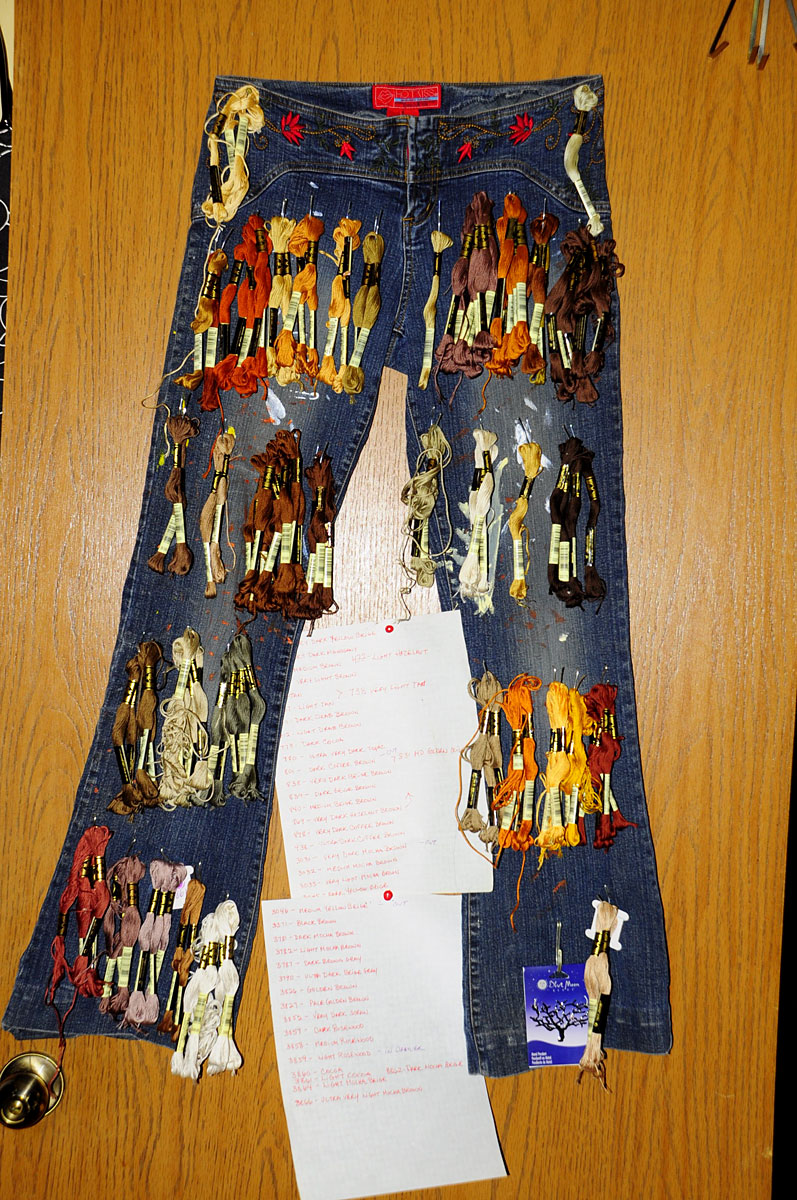
Then it was time to sort through and organize all the vintage thread I’ve come across in thrift stores:


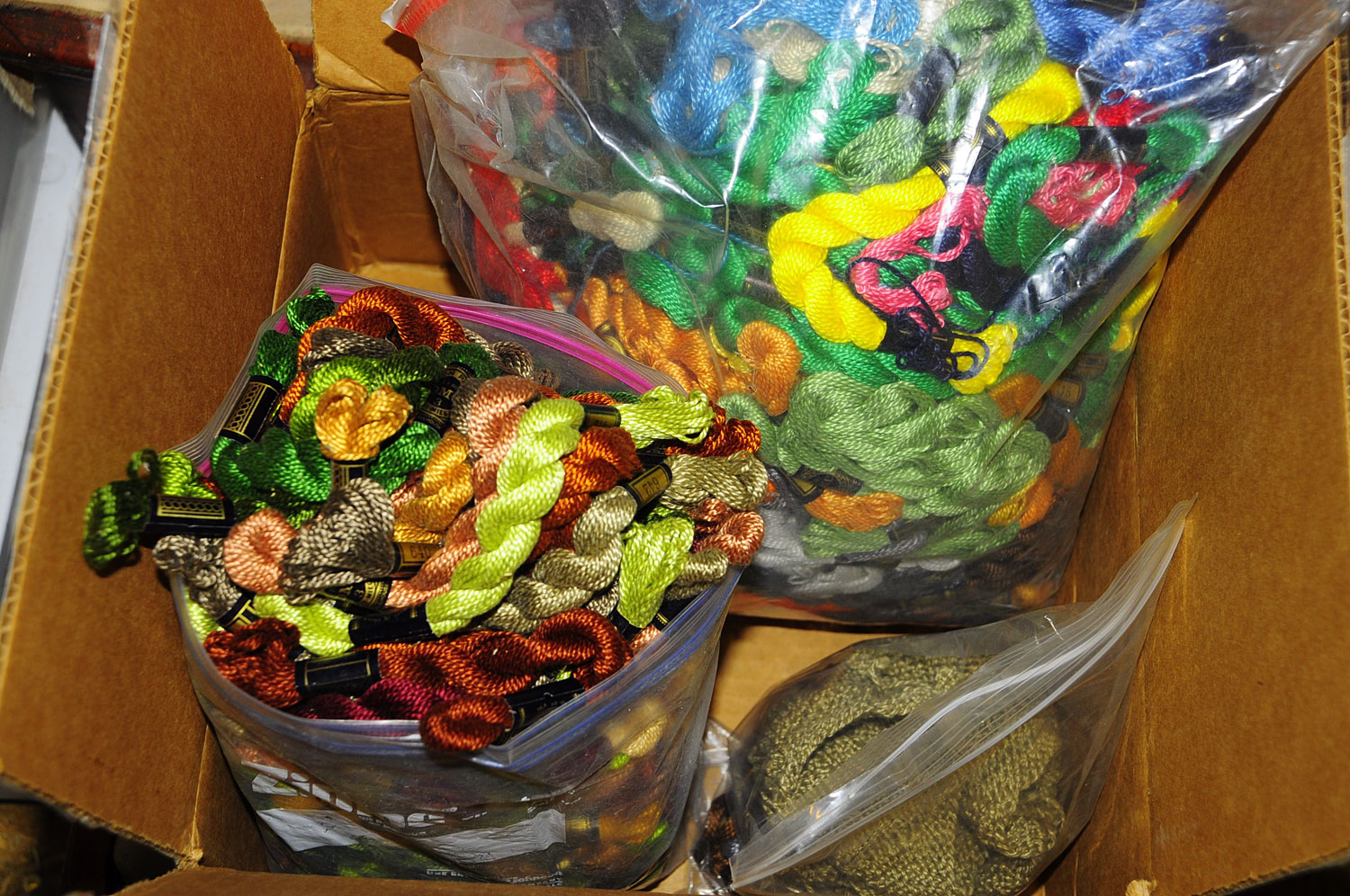
Then I tackled the small bag of perle 3 from Kestrel. That contained 170 skeins. I’m going to need a lot more containers before I tackle the big bag.


Click for full size. © C. Ford, all rights reserved.


© C. Ford. All rights reserved.
Fledgling Downy Woodpecker. Click for full size.

© C. Ford. All rights reserved.

Here are the materials in Dakota Access LLC v. Archambault (D.N.D.):
Via Turtle Talk.

Courtesy Standing Rock Dakota Access Pipeline Opposition
Police line up before protesters near the construction site of the Dakota Access oil pipeline.
The controversial Dakota Access Pipeline project is back in the news. Over the weekend, tribal activists faced off against lines of police in Hunkpapa Territory near Cannon Ball as construction crews prepared to break ground for the new pipeline, while Standing Rock Sioux governmental officials resolved to broaden their legal battle to stop the project.
On July 26, 2016 the Standing Rock Sioux Tribe was stunned to learn that the U.S. Army Corps of Engineers had given its approval for the pipeline to run within a half-mile of the reservation without proper consultation or consent. Also, the new 1,172 mile Dakota Access Pipeline will cross Lake Oahe (formed by Oahe Dam on the Missouri) and the Missouri River as well, and disturb burial grounds and sacred sites on the tribe’s ancestral Treaty lands, according to SRST officials.
Texas-based Energy Transfer Partners will build, own and operate the proposed $3.78 billion Dakota Access Pipeline and plans to transport up to 570,000 barrels of crude oil fracked from the Bakken oil fields across four states to a market hub in Illinois. The pipeline—already facing widespread opposition by a coalition of farmers, ranchers and environmental groups—will cross 209 rivers, creeks and tributaries, according to Dakota Access, LLC.
Standing Rock Sioux leaders say the pipeline will threaten the Missouri River, the tribe’s main source of drinking and irrigation water, and forever destroy burial grounds and sacred sites.
“We don’t want this black snake within our Treaty boundaries,” said Standing Rock Sioux Tribal Chairman Dave Archambault II. “We need to stop this pipeline that threatens our water. We have said repeatedly we don’t want it here. We want the Army Corps to honor the same rights and protections that were afforded to others, rights we were never afforded when it comes to our territories. We demand the pipeline be stopped and kept off our Treaty boundaries.”
Whitehouse.gov
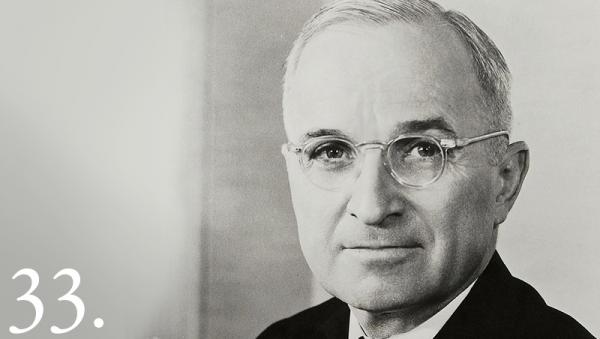
One of the most dramatic shifts in federal-Indian relationships occurred under the administration of Harry S. Truman. His presidency marked the end of Franklin D. Roosevelt’s Indian New Deal and the beginning of the termination era.
One of the most dramatic shifts in federal-Indian relationships occurred under the administration of Harry S. Truman.
When Truman took office in 1945, Indians had unprecedented autonomy under the Indian New Deal, enacted more than a decade earlier by Franklin D. Roosevelt. The Indian New Deal abolished the allotment program, allowed tribal communities to organize their own governments and ushered in an era of hope.
Under Roosevelt, Indians enjoyed a 12-year reprieve from aggressive assimilation policies. They had breathing room to regenerate tribal governments and reclaim land.
But Truman’s presidency marked the end of this New Deal and the beginning of Indian termination, a series of policies that sought—once again—to assimilate Indians. Billed as vehicles to integrate Indians into the wider nation and protect them from racial discrimination in the post-World War II era, termination policies dismantled trust relationships, relocated Indians to urban centers and stripped tribes of land and sovereignty.
“Truman parted with Roosevelt and with the philosophies of the Indian New Deal,” said Samuel Rushay, supervisory archivist at the Harry S. Truman Presidential Library and Museum. “He adopted the termination policy out of good intentions because he wanted to encourage racial integration.”
Truman supported termination because he saw it as a way to protect equal rights and improve Indian lives through full participation as citizens, Rushay said. It also lightened the economic burden Indian services placed on the federal government.
“It’s important to remember that Truman tended to conflate Native American rights with the rights of other minorities,” Rushay said. “He saw them as individuals who should have individual rights and freedoms, but he did not take into proper account the importance of tribal culture. He didn’t understand that tribal relationships were an integral part of culture and identity. He didn’t know that by relocating Indians to urban areas he was cutting off their support.”
Within the first decade of the termination era, policies that Truman supported terminated more than 100 tribes, severing their trust relationships with the federal government. Termination defined federal Indian policy for the next 25 years and forever altered the dynamics between tribes and the federal government.

Indian Affairs Archives.
“We know our lands have now become more valuable. The white people think we do not know their value; but we know that the land is everlasting, and the few goods we receive for it are soon worn out and gone.”
Canassatego, circa 1740
“…your money is not as good as our land, is it? The wind will blow it away; the fire will burn it; water will rot it. Nothing will destroy our land.”
Crowfoot, Siksika, 1877
Quick Story: I saw some images today of the direct action going on at the Sacred Stone Camp in Hunkpapa territory right now, where Native people are organizing against the Dakota Access Pipeline. Powerful images, powerful movement. And although I was going to write about something else, Hunkpapa made me realize how long Native people have been organizing against these dirty energy projects—choosing to turn down huge sums of money—to protect the earth from folks who would tear up our homelands. Those photos made me realize that we’ve been doing this for a long time. From Northern Cheyenne to the Blackfeet Nation to Lummi to Standing Rock, so many of our folks simply will not take a few bucks in exchange for destroying our relationship with Earth. Please look at these images—pray for these warriors on the front line right now, in real time, in Hunkpapa territory. Send some thoughts, prayers and food. Share the images; it all helps. But there is a reasonable question of why do Native people keep on fighting against what the white folks call “progress” and “economic development?”
Why can’t Native people just take the money and run?
From Rick, more beautiful swarf (weld spatter) and lovely rocks. Thanks, Rick!


From Marcus, resin-metal (stainless and nickel steel) wondrousness! (Yes, one of them is upside down, because it’s for adult eyes only.) They need a bit of polishing with steel wool, which is being lovingly done by Rick. The Buddha was first, and now has a place of honour on my desk shelves, because he just makes me happy. Thank you, Marcus!

I have received wondrous things! First, from Kestrel, an absolutely amazing amount of DMC Perle 3. I don’t use a lot of perle, because it’s more expensive, and what I do have is 5, which is considerably smaller. So, next major project will need to be Perle 3 based, I think. I have not yet pulled them all out, counted, sorted, or anything else. I’m still a bit busy picking my jaw up here. Thank you so much, Kestrel!

Black-capped Chickadee. Click for full size.

© C. Ford. All rights reserved.

Carol Everett (Photo: The Heidi Group).
In the not enough facepalm in the universe category, Texas legislature has designated 1.65 million dollars to a non-medical based, anti-abortion group, on the basis of aborted fetuses flooding the sewers, and somehow or another, causing the general water supply to be contaminated with STDs or HIV, because that’s just oh so realistic. Honestly, this is so goddamned embarrassing.
Carol Everett is the founder and CEO of The Heidi Group, an anti-abortion organization that gives women health “advice,” but is not a medical provider and can’t perform any health care services.
Earlier this month, Everett testified at a hearing at the Austin, Texas statehouse on a proposed requirement that women either bury or cremate the remains of an aborted fetus. According to The Austin Chronicle, Everett testified about her concerns of an impending public health disaster if fetuses were flushed down toilets. She argued that the general public could be afflicted with STDs or even HIV due to fetuses flooding the sewer systems.
“What if one day something horrible escaped into the sewer system?” she said, as the audience snickered.
Everett’s claims are scientifically impossible.
Just days later, the Texas legislature awarded The Heidi Group $1.65 million in taxpayer money for the organization’s “health care services.” Their organization doesn’t provide health care services.
While the group’s website advertises “Helping Texas Women,” further examination reveals their claims to have “programs” lists merely a phone number, the page that offers to help women with pregnancy/infant loss says “Page Coming Soon” and if a woman needs a pregnancy test they have a list of links to crisis pregnancy centers, that counsel women against abortion.
“The Heidi Group exists to ensure that all Texas women have access to quality health care by coordinating services in a statewide network of full-service medical providers,” the website says. It doesn’t explain how this is different from a Google search.
The grant comes out of funding that previously went to Planned Parenthood before Texas politicians kicked them out of the program in 2012.
In an interview with the Texas Observer, Everett admitted that she’ll be forking over a lot of the money to crisis pregnancy centers, which an investigation showed lie to women about the realities of their reproductive health. She assures the Observer that the taxpayer funds will not go to administrative costs at The Heidi Group or the organization’s rent, but it will go to nurses and doctors in rural Texas that urge women against abortions.
“My goal is to reach that little girl in a small county with no hope of having anybody explain her birth control options or have her blood pressure checked,” she said.
The local CVS pharmacy and Walmart often have machines where people can have their blood pressure taken for free. Crisis pregnancy centers in Texas have been caught counseling women to use abstinence only as a birth control method and refusing to dispense contraception.
Full Story Here.