Affinity
Art, Fun, & Nonsense.


(Screenshot/4Chan.org).
All us lefties are going to start foaming at the mouth, wilt, and just give up in the face of It’s Okay To Be White. Odd, but I don’t feel a swoon coming one, and my monocle is unpopped.
In right-wing internet message boards, users are encouraging one another to print and hang posters that state simply “It’s OK to be white” with the goal of exposing what they claim is anti-white racism in liberal communities and on college campuses.
Creators of the signs were first inspired by a news report that police were investigating fliers hung at Boston College that depicted Uncle Sam and the text, “I want you to love who you are” and “Don’t apologize for being white.” Reporters noted that the signs were posted near the planned location of an anti-racism rally on campus.
Earlier this week, 4chan users called on one another to hang fliers in their own communities with a more succinct spin on the Boston signs, making the statement “It’s Okay To Be White” in large easy-to-read font with no other context. One post detailing the plan explained the goal was to make liberals go “completely berserk” and ruin their credibility, marking a “massive victory for the right in the culture war.” [The linked post actually says media will go berserk.]
The campaign also urges participants to use adhesives that are non-permanent in order to avoid violating any laws and to conceal the signs’ connections to “racists or the alt-right.” One campaign graphic reads: “The simplicity is the point. It’s working.”

Right-wing YouTube creators have also taken notice, including Infowars editor-in-chief Paul Joseph Watson and white nationalist Paul Ramsey. Alt-right video bloggers James Allsup and Nick Fuentes even launched their own spin-off of the signs that read “Make your ancestors proud. Never feel guilty for who you are,” and solicited donations to produce and distribute their posters.
Oooh, be proud of your ancestors! Okay, I am. Funny how my pride amounts to “you stupid Indians, shut up! Pipelines are good!” and the like. That’s the problem with white pride, it excludes everyone else. Of course, exclusion is what white colonial pride is all about: “white people masters, everyone else, lay down to be trodden on.” This little campaign is hardly different from all the other shite supremacy, so it’s not a shock, it’s not even a surprise. White people being suuuuuper assholes simply has zero shock value.
,
First, What Is Digital Humanities?
Humanity (and not just the humanities) mediated through the largest extant body politic. A global vehicle (and personal prosthetic) for containing what it is to be human and humanist–within and without the academy. – Robert Long.
Digital Humanities: the creation and preservation of extensible digital archives to document, and tools to interact with, material culture. – Robert Whalen, Northern Michigan University.
A fluid term to describe a variety of practices applying and theorizing the intersection of technology and humanities questions. – Amy Earheart.
There’s more. Much more.
Introduction: In the decades following the onset of the Index Thomisticus project, medievalists were often early adopters of the digital, and continue to play an important role in the development of a broader field, which came to be called digital humanities. This field took other forms and names during its emergence and subsequent development: humanities computing, humanist informatics, literary and linguistic computing, digital resources in the humanities, eHumanities, and others.
These competing alternatives, among which “humanities computing” had long been dominant, have only recently made place for the newly canonical term “digital humanities,” which today is rarely contested. “Digital humanities” is generally meant to refer to a broader field than “humanities computing.” Whereas the latter is restricted to the application of computers in humanities scholarship and had narrower technical goals, the former also incorporates a “humanities of the digital,” including the study (potentially via traditional means) of digitally created sources, such as art and literature.
DH is therefore profoundly multidisciplinary and attracts contributions from scholars and scientists both within and outside the humanities and the humanistic social sciences. Digital humanists have taken care to define themselves in an inclusive rather than exclusive manner. As a result, the term “digital humanities” connotes a greater sense of integration than the diversity of approaches that are sheltered within the “big tent” of DH and that are also reflected in the contents of this supplement.
You can read more at Medievalists, and that article led me to a full open access issue of Speculum! Some very good reading there, including The Digital Middle Ages: An Introduction.


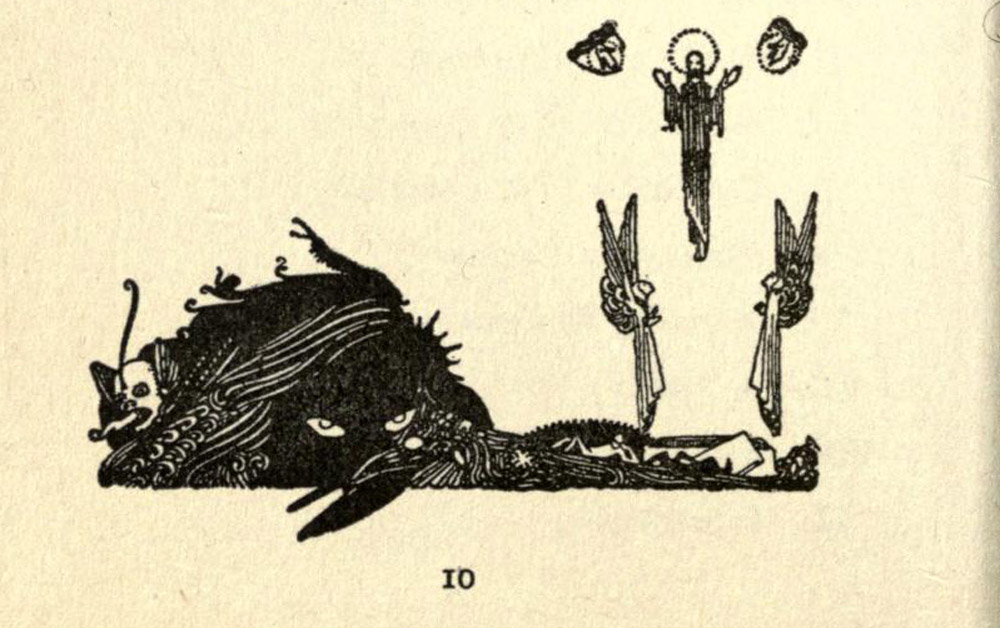
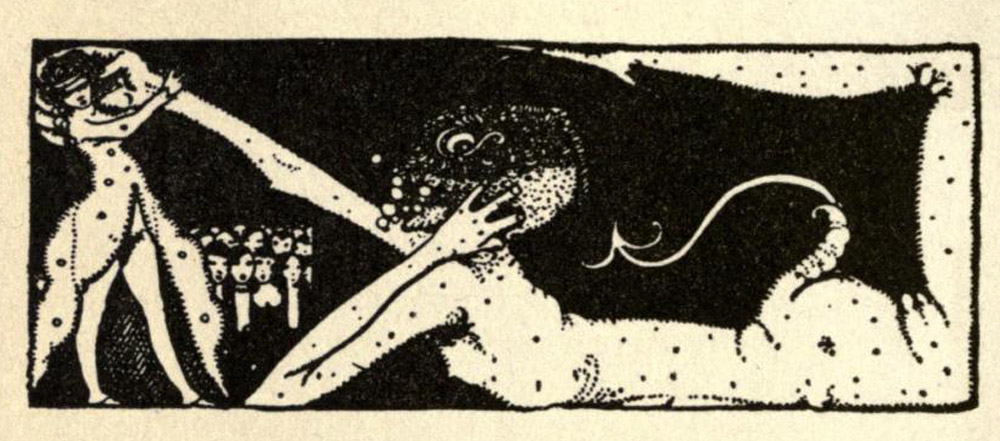
Decoratives by Harry Clarke.
Angel spends some time with Helmi.

© C. Ford.
Pain – Shut Your Mouth. Brilliant.
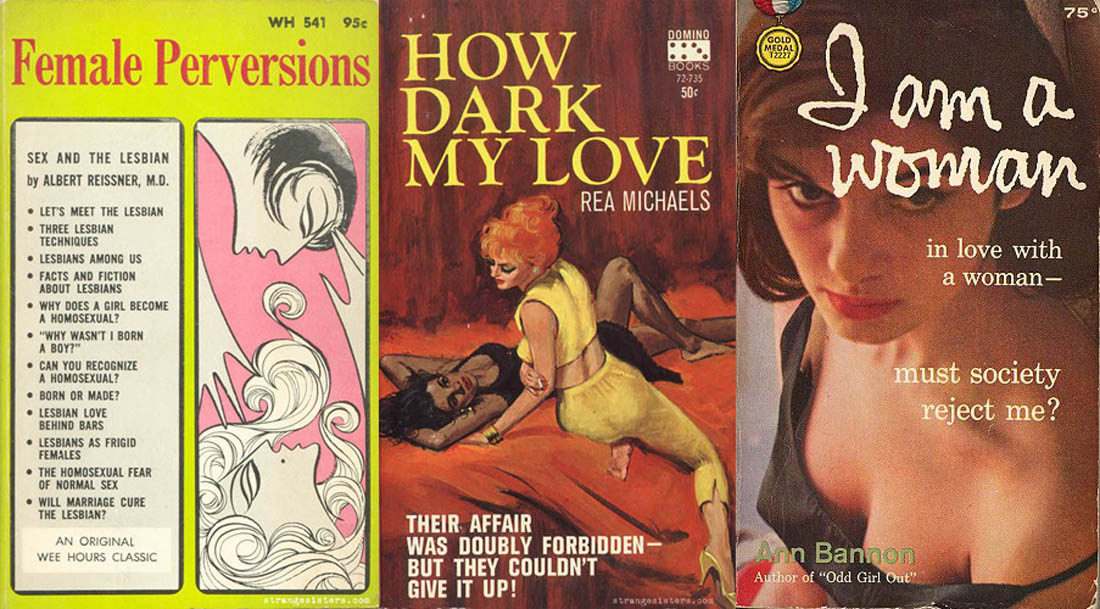
Note: Rea Michaels, writer of novels including Cloak of Evil and Duet in Darkness, stands out as one of the only pulp authors to include people of color and interracial relationships in her books and to have representations of lesbians of color on the covers of her novels. The majority of Queer pulp was overwhelmingly white.
Click for full size.


© C. Ford.
Eurasian Collared Doves, click for full size.


© C. Ford.

Bakhshali manuscript – image courtesy Bodleian Libraries, University of Oxford; Science Museum.
An international group of historians of Indian mathematics challenges Oxford’s findings around the age and importance of a manuscript thought to contain the oldest known zero.
Last month, the Bodleian Library at Oxford University announced that a Sanskrit manuscript housed in the library for the last century had been dated using radiocarbon techniques. Oxford’s radiocarbon dating laboratory announced that the three of the birch-bark folios of the Bakhshali Manuscript could be dated to roughly 300 CE, 700 CE and 900 CE.
[…]
An international group of historians of Indian mathematics has now challenged Oxford’s findings.
The team, which includes scholars from universities in the USA, France, Japan, New Zealand and the University of Alberta in Canada, has published a peer-reviewed article that refutes several of the Library’s key assertions.
[…]
The international team ends its article with a plea to Oxford University’s Library that important and complex scholarly topics should be published through established academic channels involving peer-review, and not through sensationalizing press releases to the media.
Medievalists has the full story. Also see The First Zero. The article in the journal History of Science in South Asia.
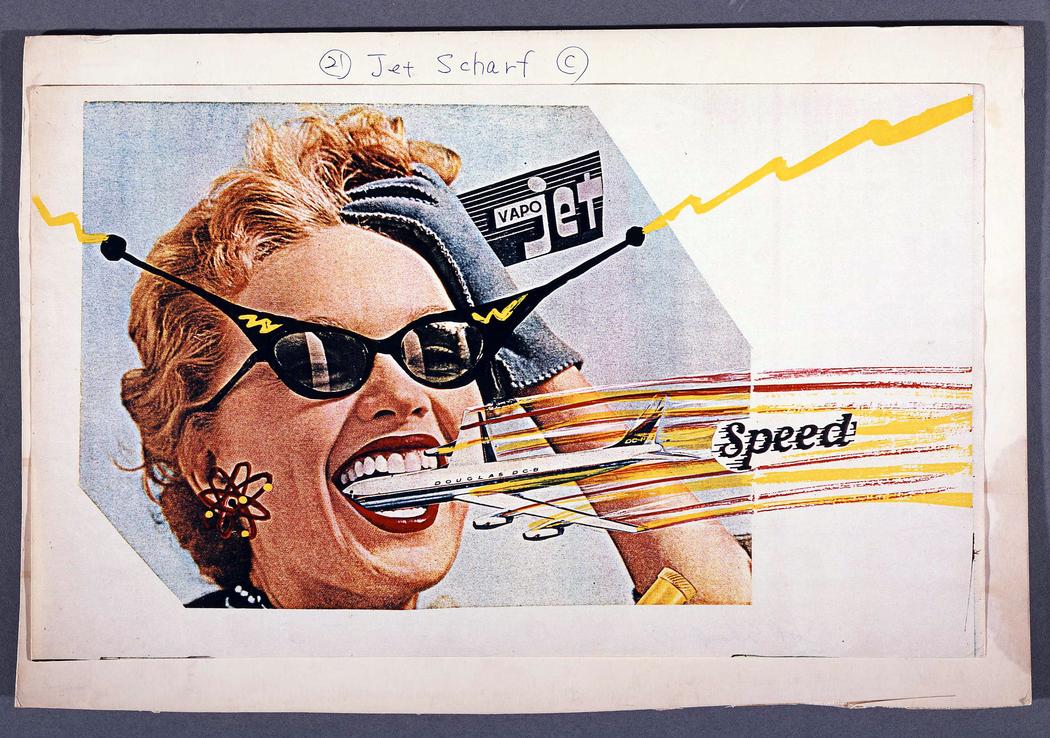
Kenny Scharf, Untitled #6 (Speed), 1979. Mixed media on board. Courtesy the artist and Honor Fraser Gallery, Los Angeles.

Lady Wrestling at Club 57. Pictured: Tom Scully, Tish and Snooky Bellomo. 1980. Photograph by and courtesy Harvey Wang.
MOMA is revisiting Club 57, in all its various glories. Club 57: Film, Performance, and Art in the East Village, 1978–1983 is on view at the Museum of Modern Art, New York, through April 1, 2018.
You can read about this at Garage.*
*This seems to be where the never updated Creators Project went. The writing has become extremely pretentious.
Rats, so clever. They figured out how to open the latch, and had a party. Rat Art Installation 7,352. Can you tell I’m cleaning my studio? Takes a while to find these things, the girls drag them off and hide them, even stuff that is 9.5″ x 7.5″. As to why this is in my studio, every now and then I like to paint with cosmetics. Click for full size.

© C. Ford.
Click for full size.


© C. Ford.

