
The zodiacal light. Observed February 20, 1876. Étienne Léopold Trouvelot.

The zodiacal light. Observed February 20, 1876. Étienne Léopold Trouvelot.


Illustration from Spectropia, or, surprising spectral illusions showing ghosts everywhere and of any colour by J. H. Brown (1864) (via Wikimedia).
The 1864 Spectropia used optical illusions to manifest ghosts in Victorian homes, and was designed to attack the quackery of Spiritualism. You can read and see more here.

“Hallowe’en morning” (John O. Winsch, 1914) (via Special Collections Department, Postcard Collection, Enoch Pratt Free Library).
Look, witches were into biofuel! :D Hyperallergic has a host of entertaining vintage Halloween Cards.
On the more serious side, today marks the opening of a new exhibition of Cornell University’s Witchcraft Collection:

Image from the Cornell University Witchcraft Collection (courtesy Cornell University Library).
You can read and see much more at Hyperallergic. It’s the largest witchcraft collection in North America, and will run through August of 2018.

Star clusters in Hercules. From a study made in June, 1877. Étienne Léopold Trouvelot.

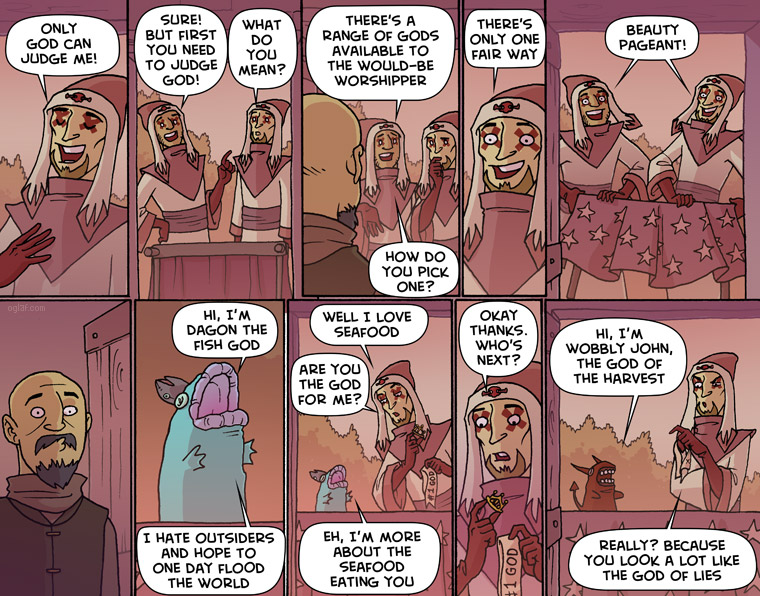
Do not miss this Oglaf! It’s 8 pages, and don’t forget the mouseover for each page. Hat tip to Chigau.
If you want to do something a bit different, consider Soul Cakes. There’s a good recipe here. Rather than go with carving pumpkins, why not give the traditional turnip a go?

A traditional Irish Jack-o’-Lantern in the Museum of Country Life, Ireland.
And the latest issue of Medievalist has a costume idea:
A Plague Victim.
It’s easy costume to prepare: – use beet juice rubbed on your face to create a flushed look. Buboes can easily be made from bread dough – use honey to attach to your underarms. Wear an old dress or other clothing you don’t mind getting dirty – this way you can fall to the floor groaning dramatically. You can take advantage of the conflicting theories about the black death and, when caught eating, claim an enormous appetite is a common symptom. You can throw your ‘buboes ’ at people, both delighting them at your humour and disgusting them at the same time!
Edited to add: I’d have a blast with that – I’d probably go with ready to bake biscuit dough, paint the outside with food colouring, then make a hole to pour in slightly whipped cream, tinted green and yellow with food colouring, then pinched mostly closed. If you threw one of those at someone, you could properly make them scream! :D


Medieval werewolves were a popular subject, but they were quite different from the slavering, unreasoning beasts of later depictions. Werewolves weren’t necessarily bad, and retained the ability to reason. Even the transformation was different.
One way of man-to-wolf transformation is to wear a wolfskin – this is most common in Old Norse-Icelandic literature, where the wolf-man is frequently referred to in skin-related terms, echoing the tradition of berserkr and úlfheðnar, battle-frenzied warriors wearing nothing but bear/wolf skin. Gerald of Wales (1146 – 1223) also reports a priest encountering a werewolf couple while travelling across the region of Ossory in Ireland. When the priest refused to perform last rites for the dying she-wolf, fearing that she might be some Devil ’s trick, the man-wolf ‘unzips ’ the wolfskin to reveal an old woman underneath, as if it were just a coat. The difference in transformative mode results in a difference in emphasis: when the wolf comes out of the man, it is as if the wolf – the wolf is the essence. In the medieval portrayal, on the other hand, even though in some cases the wolfskin/form does bring out the beast within, the man is only wrapped,hidden, but never destroyed, and the werewolf is more like a riddle, waiting to be solved.
In Jim C. Hines’s Princess series, I loved that the character of Red Hood was this form of werewolf – the inside of her red cape was a wolfskin. If she flipped it so the wolfskin was on the outside, she transformed.
Medieval werewolves got along just fine in knightly and courtly sense.
‘Be a wolf, have the understanding of … a man!’
The quote above is from Arthur and Gorlagon, [English starts on page 24] one of the four Arthurian Romances written in Latin. In the story, King Gorlagon is turned into a wolf by his treacherous wife. She could have gotten away with the crime, had she not made the mistake of enhancing ‘the understanding of a man ’ instead of ‘the understanding of a wolf ’. A most unlikely mistake, and most unfortunate on the wife’s part, but it brings another major difference between modern and medieval werewolves: the medieval ones are rarely savage monsters; instead, they can be surprisingly intelligent, rational, and well-behaved. Melion, Bisclavret, and Gorlagon find no difficulty in mingling with the king ’s knights and courtiers – Gorlagon even sits on the horse and waits on the king’s table ‘with his forepaws erect ’. Granted, courtesy does not make werewolves mild and friendly creatures, but even when they perform some deeds of violence, that violence is well justified. Take Bisclavret for example: the wolf inflicts great harm upon his wife and her lover, but the action is read as revenge, thus confirming, rather than forfeiting the wolf ’s humanity.
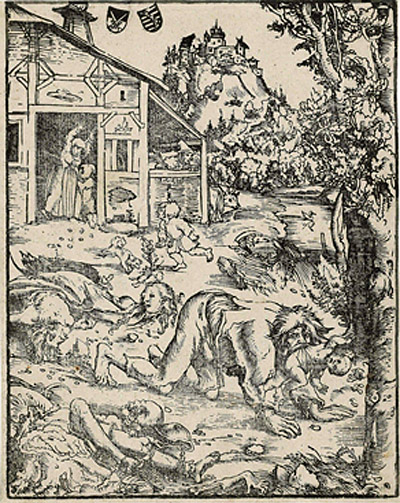
Werewolf (1512).Lucas Cranach the Elder .Gotha,Herzogliches Museum (Landesmuseum).
Other differences were transformation triggers; Medieval werewolves were not ruled by the full moon. Bisclavret transformed at will, with no regard to the moon. There were two tales which did take a lunar trigger into account:
The only example of a full moon transformation is found in Otia Imperialia or ‘Recreation for an Emperor’, a speculum written by Gervase of Tilbury (1150 – 1220) for Otto IV (1175 –1218). Gervase reports men turning into wolves ‘according to the cycles of the moon’. He gives two examples:The first, is a certain Pons de Chapteuil, a knight-turned-vagabond that becomes mad while ‘wandering alone like a wild beast … deranged by extreme fear’. Despite Gervase’s earlier mention of the moon, Pons de Chapteuil’s transformation is primarily a physical manifestation of his social identity and emotion. The other werewolf is Chaucevaire, who does transform under lunar influence, but does so only when there is a new moon, the opposite to a traditional full moon transformation. The connection between the werewolf and the moon the etymology of the Latin word moon, luna, which is associated with lunatics. Their loss of human reason dehumanizes them, rendering them figurative beasts, which, as the previous point shows, apparently is not the case with most werewolves.
In the Discworld Watch books, Terry Pratchett compromised with his primary werewolf character, Delphine Angua von Uberwald, who could transform at will, but was subject to an irresistible trigger at the full moon. Medieval werewolves also didn’t have an appearance which was distinct from natural wolves. They might have been a bit larger, but that was all, so there was no easy way to distinguish a werewolf.
I can’t help thinking that Aargh, the English Wolf would have considered them all with disdain.
From Medievalists, an article by Minji Su, Current DPhil student at Oxford university, researching on werewolves in medieval Icelandic literature.
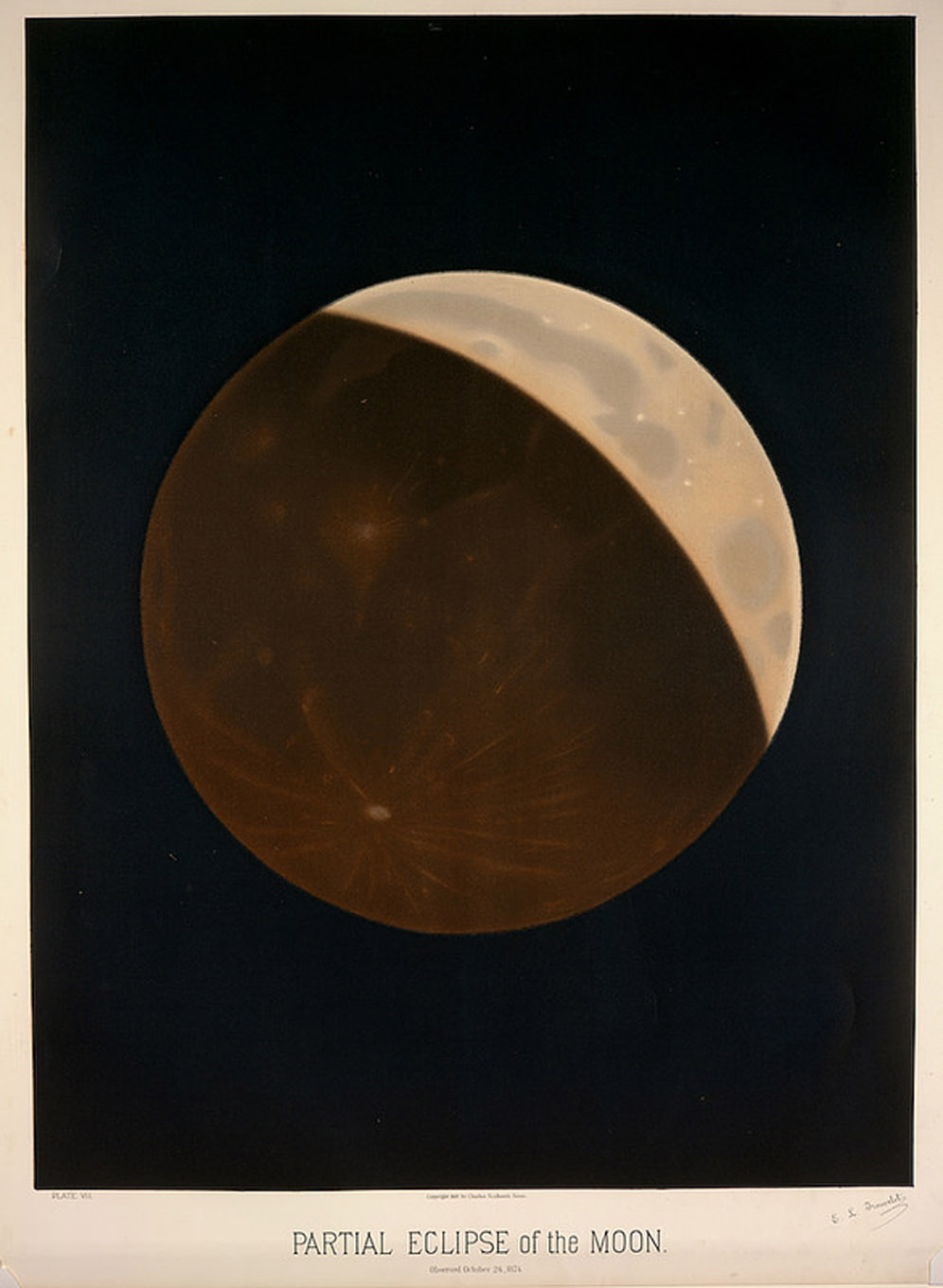
Partial eclipse of the moon. Observed October 24, 1874. Étienne Léopold Trouvelot.


Night Dragon, watercolour. © C. Ford, all rights reserved.
New book!

The Penguin Book of the Undead: Fifteen Hundred Years of Supernatural Encounters, by Scott G. Bruce.
Just got this downloaded, really looking forward to it. Came across this at Medievalists, in a short article about how Medieval people dealt with those pesky dead people who refused to stay dead and buried. The cover art, which I think is fabulous, is by Anton Semenov, check out more of their work here.
This will make lovely nighttime reading.

The great nebula in Orion. From a study made in the years 1875-76. Étienne Léopold Trouvelot.
