Slavic Saturday

Today I wish to share traditional Czech and Slovak recipe, although I do not think it is exclusively ours or exclusively slavic. It is called “smaženice” in Czech and “praženica” in Slovak. Both of those names could be translated as a “fry up”, but in our language it is only this one meal and not a generic name. There might be some local variations to the recipe (in fact, I would be suprisede if there wer not), so this is not “the” version.

It  is a very simple meal specific for this season, because it is best made from freshly collected mushrooms. I was personally not mushroom hunting this year, because it was too dry when I had the time. But one of my mothers friends brought us this Tuesday a basket of mushrooms as a payback for tomatoes, plums and walnuts we let her take from our garden.

In my opinion best species for this are blushers (Amanita rubescens), closely followed by various boletes that are not suitable for drying – like suede boletes, larch boletes, birch boletes etc. So I collected all of such species from the basket, cleaned them and cut them into a thumbnail sized chunks and I added then bay boletes and ceps  until I had a overfilled soup-plate of such chunks. It looks like a lot, but it is only one, albeit generous, serving – the mushrooms will lose most of their water during the process. Now is also the time to add salt – sprinkle an “adequate” amount of it on the shrooms, stir and wait a while. You can also add other spices of your liking, I only add shredded cumin and black pepper.

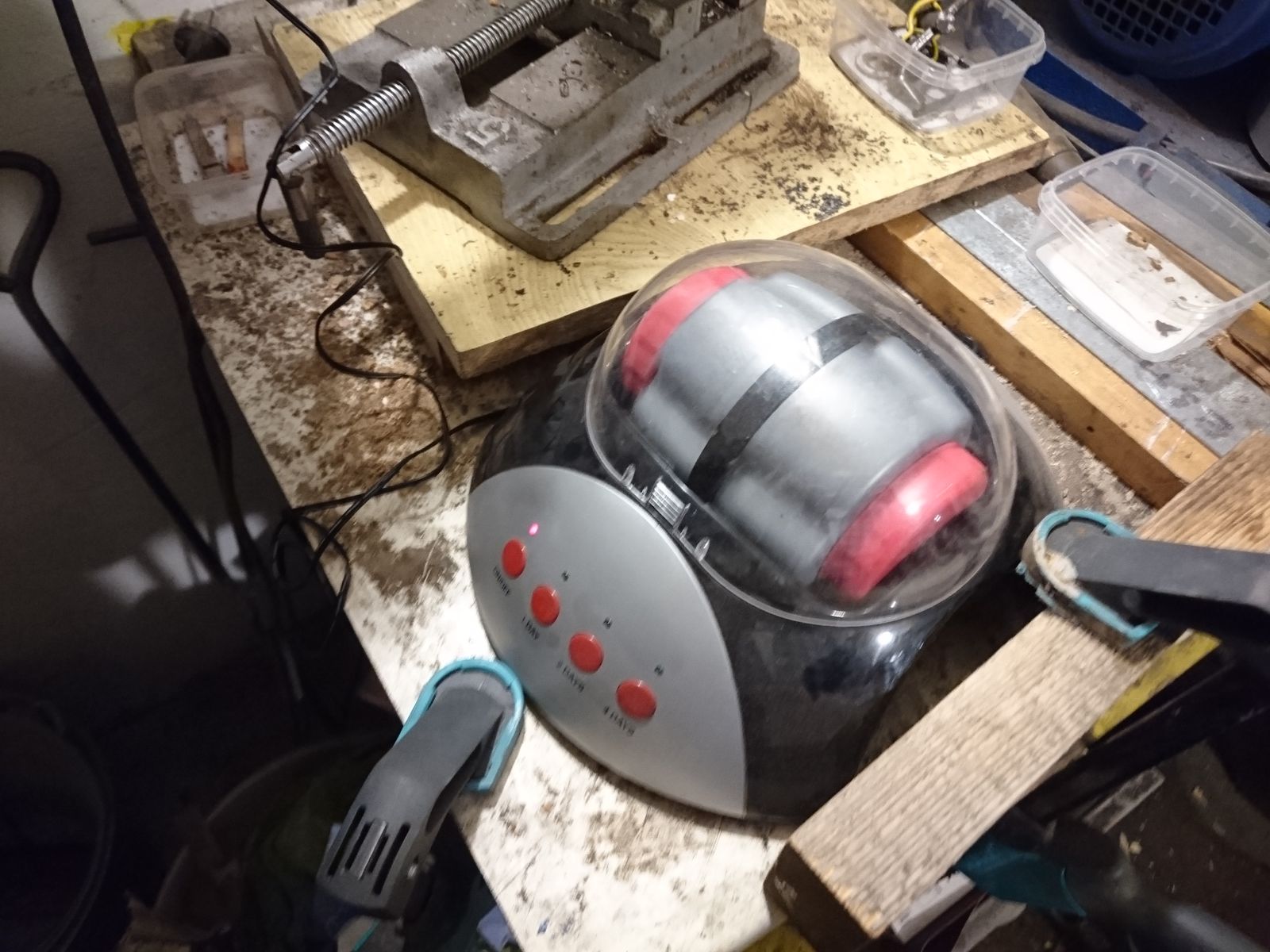
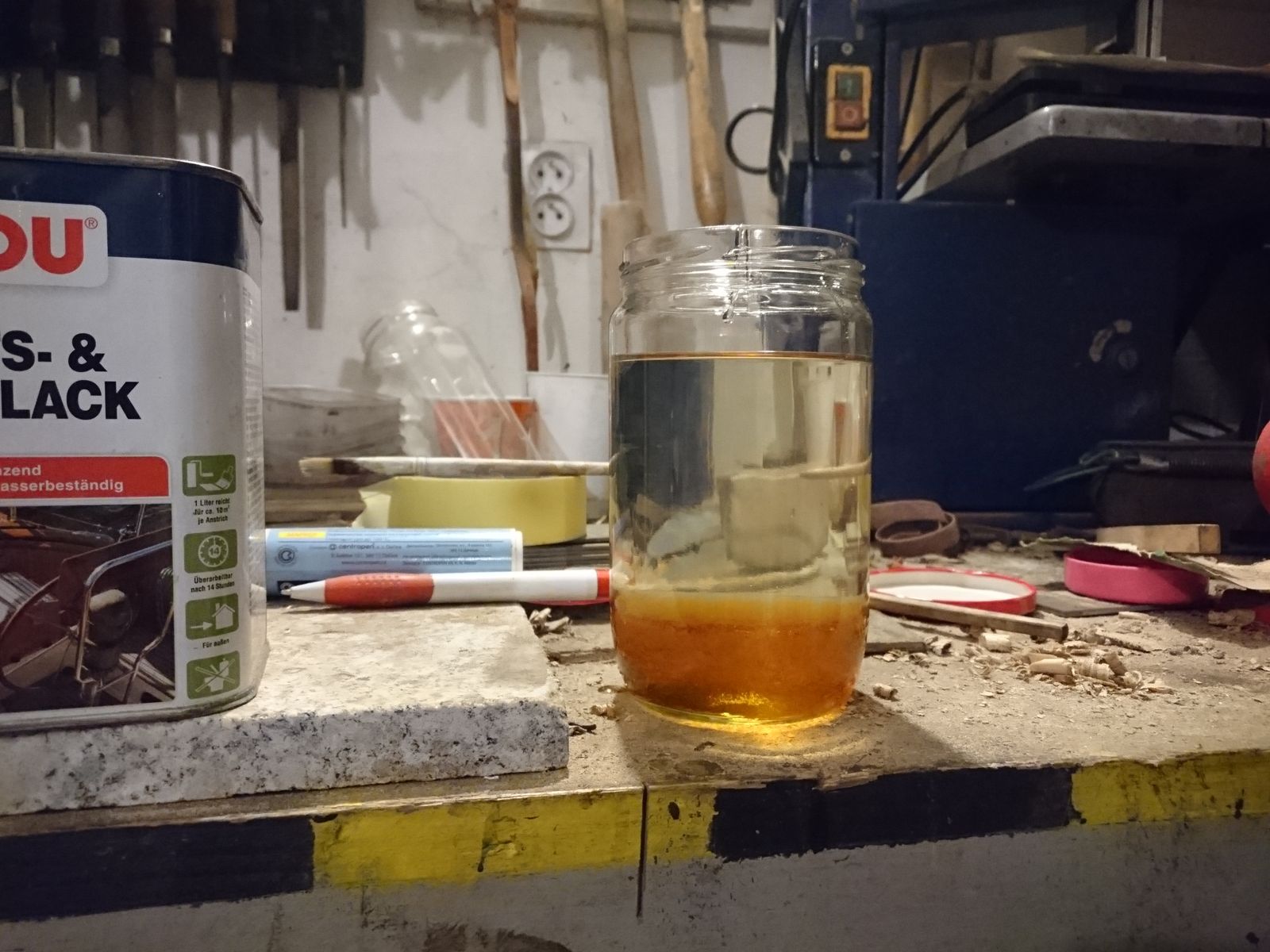
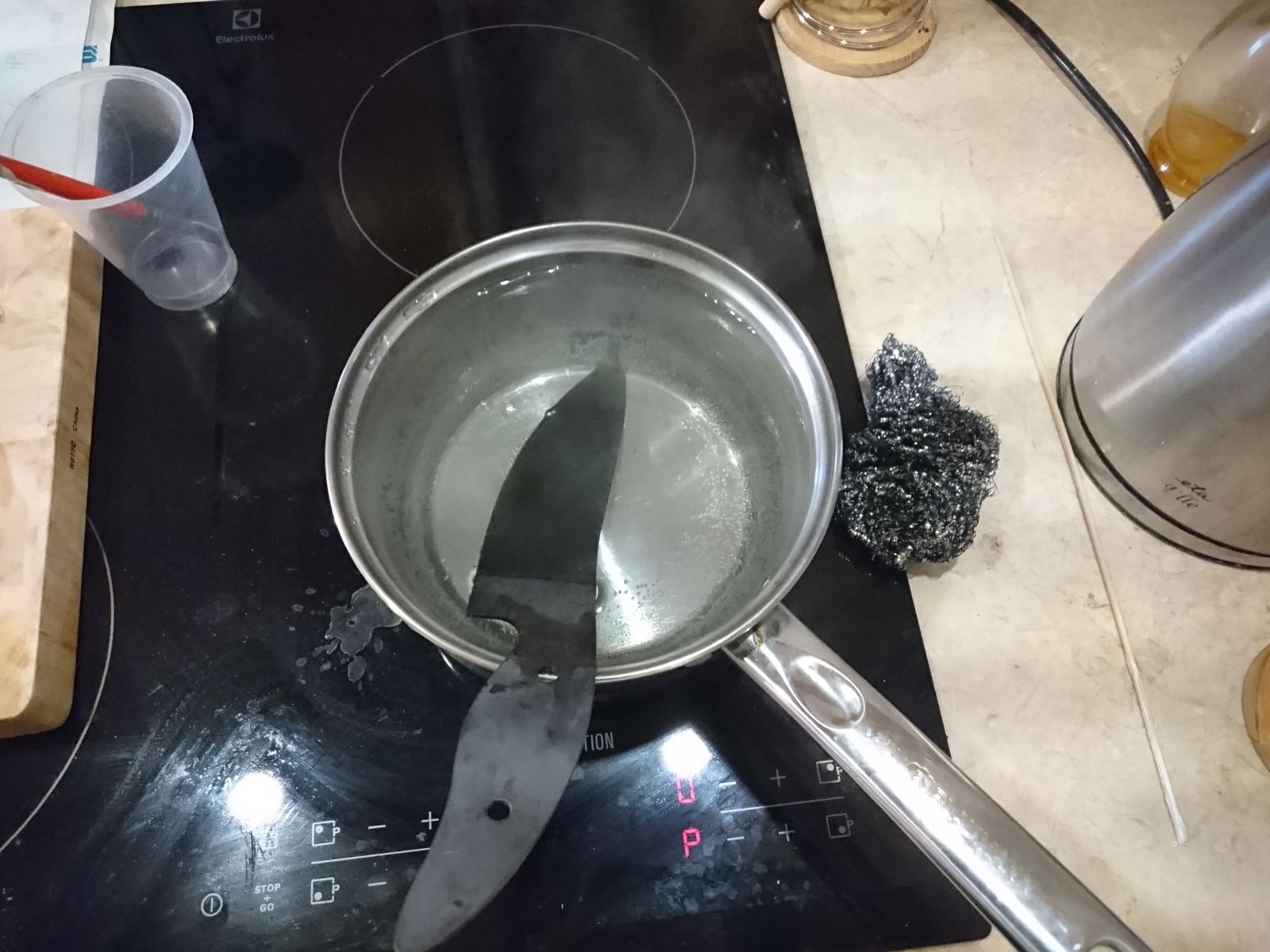
After the chunks are cut and salted, it is time to start frying. That starts with an onion cut into cubes being fried at high temperature – the best fat for this meal is therefore lard, second best is butter, after that are the vegetarian options. I still had a chunk of lard from my dubbin-making experiment, so I have used lard. The onion is fried until it starts to look glassy, and just when some smaller chunks start to turn yellow, it is time to add the mushrooms. After stirring the mushrooms into the fried onion, put a lid on it and let it stew for at least twenty minutes, checking it and stirring every minute or so.

Both of those things are important. The time to make sure that the meal is really edible – even edible mushrooms can be slightly poisonous when raw and all are rather hard to digest when not cooked long enough. And the stirring of course to asses the situation and to mix things up. Sometimes it is necessary to add a bit of water during the process, sometimes even more than once. This time I could do without it and the mushrooms stewed very nicely. Towards the end I had to stir more often and for the last two minutes or so I took the lid off and stirred continuously so the mushrooms do not burn.

Maybe you can see now that the mushrooms have lost more than a half of their volume and they all turned into the same yellowish color. The color depends on used species – the yellowish was brought in by the yellow boletes (similar to larch boletes, but these were different species). Had I used dottet stem bolette, the mass would all be dark grey or even black like a boot polish. Had I used only blushers, it would be whiteish-pink-grey.

The final ingredients are eggs, two in this case, and a generous glass of non-alcoholic beverage of your preference. Why the beverage, you ask? To drink before the meal, during cooking. Do not underestimate this – this meal can lie rather heavy in the stomach and drinking after it a lot is not recommended, because it impedes its digestion. So it is recommended to drink generously before eating it, otherwise bad dreams might ensue. The eggs are simply stirred into the mass and fried until done. The meal is traditionally served with bread, but I had two whole-grain buns so I went with those this time – more photogenic. I enjoyed the meal and slept well afterwards.


Spider Silk

Due to drought, there probably will not be any meaningful aftermath this year. The meadows are green, but the grass is not even knee-height. But everything is covered with spider silk this fall, something that I did not notice other years. I tried to take a few shots.

©Charly, all rights reserved. Click for full size.

Fall Colors of a Rowan Tree

Today I managed to get home before the sun set completely  and I was not hungry overmuch, so I managed to grab my camera and go for a walk for a change and I experimented a bit with this and that.

Today I wish to share a few shots of a roadside cluster of rowan trees. I love rowan trees, every part of them. In the fall, they are the first ones starting to change color around here. The fall has truly arrived.

©Charly, all rights reserved. Click for full size.

Youtube Video: Forging a Viking Dane Axe – With Tord of Thor’s Forge (part 1)

I enjoyed this video immensely. Tord of Thor’s Forge in Sweden shows a process of making a two-handed Dane Axe blade the traditional way – from recycled wrought iron and carbon steel, both refined by bending and forge-welding. As close to a Viking-era technology as possible.

I learned a lot just by watching and I hope that some day I will have a chance to try out some of those things myself.

Video is 40 minutes long and there is about 4 min introduction by Matt Easton. Take that into account if you decide to watch.

Anatomy Atlas – Part 24 – Nerves

Nerves. There are so many things that get on mine. Coleagues. Family. Too many people. Absence of people. Loud noises. Quite noises. Silence.

I do occasionaly wonder how the phrase “It is getting on my nerves” came about, but I never bothered to look.

©Charly, all rights reserved. Click for full size.

What you see here is in no way detailed depiction of peripheral nerves, only a rough outline of some main plexuses. What is ingenuous about nerves is the way they are led though holes and around various joints in a way to avoid pinching, squeezing or bending at a sharp angle. Everyone who has ever hit their elbow in between the protrusions on ulna where the nervus ulnaris leads knows what irritated never means – pain. Lots of it. This brings a memory of Caine, and not a happy one at that. She had an inflammation of nervus ischidadicus and if you ever have difficulty to imagine how that feels like, hit yourself in the elbow and multiply the sensation by about four times and prolong it indefinitely. I have already mentioned when talking about the pelvis that this pain can be so extreme as to lead someone to suicide.

But on a cheerier note, plexus brachialis is a cluster of nerves near surface around the musculus trapezius. That is where you have to squeeze in order to apply the vulcan nerve pinch to render your foes unconscious.

Of course vulcan nerve pinch does not work for non-vulcans, but should you ever find yourself in a self-defense situation, knowing where nerves lead near surface is indeed useful, since irritating nerves elicits involuntary reactions in even the strongest individuals. If you ever find yourself in a situation like that, my recommendation is to use thus gained fraction of a second to get the hell away.

Behind the Iron Curtain part 18 – Periodicals for Children

These are my recollections of a life behind the iron curtain. I do not aim to give perfect and objective evaluation of anything, but to share my personal experiences and memories. It will explain why I just cannot get misty eyed over some ideas on the political left and why I loathe many ideas on the right.


From a child’s perspective, this is one of those things again that the regime got at least mostly right, if not outright right. There were at lest five different magazines specifically for children, with target audiences from 6 to 18 years. Unfortunately most of them do not exist anymore, except one and the last issues I have seen of that one do not hold a candle to what it used to be – too many advertisements, too little real content.

The magazine I am talking about is ABC mladých techniků a přírodovědců (ABC of young technicians and natural scientists). I still have a stack of old issues that I have not thrown away and sometimes I still go through them and occasionally learn a new thing or two.

That particular magazine has a unique format – there are articles about science, technology and nature and occasional story of course and I learned a lot about those things from it. But it also featured two regular features that no other magazine in our country at that time had – paper models and comics.

The paper models are what made the magazine extremely popular and famous, and in my opinion also most useful for a young kid. I know people, even in my family, who sneer at that notion, but the truth is that even today I and I am sure my brother as well are using the skills learned while cutting, measuring and gluing paper models together. And by using I mean getting paid, because making models gives one nimble fingers, teaches patience and trains spatial intelligence. It is a pity that since made from paper, those models were not particularly long-lived so none of them survived until today. They required way to much care and collected way too much dust to be kept in a household with three asthmatics.

The comics were, in my non-humble opinion, much better than whatever nonsense Marvel is peddling. There were no superheroes and no mages. Over the years there were multiple series, and they all excelled in the past in one thing – combining education with entertainment. One series was entirely devoted to Darwin’s voyage on the Beagle. One was about a robot uprising. And one particularly long-lived one was about a group of Pionýrs doing the things that kids do – going to school, going outside, camping, fighting etc.

It was full of covert propaganda of course, but even in retrospect it was mostly not propaganda that I particularly mind. Most of it was about the importance of having useful skills and knowledge, about not being an asshole and taking care of other people as well as yourself. Things that I personally think children should learn as a matter of course wherever they live.

The Worst Horror of Hunger Games

I know I am very behind the curve here, but the phenomenon of Hunger Games has completely missed me, both the books and the movies. I learned about them through social osmosis, probably in comments and articles around FtB, but I never paid it much attention and I never knew what it is about, except a vague feeling that it should be good and that there is some girl shooting a bow.

So because I needed a pause from listening to Terry Pratchett’s Discworld Series over and over again, and I also needed a rest, I bought an audio book of the first in the trilogy and listened to it these last few days, whilst trying to get rid of some damn virus trying to cook me in my skin.

The book is an excellent piece of storytelling, there is no doubt about it, I will not be able to resist and I will buy the rest of the trilogy as well. But had I known in advance what it is about, I probably would not have bought it, definitively not now. It shook me to the core. I was, and I still am, absolutely horrified.

That might seem odd, because I have read my share of books of all genres, from horrors to comedies, but I do not remember being moved this much by a book for quite a long time. It was not the deaths what has got to me. It was not the quite excellently portrayed psychology of an individual caught in a string of apparently lose-lose situations. It was not the story, that was pretty straightforward and to someone well read slightly predictable at times. It was the believability of it all what really got me.

There are simply too many parallels to societies like that one portrayed in the book throughout human history and even today.

Of people living in distinct caste-system that is impossible to escape from.

Of entire populations being worked to death and held on the brink of starvation for the benefit of an elite few.

Of totalitarian regimes where everyone is a subject to the whims of the powers that be.

Of people jeering and laughing at the suffering of those they perceive as lesser, as other, as subservient.

And we still are not in the clear. We might be heading towards societies just like that, again. The book might very well be an accurate prediction of a future mere hundred years from now. And that there was no suspense of disbelief needed makes everything in it much worse than it would be in an ordinary horror with magical or inhuman monsters. People can be the worst monsters, it seems to me.


Slavic Saturday

OK, I’ll bite. Last week Rob Grigjanis mentioned Antonín Dvořák and he indeed is one of Czech composers whose work is dear to my heart. I particularly like his Slavonic Dances, Opus 46. I was looking for a video that I like and unfortunately the only one that I do cannot be embedded, so you would have to head over to Czech TV Website. I hope it works for out-of state too. Other recordings that I have found on YouTube I did not like – right at the first dance “Furiant” seemed either too fast or too bland.

That I make such judgement is slightly ironic and possibly unfair to the musicians. I do not dance at all and I hate it, particularly polka. Surely everyone knows polka, although not everyone knows that it is originally Czech dance. My experience with it is however rather unpleasant – I was always a bad dancer, but it was seen as somewhat required to take dance lessons in highschool, so I did, being awkward and clumsy all the time despite my best effort. And polka was for me the last straw in this string of tortures – at the end of the lesson my disgruntled dance partner has lifted her skirt and has shown me her feet that were kicked and stomped bloody. That put a final crimp in my (non-existent as it was) desire to dance that dance ever again, since I try not to hurt people on principle.

It is not that I do not have a sense of rhythm, but everyone tells me polka has two and a half step (hence the name půlka(half)-polka), however I simply hear three steps and that daft little half-skip just tangles both my brain and my feet. Not that other dances are much better with their inane jumping and turning and all that nonsense. I do not see the point of dancing, really.

But the music can be beautiful and can move me to tap my feet or nod my head a little. That much I admit.

Having a Snack

Fall is coming near and spiders are starting to gather in the house. I do not mind certain amount of spiders in the house, but the webs have to be cleaned up occasionally. So when there is too much webs (that is, when they start to be easily visible – I do not wait for them to hang so low that I have to wade through them) I collect as many spiders as I can into a glass and carry them outside, and then take a broom to the webs.

Bellow the fold you can see why I tolerate spiders in the house to a certain extent.

[Read more…]

Bougainvillea

Nightjar has submitted absolutely gorgeous Bougainvillea pictures with a short story with a question at the end. To which my answer is YES.

I let Nightjar take from here:

Last week as I looked through the window I saw a lady that lives a few streets away from me pointing her phone at my front door, as if taking a picture. I was confused at first, but then I realised what was likely going on. Our Bougainvillea is putting on quite a show this year, hanging from the balcony and almost completely covering our front door in a ridiculous abundance of pink. In fact, there is no way she was taking a photo of anything else, because everything else is under that pink cover. So later that day, I decided to go out and take a few pictures myself. Now let me ask you, if you were passing by my house and saw this, wouldn’t you be tempted to stop for a few shots too?

©Nighjar, all rights reserved. Click for full size.

Anatomy Atlas Part 23 – Circulatory System

We looked at our heart, but not at all the piping connected to it. There is rather a lot of it and this picture shows only a very, very small part.

There will be talk about testicles, read at your peril.

©Charly, all rights reserved. Click for full size.

Whilst the air pipes in the lungs are optimized for keeping constant pressure, for veins and arteries this is not the case. Perhaps there is less selective pressure for optimisation, or it is not possible to achieve? I do not know. The truth is however that there are a number of sub-optimal divisions and loops and one of them is so peculiar that once you learn about it, you will not forget it.

Professor Kos explained to us, that one such badly optimised division is at least in part responsible for the fact that one testicle is usually lower than the other, and the one that is lower is usually the left one. When you look at the picture at the right side and follow the vena cava inferior down from the heart past venae hepaticae you will come to a cross junction where from it split two venae renalis. And looking further down you will find out that venae testicularis do not both split of from the vena cava inferior symmetrically, but vena testicularis sinistra splits of from venna renalis at a near right angle. That is bad engineering – right angles mean loss of pressure automatically.

However when looking at the left side, where arteries are depicted, both arteriae testicularis split symmetrically and directly from arteria abdominalis at an angle in the direction of the blood flow.

This means that whilst fresh blood supply for both testicles through arteries is about equal, the outflow via veins is not. That means different blood flow rates through the testicles, leading to their different sizes and also different position. Because testicles regulate their temperature (which has to be lower than body temperature) via positioning, and this way the left testicle has to hang lower in order to keep the same temperature as the right one.