From David, click for full size! It’s always wonderful to see Spring, no matter where it’s happening.


© David, all rights reserved.

From David, click for full size! It’s always wonderful to see Spring, no matter where it’s happening.
© David, all rights reserved.
From Charly, who notes: I have no idea what the species is, but I had to use my macro lens for these. What looks like grass is not grass, but moss. Click for full size.


© Charly, all rights reserved.
Click for full size.

© C. Ford.
From Charly, who notes: Edible, but I never bothered to collect it so I have no personal experience with it. Strangely enough I have only seen two-three specimens this time around, both of them very young – one you have already seen in the picture besides a Larch bolete. Usually they are not particularly rare. Latin: Gomphidius glutinosus. Click for full size!

© Charly, all rights reserved.
Oh, it’s too soon. Click for full size.


© C. Ford.
From Charly, who notes: I remember finding true chanterelle only a few times in my life around here, as a child, and only a few tiny specimens at that, but my parents told me they used to grow a lot here. Then they disappeared completely and I have not seen them for thirty years at all. They went from very common to very rare during my lifetime. These false chanterelles are not too common either. I have only seen this one specimen this year, and I only ever encounter a few each year. Latin: Hygrophoropsis aurantiaca. Click for full size!

© Charly, all rights reserved.
Click for full size.
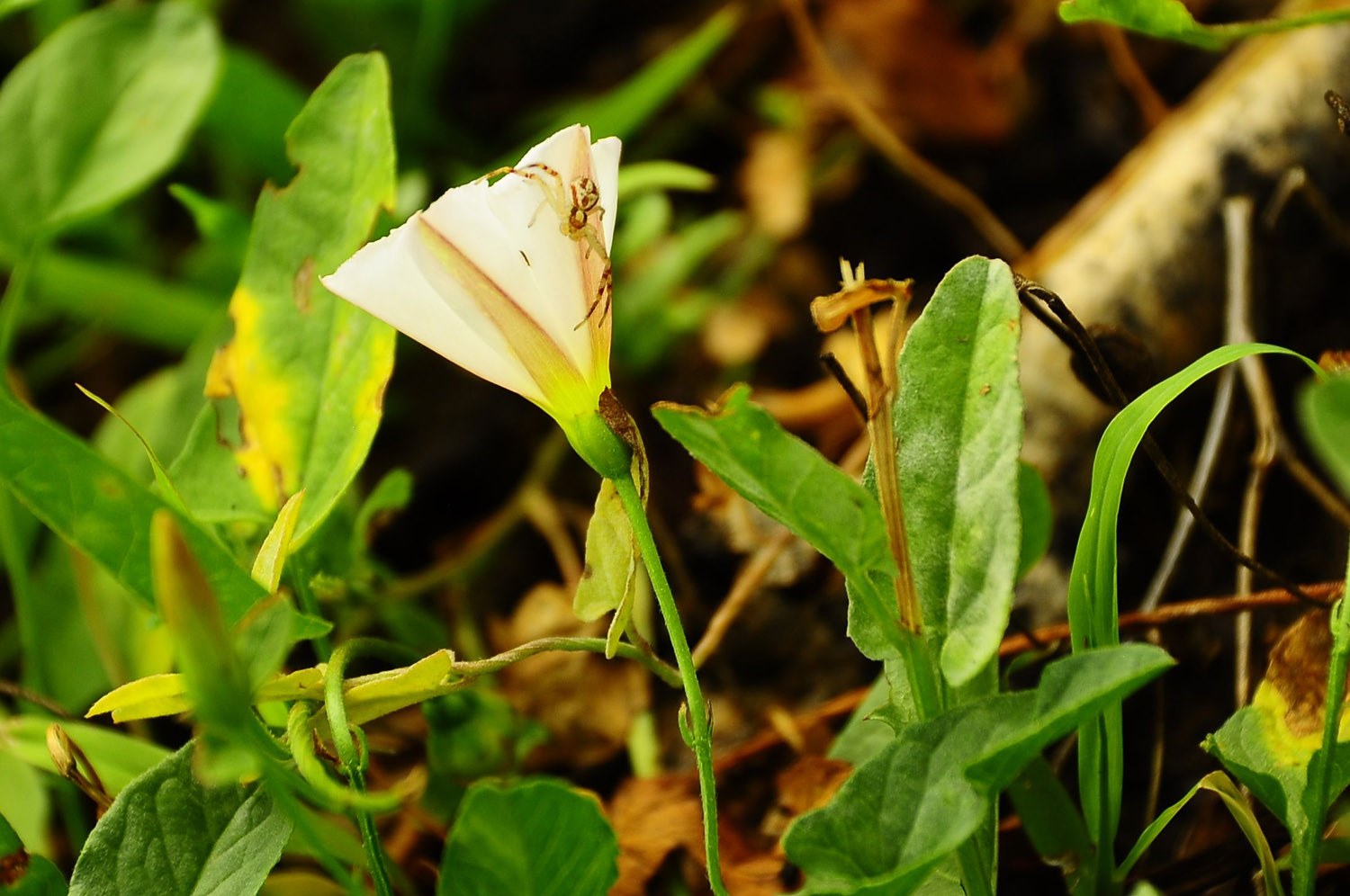
© C. Ford.
From Charly, who notes: A very common mushroom here and inedible one. There are a few species of the Lactarius genus around here, most inedible. But some years there is enough of Lactarius deliciosus – saffron milk cap, edible and very tasty – to be worth collecting. This time I only met the rufous.
A fun anecdote – I never collected milk caps, but I showed one of my friends in high school once how to recognize the L. deliciosus from the other common inedible species growing around here (it has orange milk and turns to green on bruised areas, whereas others have white milk), and his whole family started to collect them en masse in consequent years and they liked them very much. I did not even remember showing him until he thanked me a few years later. To my horror, because I am sure I never recommended anyone to actually collect mushrooms I do not have personal experience with. To trust a teenager who was just showing off with a trick learned from an atlas on mushrooms is not wise. But they are all still living 25 years later. Latin: Lactarius rufus. Click for full size!
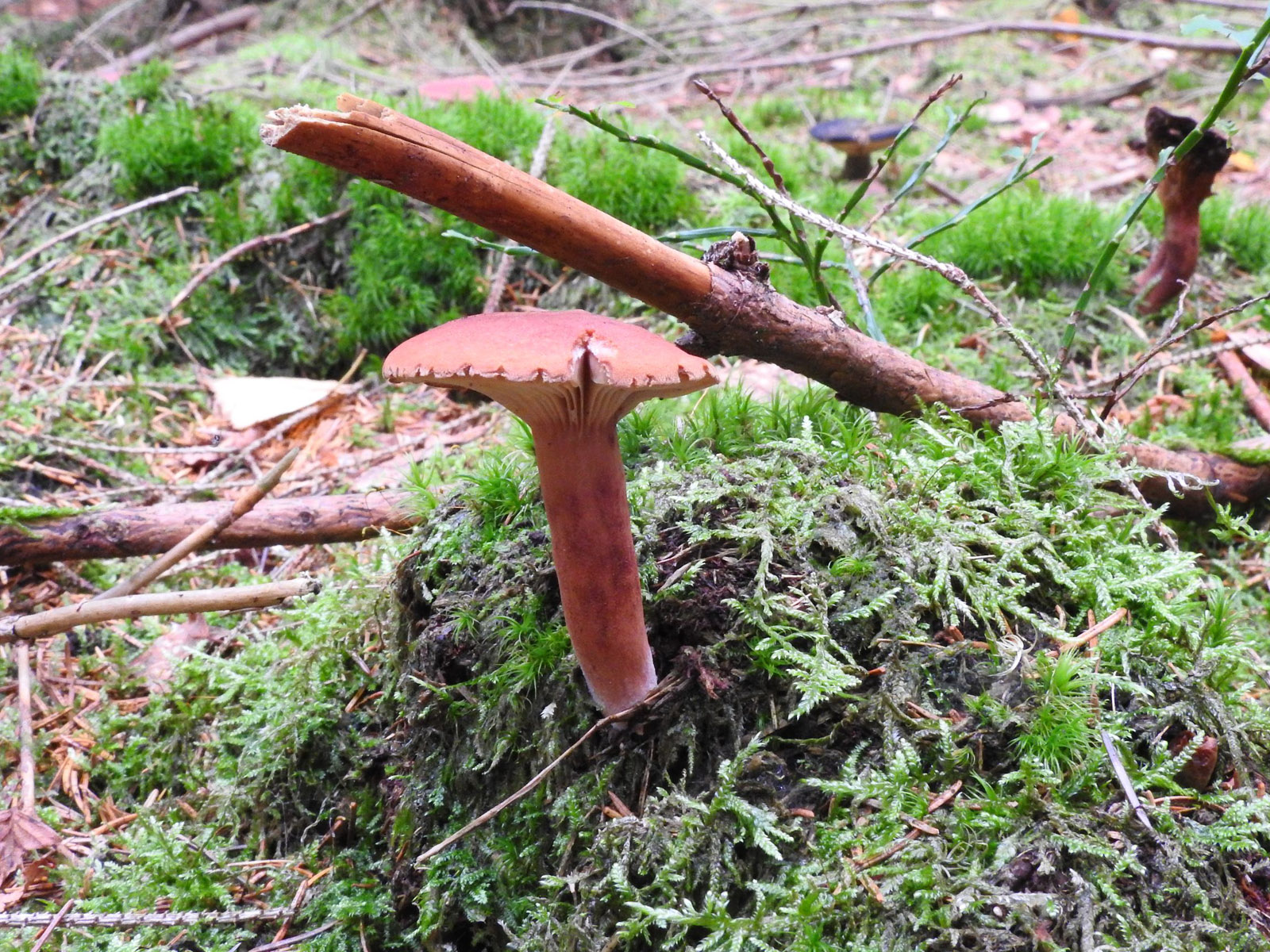

© Charly, all rights reserved.
Click for full size.


© C. Ford.
From Charly, who notes: With this one I had trouble to figure out why I took the picture, so well is it hidden. Click for full size.

© Charly, all rights reserved.
Anyone know what’s going on here? Don’t know what kind of tree, sorry. Click for full size.

© C. Ford.
From Charly, who notes: A large genus of mushrooms, some edible and good, some with nasty unpleasant or burning taste or even emetics. I do not collect them because I have never spent enough time with someone who is familiar with them enough to safely recognise the edible species. Also there are multiple species that are really similar to one another so precise identification really needs a mycologist. Addendum – only the first orange mushroom is Russula sp., the second one is very probably Amanita muscarina. I got them mixed up, I would have to pick up the mushroom to be sure sure (Russula does not have veil and does not have bulbous foot), and of course that cannot be done in picture, and I do not disturb mushrooms I do not collect. Spectacular photos all, click for full size!


© Charly, all rights reserved.

Katja Novitskova, “Earth Potential (Cuttlefish Love, Earth)” (2017), digital print on aluminum, cut out display, steel and aluminum armature (all photos by the author for Hyperallergic).
Oh, these are all so dynamic and wonderful!
…This fuzzy zone of magical looking is where Estonian artist Katja Novitskova operates, and her current exhibition in New York’s City Hall Park is a wonderfully incongruous reminder that all our photos are manipulated.
EARTH POTENTIAL, a Public Art Fund exhibition, is that rare outdoor photography show that actually works. Instead of the usual billboards or placards clumsily affixed to a wall or fence, Novitskova’s photographs are printed on freestanding aluminum panels between six and eight feet in diameter, lending them sculptural dimensionality. Most combine two elements — one astronomic, the other microscopic — printed on separate, custom-cut supports.
[…]
Two of the seven pieces in EARTH POTENTIAL feature just one scientific image rather than a pair — one is a bulbous cluster of orange stem cell embryos, the other a towering, pale pink strand of E. coli bacteria — and they are the show’s most abstract and ambiguous. Without the humor of juxtaposition and jarring shifts of scale of the other pieces, they confront us with the enormous power of scientific imagery and the frontiers of microscopic photography. They also hint at places where the boundaries of human knowledge are butting up against the limitations of human morality.

Katja Novitskova, “Earth Potential (E. coli)” (2017), digital print on aluminum, cut out display, steel and aluminum armature.
You don’t want to miss any of this, head on over to Hyperallergic to read and see more!