
Coridon’s Song and Other Verses. Various sources with and introduction by Austin Dobson and Illustrations by Hugh Thomson. London, MacMillen and Co., 1894
Via: The Internet Archive

Coridon’s Song and Other Verses. Various sources with and introduction by Austin Dobson and Illustrations by Hugh Thomson. London, MacMillen and Co., 1894
Via: The Internet Archive
© Charly, all rights reserved. Click for full size.
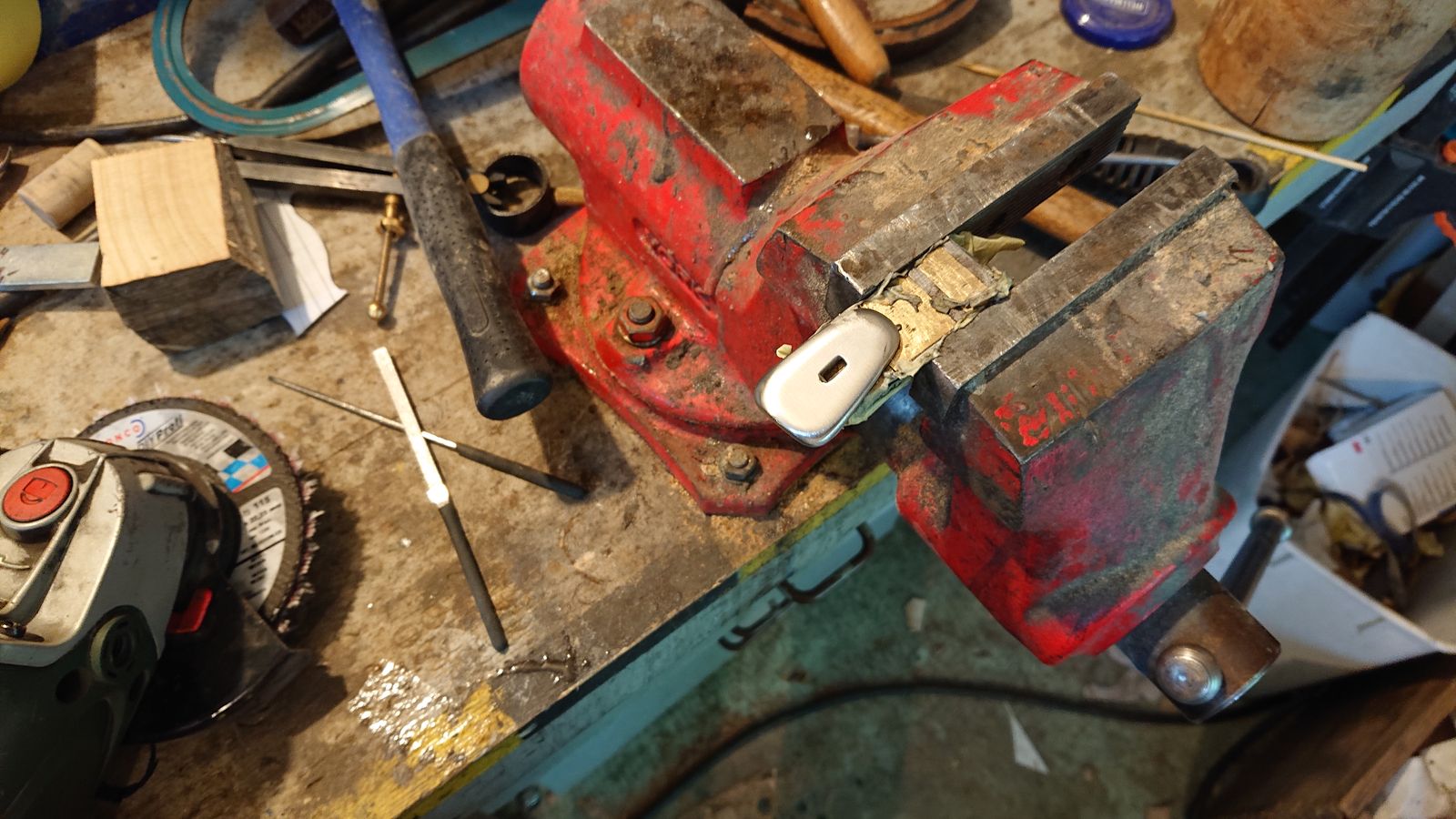
The HDD magnet proved to be very useful when polishing the bolster/handguard. It proved to be strong enough to hold it when grinding on the belt grinder, but also when polishing with the angle grinder. I did not intend to use the magnet in this way, but now I will because it has proven itself to be extremely useful for holding these tiny things steady. Shame that other metals that I am going to use for these things – aluminium and brass – are not magnetic.
The next thing I have done after the bolster was fitted was to make the handle. That did not go too well as you may remember. The first piece of wood had cracks, on the second piece of wood I messed up the drilling and the third time was the charm. It is a nice piece of wood and looks great when the grip is fully shaped, but I do wish that I have managed to get the grain alignment a bit better. But grain alignment is not something that anyone else fusses about that much, so I should not fuss about it either. Here you can see the grip roughly cut and shaped on the belt sander.

© Charly, all rights reserved. Click for full size.
After the grip was shaped, I have also glued to ti the end cap/pommel thingie and I have decided to sign the blade before assembly. For that, I have tried a new thing, which unfortunately completely and utterly failed.
I have bought photosensitive lack that is used for etching PCB boards. The idea is, you spray-paint your metal surface, you print your design, you put your design on the surface and use UV light to quickly deteriorate the paint on illuminated areas. Then you wash out the deteriorated paint with a 1% solution of NaOH and voila – you can etch.
The paint did not deteriorate under UV lamp as advertised and the NaOH solution did not wash it out of the illuminated areas. I have followed every step of the instructions, multiple times, and it just did not work. So I tried to increase the NaOH solution concentration – and it washed off all of the paint. So until and unless someone shows this particular product to me to work, I am considering it an unfortunate waste of money.
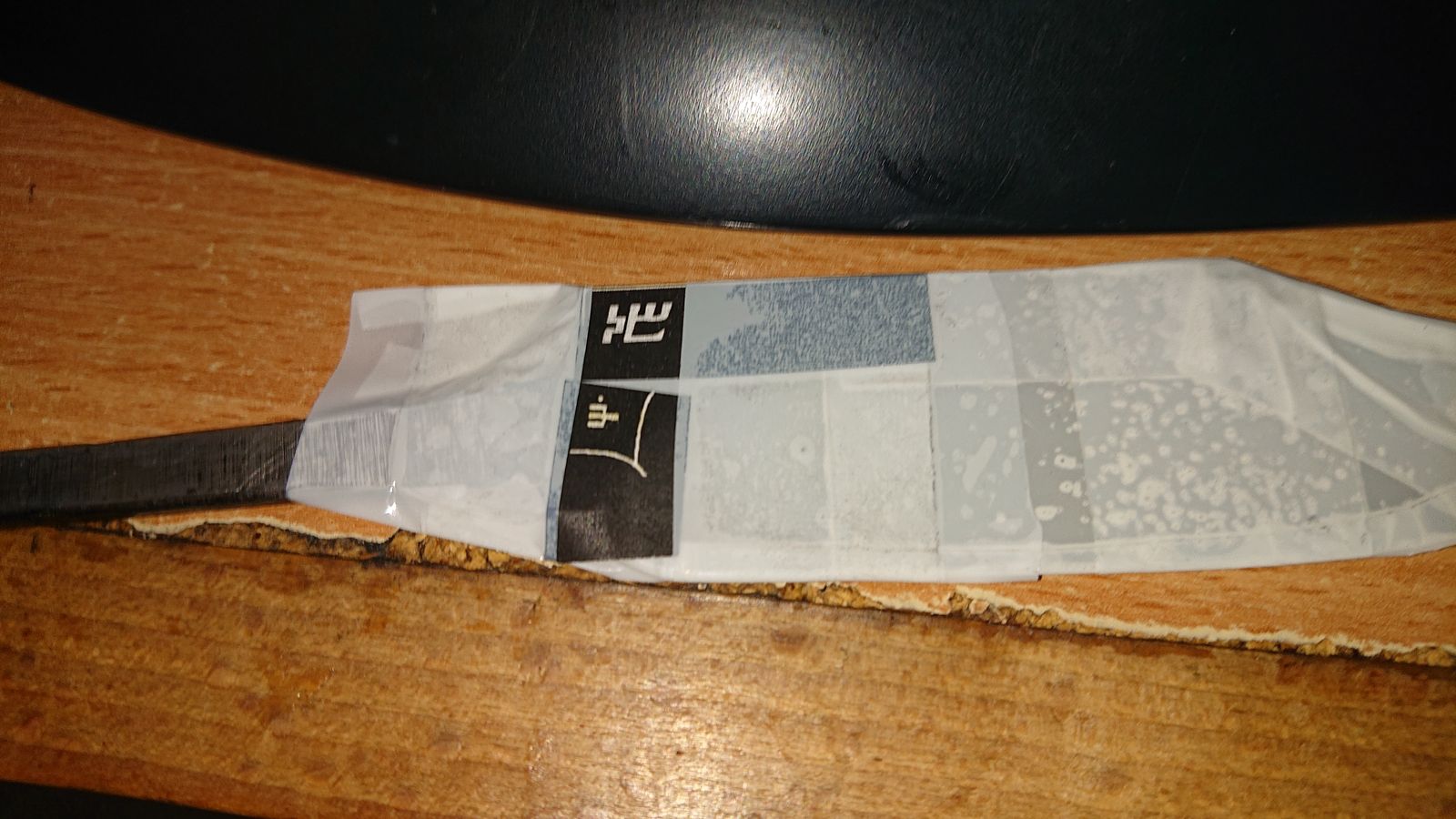
I do not want to make my signatures too big, and I want to number the blades from now on, and the wax is not very conducive to tiny fine details. So I had to revert back to how I did things in the past, with slight improvements. I have covered the blade with plastic adhesive tape. But this time I have used double-sided tape on the parts where the signature and numbering were due to go, and then I glued to it one print of the now useless stencils for the failed photo etching. Then I cut out the letters with shaving razor and a pointy scalpel blade.
Because I did not want to damage this blade, I have first tested this new technique on the failed machete (that fail has proven quite useful, I have hardened piece of steel for experimenting).
© Charly, all rights reserved. Click for full size.
Etching in a cup with solution works, but it takes a lot of space and a lot of solution to immerse the whole blade. So I have built myself a new thingie that allows me to perform etches with very little solution.
I took a piece of graphite and ground it flat to about 20x30x5 mm. On top, I glued a piece of wood and covered it all with excess epoxy glue to protect it against moisture. The next day I drilled a 6,5 mm hole into the wood down to the graphite. Lastly, I took a piece of 8 mm brass pipe, cut M8 thread in the hole and on the pipe, and I screwed the pipe into the hole so far that it has a solid connection with the graphite.
For the etching itself, I have simply put a piece of felt soaked in diluted FeCl3 solution on top of the design, between the blade and the new graphite electrode. Anode (+) on the tang, cathode (-) on the brass pipe and after five minutes the job was done. The etchings are clean and nice looking.

© Charly, all rights reserved. Click for full size.

© Charly, all rights reserved. Click for full size.
Just like last time, I have no pictures of the assembly. Imagine me slathering epoxy mixed with wood dust all over the tang, hammering the handle onto it and then peening the end of the tang whilst being in a constant state of panic that something goes wrong. Nothing went wrong, although I am not happy with how the peen turned out. But the customer did accept in advance that peened tangs can be a bit unseemly. Even unhardened stainless steel does not like to be peened and tends to crack around the edges. And I did not dare to try and weld soft steel stud at the end of the tang, this steel allegedly does not weld well. But maybe I will try something different for the second blade. This one is unfortunately stuck with this, although it might get a bit better with some more polishing.
So the knife is now more or less finished and functional. The last thing to do is to clean and polish the wood to about 300 grit and then impregnate it with boat lack.

© Charly, all rights reserved. Click for full size.
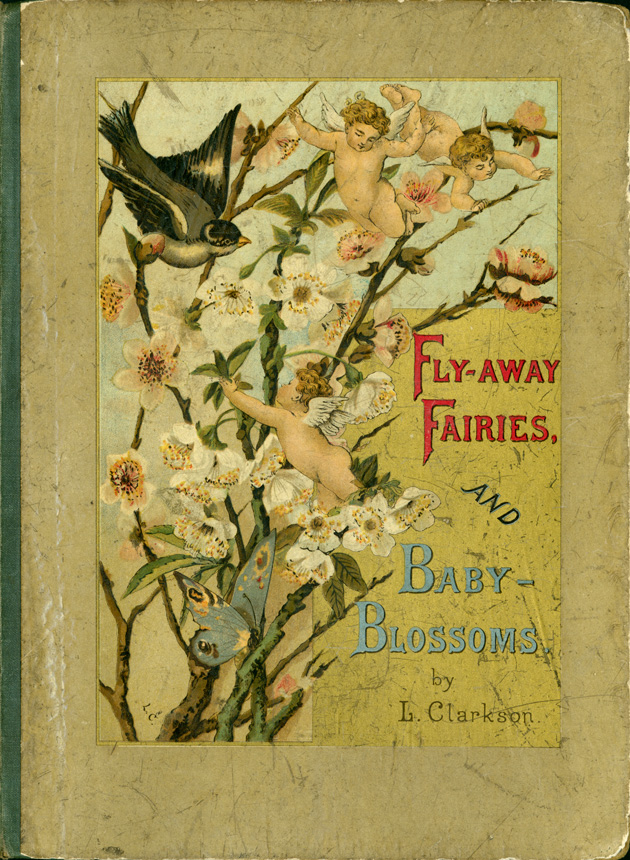
Louise Clarkson Whitelock. Fly Away Fairies and Baby Blossoms. New York, E.P. Dutton and London, Griffith and Farran, 1882.
The artwork in this week’s fairy tale book is typical of the Victorian period. I’m not especially fond of this style of art, but I think this book is interesting because its fairies look a lot like like cherubs. I also think the eyes of the children in the book look dull and creepy which is an unexpected bit of a laugh in a children’s fairy story book.
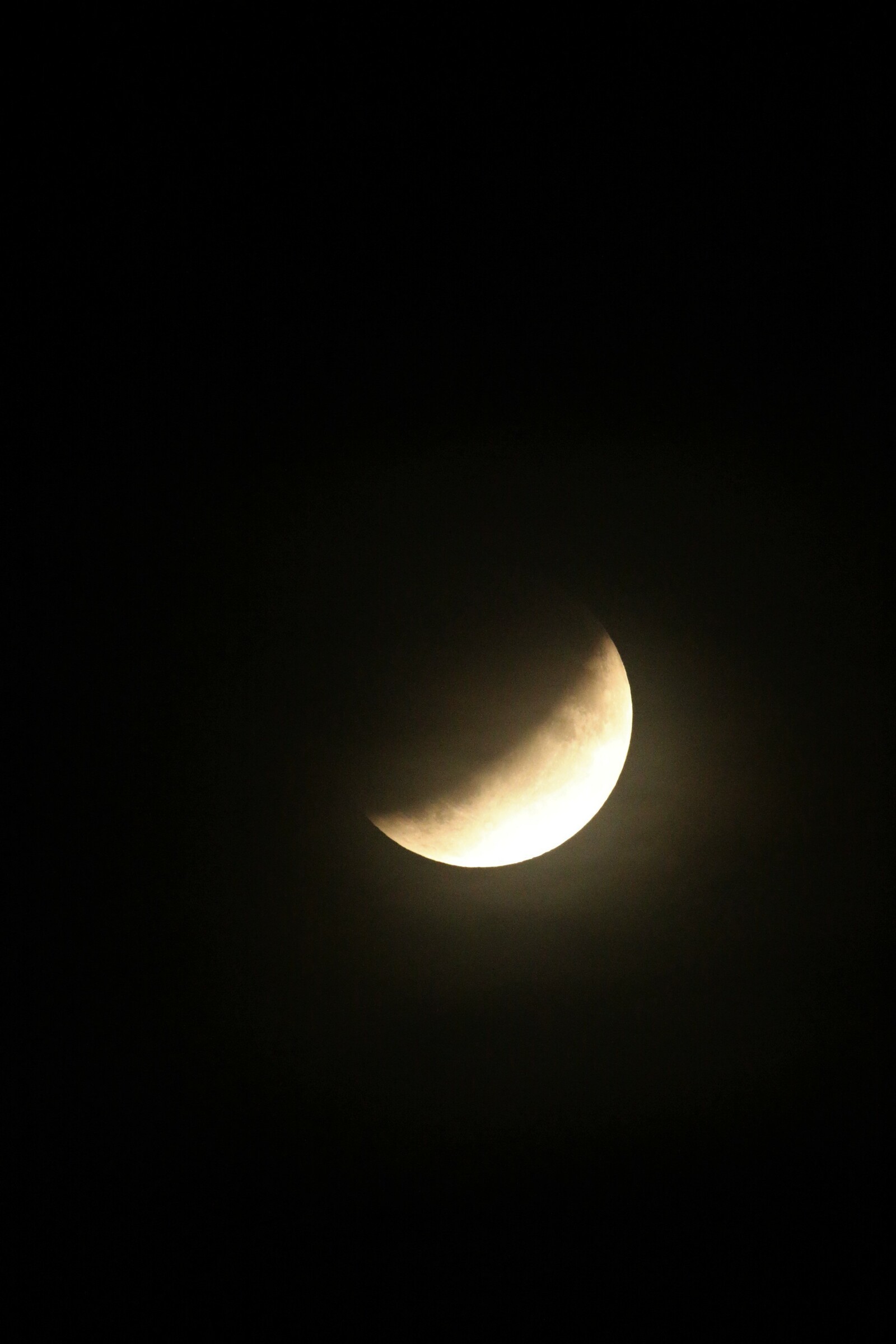
In the last pictures you could see the first clouds sliding in. They got thicker and thicker while I had another whisky, which didn’t make things easier. At least I could still see the clouds in the pics afterwards, so I didn’t imagine them…

©Giliell, all rights reserved
©Giliell, all rights reserved

©Giliell, all rights reserved

©Giliell, all rights reserved

©Giliell, all rights reserved
This photo brings us to the end of the high-resolution fungal portraits sent in by Opus. All of the photos in this series have been quite interesting and it’s been fun to see the different types of fungus in such clear detail and vivid colour. Thanks, Opus.

British Soldiers ©Opus, all rights reserved
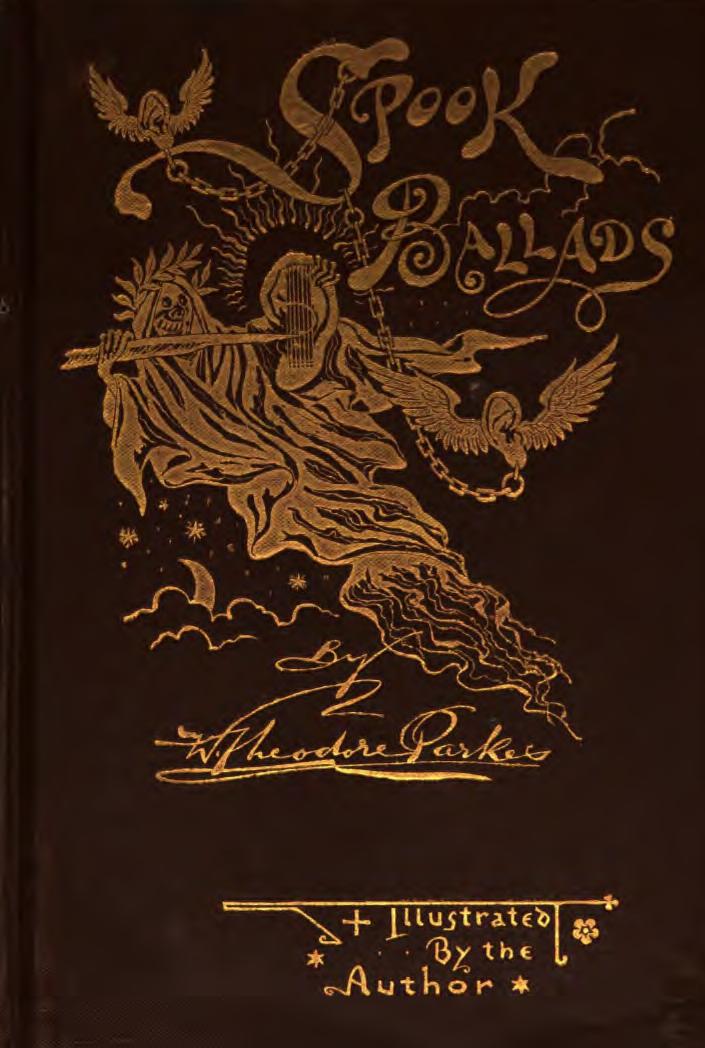
William Theodore Parkes. Spook Ballads. Illustrated by the author. London: Simpkin, Marshall, Hamilton, Kent & Co., Limited, 1895.
A rather odd collection of ghost stories and poems.
via: The Internet Archive
Sometimes a bumblebee lands, drinks a bit, and then flies off again like a little helicopter. Not these two though. They both took their time, going around the flower systematically in a circle, drinking as much as they can. And just when I was taking the pictures, one of them decided to take off.
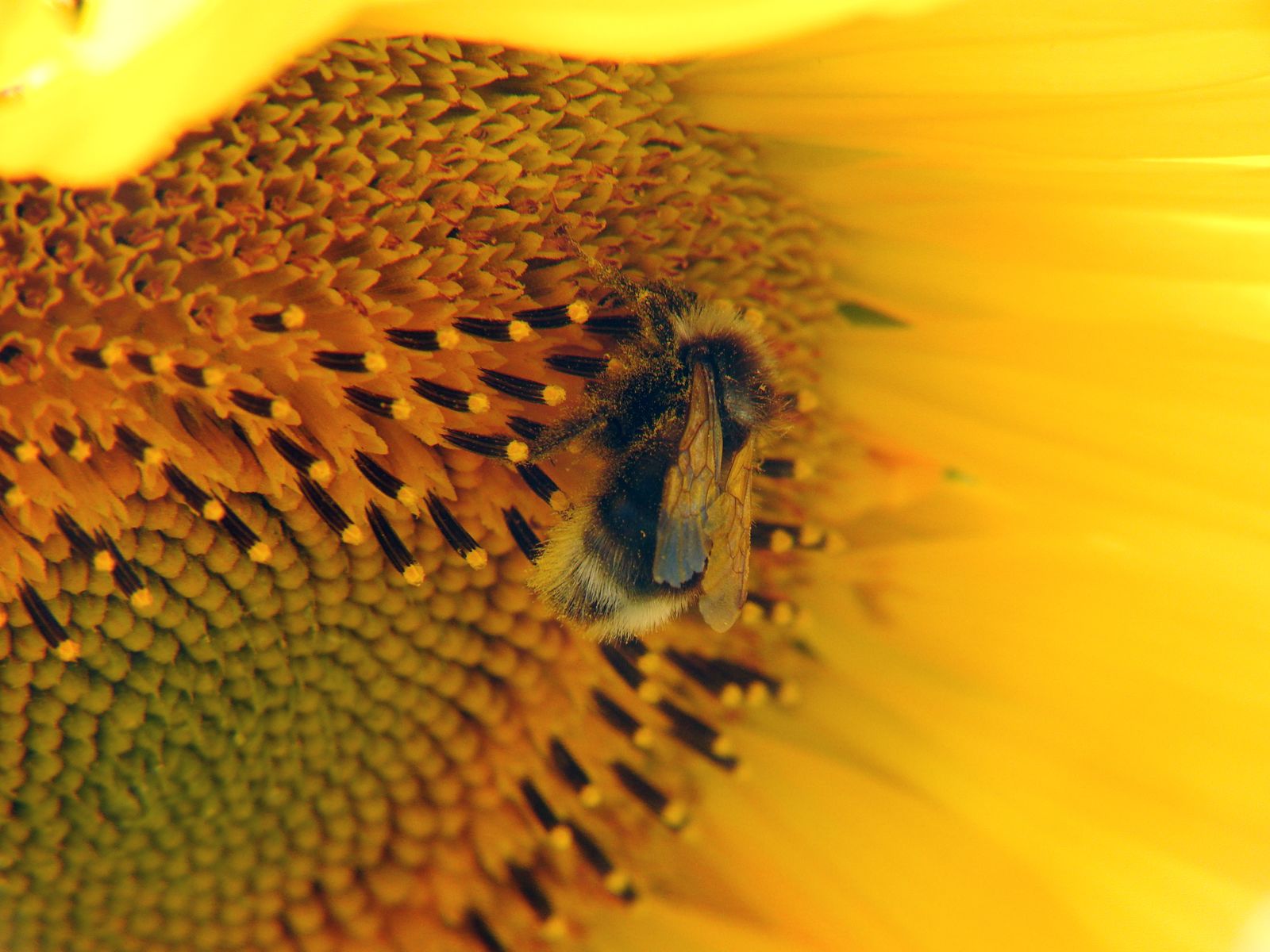
© Charly, all rights reserved. Click for full size.
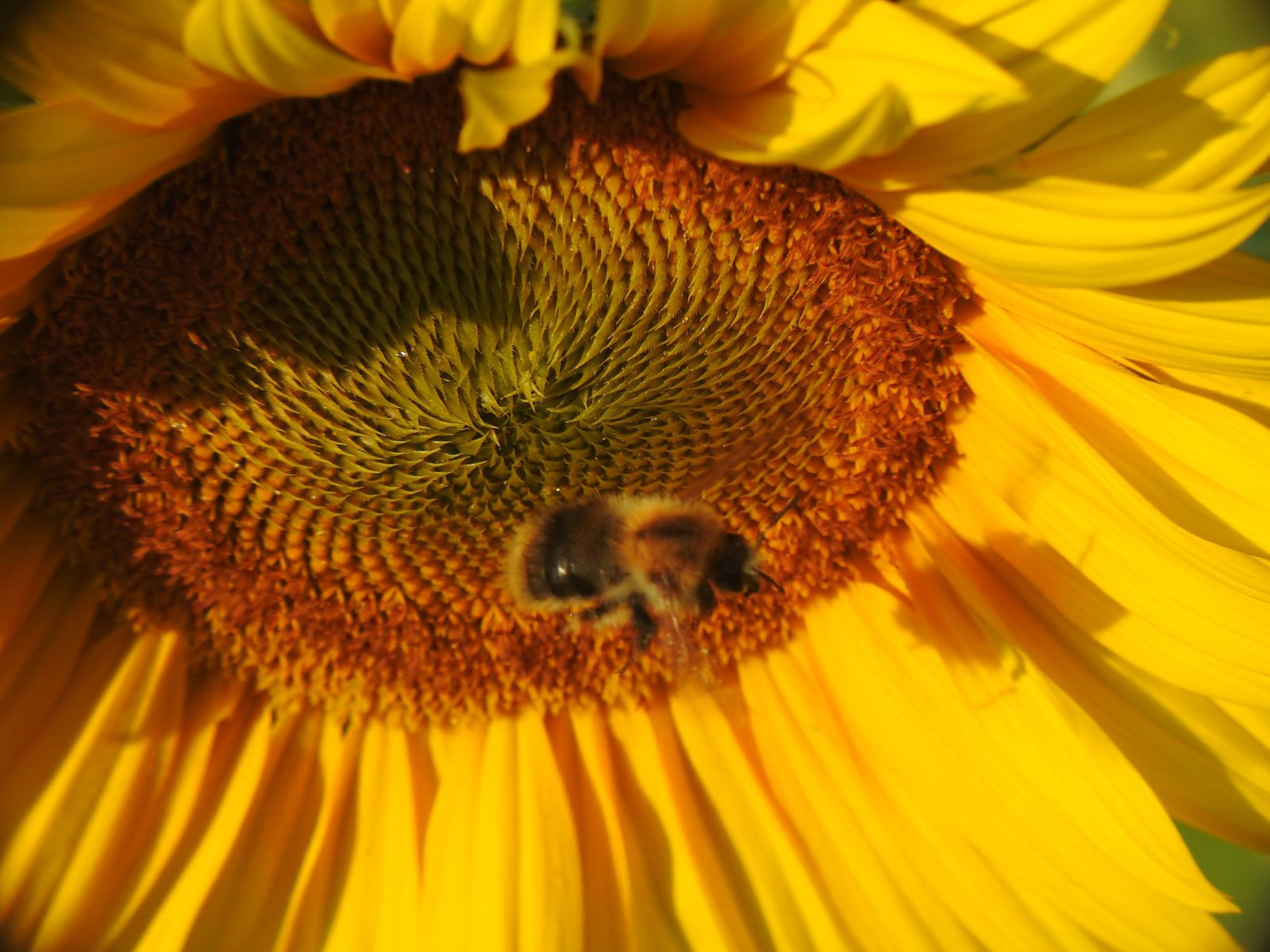
© Charly, all rights reserved. Click for full size.
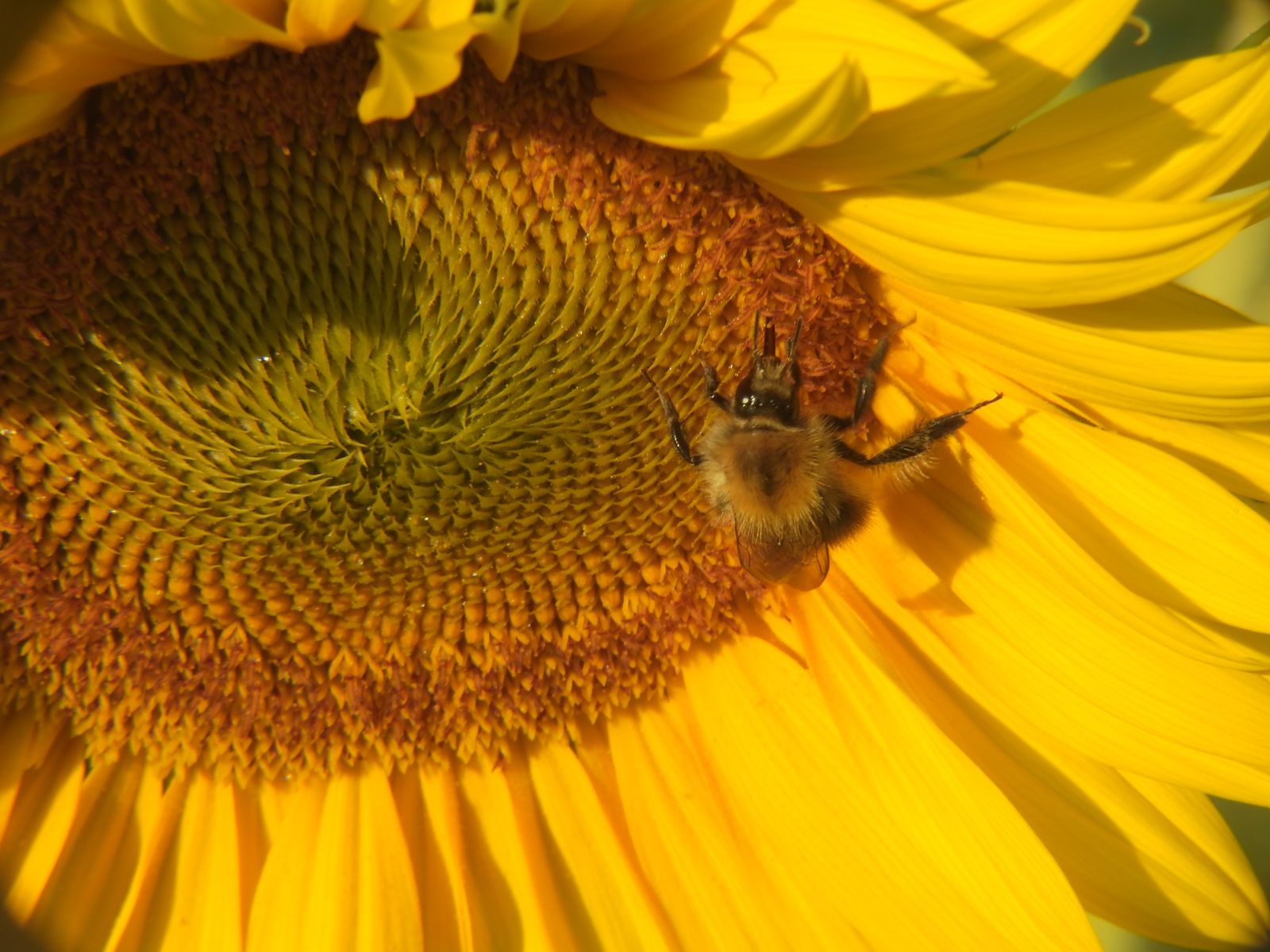
© Charly, all rights reserved. Click for full size.
Nuff said.

© Charly, all rights reserved. Click for full size.

William J. Long. Beasts of the Field. Illustrated by Charles Copeland. Boston and London, Ginn and company, 1901.
The book is filled with true stories of animal encounters in the wild and the accompanying illustrations are charming. Every page has at least one small drawing on it and there are several detailed full-page illustrations. You can see it all at the link below.
Via: The Internet Archive
I nearly missed her, despite her substantial size, so well does her color blend in with the sunflower stalks and leaves.
I remember that as a child I caught one of these in bare hand and it bit me rather painfully.

© Charly, all rights reserved. Click for full size.

© Charly, all rights reserved. Click for full size.

© Charly, all rights reserved. Click for full size.

Glasgow, Ellen Anderson Gholson. Phases of an Inferior Planet. New York and London, Harper & Brothers, 1898.
via: The Internet Archive
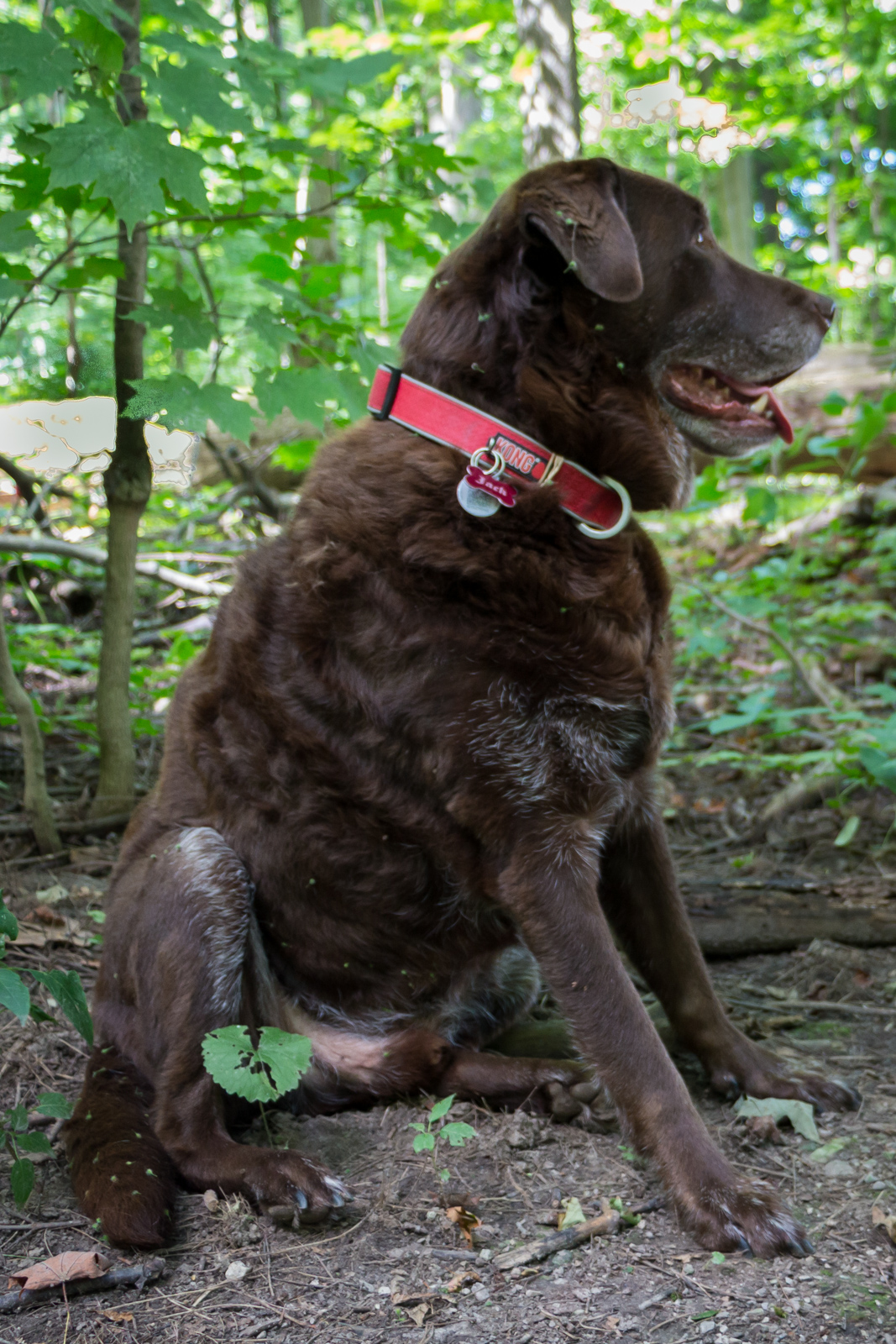
Hey, Bubba, what are all those spots on you?

Umm, what spots, mom?
Jack and I have been walking at odd hours for the last few weeks because I’ve been spending most of my time at the nursing home with my mother. Mom is in the last stage of her life and is expected to die soon, but it’s turning out to be a long, difficult journey for her. She has a lot of pain that isn’t always well controlled and she’s s full of fear and anxiety. She often calls out “Help, Oh please help” or asks for mommy or daddy and occasionally for me, but when you ask her what she wants or what’s wrong or what she’s afraid of she goes quiet. She’s also developed a large ulcer on her coccyx from the continuous bedrest. Mom is a big woman, about 240 lbs. and it’s difficult to reposition her so there’s no pressure on that area. About every hour I’ve been rubbing her other pressure points to hopefully avoid another ulcer, but it pains mom and is difficult for both of us.
The nursing home where she lives has given us a private palliative care room with a big, stuffed electric recliner for me. The support workers check on us often and have been fabulous with mom, but I can’t say the same about the registered nursing staff. Some nurses are reluctant to give mom pain meds – one nurse insisted that she had to ask for them herself because writhing in bed and calling out for help apparently isn’t good enough. Some nurses forget to crush mom’s pills and some try to give her plain water without thickener which makes her choke. I’ve asked and asked for that to be written on her chart, but it hasn’t happened. That’s partly because of the long weekend – some of the nurses come from an agency and don’t know the residents, so I’m hoping that will improve this week. Just to be sure, I’ve put a large sign over mom’s bed about what she needs in case I’m not there.
I’m telling you all of this because I’m burnt out and there’s still a lot of road ahead. My fibro has flared up and I’ve got shingles. I expected both those things, but that doesn’t make it any easier to deal with. I have a chronic form of shingles that flares up often, especially when I’m tired or stressed and right now I’m both of those. Something has to give and unfortunately it’s Jack’s Walk the virtual and Tree Tuesday, both of which I’m putting on hold. The nursing home doesn’t have wifi and even if it did I’m not thinking clearly – it’s taken me 3 days to write this – I’m in pain, I’m exhausted and my mom needs me. So does Mr. V whose heart has been acting up with atrial fib.
Jack’s Walk and Tree Tuesday will be back, but I don’t know when. I’ll try to keep posting a daily book, which gives me something nice to think about, but if I miss a day you’ll know why. I’ll be around and I’ll stay in touch. Jack says gawoof, gawoof in his big boy voice which means see you soon.
After sitting at the beach for a while, we noticed the eclipse, which we hadn’t even known was going to happen.

©Giliell, all rights reserved
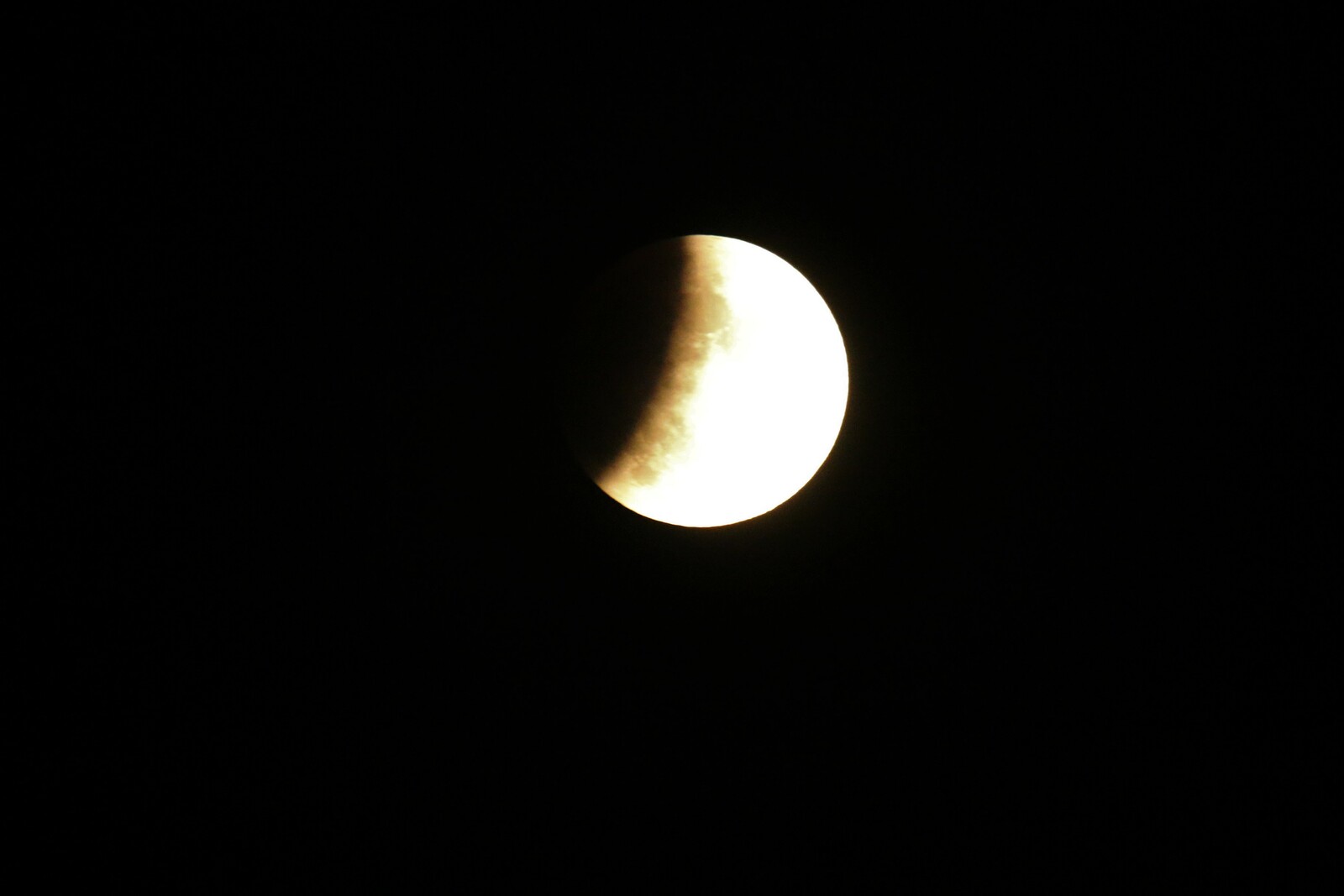
©Giliell, all rights reserved
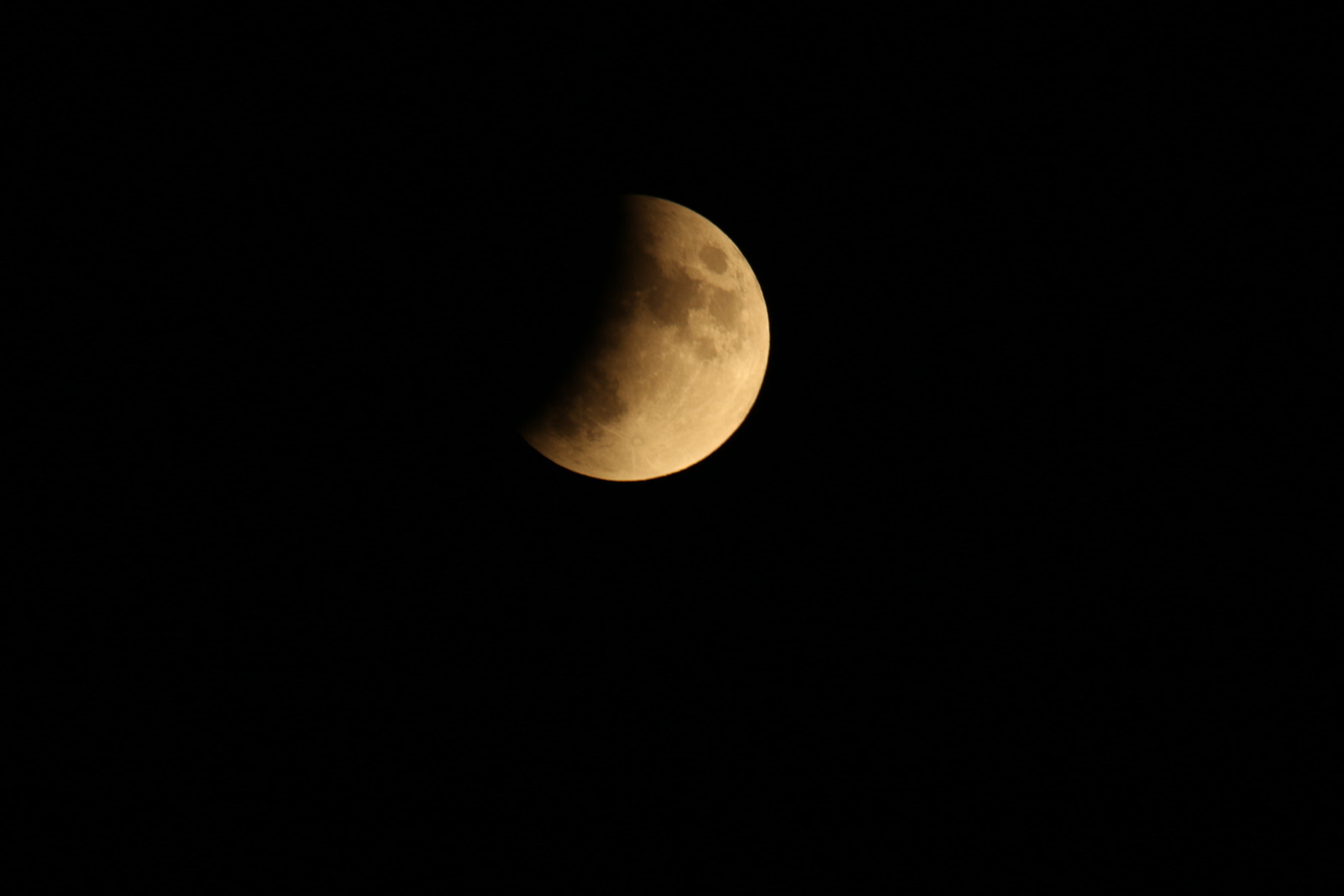
©Giliell, all rights reserved I think this one is my favourite
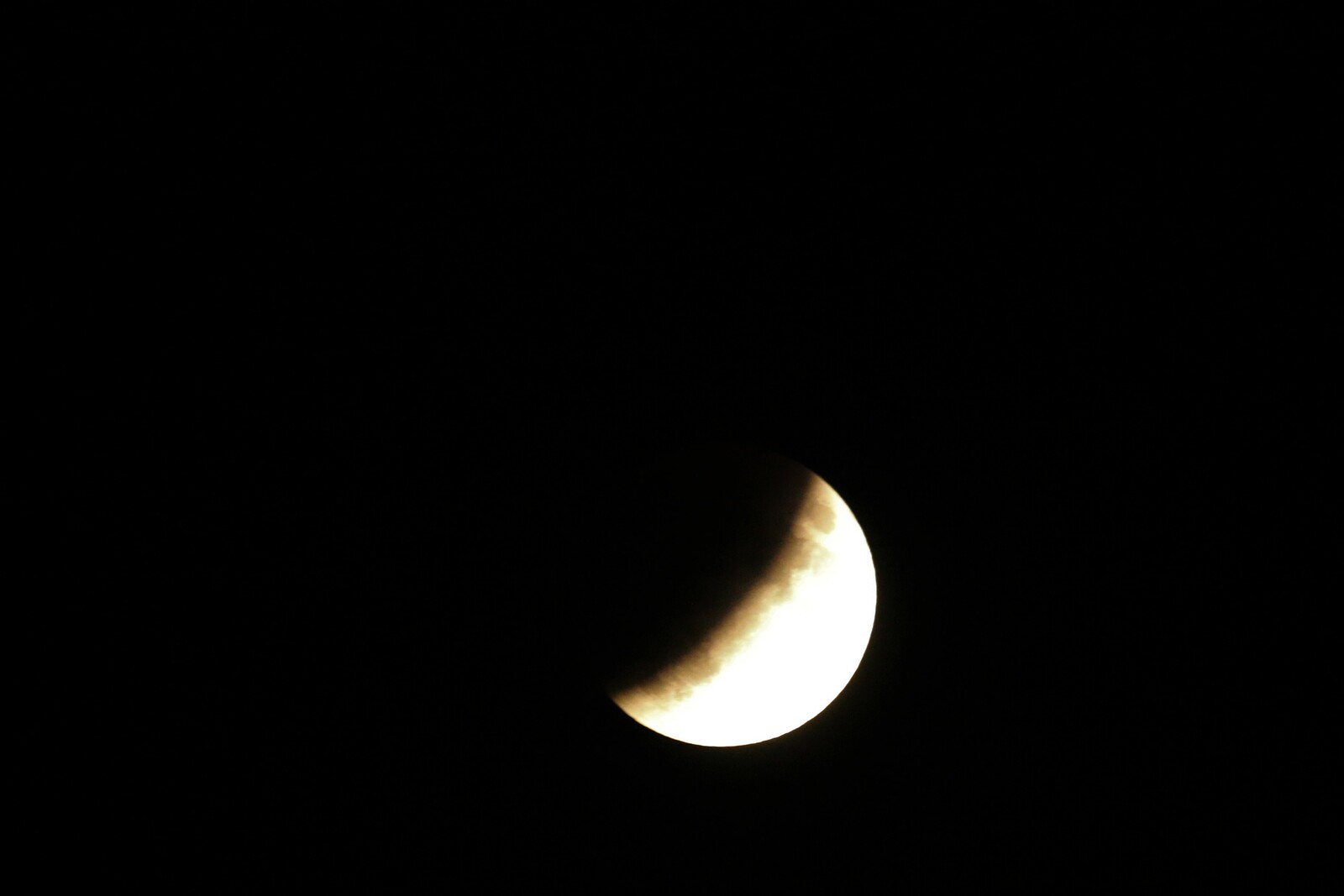
©Giliell, all rights reserved

©Giliell, all rights reserved Here you can see the first clouds crossing over the moon. More of them tomorrow.