Here Comes the Sun.

From Kengi:

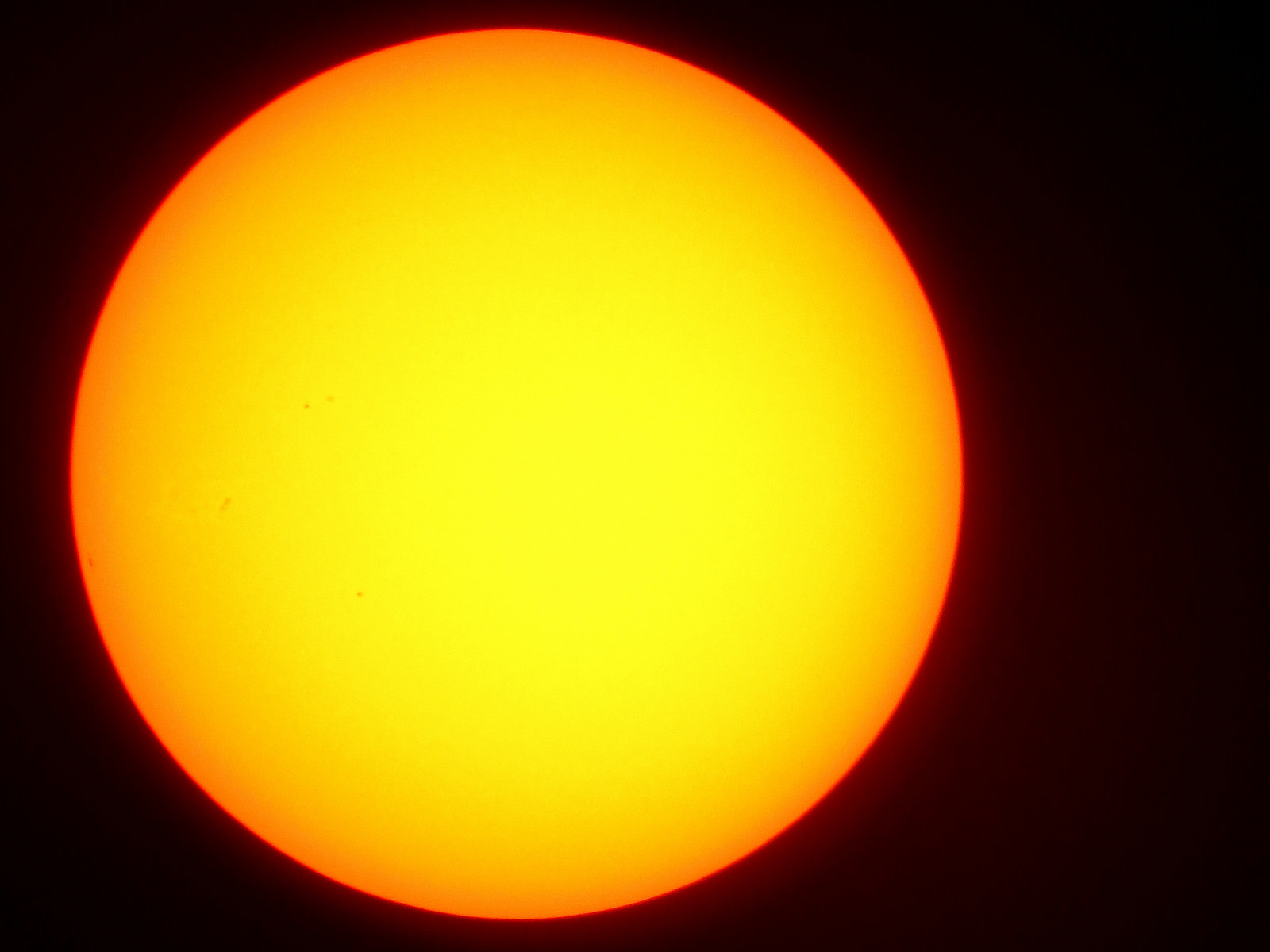
The photo includes Sunspots 2562, 2563, and 2564. The three sunspot groups form a triangle on the left side of the sun with 2562 on the bottom, 2563 on the top and 2564 on the left. There’s another sunspot just coming around further to the left.
Taken through a ND-5 thin film (.002″ thick) polymer filter. That’s ND-5 in astronomy, not ND-5 in photography, which are not the same. Remember, never look into the sun without a proper astronomical solar filter.
Click for full size.
Sunspots
© Kengi. All rights reserved.
Faces.

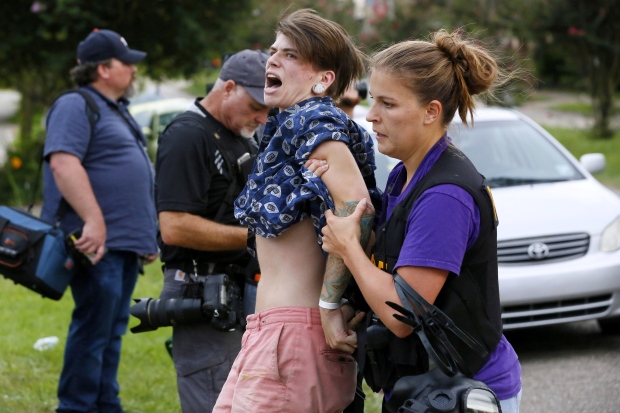
A woman confronts stormtroopers. Credit: Jonathan Bachman/Reuters

A woman confronts stormtroopers. Credit: Jonathan Bachman/Reuters. Source.


Faces2

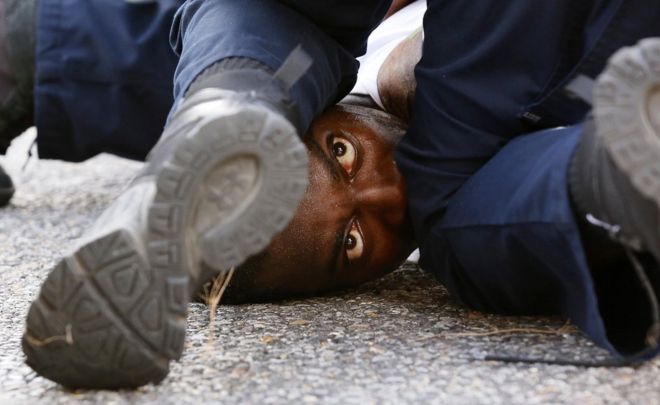
A man being “detained”. Credit: Jonathan Bachman/Reuters. Source.

Jonathan Bachman/Reuters

Ieshia Evans. Credit: Jonathan Bachman/Reuters. Source.


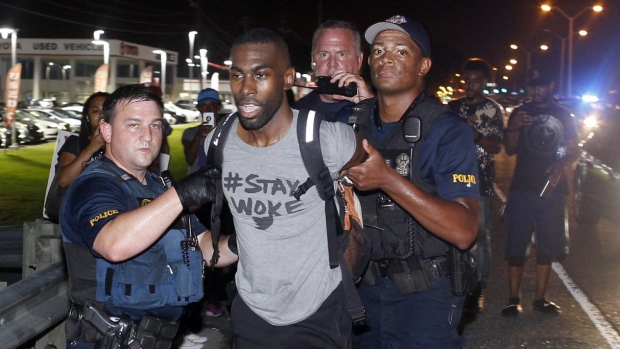
Police arrest activist DeRay McKesson during a protest along a major road that passes in front of the Baton Rouge Police Department headquarters. (Max Becherer/Associated Press)

Police arrest activist DeRay McKesson during a protest along a major road that passes in front of the Baton Rouge Police Department headquarters. (Max Becherer/Associated Press).


A man being "detained" by stormtroopers. Credit: Jonathan Bachman/Reuters.

A man being “detained” by stormtroopers. Credit: Jonathan Bachman/Reuters.


Another person being "detained". Credit: Shannon Stapleton/Reuters.

Another person being “detained”. Credit: Shannon Stapleton/Reuters.

Photographing the Radioactive Past.

Jeremy Bolen.

Jeremy Bolen.

Bolen’s featured works at Newspace include a series named after Vieques, an island belonging to Puerto Rico that was used for weapons testing by the United States between when the US bought about two-thirds of the island 1941 and when the military left the island in 2003.

According to Arizona State University’s Walter Cronkite School of Journalism, “More than 80 million pounds of chemical weapons, bombs and ammunition were dropped on the eastern portion of the island for a good part of the 20th century. Its soil still harbors bullets filled with radioactive depleted uranium and unexploded bombs.” In 2010, about 7,000 residents of the island jointly sued the US Navy claiming that military operations on the island were the cause of Vieques’ higher-than-average rate of cancer, along with a slew of other long-term medical issues. A Puerto Rican Federal District Court dismissed the lawsuit, and the US First Circuit Court of Appeals upheld that dismissal in 2012 due to the Navy’s right to sovereign immunity.

Bolen went to Vieques—though not to the restricted-access area on the eastern side of the island—and buried some of his film in the soil before it was exposed to visible light. He later dug the film back up and developed it, finding chromatic irregularities in the resulting prints. The artist’s prints are accented by bits of dirt (occasionally painted or gilded), and accompanied by a photo of the location where he buried his film, hung behind swatches of window screen.

For Bolen, adding the dirt to his irradiated film elucidates the “tension between the visible and the invisible,” that comes with living at these sites, as many in Vieques still do.

Full story here.

Granite Claw Flower.

From Lofty:

I had a botanist friend over who identified this bush in our garden as a Western Australian native, “Calothamnus graniticus”, normally found in sandy soils derived from granite. It grows well in our garden, it was here when we moved in 20 years ago.

So fuzzy! Click for full size.

graniteclawflower

© Lofty. All rights reserved.