Click for full size.

The Last Gasp. Or Toadstools Mistaken for Mushrooms. Thomas Rowlandson, Etching coloured. Subject: Mushrooms, Obesity, Gastronomy.

Click for full size.
The Last Gasp. Or Toadstools Mistaken for Mushrooms. Thomas Rowlandson, Etching coloured. Subject: Mushrooms, Obesity, Gastronomy.
Click for full size!
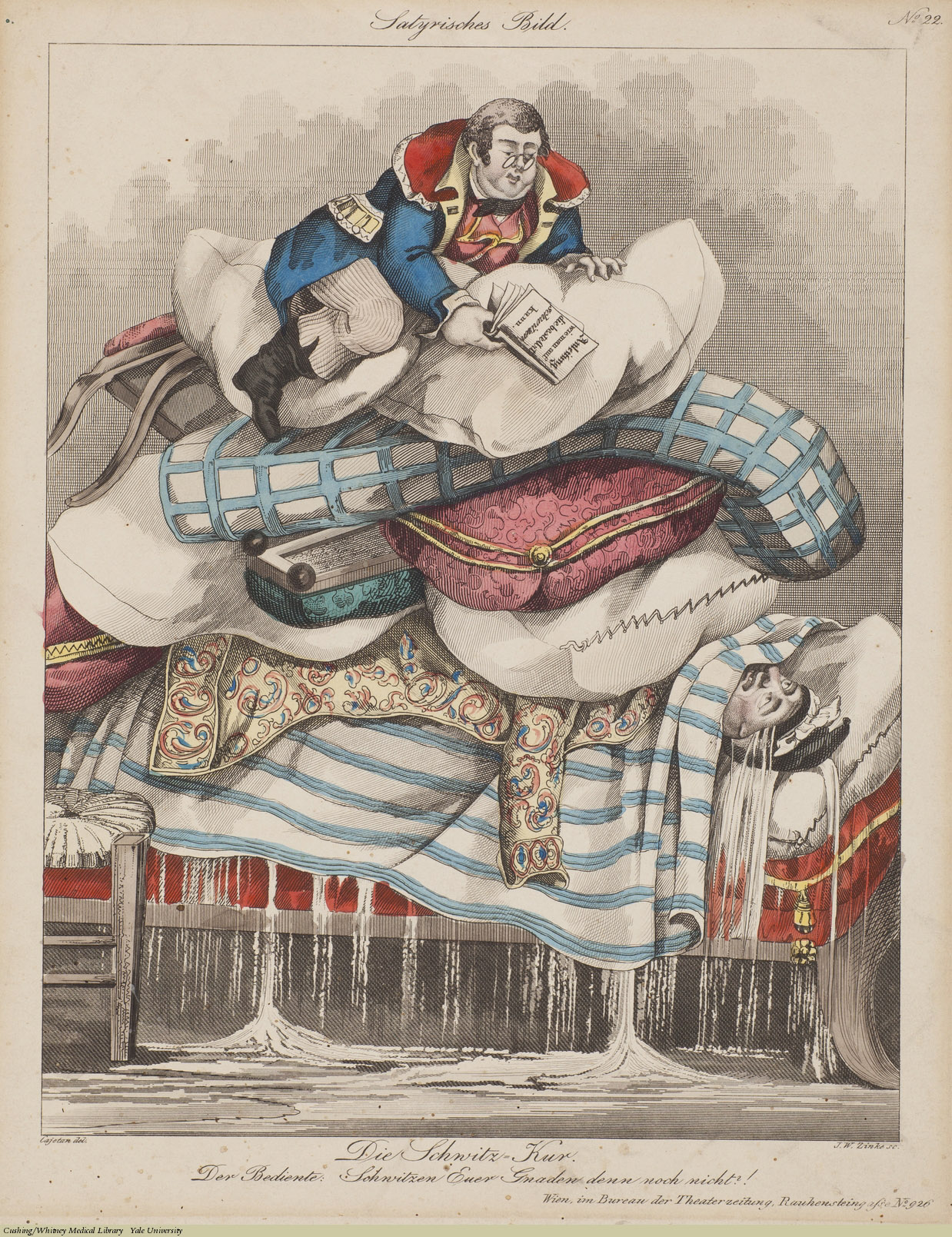
Die Schwitz = Kur. Johann Wenzel Zinke, Engraving coloured, Satyrisches Bild. #22. Subject: Sweating Cure, hydrotherapy.
Matt Easton and Tod Todeschini got together to make a really interesting video that also pertains to my current project in work.
The breadth of Tod’s skill and knowledge is incredible. When I grow up I want to be just like him.
Click for full size!
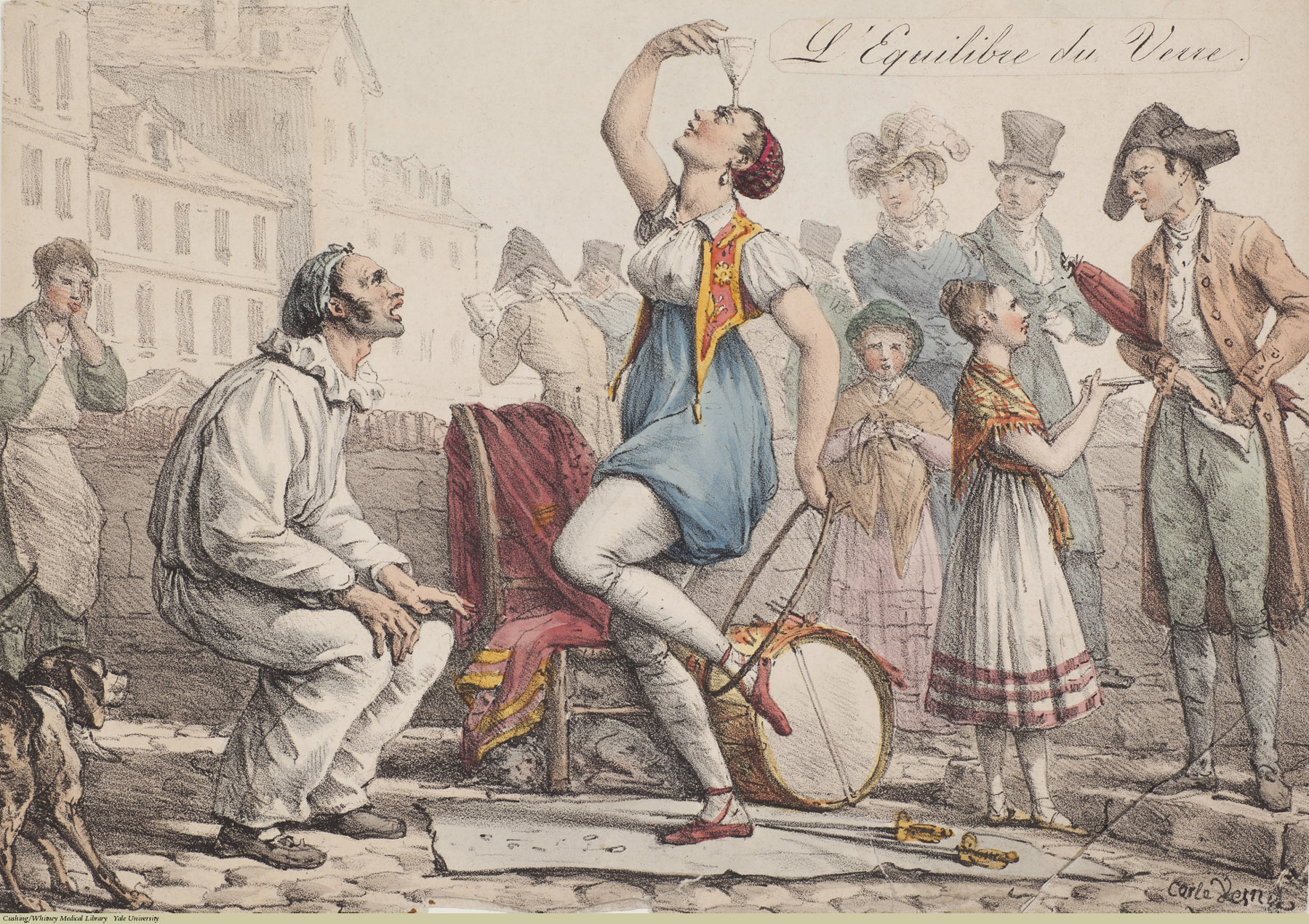
L’Equilibre du Verre. Carl Vernet, Lithograph coloured, 1823. Subject: Balance, Acrobatics.
Click for full size!

The Surgeon. Lucas van Leyden, Laid, 1524. Subject: Surgeons & Surgery, Rural Medicine.
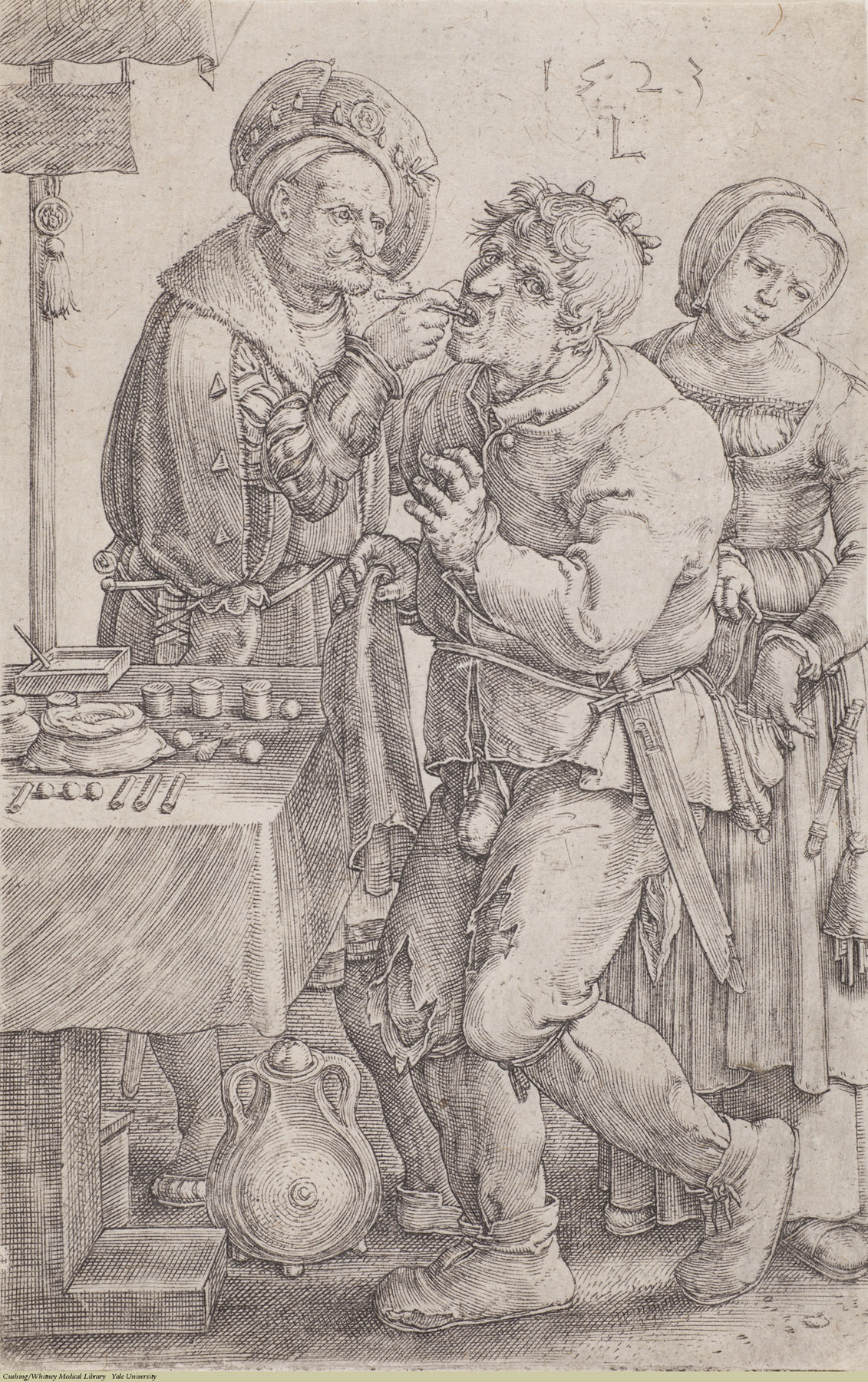
The Charlatan (The Dentist). Lucas van Leyden, Laid, 1523. Subject: Tooth Extraction, Charlatan, Thievery.
Click for full size!
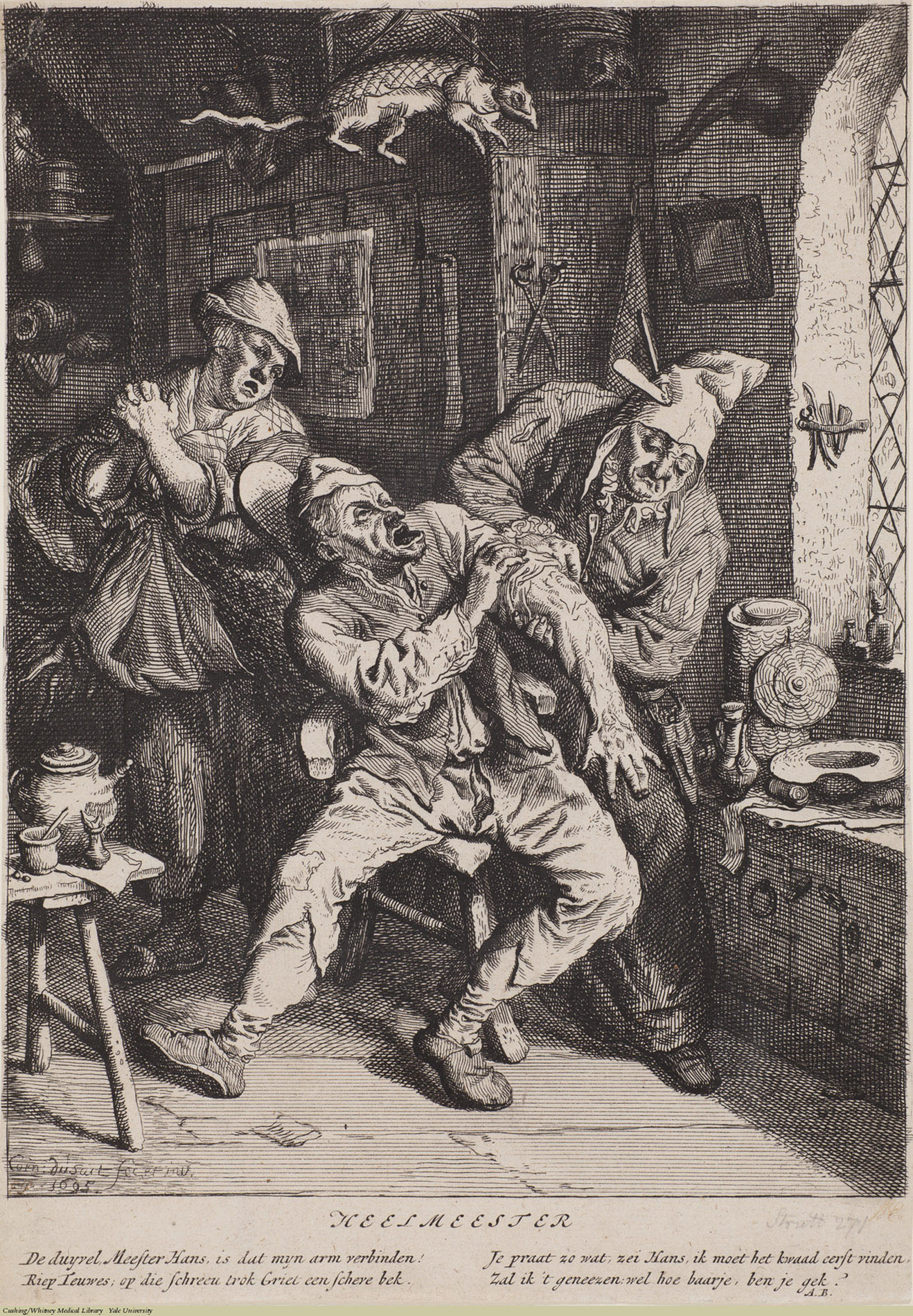
Heelmeester. Cornelius Dusart, Laid, 1695. Subject: Barber Surgeons, Rural Medicine.
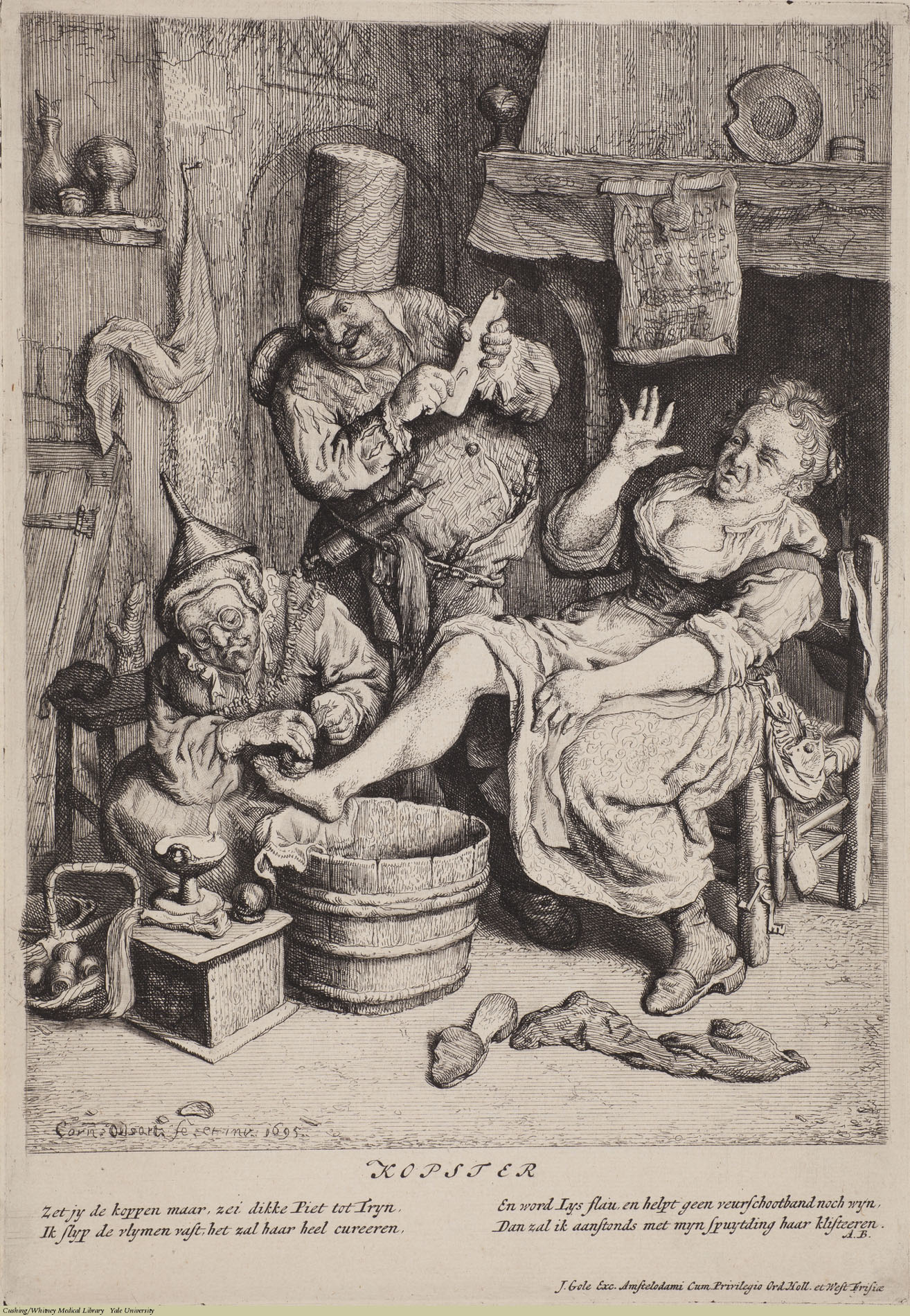
Kopster. Cornelius Dusart, Laid, 1695. Subject: Village Doctors, Phlebotomy, Bleeding Cups, Rural Medicine.
Click for full size. Note the very misogynistic sign at the top: Man Traps Laid In These Grounds. As if any man in question had absolutely nothing to do with it all.
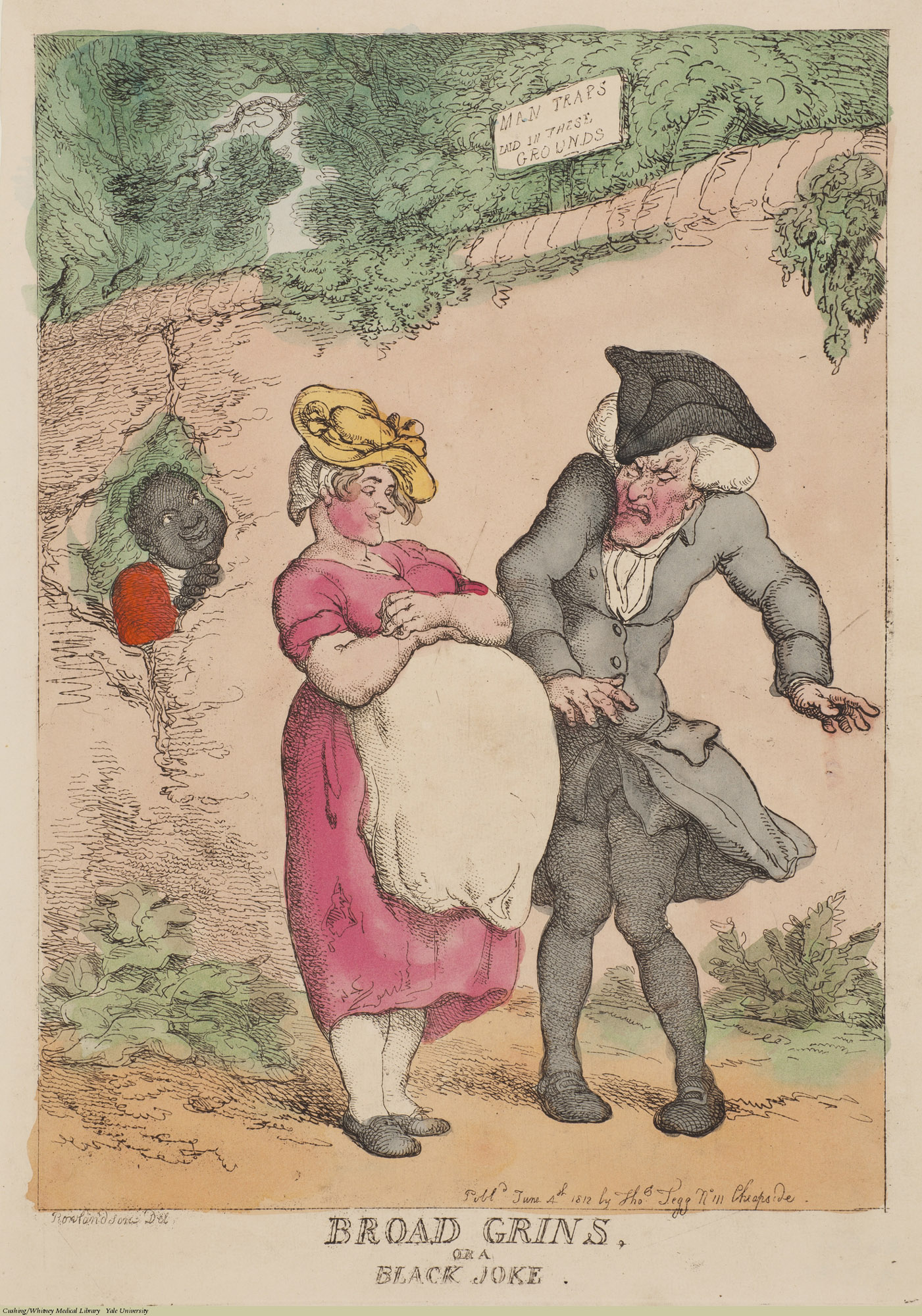
Broad Grins, or a Black Joke. Thomas Rowlandson, Etching coloured, 1812. Subject: Pregnancy, Misogyny.
Much like people still use fungus riddled Diamond Willow to make walking sticks and other items, spalted wood was also a part of the art of Intarsia, a specific type of wood inlay. Here are a few stunning examples, and you can see and read much more about the history of this art at the Public Domain Review.
The technique of Intarsia — the fitting together of pieces of intricately cut wood to make often complex images — has produced some of the most awe-inspiring pieces of Renaissance craftsmanship.
Note: if you click over to the Met Museum, the way to see the images full size is to click on ‘download’. All the images here, click for full size!
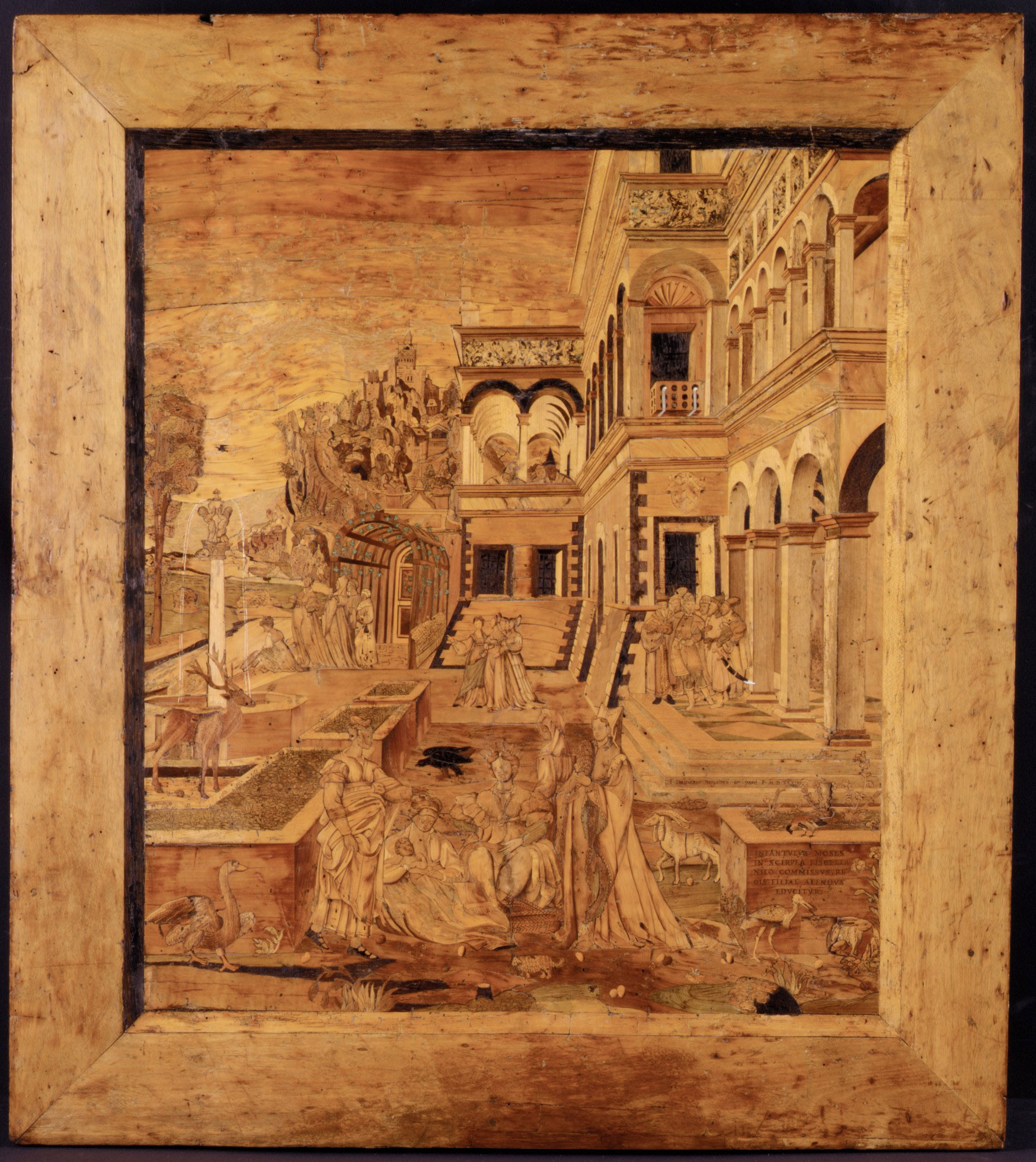
Detail from an intarsia piece by Fra Damiano da Bergamo, early 16th century. Note the subtle dots of greenish-blue in the covered archway — Source.
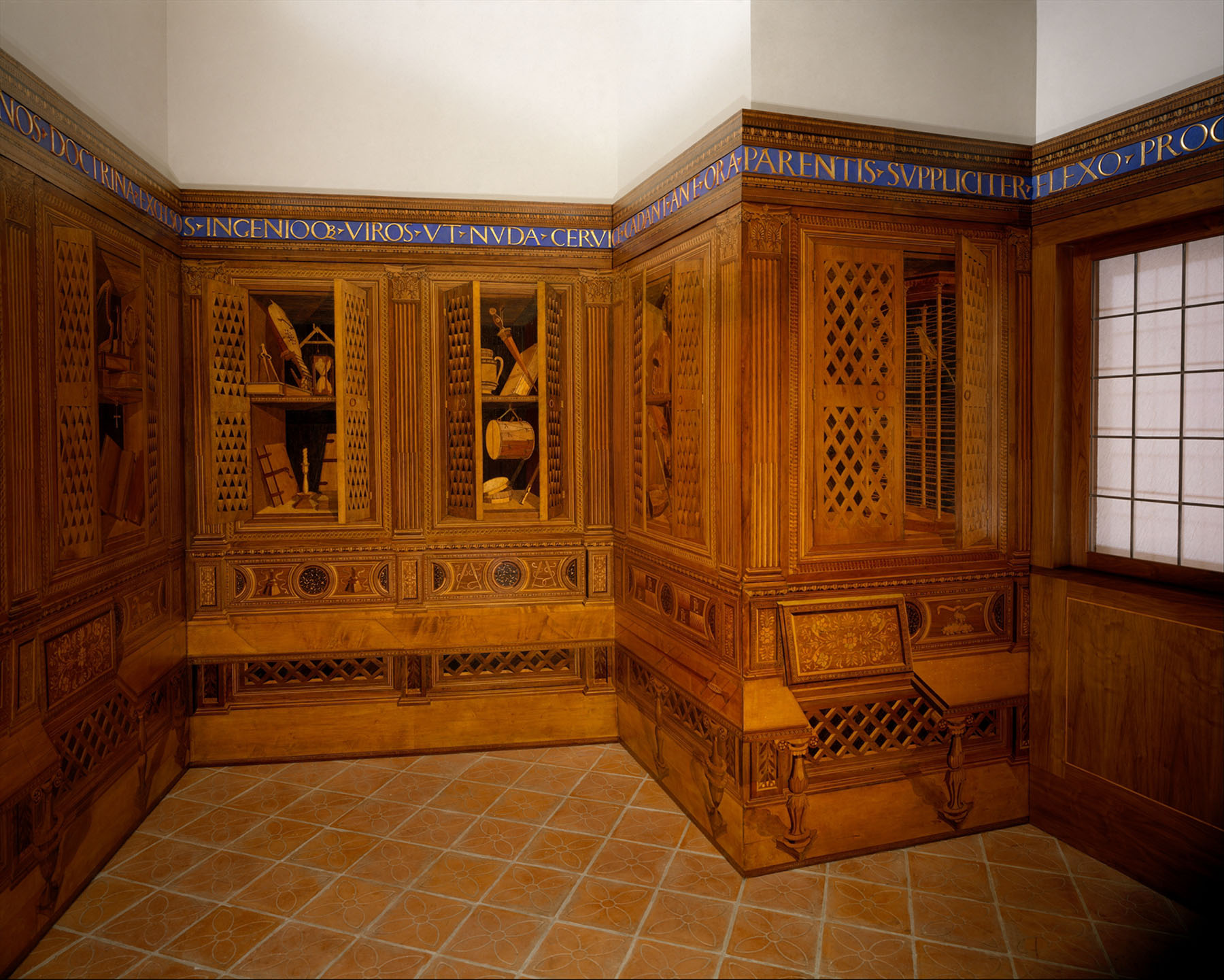
Those “cupboards” are trompe l’oeil! Part of the Studiolo Gubbio as installed in the Metropolitan Museum — Source.
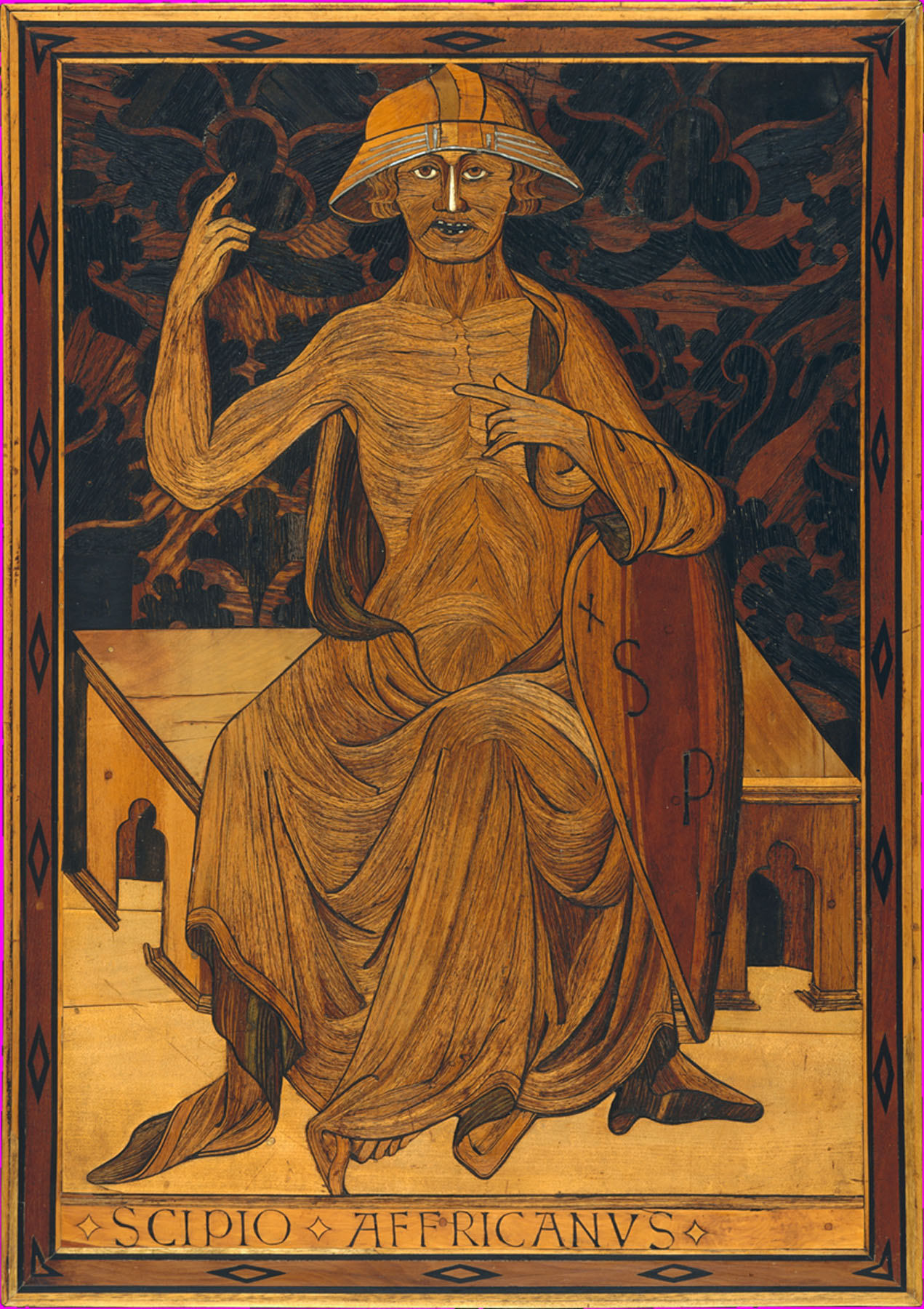
Scipio Africanus (ca. 1425–30), intarsia by Mattia di Nanni di Stefano using poplar, bog oak and other wood inlay, rosewood, tin, bone, traces of green colouring — Source.
Click for full size!
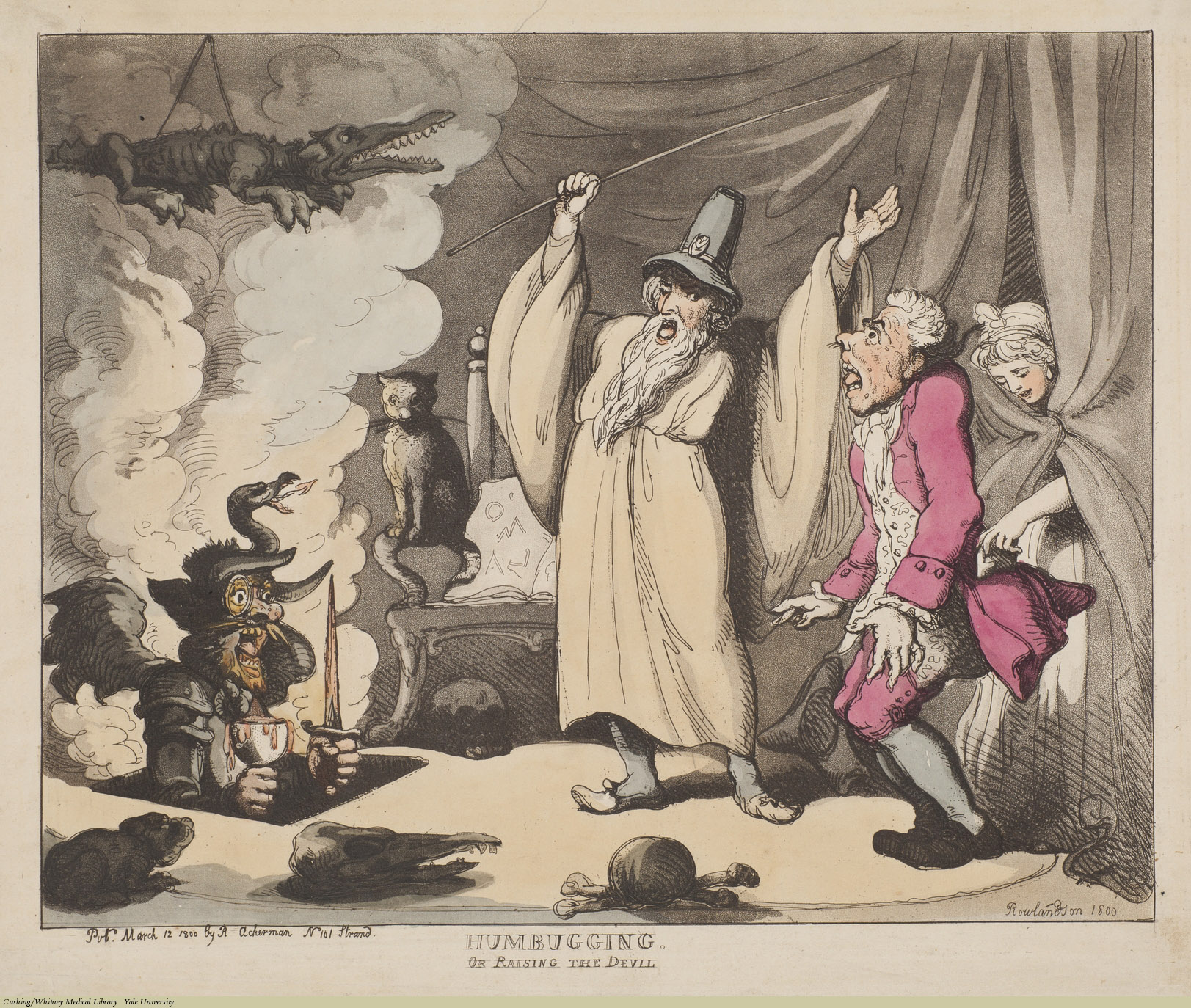
Humbugging. Or Raising The Devil. Thomas Rowlandson, Aquatint coloured, 1800. Subject: Wizards, Confidence Trickster, Pickpocket.

Hocus Pocus Or Searching For The Philosopher’s Stone. Thomas Rowlandson, Aquatint coloured, 1800. Subject: Count Alessandro Cagliostro (Giuseppe Balsamo), Alchemy, Sex.
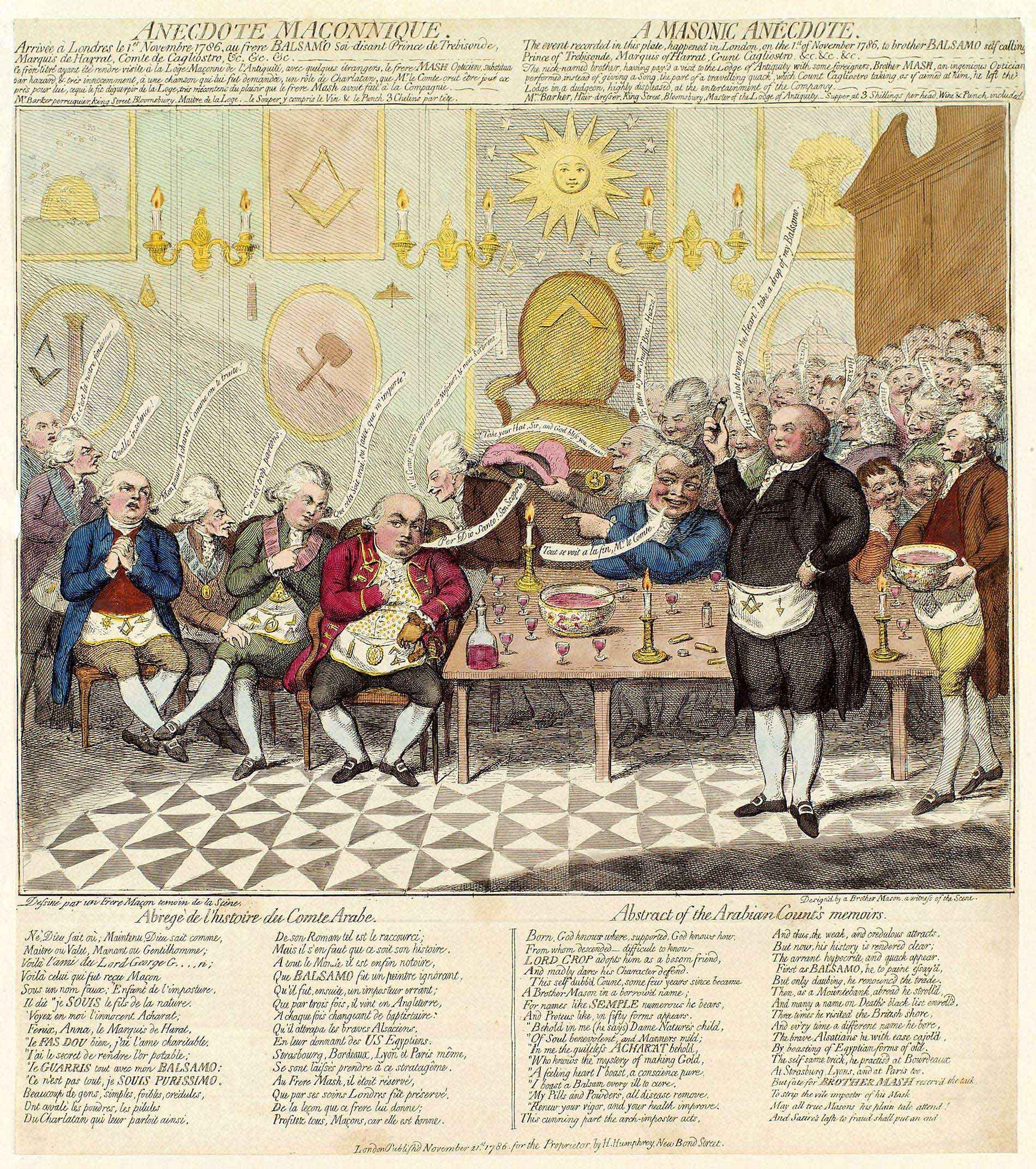
James Gillray did a scathing piece on Cagliostro, click for full size:

A brand new translation of Symphorien Champier’s The Ship of Virtuous Ladies is now available, and it sounds most intriguing. I’ll be ordering.
First published in 1503 in Lyons, Symphorien Champier’s The Ship of Virtuous Ladies helped launch the French Renaissance version of the querelle des femmes, the debate over the nature and status of women. The three books included in this edition include arguments for gender equality, and a catalogue of virtuous women modeled on Boccaccio’s Famous Women and Jacobus de Voragine’s Golden Legend. Titled “The Book of True Love,” book 4 is especially important in gender history, importing and transforming the male-centered Neoplatonic philosophy of Marsilio Ficino for pro-woman ends.
Medievalists has a look at some sex tips from the volumes.
1. The Right Age
Following Plato, Champier declares that the perfect age for women to marry is 16-20, and for men, 30-35. Any younger, and you might marry a girl who will be sick forever – “So instead of being served by them, [you] must serve them”, Champier warns. The only exception is if the young woman is tall. If she is short, you should definitely wait until she’s 21. And if both man and woman are over twenty-one, you’re in the clear: “the children will be attractive and have good temperaments, with well-proportioned members and will have good minds.” Be sure to wait, if at all possible, because if you have children earlier, “they will be imperfect and short.”
2. The Right Time
People should not have sex at just any old time of the year, Champier says. If you want to conceive, make sure you have sex in the spring, because it’s “warm and moist”, which is the best kind of humour. “Next after spring,” if you can’t manage it then, “winter is the season most conducive to conception, while summer is bad and autumn is the worst of all.” As for time of day, it can’t be right after eating. As we’ve always been told about swimming right after a meal, the consequences would be dire:
If a man, when he is full and has eaten, enters the world of the carnal, he weakens his body and his nerves and causes pain for himself in his legs and knees. He also causes obstructions all throughout his body and causes thick humors in his body; and if he does this regularly, his body parts retain too much water, he has great difficulty breathing, and his limbs start to shake.
If you thought it was safe to have sex before eating, think again:
If he acts carnally when he is hungry or thirsty or when he has an empty body or when his body has been bled … he damages his body and dries it out, and its natural heat dissipates, negatively affecting his sight, and sometimes he becomes paralyzed.
(Same goes for if you’re just been bled, bathed, worked, fasted, or been sad.) You’ve been warned. Best to play it safe and just have sex first thing in the morning, “after a [good] night’s sleep.”
You can read the rest of the tips at Medievalists.net.
Click for full size!
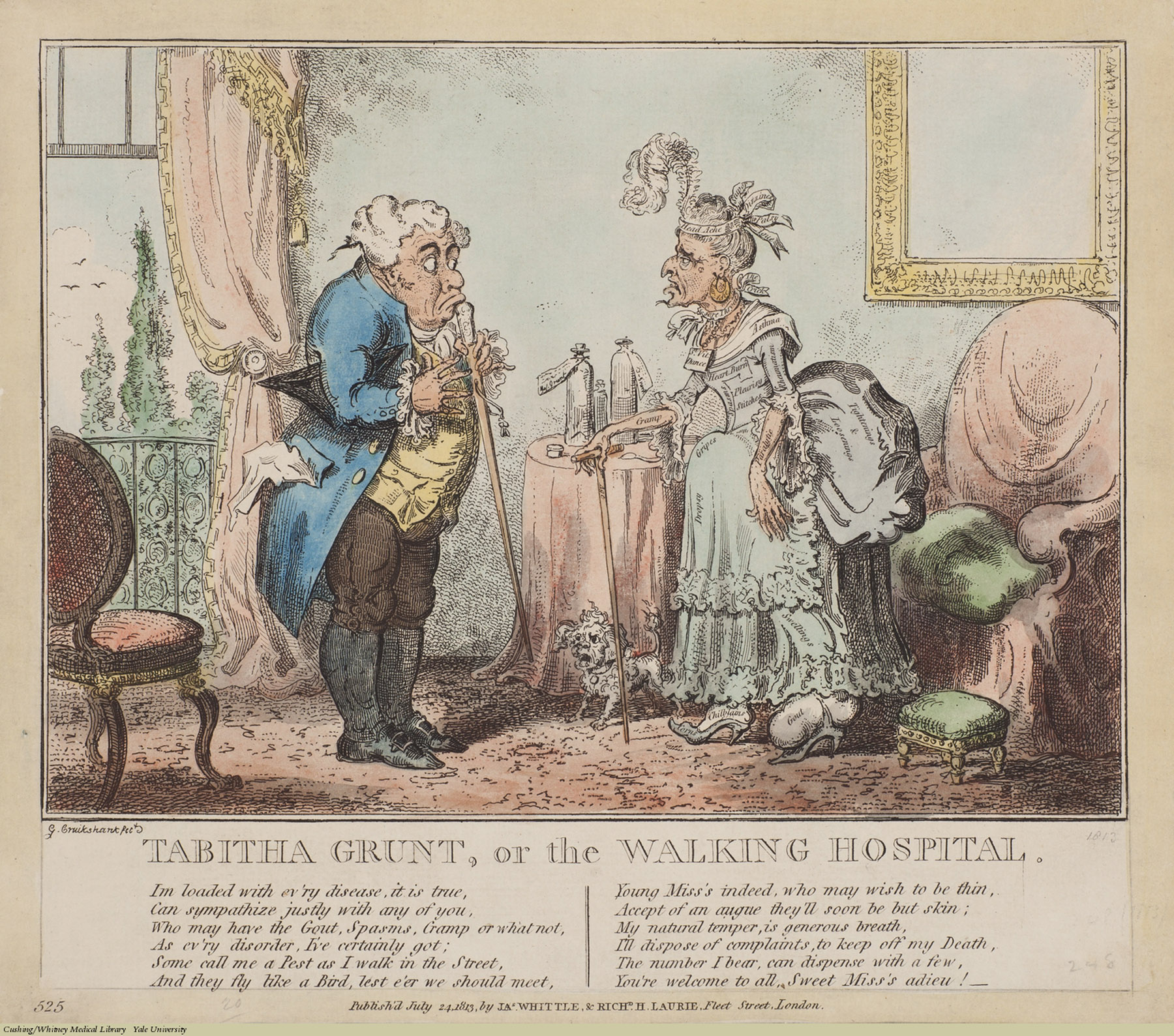
Tabitha Grunt, or the Walking Hospital. George Cruikshank, Etching, colored, with pencil & watercolor, 1813. Subject: Gout, Hypochondria.
By James Gillray. In this etching, he caricaturised a lecturer – most likely physician and chemist Thomas Garnett, as administering gas at London’s Royal Institution to a particularly long-winded member of parliament, Sir John Coxe Hippisley. Squeezing the bellows next to the pair is the grinning future Sir Humphry Davy. Just over a week after Hannah Humphrey published Gillray’s etching, Davy would replace Garnett as the Royal Institution’s Lecturer of Chemistry. Source. Over to the left, toward the bottom, there appears to be an interracial couple with a child. Click for full size!

New Discoveries in Pneumaticks!: or an Experimental Lecture on the Powers of Air, James Gillray, Etching coloured, 1802. Subject: New Discoveries, Equipment, Supplies, Teaching.
George Cruikshank, click for full size.
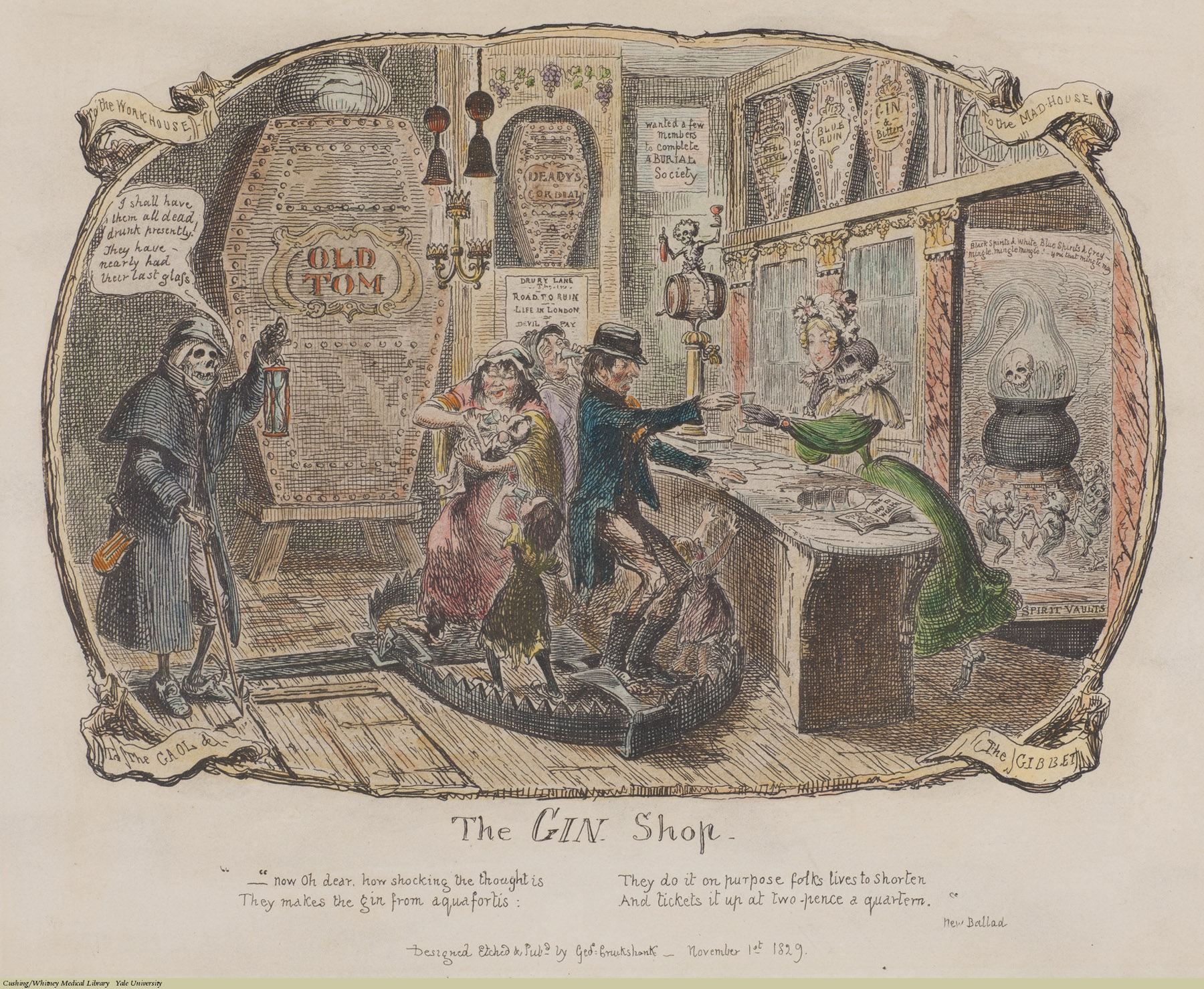
The Gin Shop, George Cruikshank, Etching coloured, 1829. Subject: Alcohol, Gin, Drunkenness, Mother’s Ruin, Children, Child Care.
The GIN Shop –
—”Now oh dear, how shocking the thought is They makes the gin from aquafortis:
They do it on purpose folks lives to shorten And tickets it up at two-pence a quartern.”
New Ballad.
You can read more about the Gin Craze here.
