
Except I am the wrong gender, and I didn’t have a costume. And I was sorting peas of my own accord, not at the behest of an evil stepmother.
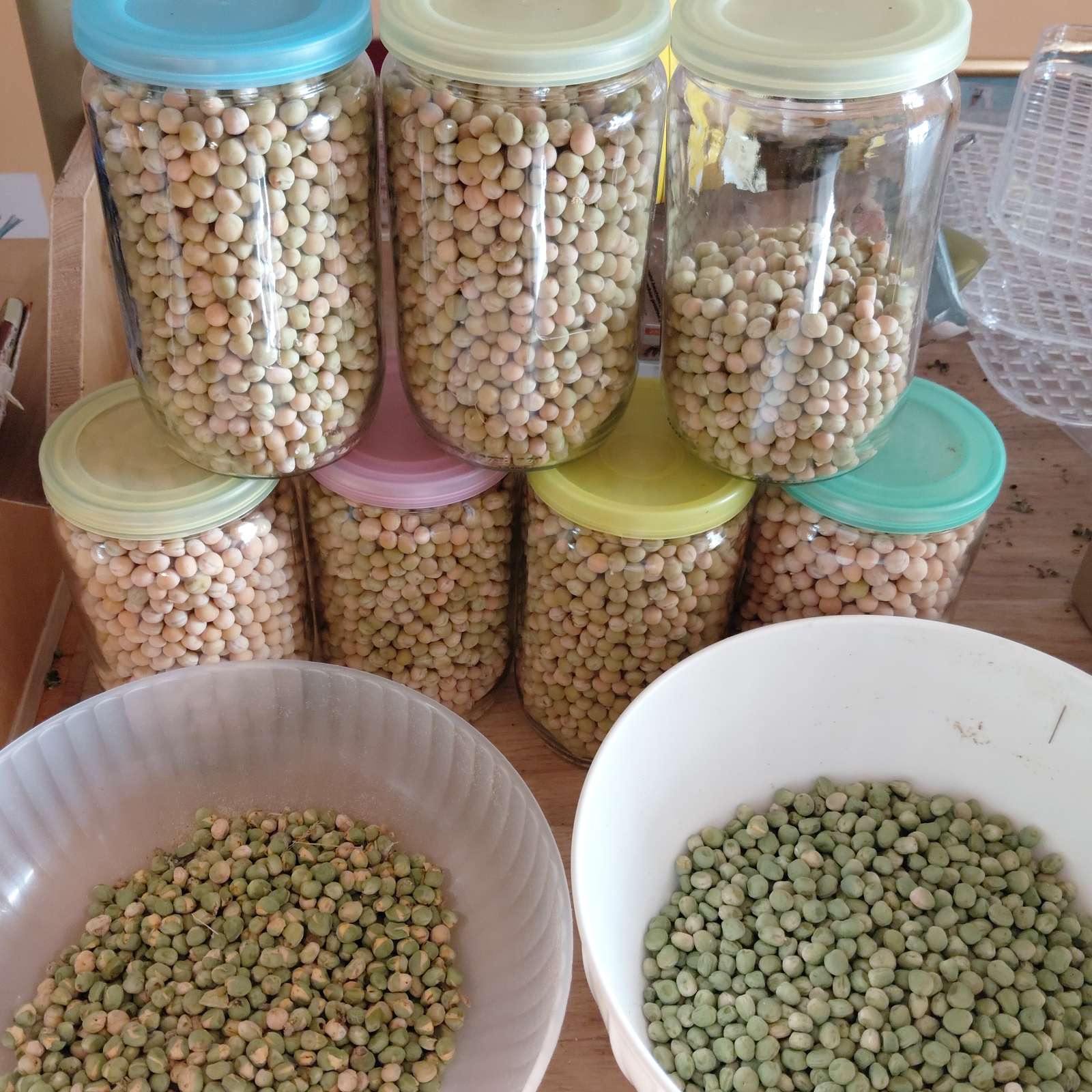
© Charly, all rights reserved. Click for full size.
I sorted undamaged and damaged peas. In the picture, there are approximately 3,25 kg of healthy-ish yellow peas in the jars. Healthy-ish because I am not entirely certain – some of them do have black spots, which might indicate there is a weevil pupa inside. The same goes for the 400 g of green peas on the right. And on the left are 200 g of badly damaged green peas. Not depicted is about the same amount of badly damaged yellow peas.
The healthy-ish yellow peas will be briefly frozen to kill any potential weevil pupae that might lurk in them. Then they will be used next year as either a pre-crop, companion crop, or even a main crop. To reduce weevil infestation, I will use a technique I read about on the interwebs and tested this year: staggered sowing. I will sow about a third as early in the season as possible and let them flower and fully fruit on some secondary plot. And about two months later, I will sow the main patch where I want them to grow for food. If I fail to grow food-grade peas, still no problem; they will be useful as green fertilizer even so.
The damaged yellow peas I have sown (together with some bad oats) in the raised bed where I had garlic this year. Some will decompose right away, but some will sprout and grow. Either way, they will serve as an organic fertilizer.
The healthy-ish green peas get the freezer treatment too, and they will be used to grow green peas next year as pre-crop with corn. The plan is to sow these as early as possible and harvest them as fresh green peas sometime in May, at about the same time that the Painted Mountain corn is supposed to be sown.
And the damaged green peas will be sown as green fertilizer now in the fall on the patch of land where I grew oats this year.
Leave a Reply
You must be logged in to post a comment.