I see shoveling in my future ©voyager, all rights reserved
Snow is a four letter word.

I see shoveling in my future ©voyager, all rights reserved
Snow is a four letter word.
© Giliell, all rights reserved
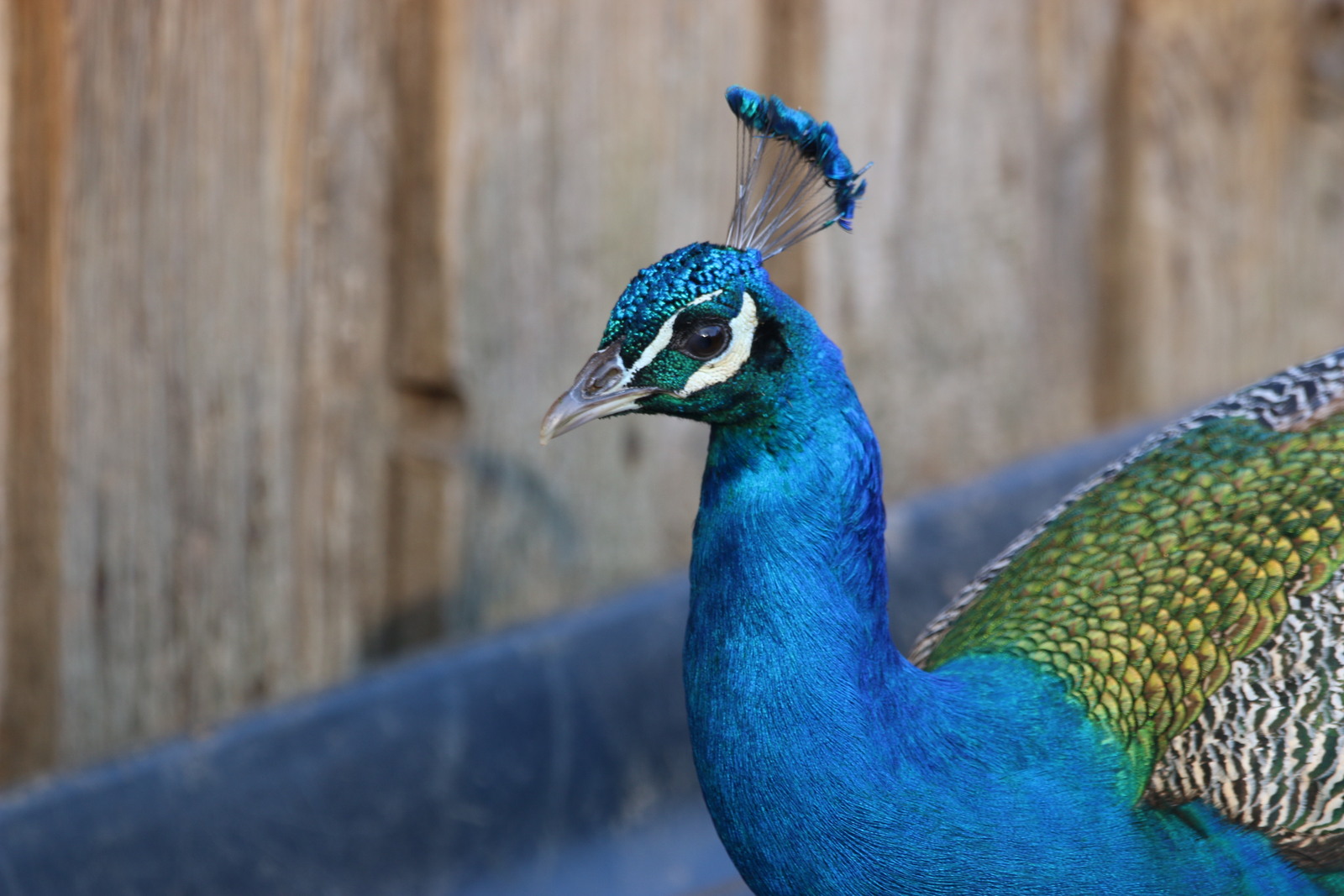
Like in most zoos, our peacocks roam freely, which means that they have access to the enclosures of other herbivores. In this case, the dwarf goats. They had just been fed and you can imagine who thought that HE had been fed.
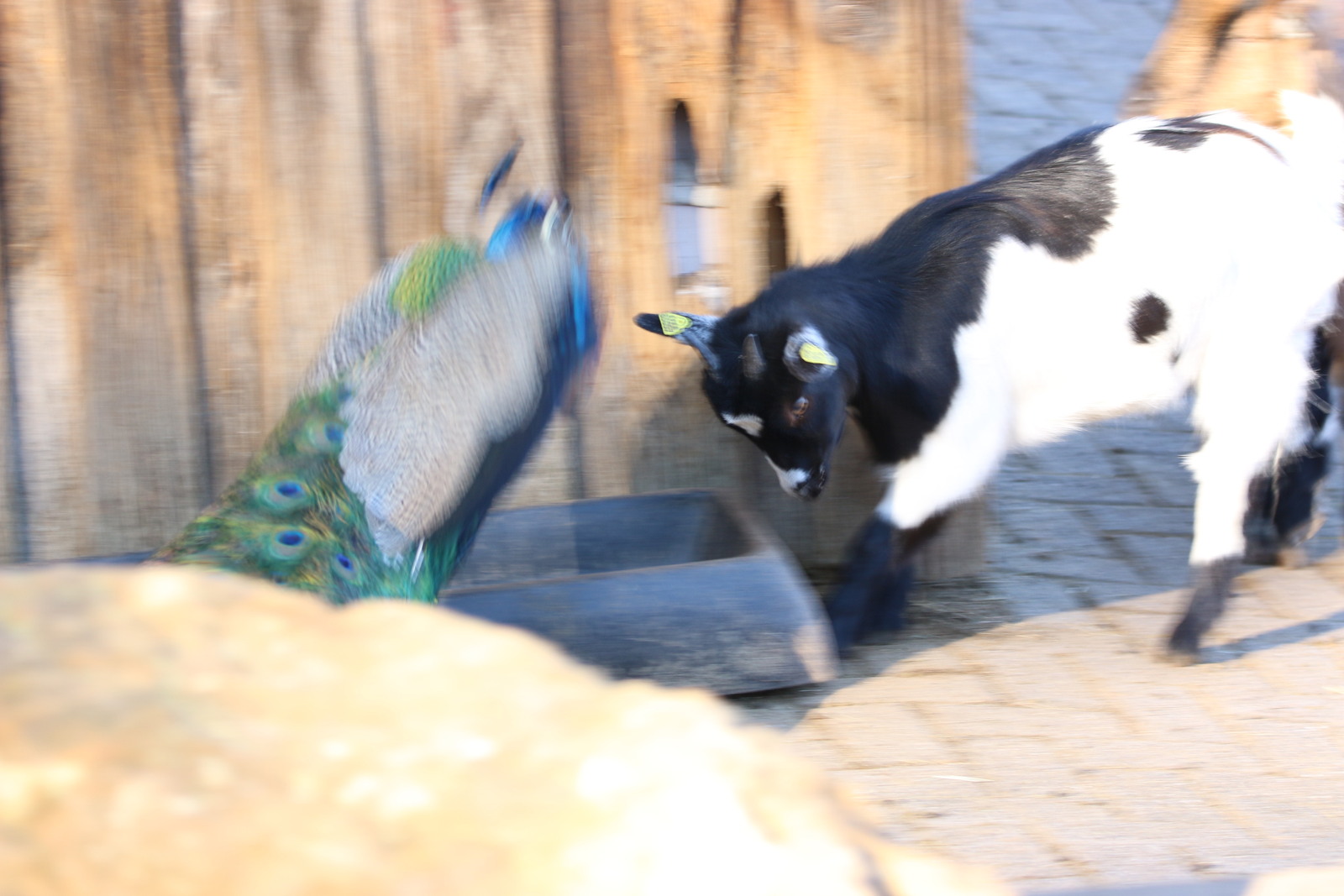
© Giliell, all rights reserved
Unfortunately I’d put the shutter time really low before and didn’t notice, so the pics are blurry, although their blurriness also adds to the overall mood.

© Giliell, all rights reserved
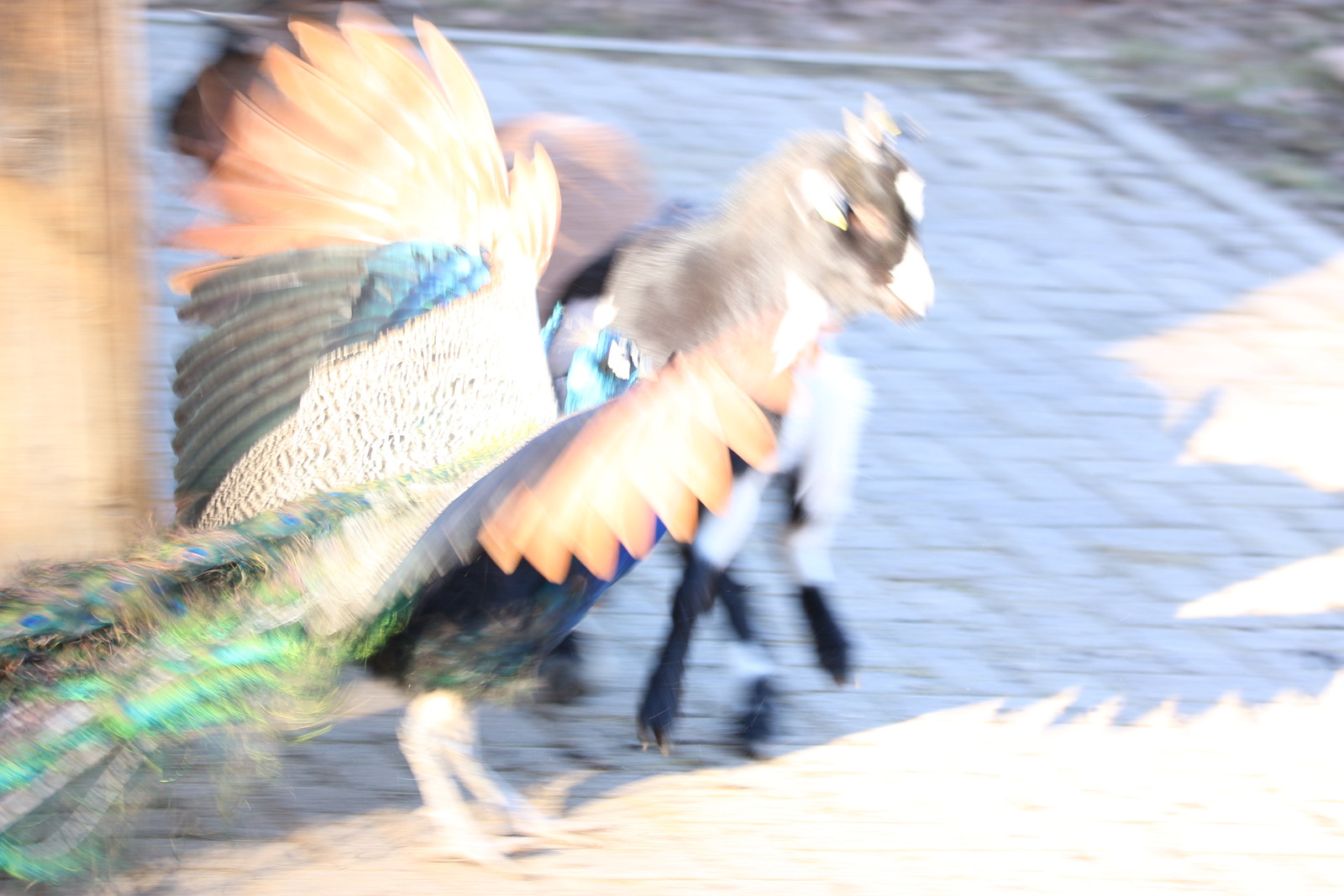
© Giliell, all rights reserved
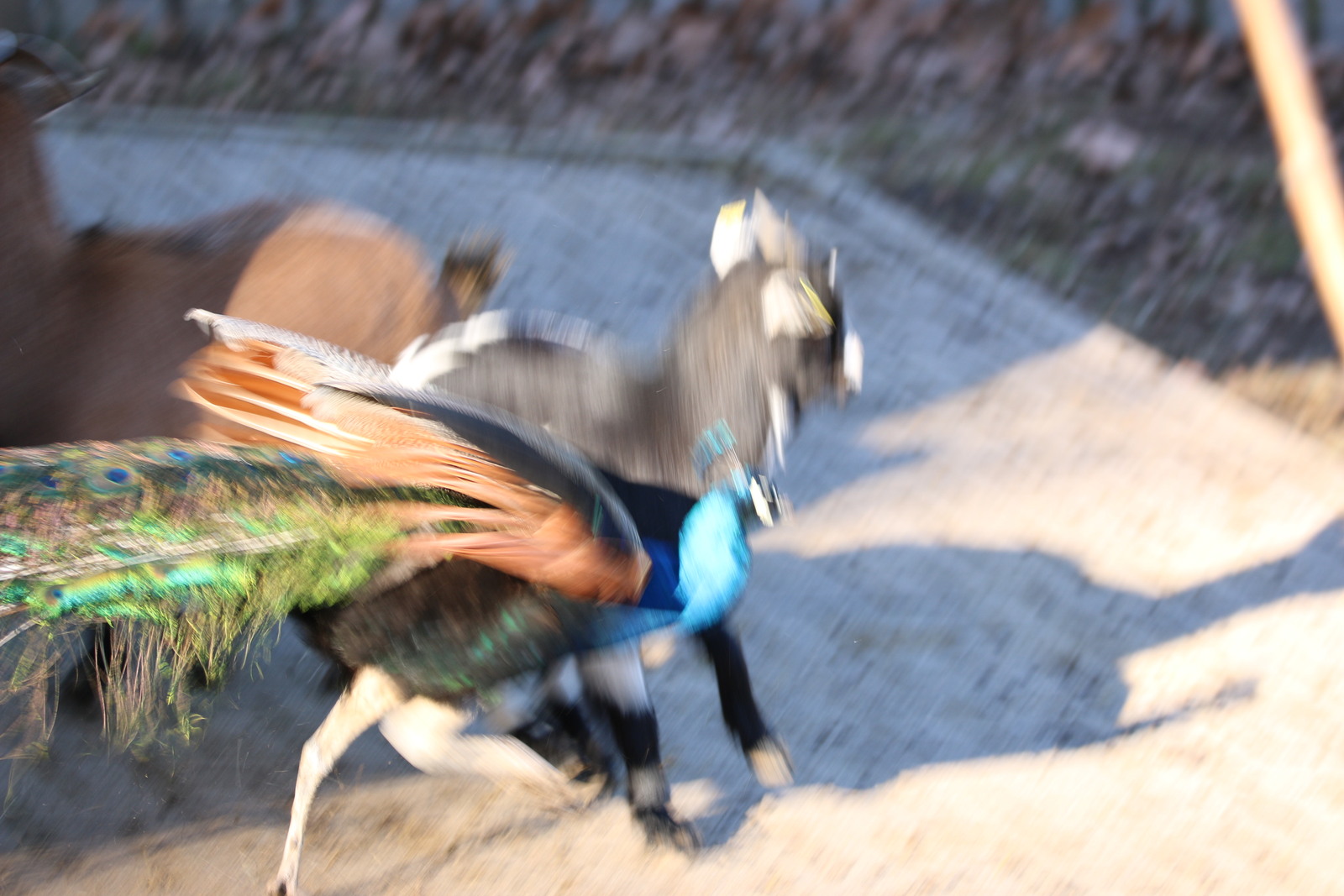
© Giliell, all rights reserved
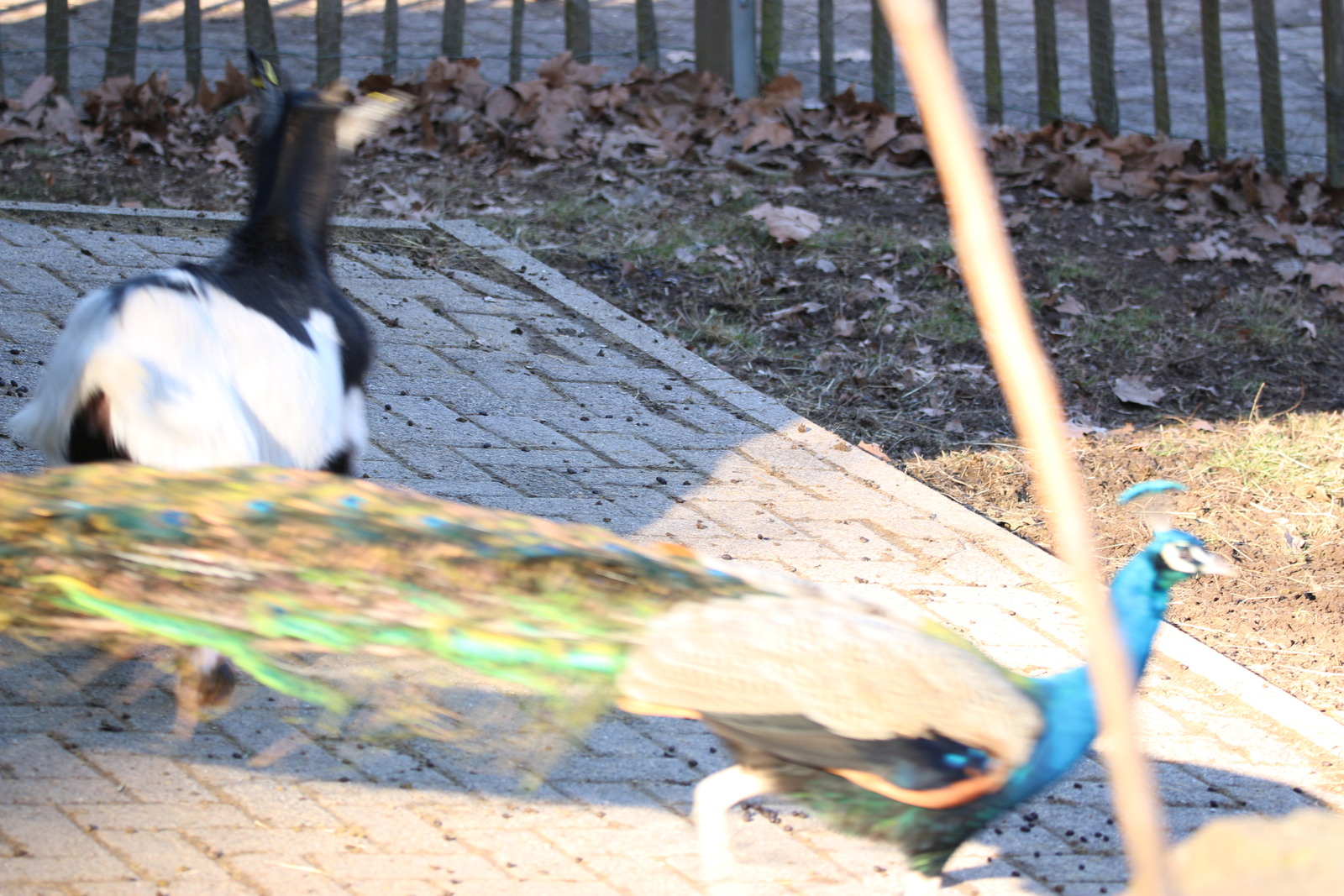
© Giliell, all rights reserved
Well, I guess he was right…
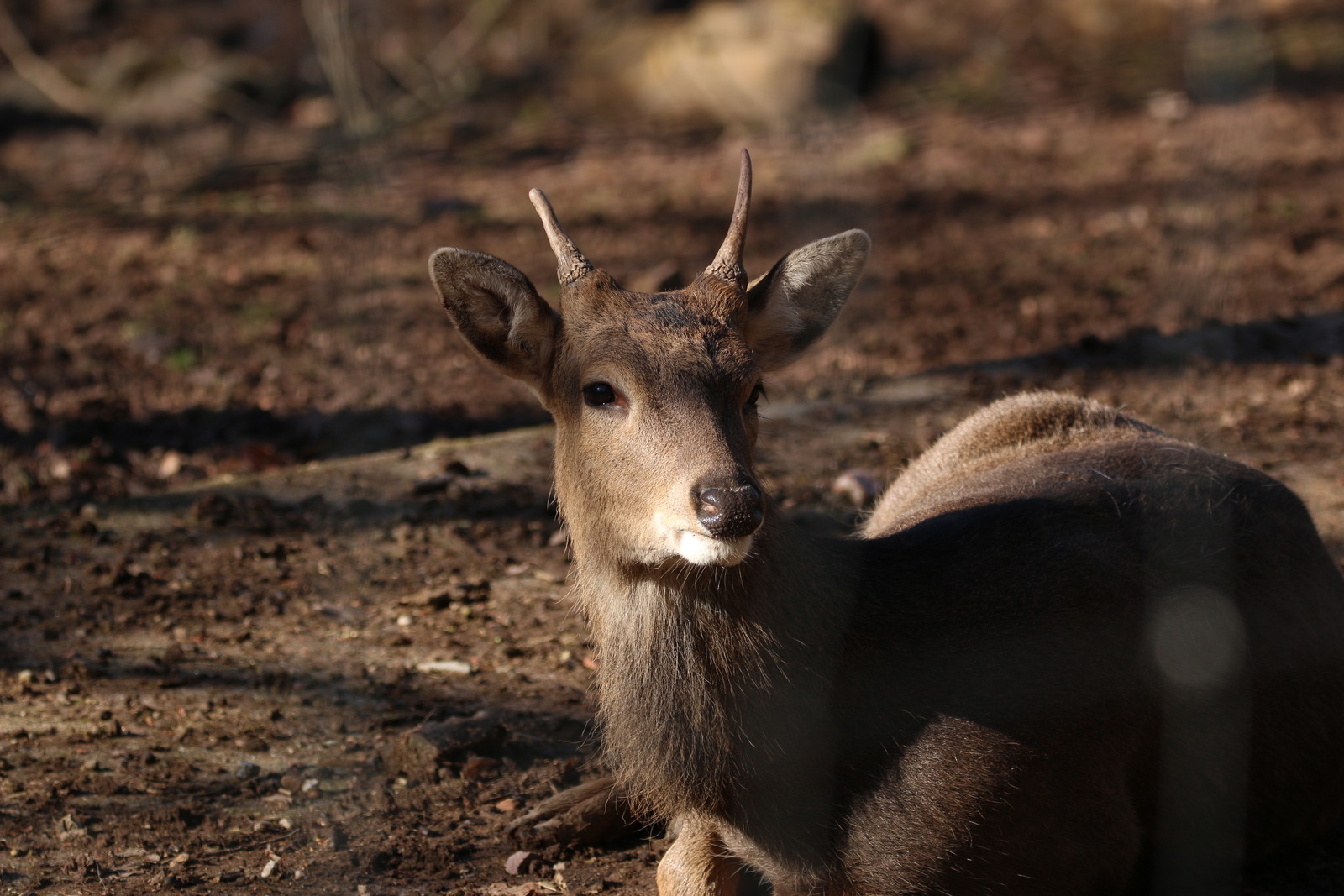
Assorted hoofed animals. Please don’t correct my bad joke.

© Giliell, all rights reserved
© Giliell, all rights reserved

© Giliell, all rights reserved
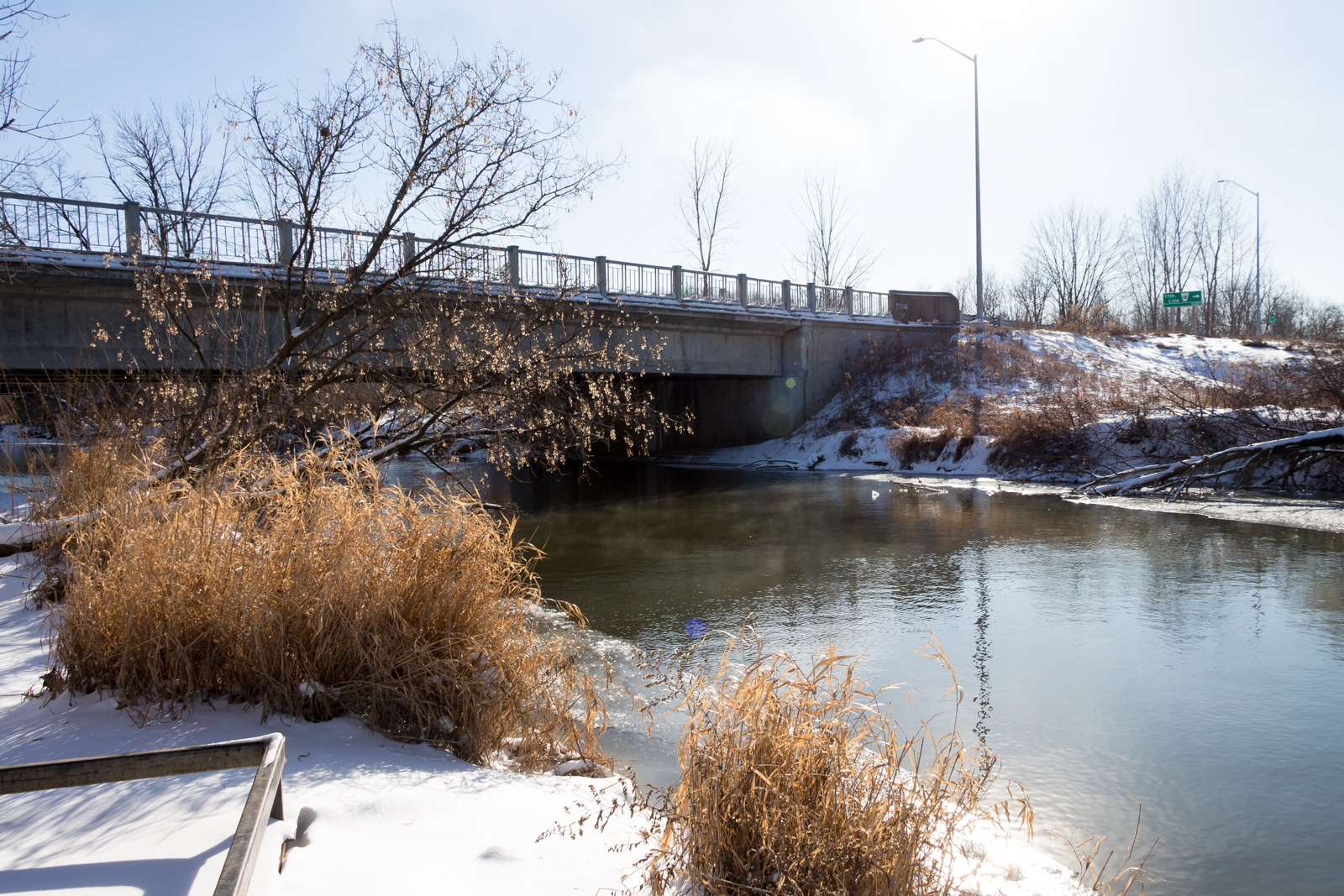
The Thames River, ©voyager, all rights reserved
Walking in town is still too treacherous for Jack and I because of icy sidewalks so we’ve been using the well-worn country trails frequented by lots of other dog walkers. This is the Millenial Trail by the Thames River and the path is mostly packed and roughed up snow which is a fairly easy walk. This is the place where the beavers live and I am 90% certain I know where their lodge is, but conditions are such that we can’t get too near until the snow melts. In the meantime, I’ve been reading about beavers and have discovered that they are mostly nocturnal and seldom leave their lodge in winter, so springtime at dusk or dawn would be an ideal time to see them out and about. Here’s my plan. I’m going to leave Jack at home one spring evening when the weather is clear and the moon is full and take a small camp chair to the site and set up my camera ready for dim light pictures. (I should practice first…I’m not very good at dim light photography.) Then, I’m going to sit very, very quietly and wait for the beavers to leave the lodge. They are very shy animals so I’m not sure how much my presence will affect their activity. I might need to sit there for a few evenings to allow them to get used to me. We’ll see. It’s an exciting adventure to contemplate and I promise I’ll keep you posted.
It’s time to join Ice Swimmer on Harakka Island.

Return to the Mystery Path ©Ice Swimmer, all rights reserved
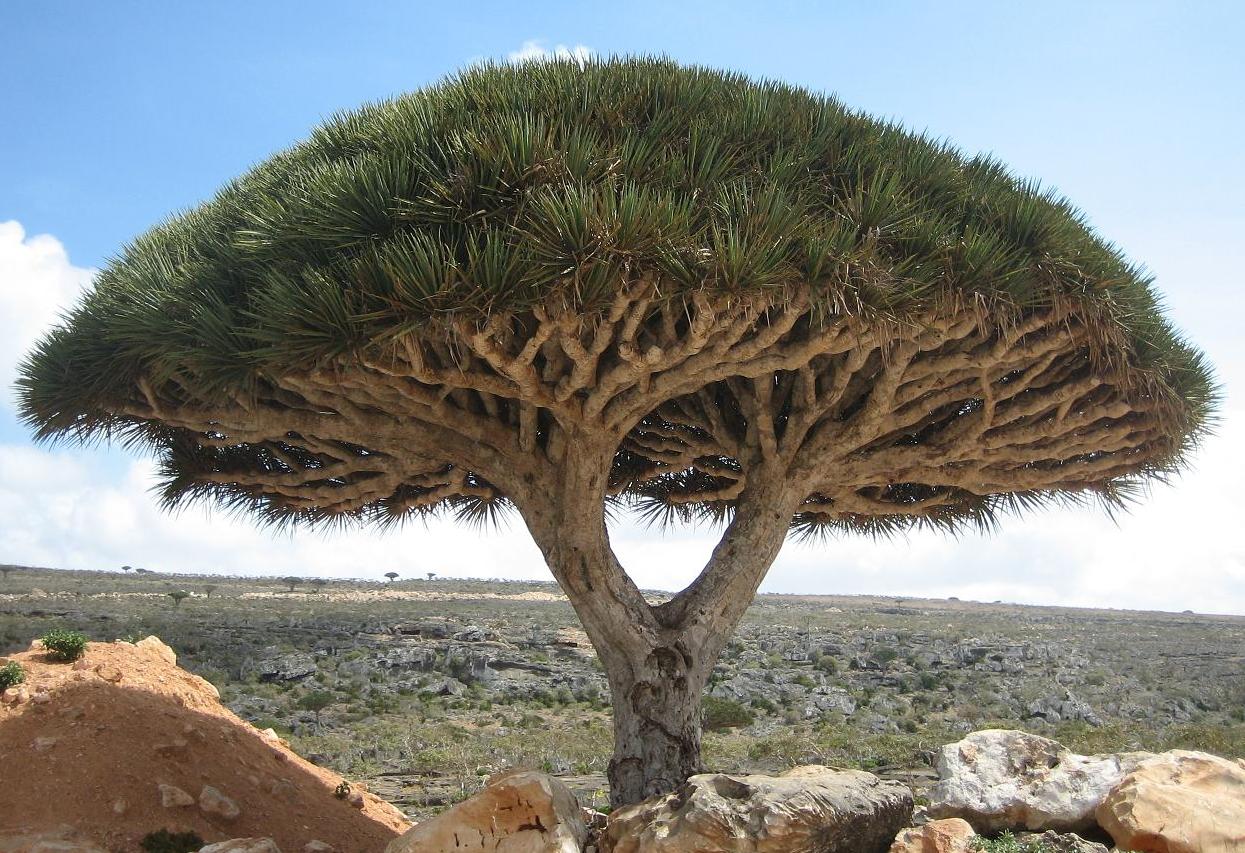
photo courtesy of Owlcation, Boriskhv, Wikimedia Commons
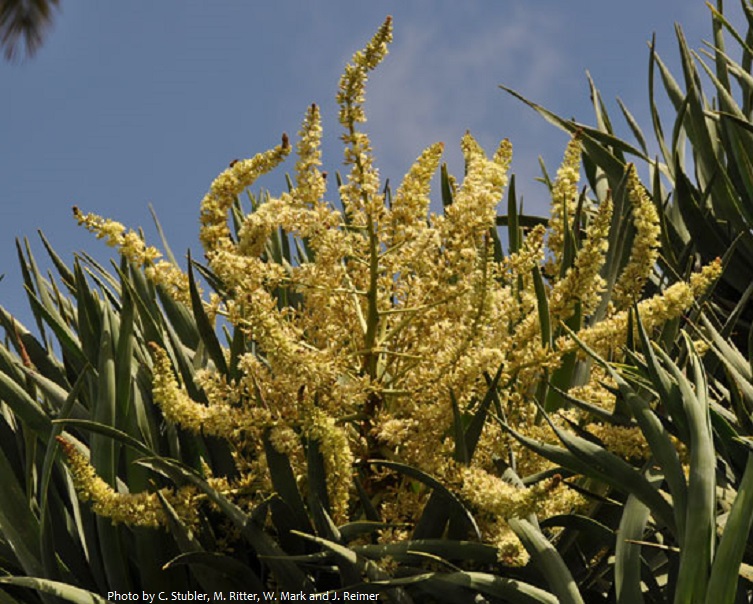
This week we’re looking at the Dragon’s Blood Tree, a very unique evergreen tree that grows in only one place, Socatra Island in the Arabian Sea and belonging to Yeman. The tree gets its name from the red resin that it secretes and this resin has been used for centuries for many different purposes.
According to legend, the first dragon blood tree was created from the blood of a dragon that was wounded when it fought an elephant. Like the unfortunate dragon, the tree secretes its resin when it’s injured. In ancient times the resin was believed to have magical and medicinal properties. People used it as a pigment for art, a dye, and a medicine. Dragon’s blood is still used for these purposes today.
The Dragon’s Blood Tree is absolutely unique in appearance.
The crown of the tree often looks like an umbrella that has been turned inside out. The fact that the branches are bare except at their tips adds to this illusion. The long and stiff leaves are born in bunches at the ends of the branches. Some trees have more rounded crowns than others and remind me of giant mushrooms instead of umbrellas.
The branches have a rippled appearance. They develop in a very regular pattern known as dichotomous branching. In this process, each branch produces two new branches arising from the same point. The process repeats to create the base of the tree’s crown.
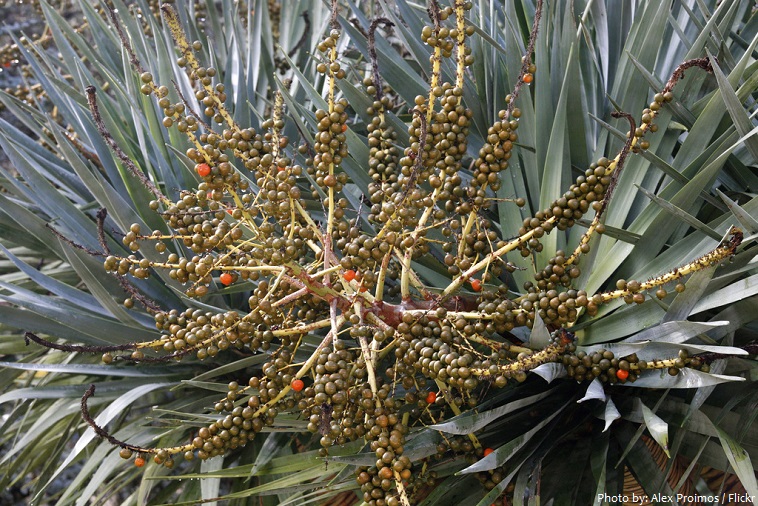
Like the leaves, the flowers are borne at the tips of the branches. The flowers are small and greenish-white in colour. They are located in groups known as inflorescences. The fertilized flowers produce green berries that change to black as they ripen and then to orange when they are fully ripe.
The Dragon’s Blood Tree grows slowly and is very long-lived. According to Just Fun Facts,
…can live up to 650 years and reaches heights of around 10 to 12 meters (33 to 39 feet).
The tree grows slowly, about one meter (3 feet) every ten years.
The dragon blood tree is a succulent, very hardy and drought tolerant. It enjoys warm temperatures and
sub-tropical conditions.Like other monocotyledons, such as palms, the dragon blood tree grows from the tip of the stem, with
the long, stiff leaves borne in dense rosettes at the end.It branches at maturity to produce an umbrella-shaped crown, with leaves that measure up to 60 cm
(23.6 in) long and 3 cm (1.2 in) wide.Leaves appear only on the ends of the youngest branches, last for 3 or 4 years, then fall off and are replaced by a new set.
The dragon blood tree flowers around February. The flowers tend to grow at the end of the branches. The flowers have inflorescences, and they bear small clusters of fragrant, white or green flowers.
The fruits take five months to completely mature. The fruits are described as a fleshy berry, which changes from green through black to orange-red when ripe. The fleshy berry fruit contains one to three
seeds. The berries are usually eaten and dispersed by birds and other animals.
Despite their hardiness the Dragon’s Blood Trees of Yeman are threatened by climate change and the encroachment of human populations.
The IUCN (International Union for Conservation of Nature) classifies the population status of dragon blood trees as “vulnerable”. Although there may be several factors putting the population at risk, the major one is believed to be climate change. Grazing by domestic goats, extraction of the resin, and using the tree for firewood may play a smaller role in the tree’s problems. Other problems may be the increasing amount of development on the island, especially the creation of roads, as well as the increasing number of visitors.
Socotra Island has a generally dry climate but experiences periodic monsoons. The crown of the dragon blood tree channels rain and mist water to its roots very effectively. Unfortunately, the climate of Socotra Island is becoming drier and the monsoons less reliable.
For more photos and information I encourage you to read the whole story at Owlcation and Just Fun Facts.
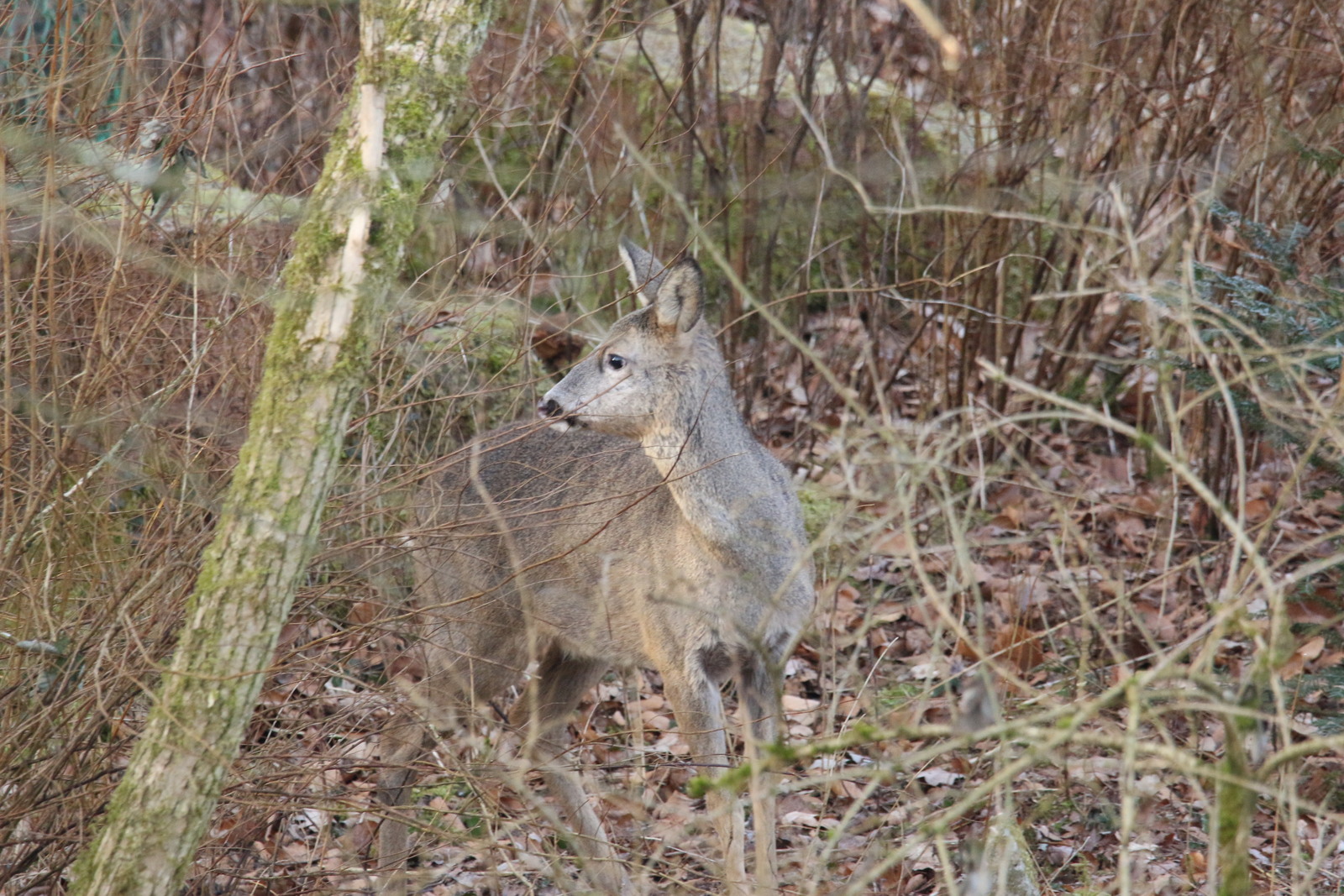
This morning a small group of deer visited the garden, probably the doe and last year’s youngsters. They went foraging a bit and when they wanted to leave, one of them had painted itself into a corner, with the absence of paint and a meaningful corner.
You have to imagine the gardens as one big rectangle cut into four parts. At the head of two of them, are the semi detached houses of us and our neighbour with the gardens that belong to the houses, both with fences (mostly) all around. Behind that are the two gardens we both rented from the city, only that ours is still a work in progress while our neighbour’s is basically abandoned, because tearing down the garden house would be much more costly than paying the rent. There’s only a partial fence between those areas, but the neighbour’s is closed to the woods while ours is open, which is where the deer entered.
One of the then went to the neighbour’s place and you can guess what happened, it didn’t find its way back. While mum and sibling were waiting on the other side of the fence, it took the youngster about half an hour to realise it needed to walk back towards the houses and cross into our garden so it could leave again.
They’re still cute.
© Giliell, all rights reserved
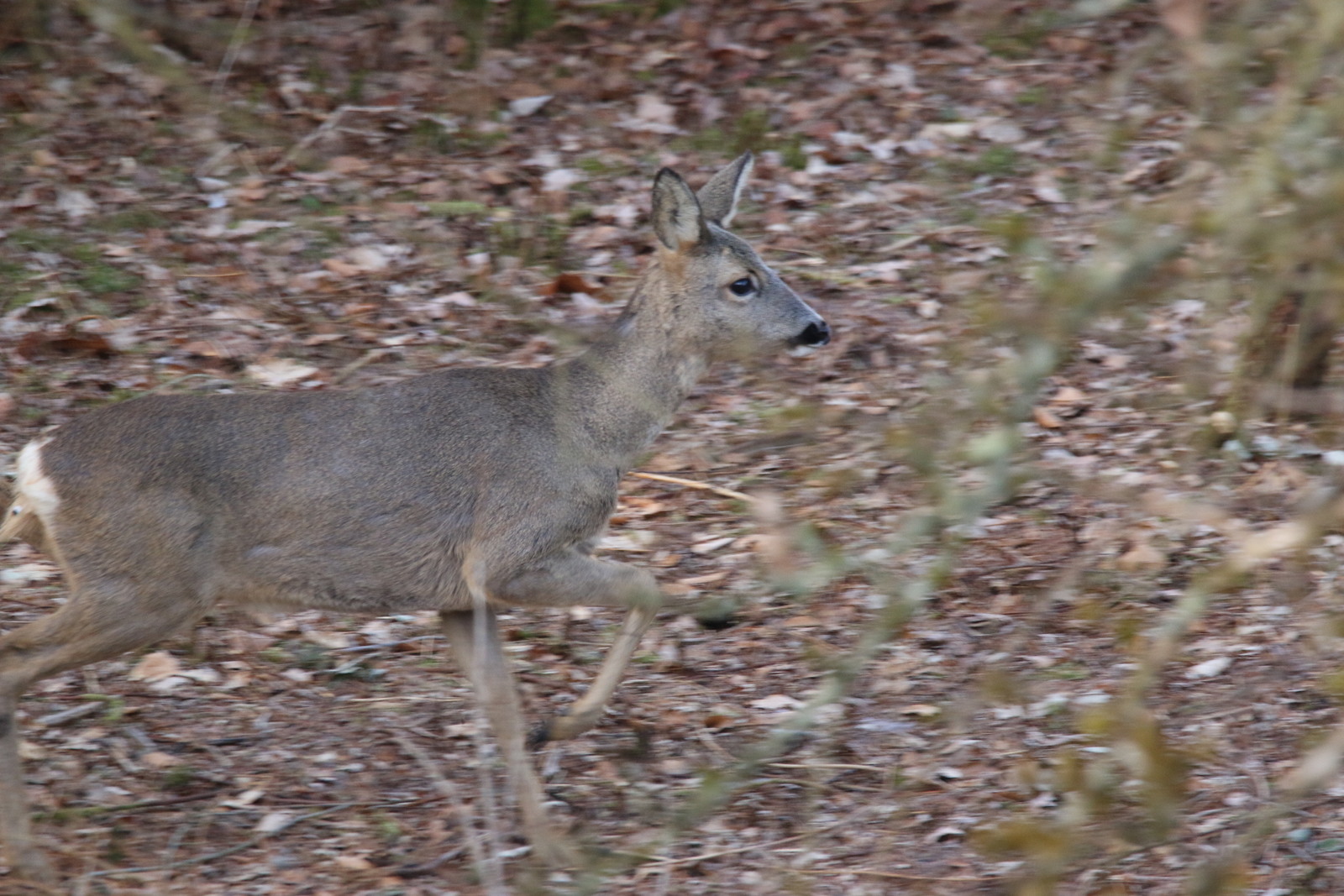
© Giliell, all rights reserved
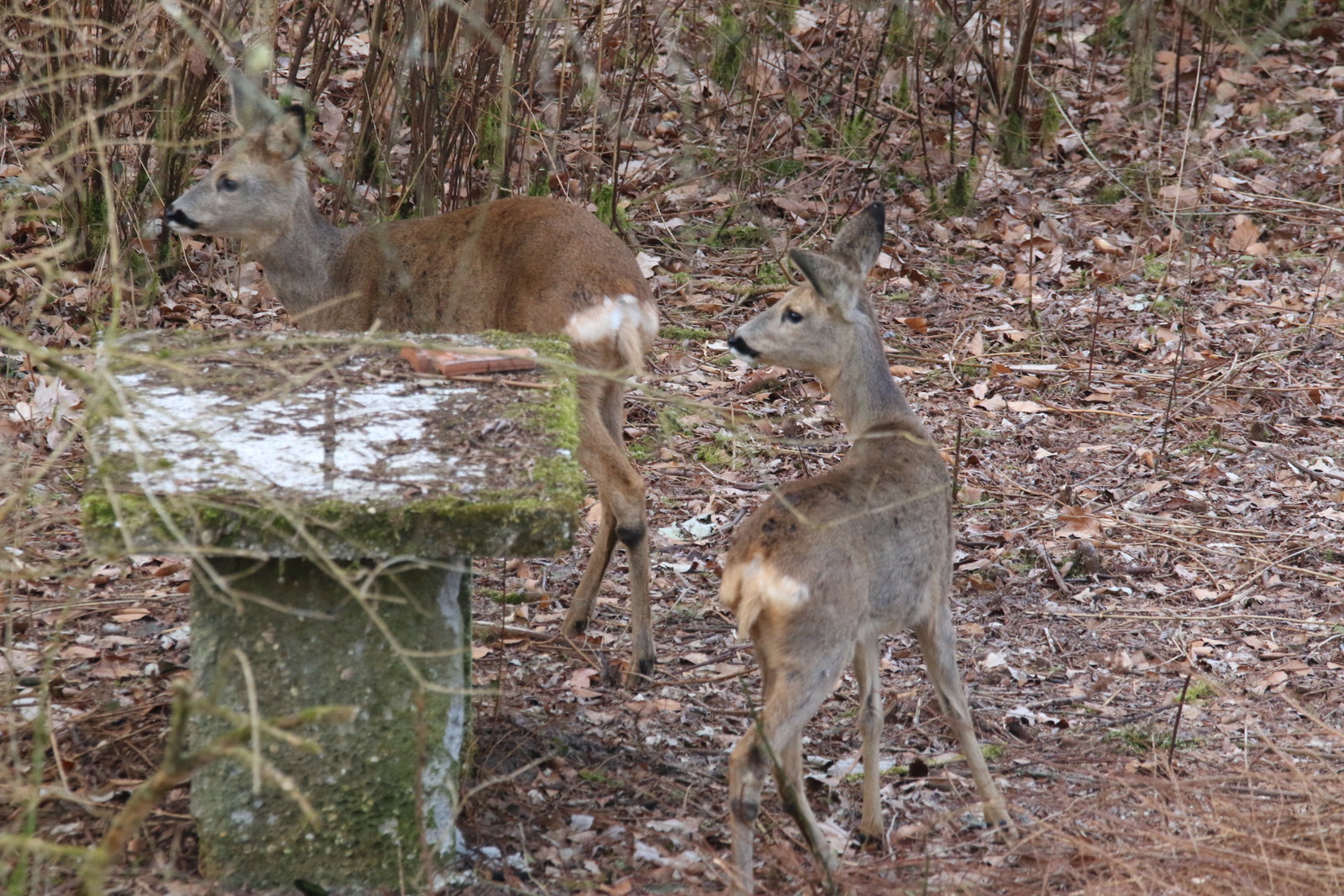
© Giliell, all rights reserved

© Giliell, all rights reserved

© Giliell, all rights reserved
It’s amazing how well they’re hidden when they don’t move.

© Giliell, all rights reserved
Probably not a deer. Deer are shy. This one looked at me like it was contemplating my right to remain alive.
This Teacher’s Corner is going to be a bit different from the usual ones as it will breach out to a broader topic, but it all starts with teaching.
Actually it starts with Twitter and an annoyed paediatrician tweeting that since it was half term he would get lots of primary school kids’ parents who’d been told to get their kid tested for ADHD and such*. I replied something along the lines that if teachers could diagnose ADHD they’d be psychiatrists and not teachers, which is why we’d like parents to get a professional opinion on the matter. After all, the only thing we see is that a child has obvious problems paying attention and following the classroom rules.
While this is an interesting topic in and on itself, it was only the starter for a conversation with another user about introverted kids. Her complaint was that the German school system punishes introverted kids via the “participation” grade. In Germany almost all term reports have two separate grades that are “participation” and “behaviour”. All teachers teaching in a class submit their grade, the mean gets calculated and then there may be adjustments. To be honest, till the end of the conversation I couldn’t quite get what she actually wanted, because she kept contradicting herself, but I got that she was fundamentally unhappy, either from her own experiences or because of somebody else, and wanted CHANGE, even though she was not quite clear as to what should actually change. I’ll try to talk about why “just leave the quiet kids alone” isn’t a good idea from a teaching point of view and then move to what bugged me about the whole discussion. [Read more…]
Our Amorphophallus decided to blossom this year. A beautiful flower, the blossom itself is about 40 cm tall and it is difficult to get it into a picture.
And it had to be confined to a closed room, because it stinks of rotting flesh.
Yay.
©Charly, all rights reserved, click for full size.


©voyager, all rights reserved
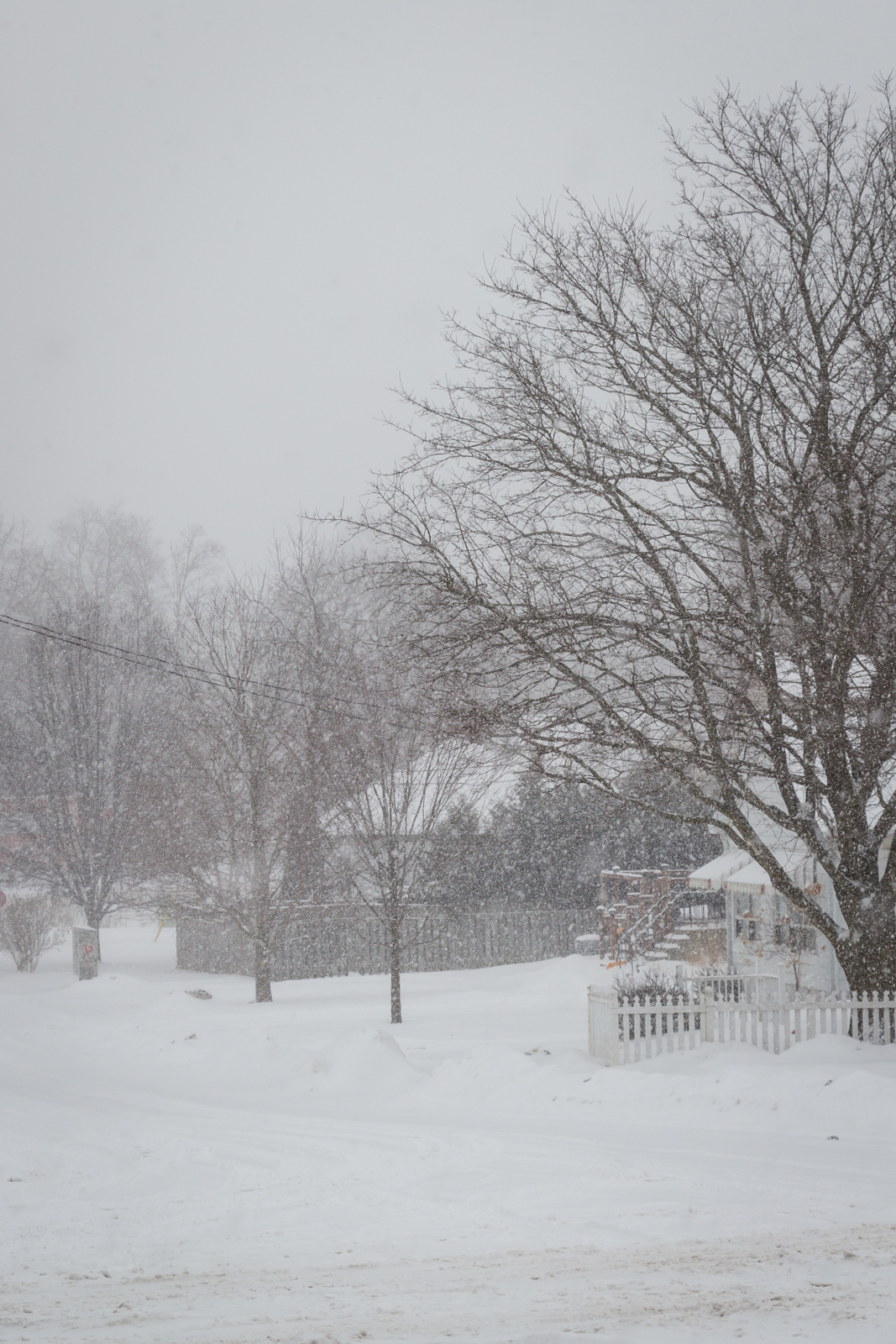
We had quite the storm around here last night. First the temp dropped from +3 to -5º C and then, just as the light was fading from the sky, the wind started to howl. It was a pretty steady howl too at about 40km/hr with big gusts of up to 120km/hr. And then, Cue the Snow. You gotta have snow, you know. Thankfully not much with this storm, just short bursts of that small, light snow that gets caught up in the wind and won’t settle on the ground. I couldn’t see farther than 2 houses down my street and when the wind gusted it actually looked as it the snow was falling sideways.
The wind is still howling this morning, but the snow has stopped and we only got a total of about 5cm of the stuff. There’s a lot of drifting, though, so shoveling turned out to be more challenging than I thought. It doesn’t help that our only shovel is too big for the porch steps and too small for the driveway. I keep meaning to get proper shovels, but I never seem to remember when I’m out. (aargh!) Jack and I did get out, though. We braved the cold and the ice and the wind and daydreamed about warm, green grass and the sun on our bare shoulders.
As we all know, Opportunity was declared officially MIA a short while ago. I had planned on preparing a more sensical post as tribute, but instead, here is a short list of links on the subject:
Spirit (xkcd) (I know I know but it’s a good one)
It’s Time to Say Goodbye to Our Beloved Mars Rover
NASA Declares a Beloved Mars Mission Over
Six Things to Know About NASA’s Opportunity Rover
The Mars Opportunity rover has officially ghosted Earth
And finally, from the futuristic fiction department, A Martian Hunts for the Red Planet’s Past – And His Own
A pheasant, obviously. What kind? I should take pics of the labels, too.

© Giliell, all rights reserved

© Giliell, all rights reserved
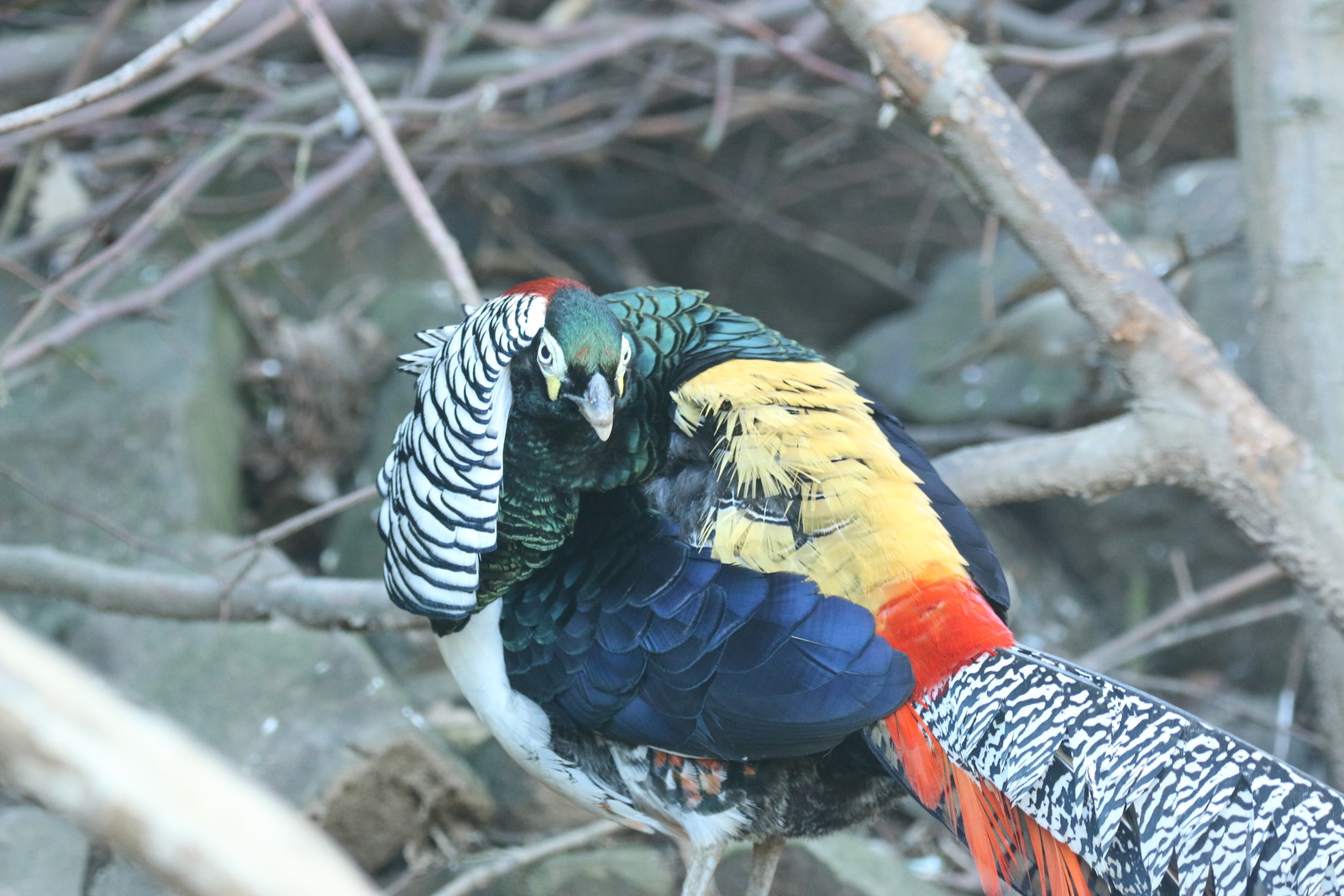
© Giliell, all rights reserved

© Giliell, all rights reserved
If the early bird catches the worm what does the early bee get? Her picture taken, of course. This delightful early sign of spring comes to us from Avalus.
Walking home last Saturday I found the first bee of the year! She allowed for one photo and then took off. I hope for a good year for her hive!

First bee of 2019 ©Avalus, all rights reserved