
Another heatwave has hopefully ended, but the rains have not come yet; thus, I stood before the decision – to harvest the Camel potatoes before or after the rain.
Although the camel potatoes were not completely dry above ground, they were in the process of dying, so the tubers were no longer growing. For long-term storage, it is ideal to let the plants completely dry in the field so the tubers develop a slightly thicker and more resistant skin, but that has to be weighed against the fact that tubers grown in the Ruth Stout method are more susceptible to pest damage from both rodents and slugs. And the slugs are dormant right now, whereas they will come out after a bout of rain.
So I decided to rip out the remaining plants and harvest the patch already while the soil is still dry. Even so, there were many damaged tubers, several rodent tunnels, and quite a few slugs huddling in groups that I destroyed mercilessly.
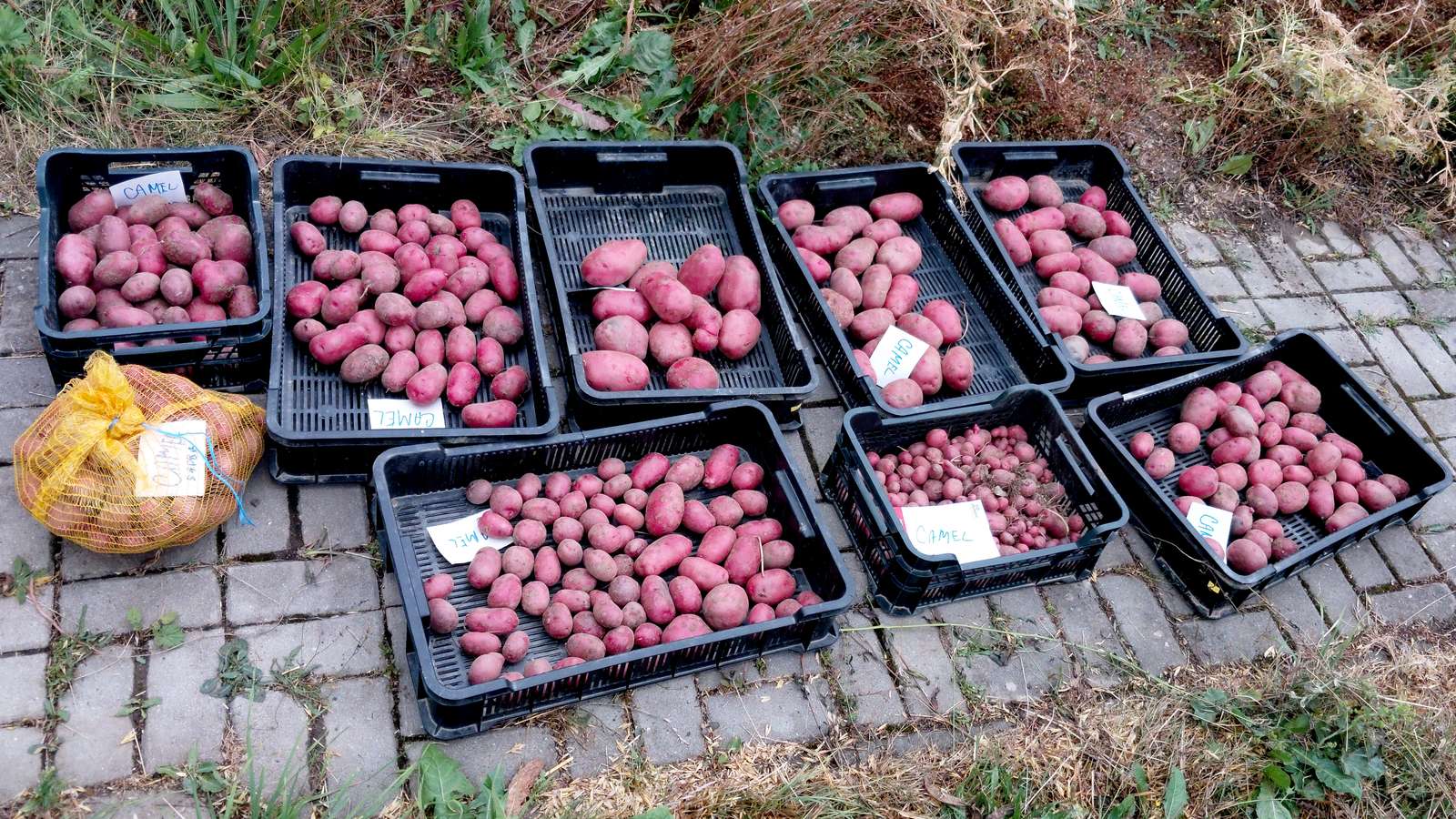
© Charly, all rights reserved. Click for full size.
Again, each of these crates contains 4 kg of tubers, except the middle one in the lower row, which contains 3,5 kg of the tiniest ones. The sack on the left weighs approximately 5 kg and contains 100 pieces of seed potatoes for next year. Not depicted is a bucket with circa 7 kg of heavily damaged potatoes that will need to be sorted and processed quickly.
Even though I put aside seeding potatoes, I am not so enthused about this variety as I am about Bellarosa:
- The overall result of 43,5 kg from 5 kg of seed is slightly better than Bellarosa, especially considering that they were partially destroyed by mice in the spring. This variety sprouted later and had a slightly longer growing season.
- There was no blight, and the pest damage was slightly more than with Bellarosa. This was somewhat offset (the overall number of damaged tubers is about the same) by my not damaging as many tubers with the rake, but the waste from that bucket will be substantial.
- The size of the tubers is more spread out than with Bellarosa. I got one 4 kg crate with just 12 tubers, which is impressive. But overall, the tubers do seem smaller on average – 12 kg of big, 16 kg of small, and 3,5 kg of tiny tubers fit for storage.
- The plants did survive the heatwaves well, but…
- … as the title implies, the tubers seem to be much more scabby/warty than Bellarosa. So despite the name, they did not cope with the heat quite as well. This is mainly a cosmetic issue, but it slightly increases the waste from peeling.
So still not impressed, but content with how this turned out. We shall now test which meals these are suitable for and whether they can be dehydrated.
Conventional wisdom frowns on scabbby potatoes as flawed, but if you bake them in their skins you get the crispiest skin ever, so I’m rather pleased when ours get scab. Baked potatoes with butter and a little grated cheese accompanied by one of my chutneys is one of our easy ‘comfort’ meals.
This weekend I harvested the one properly grown watermelon. I was perfectly ripe -- that’s always difficult to estimate -- and I’d guesstimate it weighed between 2 and 3 kg. I’ve been also lately planting leafy vegetables for the autumn at the Glasshouse Balcony.
Drought conditions are also developing here, though not as bad as in most of Central Europe.