A Great Tit from Charly, click for full size!
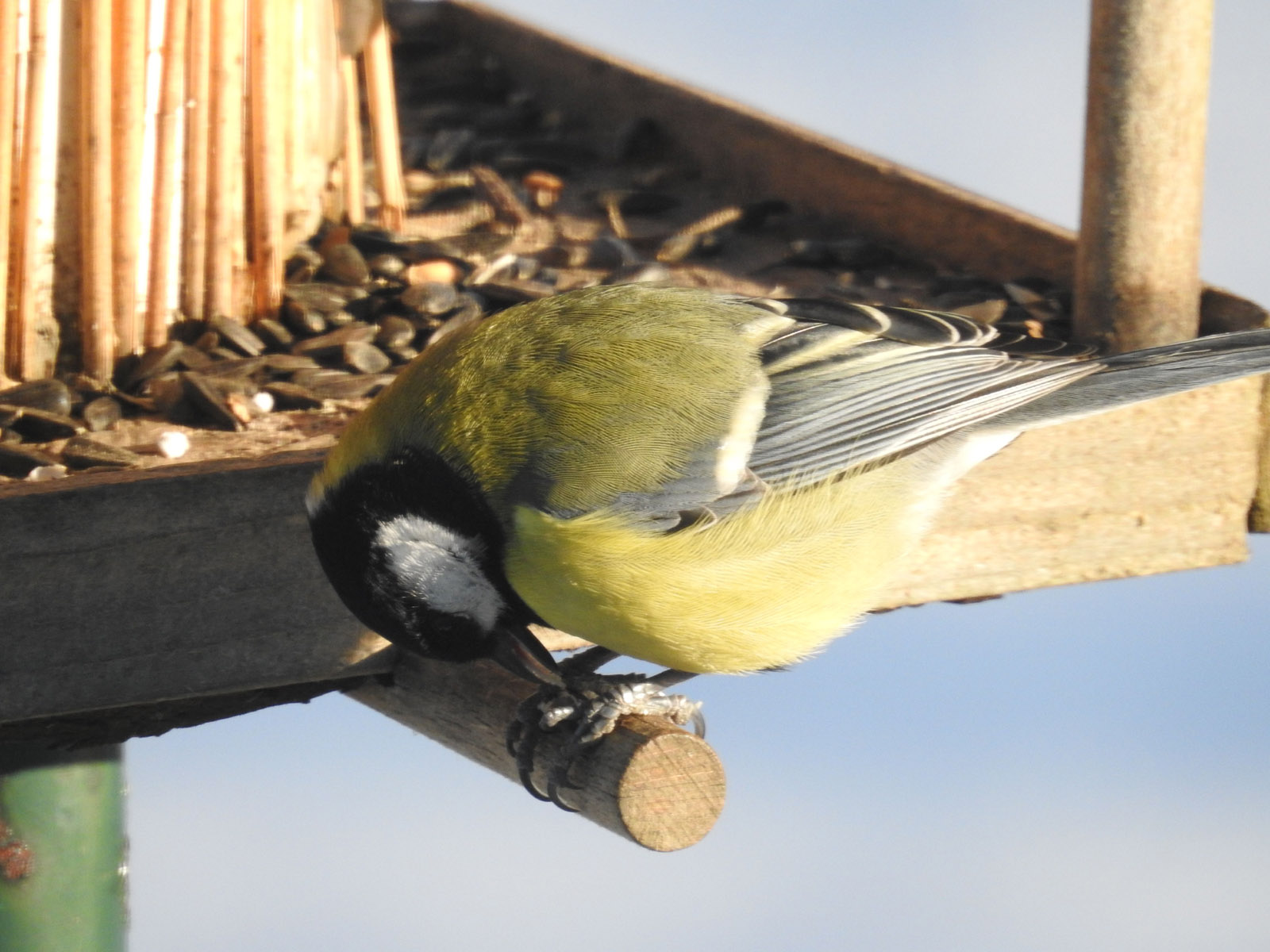
© Charly, all rights reserved.

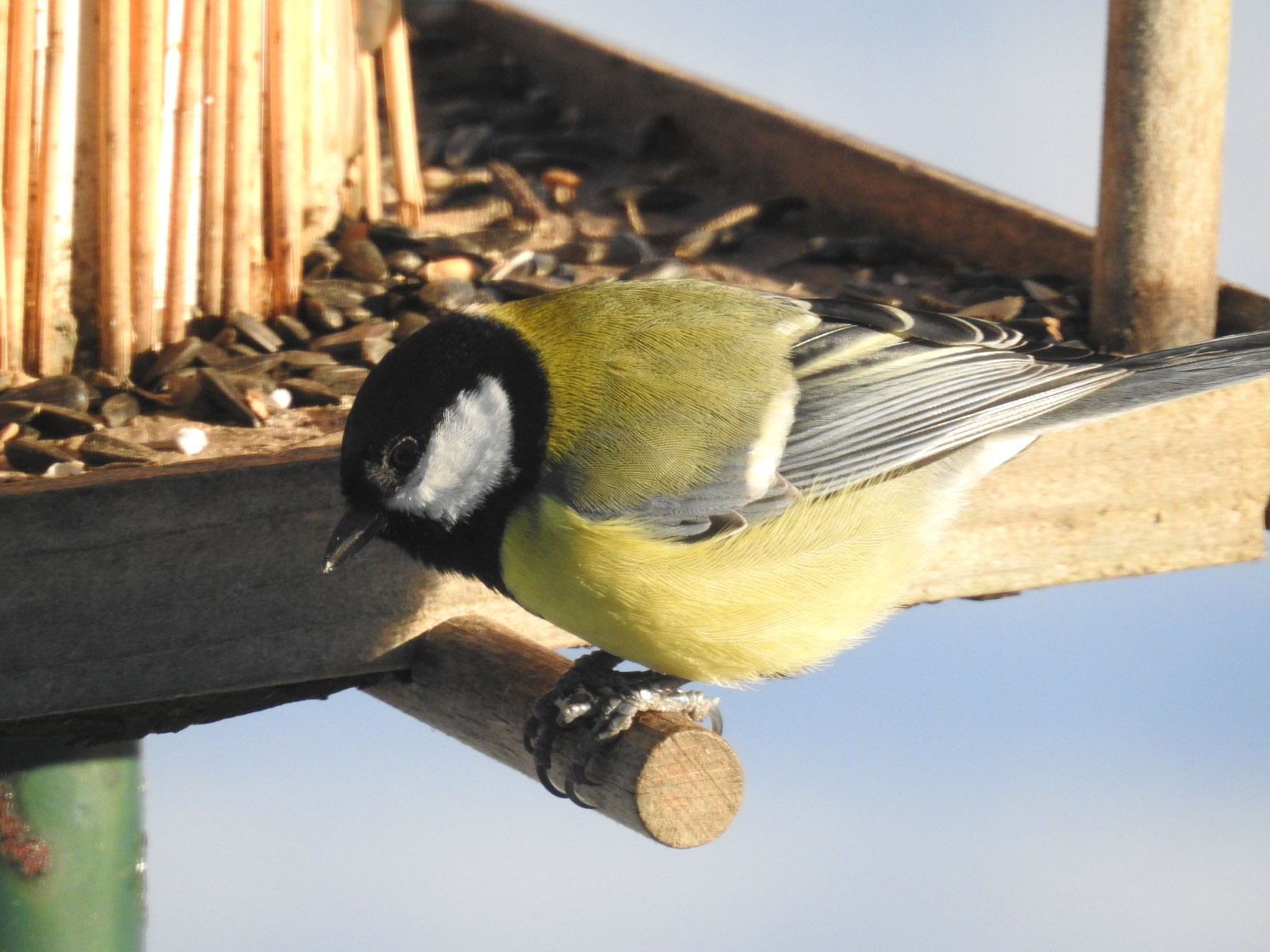
A Great Tit from Charly, click for full size!
© Charly, all rights reserved.

Some of the stuff which goes with me on chemo days.
Seeing as today is chemo day, seemed appropriate to write about Chemo Brain. Yep, that’s a thing. Doesn’t set in right away, so you think to yourself that it’s just normal forgetfulness or spacing out. Then it gets more intense, by magnitudes of order. If you’re taking meds at the same time, you might seriously start to question your sanity or whether or not you have a brain at all. Chemo brain is one world class, gigantic brain fart. Generally speaking, being forgetful or zoning out isn’t a big deal, but it can be dangerous at times – being in the kitchen or driving, frinst. For the most part, it’s manageable. Start keeping lists, and write things down when you think of them, else it will be out of your head 5 seconds later, often to never return. So, first thing, get yourself a nice little notebook & pen, or a pocket recorder (or set up your phone or tablet for note-taking).
You don’t have to have extra stuff with you when you go for infusion, but a lot of people prefer to have the extras. First, catch your bag. :) What kind of bag best suits is up to each person, but if you’re looking around for a nice gift for a friend or loved one with cancer, or their caretaker, a nice, large bag with plenty of compartments and pockets is a good one. Ideas for stocking the bag: individual packs of tissues, cough drops or other hard candies, small pack of drinking straws, fragrance free lotion, folding headphones, pill case, notebooks or journal, pens or pencils, and if you know their taste in reading material, books and/or magazines. If they like to draw, a pad of good paper, pencils or markers. Drinks – you always need those. While there’s usually a good assortment available in most chemo suites, if you’re fussed, you can take your own. A bottle or two of Powerade or the like is welcome; I take a couple bottles of boost, and as we like good coffee, we take the giant Thermos with us. So, depending on taste, those are all good things to gift along with a bag. A special mug can be nice, too. I have my Fuel Rats, thanks to Marcus. If someone likes to knit, crochet, or embroider, a bag specifically made for that sort of thing is great. Rather than buying knitting/crochet/embroidery supplies, a gift certificate would be most welcome.
The more organized you can be, the easier chemo days go. Having a dedicated Chemo Bag can go a long way in easing the day, you just have to grab it and go. I end up having to switch bags about, depending on what I’m going to be working on that particular day. I usually prefer something smaller than my art bag, but sometimes, it’s the only thing for one specific day. So, getting everything together on Tuesday:

Getting everything nice and neat.

All set. Just have to remember to take the bag!
When your friend or loved one tends toward a complete blank on things, don’t be surprised, and please, don’t chide. It’s difficult enough realizing that your brain on chemo has more in common with Swiss cheese, and you keep wondering if you’ll ever get back to what passes for normal. Caretakers can help by keeping all the vital info, appointments, med lists, and all that stuff. It’s very important there’s back up on all that. Just today, I found myself so grateful Rick had put all the upcoming appointments on his phone, because I didn’t know where the latest raft of paperwork was, nor any idea of what time we’d have to leave in the morning. Turns out lab is at 9 am, so we have to leave at 7:45 am. It’s also very important to be extra nice and thoughtful towards your caretaker when they keep asking if you’ve remembered everything, because they aren’t trying to be annoying, so even if you feel like snapping, don’t.
Cancer treatment-related cognitive impairment, cancer-therapy associated cognitive change, or post-chemotherapy cognitive impairment – these are phrases you may hear from medical, and they all mean Chemo Brain. The primary problems are memory lapses, trouble concentrating or focusing, difficulty remembering names, dates, details, events, inability to multitask, disorganized, slower thinking, having difficulty with common words (can’t remember specific words when talking or writing). The problem with remembering common words has hit me particularly hard, and it’s been making me a bit crazed, sitting there, and trying to remember a word I know, and know well. In my head, I can see a circle of words, with a fuzzed out blank where the word I want should be. I often find myself starting a specific task, only to get distracted, start something else, then remembering and going back to the first, lather rinse repeat. It’s frustrating as fuck, and makes me feel very frazzled and stressed. Just getting through one day’s regular tasks is exhausting.
Naturally, chemo brain varies from one individual to the next, and while most people experience temporary effects, others end up with very long-term effects, sometimes to the point they cannot return to work. (If this is the case, disability applies.) The effects of chemo brain are amplified by every infusion and radiation. While the person undergoing treatment becomes aware of changes in their thinking, they may not say anything to anyone. This is not something which is terribly easy to talk about, and there’s a strong impulse to try and cover it up the best you can. As well as being frustrating, it’s deeply embarrassing. Technically, chemo brain is defined as a decrease in mental sharpness, which, along with forgetfulness includes difficulty in finishing tasks and learning new skills. While chemo brain is not fully understood, there is and has been research into it, and with most things, there can be a number of factors:
The cancer itself.
Other drugs used as part of treatment, such as steroids, anti-nausea, or pain medicines.
Surgery and the drugs used during surgery (anesthesia).
Low blood counts.
Sleep problems.
Infection.
Tiredness (fatigue).
Hormone changes or hormone treatments.
Other illnesses, such as diabetes or high blood pressure.
Nutritional deficiencies.
Age.
Depression.
Stress, anxiety, worry, or other emotional pressure.
One thing which has happened to me is a sense of mental exhaustion. Thinking has become difficult enough that I don’t really want to do much of it unless I have to do so. As tempting as it might be sometimes, to just sit in a corner and vegetate, that does not help. It’s important and helpful to stay engaged in one way or another. If you do social things on the ‘net, keep doing them. Read, chat with people. If you write on the ‘net, keep doing that too, even when it seems to be an insurmountable task. If you’re a reader, keep reading. Read, read, read. It does not matter if your reading speed has seriously slowed down along with your comprehension rate. The more you read, the more you keep that at bay, and make sure your brain is exercised. If you find you have trouble concentrating, try audio books. Listen to music. If you like puzzles of any kind, keep doing those too. Resist the quiet – I’ve gotten quieter and quieter, less likely to engage in a conversation because it’s difficult. That said, you need to encourage conversational fluency, and that won’t happen if you never talk. Make a list of your ‘failed’ words – the ones it takes forever to drag out of your brain, kicking and screaming. Refer to it when necessary.
Stop trying to multitask. Focus on one thing at a time, finish up, move on to the next. This really does not suit me, and makes me feel like I’m on a chafing leash, but you have to do what works and enables you to get things done. Lists – start lists for everything. Eat. A lack of nutrition does not help and makes chemo brain worse. Make sure you get a fucktonne of sleep. When things get too frustrating, wander off and have a rest. No one is at their mental best when tired, and treatment makes a person very fucking tired indeed. You don’t have to try to be Heracles doing the labours. Try to get into a daily routine, and keep it. This will make things much easier, and cut down on the stress caused by chemo brain. If you can, try to track the biggest problems, write down when you have memory lapses, and so forth. After a while, you might see a pattern emerge, such as the worst times being when you take a certain med, and so forth. That can help you to avoid scheduling things when you’re likely to be at a low point in mental abilities.
Maybe the hardest thing to do: tell people. Tell your primary caregiver, and let medical know. They can’t help if they don’t know. Don’t be all embarrassed to ask for help. Those who love and care for you will be most happy to be able to do something for you. The other hardest thing: accept help. For a lot of us, that’s a genuine hurdle to overcome, but this is important, and you need to set yourself different limits from what you’re used to, and allow others to pick up where you leave off. Last, do whatever it takes to keep that sense of humour intact.
I have this nagging sense I’ve left things out, but I feel like that most days now. If I do actually think of something which needs to be included, I’ll do an edit late today or sometime Thursday.
ETA: If you’re in treatment, especially just starting out, it’s not likely anyone will mention Chemo Brain to you. So, know this: You are NOT crazy. You are NOT stupid. This is an actual effect of treatment. You’re most likely to first hear about Chemo Brain from others undergoing treatment. Don’t be afraid to bring it up with your infusion nurses, they can help.
![Blueprints for the El Paso [Santa Fe Bridge] disinfection plant, 1916 (image from Ringside Seat to a Revolution: An Underground Cultural History of El Paso and Juarez:1893-1923 by David Dorado Romo).](https://i2.wp.com/freethoughtblogs.com/affinity/files/2018/03/blueprint-720x978.jpg?ssl=1)
Blueprints for the El Paso [Santa Fe Bridge] disinfection plant, 1916 (image from Ringside Seat to a Revolution: An Underground Cultural History of El Paso and Juarez:1893-1923 by David Dorado Romo).
During the Second World War, with industrial resources bent toward the war effort, the US suffered a dangerous shortfall of farm and railroad workers. From 1942 to 1964, the federal government, in partnership with Mexico, oversaw one of the largest foreign worker programs in US history. It was called the “Bracero Program,” from the Spanish word for manual labor. Between 1951 and 1964, Rio Vista Farm, near El Paso, Texas, accepted more than 80,000 Mexican workers per year. The contractual time, wages, and transportation of workers were documented at these sites after they underwent medical and psychological examinations, which often included fumigation with DDT. Approximately 4.6 million braceros went through the system over a 22-year period.
Artist Adriana Corral, with assistance from the National Trust Foundation and historian David Romo, has spent several years preparing to erect a site-specific installation at the historic Rio Vista Farm, titled “Unearthed: Desenterrado.” The work, curated by Cortney Lane Stell and produced by the Denver-based traveling museum Black Cube, is composed of a 60- by 40- foot flag. On each side of its semi-translucent white cotton support, a single eagle is embroidered: the Mexican golden eagle on one side and the American bald eagle on the other, claws connecting. Artist Vincent Valdez, who collaborated on the idea and design, told Hyperallergic in an email:
The historic usage of the eagle as nationalistic and patriotic symbols are used to evoke power, aggression, invulnerability and triumph. In this case, two eagles caught dueling in mid-flight speak to the tangled love and hate relationship between the neighboring countries.
It symbolizes the monumental contributions made by Mexicans and Mexican-Americans in the US, and captures a neglected narrative in American history. Corral discussed the project with Hyperallergic.
Hyperallergic has an in-depth article and interview about this project, and the history of the Bracero Program, along with more images. Click on over to read all about it.
 Penumbra / Brio / Multifarious / Inexorable
Penumbra, noun. Plural -brae.
1 a: a space of partial illumination (as in an eclipse) between the perfect shadow on all sides and the full light. b: a shaded region surrounding the dark central portion of a sunspot.
2: a surrounding or adjoining region in which something exists in a lesser degree: fringe.
3: a body of rights held to be guaranteed by implication in a civil constitution.
4: something that covers, surrounds, or obscures: shroud.
-Penumbral, adjective.
[Origin: New Latin, from Latin paene almost + umbra shadow.]
(1666)
“The allure and glamour of radical surgery overshadowed crucial developments in less radical surgical procedures for cancer that were evolving in its penumbra.”
Brio, noun.
1: enthusiastic vigor: vivacity, verve.
[Origin: Italian.]
(1734)
“Yet, even lacking such targets, Frei and Freireich had cured leukemia in some children. Even generic cellular poisons, dosed with adequate brio, could thus eventually obliterate cancer.”
Multifarious, adjective.
1: having or occurring in great variety: diverse.
-multifariousness, noun.
[Origin: Medieval Latin multifarius, from Latin multifariam in many places.]
(1593)
“The biological characteristics of tumors were described as so multifarious as to defy any credible organization. There seemed to be no organizing rules.”
Inexorable, adjective.
1: not to be persuaded, moved, or stopped: relentless.
-inexorability, noun.
-inexorableness, noun.
-inexorably, adverb.
[Origin: Latin inexorabilis, from in– + exorabilis pliant, from exorare to prevail upon, from ex– + orare to speak.]
(1542)
“For an oncologist in training, too, leukemia represents a special incarnation of cancer. Its pace, its acuity, its breathtaking, inexorable arc of growth forces rapid, often drastic decisions; it is terrifying to experience, terrifying to observe, and terrifying to treat.”
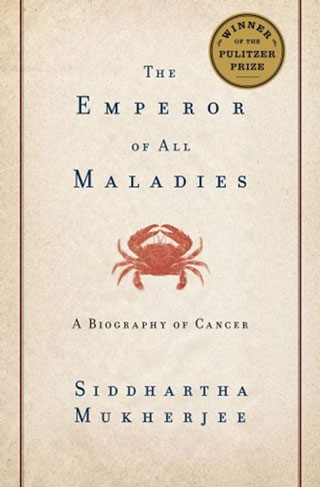
All quotations from The Emperor of All Maladies by Siddhartha Mukherjee.
A tortoise named Spartacus from Raucous Indignation, click for full size!

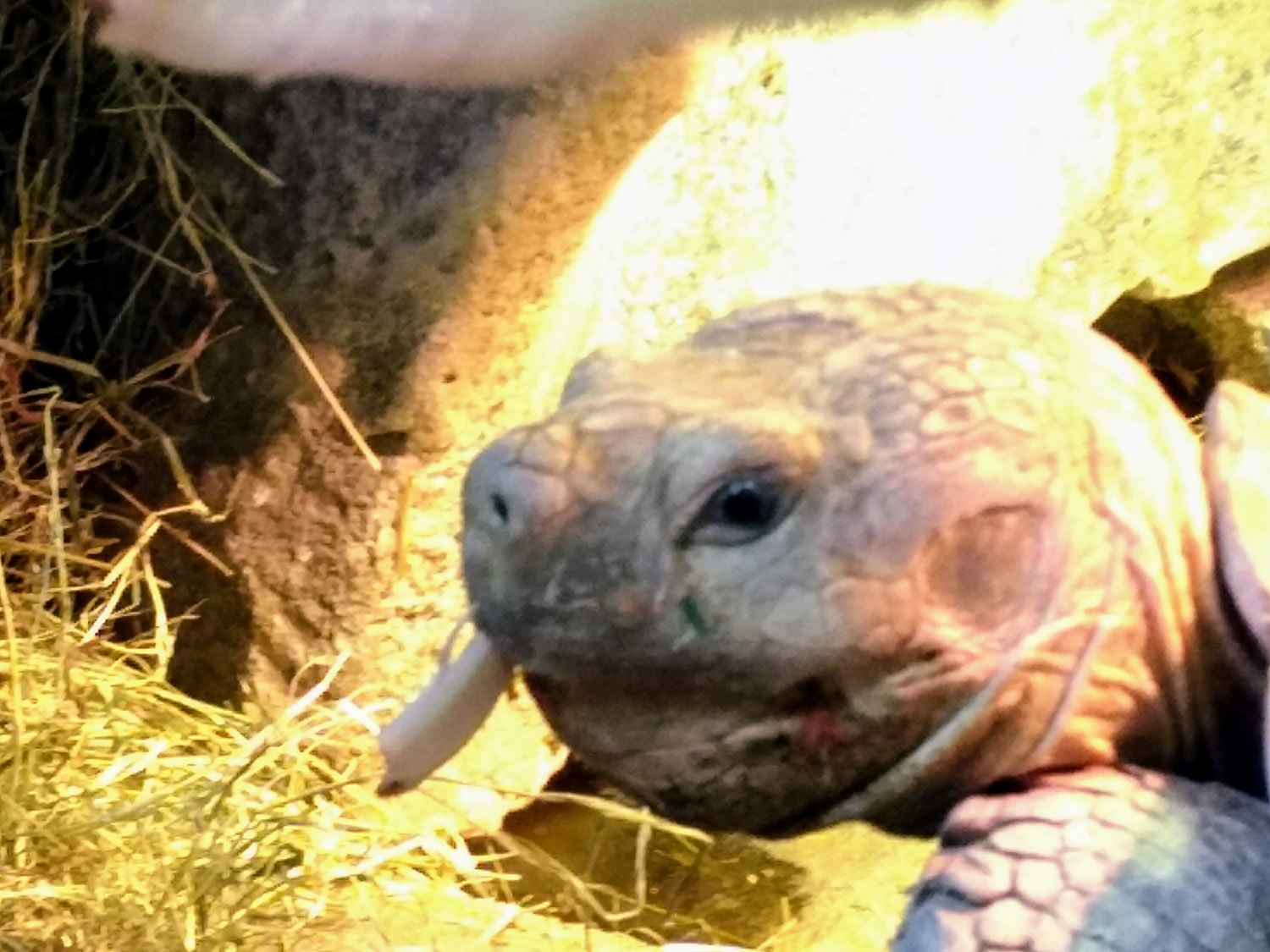

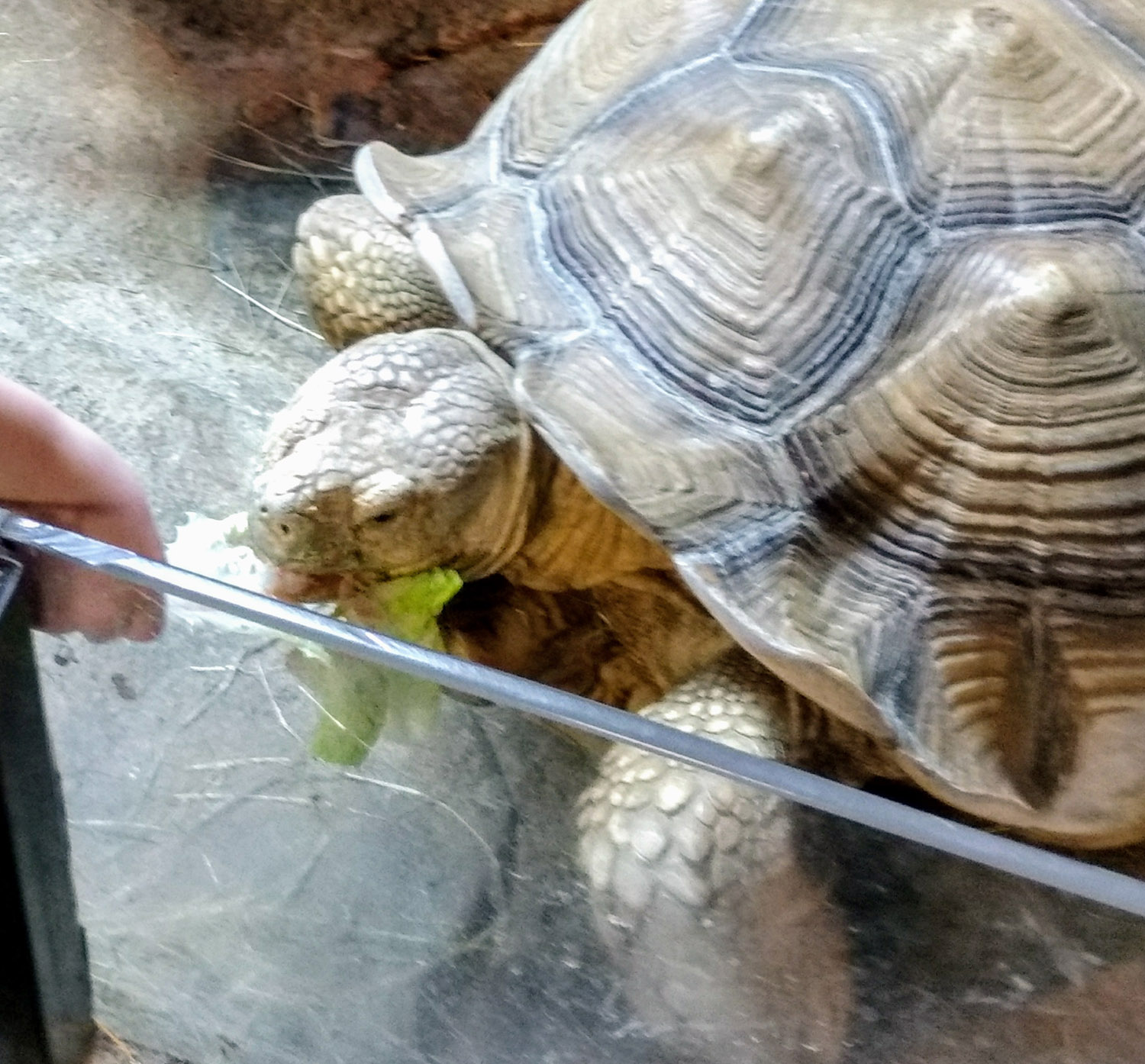
© Raucous Indignation, all rights reserved.
From Giliell, click for full size! Grand shots, all.

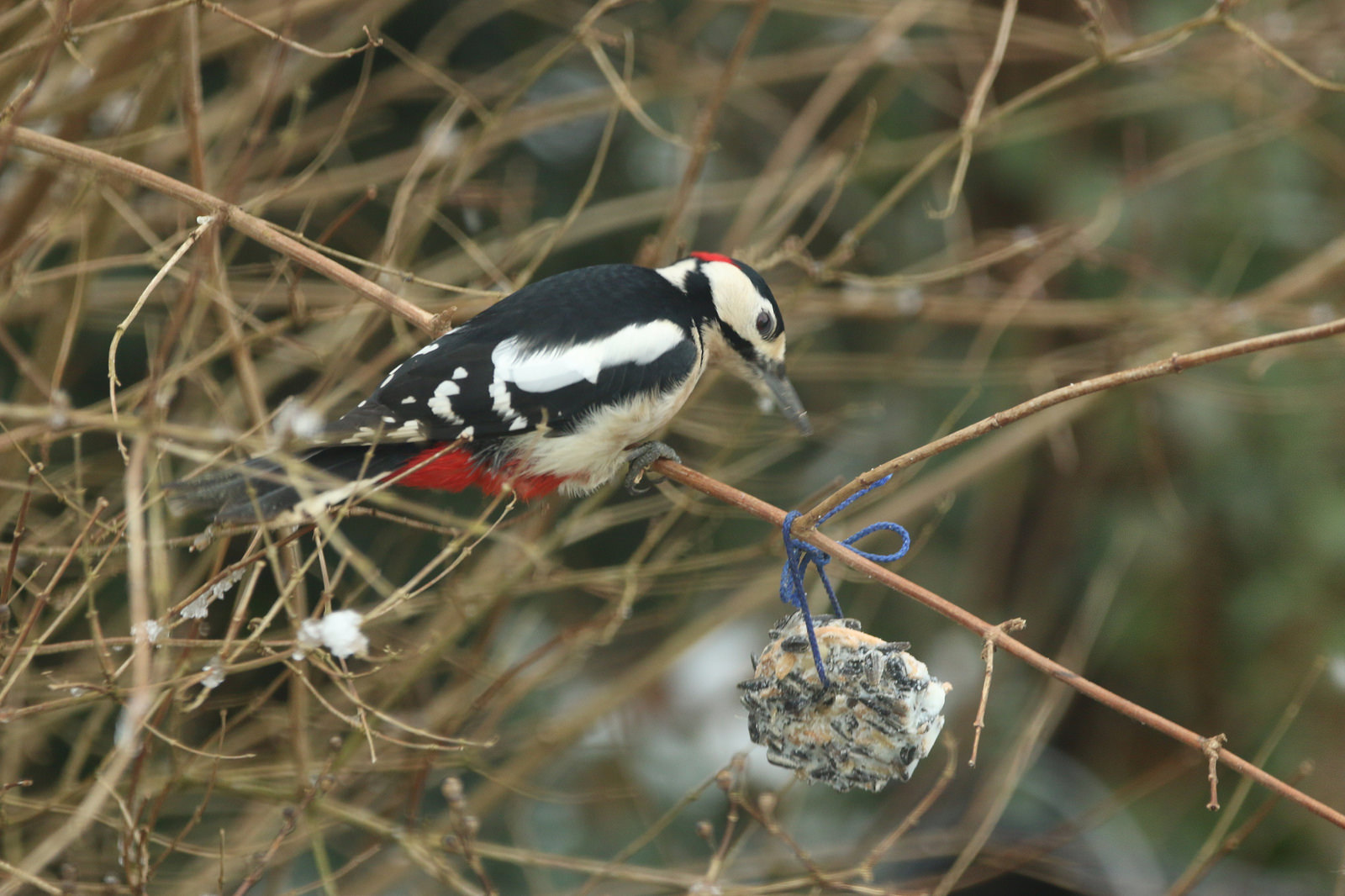


© Giliell, all rights reserved.

“Staying Alive” is among the buckets of emergency food available from “The Jim Bakker Show” for a donation. Inside: 241 servings of buttermilk pancakes, potato flakes, vegetable stew blend, Morning Moo’s low fat milk alternative and more. Tim Funk, Charlotte Observer.
Oh The Bakkers, always shilling. They’re just trying to stay alive! They have some seriously nice digs for people who are supposedly hangin’ by fingernails.
Televangelist Jim Bakker used Friday’s episode of his television program to warn that the volcano under Yellowstone National Park will soon erupt and urge his audience to buy his buckets of survival food to prepare. Bakker, whose business dealings around his prepper food are murky, told his audience that he was selling them the food at a very low margin. “I feel like we’re more of a co-op, you help me and I’m helping you, and we’re a co-op,” he said.
Mmm. Feeling like you’re a co-op doesn’t make it so. I suspect that Bakker doesn’t even know what an actual co-op is or how one works. I imagine he’d be horrified by the idea.
After offering his audience a soon-to-expire deal on food buckets, Bakker explained that his ministry takes “a piece” of the payment. “A little part of it goes to keep us on the air,” he said, “and it’s really a small part, it’s not even what a big store would have, a lot of stores would have a lot more profit in it than we do, but it’s what we do. It’s keeping us alive, but it’s going to keep you alive.”
Oh just a bit, a tiny bit! And everyone has to take him at his word, because the Bakkers have their con registered as a church, and they disclose nothing. This is their “church”:

Morningside Church, in Blue Eye, Mo. Tim Funk, Charlotte Observer.
Perhaps it’s just me, but that looks considerably higher than ‘stayin’ alive’ to me.
He went on to explain that he keeps buckets of food stored away in “hidden places” in his house so that he won’t get robbed in the End Times. “Just keep it a secret at your house,” he advised. “Because in the last days, perilous times comes, and see what kind of people are going to roaming around? Killers, without any love, without mercy. They’re just going to hate each other and judge each other.”
This is Bakker’s routine chorus, he’s been preaching end times for one hell of a long time now. I always find this interesting, because it always comes across like there’s no expectation of getting swept up by the rapture. I think if the whole planet is going to be 90% killers running about, perhaps having a stash of ick inna bucket might be a low priority. If Jim truly believes this line of crap, I’d think he’d be fervently in favour of gun control, but no.
“Remember that song you sang, ‘Staying Alive’?” he asked his wife, Lori. “Well, we’ve got to stay alive and we’ve got to pay the bills, that’s all. I feel like we’re more of a co-op, you help me and I’m helping you, and we’re a co-op.”
Everyone has to stay alive and pay the bills, Lori. It’s not a problem unique to you. Most people work honest though, rather than grifting and fleecing people, and doing it in the most gruesome of ways:
Yes, this is the compleat slaughter of My Girl. :shudder:

Clem Albers, “San Pedro, California, April 5, 1942” (courtesy National Archives and Records Administration).
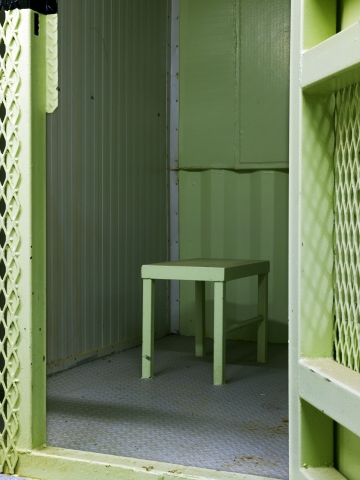
Edmund Clark, “Camp 1, isolation unit” from the series Guantanamo: If the Light Goes Out (2009) (© Edmund Clark).

Edmund Clark, “Camp 6, Immediate Response Force equipment,” from the series Guantanamo: If the Light Goes Out (2009) (© Edmund Clark).
The exhibition Then They Came for Me: Incarceration of Japanese Americans during World War II is what brought me to the International Center of Photography. After all, the wartime photos of Dorothea Lange, Ansel Adams, and Toyo Miyatake are much celebrated today, historical artifacts in themselves. But I felt compelled to stay for The Day the Music Died, British photographer Edmund Clark’s eight video, music, and photography installations on the post-9/11“War on Terror” around the globe.
The pairing of the two exhibitions invites viewers to search for parallels between US national security efforts more than 70 years ago and today: How does the forced relocation of virtually all ethnic Japanese people residing in the US during World War II resemble the dragnet of the current anti-terrorism apparatus around the globe? Both shows shed light on people, more that half a century apart, swept into detention by the US government without due process, in the name of national security. And the juxtaposition has become all the more timely since President Trump’s late January signing of an executive order to keep Guantánamo Bay’s prison open.
[…]
The exhibitions Then They Came for Me: Incarceration of Japanese Americans during World War II and Edmund Clark: The Day the Music Died continue at the International Center of Photography (250 Bowery, Lower East Side, Manhattan) through May 6.
You can read and see much more about these terribly poignant photographs and their history at Hyperallergic.
From Ice Swimmer: These footprints in snow were on dry land and on the sea ice, or both in Helsinki, first four near the former Presidential Residence, Tamminiemi and the museum island Seurasaari and the last two near the Hietaranta beach and Hietaniemi cemetery. Click for full size!






© Ice Swimmer, all rights reserved.
A Grackle samples brunch, from Raucous Indignation, click for full size!


© Raucous Indignation, all rights reserved.

Peter Williams, “Resistance II” (2017), oil on canvas, 48 x 36 inches (photo by Carson Zullinger).
[…] Williams uses caricature to invite viewers — whatever their political persuasion— to reflect upon how they see people of a race different from their own, as well as underscore the intolerance, distrust, and fear running throughout our everyday lives. A brave and intrepid curator ought to buy “Mass Murder” and install it near the entrance of a museum.
Walking home, I remembered something a black artist friend told me about raising his son in New York City: “I told him never to run down the street.” This is the reality we inhabit. There is nothing “united” about the United States, something artists as different as Jasper Johns and Peter Williams have known their whole lives.
Peter Williams: With So Little To Be Sure Of continues at CUE Art Foundation (137 West 25th Street, Chelsea, Manhattan) through March 29.
Hyperallergic has an in-depth article on Peter Williams’s latest works and show, well worth a detour in your day to read and see many more art pieces.