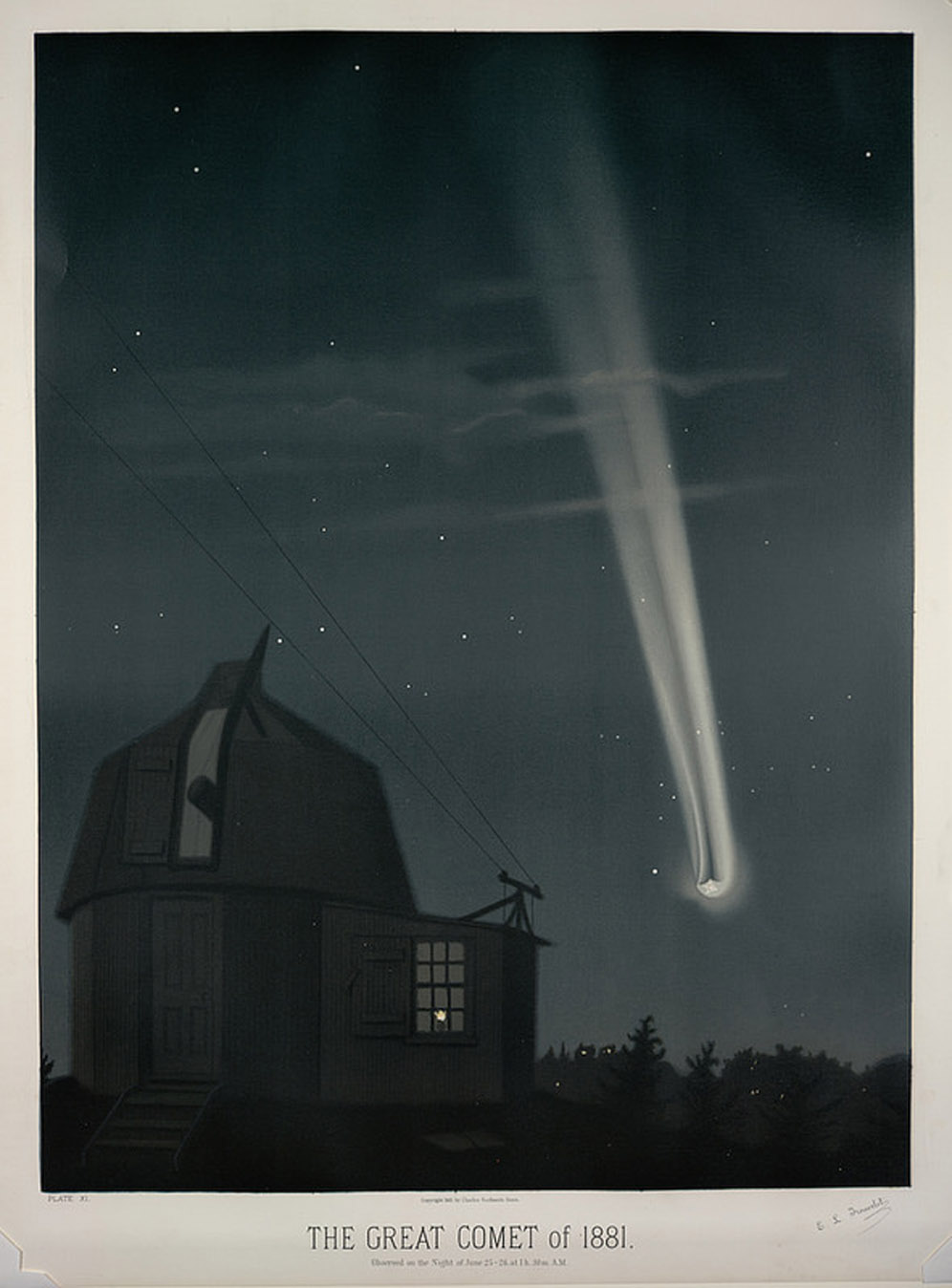
The great comet of 1881. Observed on the night of June 25-26 at 1h. 30m. A.M. Étienne Léopold Trouvelot.

The great comet of 1881. Observed on the night of June 25-26 at 1h. 30m. A.M. Étienne Léopold Trouvelot.


A fascinating little book published in 1898, by Charles DeKay, it travels all over the world in pursuit of Bird Gods and myths about birds. There are many stories from Finland, I’d love to know if they are at all still known. (Hint, hint to Ice Swimmer & Lumipuna).
Speaking fluent German, French, and Italian, as well as studying Latin, Greek, and Sanskrit, DeKay’s linguistic background is apparent in the book as he traces the various cultures and mythologies that the different birds appear in. He presents the idea that, rather than the more distant celestial objects, it is the animals that have surrounded us which have been the root of religious ideas. Each chapter in the book presents a different bird, from the owl and peacock to the woodpecker and the dove, as well as the gods these birds represented. In his preface, DeKay writes of how humans have shared their belief in nature and that this still exists in us no matter of religion, language, or ethnicity, urging his readers to respect nature and not destroy it without reason. He writes:
[…] recollection of what our ancestors thought of birds and beasts, of how at one time they prized and idealized them, may induce in us, their descendants, some shame at the extermination to which we are consigning these lovable but helpless creatures, for temporary gains or sheer brutal love of slaughter. The sordid men who swept from North America the buffalo, the gentlemen who brag of moose and elephants slain, the ladies who demand birds for their hats and will not be denied, the boys who torture poor feathered singers and destroy their nests, are more ruthless than the primeval barbarians. […] The marvellous tale of the share birds have had in the making of myth, religion, poetry and legend may do somewhat to soften these flinty hearts and induce men to establish and carry out laws to protect especially the birds.
The illustrations by George Wharton Edwards are gorgeous. You can read or download Bird Gods here. Via The Public Domain Review.

One of the viral images of President Trump, with a photoshopped portrait of George Washington (via @JaimsVanDerBeek/Twitter).
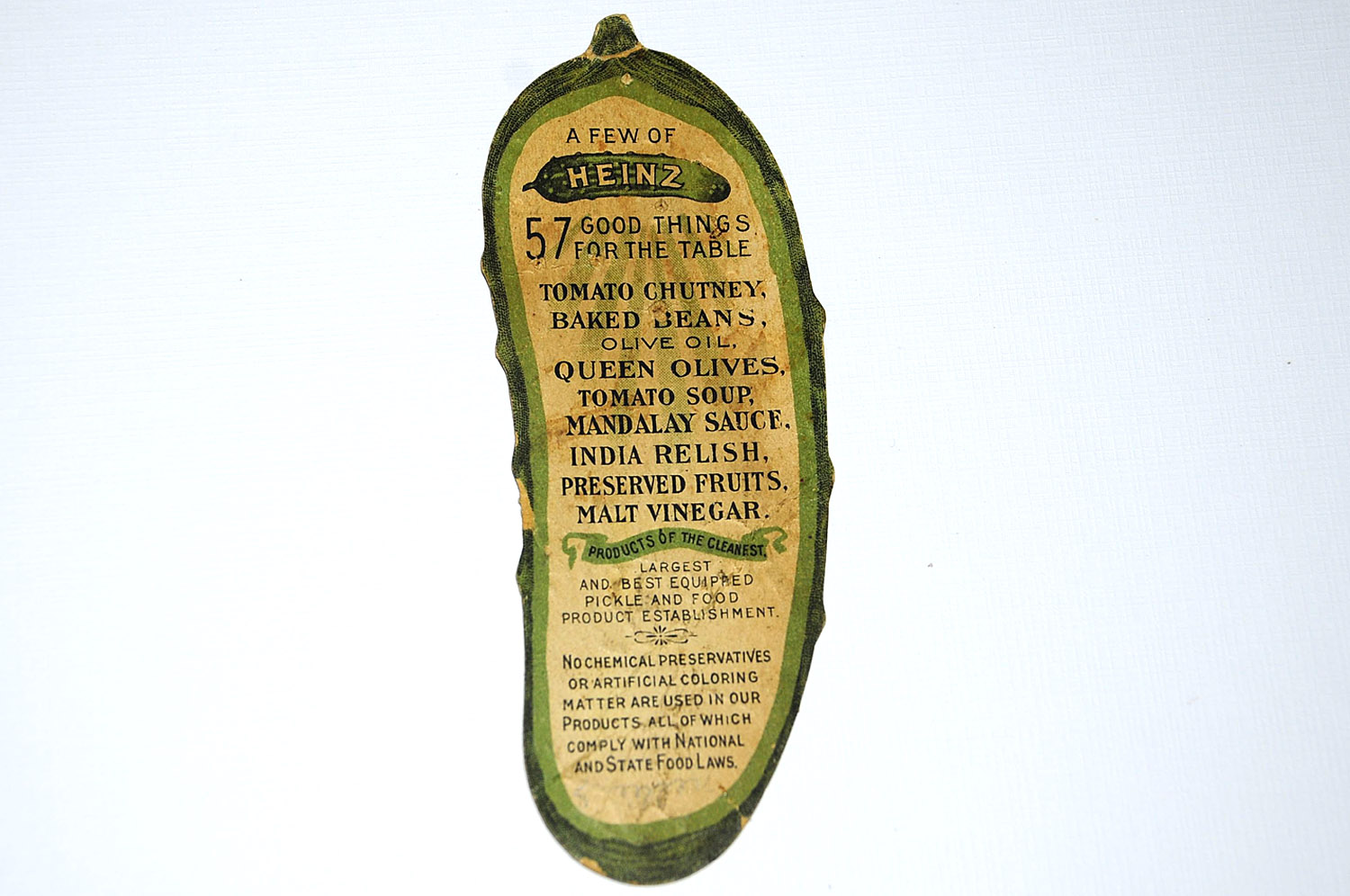
Atlas Obscura has an article up on Victorian Food Trade Cards, which sent me running to a file cabinet, I have one those! I’ve had it for ages, came from one of the grandmothers.

:D.

The Hornet.
Fancy Dresses Described; or What to Wear at Fancy Balls is an 1887 costume guide, and it is amazing and wonderful. Some of the ideas would be best avoided in this century, but the costumes run the gamut from Five O’Clock Tea to Gold Mines to Backgammon to whole countries, and everything in between. Fascinating. The lists of illustrated costumes does not even come close to all the costume guides:


A sample of one page of descriptions:

The costumes are amazing and beautiful:

Magpie.
Oh, the Magpie! Who needs an excuse to wear that?
I haven’t even come close to perusing the whole book, but this caught my eye, and now I want this outfit:

Masherette. Black satin tail coat and skirt, with white waistcoat; black embroidered stockings; crimson silk handkerchief; opera hat and crutch stick; high Wellington boots; shirt front, high collar; eyeglass in eye; buttonhole.

Monte Carlo.
The book is a tremendous amount of fun, just on reading alone, and it’s a great resource and imagination spark for all the costume makers and wearers out there. Fuck, I really wish I could sew. It’s as well to remember that this book did cater to the rich, just look at the entry for Night. Diamonds scattered in the hair, and much more. Of course, there’s no need for them to be real.

Paul Kidby’s illustration of Terry Pratchett’s Discworld: a large disc resting on the backs of four elephants, which are in turn standing on the back of an enormous turtle called Great A’Tuin, as it swims through space. Illustration: Paul Kidby/Orion Books.
Me, I don’t live in ‘merica, this is Turtle Island. World turtles figure prominently in many cosmologies, and Atlas Obscura has a look at them.

The planet Saturn. Observed on November 30, 1874, at 5h. 30m. P.M. Étienne Léopold Trouvelot.
Stunning shots from Saad, click for full size!


© Saad, all rights reserved.

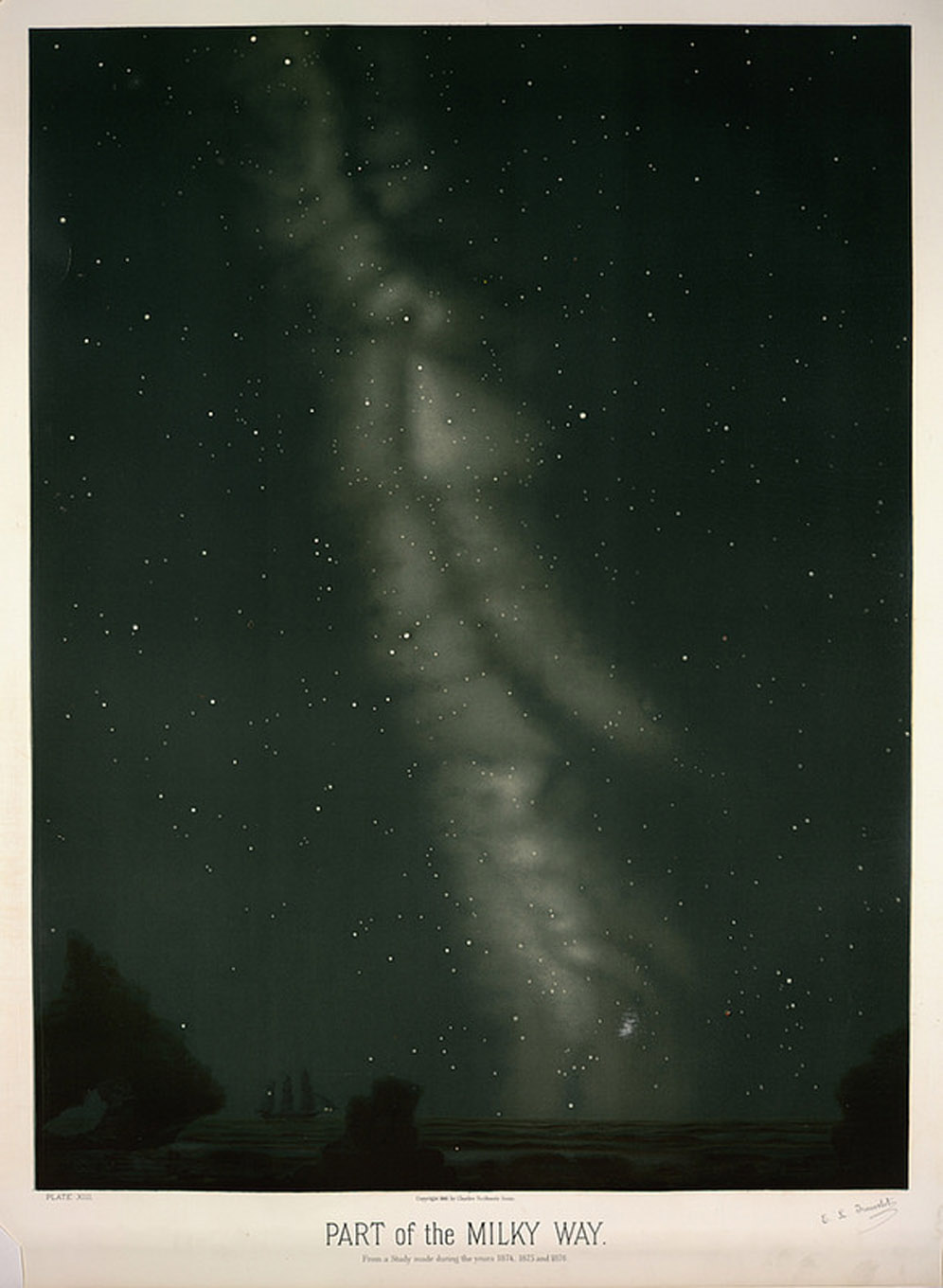
Part of the Milky Way. From a study made during the years 1874, 1875 and 1876. Étienne Léopold Trouvelot.
After this post, there was interest in the lavender pulp covers, so I’ll do three at a time until done. They aren’t very large, and I’m not going to enlarge them because they look awful if you do.


The Intent to Know.
Thought-Forms, a strange, beguiling, frequently pretentious, utterly original book first published in 1901, emerged from this ferment of late-Victorian mysticism. It was written by Annie Besant and Charles Leadbeater, erstwhile members of the London Theosophical Society alongside Yeats, and it features a stunning sequence of images that illustrate the book’s central argument: emotions, sounds, ideas and events manifest as visual auras.
The book’s grand ambitions are evident from the first page. “To paint in earth’s dull colours the forms clothed in the living light of other worlds,” Besant laments, “is a hard and thankless task.” She insists that the images in the book “are not imaginary forms, prepared as some dreamer thinks that they ought to appear.” Rather, “they are representations of forms actually observed as thrown off by ordinary men and women.” And she hopes that they will make the reader “realise the nature and power of his thoughts, acting as a stimulus to the noble, a curb on the base.” This grandiloquence was typical: fin de siècle occult leaders produced some of the most baroque writing in literary history, the purplest of purple prose.
Yet what are we saying, exactly, when we call black words on a white page “purple”?
These sorts of underlying associations between words, colors and sounds were precisely what motivated Thought-Forms. In other words, the book was about synesthesia. The illustration of the music of Mendelssohn reproduced above, for instance, depicts yellow, red, blue and green lines rising out of a church. This, Leadbeater and Besant explain, “signifies the movement of one of the parts of the melody, the four moving approximately together denoting the treble, alto, tenor and bass respectively.” Moreover, “the scalloped edging surrounding the whole is the result of various flourishes and arpeggios, and the floating crescents in the centre represent isolated or staccato chords.” Color and sound had become commingled.

Going by the colours I like best, I end up with Strong Intellect, Selfish Affection, Pure Affection, Avarice, Anger, Sensuality, and Malice. Sounds about right. (If 2/2 was white, rather than a missing colour, that one would have been picked, too.)
You can see and read much more at The Public Domain. The book is available to view through Gutenberg.
