Elephant Art

If you find yourself in the market for something truly special, consider elephant art.  I’m in love with Aleena’s Garden Dance, and have been saving pennies, but I wouldn’t hold even the thought of a grudge if someone snapped it up. It all goes to help the artists, and to enable other artists to be rescued.

Garden Dance, © Aleena (May).

Garden Dance, © Aleena (May).

Aleena was born on May 6, 2004. Her father is Phra-may and her mother is Poomphaung, another Novica-featured elephant artist. Aleena’s nickname is May and she weighs 3,329 pounds. The young pachyderm is very friendly. She is practicing to play in the elephant orchestra, however she is already a skilled painter. To read more about Aleena, click the link and scroll down.

Music Lover, by Nammoey.

Music Lover, © Nammoey.

Born in 2009, Nammoey is a young female who survived elephant traffickers thanks to the forest officers who work to enforce the Wildlife Preservation and Protection Law. They found her near the Salween River in Sobmoey, Mae Hong Son, and placed her in the care of the Thai Elephant Conservation Center-TECC. To read more about Nammoey, click the link and scroll down.

Autumn Flower, by Bai-Tong.

Autumn Flower, © Bai-Tong.

Bai-tong enjoys painting so much that she sometimes takes a firm grip on the paintbrush and refuses to return it to the trainer. She is much loved by the TECC staff and every tourist who has seen her. To read more about Bai-Tong, click the link and scroll down.

Stan & Olli & Juan & Carlos

Image via Wikimedia Commons

Image via Wikimedia Commons

Penguins get more recognition and acceptance than people. Why am I not surprised?

Two male king penguins, Stan and Olli didn’t quite reach the expectations of zookeepers in Berlin. Both penguins were placed under the European Conservation Program (EEP) to reproduce with a female in order to ensure a strong future for the existence of the species. It turns out the penguins weren’t interested in the females, but rather, each other.

“They’re gay, as far as we know,” said Berlin Zoo spokeswoman Christiane Reiss. “They never bred. And when it came to courtship, they only mated with one another.”

According to The Local, both penguins have been transferred to a zoo in Hamburg where they will be a part of an exclusive male community that’s also home to another gay penguin couple, Juan and Carlos.

[…]

In a country where same-sex marriage is not legal and gay couples have limited adoption rights, it’s nice to see penguins at the forefront of LGBT rights in Germany.

Article.

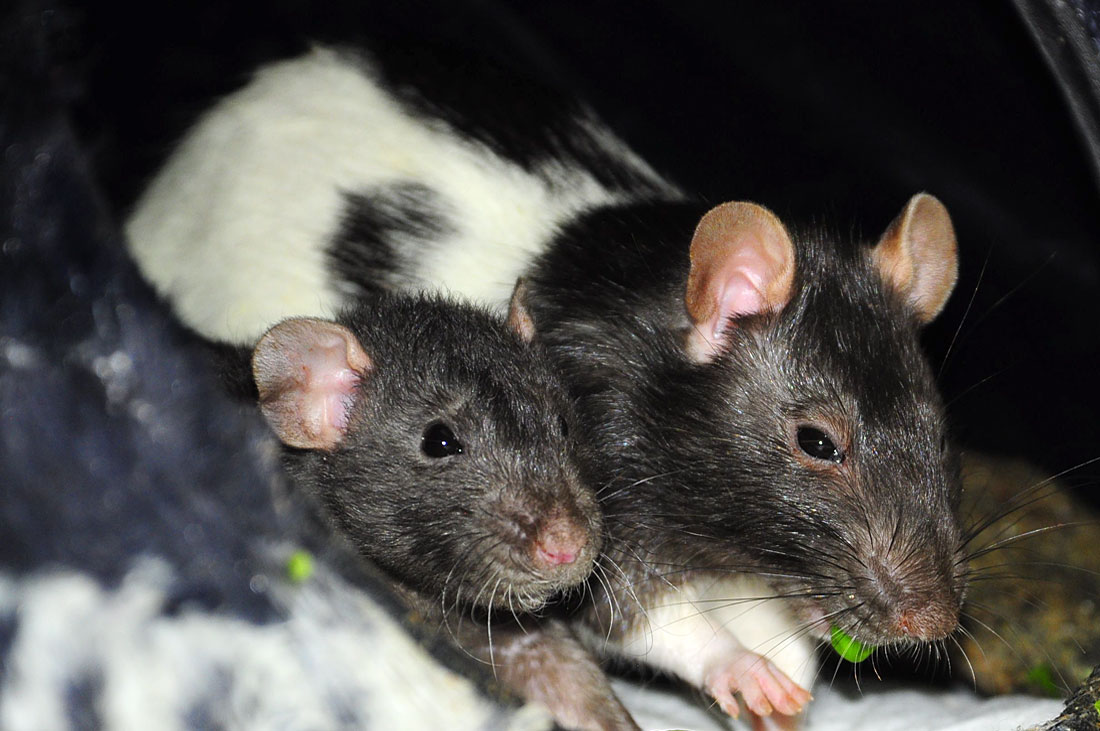
Raturday: Paaaint!

I had an almost empty tube of black acrylic, so I gave it to Grace and crew. Oh, and for obsessive asses at certain corners of the ‘net, why yes, that is a Hobby Lobby label! That paint was purchased years ago, prior to imposing a self-ban on buying there. Have fun insisting I’m lying!

GracePaint1

GracePaint2

GracePaint3

Photos © C. Ford.

Cool Stuff Friday

First up, absolutely stunning macro shots of some awesome insect architecture: Macro Photographs of Nature’s Tiniest Architects by Nicky Bay. Be sure to click the link so you can see all of the photos. All I have is “Wow!”

Arctiine moth pupa (Cyana sp.)

Arctiine moth pupa (Cyana sp.)

Bagworm Moth

Bagworm Moth

Next, a lake of mirrors. This left me speechless. A Photographer’s Digital Journey to Produce a Lake of Shattered Mirrors.

“Impact” by Erik Johansson, image provided by artist.

“Impact” by Erik Johansson, image provided by artist.

Swedish photographer Erik Johansson had a vision for a digital photograph of a lake shattering like a mirror, an image he wanted to produce as accurately as possible. To achieve this effect for Impact, Johansson bought 17 square meters of mirrors, found a boat and a model, and posed all three in a stone pit until he got the best shot for the final image. Several months of planning, shooting, and editing later and he has an entire video that documents the tasks that lie far beyond the many hours he spent in Photoshop.

The importance of pets

Naeila El Shatir considers her cat Sherry to be part of the family. (CBC)

Naeila El Shatir considers her cat Sherry to be part of the family. (CBC)

Thanks to Tim Gueguen for the heads up. Naeila El Shatir, a Syrian refugee, was very happy to be going to Canada, but she also had a great need to ensure another refugee made it with her, her cat Sherry.

“This cat suffered as we suffered in the war. He was always afraid,” she explained. “He spent a very difficult time with us. He always looked at me to ask, ‘When will all of this end?'”

[…]

For El Shatir, who counseled refugee children with psychosocial issues, taking care of Sherry became a form of therapy and a way of honouring her sister’s memory.

In February, El Shatir and her elderly mother were accepted as government-sponsored refugees in Canada, but pets were not allowed.

“There is no chance,” El Shatir said. “There is a big list of what you can bring and can’t bring. I can’t bring cats or plants.”

El Shatir was torn over whether to leave Sherry behind. In the end, she entrusted Sherry with her brother who promised to complete the extensive medical screening and paper work required to ship a cat to Canada.

[…]

“I thank Canada, its people, its government for giving the Syrian people a chance to restart our lives again. To have a chance to live in a normal way and a safe way. Also for giving my cat another chance to live.”

There seems to be a prevailing sense that any refugee should be damn glad to be out of a bad situation, who cares if they are treated like human beings floating about. It’s good to see there are people who do understand how difficult it is for refugees, and something like a beloved pet can make all the difference to a person, especially one who has been subjected to ongoing trauma. You Canadians are serious nice.

Grackle!

The Grackles are back. I look forward to this every year, I’m very fond of grackles. They are astonishingly beautiful birds, with a metallic rainbow hidden in that black. They can look wonderfully fierce and raptorish, but they are endearingly clumsy, and there’s that fabulous puff ‘n’ whistle business. Grackles are always shy at first, as they tend to be high on the enemy list here in farm country. The last couple of years, there’s been an increase in leucism in grackles. There’s one leucistic grackle in particular, I call Pye, and I hope he is back again this year. (The last shot is Pye, from last year). Click for full size.

Grackle

Grackle1

Grackle2

Grackle3

Grackle4

14340717454_1c846ab4ca_o