It seemed too sappy for much of its length, but the ending saved it for me.
Is it really time to start thinking about Halloween?

It seemed too sappy for much of its length, but the ending saved it for me.
Is it really time to start thinking about Halloween?

I think this means the Sixties are finally over. This is how he illustrated the Apollo 11 moon mission.
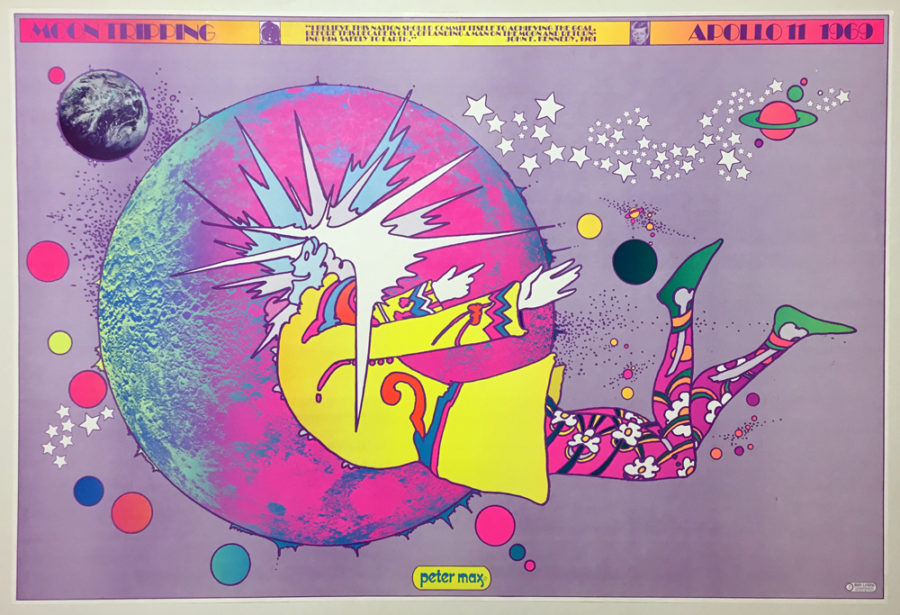
The guy had a definite style. I had Peter Max folders and notebooks back when I was going to school.


We need a name for this disease, and it may already have one, because it’s been rampant for decades. It is the need to attach a specific number to a phenomenon that is not a single parameter, that encompasses a diversity of causes and consequences, and then treat the phenomenon as something that can be ranked, or min-maxed, or just generally be reduced to one number. And then it gets treated competitively! The most familiar example is IQ, taking a complex multivariate property like intelligence, and reducing it to this one single number, and then regarding the highest score as the best, without even considering the best…what? The best mathematician, the best musician, the best conversationalist, the best humanitarian, the best poet? It’s a sickness. We spend way too much time obsessing over the quantification of our existence.
Another example is sports and athletic performance. How much do you bench? How fast do you run 100 meters? What’s your freethrow percentage, your RBI, your golf handicap? These are all valid contributions to your performance at a game, but they don’t capture the totality of that performance, despite being easy to print on the back of a collectible sports card. In particular, they don’t come close to representing the value of that human being’s life.
It’s disturbing when someone focuses so much on the statistics of their existence that they miss the broader view of what that life is about. Case in point: Bryan Johnson, the weird millionaire who is obsessed with fine tuning every aspect of his physiology to maximize his longevity. His life is a constant whirl of pill-popping, exercise regimes, blood testing, and pointless measurement, all to a goal that he won’t get any closer to with his endless tweaking. Watching Johnson on his ridiculous hamster wheel of a life is entertaining, in a sad kind of way.
The latest news is that Johnson has a girlfriend, and he has immediately started scoring her.
Bryan Johnson, the world’s most dedicated oversharer, is in love. The 48-year-old got famous for documenting his strict diet and elaborate regimen of supplements—many of which he also sells—as well as exotic therapies including an injection of “young Swedish” stem cells, all in the pursuit of not dying, ever. And after he got a girlfriend, he told his public more than they’d ever want to know. “Just gave Kate oral sex. Goodnight everyone,” he tweeted this spring. Alas, there was more: “This is her vaginal microbiome report. 100/100 score. Top 1% of all vaginas.”
What followed was a report from a vaginal microbiome test, confirming the elite status of Kate Tolo’s. This, Johnson claimed, was a critical marker of Tolo’s overall health. (He soon began referring to his girlfriend’s genitals as “Kate’s 1%.”) Tolo then leapt into the comments, reassuring followers that she was totally fine with the world knowing that the bugs in her vagina are the very best bugs.
Wait. My first thought was about how you score a microbiome. Is this a thing? It turns out that it is.
In the simplest terms, a microbiome score is a metric designed to summarize the state of the microbial ecosystem living in your gut. It is a data-reduction tool. Instead of listing the relative proportions of hundreds of different bacterial species, a testing company uses a single number or a small set of numbers to represent the overall health and balance of your gut flora. This is analogous to a Body Mass Index (BMI) score: it condenses complex data into a single, comparable figure.
These scores are not universally standardized across the industry. Each testing company uses its own proprietary algorithm to calculate them. A “score” is meant to be a starting point, a way for you to quickly gauge whether your gut ecosystem appears healthy (often called “high diversity” or “good balance”) or potentially imbalanced (sometimes termed “dysbiosis”). However, you must distinguish between a summary score and the raw data. The raw data—the specific bacteria found and their levels—provides the most detailed and actionable information for a healthcare professional.
So it’s a scheme for reducing hundreds of numbers to one number, and different companies (that’s telling — it’s a profit-making tool) have different schemes, and it’s just as valid as BMI…which we already know is seriously flawed.
How was the sex, Bryan? What do you love about your girlfriend? He replies with a simplistic calculation of the distribution of bacteria on her body. I think you’re missing the point, Bryan.
I hope for Kate’s sake that she can keep her bacteria in tip-top shape. Would Bryan shame her if she were only in the top 5%? A yeast infection would be a devastating crisis in their relationship.

I was croaking my way through lab today, when one student told me…
“This class has more math than any of my other classes!”
Which means I’m teaching it well. We haven’t even gotten to enzyme kinetics yet — that’s Friday.

I still can’t talk, and my throat is horribly sore.
But…when I got home yesterday, Mary put me to bed, zipped out to the pharmacy and picked up some medications, went to the grocery store and got Jell-O and chocolate pudding, nagged me to drink lots of fluids, and checked on me every few hours to make sure I was comfortable. Then this morning she yelled at me to stay home and not go to work. I’m feeling coddled.
Unfortunately, I’m going to work in a few minutes. I have to give an exam and run a lab. I can’t spare a day in my schedule.


My voice is totally gone, except as a raspy whisper that frequently cracks and can only make shushing noises. That’s the bad news.
The good news is that none of my students have stopped by to ask questions! I guess I have taught them superbly well, or possibly they are terrified of the old man who keeps pushing more facts and formulas at them.
I’ll hang out in my office a while longer, just in case. I am drinking lots of honey lemon ginseng tea with big spoonfuls of honey. Also, tomorrow I’m just giving this exam and teaching a lab which should give me another day to recover.

I’ll have to show my spiders this reconstruction of their great-great-many-times-great grandmama. She’s adorable.

Megachelicerax cousteaui
It’s all in the chelicerae.
In a study published in Nature, Research Scientist Rudy Lerosey-Aubril and Associate Professor Javier Ortega-Hernández, Curator of Invertebrate Paleontology in the Museum of Comparative Zoology, describe Megachelicerax cousteaui, a 500-million-year-old sea predator discovered in Utah’s West Desert. It is the oldest known chelicerate, the arthropod group that includes spiders, scorpions, horseshoe crabs, and sea spiders. The discovery pushes the evolutionary history of chelicerates back by 20 million years.
Hey, I’ve visited the West Desert of Utah — but all I found were fossilized trilobites. Lots of trilobites. Megachelicerax food. But I never found a predator like this one.
The key feature identifying it as a chelicerate are those big clawed appendages on the front of its face, which is also a prominent feature of modern spiders, much modified. The appendage is now a crushing/chewing anvil, and the thumb of the claw has evolved into a wicked needle.
Its most extraordinary feature, however, is its unmistakable chelicera — the pincer-like feeding appendages that define the subphylum Chelicerata and distinguish spiders from insects. While insects possess sensory antenna as their foremost appendages, chelicerates have grasping, often venomous tools. Despite a rich Cambrian fossil record, no unambiguous chelicera-bearing arthropod from that time had ever been found – until now.

The thing about modern spiders is that they’re mostly defenseless — no sting, no pointy legs, no claws — except for that one extraordinarily useful weapon, the chelicerae. Well, they also have silk, making them a kind of retiarius of the arthropod world. You’re probably not afraid of their webs, but you worry about their big chompers and the venom they carry.
I don’t think the retiarii would have poisoned their tridents, though.


The timing is terrible. I developed a nasty sore throat last night that kept me up half the night — I’m going to be gulping down tea with honey all day long. I’m giving the first big exam of the semester tomorrow, so I’m giving extended office hours this morning and afternoon, which means I’m going to be dealing one-on-one with students while suffering from this croaky voice.
Mask on. More tea. Don’t ask me to sing.

This is ridiculous.
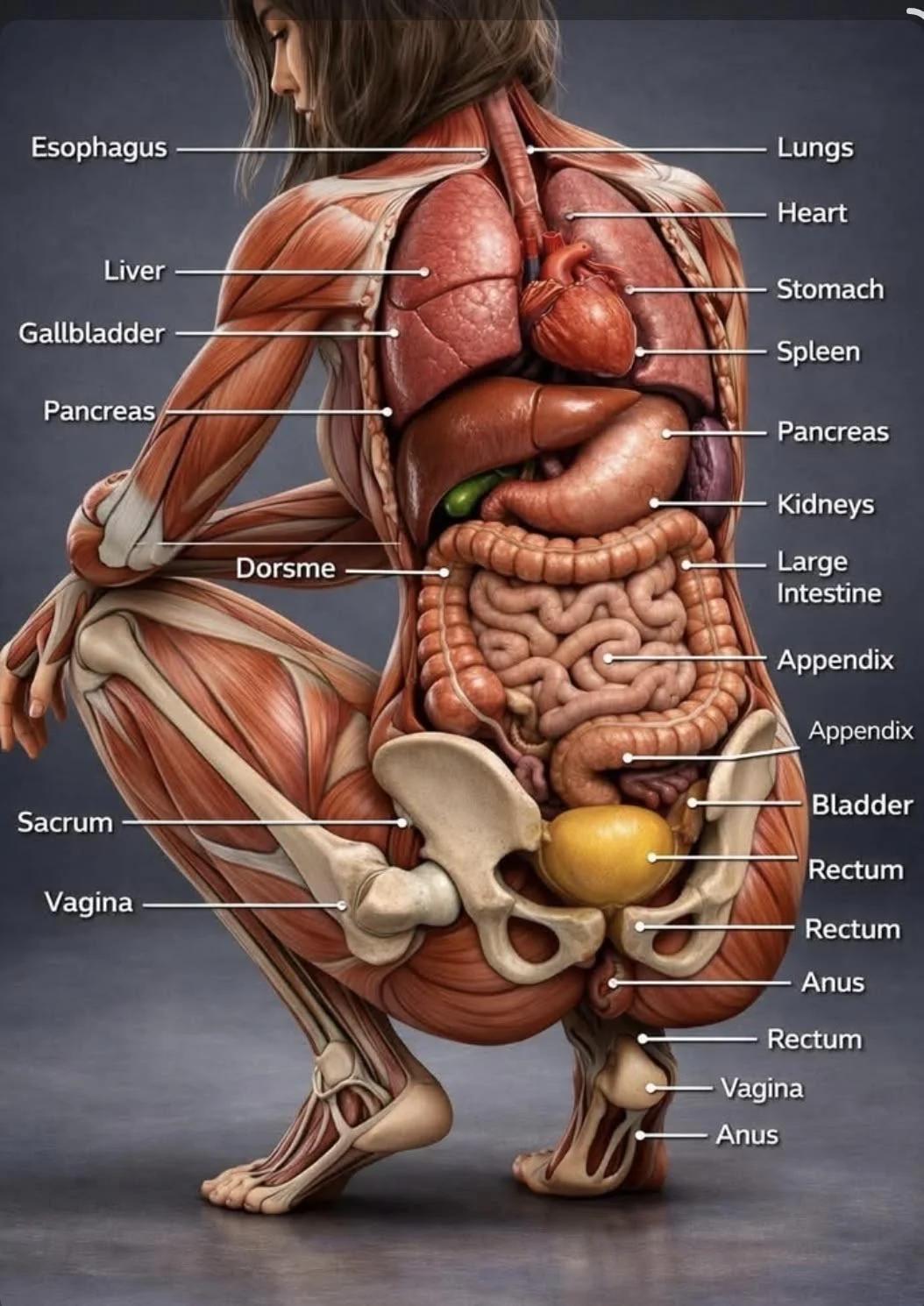
Backwards, grossly mislabeled, multiplication of organs — two vaginas in unexpected places? — one imaginary organ (dorsme?), all professionally illustrated. Don’t show this to any young boys, they will be even worse in their future interactions with women.


I hope my terrible confession doesn’t drive away my readers, but…
I can’t stand Star Trek anymore.
I don’t want to watch it. I see an ad for a new Trek series, or Trek memorabilia, or a Trek convention, and I immediately set course for a new destination far far away. This is the year of the 60th anniversary of the series, and my mild disinterest has evolved into strong revulsion.
I have happy memories. When I was 9 or 10 years old, it was an obsession — I looked forward to Thursday evenings (I think that was the day it was on) and staying up to watch it on our old black & white TV. I was even enthused when they made movies based on it. But by the time Star Trek: the Next Generation was a thing my interest was cooling, and I was thinking it would be nice to have some more creative science fiction approaches in my entertainment. The Federation was stale.
And now, my reaction is nothing but boredom or disgust. Star Trek is oversaturated. Let’s all move on.
Remember all those 1950s SF serials that I saw in reruns? Shall we bring them back, too? Flash Gordon and Buck Rogers got some attention, but it didn’t last. I kind of wish Star Trek got the same flash of transient revitalization, before fading away as the entertainment industry found novelty more interesting.
Next: I’m waiting for Star Wars to die. Disney is helping by driving it into the ground with new series that I can’t even be troubled to look up.
