I don’t understand American Christians

Barna has put out the results from a survey of American beliefs, and it bewilders me.

• A majority of U.S. adults adopted a biblical answer on only 1 of 7 questions about humanity and only
1 of 7 questions about the supernatural.
• Only 57% of adults believe humans are God’s creation, made in His image, fallen, and in need of
redemption—despite 70% identifying as Christian.
• Just 30% of adults hold the biblical view that people are born into sin and can only be saved by Jesus
Christ. Among Catholics, that figure drops to 24%.
• Only 1 in 4 adults (27%) believes human life is sacred. An equal share says human life has no intrinsic
value.
• A majority of Americans (52%) consider abortion morally acceptable—and only 1 in 3 adults (33%)
describes themselves as passionately pro-life.
• Only half of U.S. adults (50%) believe God is the all-powerful, all-knowing Creator of the universe
who rules it today—down from a clear majority at the start of the millennium.
• One in four adults strongly agrees that Jesus Christ sinned while on Earth. Among Notional Christians,
roughly half of all churchgoers, more strongly agreed He sinned than strongly disagreed.
• By a nearly 2-to-1 margin, Americans are more likely to firmly believe the Holy Spirit is merely a
symbol than to strongly affirm the Holy Spirit as a living entity.
• Twice as many adults strongly agree that animals, plants, wind, and water have unique spirits (35%) as
strongly disagree (16%).
• Nine out of 10 American adults hold Syncretism (not Biblical Theism) as their dominant worldview

• A majority of U.S. adults adopted a biblical answer on only 1 of 7 questions about humanity and only
1 of 7 questions about the supernatural.

What is a “biblical answer”? I don’t think there is such a thing — the Bible is a tremendous hodge-podge of archaic, conflicting, and fuzzy ideas. This is an assumption that there is a clear “biblical” position on everything, so I’m unsurprised that there is an absence of a coherent response. The survey returned results that don’t match Barna’s presupposition of what Americans should believe.

• Only 57% of adults believe humans are God’s creation, made in His image, fallen, and in need of
redemption—despite 70% identifying as Christian.

57% is still too damn high. I’m curious as to what the 43% believe.

• Just 30% of adults hold the biblical view that people are born into sin and can only be saved by Jesus
Christ. Among Catholics, that figure drops to 24%.

That’s just a fundamentally horrible belief. What is sin? What is it that a newborn is a sinner? I’m happy to see that belief is in decline.

• Only 1 in 4 adults (27%) believes human life is sacred. An equal share says human life has no intrinsic
value.

I believe that human life is valuable and should be protected, but I don’t believe in the “sacred,” so I guess I’m in the majority. A lot of people are becoming cynical if they think life has no intrinsic value.

• A majority of Americans (52%) consider abortion morally acceptable—and only 1 in 3 adults (33%)
describes themselves as passionately pro-life.

The pro-life movement has always been nothing but an ideological game that was ginned up in the 1970s. The Bible doesn’t say much of anything about abortion, and basically takes it for granted that it happens. Is this one of the things they score as a “non-biblical answer”?

• Only half of U.S. adults (50%) believe God is the all-powerful, all-knowing Creator of the universe
who rules it today—down from a clear majority at the start of the millennium.

Good. Let’s see that number continue it’s decline. The concept of an ominipotent supernatural agent is nonsensical.

• One in four adults strongly agrees that Jesus Christ sinned while on Earth. Among Notional Christians,
roughly half of all churchgoers, more strongly agreed He sinned than strongly disagreed.

I’ve never even thought about this idea! Why would anyone care about the sin-status of a rabble-rousing Jewish preacher who lived 2000 years ago? Apparently it’s a serious theological question, which is an indictment of theology.

• By a nearly 2-to-1 margin, Americans are more likely to firmly believe the Holy Spirit is merely a
symbol than to strongly affirm the Holy Spirit as a living entity.

Don’t you suspect that most people are confused about this whole business of a “holy ghost”? I know I was only exposed to the concept of the trinity as a grade school child, and found it absurd, so I’m sure theology has a more “sophisticated” muddle of excuses, but I suspect most Americans have the equivalent of my childish explanation.

To be a good Christian, must one believe in a nebulous space ghost?

• Twice as many adults strongly agree that animals, plants, wind, and water have unique spirits (35%) as
strongly disagree (16%).

“Spirits.” Stop there. When your survey is treating spirits as discrete entities that need to be evaluated, you’re lost.

• Nine out of 10 American adults hold Syncretism (not Biblical Theism) as their dominant worldview

OK, good. Ken Ham is thus rebuked.

I read the whole paper, and I’m mainly confused about why we should consider it significant that American religious belief is complicated and messy and does not conform to one particular view. There are tens of thousands of protestant denominations! I guess it’s nice that Barna is highlighting how incoherent religious belief is.

A science star!

My daughter won first prize in a poster session at UW Madison, presenting her work on “Evaluating Retrieval-Augmented Generation vs. Long-Context Input for Antibiotic Timeline Extraction from EHRs”. I struggled to follow it, but got the gist of it — they’re working on methods to more efficiently extract information from patients’ medical records using LLMs. She sent us the poster image, maybe you can extract more details from it.

Near as I can tell, it’s perfect, and her peers also thought so. The only suggestion I could possibly make is to maybe add a few spider photos…or a picture of my granddaughter? I don’t know that my suggestions would necessarily help.

It’s nice to have a vague idea of what she’s been up to!

They’re against science and free speech

No one will be surprised to learn that RFK jr is trying to bias the scientific literature. He’s upset that the journal Toxicology Reports had killed an article that supported his weird belief that childhood vaccines are causing Sudden Infant Death Syndrome, so he pressured them to restore it.

Robert F Kennedy Jr, the US health secretary, is demanding answers from a medical journal that recently removed a paper suggesting a link between vaccines and infant death, saying their decision was “of great interest to me”.

Public health advocates immediately criticized the move, and said Kennedy appeared to be trying to intimidate and influence the journal’s editorial process. The journal Toxicology Reports had removed the paper this spring after editors determined it was so seriously flawed it could harm patients and pose a risk to public health.

This is patent meddling in the publication of scientific ideas. David Gorski commented on it.

Dr David Gorski, a surgical oncologist who has written extensively about the antivaccine movement, pointed out in a post that Kennedy has portrayed himself as pro-free speech, but that he was “apparently using the power of his position” to put pressure on an editorial decision by a private publisher.

“To antivaxxers, it’s free speech for me, but not for thee,” Gorski wrote on X.

I’m interested in that bit about how the paper was “seriously flawed”. The first clue is that the paper is yet another example of VAERS cherry-picking, a common tactic by vaccine deniers to scavenge through reports of vaccine effects to find isolated examples that they they then assemble into fanciful fairy tales of statistical significance, and that’s what this paper is.

The paper raised concern among scientists soon after it was published in 2021 by Neil Z Miller. It used reports made in the federal government’s Vaccine Adverse Event Reporting System (VAERS) to find what Miller said were “unusual patterns and safety signals highly suggestive of a causal relationship” between vaccination and Sids. VAERS is a vaccine safety monitoring program where anyone can submit a report about any suspected adverse health event that happens after a vaccination.

The second clue is that the author is Neil Z Miller. They can stop right there — Miller has an entry in the Encyclopedia of American Loons. He’s not a scientist, not a doctor, and has no qualifications whatsoever, and all he does is comb through diverse data to assemble “evidence” supporting his a priori conclusion that vaccines are bad, mmmK?

Neil Z. Miller is a “medical research journalist”, “health pioneer”, “independent researcher” (yes, that means exactly what you think it means) and Director of the Thinktwice Global Vaccine Institute, an anti-vaccine organization listed here (and Miller has a long history in various altmed and antivaxx organizations). Gary S. Goldman is an “independent computer scientist” affiliated with WAVE – World Association for Vaccine Education, another anti-vaxx organization, and President and Founder of Medical Veritas, a rabidly anti-vaccine “journal” (listed here) that is into HIV/AIDS denialism as well, having published dubious “reanalyses” of autopsy results of victims of AIDS. Neither Miller nor Goldman have any qualifications that would lead one to think that they have any special expertise in epidemiology, vaccines, or science. But they have google and are not afraid to use it.

Together they have actually managed to publish a paper or two in obscure journals, where they completely misunderstand data in favor of their cherished hypotheses. In “Infant mortality rates regressed against number of vaccine doses routinely given: Is there a biochemical or synergistic toxicity?” they “found” that nations requiring the most vaccines tend to have the worst infant mortality rates, and their cherry-picking of data and speculation needed to reach that conclusion are rather painful – quite simply yet another poorly planned, poorly executed, poorly analyzed study that is poorly done exactly because it needs to be in order to show what the authors want it to show, namely that vaccines cause autism, a hypothesis so thoroughly falsified as any in the history of science. The study was of course praised in the venues you’d suspect, and where the assessment of the methodology used in the study is determined by whether it supports the conclusions the praiser wants it to show. Indeed, it was even praised at NaturalNews in a long post written by … Miller himself.

That paper should not have been accepted in the first place, and now we have RFK jr stepping in to push for its publication. And what qualifications does RFK jr have to assess scientific papers? Also none whatsoever.

The nefarious prickly pear

I’ve always taken cactuses for granted — I’ve lived in deserts before, and they’re just there, growing all over the place, and familiar part of the landscape. I didn’t think about the fact that they’re an entirely American clade, or that they could be a destructive invasive species elsewhere. I didn’t know that they were a major pest in Australia, along with rabbits and cane toads (Australians keep bringing in alien species that devastate their ecologies, in desperate attempts to counter the previous wave of invaders). So this was an informative video for me.

It’s also an example of where bringing in yet-another-foreign species, in this case moths and scale insects, defeated the problematic invasive species. For now.

To boldly go where everyone has gone before

I’m about to attempt a trek from my house to the grocery store and back again, because I want to get back into the habit of regular walks. It’s going to be a little bit of a challenge — I’ve been doing short walks around the house, but I think I can handle a whole kilometer and a half, because maybe I’m getting overconfident.

If I’m not back by noon, call out the helicopters and the search parties. (I also have an ace in the hole: Morris has an informal bus service where you just call and they eventually deliver you right to your door. Don’t worry.)


I’m back, call off the emergency search teams. It took an hour and a half to walk there and back? I’m getting so slow.

Trogloraptor!

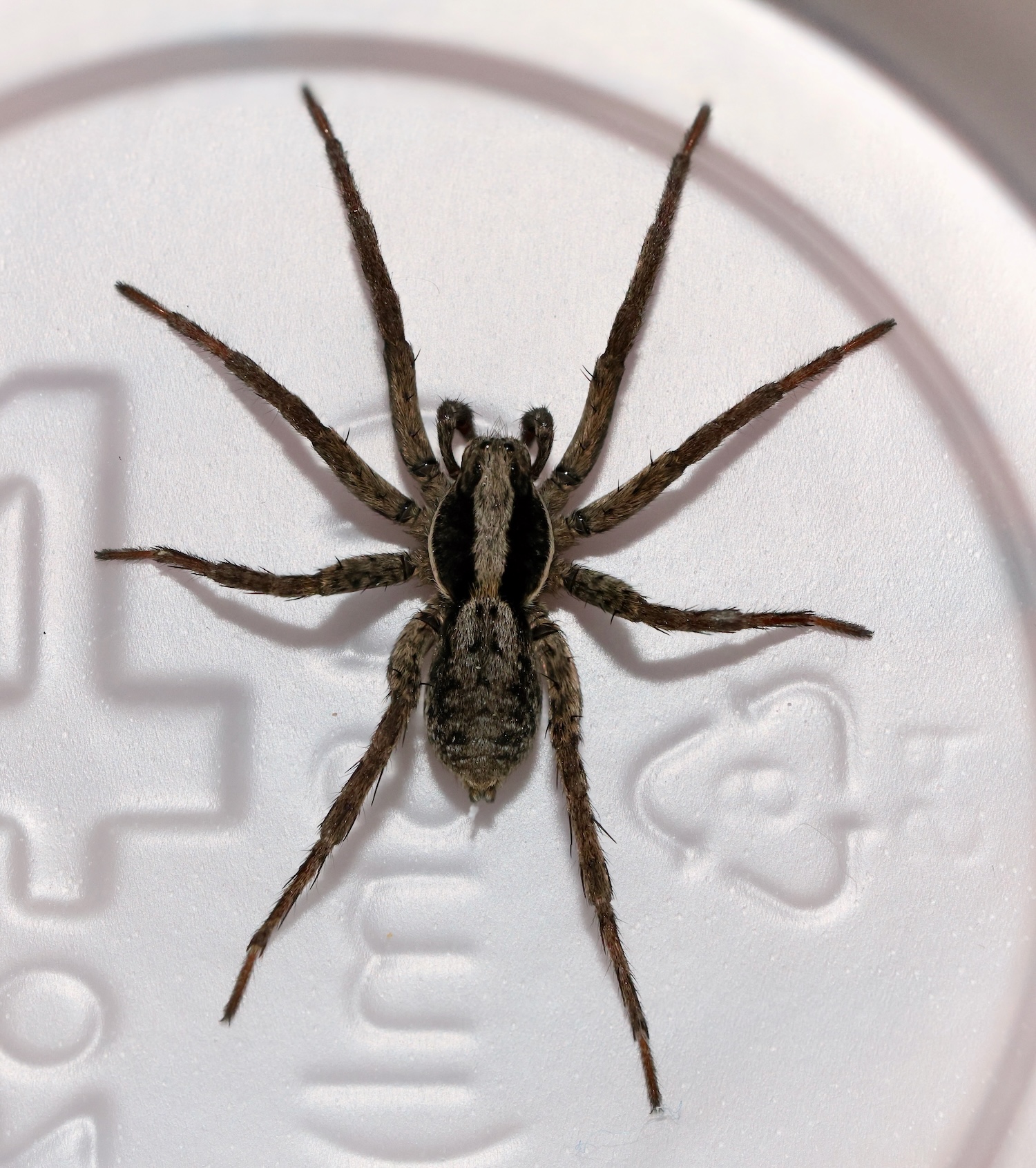
A new species of spider has been identified.

We present a morphological description of a recently discovered species of spider in the family Trogloraptoridae from the Columbia River Gorge in northwestern Oregon. The family was previously monotypic (Trogloraptor marchingtoni) and only known from populations near the southwestern Oregon—northern California border. Trogloraptor tulishpun sp. nov. retains the key family synapomorphy, distinctive subsegmented raptorial tarsi, and an oblique membranous division of the basal segment of the anterior lateral spinnerets. Trogloraptor tulishpun is distinguished from T. marchingtoni by its color pattern, clypeal height, vulvar and palp structure. We have found T. tulishpun in four localities in the Columbia River Gorge, which show little mitochondrial sequence divergence from one another, but are highly genetically distinct from T. marchingtoni. Trogloraptor tulishpun is found in basalt features, including lava tubes and shallow talus caves, and has been observed to eat arachnids and moths, making them top predators in these environments.

First, that’s a truly awesome name, Trogloraptor, for a cave spider. Somebody hit a home run with that name.

Naming a new species isn’t a trivial thing, but the lab that found this one went above and beyond to come up with the name Trogloraptor tulishpun. They consulted the local people of the Yakama nation, and got the name “tulishpun” from them. And then they had a formal naming ceremony, as reported on NPR.

ANTHONY WASHINES: At this time, we’ll open this ground, the sacred ground that we’re standing on, and then we’ll begin.

PRICHEP: Naming ceremonies are usually, unsurprisingly, for people. It’s a formal introduction of the name, but it’s also a way to sort of welcome that individual and mark their place in the community.

(SOUNDBITE OF ARCHIVED RECORDING)

WASHINES: You’re being a witness to this brother being acknowledged.

PRICHEP: Anthony Washines is the Yakima elder who came up with the spider’s name.

(SOUNDBITE OF ARCHIVED RECORDING)

WASHINES: And so, from this day forward, we will call them by the name tulishpun. Repeat after me – tulishpun.

UNIDENTIFIED CROWD: Tulishpun.

PRICHEP: Gifts and food were shared, and a traditional naming song was sung. A few spiders were gathered to receive their name and then returned back to the nearby caves. Washines knows people will see tulishpun as a small thing. But he says every creature has its place, and this little spider has been in this place even when his people were not.

WASHINES: We were literally herded to a reservation up in the high-desert plateau, which was not our land. But he stayed here and remained. He still took care of this land.

PRICHEP: Usually, the discovery of a new species is celebrated with a pizza party in the lab, maybe a nod from the dean. It’s an academic milestone. But for tulishpun, it’s a community event, a gathering of scientists and citizens, of human and animal, to name all of those who make up this land and honor the connections between them.

How lovely. I’ll keep that in mind if I ever discover a novel species, which is extremely unlikely. In my background, we didn’t go looking for new species — new mutations and new molecules, sure, and we had ceremonies, usually involving popping a champagne bottle, when a paper was published, but we lack a connection to the community, the people, and the land. A species, though, is something people may have interacted with before, and that interacts with other levels of its biome, and it is appropriate to add a scientific context to a known part of our world.

That went about as well as expected

Donald Trump had his tacky birthday party on the White House lawn yesterday. A bunch of people I never heard of had fights in front of a crowd of rich people who did not get rained on, unfortunately, but they did manage to demonstrate how low-class they were.

Yet if the event was intended as a celebration of American strength and exceptionalism, it also repeatedly descended into something cruder. The most striking example came after prospect Josh Hokit stopped Derrick Lewis in the second round of their heavyweight bout. After exiting the cage to present Trump with a necklace at ringside, Hokit delivered a rambling post-fight interview that veered from praise for the president to religion before concluding with the false conspiracy claim that “Michelle Obama is a man.”

The remark, one of the oldest and most persistent smears directed at the former first lady, drew cheers from some sections of the crowd and bewilderment from others. Even on a night that had already blurred the line between civic ceremony, political rally and pay-per-view entertainment, Hokit still found a way to lower the level of discourse.

Hokit’s comments were not the evening’s only political barb. When former UFC bantamweight champion Sean O’Malley faced Canada’s Aiemann Zahabi, the bout took on a nationalistic fervor. Trump donned a white “USA” hat cageside while chants of “U-S-A!” rang out from sections of the crowd. At various points spectators shouted “Canada is the 51st state!” – echoing Trump’s repeated taunts about annexing America’s northern neighbor – while others urged O’Malley to “eat” his opponent.

He got the party he wanted, but not the party he deserved.

Please, make these people go away.

Since we’re talking about UFOs…

In other news about UFOs/UAPs, would you believe our government has formed a “UAP Science Advisory Council” to chase the nonexistent science behind the illusory flying saucers? Of course you would, because our current government is all about throwing stupid money after stupid ideas. Guess who they’ve appointed to run it…

Avi Loeb!

The three UAP file releases thus far attracted more than a billion views and a lot of chatter on social media. However, to paraphrase the wisdom of basketball players: “we must keep our eyes on the orbs, not the audience!”

What could be a better way of doing that than the establishment of a new “UAP Science Advisory Council” by the White House, AARO, the Office of the Director of National Intelligence (ODNI), the FBI, and all Intelligence Community members. This is not wishful thinking but a reality now. Over the past week, I was tasked by the above organizations to create a research team of young scientists who will serve on this council. The Council under my leadership includes the following members: Dr. Richard Cloete and Dr. Regina Sarmiento with expertise in data analysis and data management with AI tools, Prof. Matthew Szydagis with expertise in instrumentation and data collection, Dr. Devesh Nandal with expertise in numerical analysis and astrophysics and Dr. Omer Eldadi with expertise in data management, AI and human psychology. This constitutes an amazing A-team of exceptional scientists.

I would not want to be associated with anything endorsed by this administration, and I would not call any group of scientists picked by Avi Loeb to be exceptional anything other than exceptionally irrelevant. As usual, it’s a game of picking the biggest idiot you can find to run an organization. Bonus points if they’re an egotistical glory-hound.

I told you I might go see Disclosure Day

And I did. And I regret it.

Steven Spielberg can make some great movies, but he also has this solid wad of gullibility in his brain that emerges whenever he makes a movie about aliens. It happened when he directed Close Encounters of the Third Kind, ET the Extraterrestrial, Indiana Jones and the Kingdom of the Crystal Skull, and it also leaked out a bit with A.I. Artificial Intelligence. They all made lots of money, though, so I fear there’s no way we can ever stop him.

[Read more…]