MRAs are the same all around the world

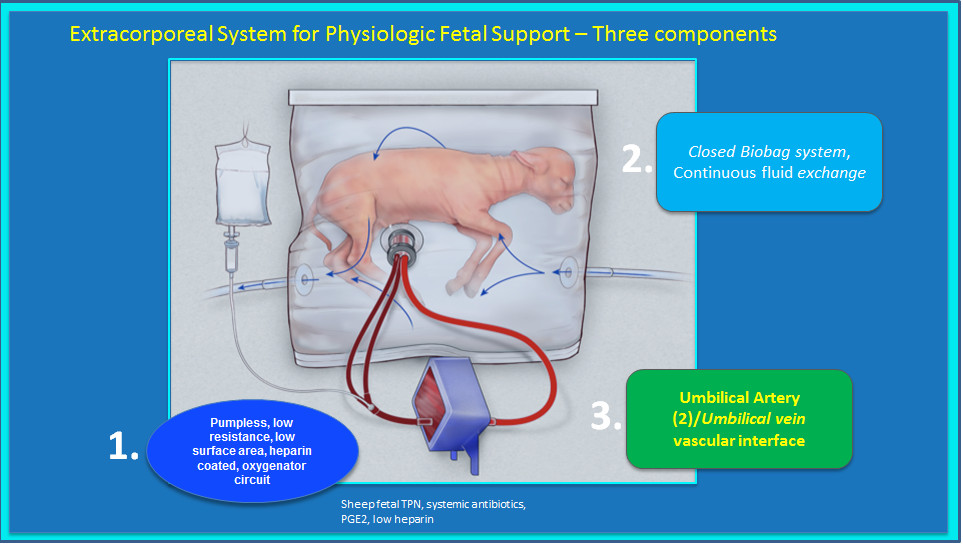
Mens Rights Pakistan is excited about the potential of the development of an artificial womb. For those who haven’t been following this development, researchers have developed a system for keeping prematurely born mammals alive in a fluid filled sac. It’s been tested on sheep, and they’ve got little lambs living inside this ‘biobag’ for the last month of gestation.
When I heard about this, the last thing on my mind was to wonder what anti-feminists woud think about reproductive biotechnology, but they’re quite vocal and have strong opinions. They’re for ’em. Not for the reasons I approve, though.

Artificial womb is coming and human fetuses will be grown in artificial wombs. Now where does religion stand on this is of course up to the respective religion’s guardians. However, I would like to point out something that this technology can help save a lot of babies from abortion. Here at anti-feminism pakistan, we are unequivocally anti abortion, pro adoption and libertarian in our approach towards social
commentary.

OK! Thank you for your clarity! They don’t like women, but they also hate abortion. It’s amazing how often those two opinions come together.

I don’t like you.

The first question that will come before pro-abortion Pakistanis whether they belong to Islam or any other minority religion or are averse to religion like atheists, is that if fetuses can be saved with this technology is their argument for choice to kill babies still about betterment of the society through avoiding birth of human beings who are predicted to have significantly worse quality of life and indulge in criminality or just an escape for women from consequences of their action?

Clarity…fading. But they seem to have decided that there are only two reasons for abortion: women are choosing to abort fetuses that they think will become criminals (how do they know?) as a kind of informal eugenics, or they’re just hedonists who won’t accept the natural product of their lusts.

I don’t think any women get abortions for the bizarre reason of the “betterment of society”. It’s a personal choice.

Children are a huge commitment, and they can constrain a woman’s life a great deal. Women get abortions because they plan their families, which means that they don’t want children. That’s OK. MRAs don’t seem to be very interested in supporting children either.

But this artificial womb doesn’t really impinge on the abortion debate at all, anyway. It’s a technology that will allow for better survival of premature babies, for families that want children. It’s only going to be useful in the last month or two of a pregnancy when the only time an abortion occurs is when severe life-threatening disease is present, or the fetus is so abnormal that it has no chance to live. The biobag does not save those fetuses.

The second question that I would like to ask strict traditionalists is whether their argument for protection of women still hold when a part of their traditional role is taken over by a machine? Now let it be said, I am not saying that women have no other role beside bearing the baby, as countless research has shown that a child with both father and mother in his/her life ends up doing much better than a child without either one or both. However, think about it. Why should a man provide for and protect a woman who can circumvent a supposed difficult part of her life?

Again, the artificial womb is not a technique for allowing a woman to circumvent the last month of pregnancy with elective surgery. It is not a strategy for replacing parental roles, traditional or otherwise. Are you stupid or something?

Also, maybe you should get over this notion a woman is someone you “provide for and protect”. Start thinking about respectful partnerships, instead. It’ll change your life for the better!

The third question is a more of a conjecture on my part, I wonder if artificial womb can be the death knell for the concept of ‘Mamta’ which can loosely be defined as the kind of love mothers have for their babies. If they do not experience the growth of the baby inside of them, is the baby anymore even hers beyond the obvious biological DNA provision.

I know it’s hard for you to think outside your biases, but try this. Men do not get pregnant at all, generally; they do not have babies growing inside them. What kind of hissy fit would you throw if someone said your children aren’t even yours, beyond the obvious biological DNA provision? Are you really trying to argue that a father’s love can’t exist, in an attempt to deny maternal love?

The final question is, can this be the ultimate in male emancipation?

It’s just getting juicy and weird, and he plops this question out and doesn’t follow through! No fair!

The answer is…no. MRAs already treat women as biobags, so this technology doesn’t change a thing.

For the “hate speech has no consequences and must be allowed” crowd

Compare and contrast: two students, both at Transylvania College. Tracy Clayton is a black woman who wrote about the endemic racism at the school; confederate flags hanging in dorm room windows, buildings named to honor the Confederacy, racist slurs in graffiti and conversation, etc. You know the drill. Your standard oblivious racist sense of entitlement from the white community, as we see all across the country. Transylvania College has about a 19% enrollment from people of color, so factually, she actually was a member of the minority there.

Mitchell Adkins was a white man in this same environment: a majority white Southern school. He imagines that he’s an oppressed minority.

Adkins complained, “Being a Republican in this school makes me such a minority that I’ve had to face discrimination on a daily basis.”

Kentucky went for Trump over Clinton 62.5% to 32.7% in the last election. It has a Republican governor and legislature. It elected Rand Paul to the Senate. It is true that Lexington and Louisville are two small islands of blue, but it’s not as if Adkins is all alone. And his party swept the last election! You’d think Republicans would see that as some sign that they have political clout. But that is not enough! He was oppressed!

“Transylvania is a predominantly Democratic school. I’m always happy to listen to other people’s opinions, but as soon as I give my own, I’m called a ‘bigot,’ an ‘assh*le,” some even go as far as ‘fascist Nazi,’” he wrote.

He continued, “With the election of (Republican) Matt Bevin as governor, I’ve become even more of a target for people claiming that I’m ‘responsible for ruining this country’ and that, somehow, I’m an evil person for what would make this state great.”

He didn’t bother to say what he said that prompted the accusation of bigotry, probably because he’s aware that if he did, everyone would agree that yes, the consensus of the people he’s complaining about was correct.

Clayton graduated, moved on, and is a writer for Buzzfeed. Adkins dropped out, blamed the liberals for his failure, and did this:

“A guy came in, banged something, a hatchet or an ax, on the table and said ‘the day of reckoning has come,’” witness Tristan Reynolds said. “He asked somebody what their political affiliation was, they said ‘Republican’ and the guy said ‘you are safe.’ And then I realized what was going on and started getting people out.”

He put two women in the hospital with a machete attack in a coffeeshop.

It was all the liberals’ fault, of course. Damn them and their thuggish ways!

The new Leeeeroy Jenkins

One of the dudebro organizers of the Fyre Festival, on being told there was no way they were going to pull it off short of spending $50 million:

Let’s just do it and be legends, man.

If that isn’t enough absurdity for you, you can read a personal account from an attendee.

I’m beginning to wonder if this was a trial run for the revolution. No tumbrels, no guillotines this time — we just advertise on Instagram for a party with supermodels in some exotic location, charge the rich for their own transportation, and drop ’em off in a tarpit somewhere. Fyre Festival was the ‘B’ Ark.

Woodstock it wasn’t

Wow. The Fyre Festival didn’t look at all interesting to me, but it seems to have suckered a lot of people. It was a music festival with only one band I’d ever heard of, and all the advertising seems to have revolved around photos of young women in bikinis. “The unparalleled best in music, cuisine, design & hospitality on a private island in the Exumas”, they said. And then…

Fyre Festival set out to provide a once-in-a-lifetime musical experience on the Islands of the Exumas.

Due to circumstances out of our control, the physical infrastructure was not in place on time and we are unable to fulfill on that vision safely and enjoyably for our guests. At this time, we are working tirelessly to get flights scheduled and get everyone off of Great Exuma and home safely as quickly as we can. We ask that guests currently on-island do not make their own arrangements to get to the airport as we are coordinating those plans. We are working to place everyone on complimentary charters back to Miami today; this process has commenced and the safety and comfort of our guests is our top priority.

The festival is being postponed until we can further assess if and when we are able to create the high- quality experience we envisioned.

We ask for everyone’s patience and cooperation during this difficult time as we work as quickly and safely as we can to remedy this unforeseeable situation. We will continue to provide regular updates via email to our guests and via our official social media channels as they become available.

The Fyre Festival team did become accomplished masters of understatement, though.

Blink 182 cancelled, because they’d never been paid. Which is strange, because tickets were exorbitantly priced.

Festival-goers paid anywhere from $450 for a no-frills day pass to up to $250,000 for the full VIP experience. One widely-advertised festival package cost $12,000. There were even packages that included a private yacht.

That’s a whole different world, there. People paid thousands of dollars to fly to a desert island in the Bahamas for a weekend of luxury. I’m straining to pay a few hundred dollars to visit Cincinnati for a science conference. Really, don’t go into teaching or science if you want to get rich.

But at least I didn’t get robbed. The Festival turned out to be soggy disaster tents, squares of cheese on plain bread, no music, and evacuation flights. It does provide a rich mine of schadenfreude, though.

Luxury! Music! Cuisine! Hospitality!

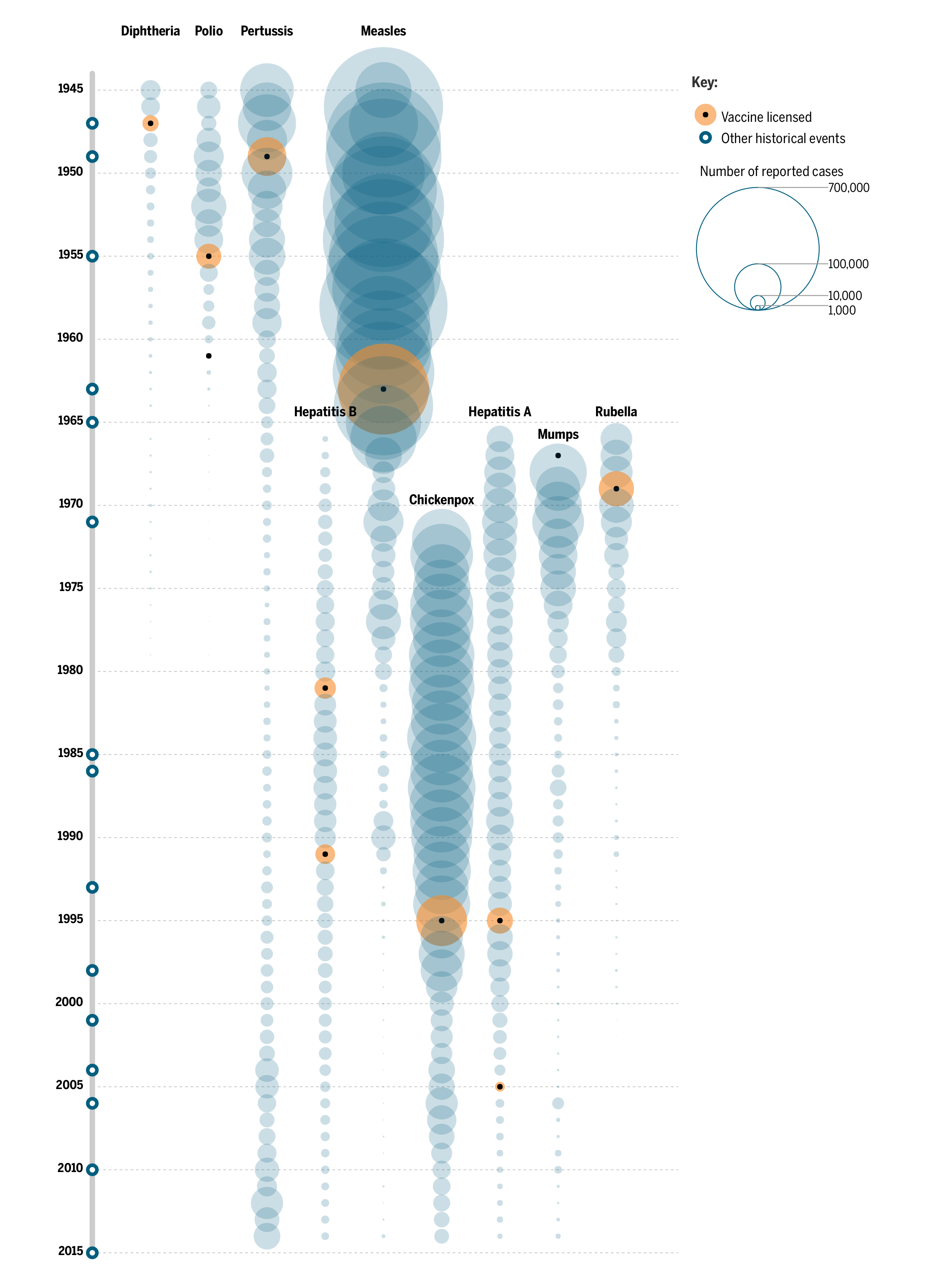
I guess vaccines really do work

The evidence is rather vivid.

Also timely. The Somali community in Minnesota has had an outbreak of 24 cases of measles recently.

Even though the case count has doubled this week, health investigators say the outbreak’s development isn’t presenting them with any surprises. All of the cases involve unvaccinated Somali children from the age of 10 months to 5 years. Fifty percent of the current cases have been hospitalized.

Get those kids their MMRs!

There’s just something off about this photo

Maybe you’ll notice what it is. A hint, if it helps: it’s a group of young Republicans making excuses for Trump. Don’t bother reading the article, though: these students are incredibly vapid (We’ve seen with President Obama there was a lot of trickle-down economics, things just trickling down from Washington, D.C., says one, to give you an idea of the quality of their rationalizations).

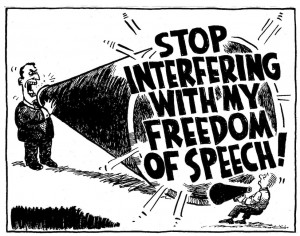
How much free speech do you want for free?

The Free Speech Absolutists are in a tizzy again, because Ann Coulter isn’t going to speak at Berkeley. The usual cliches are being deployed.

“I disapprove of what you say, but I will defend to the death your right to say it.” Very noble.

“If liberty means anything at all, it means the right to tell people what they do not want to hear.” How can anyone oppose liberty?

“One of the problems with defending free speech is you often have to defend people that you find to be outrageous and unpleasant and disgusting.” Definitely the case here.

OK, let’s do it! Absolute, total, complete Free Speech on college campuses! Anyone and everyone can say whatever they want, any time they want, you can have an auditorium of your choice, you can book it for as long as you want!

One catch. You want infinite free speech on campus, you have to give us infinite money, infinite time, infinite resources. Fair enough?

Somehow, I don’t think it’s coming. Especially since the same people who want to see Ann Coulter given a privileged spot on the non-infinite roster of available speaking engagements are the people who under other circumstances complain bitterly about diversity. The rage always seems to rise on behalf of far-right asshats and Nazis, like Coulter or Yiannopoulos, have you noticed?

But even if we could accommodate everyone and every single point of view, the result has a name: it’s called cacophony. I don’t see how that is useful or constructive. Universities have a mission of promoting education; should we, in the name of Free Speech, insist that we also promote ignorance? That would be incoherent.

Universities are not neutral on all issues, nor should they be. We try to encourage open-mindedness; you can’t do that by also opening the door to those who encourage the closing of minds. We try to serve a diverse community; that doesn’t work if you take a disinterested position on purveyors of hate and bigotry. We aim to be selective and teach the best ideas that have the support of an educated, informed group…the antithesis of indiscriminate acceptance of bad, unsupported, rejected falsehoods. Coulter has nothing to contribute.

I know what’s next: Marketplace of ideas! Exposing students to novel points of view! The university should take students out of their comfort zone!

This is true. We do that all the time. I introduced my students to epistasis last week — discomfort and confusion were sown everywhere. It was good. But none of these arguments apply to Ann Coulter.

We, and the students, all know exactly what kind of provocative bullshit she’s going to say. She’s got a syndicated opinion column, she’s written 12 books, she regularly appears on television. I’ve got one of her books, a signed copy, on a shelf in my office because a student brought it back for me. She is a known quantity. That’s why people protest her appearances! They aren’t saying, “please keep me ignorant and unaware of this person and what she has to say”, they are saying “I am already fully aware of Ann Coulter’s perspective, and why are you giving her more money to stand in front of us and babble her hateful drivel?” It’s not as if Ann Coulter has lacked the ability to make her views known.

I mean, if you’re saying we can learn something new and interesting from an Ann Coulter talk, I have to point out that a) she is not a scholar with an insightful, well-researched position, b) we’re already well-steeped in her kind of godawful discourse, and c) I have to question your competence in critically evaluating the world of ideas if you think she has anything worthwhile to contribute.

Further, if you think being a place for education and intelligence and learning means you’re supposed to be wide open and completely neutral on everything, letting every voice through unfiltered, you don’t understand the university. I’ll give you two words: critical analysis. The university will examine your ideas, all right, and it will judge them. Nazis don’t get to come back and demand a do-over and a new grade.

Those protests? Those are students exercising their intelligence, and then going into the public square to exercise their free speech. Why? Did you think free speech meant freedom from criticism?

Bill Nye is doing science just fine

Let’s look at a painfully naïve understanding of science.

Science. The word denotes logic. Reason. Cold, hard facts. Measurable data and observable phenomena. Objectivity.

There is a germ of truth in that: scientists use reason, we hope, to interpret data, “facts”, to arrive at a conclusion, but it’s more complicated than that. Science is a process, not the “cold, hard facts” themselves, and it is a process that is supposed to place a check on the subjectivity of scientists. It’s odd, though, to see science reified to the point that we can assign human values like “objectivity” to it.

I’ll use a couple of examples to explain why that understanding of science is wrong.

This is a fist-sized rock. It’s real. You can measure its dimensions, weigh it, break down its chemical composition, determine its location in space and time. It is a “cold, hard fact”. But as far as science is concerned, it’s not very interesting, and wouldn’t warrant a museum exhibit or a paper being written about it.

Where it gets interesting is in the context of a theory or explanation. This is a rock found in association with a recently excavated mastodon skeleton. What provokes discussion is that it is proposed to have been a hammer used by hominins to help butcher the mastodon.

Is that a “cold, hard fact”?

It’s an explanation that is in dispute. Most anthropologists are dubious. Of course, if it’s just a random, eroded rock it becomes a pointless, unsurprising “fact”, because rocks are mundane and common; if it’s confirmed as a stone tool, it becomes a career-making discovery.

Here’s another “fact”. We have some “measurable data” on the age of the mastodon.

Since 1993, the team, including lead author Steven Holen, have repeatedly tried to date the mastodon fragments, using techniques like carbon-dating. They repeatedly failed. They only succeeded when they turned to uranium-thorium dating, which looks at the decay of two radioactive elements. That gave an age of 130,700 years, give or take 9,400 in either direction.

130,700±9,400. Sure sounds measured and specific and sciencey. It’s also a radical surprise — we don’t think people were living in North America 130,000 years ago! Most anthropologists still don’t. That number is in question.

“There are a small number of uranium-thorium dating specialists who think bone can be dated,” says John Hellstrom from the University of Melbourne—who isn’t one of them. “The problem is that uranium moves around in bone, which invalidates the dating unless you can use a mathematical model of that movement to compensate. That is exactly what the authors of this study have tried to do.” Coupled with other evidence about the surrounding rock layers, the bones are “likely to be something around the age the authors claim,” he says, “but I would not give these dates hard-evidence status. More correctly, they indicate the bones are most likely at least tens of thousands of years in age.”

So what is it? A hammer, or a stone? Is it 130,000 years old, or just something over 10,000 years old?

See, this is where we disagree on the meaning of science. Some want to say it’s about absolute truths, crystal-clear facts laid out in the grand Book of Nature. Some of us think instead about complexity and context, that we’re trying to use evidence to reduce uncertainty and converge on models that best explain reality. The scientific meaning of that rock will change as we gather more evidence, develop more tools for examining it in greater detail, look at other sites of similar age, and work to confirm or disconfirm the idea that it is an ancient hammer. Science will change its interpretation, because it is a process that constantly evaluates and re-evaluates the data, and gathers new data that requires modification of our understanding.

And we’re cool with that. That’s how it’s supposed to work. We don’t deal in absolutes.

I think it’s extraordinarily unlikely that it’s an ancient hammer ten times older than any other artifacts we’ve found on the continent, and I’m OK with that. If more evidence emerges of people living in North America 100,000 years ago — which I wouldn’t bet on occurring — then I’m also OK with that. A good scientist should be a leaf on the wind.

Here’s another example of “measurable data and observable phenomena”: digit length ratios and gender. Women are supposed to have a shorter ring finger, relatively, than men, and subtle variations in the ratio of the length of the ring finger to the index finger are supposed to be indicative of everything from sexual orientation, to sperm count, to aggressiveness, to adult hormone concentrations.

I’ve seen people present that difference as a “cold, hard fact”, too. It’s not. It’s a smear of ratios, with only a rough statistical correlation, and no predictive power at all.

That’s the danger of that quote at the top of this article. When you treat science as a collection of facts, you shut down questioning and exploring the complexity of reality — you short-circuit the process, which means you aren’t doing science any more. That doesn’t mean there are no truths in science — evolution is a fact, as is global climate change — but that those facts are more subtle and fluid than most people imagine, and all of them are provisional and subject to re-evaluation.

But there are even more errors at that link. The purpose of the article is to criticize Bill Nye’s new show, Bill Nye Saves the World, which is fine. There is much to criticize in it — I found it a bit superficial and with a style I find annoying, but the thing is…it’s a show intended to reach people other than already-confirmed science educators like me, so it’s fine that I’m not the target. It’s more than fine — I think diverse approaches are necessary, and applaud the blooming of a thousand flowers, which are not all old, white, and male.

But once again, this critic approaches it with his own flawed biases. He watched the show about “The Sexual Spectrum”, and was horrified.

The only “science” mentioned in the episode about sex comes during the first segment when we are informed about sex chromosomes and their function. If you are XX you are female, and if you are XY you are male. Most all of us learned this in school. But Nye is quick to point out that this binary way of looking at things is outdated. Some people have more than two sex chromosomes. Some have only one. Indeed, he instructs us, people don’t really fall into binary categories of male or female, but exist somewhere on a sexual spectrum with male at one end and female at the other.

That is a very revealing paragraph. What constitutes science, to him? Descriptions of chromosomes. He’s already narrowed the slit he views the world of science through to a remarkable degree, because at the very least his reductionist perspective should include endocrinology, and molecular biology, and cellular responses (I understand how many narrow scientists would exclude such things as psychology and sociology from the domain of science, but at least he’s got to understand that there’s more to sex than just chromosomes, right?).

But then he goes on to get the one allowed piece of science wrong!

If you are XX you are female, and if you are XY you are male.

Nope. Not always true. You could argue that if you’re XX, you won’t be able to produce sperm, and if you’re XY, you won’t be able to produce ova, and that if you’re aneuploid you probably won’t produce either. You can kinda sorta limit your understanding of sex to the gametic definition, but there are far too many circumstances where that is irrelevant.

Then it gets worse.

Nye mentions that there are abnormalities in the sex chromosomes in 1 in 400 pregnancies, which he calls “quite a lot.” Calling it a “spectrum” suggests that most of us would be neither XX or XY but something in between. Generally the extreme ends of the spectrum represent the minority with most people somewhere in the middle.

Yes, 1 in 400 is “quite a lot”. It means that at my university, there are probably about 4 students with a chromosomal abnormality of the sex chromosomes, and that’s probably a low estimate. You probably know people with this kind of variation, but the thing is, it usually doesn’t jump out at you as some easily visible phenotype. A surprising number of people show up at fertility clinics with problems in reproduction that only then are discovered to be due to a sex chromosome abnormality.

But here’s how that writer deals with the “cold, hard fact” that a significant number of people in our population have a variation in chromosome number: by trying to argue that the percentage is even lower, as if that matters, and trivializing the existence of the minority.

The fact that abnormalities occur does not negate the norm or render the idea of the norm meaningless. What is more telling, that 399 out of 400 children are born with typical XX or XY chromosomes or that 1 out of 400 is not?

So…what do you propose we do with that 1 out of 400? Ignore them? Pretend they don’t exist? Allow the self-righteous Norms to persecute them? They are real, they exist, they have just as much right to exist as someone with an XY chromosome pair. Their existence is also not a rebuke to the 399 out of 400. It just is. If you’re a scientist, accept that.

There’s another weird thing in his comments.

Generally the extreme ends of the spectrum represent the minority with most people somewhere in the middle.

He seems to have confused a bell curve with a spectrum. No, that is not true. If it were, since the middle of the visible light spectrum is about 570 nm, rainbows would be mostly yellow-green. That the human sex chromosome distribution is strongly bimodal with large peaks at XX and XY does not mean there cannot be a spectrum of intermediates. But then, his approach to refuting the idea of a spectrum of sexuality is to a) minimize the existence of known intermediates, and b) then pretend that they don’t count as a “spectrum”, because they don’t fit his predefined and incorrect understanding of what a spectrum is.

He ends similarly with his biased interpretation of the purpose of sex.

Surprisingly, for someone who supposedly champions reason, not once in this episode did Nye even raise the question What is sex for? Why are human beings sexual? There is no mention of children; no mention of marriage; no mention of love. No mention, in fact, of any sort of consequences for our sexual behavior. Bill Nye speaks in this episode of how things are “in the real world” but one gets the impression that he hasn’t lived there in quite some time.

Well, gosh. If he’s going to reduce sex to his narrow “scientific” interpretation of “cold, hard facts”, why is he bringing up love and marriage? Yeast have sex, you know, but they tend not to bother with religious rituals, and I rather doubt that love is involved.

If Nye had brought up the topic of the purpose of human sex, I’m sure it would have been even more offensive to a Catholic minister.

Sex is for reproduction.

Sex is for pair-bonding.

Sex is for fun.

Sex is for sale.

Sex is for political alliances.

Sex is for entertainment.

Sex is for demonstrating submission.

Sex is for conformity.

Sex is for psychological release.

Sex is for trading for favors.

Sex is for religious celebrations.

Sex is for dominance displays.

Sex is for consolation.

Sex is for whatever you feel like.

I’ve noticed that the “real world” seems to have a lot of people and behaviors who aren’t exactly like me and mine. That doesn’t offend me at all. I think I’d rather encourage everyone to be themselves and be happy, than to arbitrarily decide to be like me and be miserable (I’m happy as I am, but wouldn’t expect others to be).

Likewise, you don’t have to like Bill Nye’s new show. I’m neither into gay sex or Bill Nye Saves the World, and that’s just fine. If it opens up a better perspective on science than too many self-identified “science” advocates have, then more power to it.

You can fake peer review?

I’d never even considered the possibility of faking peer review, but it turns out that it’s possible, if you have a sufficiently sloppy journal.

It’s possible to fake peer review because authors are often asked to suggest potential reviewers for their own papers. This is done because research subjects are often blindingly niche; a researcher working in a sub-sub-field may be more aware than the journal editor of who is best-placed to assess the work.

But some journals go further and request, or allow, authors to submit the contact details of these potential reviewers. If the editor isn’t aware of the potential for a scam, they then merrily send the requests for review out to fake e-mail addresses, often using the names of actual researchers. And at the other end of the fake e-mail address is someone who’s in on the game and happy to send in a friendly review.

But this makes no sense! At least with real peer review, you’re kinda sorta somewhat guaranteed that two people will read your paper — the reviewers. If you’re using fake peer review, sending your paper to the kind of crappy journal that can allow it, it may mean no one will ever read it. It’s a notch on your CV, I guess.

I do appreciate the error made that allows them to be caught, though.

Fake peer reviewers often “know what a review looks like and know enough to make it look plausible,” said Elizabeth Wager, editor of the journal Research Integrity & Peer Review. But they aren’t always good at faking less obvious quirks of academia: “When a lot of the fake peer reviews first came up, one of the reasons the editors spotted them was that the reviewers responded on time,” Wager told Ars. Reviewers almost always have to be chased, so “this was the red flag. And in a few cases, both the reviews would pop up within a few minutes of each other.”

So now all the fake scientists with the fake reviewer email addresses will know to wait a week or two before sending in their two thumbs up reviews. Or, for added verisimilitude, they’ll hold the reply for six months or more. Now we’ll never catch them!