First class kerblooiee

I can’t say it was successfully completed, though — it was a disaster. We’ve got this fancy video projection system that I already hate, and a step-by-step instructions on the wall are full of errors, and it was a struggle to get connected at all, and then the sound feedback was so horrid that I just gave up and shut it all down and just used words and gestures to communicate. How primitive.

Then I called our tech help to get assistance and get this damned thing working for the next day. I called the number on the wall to the Morris campus help desk, and who picks up? Some helpful guy at the Twin Cities campus, 150 miles away, who wasn’t familiar with our system. He tried to connect me to Morris, but it just looped back to circle around to the Twin Cities again. Three times. Phones, what are they good for anyway?

I am now the proud possessor of a numbered help ticket…to assistance at the Twin Cities. Man, I hope they don’t mind taking a 3 hour drive to help a professor with presentation technology. Otherwise, I’m going to be doing everything with chalk.

So how’s your day going? Getting a good start on the Fall term?

(Also, it’s true: none of the students wear a mask to class. Just me.)

Well, with evidence like that…

Currently, I’m one of the rare weirdos at my university wearing a mask. I’ll be wearing it when I teach. I’m mystified by the reluctance of administrators to follow simple, painless health rules.

Maybe it’s because so many doctors are saying it’s unnecessary, sort of, like this op-ed from a doctor in the Washington Post. She’s abandoning masking her kids for the strangest reasons.

I accept the risk that my kids will probably contract covid-19 this school year, just as they could contract the flu, respiratory syncytial virus and other contagious diseases. As for most Americans, covid in our family will almost certainly be mild; and, like most Americans, we’ve made the decision that following precautions strict enough to prevent the highly contagious BA.5 will be very challenging. Masking has harmed our son’s language development, and limiting both kids’ extracurriculars and social interactions would negatively affect their childhood and hinder my and my husband’s ability to work.

So no more masks because she is resigned to the fact that her kids will get a potentially debilitating, even deadly disease? Meh, if COVID doesn’t kill them, something else will, so don’t bother protecting them. It’ll be challenging, but not challenging enough to make an effort. Besides, it would mean not turning out for baseball or dance class, and most importantly, might hinder Mom & Dad’s ability to work!

Hint: if that’s what worries you, don’t have kids. That’s what kids do.

But then, I was interested in the one concrete thing she claims: Masking has harmed our son’s language development. It’s got a link that I presumed must point to a study demonstrating that specific problem, but no, it’s a news story about growing calls to take masks off children in school. It’s a collection of anecdotes about anti-masking people complaining about how hard it is to keep a mask on their kids, and claiming, like the doctor above that it is hampering their language or even smothering their empathy. It mentions (but does not cite) one German psychiatrist, Manfred Spitzer, who claims all kinds of deleterious consequences of using a mask, but this is also a guy who argues that children should be banned from having a cell phone until they’re 18. And then, this:

Diane Paul is with the American Speech-Language-Hearing Association, the national professional association representing speech therapists. She says referrals of children to speech therapy have increased since the pandemic began.

But, Paul adds, there are no studies to prove — or disprove — that this is due to masking rather than, as she believes, the lingering effects of remote learning and other factors of the pandemic.

Is it hard to keep a kid masked? Sometimes, no denying it. Does it cause little problems? Sure.

But I will deploy my own anecdote to counter that: my granddaughter, Iliana, has been living under the cloud of the pandemic for practically her entire life. She cheerfully puts on a mask — it’s a fashion accessory, it’s the grown-up thing to do — and toddles off to the store with mom and dad without complaint.

Also, she is extremely vocal and will chatter away non-stop, with no real speech impediment.

Checkmate, anti-maskers. Put the damn thing on and do everything you can to protect your child from disease. Why is that even in question?

God-bothering violent fool was temporarily restrained

There’s the question I’d ask.

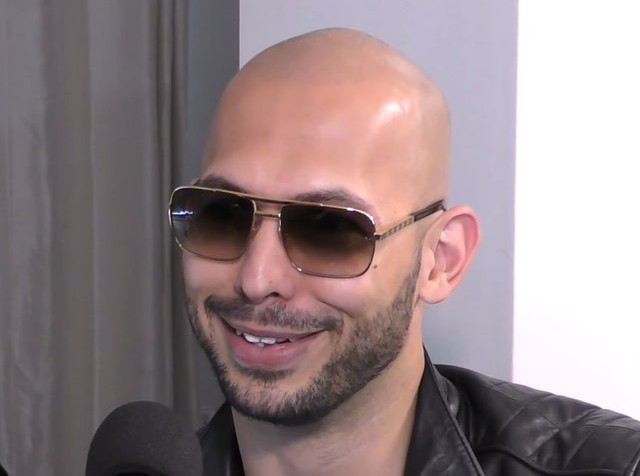
“Andrew Who?” That’s most of what the over-30 crowd said in response to the news that Andrew Tate had been banned from TikTok, Instagram, and Facebook after a spate of negative coverage and increasing concerns from parents and teachers about the TikTok star’s power over his followers. For adults who don’t have teenage sons, the 35-year-old kickboxer-turned-TikTok star was largely unknown, but as anyone in the high school and college age set could tell you, online he was an overnight sensation.

Admittedly, I’d heard of him second hand as a terrible trollish asshole, but I’d never seen any of his videos, so I’m glad Amanda Marcotte explained it. The big question, though, is how does a loudmouthed ignorant jerk become an overnight sensation? Amanda answers that, too.

His popularity is directly attributable to the profit motives of social media companies. As the Guardian demonstrated, if a TikTok user was identified as a teenage male, the service shoveled Tate videos at him at a rapid pace. Until the grown-ups got involved and shut it all down, Tate was a cash cow for TikTok, garnering over 12 billion views for his videos peddling misogyny so vitriolic that one almost has to wonder if he’s joking.

Oh.

I’m sure the executives behind those kinds of decisions are all cowering behind the smokescreen of the mysterious “algorithm”, but they wrote the code for that crap and fed it the data, and you’re telling me that they never noticed that their software was running amok and spewing bad recommendations all over the place? Nah, I don’t believe it. More likely there was the Chinese equivalent of Silicon Valley dudebros enthusiastically priming the system with the kind of videos they like to watch — a mob of James Damore wanna-bes — and it took off in a way that the grown-ups had to notice. They noticed the cash flowing into their pockets, anyway.

Parents, teachers, and anyone who cares about the wellbeing of young people should be worried. It’s not just that Tate was spreading hateful ideas and encouraging violence against women, though that on its own is terrifying enough. It’s that Tate is just the latest example of the way that far-right figures lure in young men by preying on their insecurities. Once the influencers suck in these young men, they start redirecting audience energies towards fascist organizing. Tate is just a piece of a larger puzzle that explains, for instance, how so many otherwise normal young men get wrapped up in groups like the Proud Boys and actions like storming the Capitol on January 6.

The strategy is simple. Far-right online influencers position themselves as “self-help” gurus, ready to offer advice on making money, working out, or, crucially, attracting female attention. But it’s a bait-and-switch. Rather than getting good advice on money or health, audiences often are hit with pitches for cryptocurrency scams or useless-but-expensive supplements. And, even worse, rather than being offered genuine guidance on how to be more appealing to women, they’re encouraged to blame women — and especially feminism — for their dating woes.

There has to be more to it than just a pied piper leading adolescent boys to their doom, though. I was an adolescent boy, once, and I would have been repelled by my fellow boys “saying shit like women are inferior to men, women belong in the kitchen, and refusing to read an article by a female author because women should only be housewives.” I’m not saying I wasn’t impressionable and stupid at a young age, but that there are some kinds of messages I would have rejected instantly. There’s got to be some other ingredient in the recipe to make a right-wing tool.

By the way, Andrew Tate himself might be banned, but TikTok and YouTube are stuffed to the gills with Andrew Tate videos — his acolytes have been busy duplicating and uploading copies of his videos everywhere…and none of the services profiting off them will do a thing about it. Kent Hovind could be sent to prison for ten years, and still his lies continued to proliferate. Expect Tate to thrive in the same virtual way. He’ll be back. Or some vicious little copy of him will be.

This Theme Park Evangelist is not going to be popular with Ken Ham

Answers in Genesis has opened a shiny new attraction, The Journey of the Animals Carousel. It is what it sounds like, a carousel with different fiberglas (I assume) animals that goes around and around. That’s it.

This guy who calls himself the Theme Park Evangelist was very enthused, and called it exciting and unique in a video about it. It’s neither.

While gushing, though, he spilled a lot of the truth about it.

it has not had a lot of people on it yet: correct. It reflects my experience with the place: a whole lot of real estate with what may be, in aggregate, a substantial crowd, but everyone looks lost and scattered in it.

it sounds like Jurassic Park: oh, he noticed. They try very hard to rip off more popular intellectual properties, so they play a Jurassic Park sound-alike theme. There’s no originality here.

it’s got pictures all over the walls: there is no intrinsic didactic purpose to a carousel, but this is supposed to be an evangelical display, so they scatter plaques and posters on the walls to explain Jesus’ purpose. Which get ignored. The inside of the Ark is similar, the fake boat is there to provide convenient wall space for signage.

there’s no AC in here whatsoever: unsurprising. It’s a cheap outfit, all about providing a facade.

I do wonder what Ken Ham will think of this video made with the intent of promoting the Ark Park, but which only succeeds in making it look boring?

Be like Bertrand Russell, not Oswald Mosely

A reader sent me this rather affirming quote from Bertrand Russell, in which he refuses to debate the old fascist, Oswald Mosely.

Dear Sir Oswald,
Thank you for your letters and for your enclosures. I have given some thought to our recent correspondence. It is always difficult to decide on how to respond to people whose ethos is so alien and, in fact, repellent to one’s own. It is not that I take exception to the general points made by you but that every ounce of my energy has been devoted to an active opposition to cruel bigotry, compulsive violence, and the sadistic persecution which has characterised the philosophy and practice of fascism.
I feel obliged to say that the emotional universes we inhabit are so distinct, and in deepest ways opposed, that nothing fruitful or sincere could ever emerge from association between us.
I should like you to understand the intensity of this conviction on my part. It is not out of any attempt to be rude that I say this but because of all that I value in human experience and human achievement.
Yours sincerely,
Bertrand Russell

I note that so many of the debate channels are begging for people to participate, and they usually start with bringing in creationists of flat earthers or such trash to take one side, and can then find others willing to take the reasonable side. It’s not necessarily “cruel bigotry, compulsive violence, and the sadistic persecution” in the beginning, but still, by joining in, you’re contributing to the popularity of pernicious ignorance.

I’ve also noticed that that’s only the start — those channels, in their desperate straining for increasing sensationalism, always seem to end up bringing fascists and racists on. Would you believe I saw a video with Richard Spencer arguing for evolution? That was such a shit show I couldn’t bear it. Bertrand Russell would have wept. That’s the direction these pro-debate groups are going, milking profit off their ability to convince people to step into the ring with some terrible nobody. They are the modern equivalent of bum fights, and they are all morally reprehensible.

Just say no to debates.

TIA

That’s short for “transient ischemic attack” — I had one. It was only 10 minutes of discombobulated confusion that ended quickly and went away, but it landed me in the hospital overnight. I got CAT scans, an MRI, heart monitors, the works, all while I fumed in a hospital bed because I had things to do, since classes start tomorrow.

All is well now, no detectable damage done, this was just a warning. I got a new pill and some dietary restrictions to keep it from happening again.

And now I have to play catch-up. Everything I was going to get done yesterday has to be done now.

Who needs religion when you’ve got these clowns promoting bad ideas?

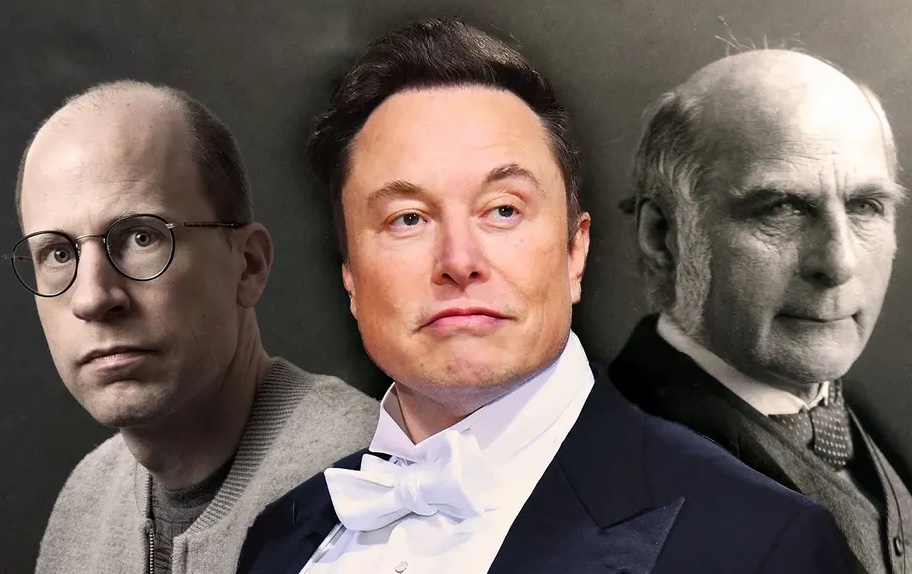
That’s an unholy trinity if ever I saw one: Bostrom, Musk, Galton. They’re all united by terrible, simplistic understanding of genetics and a self-serving philosophy that reinforces their confidence in bad ideas. They are longtermists. Émile Torres explains what that is and why it is bad…although you already knew it had to be bad because of its proponents.

As I have previously written, longtermism is arguably the most influential ideology that few members of the general public have ever heard about. Longtermists have directly influenced reports from the secretary-general of the United Nations; a longtermist is currently running the RAND Corporation; they have the ears of billionaires like Musk; and the so-called Effective Altruism community, which gave rise to the longtermist ideology, has a mind-boggling $46.1 billion in committed funding. Longtermism is everywhere behind the scenes — it has a huge following in the tech sector — and champions of this view are increasingly pulling the strings of both major world governments and the business elite.

But what is longtermism? I have tried to answer that in other articles, and will continue to do so in future ones. A brief description here will have to suffice: Longtermism is a quasi-religious worldview, influenced by transhumanism and utilitarian ethics, which asserts that there could be so many digital people living in vast computer simulations millions or billions of years in the future that one of our most important moral obligations today is to take actions that ensure as many of these digital people come into existence as possible.

In practical terms, that means we must do whatever it takes to survive long enough to colonize space, convert planets into giant computer simulations and create unfathomable numbers of simulated beings. How many simulated beings could there be? According to Nick Bostrom —the Father of longtermism and director of the Future of Humanity Institute — there could be at least 1058 digital people in the future, or a 1 followed by 58 zeros. Others have put forward similar estimates, although as Bostrom wrote in 2003, “what matters … is not the exact numbers but the fact that they are huge.”

They are masters of the silly hypothetical — these are the kind of people who spawned the concept of Roko’s Basilisk, “that an all-powerful artificial intelligence from the future might retroactively punish those who did not help bring about its existence”. It’s “the needs of the many outweigh the needs of the few”, where the “many” are padded with 1058 hypothetical, imaginary people, and you are expected to serve them (or rather, the technocrat billionaire priests who represent them) because they outvote you now.

The longtermists are terrified of something called existential risk, which is anything that they fear would interfere with that progression towards 1058 hardworking capitalist lackeys working for their vision of a Randian paradise. It’s their boogeyman, and it doesn’t have to actually exist. It’s sufficient that they can imagine it and are therefore justified in taking actions here and now, in the real world, to stop their hypothetical obstacle. Anything fits in this paradigm, it doesn’t matter how absurd.

For longtermists, there is nothing worse than succumbing to an existential risk: That would be the ultimate tragedy, since it would keep us from plundering our “cosmic endowment” — resources like stars, planets, asteroids and energy — which many longtermists see as integral to fulfilling our “longterm potential” in the universe.

What sorts of catastrophes would instantiate an existential risk? The obvious ones are nuclear war, global pandemics and runaway climate change. But Bostrom also takes seriously the idea that we already live in a giant computer simulation that could get shut down at any moment (yet another idea that Musk seems to have gotten from Bostrom). Bostrom further lists “dysgenic pressures” as an existential risk, whereby less “intellectually talented” people (those with “lower IQs”) outbreed people with superior intellects.

Dysgenic pressures, the low IQ rabble outbreeding the superior stock…where have I heard this before? Oh, yeah:

This is, of course, straight out of the handbook of eugenics, which should be unsurprising: the term “transhumanism” was popularized in the 20th century by Julian Huxley, who from 1959 to 1962 was the president of the British Eugenics Society. In other words, transhumanism is the child of eugenics, an updated version of the belief that we should use science and technology to improve the “human stock.”

I like the idea of transhumanism, and I think it’s almost inevitable. Of course humanity will change! We are changing! What I don’t like is the idea that we can force that change into a direction of our choosing, or that certain individuals know what direction is best for all of us.

Among the other proponents of this nightmare vision of the future is Robin Hanson, who takes his colonizer status seriously: “Hanson’s plan is to take some contemporary hunter-gatherers — whose populations have been decimated by industrial civilization — and stuff them into bunkers with instructions to rebuild industrial civilization in the event that ours collapses”. Nick Beckstead is another, who argues that saving lives in poor countries may have significantly smaller ripple effects than saving and improving lives in rich countries, … it now seems more plausible to me that saving a life in a rich country is substantially more important than saving a life in a poor country, other things being equal. Or William MacAskill, who thinks that If scientists with Einstein-level research abilities were cloned and trained from an early age, or if human beings were genetically engineered to have greater research abilities, this could compensate for having fewer people overall and thereby sustain technological progress.

Just clone Einstein! Why didn’t anyone else think of that?

Maybe because it is naive, stupid, and ignorant.

MacAskill has been the recipient of a totally uncritical review of his latest book in the Guardian. He’s a philosopher, but you’ll be relieved to know he has come up with a way to end the pandemic.

The good news is that with the threat of an engineered pandemic, which he says is rapidly increasing, he believes there are specific steps that can be taken to avoid a breakout.

“One partial solution I’m excited about is called far ultraviolet C radiation,” he says. “We know that ultraviolet light sterilises the surfaces it hits, but most ultraviolet light harms humans as well. However, there’s a narrow-spectrum far UVC specific type that seems to be safe for humans while still having sterilising properties.”

The cost for a far UVC lightbulb at the moment is about $1,000 (£820) per bulb. But he suggests that with research and development and philanthropic funding, it could come down to $10 or even $1 and could then be made part of building codes. He runs through the scenario with a breezy kind of optimism, but one founded on science-based pragmatism.

You know, UVC, at 200-280nm, is the most energetic form of UV radiation — we don’t get much of it here on planet Earth because it is quickly absorbed by any molecule it touches. It’s busy converting oxygen to ozone as it enters the atmosphere. So sure, yeah, it’s germicidal, and maybe it’s relatively safe for humans because it cooks the outer, dead layers of your epidermis and is absorbed before it can zap living tissue layers, but I don’t think it’s practical (so much for “science-based pragmatism”) in a classroom, for instance. We’re just going to let our kiddos bask in UV radiation for 6 hours a day? How do you know that’s going to be safe in the long term, longtermist?

Quacks have a “breezy kind of optimism”, too, but it’s not a selling point for their nostrums.

If you aren’t convinced yet that longtermism/effective altruism isn’t a poisoned chalice of horrific consequences, look who else likes this idea:

One can begin to see why Elon Musk is a fan of longtermism, or why leading “new atheist” Sam Harris contributed an enthusiastic blurb for MacAskill’s book. As noted elsewhere, Harris is a staunch defender of “Western civilization,” believes that “We are at war with Islam,” has promoted the race science of Charles Murray — including the argument that Black people are less intelligent than white people because of genetic evolution — and has buddied up with far-right figures like Douglas Murray, whose books include “The Strange Death of Europe: Immigration, Identity, Islam.”

Yeah, NO.

How much walkin’ around data do you carry?

I was getting ready for meeting with students today, getting out of the ragged summer clothes into slightly more formal apparel, when I noticed something I take for granted: my pocket data. You’ve all got that, right? That little collection of tiny flash drives that you have handy for on the fly data transfers? I tallied mine up.

In my pocket I have a 256GB USB device.

I also have a card wallet with:

  • 3 64Gb SD cards
  • 2 64GB micro SD cards
  • 1 128GB SD card
  • 1 16GB SD card (it came with my camera)

That’s a total of 720GB just jingling like pocket change as a I walk around. I don’t keep anything particularly valuable on any of them, they’re mostly there in case I need to shuffle around some video or images or a class presentation — all the valuable stuff is on the home computer storage (500GB internal ss drive, a 4TB and 2TB external drive) and backed up in a few places.

But it got me thinking how insanely rich I am with data storage…and some of you might have more. When I got my first home computer back in 1979, we measured everything in K, and floppies didn’t fit in your pocket. Then in the late 80s, it went up to M — my first hard drive (don’t ask how much it cost) had a 5 megabyte capacity, and I was stunned with the amount of space I had. Now everything is in Gs, with a few Ts in there, and eventually we’ll all be hauling multiple terabytes of casual storage around.

What are we going to do with it all?

Is polarization really such a bad thing?

Conservatives seem to think it’s grossly unfair that Nearly half of college students wouldn’t “dorm across the aisle”. Look! Republican students are more willing to share a room with a Democrat.

This being Axios, no one thinks to wonder why. Have they considered the possibility that so many far right Republicans have proven themselves to be violent and bigoted? As a college freshman, I had a roommate who was racist and thoroughly unpleasant…am I supposed to have signed up for another semester with him? I don’t think so.

And likewise, what’s with this expectation that we ought to tolerate a Republican as a marriage partner?

46% said they would probably/definitely not room with someone who supported the opposing presidential candidate in 2020 (62% of Dems, 28% of GOP).

53% said they would probably/definitely not go on a date with someone who supported the other side in 2020.
63% said they would probably/definitely not marry someone who supported the other 2020 candidate.

Madness. You should look for compatibility in a partner, and there’s nothing wrong with that. And yet, conservatives are outraged that progressives won’t have sex with them — preferably via the straitjacket of “enforced monogamy” — as if intimacy is supposed to be delivered on demand to anyone who asks for it. The fact that liberal men would rather poke Ann Coulter with a stick, or that liberal women are creeped out by Ben Shapiro, is a sign that liberals are really the intolerant ones. Amanda Marcotte understands what’s really going on.

On the right, there was a lot of trumpeting how this supposedly proves the left are the ones who are “really” intolerant. Radio talker Matt Murphy whined that liberals “don’t believe in our republic cannot abide people who think differently than them.” As if not getting to have sex with or go to parties with liberals is exactly the same as having your basic rights as a citizen stripped from you. “This doesn’t bode well,” complained GOP lawyer and ABC commentator Sarah Isgur, who previously defended the Trump administration’s policy of separating families at the U.S.-Mexico border as a former spokesperson in the Justice Department.

“My most fascinating friendships have always come from ‘the other side,'” MSNBC host Joe Scarborough tweeted, noting that, as a Republican, he “always benefitted” from those conversations. As many people pointed out in response, however, that a Republican like Scarborough gained from friendships with people like “John Lewis, Elijah Cummings, Ron Dellums, and Maxine Waters” doesn’t mean the reverse is true. And that is most likely what this polling is picking up.

I think most liberals would consider a relationship to be a mutual partnership, where both gain reciprocally, rather than something where one side benefits. You enter into it by mutual agreement, not because you are ordered to do so.

Don’t blame the liberals. This is all on the conservatives, who have all been racing to be extreme authoritarian assholes with a sense of entitlement to your room, your life, and your sex, who no one wants to fuck.