No thagomizers.
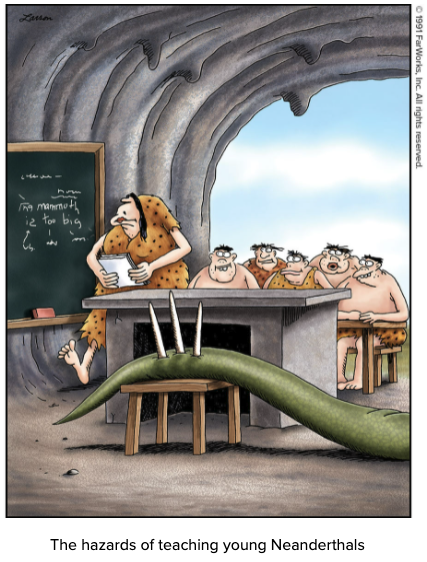
It’s still early in the 21st century, the students will figure out a way eventually.

No thagomizers.
It’s still early in the 21st century, the students will figure out a way eventually.

Time to explain why Boghossian’s resignation is a) not newsworthy, and b) good and appropriate.


I guess the Aubrey de Grey affair, in which he was accused of sexual harrasment and lost his job, has been concluded with the release of the independent investigation’s report. De Grey has his own peculiar twist on it.
Now that the relevant portion of the independent investigator’s work is finished, and especially because her report quoted the full text of the email in question, I am at last in a position to apologise – which I gladly do publicly – to Laura Deming for my email to her in 2012, about which I had forgotten until the investigator reminded me of it. As STAT reported three weeks ago, I consider that that email would have been a mistake even if she had been five years older, because we were in a mentor-mentee relationship. I catgorically deny Laura’s current (though, as she made clear on August 10th, not contemporaneous) view, shared by the investigator, that I sent that email with improper intent – but my email does not become OK just because improper intent is now being misread into it. It’s also no excuse that I had interpreted the email from Laura to which I was replying as light-hearted, rather than as expressing “concerns about mentors doing stuff like that” (as she wrote on August 10th), and allowed myself to be emboldened by it. Laura: I unreservedly apologise.
So only now can he apologize, after the investigators published his offensive email in full. If they hadn’t published it, he wouldn’t need to apologize? It’s nice that he apologizes now, but notice that he says nothing about the final results of the independent investigation, which found him guilty, guilty, guilty. It’s pretty scathing, actually, but I guess he’s in denial.
After a thorough review of the evidence, we make the following findings by a preponderance of the evidence.
First, we find Dr. de Grey purposefully and knowingly disregarded multiple directives (from the acting Executive Director, this investigator, and his own counsel) to retain the confidentiality of the investigation. In his interview, Dr. de Grey not only admitted to this conduct, he made unreasonable efforts to justify it (e.g., downplaying it as a “transgression” that “worked.”)
Second we find Dr. de Grey misrepresented facts to the Recipient. He suggested the investigation concluded Complainant #2’s claims were “100 percent fictitious.” Yet when pressed as to the source of that information, Dr. de Grey acknowledged he extrapolated this interpretation from Fabiny’s comment that he was going to be reinstated. We note in a Facebook post published after his termination on August 21, 2021, Dr. de Grey seemingly acknowledged taking liberty with Fabiny’s comment, characterizing his interpretation of her comment as “exaggerated.” We also note that after Dr. de Grey learned the following day that the investigation had in fact sustained Complainant #2’s claims against him, he made no efforts to correct his earlier misstatement, either to the Recipient or to his Facebook audience (having reposted on August 21, 2021 his original message referring to the claims as “100 percent fictitious.”)
Third, because of the public nature in which this investigation is being played out – including Dr. de Grey’s continued social media comments and his supporters’ prolific responses – we find it reasonable that key witnesses with material information (perhaps even more complainants), would be deterred and intimidated from meeting with the Firm. This deterrence and intimidation could seriously compromise the Firm’s ability to conduct a thorough investigation into ongoing sexual harassment claims, as the Board directed we undertake.
Fourth and similarly, Dr. de Grey’s message to the Recipient – incorrectly declaring the investigation was concluded in his favor – suggests he was privy to details of the investigation before others. Both aspects – that he had advance notice and that it was contrary to the actual findings – inaccurately portray the Firm as lacking impartiality and independence to potential witnesses and parties.
Fifth, we find Complainant #2 reasonably interpreted Dr. de Grey’s message to the Recipient to be a threat to her career. She heard from the Recipient that Dr. de Grey referenced her “career will be over soon.” This is consistent with his actual email. It is undisputed Dr. de Grey made the following statement, suggesting he alone could save her career, but only if she did his bidding: “I find [Complainant #2’s] career is absolutely over as things stand, and the only reason it actually isn’t is because I am a man of honour who refuses to let somebody (especially a meteoric rising star) be burned at the stake while an actual villian gets away scot free and is thereby emboldened.” While Dr. de Grey characterized his proposed course of action in the email to the Recipient as “rescuing” Complainant #2, we do not find this plausible, given the language he used. Dr. de Grey’s message to the Recipient did exactly what the confidentiality admonitions were designed to prevent – attempt to interfere with an investigation by influencing a party’s allegations. Dr. de Grey’s ill-advised message to the Recipient was in fact conveyed to Complainant #2. Indeed, Dr. de Grey intended this course of action by stating, “And you need to tell her so, as probably only you can. Go to it.”
Next, we find Dr. de Grey’s message an attempt to distract from his own conduct – part of which he admitted (sending a sexual message to underage mentee Complainant #1) – and to point to another individual as the “actual villain.” Regardless of anyone else’s motives or conduct in pursuing an investigation, the fact remains that Dr. de Grey is responsible for his own conduct, regardless of how it came to light.
Finally, we find the fact that Dr. de Grey sent the emails to the Recipient from his SRF email account was yet another attempt to unduly influence, at best, and threaten, at worst, the Recipient into taking the actions Dr. de Grey wanted, namely putting pressure on both the Recipient and Complainant #2. In this regard, we note Dr. de Grey’s subject line to the Recipient – “You will thank me.” – suggests Dr. de Grey was doing him a favor by asking him to put pressure on Complainant #2. This can only be interpreted as a demand the Recipient interfere with a confidential investigation and unduly influence a witness.
In closure, Dr. de Grey’s unapologetic interference with the investigation by reaching out to a witness through a third party, and repeatedly posting about the investigation, has generated angry attacks on the accusers and perpetuated misinformation (i.e., that he has been exonerated). This compromises the Firm’s ability to retain credibility and trust with witnesses. We find his attempt to influence a party may chill, and likely has chilled, others from coming forward; was an effort to alter and sidetrack the investigation; and, was reasonably threatening to a party.
De Grey’s response to all that was to announce, with a sigh of relief, that he can finally apologize to one of his accusers for one thing, while denying everything else, in spite of the fact that the investigation found him clearly in the wrong on everything. Furthermore, the investigators noticed all the squirrely stuff he was doing on social media to mislead and lie…it was danged obvious to everyone, except of course, to his cult-like fans who truly believe that Aubrey de Grey is going to cure death.

Yesterday was Mary’s birthday. I performed the ritual.
“What can I get you?” I asked.
“Nothing.”
“Can I take you out for a nice dinner?”
“No.”
“Can I cook you a nice dinner? Whatever you’d like.”
“There’s some acorn squash we need to use up.”
“That’s it? Just bake some squash?”
“Yes.”
So I obeyed. Nothing special. One squash, baked. Done.
Today is the day after her birthday. The geas is lifted, I can do whatever I want. So tonight I whipped up some Cod Provençal: cod cooked in fresh tomatoes from her garden, onions, garlic, olives, mushrooms, corn, and lots of basil. Don’t tell her it was almost as easy as the squash.

See what happens when you don’t give me good ideas?

We’re getting ready for Halloween.

I’ve got more spiders coming soon!

I told you not to read that book, but a bunch of you did, and now look what’s emerging from the depths.

As we all know, from the teleological impulse, all lineages are destined to converge on the truest, most godlike form, therefore someday your descendants will all look like that, because you just had to read the damned book.

I knew it. For years I’ve seen the “dinosauroid” trotted out as an illustration of how dinosaurs could have evolved, if only that little space rock hadn’t messed up their progression. To me, it was symptomatic of a deplorable strain of teleological thinking in biology, and I thought it was totally bogus from the first glance.

Why would anyone think a coelurosaur would gradually converge on an anthropoid form? So much of our morphology is a consequence of variations in our ancestors — ancestors that would not have been shared with dinosaurs. Yet here is this imaginary beast with ape-like details. How would it have acquired those?
Darren Naish has tracked down the history of this bizarre mannequin, and I am totally not surprised: we can blame Teilhard de Chardin, who had a pernicious influence on Dale Russell, the scientist who built it.
I’m confident that another factor contributed to the construction of the dinosauroid, but it’s something more controversial than everything discussed so far and is also harder to establish with any degree of certainty. I think that Dale Russell’s specific personal views on the nature of the universe and the position of humans within it played a role in everything that happened.
We know from the recollections of his colleagues that Dale Russell was religious, with an active spiritual life committed to Catholicism. We also know from statements made by Robert Bakker and others who discussed religion with him that Russell was fond of the ideas of Jesuit priest and palaeontologist Teilhard de Chardin (Campagna 2001, p. 7, Noble 2016, p. 41). Chardin (1959) argued for a directionality in evolution, that humans represent a point close to (but not at) the pinnacle of evolution, and that a humanoid stage was inevitable for those organisms approaching evolution’s final stage. Add to this the fact that Russell stated in correspondence his idea that “the human form might be a natural target for selective pressures” (as Russell wrote to anthropologist Noel Boaz in August 1984), and his implication – made several times in interview – that humans (and, by extension, other humanoids) are not simply additional animals (Russell 1987, p. 130, Psihoyos & Knoebber 1994, p. 252). We’re talking here about what’s been called the ‘inevitable humanoid proposition’, a concept often linked both to religiosity and to an anthropocentric view of the universe.
My personal opinion is that the dinosauroid was not, then, the honest experiment in speculative evolution that some authors have implied (e.g., Losos 2017; reviewed here at TetZoo). Instead, Russell had already decided that he wanted to showcase the possibility that human-shaped non-humans were ‘inevitable’, and that they might have a special place in the design of the universe.
Do not, under any circumstances, ever try to read Teilhard de Chardin’s Phenomenon of Man. I did, and it was the closest real-world experience to the horror movie trope of reading the Necronomicon aloud in a cabin in the woods. It contains damnable prose and arcane leaps of logic that defy rational thought. It is infuriatingly stupid.
You’re all going to try and read it now, aren’t you?
Before you throw yourself into that pit of madness, at least read Peter Medawar’s review. Be forewarned. Make sure you have a chainsaw and a shotgun near at hand.
What’s weird, though, is how so many discussions of this idea are gentle, almost apologetic in addressing Teilhard de Chardin’s and Dale Russell’s strange religious bias. Don’t take this stuff seriously — it’s Time Cube level of wrong, pure garbage in defiance of the scientific consensus with no evidence to support their interpretation. Worse, that delicacy in treating the teleological imperative has had some embarrassing influence — Carl Sagan’s worst book, The Dragons of Eden, was rife with it.
Also infected with the Teilhard de Chardin disease: Simon Conway Morris. The tentacles of that mad Frenchman extend everywhere, bringing insanity to all who view them.

It’s only a bit over 150 years too late, but I’ll take it — deserved worse. It’s also a barbaric punishment, but it’s only being done in effigy, so you can’t complain too much.

He does have his defenders, though, but it’s too bad that they include a certain stupid ex-president who declares Lee the greatest strategist of them all
, except for Gettysburg
. Wasn’t Gettysburg ultimately a tactical failure? And wasn’t the greater strategic failure getting involved in the Civil War at all? I’d have to say that Grant totally out-strategized Lee.

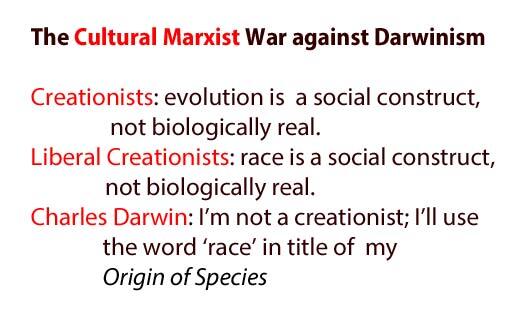
The Cultural Marxist War against Darwinism
Creationists: evolution is a social construct, not biologically real.
Liberal Creationists: race is a social construct, not biologically real.
Charles Darwin: I’m not a creationist: I’ll use the word ‘race’ in title of my Origin of Species
Been there, been accused of that. It’s such a familiar story I’m surprised it was worth a story in Religion & Politics. “Creationist!” is an extremely common accusation against anyone who disagrees with racists — they sincerely believe that their bigotry is as well supported by the science as evolution, which tells you right there how well informed they are about evolution and racism. So, yeah, I get a lot of this crap in my inbox.
Mark Looy, one of the cofounders of Answers in Genesis (perhaps the largest creationist organization in the world today), acknowledges that viewpoint diversity, stating “creationism is a very broad term with multiple definitions.”
But it would have to get a lot broader to include someone like Holly Dunsworth, a biological anthropologist at the University of Rhode Island who studies human evolution—and a self-described atheist. Nonetheless, earlier this year, Dunsworth and other scientists were somewhat surprisingly described as “cognitive creationists” in the first article published by the Journal of Controversial Ideas, a new publication that accepts anonymous peer-reviewed research on contentious ideas. The piece on creationism, credited to the pseudonym “Shuichi Tezuka,” targets these scientists’ criticisms of recent publications claiming that IQ is genetically determined and that different nationalities or ethnicities score differently on IQ measurements of mental abilities. What Dunsworth and other critics call a dangerous reprise of racist (and often sexist) tropes corrupting scientific research, Tezuka likens to the creationist practice of rejecting scientific truths because the results are morally or ideologically distasteful.
Happens all the time. I understand what they’re trying to do, ‘“creationism” is being used to describe and delegitimate arguments against a reductive genetic definition of race and identity’, but it’s not very effective.
In both these cases—of intelligence testing and Indigenous identity—“creationism” is being used to describe and delegitimate arguments against a reductive genetic definition of race and identity. While few scientists would claim that genetics play no role whatsoever in one’s identity, the idea that cultural or ethnic identity can be assessed solely or primarily by DNA is frequently criticized. Dunsworth pointed me to a recent article she co-authored arguing against the idea that race is a primarily biologically constructed. “‘Race’ is far more than ancestral/inherited DNA and is far more than geographically patterned morphological variation like skin color,” she said via email. It’s only by treating race as a genetic/biological category—and ignoring the role that history, culture, law, and environment play in how ideas of race are used—that make possible claims that intelligence can be genetically correlated with certain ethnic types or that authentic Indigenous identity can be found though a blood test.
The catch is they’re trying to dishonestly accuse a critic of a belief they definitely do not hold, so it undermines any trust we might have in their honesty, and turns the debate into a joke full of their lies.

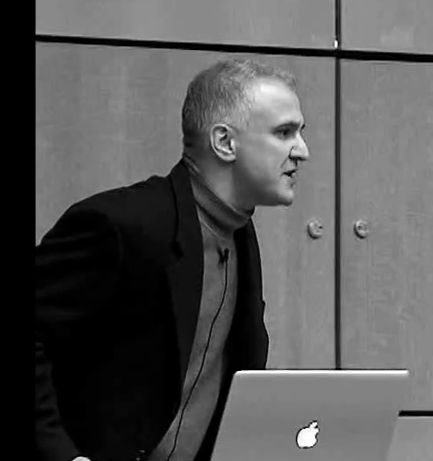
The infamous ignoramus Peter Boghossian has resigned from Portland State University, and of course he does it with a long-winded tedious whine about how he was oppressed and his free speech abridged. You can read the whole thing if you want in an appropriate venue, the Daily Mail. I just want to single out one misbegotten complaint.
Over the last decade, it has been my privilege to teach at the university. My specialties are critical thinking, ethics and the Socratic method, and I teach classes like Science and Pseudoscience and The Philosophy of Education. But in addition to exploring classic philosophers and traditional texts, I’ve invited a wide range of guest lecturers to address my classes, from Flat-Earthers to Christian apologists to global climate skeptics to Occupy Wall Street advocates. I’m proud of my work.
…
I never once believed — nor do I now — that the purpose of instruction was to lead my students to a particular conclusion. Rather, I sought to create the conditions for rigorous thought; to help them gain the tools to hunt and furrow for their own conclusions. This is why I became a teacher and why I love teaching.
Oh, bullshit. If you want to expose them to the full range of ideas, from the sublime to the ridiculous, just tell ’em to go browse Facebook. This is not how teaching works. Part of what you must do is act as an informed guide, who can show students the best ideas and help them to understand why they are good. What do they learn from bringing in a flat-earther? Nothing of value, except that they should follow the example of their teacher and accommodate madness and stupidity. I would never, for instance, give a creationist free reign in one of my classes to explain his bad ideas; I will instead use that time more productively to explain why those ideas are bad. If a student wants to discuss such ideas with me, I’m happy to do so and will treat them respectfully, but I will not and should not give such claims the benefit of my attention without ripping them to shreds.
If a student were to leave my classes without having been led to the knowledge that informs us about the shape of the world, the age of the Earth, or the patterns of our changing climate, I would be a bad teacher. Like Boghossian. But then, maybe he’s one of those namby-pamby feels-over-facts guys who doesn’t believe that some ideas are correct and others are not.
Now we just have to wait for the other shoe to drop. I don’t think he would have quit without some fall-back position already lined up. Which conservative think-tank will be paying his salary in the future, do you think?
