
Bugsnax’s twofold queerness

cn: no spoilers in the OP, but spoilers permitted in comments

Over break, I tried playing Bugsnax, a video game about catching snack-themed bug monsters. I expected a light and colorful game, but I got something more story-oriented, and way more queer. And that’s not just me reading into it–basically anyone who plays through the game will know that there are not one but two same-sex couples in its cast of 13. Fewer players realize this, but there is also a nonbinary character.
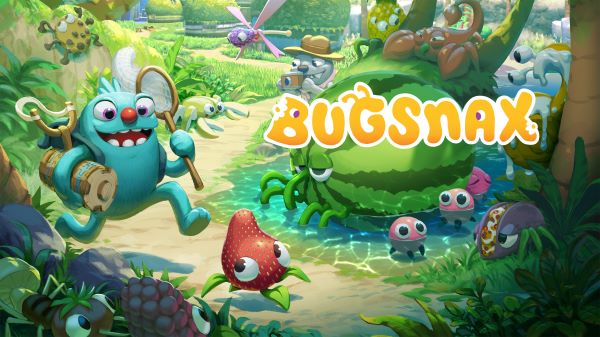
 

bugsnax cover art

Source: Young Horses

My attitude towards queerness in video games is as a nice-to-have. I don’t really expect it, and I expect little out of it. Bugsnax having many queer characters is a pleasant surprise. But I read webcomics whose casts are 100% queer, so for me the novelty is only in the medium, and not in the queerness itself.

What really pleased me about Bugsnax is that it is an excellent example of what I’m calling twofold queer representation. It has queer characters… and queer-coded themes. The queer themes are never explicitly labeled as queer, and have no direct connection to the queerness of the characters. Nonetheless, the significant presence of queer characters cues the player to look for queer interpretations of the rest of the story–and find them.

[Read more…]

Two theses on queer readings

This was crossposted to my other blog, The Asexual Agenda, under the title “The essentiality of ace readings“.

As part of my usual youtube browsing, I was checking out a games criticism channel, Transparency, and I watched a video titled “Queering Animal Crossing | A Helpful Guide to Queer Readings” (29 minutes). I don’t think it says anything truly unusual, it’s just an entertaining and accessible introduction to the topic.

Videos like this are useful for me to reflect on my own views, and crystallize disagreements. So here I present two theses about queer readings. First, I assert that queer readings are not always political, but also form an ordinary part of how queer people consume media. Second, I argue that asexual readings are an essential concept that should be introduced as part of basic education about queer readings.

Queer readings as ordinary

The Transparency video does a good job of establishing the point that queer readings are not “alternative” interpretations of texts. Rather, they show how queerness–which exists all over the place in the real world–has also slipped into our fiction, as much as heteronormativity may try to stop it or ignore it. Queer readings do not require any “proof” of queerness, after all this is fiction and there is no underlying truth of the matter. Nor do queer readings require any knowledge or theorizing about the intentions of the creators. Queer readings are just about recognizing hints and potentialities that exist in our fiction. Straight audiences regularly interpret knowing glances between m/f pairs as a code for romance, we can very well do the same for queer pairings.

[Read more…]

Retrospective: Doomsday Book

Doomsday Book is a science fiction novel about an epidemic, published in 1992, and read by me in 2015. At the time, I gave it 1/5 stars. Today, it’s the most directly relevant work of fiction I have ever consumed.

This isn’t a proper review, because I can only remember so much from a book I read five years ago, and which I didn’t even like. I’m reconstructing some of my memory based on the Wikipedia summary, and based on the two paragraphs of private notes I wrote for myself.

Doomsday Book is about history grad student (?) Kivrin, in a world where historians perform field work by traveling back in time. Time travel is underpowered here—the timeline simply won’t allow people to travel to a point in time if it would change history. And rather than zipping back and forth through time, Kivrin is preparing for a single trip to medieval England, which is the culmination of her PhD.

[Read more…]

My guide to drone music

In lieu of my annual music post (my antidote to Christmas music), I’d like to dedicate a post to the drone genre. I will discuss the challenges of drone, how to appreciate it, and share some of my favorite examples, with an eye towards newcomers. Readers are also welcome to skip the discussion and just try the music.

How to appreciate drone

Drones—sustained tones—are one of the oldest musical elements, and appear in all sorts of music. However the present focus is the modern genre of drone, a subgenre of ambient music that prominently features drones. We should also consider adjacent genres such as drone metal, post rock, and shoe gaze; and examples of drone in (20th century) classical music and film soundtracks.

Some music can be difficult because it’s too complex to figure out, but drone tends to be difficult because it seems there is nothing to figure out. It feels like it’s either one note played for ten minutes, or a single phrase repeated ad nauseum for ten minutes. Do fans of drone just like keeping it simple stupid, or is there some hidden complexity you’re missing? Answer: it’s both.

[Read more…]

Against the liberation/assimilation lens

Liberationism vs assimilationism is a historically important dichotomy, which dates back to the gay liberation movement of the 1960s.  It put a name to certain political disagreements among LGBT/queer people that persist to the present day.  That said, in the present day, liberationism/assimilationism is less relevant, just one lens of many that we may apply whenever it seems particularly apt (e.g.).  And often, when we do talk about the dichotomy, we feel the need to re-explain what the dichotomy even is.

Ahem…  In a contemporary context, assimiliationism refers to the desire to blend in with mainstream culture, to emphasize “we’re the same”; while liberationism refers to a desire for more radical change.  A somewhat longer explanation is available here.

A recent video by Rowan Ellis revives the liberation/assimilation dichotomy for the purpose of understanding different forms of queer representation.  I hate it, and it illustrates how the liberation/assimilation lens can go so wrong.

The primary problem, is that “liberation vs assimilation” has largely been collapsed into “good vs bad”, while explicitly denying it.  Rowan Ellis says,

It’s not necessarily that assimilation films are bad and liberation films are good.  […] In the way in which it deals with LGBT stories and identities, for me, the liberation stuff comes up top. (14:23)

[Read more…]

Webcomics I’ve read to completion

I’m really into webcomics.  I like the art, the writing, the humor.  I appreciate the low barrier to entry, which means all the stuff that people complain there isn’t enough of in movies or TV (like queer representation) is available in webcomics in abundance.  And I like how a good webcomic develops its story at a trickle pace over the course of many years.

Of course, the problem is that sometimes a webcomic stops before finishing, or I stop reading before it finishes.  When a webcomic is done well, the journey is worthwhile even if you don’t make it to the end.  But still… it’s nice to make it to the end.

I have a list of webcomics that I read to completion, and I’d like to share them.  Most of these, I read many years ago, so I won’t remember all the details, but the fact that I can say anything is a testament to their value.  And if you’d like to relive the experience of getting webcomic updates at a trickle pace, I recommend Comic Rocket, which keeps bookmarks, and generates customizable rss feeds.

[Read more…]

What drives walking sims?

“Walking simulator” was originally a derisive term, coined in the days of gamergate, referring to a set of minimalist games where you simply walked around 3D environments. By now, a lot more games in this category have appeared, and while not universally beloved, they’re more or less accepted as a part of the video game landscape. And I find that I rather like this genre myself. I’ve played quite a number of walking simulators over the years, and still others I’ve watched on video or have seen critical discussions.

The question I’d like to ask today is, what is the appeal of walking simulators? What drives them?

I am thinking in analogy to drone and ambient music, which strips away many of the components that people conventionally enjoy in music. But what motivates drone/ambient music varies greatly depending on the work. Contrast Brian Eno’s Music for Airports, which wants to blend into the background, with Sunn O)))’s Monoliths and Dimensions, which wants to mesmerize. Walking sims are also a genre full of contrasts, and I’d like to identify several different goals that they may have.

[Read more…]