This figure, used by ScienceDaily, is totally irrelevant to the topic and has a caption that doubles-down on the nonsensical part of the article: “The human brain may actually be two ancient nervous systems fused into one, a discovery that could transform how scientists study brain development and devastating neurological diseases.”
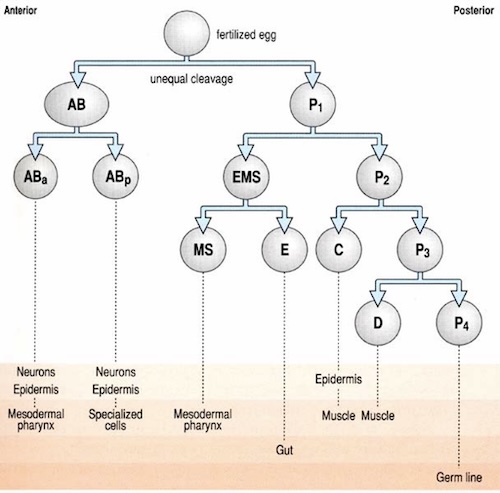
I guess I should address this, since so many people are emailing me about it. There is an article titled “Stanford scientists discover the human brain may actually be two separate organs”, which takes a basic reality of developmental biology and blows it up with a ridiculous conclusion. No, your brain is not two separate organs, any more than your liver is multiple organs because it contains multiple tissue types — that, for instance, there are different lineages of hepatic progenitor cells in liver differentiation that produce hepatocytes and cholangiocytes. We take this for granted; development is a hierarchical, branching process, and so yeah, we see sequential separation of developmental lineages. It’s to be expected! We don’t promote the work by claiming various organs are in fact multiple organs.
The sensationalist spin is being placed on competent work that traces markers that distinguish regions of a single organ, markers that have a deep history in both development and evolution. Calm down. This is a routine observation that does have some practical uses.
The weird twist was put on it by the Stanford press office and ScienceDaily. The actual paper (which is fine) it is based on is titled “Two parallel neural ectoderm progenitors contribute to the developing brain”, a much more sensible and accurate title, although it also claims that the brain is a “composite organ”, which is a little bit silly. Every organ is a composite organ in some sense. We are a multicellular gemisch with some regional organization.
Development is hierarchical and sequential. It’s disappointing that this isn’t taught in grade school.