Welp, yeah, that convinced me

Those ghosthunter shows are all looking for evidence of an afterlife and of spirits hanging about to communicate with us, and finally a group of ghosthunters in Oklahoma have found it. They’ve been exploring a decrepit basement in an abandoned urban building — you know, the kind of place where teenagers might hang out and drink and get into mischief — and they left up a chalkboard, and when they weren’t around, messages appeared on it. Deep, cryptic, strange messages, so they must be from ghosties.

The lanky cowboy with the slow drawl is totally mystified by the paranormal message with its deep historical resonance scrawled on the board.

“THE CAKE IS A LIE.”

So profound. So inexplicable and enigmatic. I wonder what it means? Perhaps one of you will have insight into this perplexing arcane sign from another world.

Let’s simplify time zones!

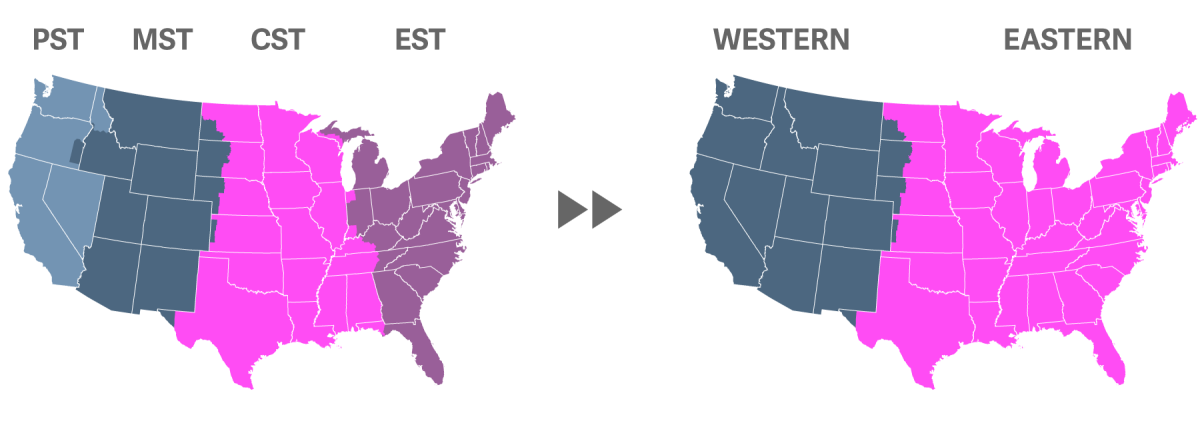
I like this idea: end the fall and spring clock jiggering, consolidate time zones, and just have two fixed time zones in the continental US.

It would seem to be more efficient to do away with the practice altogether. The actual energy savings are minimal, if they exist at all. Frequent and uncoordinated time changes cause confusion, undermining economic efficiency. There’s evidence that regularly changing sleep cycles, associated with daylight saving, lowers productivity and increases heart attacks. Being out of sync with European time changes was projected to cost the airline industry $147 million a year in travel disruptions. But I propose we not only end Daylight Saving, but also take it one step further.

proposed-time-zones

But then, that’s easy for me to say: my job is all done under artificial lighting anyway. But when I look at what, for instance, farmers are doing, they don’t seem to care about the clock that much either, and the cows and pigs sure don’t care much about what the hands on the clock say.

In case you haven’t got the hint yet, you were supposed to turn your clock back last night. Or if you’re living in the digital age anyway, your computers all automatically adjusted everything for you.

The Carnival of Evolution #65: Horror Host Edition

I prepared for the Carnival of Evolution late at night over the last several days, bracketing the Halloween holiday, and coupled them with my traditional custom of watching horror movies. It wasn’t a good match. The evolutionary stories were far more frightening!

Terrifying complexity!

Let us consider the mind-blasting madness of dealing with tens of thousands of genes interacting epistatically with one another.

The second problem is that while it may in theory be possible to assign fitnesses to individual alleles at individual loci, there are some 25,000 loci in humans, which seems to be about right for most organisms.  Reducing selection coefficients to individual loci requires solving a problem in 25,000 unknowns.  This problem is exacerbated by the fact that the genes are linked, and in linkage disequilibrium.  In short it is what is called an NP hard problem. 

Or the prospect of having to solve math problems in biology. I have made students weep by doing that.

You’ve got two copies of each chromosome, having received one copy of each chromosome from your mother and one chromosome from your father (this is true for your autosomes, but not for your X, Y, and mitochondria). When it comes time to pass on your DNA to the next generation, you in turn package up a single copy of each chromosome into a sperm/egg. Sometimes you pass on either mum or dad’s copy of a chromosome at random, often though you pass on a mosaic consisting of the two chromosomes (a recombinant chromosome).

The question came up (via a article by Razib Khan) of what is the probability that by chance your parent entirely failed to pass any autosomal DNA from a grandparent to you (e.g. your father fails to pass on any autosomal genome from your paternal grandfather)?

Wait. How many different ways can you draw a tree?

These days, there are many unrooted affinity-type networks used to display conflicting phylogenetic signals. There are many different methods available, although the various forms of splits graphs seem to dominate, especially NeighborNet and Consensus Networks (for species-level data), and Reduced Median Networks and Median Joining Networks (for population-level data). However, phylogeneticists are interested in genealogies, not just data displays.

Oh, my god. This person is inciting more math!

So, folks: that is what we need! More spatiotemporally replicated studies of selection in naturally occurring populations – particularly studies NOT near 40°N latitude. Don’t forget to report your standard errors, and if you do gamma estimates, don’t forget to double them (Stinchcombe et al., 2008)! Happy selection estimating!

It’s OK, though. it’s all futile, so you might as well give up.

There is a version of a cybernetics-like model that may deal fairly well with tumor suppressor gene regulation. I previously reviewed a type of metabolic pathway called the futile cycle [7] here on Synthetic Daisies. The sole purpose of a futile cycle (Figure 3) is to convert one product to another, and then re-convert to its original form, expending energy in the process but producing no distinct output [8]. In some ways, this resembles the repressilator motif in gene regulation [9]. However, the futile cycle might also be applied to gene expression and genetic regulation in its own right, particularly with respect to stochastic gene expression.

Ancient_Evil

Things from the ancient past!

Fear the brains from a half billion years ago! Unearthed!

So here’s (a concise history of) what happened since a little creature called Alalcomenaeus died:

Its body sinks to the ocean floor, gets covered in sediment and slowly turns into a stony fossil. Meanwhile, all the world’s land has time to glom together into a mega-continent called Pangaea before breaking up again. Life, was restricted to the oceans, invades the land. Plants and fungi go first, producing thin coverings of mosses and lichens and eventually giant forests. The insects appear, and take to the skies. Other marine animals evolve familiar traits like bones and jaws, and their descendants diversify across the land. Dinosaurs come, see and conquer, before (mostly) dying out. Mammals get their day and one of them, armed with technology and knowledge, unearths Alalcomenaeus from its ancient resting place in what is now China.

ghostgame

Ghosts!

How dare it be suggested that species are phantasms?

But species? I am aware of no theory that requires them. Having made that outrageous claim, I had better explain what I mean before I am attacked by roving bands of disaffected taxonomists.

Or that they are products of theological nightmares? This man is a heretic.

The reason we have a notion of species in biology at all is because of Noah’s Ark…

Roving bands of disaffected taxonomists are too good for him. Unleash the plagues!

plague

The Plague!

Did you know that Back to the Future is a horror movie? We’re just waiting for the ending.

Unfortunately, moviemakers know little about evolutionary biology and host-parasite interactions. Indeed, Michael J. Fox is travelling through time without any assessment of disease risk. What would have happened if he had a 1985 Penicillin-resistant nasty cold and contaminated his father in 1955? He might have destroyed his father and his own present. And even worse, what if he brought back the Black Death or the poxs from 1885? Would we be able to control public health and prevent a new pandemic? According to the Back to the future script, the past Michael J. Fox is taking the DeLorean time machine again to arrive in October 21th 2015… This is EXACTLY two years from now, so we better start worrying!

Oh, sure, they’re just preying on bacteria now, but give them time.

Virulent phage infect bacteria, and they have life-cycles like those of insect parasitoids; that is, a successful infection is lethal to the host, and many phage are produced from a single infection.  In this paper, we examined the ecological and evolutionary dynamics of the interactions between E. coli and four different virulent phages.  First, the Lotka-Volterra predator-prey model – modified to include resource-based growth for the prey (bacteria) and a time-lag associated with predator reproduction (phage replicating inside bacteria) – predicted reasonably well the short-term dynamics of the interaction between E. coli and one of the phages, called T4.  Second, the model was extended to include the evolution of bacteria that are resistant to phage attack. 

Your doom will sneak up on you from an unexpected quarter: ‘ware the bacon.

It would seem that between the global hitchhiking of feral pigs with human migration, America’s absurd obsession with bacon and the possible emergence of pandemic influenza via recombination of human and porcine strains, the past, present and future of our civilization are inextricably linked to that of the domestic pig.

Screaming-Skull

Skulls! More skulls!

John Hawks is way too enthused about fondling skulls.

It smells like ashes. Holding it and examining it is really not like the other fossil crania I’ve studied. The other Dmanisi crania strike me as being very like some Neandertals in their preservation — not with the heavy mineralization or "shine" of more fossilized crania. But this new skull is earthier. It has the feel of some Bronze Age crania. The preservation is remarkable.

Isn’t the reason we walk upright to put our skulls prominently up top?

Walking upright is one of the defining features of humans, separating us from the rest of the living apes. So it’s hardly surprising that the origins of bipedalism are a subject of great interest to palaeoanthropologists. Even I’ve probably spent more time dwelling on the subject than is healthy (particularly when arguing with Answers in Genesis. That’s never good for you). Yet despite all of these posts, I’ve never really addressed the ultimate question: just why do we walk upright?

Or perhaps it is to free up hands that clutch?

There’s an interesting new study that looks at how our hands and feet are wired in our brains. The results of the study suggest that hands for tool use evolved before feet for walking (the debate is over whether we evolved walking to free up our hands for tool use, or we evolved tool use after our hands were freed up because of upright walking).

It takes a special kind of kink to contemplate skulls and talk about reproduction.

What has been seen suggests that there was in Eurasia some inter-group admixture.  For example, one can see close sequence similarity across a given chromosome among the fossils, but this is interrupted here and there by runs of rather different, and seemingly more distant sequence that seem to come not from the same lineage but from more distantly related ones.  Such ‘introgression’ as well as sequence elements in these same genomes that may have quite different apparent times of common ancestry.  The general interpretation of such evidence is that after some thousands of years of separation, individuals came together (so to speak) and produced offspring. 

That of course implies that, by the classical species definition of reproductive incompatibility, not only did these guys not exterminate each other or manifest the CEP (at least, not immediately), but they were reproductively compatible with each other.  Nor do these data preclude the gene flow time-diminution issue.  Hello, single species hypothesis again?

Beast_from_20,000_Fathoms

Monstrous beasts!

The Legless Lizards of LAX already sounds like a horror movie title.

Last month, biologists announced the discovery of four new species of lizard, not in an exotic tropical jungle, but right under our noses. The new-to-science animals (from the genus Anniella) were found at several unlikely locations — including in an abandoned lot in Bakersfield, California, and near the runway at Los Angeles International Airport. But don’t count on catching sight of one of these critters the next time you have a layover at LAX. First, they are small — less than 8 inches long. Second, they live mostly underground (the researchers had to tempt them out of hiding by leaving pieces of cardboard and plywood on the ground). And third, even if you did see one, you might not recognize it as a lizard. The four new species have no legs and could easily be mistaken for snakes!

Lest you think evolutionary biologists are obsessed with legless lizards, have no fear: this post is more about multilevel selection. You find that even more terrifying? You are wise.

Two models for the evolution of leglessness in snakes.  One is terrestrial, the other aquatic.  The currently favored hypothesis is that ancient monitor lizards gave rise to mosasaurs, which in turn gave rise to snakes.  In this hypothesis the garter snake sunning in your back yard is the descendent of a sea monster.

I shall have nightmares about the beast with two tails!

What’s a bird to do if his flight-approved, aerodynamic tail isn’t showy enough to attract the ladies? Have two tails of course. Anyway, that seems to be how the Early Cretaceous bird Jeholornis solved this problem. Scientists led by Jingmai O’Connor of the Chinese Academy of Sciences discovered that Jeholornis had two functional tails.

Do not neglect the small creepies and simple wormy molluscs. They’ll get you eventually.

With over 200.000 species described, the Mollusca – soft-bodies animals that, among others, include snails, slugs, mussels, and cephalopods – constitutes one of the most species-rich animal phyla. What makes them particularly interesting for evolutionary studies, however, is not the sheer number of their representatives, but rather their vast variety of body morphologies they exhibit. Ever since they have been unambiguously assigned to the phylum, a group of worm-like, shell-less mollusks whose body is entirely covered by spicules – the Aplacophora (“non-shell-bearers”, usually small animals in the mm-range that inhabit the seafloors from a few meters to abyssal depths) has been hotly debated as being the group of today’s living mollusks that most closely resembles the last common ancestor to all mollusks.

And of course the creepiest are…

Them

INSECTS!

You may wonder where they came from, but I notice the scientists don’t even consider the hypothesis of nuclear testing in the Arizona desert.

It’s been known for a while that ants evolved from a wasplike ancestor, but the relationships among living wasps and ants have been unclear.  An new online paper in Current Biology by Brian Johnson et al. (the senior author is my old friend Phil Ward at UC Davis), using a huge amount of sequence data, seems to have resolved the situation pretty definitively.

Not only are these arthropods thinking, planning machines, but they plan but one thing: Mating!

There are many wonders in nature and it is tempting to look at ourselves and believe that while we are conscious, intelligent beings, the rest of living nature is made up mainly of molecular robots, that respond much like thermostats and little more than that.  But that arrogance may be badly misplaced.  Not only do simple, lowly creatures have complex decision-based lives, but they often do things in ways similar to what we do–often using evolutionarily similar genetic mechanisms.

That is, when they aren’t planning to kill you with their stings.

As most of my friends on the mainland don longer sleeves and more layers, it’s hard not to be a little smug about living in paradise. While, in their neighborhoods, leaves are falling off of trees and icy winds threaten to bring snow, I can throw on a T-shirt and shorts, grab a picnic basket, and hike to a scenic overlook for lunch. But Hawaii’s ever-sunny weather comes with one side-effect that can be deadly serious: year-round, Hawaii has bees.

Rosemarys-baby

Childbirth! Aaaaiee!

I’ve seen a few births. Newborn babies are the scariest thing on the planet. Don’t let this cheerful story fool you.

Want to get closer to your primal beginnings? Have kids. During nine-months of pregnancy, you will learn about all the evolutionarily-influenced mechanics of giving birth, from the fetal acrobatics involved in maneuvering an enormous head required to house our big brains through a birth canal constrained in size so that human females can walk upright. Next time you look at a newborn baby, take a moment to appreciate these many echoes to our primitive origins.

Perhaps you think laying eggs would be less painful or frightening. Not after you read about the 35 million year old fossil bird egg!

In the case of the Nebraska egg, one of its most salient and confusing characteristics was right on its surface.

“Unlike the smooth surface of most modern eggs, dinosaur eggs typically exhibited surface ornamentation — raised bumps or ridges,” Jackson said.

And despite its relatively young age, the Nebraska fossil egg, too, had an unusually textured surface, with tiny lumps and waves that she and her team describe as an “undulating ornamentation.”

The_Faculty

The Faculty!

Strangely heroic academics plumb the murky depths of ancient history…the 1960s and the curious mysterious history of the term “Junk DNA”!

“The term ‘junk DNA’ became popular in the 1960s (e.g., Ehret and de Haller 1963). It was formalized by Susumu Ohno in 1972.”

I sense a disturbance in the institution: the American Society for Biochemistry and Molecular Biology not be as clever as they might think.

I think it’s wonderful that students have a knowledge of Darwin’s Theory of Evolution by Natural Selection. It would be horrible if ASBMB thinks that this is all there is to evolution. That would be propagating one of the major misconceptions about evolution; namely, that "evolution" and "natural selection" are synonyms. Let’s hope they aren’t making that mistake … it’s not looking good.

Be wary of charlatans! Keep your eyes open for the parasites who wish to intrude on your institution of learning! It’s a trap!

A short time ago, as I headed to teach one of my classes, I saw an older white guy writing a chalk advertisement on the pavement in front of the student union.  The advertised talk seemed to be a presentation or discussion of the problems with evolutionary theory. Since I did not have my son that evening, I decided to attend.

This was not a talk, presentation, or discussion of the problems with evolutionary theory. No, this was nothing more than a collection of well-disputed creationist talking points hiding under the auspices of an honest scholarly seminar.

SpongeBob_SquarePants

Saving the most horrible for last!

No! Anything but this! You can teach phylogenetics with SpongeBob Squarepants? The horror.

Importantly, the main characters in the cartoon have representative members of several phyla (notably, except the Cnidaria). Indeed, the List of SpongeBob SquarePants characters at Wikipedia makes this very clear. This opens up the possibility that they could be a means of using modern culture to introduce phylogenetics. This idea has been independently discovered at least twice.

Don’t panic, here’s a curative. When you’re dreading the Spongebob, just consider the remarkable evolution of baleeen.

During feeding baleen whales open their mouths to take in massive quantities of water containing zooplankton such as small fish and crustaceans, they then close their mouths and, using their tongue, expel the water through the baleen plates trapping their prey in the process. Using this feeding technique the blue whale (Balaenoptera musculus) may take in and expel more than 70 tons of water in one go!

Take that, minuscule annoying invertebrates!

Enough. Next month’s chilling edition of the Carnival of Evolution will appear at Evolving Thoughts on 1 December.

Who needs reason & evidence when you’ve got hurt feelings?

Francis Spufford has written a book called Unapologetic: Why, Despite Everything, Christianity Still Makes Surprising Emotional Sense. I don’t think I’ll be reading it, if this excerpt is at all representative, because what it represents is all that I despise about Christianity and Christians. Number one: their persecution complex. That aura of sanctity they all get by piously reciting all the horrible things done to them because of their deep, profound, all-important faith. So Spufford babbles, at excruciating length, about all the misconceptions atheists have about Christians.

It means that we’re dogmatic. That we’re self-righteous. That we fetishize pain and suffering. That we advocate wishy-washy niceness. That we promise the oppressed pie in the sky when they die. That we’re bleeding hearts who don’t understand the wealth-creating powers of the market. That we’re too stupid to understand the irrationality of our creeds. That we build absurdly complex intellectual structures, full of meaningless distinctions, on the marshmallow foundations of a fantasy. That we uphold the nuclear family, with all its micro-tyrannies and imprisoning stereotypes. That we’re the hairshirted enemies of the ordinary family pleasures of parenthood, shopping, sex and car ownership. That we’re savagely judgmental. That we’d free murderers to kill again. That we think everyone who disagrees with us is going to roast for all eternity. That we’re as bad as Muslims. That we’re worse than Muslims, because Muslims are primitives who can’t be expected to know any better. That we’re better than Muslims, but only because we’ve lost the courage of our convictions. That we’re infantile and can’t do without an illusory daddy in the sky. That we destroy the spontaneity and hopefulness of children by implanting a sick mythology in your minds. That we oppose freedom, human rights, gay rights, individual moral autonomy, a woman’s right to choose, stem cell research, the use of condoms in fighting AIDS, the teaching of evolutionary biology. Modernity. Progress. That we think everyone should be cowering before authority. That we sanctify the idea of hierarchy. That we get all snooty and yuck-no-thanks about transsexuals, but think it’s perfectly normal for middle-aged men to wear purple dresses. That we cover up child abuse, because we care more about power than justice. That we’re the villains in history, on the wrong side of every struggle for human liberty. That if we sometimes seem to have been on the right side of one of said struggles, we weren’t really; or the struggle wasn’t about what it appeared to be about; or we didn’t really do the right thing for the reasons we said we did. That we’ve provided pious cover stories for racism, imperialism, wars of conquest, slavery, exploitation. That we’ve manufactured imaginary causes for real people to kill each other. That we’re stuck in the past. That we destroy tribal cultures. That we think the world’s going to end. That we want to help the world to end. That we teach people to hate their own natural selves. That we want people to be afraid. That we want people to be ashamed. That we have an imaginary friend; that we believe in a sky pixie; that we prostrate ourselves before a god who has the reality status of Santa Claus. That we prefer scripture to novels, preaching to storytelling, certainty to doubt, faith to reason, law to mercy, primary colors to shades, censorship to debate, silence to eloquence, death to life.

Jesus fucking Christ, man, get down off that giant cross you’ve erected! You’re going to hurt yourself!

And that’s only a small piece of the long tirade. He has more than a few misconceptions about atheists, himself. He goes off about how Christians are supposed to be embarrassed because they’re not Harry Potter or Star Wars, how atheism is all about hedonism rather than the richly human complexity of Deep Theology, and how he’s so bitter about suggestions that we enjoy our lives, and “Imagine”, and pop culture, and how much he thinks Mozart is wonderful, and there’s not one word that explains why religion adds anything to our lives.

Fuck it, never mind, Spufford, go ahead and climb back up on that rickety cross with your mouthful of nails — it’ll shut you up and keep you happy for a while.

Especially when this is the one strong assertion you make in the midst of all your whiny caterwauling about how awfully terrible it is that some of us look at your tearful tantrum with contempt.

I think that the reason reality is that way, is in some ultimate sense merciful as well as being a set of physical processes all running along on their own without hope of appeal, all the way up from quantum mechanics to the relative velocity of galaxies by way of “blundering, low and horridly cruel” biology (Darwin), is that the universe is sustained by a continual and infinitely patient act of love. I think that love keeps it in being. I think that Dante’s cosmology was crap, but that he was right to say that it’s “love that moves the sun and all the other stars.”

And you’re unapologetic about dishing up that load of bullshit? Shameless, more like.

In case you were wondering, gravity and momentum keep the stars and planets moving, and not one bit of love or absence thereof will nudge stone or plasma a nanometer.

Wondering how to get an academic job?

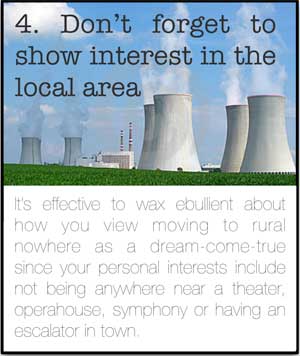
Show interest in the local area, no matter how barren

Here’s a four-page comic book guide to the process. It’s very useful and very accurate, although it does leave out the essential tip I discovered when I was going through a long chain of interviews: write down a reminder in your hotel room that says where you are and what university you are at. It’s really awful when you forget exactly where you are and confuse your interview site with their bitter academic rivals.

Step four, though, also made me wonder if this guide was written for all the candidates we’ll be interviewing in Morris.

(Speaking of which, I’m on the search committee for a new position in statistics/computer science, in which we hope to also snare someone with an interest in bioinformatics. Watch for it if you think you fit that description. Remember to say nice things about your long, long drive through the snow-covered cornfields to reach the interview, and make flattering compliments about our delightful grain elevators.)

I’d dismissed the problems with Obamacare enrollment…until now

I know it seems to be the comedy routine du jour to mock the software glitches plaguing the new health care program rollout. I hadn’t worried about it: I’d heard nothing but encouraging words about the program itself, and putting together a huge web service for the entire country is a gigantic undertaking, and I could imagine lots of ways it would run into problems, problems that would eventually shake out. I remember when we first fired up FtB, and saw it buckle under the traffic immediately!

But then I saw what the Oregon state health exchange website put up.

Oregon health exchange requires Microsoft Internet Explorer!

Holy hell. Who designed this abomination? It’s 2013, and they’re requiring users to access the site with Microsoft Explorer? And the submit button doesn’t work on any other browser?

I’m not usually a conspiracy theorist, but this is so ridiculous and such bad design that I’m thinking sabotage.

Kraken man is back

He’s persistent, I’ll say that for him. I first encountered Mark McMenamin as an enthusiastic promoter of Stuart Pivar’s inflatable donut model of development. He then sank from sight, along with the pretentious septic tank salesmen, until two years ago, when he presented piles of ichthyosaur vertebrae as evidence that a giant cephalopod, a kraken, had been creating Mesozoic art by arranging the disks into a self portrait.

You may laugh now.

He presented at the Denver GSA meeting this year. Here’s his abstract.

THE KRAKEN’S BACK: NEW EVIDENCE REGARDING POSSIBLE CEPHALOPOD ARRANGEMENT OF ICHTHYOSAUR SKELETONS

MCMENAMIN, Mark A.S. and SCHULTE MCMENAMIN, Dianna L., Geology and Geography, Mount Holyoke College, South Hadley, MA 01075

In 2011, we hypothesized that extremely large Triassic cephalopods may be responsible for certain anomalous aspects of an unusual assemblage of giant ichthyosaur skeletons in the Luning Formation of Nevada. The hypothesis has been criticized by researchers who do not accept the ichnological evidence suggesting that the skeletons were deliberately arranged rather than being deposited by currents.

Hydrodynamic considerations regarding the probability of displacement (PD) of ichthyosaur vertebral centra arrays (n=12) show that three different biserial arrangements have PDs of 17%, 89% and 100% respectively by currents strong enough to displace a single centra. The critical Specimen U array at Berlin‑Ichthyosaur State Park has PD=~100, indicating that it is highly unlikely that the biserial pattern was imparted by submarine currents. The unwinnowed wackestone matrix confirms that competent water velocities did not frequently occur in this deep-water depositional environment. The Luning Formation also hosts Protopaleodictyon ichnosp. and supergiant amphipods.

We recently obtained photographs of a retired exhibit formerly on display at the University of Nevada, Las Vegas, Museum of Natural History. The display reconstructed a well‑preserved Shonisaurus skeleton as it was found in the field. The exhibit is well documented by photographs from a variety of vantage points. The skeleton appears to have been partly disassembled during the Triassic, and a biserial array of centra very similar to the Specimen U array occurs adjacent to the nearly complete skeleton. The UNLV array has a PD=~100, again indicating that the biserial pattern was not the result of current assembly. Finally, at least three of these centra show what may be triangular bite marks removed from their margins.

His latest evidence consists of a second array of vertebrae in a line (that’s right, his earlier remarkable claim was based on a single example of bones in a line), and he is also claiming that a non-random arrangement of the bones can only be explained by an intelligent cephalopod, with no other natural processes possible.

Furthermore, as the Huffington Post credulously (their only mode) reports, he has additional evidence in the form of a giant fossilized beak. Here it is:

krakenbeak

It’s a fragmented, unidentified chunk of rock, a few inches long, which he extrapolates by comparison to a Humboldt squid beak he bought on eBay to be the tip of a giant beak belonging to a squid that was between 50 and 100 meters long.

That’s it. When ichthyosaurs decay, their vertebrae tend to fall in a line, and here’s a broken rock that kinda vaguely looks like a bit of a beak, and from this he builds this elaborate fantasy of a giant kraken roaming Triassic seas crushing ichthyosaurs to death and then sculpting their bones into squid pictures.

He should go back to praising balloon animals.


Whoops. I neglected to mention another indictment of his rationality: McMenamin is a “devout Christian” who also believes in Intelligent Design creationism.

My name is Mark McMenamin. I have completed a PhD on the fossils of the Cambrian Explosion, have published several books on the subject, and am a devout Christian. At the present time I am actively researching the latest fossil discoveries from Cambrian boundary strata.

Friday Cephalopod: A festive way to display your cuttlefish babies

The Monterey Bay Aquarium has a clever scheme for aerating their babies that involves a little creative surgery on pop bottles. It looks good, though!

bubblingcuttlefish

I’m tempted to try something similar with zebrafish, just because. I don’t have a problem with keeping them supplied with oxygen, but I do have to maintain good concentrations of food available…and this would hinder more than it would help. But it’s the coolness of it!