The Spider Times

I’m trying to keep my spider-squad informed about plans for the lab, so I’ll be periodically sending out notifications to them. I figured maybe other people might be interested in the goings-on, at least those of you who aren’t currently horrified at my arachnological obsession of late.

Hey, spider-people! I bring you news.

1. Two weeks ago, we set up new cages for the female Parasteatoda in the colony: spacious, clean, with cardboard frames to clamber on. The spiders seem very happy, and have been busy filling the frames with cobwebs.

2. Last week, I was away at an arachnology conference that extended longer than expected, because of terrible airline delays. When I got back on Sunday, I fed everyone. They were hungry. All the spiders dived for the flies with impressive speed and were munching away ferociously.

3. I’m planning on regular feeding times every Monday and Thursday at noon — but not today, since I fed them yesterday. Feel free to stop by to watch the spectacle!

4. Today is a special day for another reason. After giving the females a week to construct webs in their new housing, today at noon is the day we’re going to introduce males into their chambers. We’re hoping the roomier quarters means they won’t immediately eat their mates. Come on by for the nuptials!

5. I’m planning the next phase of the Stevens County spider survey. We’re going to start on 8 July, and we have over 30 houses to visit. We’ll have the goal of doing 6 houses per day, with each house taking half an hour or so to screen. Let me know if you want to participate.

6. The new Spider-Man movie also comes out the week of 4 July. Anyone want to join me some evening that week? My treat, we just have to work out a good day. (Alternatively, Spider-Man: Into the Spiderverse is on Netflix, starting in a few days…we could take over one of the classrooms and project it there.)

7. In other news, I’ve been posting photos of the spiders we meet to iNaturalist, in the Spiders of Minnesota project. We have the honor of the first recorded observation of Pholcus manueli in Stevens county! It was caught right here in the Science Atrium. It’s a good thing we caught it, too, because our diligent custodians eradicate any spider web they encounter.

8. You all saw the article in the Stevens County Times, right?

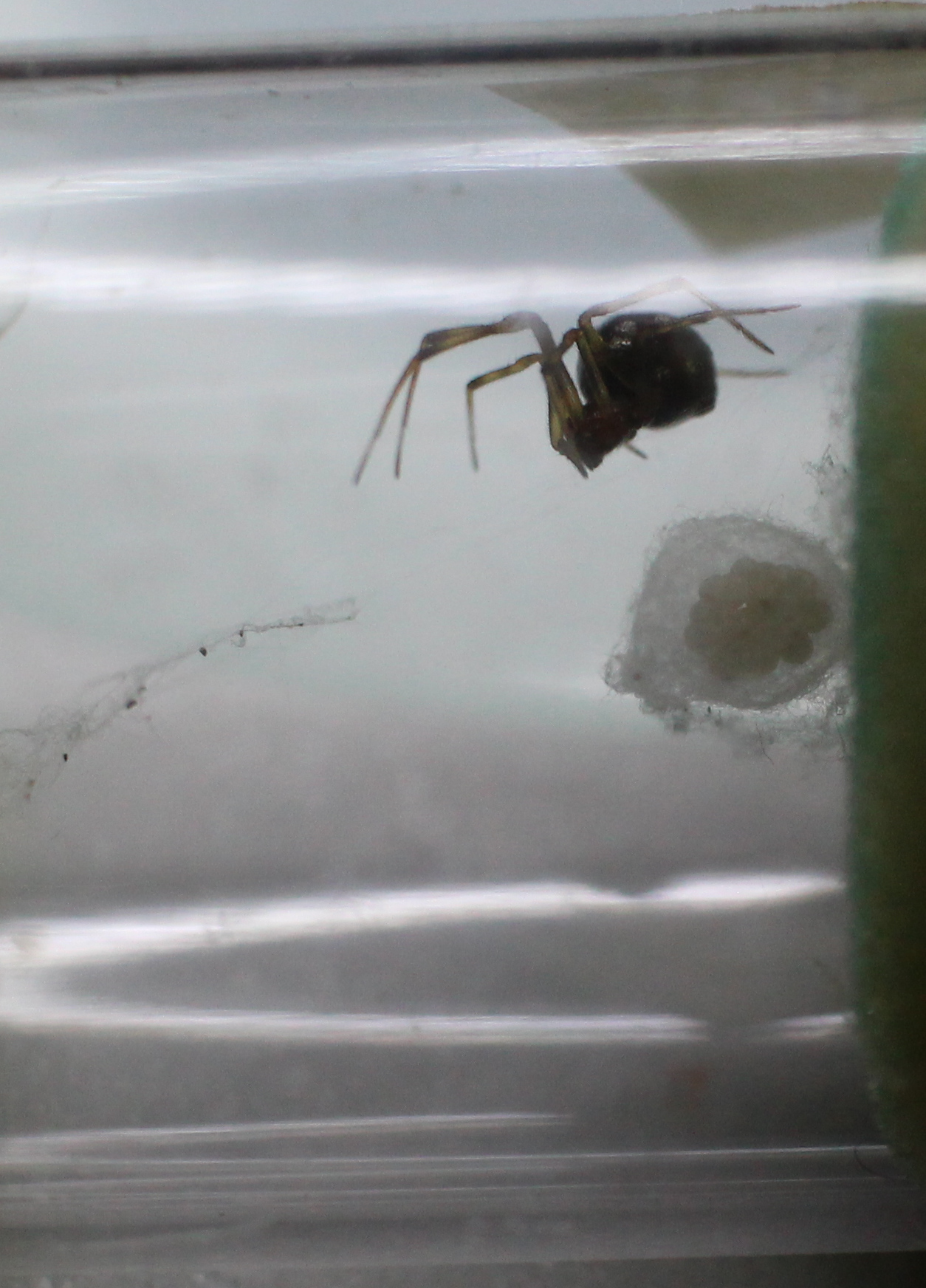
9. We have an egg sac that’s over a week old in the incubator, laid by Steatoda triangulosa, which isn’t the species I was planning to work on, but I’ll take anything now. The egg case is gauzy and semi-transparent, and you can see the embryos right through it. It could hatch out any day now, giving us a swarm of spiderlings.

So, things to look forward to:

  • Regular spider feedings at noon on Monday and Thursday
  • Mass wedding of a dozen spiders today at noon
  • Spider survey resumes on 8 July
  • Possible S. triangulosa spiderling hatch any day now

Mary has been busy, too

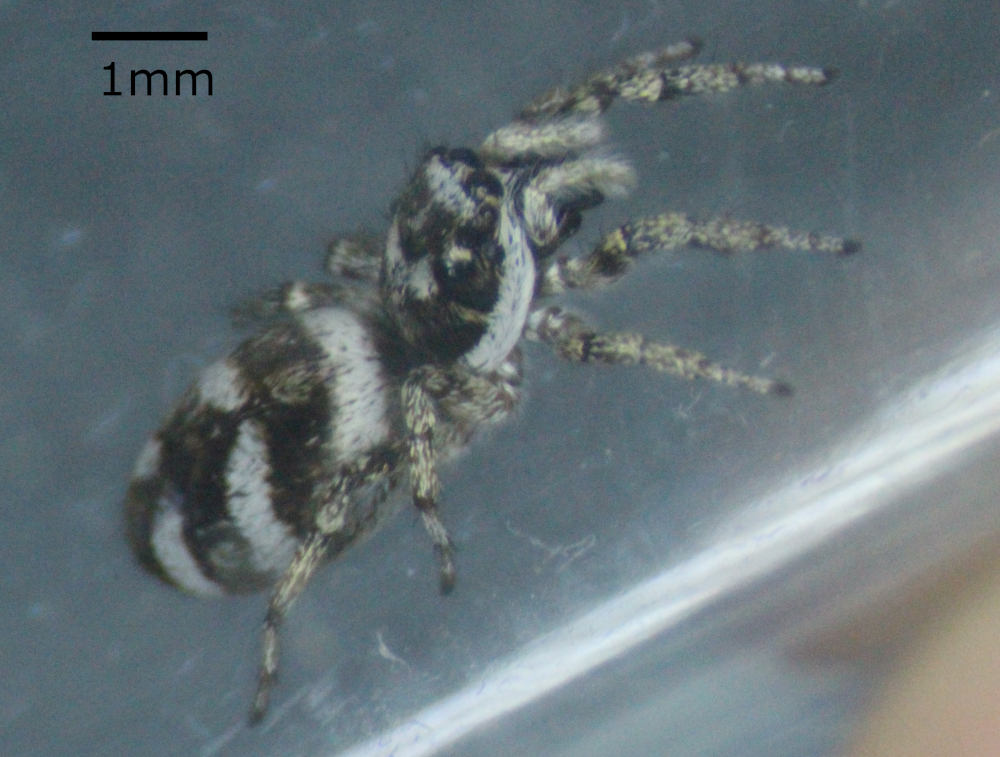
In addition to rescuing her stranded man from airports, Mary has been scouting around for spiders in my absence, and caught a few around the house. This is Parasteatoda tepidariorum, the species I work with in the lab, and she has gone straight into the colony.

P.tep is my favorite: so common, but so interesting.

Welcome to the universe, Larry!

Perhaps you recall the majestic Larinioides I found at Pomme de Terre park almost two weeks ago? It laid a large pink egg sac in the container we had it in, as a present before we released it back into the wild.

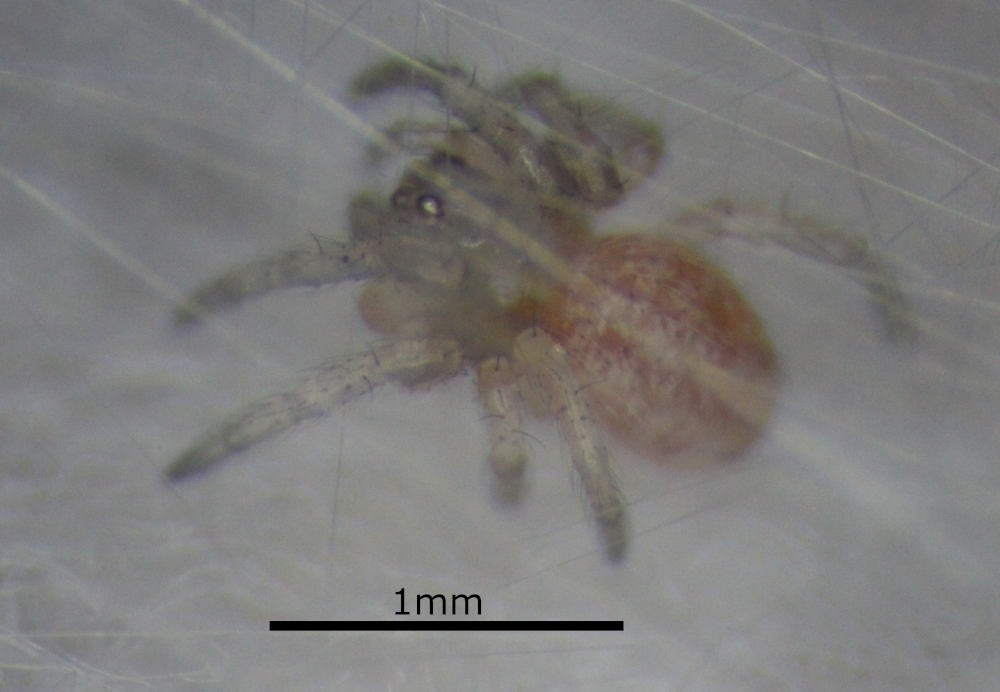
Today, or perhaps last night, they started hatching. Here’s a baby Larinioides spiderling, freshly emerged, and looking a bit stunned.

They’re back in the incubator until I see that a few more hatch out, and then they’ll be released to the world.

Spider meeting is done

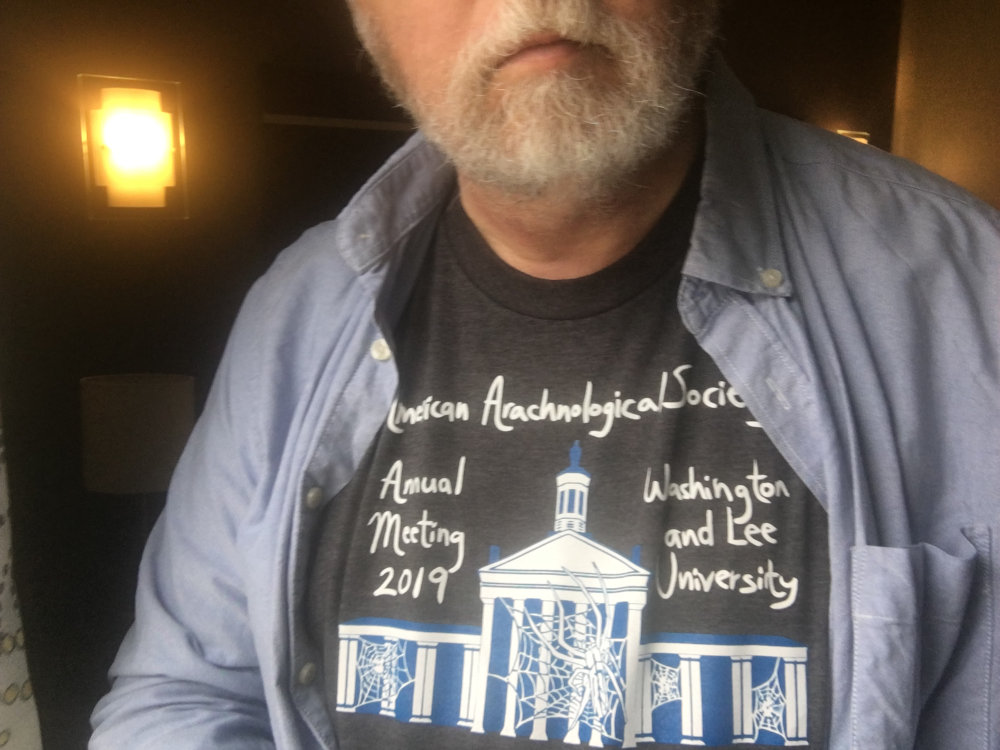
Waaah. I just have the closing banquet tonight, and then tomorrow is a long travel day home. So what did I learn?

  • Spiders are cool, but I guess I already knew that.
  • Spiders are a jillion times more complicated than I thought, and I’ve got a lot to learn.
  • Spider meetings are small and cozy and nice.
  • I’ve made a list of a dozen experiments that I think are doable by undergrads, and will provide interesting information.
  • I need to get home to start putting these ideas to work.

I guess that’s a pretty good outcome for a meeting, to end it inspired and better informed than I was at the beginning.

Next year AAS2020 will be held in Davis, California. I’m hoping I can fit it into my budget.

That makes it official

I was at dinner with a group of arachnologists last night, and I was surprised when I mentioned that I was from Minnesota and was then told that I was one of the only two arachnologists in the state. I was firstly startled at actually being told I was an arachnologist since I’m still trying to get a good grasp of the field, and secondly surprised that they’re so rare (would you believe there are only 500 people in the International Society of Arachnology?). He qualified it by saying that I was one of two people who had officially registered with the American Arachnology Society, from which I learned a few things.

If you want to be an arachnologist on paper, it’s easy — just send in your membership dues.

If you are a real arachnologist in Minnesota, with skills and expertise and deep knowledge, rather than a wanna-be like me, you’re behind. Send in your membership dues. Otherwise, people will keep mistaking me for you.

Otherwise, if you want to become a real arachnologist, here’s an article on the subject. It recommends starting in childhood and your teenage years, which is a little worrisome, since I waited until I was 61 to start. But you can do it! Unfortunately, unlike being an arachnologist on paper, it’s going to take a lot of hard work.

Another day, another overwhelming mess of spiders

This meeting is really an exercise in attitude readjustment. I’ve been steeped in the zebrafish world for so long that I’ve unconsciously held the model organism perspective — here’s my animal, all I have to do is query it deeply with increasingly thorough techniques, and I shall understand biology. Now I’m in a world where every observation is tested against a dozen closely related species, and a dozen distantly related species, and a dozen outgroups that aren’t even in the same order, and everyone is sprawling out horizontally to get a feel for the dimension of a problem rather than digging down vertically into one convenient animal bred specifically to thrive in the artificial environment of the lab. It feels strange and sometimes uncomfortable.

I’m also sometimes totally lost. I was at a session yesterday where arachnologists were just projecting photos from their personal collections, and where I was content to just think “OK, I guess that’s a spider”, other people were shouting out latin names and recognizing old friends. Or worse, “here’s a spider I haven’t been able to identify, and I consulted the world’s foremost expert, and they had never seen it before either”, and it begins to sink in that we’re surrounded by an immensely diverse population that is so wild and weird that we have no idea who they all are, and that I’m going to have to do a lot of work to catch up. It is intellectually terrifying and bizarrely stimulating.

Every once in a while, fortunately, I find something to anchor myself. Yesterday was all about spider silk, which, on the one hand, is molecular biology and can be reduced to genes and physical interactions with the environment (adhesive droplets on webs are a product of self-assembly, contingent on things like humidity and temperature), but on the other hand, of course spiders produce an incredible diversity of different kinds of silk. Sometimes, it all gets to be a bit much.

Looking at the program, this morning is all about biogeography, diversity, evolution, ecology, and life history, while this afternoon is all about behavior. I’m pretty sure my brain will explode at some point today, because I can assure you that there won’t be any single principle that I’ll be able to condense everything down to.