Two and a half weeks until classes resume, so I’m shifting brain gears to get excited about cell biology again. One of the tools I use to get into the right mindset is reading more biochemistry, and lately that means reading more Nick Lane, who is one of those biochemists who is obsessed with evolution and does a marvelous job of integrating the finicky little details electrons and protons and small molecules and chemistry with the big picture of where all this comes from and how it has shaped life.
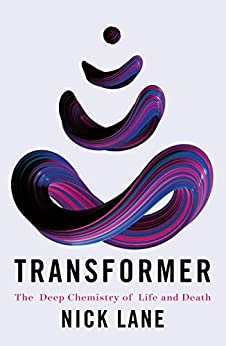 I’ve read and reread Lane’s latest book, Transformer: The Deep Chemistry of Life and Death, and recommend it highly. I’ve been struggling with how to explain it’s contents, and it’s not easy — in my class, I spend weeks just gradually building up the background needed to understand the chemistry of the cell, which makes it hard to dump on a blog or a single video as anything but a huge indigestible bolus. And of course it took Lane 400 pages in a densely packed book to cover it all.
I should have known I could just let Nick Lane do all the hard work.
“KREBS CYCLE” is not a phrase that usually gets students excited — I know from experience — but this is juicy stuff. The talk itself covers a huge amount of ground, giving the basics of metabolic cycles and going into the origins of life and the great leap forward provided by mitochondria in endosymbiosis, and the diverse ways various organisms have taken the basic toolkit of the Krebs cycle and used it in novel ways. That’s all good solid science, and I don’t understand how anyone can have any doubts about the general chemistry that leads to life (well, I sorta do — they don’t know any biochemistry. All the YouTube debates about the origin of life are a waste of time, given that creationists are disgracefully ignorant of even the most rudimentary understanding of biochemistry).
Near the end, he gets farther out into weeds with speculation about aging, cancer, and consciousness. It’s interesting and he could very well be right — he’s a smarter man than I am — but the ideas range from very likely (metabolic shifts as agents of senescence and cancer), to potentially revolutionary but still on the fringe (the role of calcium and membrane potentials in Alzheimers), to some that, well, sound like how a biochemist would view neuroscience, for instance claiming that consciousness is a product of the electrical potential across the membrane of a cell, which is rather too reductionist for me.
Watch the video, though. If there are bits that you find heavy slogging, or just too out there to grasp, let me know in the comments. That’s information I can use to present these ideas to a class of second year students. And if you find it really deeply enlightening, go out and read Transformer. It contains a lot of the ideas about cellular metabolism I’d like to get across to my students.
It would make my life a whole lot easier if I could just show a one hour video that explains everything, then say, “Well, that’s all done then. We spend the rest of the semester reading poetry and dancing and playing video games! Yay!” I suspect I should probably fill in a lot more background and talk about the details, but maybe the video would be a nice dessert for the end of the semester. I’ll have done my job if all the students can watch it and say they already knew all that, but that Lane did a fine job of tying it all together.