In 1969, Night of the Living Dead was unleashed on the innocent children of America. I didn’t get to see it — I was only 12 — but I do recall browsing through my grandparents’ latest issue of The Reader’s Digest and reading Roger Ebert’s notorious review of the movie. He gave away the entire plot (we didn’t worry about spoiler warnings back then), and made it sound like we should dread the corruption of America’s youth by all the on-screen gore.
I don’t think the younger kids really knew what hit them. They were used to going to movies, sure, and they’d seen some horror movies before, sure, but this was something else. This was ghouls eating people up — and you could actually see what they were eating. This was little girls killing their mothers. This was being set on fire. Worst of all, even the hero got killed.
It’s hard to remember what sort of effect this movie might have had on you when you were six or seven. But try to remember. At that age, kids take the events on the screen seriously, and they identify fiercely with the hero. When the hero is killed, that’s not an unhappy ending but a tragic one: Nobody got out alive. It’s just over, that’s all.
I felt real terror in that neighborhood theater last Saturday afternoon. I saw kids who had no resources they could draw upon to protect themselves from the dread and fear they felt.
Man, I really had to go see this thing. I probably didn’t get around to it until I was in college, maybe ten years later. Then I’d be totally unimpressed by the bloody violence, but highly impressed by the scariness and the build-up of fear and the way it subverted most horror movie tropes — at the time, that is. It’s since become practically horror movie dogma. It’s a classic. Many of you will probably remember Night of the Living Dead, it’s still got some impact, despite being a low-budget black-and-white zombie flick about a single night of terror, and most of you will just shrug off the scene of the undead scooping up pig’s intestines out of a dummy lying on the ground. That’s kind of not the point of the story.
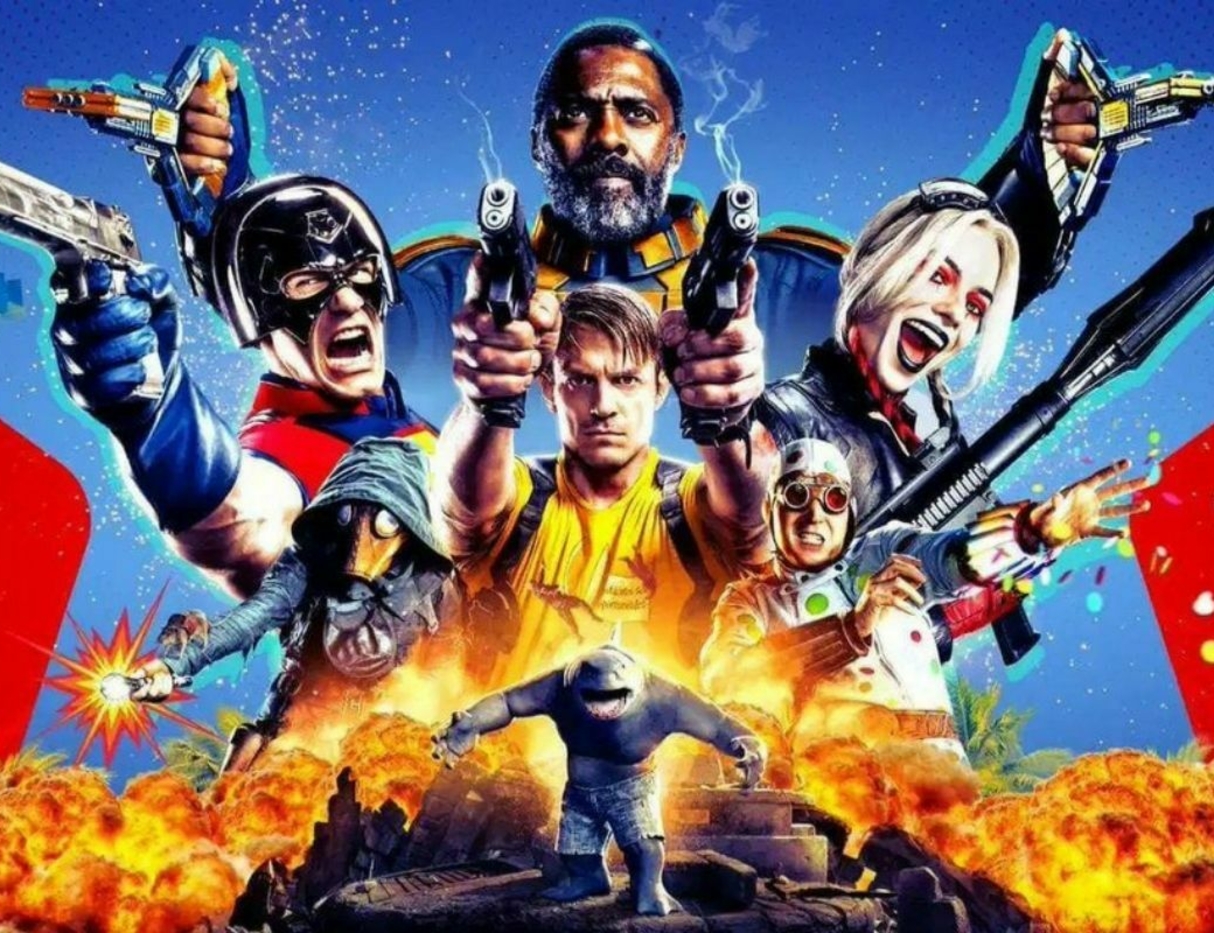
In 2021, The Suicide Squad arrived on the big screen, the pandemic had loosened its grip (don’t worry, it’s coming back), and I’m old enough to slip my leash and see it on opening night. I was looking forward to it. I am so tired of grimdark superhero movies, where Batman levels whole city blocks with his tank and Superman smashes through apartment buildings, killing citizens (indirectly and offscreen, usually) and everyone is so damned angry all the time. I also remember the Christopher Reeve Superman movie which was just as radical as Romero’s Dead, because it was all about optimism and hope and a superhero who was truly good, and I feel like I could use some of that light-heartedness. I expected some of that bright comic book color popping off the screen, with a cheerful pop-music soundtrack, and a plot about people coming together through adversity, you know, like James Gunn’s Guardians of the Galaxy.
Holy christ, this is not that movie.
There is so much explicit death and murder and blood in The Suicide Squad. You know that in a Zack Snyder movie the heroes will be cavalier about meting out justice — cars will explode, presumably killing their occupants, and buildings will collapse in a shower of broken glass and dust and brick, presumably destroying the families inside, but you won’t see the corpses. This movie…well, the chains have been unshackled. It’s about an expendable team of bad guys on a mission to destroy everything on a South American island, and right at the beginning we’re going to see half that team annihilated. I hope you weren’t looking forward to finding out about more of those characters you see in all the trailers, because they’re going to set foot on the island and get faces blown off, literally. Goodbye, Nathan Fillion, Pete Davidson, Flula Borg, and even Sean Gunn as the repellent Weasel — those are little more than walk-on cameos before their characters are blown away in a splatter of fluids and body parts.
If the protagonists are going to get treated as scrap bits falling off the butcher counter, that’s nothing compared to the military trying to defend their island of Corto Maltese. They are literally monster fodder. The shark man eats them alive, and they die screaming. The shark rips off a guy’s head and pops it into his jaws, complete with a shot of the head grimacing, its eyes rolling, blood spurting from the stump of its neck. People are ripped in half, both lengthwise and at the waist, showering everything in blood. The Squad guns down an entire camp of revolutionary allies on accident, and they just say “Oops, my bad”, and the leader of the revolution shrugs it off.
There is a kaiju rampage in the last quarter of the movie, but don’t think back to Godzilla or King Kong marching through a cardboard city. Nope, that wouldn’t be realistic. The streets are full of dead civilians. The monster stomps on fleeing mobs. People are crushed by all the masonry falling from the office buildings. James Gunn is not timid about the slaughter, as Zack Snyder would be…and given that Snyder is a murderous monster towards his characters, that is a surprising sentence.
Otherwise, though, this is a well-crafted movie that skips along lightly, keeps the story going, has distinctive characters, and even is loaded with humor. It’s a black, cynical humor, but sure, I guess bits of it were funny.
I do wonder what the Roger Ebert of 1969 would make of 52 years of cinema progress, though. This isn’t even a horror movie. Genre has lost all meaning.