Not a spider

Spiders don’t usually look this pissed off.
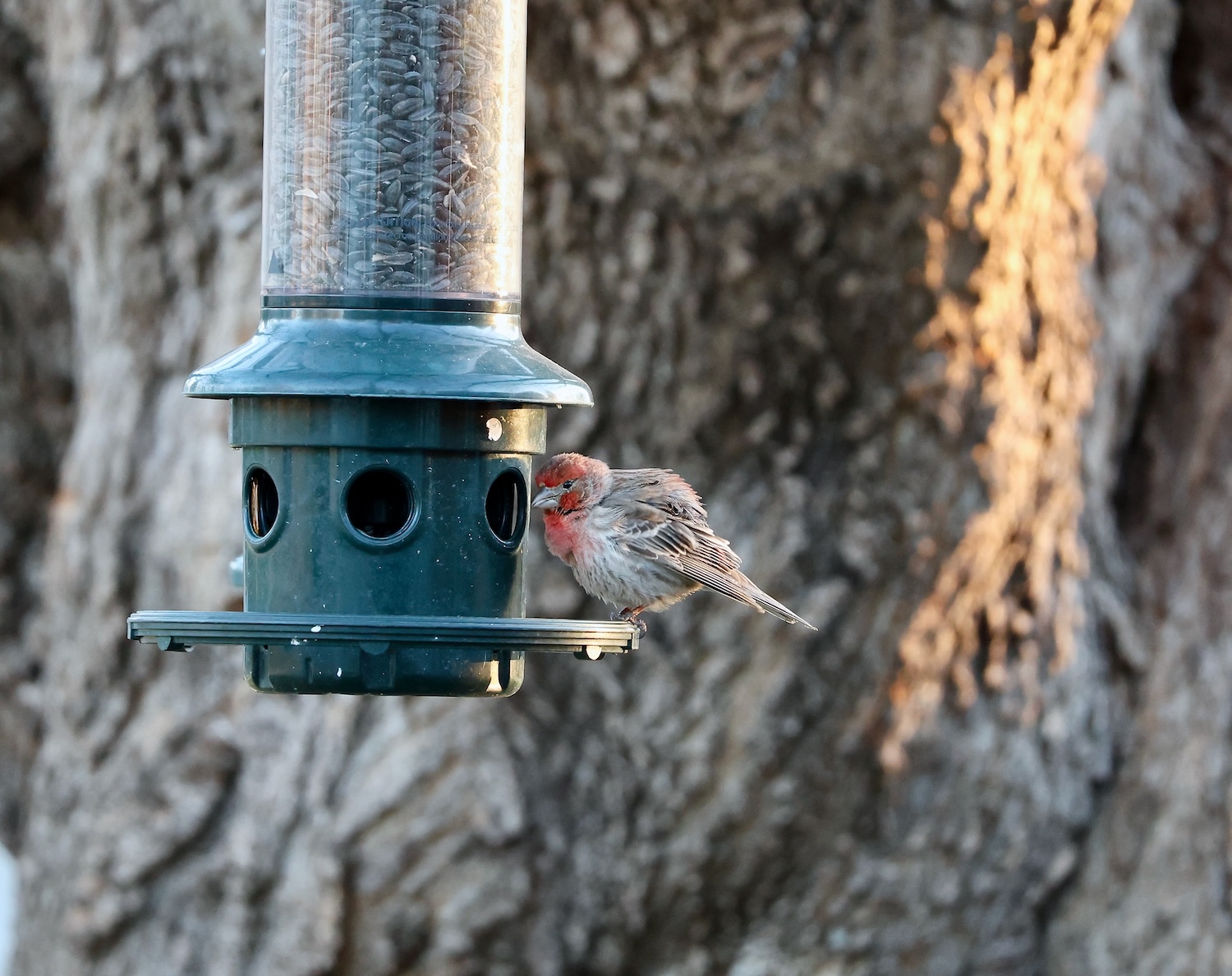
I know it’s not as interesting as a spider, but I’m setting goals for myself this summer. I’m making a list!

  • Get that knee surgery, finally. I’m meeting with the orthopedic surgeon on Wednesday to, I hope, schedule the thing.
  • Visit the Boundary Waters before the Republicans poison them. Preferably after the knees are fixed.
  • Visit Paisley Park.
  • Look at more organisms than spiders. See, bird! I understand some people maintain life lists of birds observed. I’ve already checked this one off!

I’ll probably add more to the list as I go. I think if I add more goals than I can accomplish, I can never die.

I’m not the only one easily seduced by giant Cretaceous octopuses

You knew I’d have to read an article titled Earliest octopuses were giant top predators in Cretaceous oceans. How cool is that? And then they’ve illustrated it with some very appealing figures.

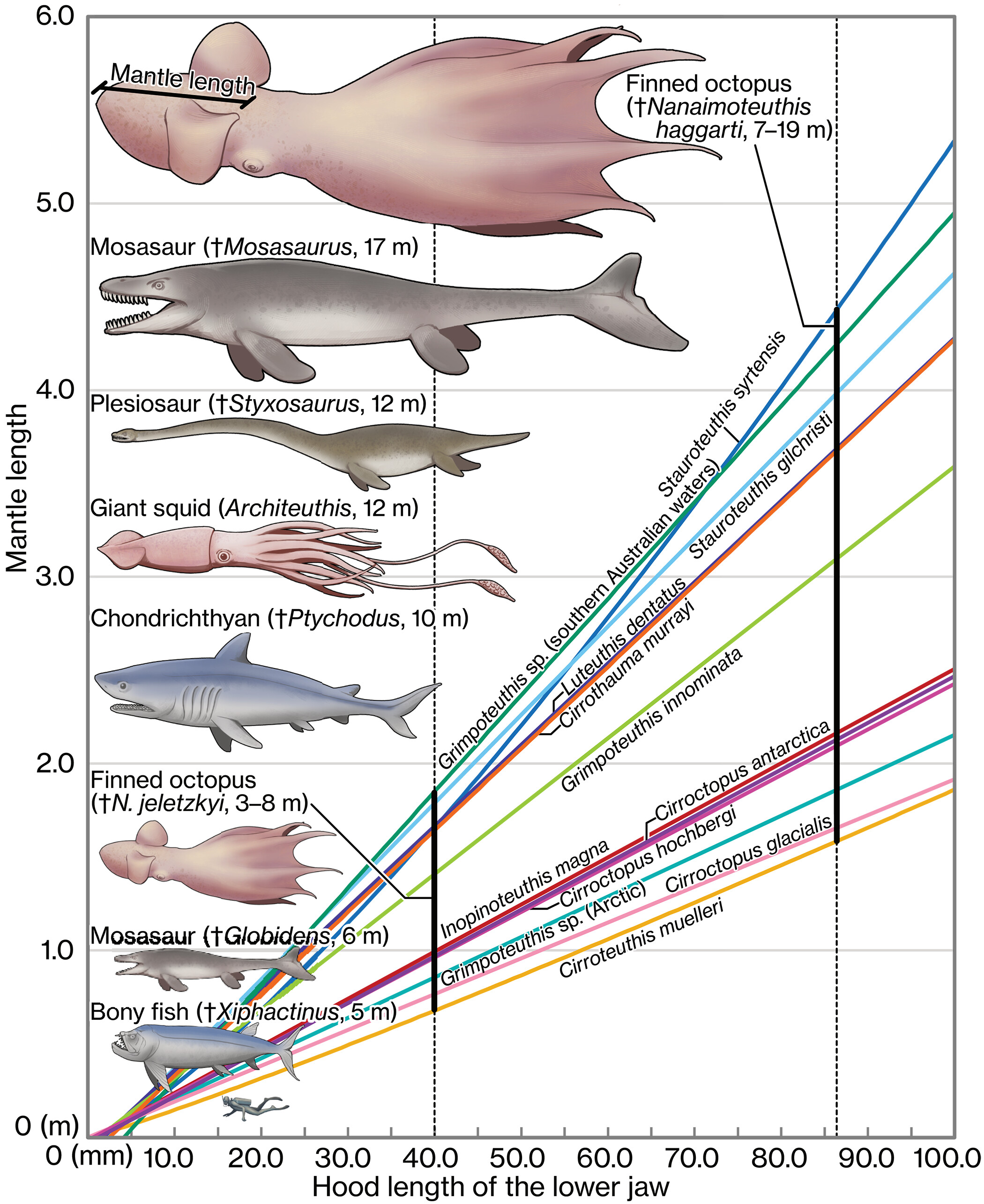
Body size estimation of Late Cretaceous octopuses.
The graph shows an allometric relationship between the length of the jaw and mantle in long-bodied species of extant finned octopus . The name of the corresponding species is shown along each growth curve. The sizes of N. jeletzkyi and N. haggarti based on their largest specimen are indicated by black vertical lines. Reconstruction of these two species, the extant giant squid, and gigantic vertebrate predators in the Late Cretaceous are shown with their maximum total length.

Also, the abstract promises much.

Top predators drive changes in ecosystem structure. For the last ~370 million years, large-sized vertebrates have dominated the apex of the marine food chain, while invertebrates have served as smaller prey. Here we describe invertebrate top predators from this “age of vertebrates,” the earliest finned octopuses (Cirrata) from Late Cretaceous sediments (~100 to 72 million years ago), as identified based on huge, exceptionally well-preserved fossil jaws and their wear. This extensive wear suggests dynamic crushing of hard skeletons. Asymmetric wear patterns further indicate lateralized behavior, suggesting advanced intelligence. With a calculated total length of ~7 to 19 meters, these octopuses may represent the largest invertebrates thus described, rivaling contemporaneous giant marine reptiles. Our findings show that powerful jaws, and the loss of superficial skeletons, convergently transformed cephalopods and marine vertebrates into huge, intelligent predators.

But does the paper deliver? Sad to say, it doesn’t. I was disappointed on how far the authors stretched an interesting technique to reach an excessive conclusion.

What they did was collect fossil octopus beaks and subject them to grinding tomography — basically shaving away the rock, photographing each exposed slice, and using an AI to help reconstruct a detailed 3-D image of the beak that allowed them to view the wear and tear on the beak’s surface, presumably seeing the damage acquired as they chewed their way through their Cretaceous prey. The entirety of the data in the paper is an analysis of scratches and wear on these beaks.

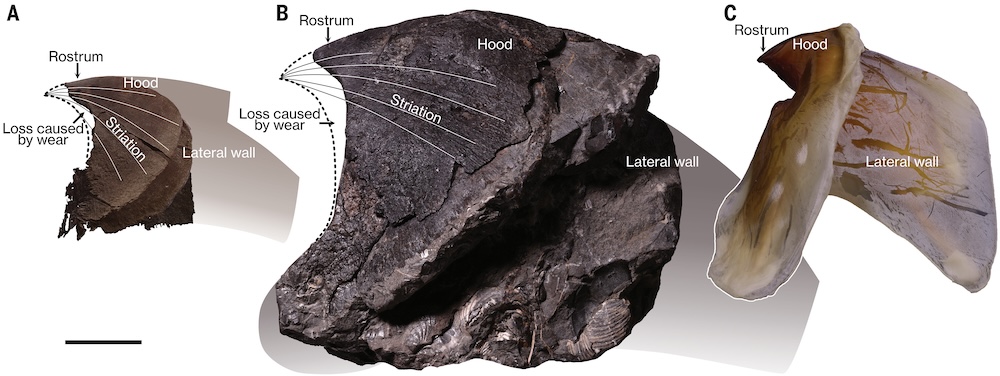
Huge lower jaws of fossil octopuses and of an extant giant squid.
(A and B) The largest lower jaws of the Late Cretaceous finned octopus species N. jeletzkyi [(A) NMNS DS00042 3LmvTpM] and N. haggarti [(B) KMNH IvP 902001]. Both specimens show extensive loss of jaw material caused by wear. (C) A lower jaw of the extant giant squid Architeuthis dux (NSMT-Mo 85956), a species having the largest jaw among modern cephalopods. (A) is a digital fossil jaw visualized as a 3D model; (B) is an exceptionally well-preserved nondigital fossil jaw; and (C) is a modern jaw dissected from a carcass of ~10 m total body length. Solid lines indicate the extension of striation on the outer surface of the hood and broken lines show the estimated outline of the rostrum without wear. The hood and lateral walls lost by weathering, shown as shadowed areas, are reconstructed based on the holotype and specimens in fig. S4. (A) and (C) are exhibited in a mirrored position. Scale bar, 20 mm.

That’s good stuff. No data too small — it’s all data. But wait: this paper contains nothing but measurements of beaks, but manages to expand this into a whole set of conclusions about the marine ecosystem.

These wear patterns suggest that Late Cretaceous giant Cirrata were active carnivores that frequently crushed hard shells and bones. The long scratches distributed on wide areas of their jaw reflect the dynamic use of the entire jaw for dismantling prey. Asymmetric loss of the jaw edges suggests lateralized behavior, which has been linked to a highly developed brain and cognition. This, in turn, suggests that the earliest octopuses already possessed advanced intelligence. Laterality is known in modern octopuses, whose high intelligence matches that of vertebrates. The exceptionally large jaws of adult N. jeletzkyi and N. haggarti suggest a strong bite force because cephalopod jaw muscles enlarge as the jaw size increases. The long lateral walls in their jaws revealed by the new digital specimens reported here show that Nanaimoteuthis had large jaw muscles. The chipping on both the rostrum and jaw edge was caused by strong shear stress beyond the yield point of the most robust part of the jaw. The transverse cracks in N. haggarti are probably a trace of larger shear failures. These large fractures thus suggest a powerful bite. In giant Cirrata, the jaws are smaller than those of contemporaneous Cretaceous vertebrate top predators, which measure ~1.7 m in length. Instead of using a large mouth, the long and flexible arms of octopuses serve for catching large prey. The giant Cirrata probably consumed large prey with their long arms and jaws, playing the role of top predators in Cretaceous marine ecosystems.

All we’ve got are scratches on beaks, with extrapolation from beak size to overall size. From that we leap to the conclusion that these giant octopuses were rivals to mosasaurs, plesiosaurs, ichthyosaurs, and sharks. We assume they’re top predators in the absence of actual evidence of predation or their role in the ancient ecosystem.

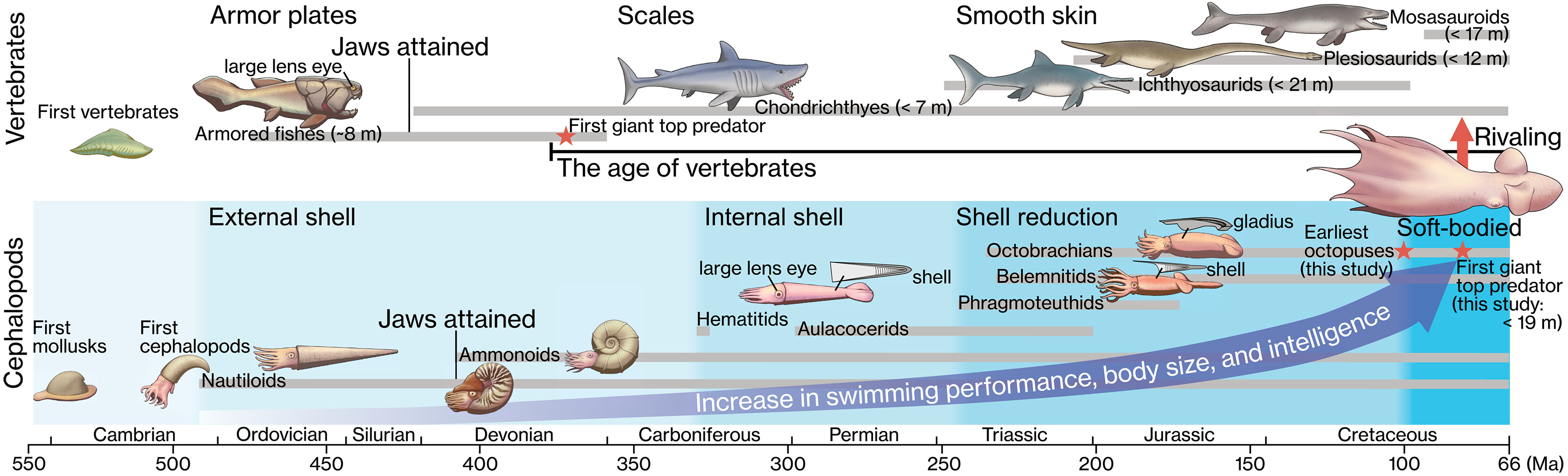
Convergent evolution among marine top predators in the Paleozoic–Mesozoic.
This model shows the acquisition of jaws and the reduction of superficial skeletons in the evolutionary history of marine vertebrates (top) and cephalopods (bottom) to become top predators. The gray horizontal bars show the chronological range of some selected groups of vertebrates and cephalopods. For cephalopods, stepwise reductions of skeletons are indicated by the blue background.

I’m not even going to touch the idea that asymmetric scratches are good evidence of high intelligence.

I am reminded of the speculations of Mark McMenamin, who thought circular shapes in Triassic sediments were evidence of a gigantic Kraken. He also found a broken piece of rock that he extrapolated to claim it was the tip of a giant kraken beak.

At least McMenamin’s extravagant conclusions weren’t getting published in Science.

Oh no, last week of classes

It’s the perfect storm, and I have myself to blame. I gave the fourth exam of the semester yesterday, and many of the students bombed. This happens every year, and it’s because the fourth exam is the hardest of them all: everything accumulates in this course, and it’s the combination of lots of math and understanding the topology of weird chromosomes entangled and swapping bits around that breaks their brains. Couple the fact that these are generally smart, high-achieving students with the shock of getting a 40% on an exam, and it’s going to get ugly. I’m going over the answers with them this afternoon.

Also, we have a major lab report due next week, and an in-class presentation. It is a high stress situation.

Students are already emailing me with requests for a point here and there on back assignments and exams. I’m going to spend my weekend with spreadsheets recalculating all their old assignments and putting together a final assessment, which will inspire a further frenzy of grade-grubbing.

If I drank anymore, this would be the weekend I’d finish off a bottle of good whisky, but I don’t drink at all anymore. I’d rather talk about genetics than grades, but the system will not allow that.

What does Theridion eat? Asked & answered

Yesterday, I posted a photo of Theridion on a signpost, and unclefrogy asked:

the question I have is what kind of prey is also attracted to that area and what time of the day because that spider sure looks well fed.

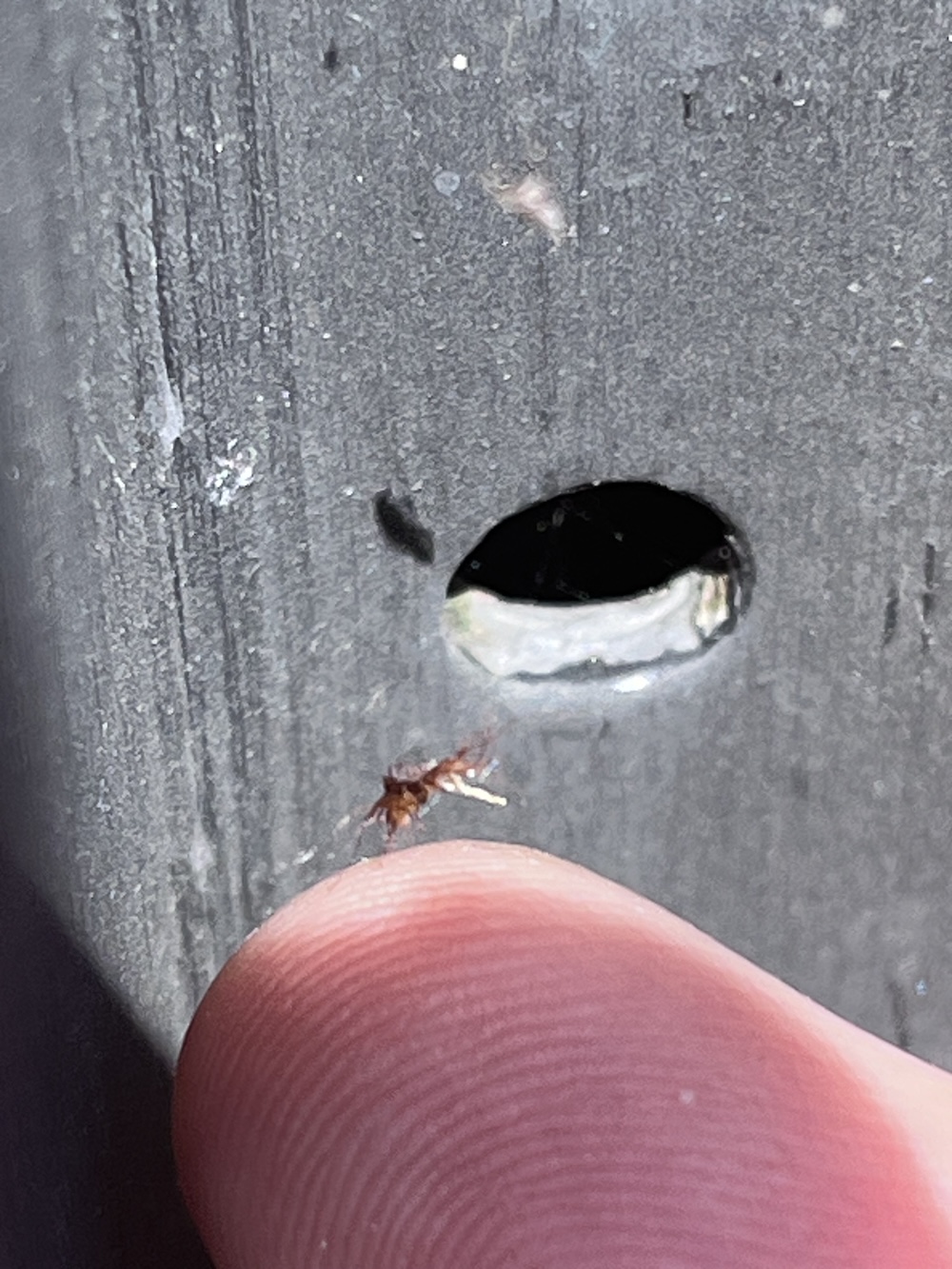
A good question! Theridion is a cobweb spider, and cobwebs are optimized for catching prey on the ground, unlike orb webs which are better for catching flying prey. These particular spiders are on a metal post 1.5 meters off the ground, so they’re unlikely to catch grounded prey. But I was passing by this same signpost today, and saw that the spider had been successful!

That’s a dead dessicated Dipteran by my finger (I had to poke my finger in to stabilize the victim — it’s windy today, and everything on silk was vibrating madly). So…they’re catching gnats and flies and mosquitos that encounter the tangle of cobweb silk.

Also, don’t insult the spider. The Theridiidae all have those nearly spherical abdomens, so she is a beauty among her species.

Something has happened to my blog

I don’t pay much attention to site stats, actively avoiding digging into them. I’m not interested in optimizing for traffic, or that SEO nonsense, but as the administrator for this site I’ve got this little toolbar at the top of the window that graphically shows how many visits the site gets. It’s not something I really care about, but I did like the predictable wave-like plot — visits rise until about noon, and then slowly decline over the course of the afternoon and evening, before starting to rise in the early morning. The tide goes in, the tide goes out, and you can’t explain that…OK, except that I can, because it tells me I have a predominantly American audience and it’s just a reflection of human daily activity levels in my hemisphere. That’s another reason to not attach much significance to those numbers.

Except…over the last few weeks, the rhythm has been disrupted. The waves are gone. I’m getting site activity all night long, which makes me suspect this isn’t human activity. On closer inspection, site views have also been more than doubled, which sounds like a good thing, except that I seem to be talking to non-human entities. Not aliens, though — AIs scouring the web.

Then I saw this comment on Mastodon:

It’s all artificial, and not at all intelligent. They’re not contributing anything, they’re not the audience I want to talk to, and I think all they’re going to do is jack up my hosting expenses.

If it is aliens, though, welcome. Leave a comment. I’m sure many people here would love to have a conversation with you.

Failing upward

Remember Devin Nunes? He’s the guy who sued a parody account, Devin Nunes Cow for $250 million (I’ve seen that number before — it seems to be a standard ridiculous number used in lawsuits by members of the Trump administration.) He lost. As a member of the Trump coven, though, he couldn’t really lose, and he was appointed to be CEO of Truth Social, the absurd far right social media platform our president uses to broadcast “Truths”.

Alas, the poor man is now stepping down from his lofty position. Don’t feel sorry for him, though, because despite the catastrophic financial losses behind Truth Social, Nunes has been cleaning up.

After soaring shortly before Trump’s re-election in November 2024, stock in the company plunged 67%, wiping out more than $6 billion in investor wealth.

Since it went public two years ago, Trump Media has lost more than $1.1 billion. Nunes got total compensation of $47 million in 2024, the last year for which figures are available.

$47 million! In one year! For running a non-viable social media platform!

You know, I’m retiring one year from now, and my wife and I are both concerned about the dramatic drop in our income starting in May 2027. My plan right now is to get a cushy sinecure with some large failing company — a job I’m not qualified to handle, but that therefore cannot demand much work from me — and then retire again after a year or so, once I’ve got a few million dollars. I would never ever have any money worries if I had a $47 million nest egg, which would keep me in grand style from now until my inevitable demise.

Does anyone know of any job openings in the overpaid-with-minimal-duties category?

Or do I need to be Republican with connections to the most corrupt administration in American history?

Boomers. Ugh.

I’ve received some spam email promoting an essay. I know I’m being their puppet by mentioning it here, but my god, this thing was stupid and annoying and feeds into stereotypes about my generation, so I’m going to link to it anyway. It’s an article titled I’m 70 and I recently realized my children love me but have no use for me — they don’t want my recipes, my stories, my experience, or my perspective on the life they’re building, and the hardest thing I’ve ever had to accept is that the person who taught them to walk doesn’t get consulted on where they’re going. Yeah, that’s the title, and it gives the entire essay away. I’m already annoyed.

The body of the essay goes on and on in the same vein. Paragraph after paragraph with the same structure as the title, my kids may love me, but they aren’t fawning appreciatively over my old scraps of paper with recipes scrawled on them. I’m pretty sure the author, Marlene Martin, doesn’t actually exist, but is a particularly dull AI that is churning out repetitive garbage that simultaneously feeds the entitled self-righteousness of a class of boomers, and outrage all the non-boomers who see confirmation of their low opinion of old people. Click click click. Just like I did.

The purported author claims to be 70 years old. I have to reassure everyone that I am a youthful 69.

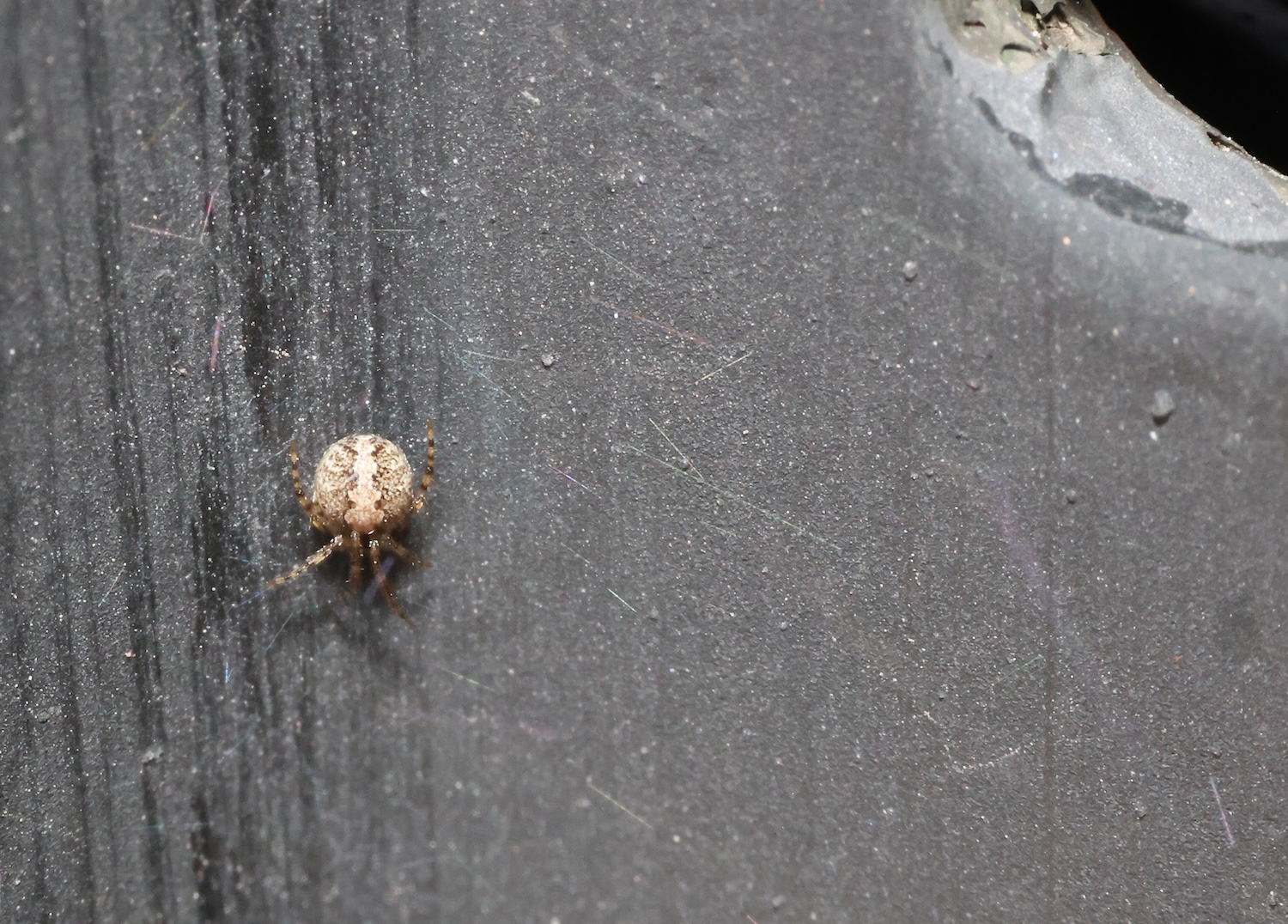
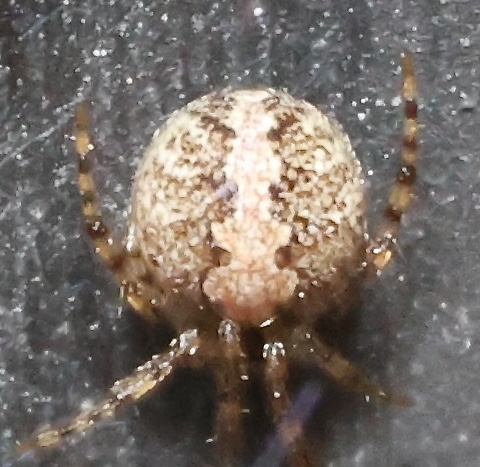
Signpost spider

For years, one of the earliest signs of the spider season is the appearance of spider silk criss-crossing these metal signposts around campus. I rarely see any of the animals making the silk — they tend to hide in the holes that puncture the posts. But today I spotted one hanging out in a visible place! They are spiders in the subfamily Theridiinae, probably in the genus Theridion. I do not know why they favor this one peculiar habitat. These black metal posts get really hot in the sun, so these spiders must like it hot.

They have quite pretty patterns on their abdomens.

A sad anniversary

Today marks the 10th anniversary of Prince’s death. I love that guy’s music, and I’m going to be playing his music nonstop today.

This one tells me he really was a Minnesotan.

My favorite, though, is Raspberry Beret. That one takes me back to being 19 and taking my girl on drives through farm country — not in Minnesota, but the music is universal. I was a fan before I moved to this state!

Lately, I’ve been setting summertime goals for myself. I know I’m probably going to be laid up with knee surgery for a while (I hope I can get these wobbly aching knees fixed!), and I’m going to get through it with some dreams. One is to get up to the Boundary Waters before the Republicans destroy them, and go spidering in the woods. Another is to visit Paisley Park. I’ve driven by it many times, this summer I’m going to get off the damn freeway and take the tour.

Mother of spiders!

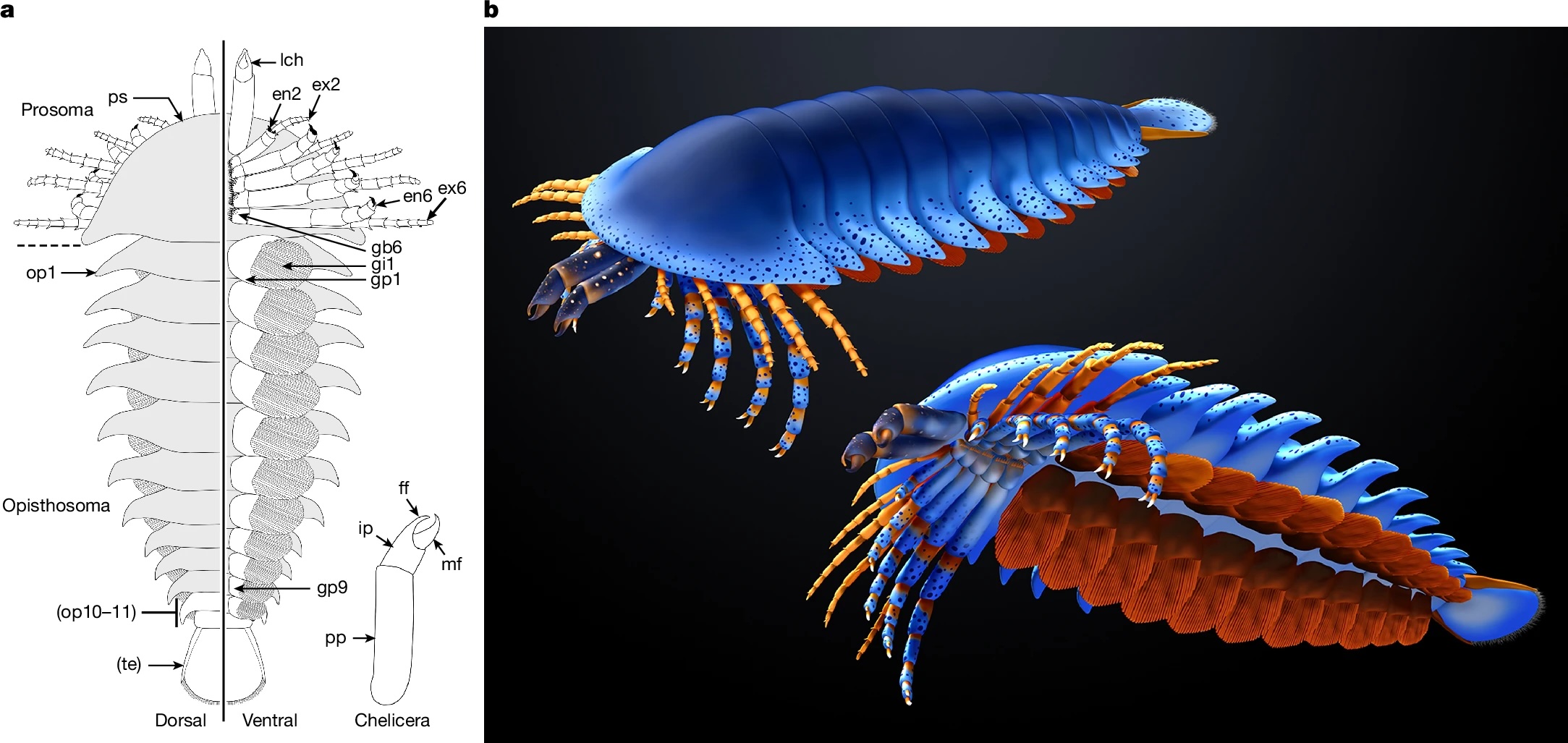
Show me a 500 million year old chelicerate, and I’ll be happy for a day. Look at this beauty, Megachelicerax cousteaui, excavated from a Utah fossil bed.

Anatomic reconstructions of the dorsal (left) and ventral (right) morphologies. b, Artistic reconstructions by M. Hattori illustrating oblique views of the dorsal (top) and ventral (bottom) morphologies. The sanctacaridid-like morphology of the posteriormost body region is speculative. gi, gill (that is, a set of gill lamellae); te, telson.

Pretty cool, right? The best part of it is that pair of appendages at the very front of the animal — those are chelicerae, the biting/chomping/chewing/venom-injecting bits of a modern spider, that make them distinct from insects, which only have antennae at that end. That makes this the oldest known chelicerate ever discovered. It was a swimming marine animal, and doesn’t have the legs we associate with spiders — chelicerae evolved first, legs much later.

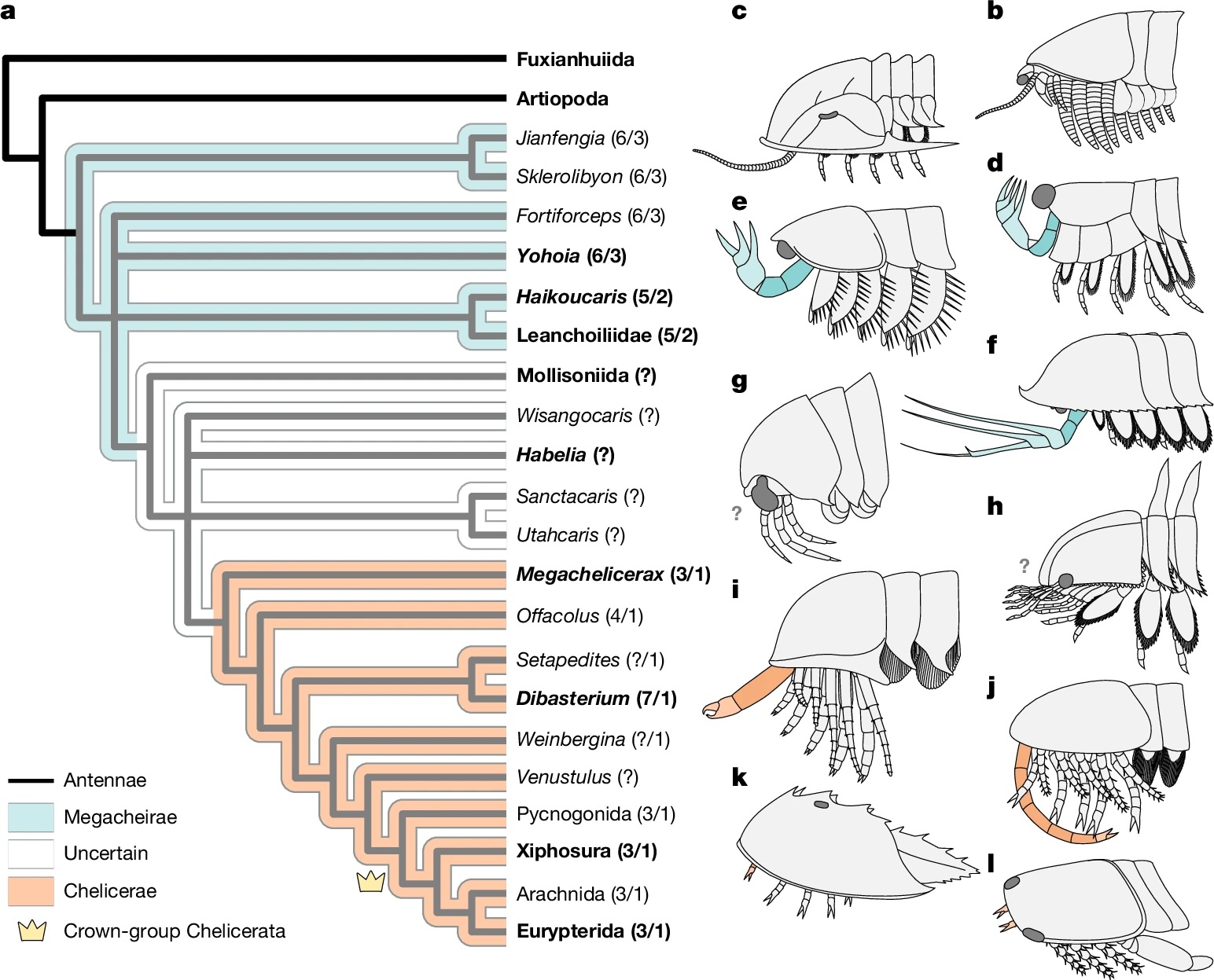
Also, this isn’t just the mother of spiders, but is also the mother of a huge family of cousins: horseshoe crabs, eurypterids, as well as spiders.

Megachelicerax documents the oldest stratigraphic occurrence of chelicerae (that is, uniramous, unichelate deutocerebral appendages) and bridges the simple body and limb organization of Cambrian megacheirans with the more derived anatomy of post-Cambrian synziphosurines and crown-group chelicerates. a, Simplified consensus topology based on Bayesian analysis (Mk model, 4 chains, 5,000,000 generations, 1/1,000 sampling resulting in 5,000 samples with 25% burn-in resulting in 3,750 samples retained); detailed results and comparison with parsimony provided in Extended Data Fig. 6. The numbers in parentheses correspond to the total number of podomeres and the number of chelae, respectively, present in the deutocerebral appendage. Taxa whose names are in bold font are illustrated in b–l. b–l, The morphology of the anterior body region in select taxa. b, Fuxianhuiid Chengjiangocaris kunmingensis (Cambrian, Stage 3). c, Artiopod Olenoides serratus (Cambrian, Wuliuan). d, Megacheiran Yohoia tenuis (Cambrian, Wuliuan). e, Megacheiran Haikoucaris ercaensis (Cambrian, Stage 3). f, Megacheiran Leanchoilia superlata (Cambrian, Wuliuan). g, Mollisoniid M. plenovenatrix (Cambrian, Wuliuan). h, Habeliid Habelia optata (Cambrian, Wuliuan). i, M. cousteaui (Cambrian, Drumian). j, Synziphosurine Dibasterium durgae (Silurian, Wenlock). k, Xiphosurid Limulus polyphemus (recent). l, Eurypterid Slimonia acuminata (Silurian, Llandovery–Wenlock).

That is one wildly successful tree. It just goes to show that you can go on to do great things even if your face looks like a nest of spiky clawed jointed tentacles.


Rudy Lerosey-Aubril, Javier Ortega-Hernández. A chelicera-bearing arthropod reveals the Cambrian origin of chelicerates. Nature, 2026; DOI: 10.1038/s41586-026-10284-2