Spiders in Spaaaaaaaace!

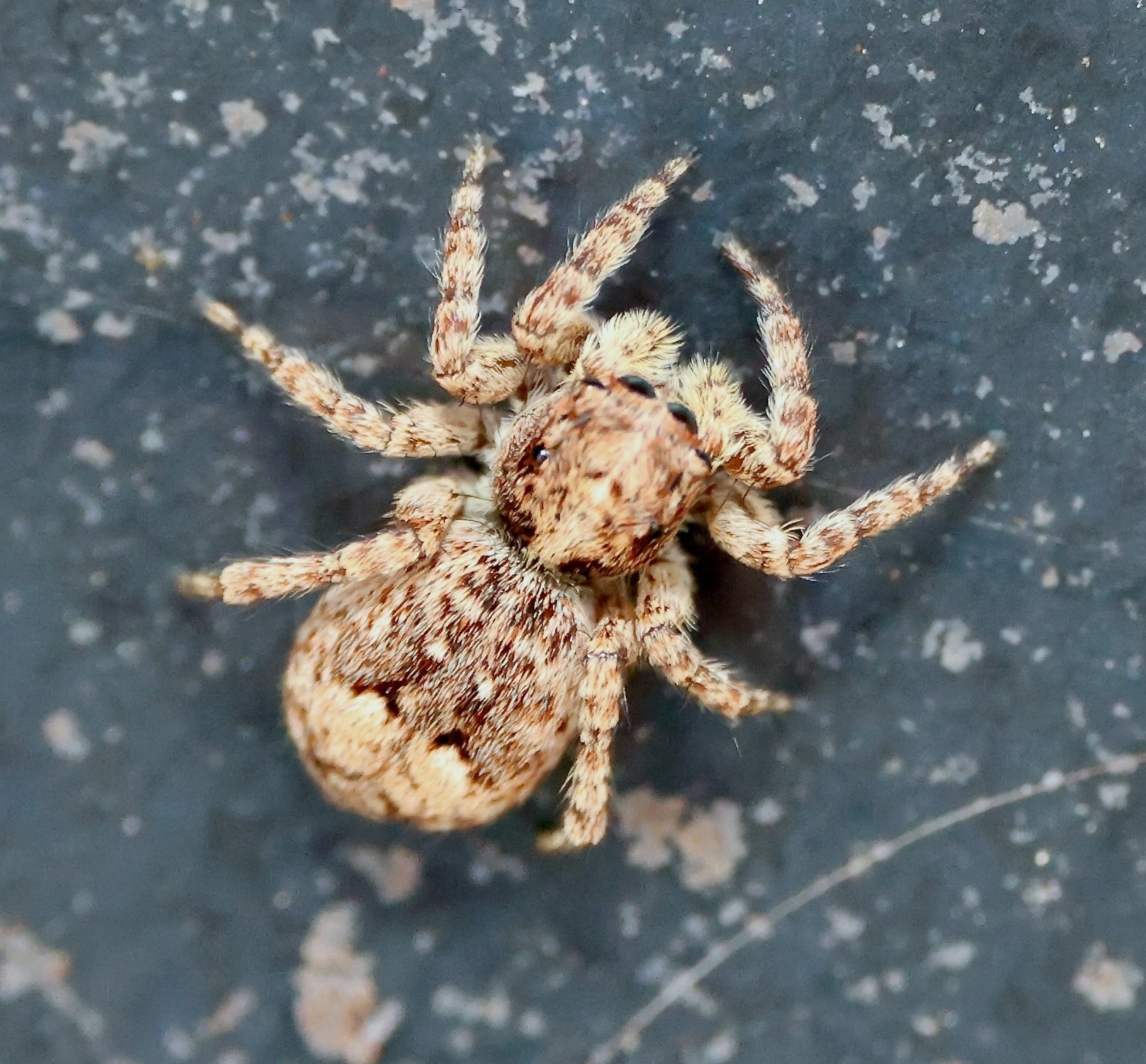
A pair (not really a pair, they were of two different species) spent a few months on the International Space Station. The article about them says “Two ‘spidernauts’ were studied to see how they adapted to microgravity – with surprising results,” but doesn’t bother to say what the surprise was.
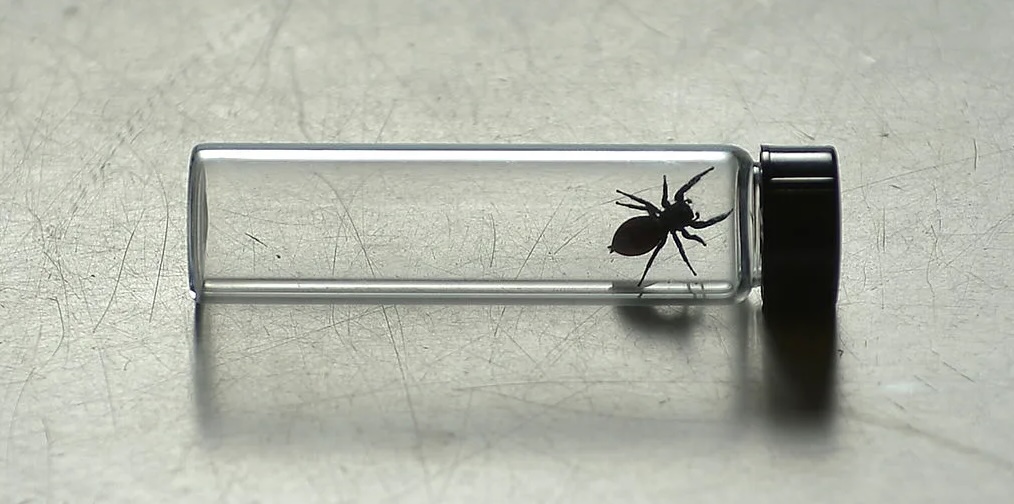
WASHINGTON, DC – NOVEMBER 29:at the Smithsonian National Museum of Natural History on November 29, 2012 in Washington, D.C. Nefertiti, the Johnson jumping spider, has found a new home at the Insect Zoo in the Museum of Natural History, after a 100 day voyage in space as a resident aboard the International Space Station. (Photo by Ricky Carioti/The Washington Post)

I think the surprise was that there was no surprise — they adapted to microgravity easily, which is what I’d expect. These are two animals who go through life constantly tethering themselves to their environment with a silken dragline. Of course they were able to cope with a space environment. They orient themselves with tactile senses, and were probably just surprised at how much easier and more effective their jumping was.

Sadly, they did not last long on return.

The mission set a record for longest time spent in space by a spider (100 days). While Cleopatra died on returning to Earth, Nefertiti would also become the first spider to survive the voyage home, and successfully readjusted to gravity.

After her marathon mission, she was destined for a long, cosy retirement. She was put on display at the National Museum of Natural History in Washington, where she was placed in a custom enclosure and died four days later.

Again, this is not surprising. Jumping spiders are not long-lived species even when not launched up into orbit on a rocket.

However, I do not appreciate hearing about death shortly after retirement, with my own retirement only a year away.

Learning about birds

I learned about an interesting bird this morning, the American Dipper, a freshwater diving bird. I didn’t know they existed.

It was particularly fascinating to me because the narrator looks so much like my late brother, when he was younger. Also, he has a pleasantly casual narrative style — I’d recommend him to replace David Attenborough, in part because he sounds nothing like him.

It’s summertime, and you know what that means…

Probably not what you think it means. To me, it means cold, a terrible chill in my lab that makes it uncomfortable to work there, just as I’m getting the freedom to work there. Every summer, when the physical plant starts working to cool the building, they seem to start with refrigerating my lab space. The whole building is out of balance, so while my lab is sitting at a chilly 15°C, the lab right next to mine is a feverish 27°C. It has been driving me mad for years, and nothing ever gets done to fix it.

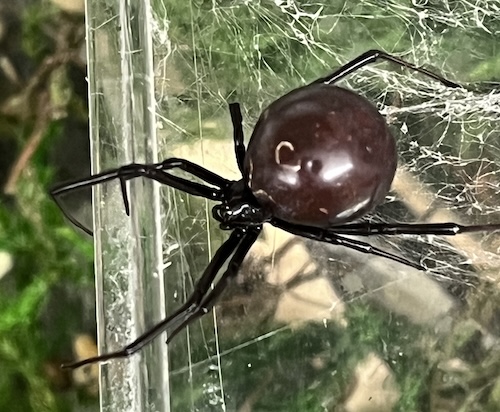
It’s not good for the spiders, these Southern belles that were collected in Florida and dragged up to Minnesota.

They’ve all got heating pads under their cages, but there’s a steep gradient from the floor of the cage to the top, so no wonder they’re all huddled as low as they can get all the time. The babies are in incubators, so they don’t care, yet…but once they get to a size that demands more space, I have to move them out into the main lab.

It’s not good for me, either. I have to wear my winter coat every day to keep warm at the microscope and computer. I have to yell at the administration, but maybe you’ve noticed that I’m rather soft-voiced and apparently totally ineffectual.

My plan for this week, as my teaching responsibilities diminish, is to pack up all the adult spiders and bring them home. Don’t worry, I’ve already cleared it with Mary.

Maybe I should pack up all the microscopes and computers and bring them home, too. The university isn’t making the effort to create a livable working environment, so they can’t complain if I abscond with all the gear and instruments, right?

Suspicious!

We have a president who is notorious for openly despising journalists. For years, he has been shunning the White House Correspondents Dinner, where, in the past, some speakers have mocked him, and where he would be surrounded by people who write rude things about him. He finally plans to attend. Gunshots ring out, secret service agents rush in, quickly bundle the politicians out, and the whole event was cancelled.

Dog help me, I’m suspicious that the police-led shutdown of the event was the whole point. I don’t want to be a conspiracy theorist, but it was all too pat — the establishment was looking for a pretext, and they found one. No one was hurt, they had a fun kerfuffle, and this year’s WHCD was silenced while the administration gets to claim persecution.

Afterwards, the president said nothing about how there are too many guns too freely available — instead, he spoke to the press about how this justifies his ballroom, which would be more secure and safe.

I hate thinking this way, but this country feels like it’s built on money, lies, and cheap stagecraft right now.

What a waste of an evening

The White House Correspondents Dinner is happening tonight, featuring remarks by the president himself. I won’t bother listening, because not only do I despise Trump, but it’s a room full of sycophants who have, with rare exceptions, enabled him.

I think Michelle Wolf had the perfect comment:


Comedian Michelle Wolf’s joke at the 2018 WHCD
resonates more today: “I think what no one in this
room wants to admit is that Trump has helped all of
you. He couldn’t sell steaks or vodka or water or
college or ties or Eric, but he has helped you. He’s
helped you sell your papers and your books and your
TV. You helped create this monster, and now you’re
profiting off of him.”

Revealing photos

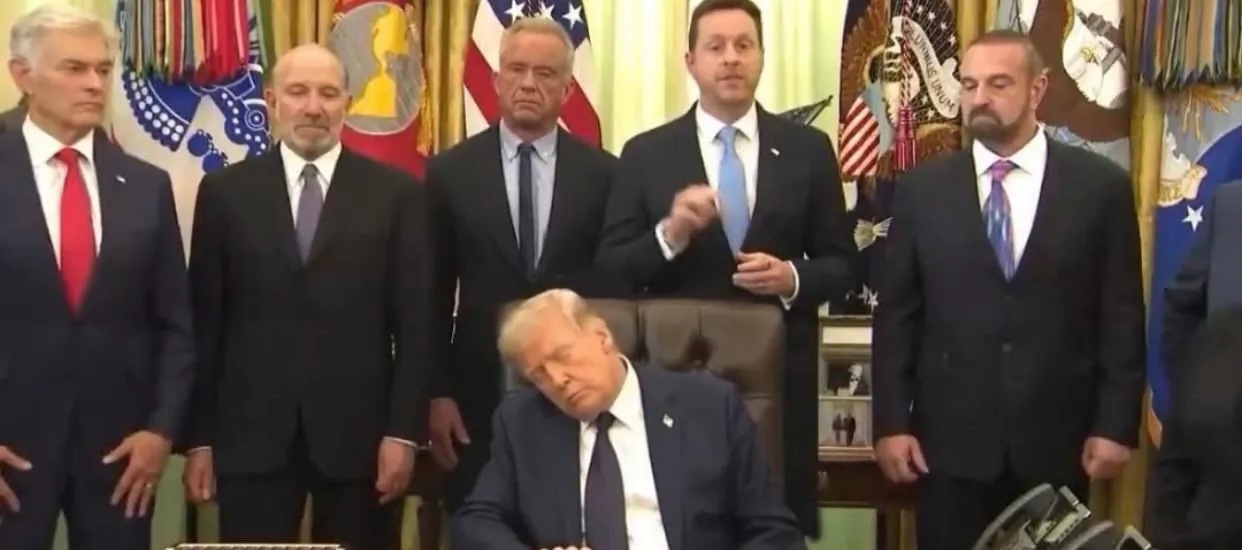
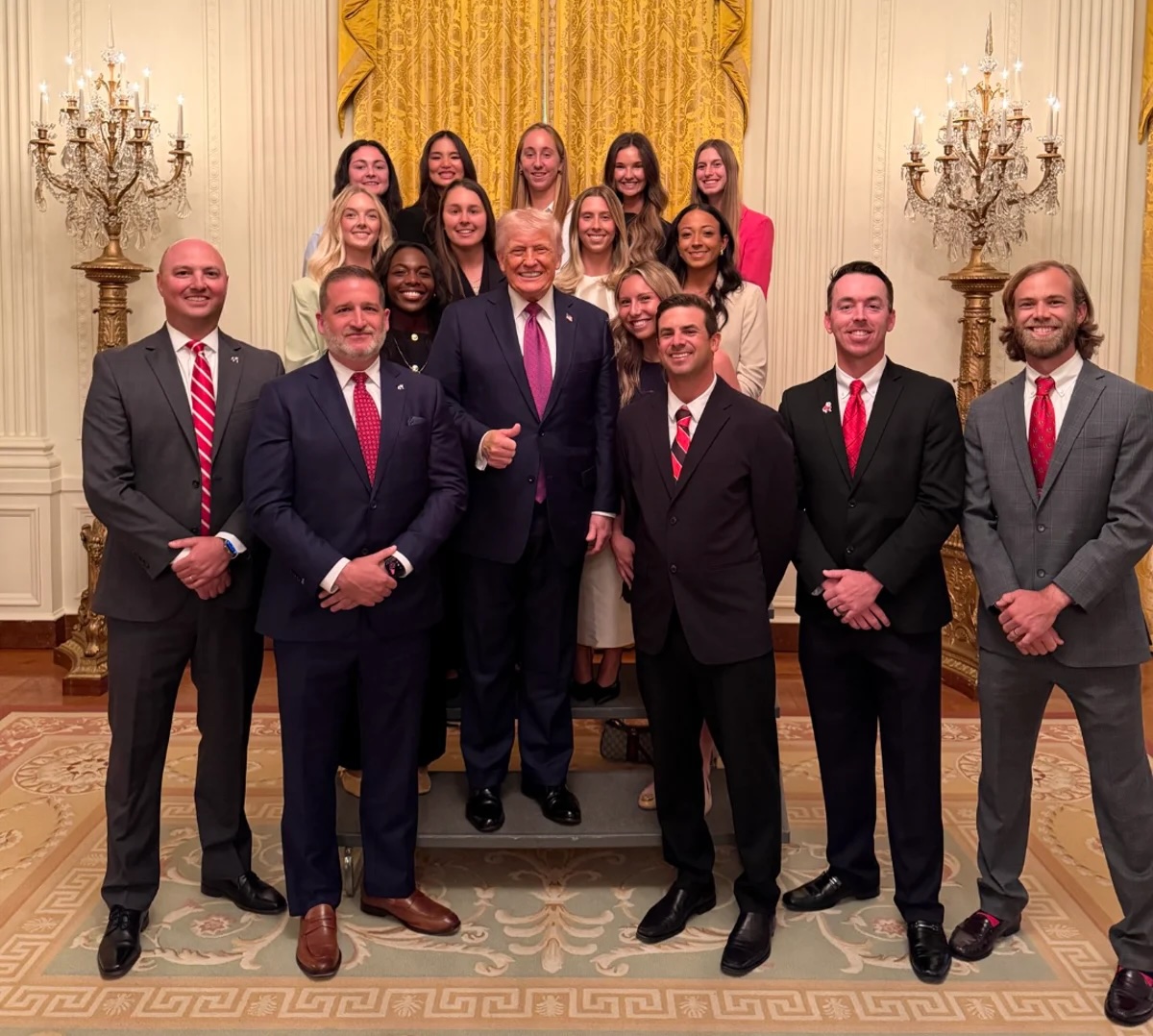
Two presidential photo ops:

The photographer who caught that one will be shot later today.

The subject for that one is the Georgia women’s tennis team. Can you tell? They’re the ones tucked away in back, behind the old white men in suits with garish red ties.

You now know everything you need to know about the current administration.

Now tempted to run a casino out of my house

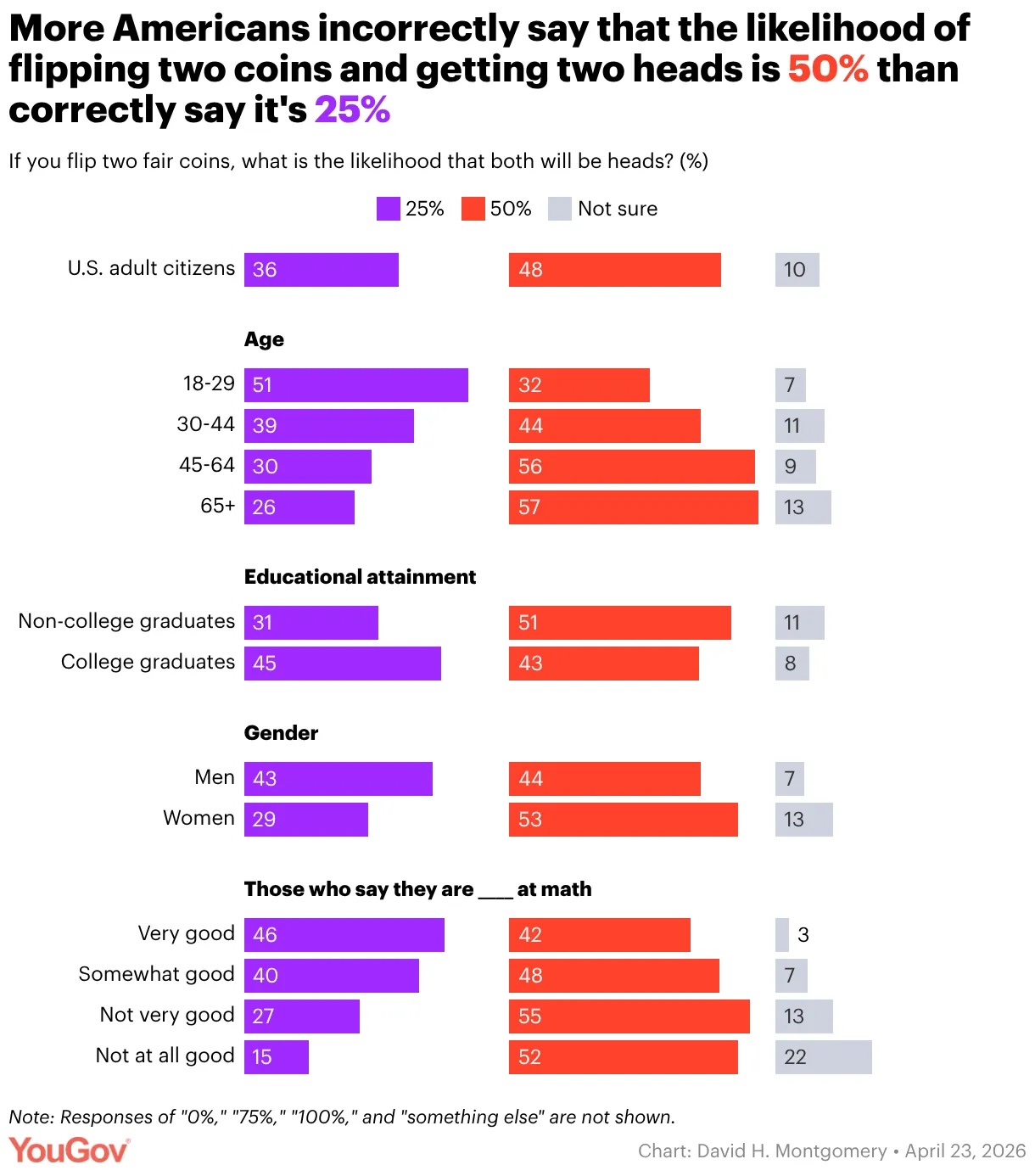
Yikes. These data jerked me right back to the first lab of my genetics course, where we learn basic principles of probability with exercises in coin flipping and dice rolling.

More Americans incorrectly say that the likelihood of flipping two coins and getting two heads is 50% than correctly say it’s 25%

I never even thought to ask them if they had a different, incorrect assumption about probability, we just did ‘experiments’ to see what the results were (and also learned some simple statistics and calculations). I am confident that if my students were asked this question they’d say 25% with no hesitation…although they might also go on a bit about chance variation and bell curve distributions.

Although the ignorance on display in that chart might explain a different phenomenon: US gambling addiction is ‘out of control’ as betting markets boom, policy expert warns. Yeah. I swear that almost half the ads I see online are about betting.

Prediction market platforms – where users can bet on everything fromaward winners and war developments, to what someone might wear, or what an artist will sing on stage – have meanwhile surged in popularity in the last few years, with more than $1bn traded on Kalshi during Super Bowl Sunday alone.

Prediction market platforms contend that they are not gambling platforms, but rather financial trading platforms. Critics argue they are gambling under another name.

It’s gambling.

It’s preying on stupid people. That chart says that that’s about 48% of the US adult population, so I can see how it’s lucrative.


Wait. I just noticed the footnote on the chart: “Responses of ‘0%’, ‘75%’, ‘100%’, and ‘something else’ are not shown”. I assume that’s the difference between the frequency of responses shown and 100%, but I want to know how deep the ignorance runs.

An adorable baby

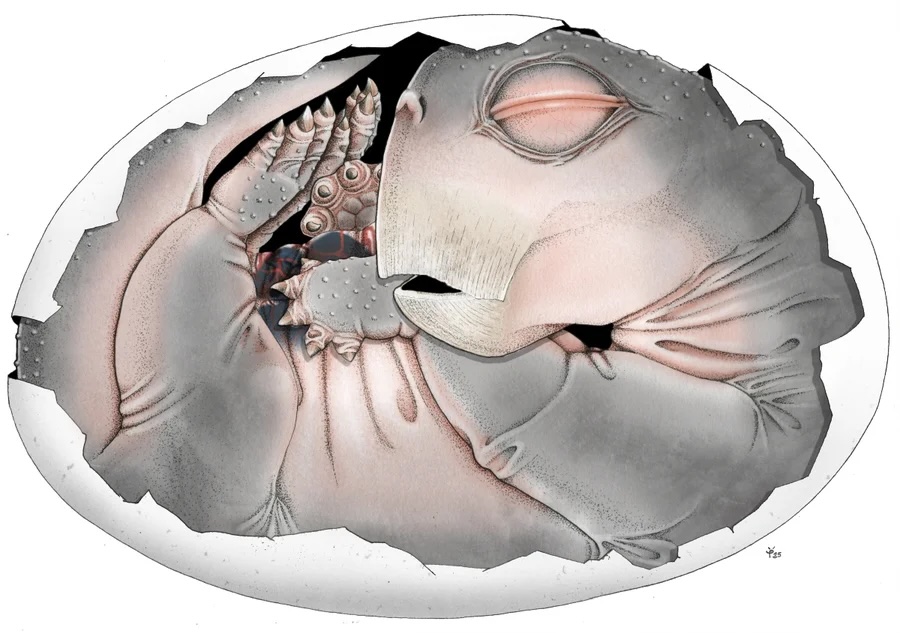
What a cute little dead baby.

That’s a Lystrosaurus embryo. If you don’t know Lystrosaurus, it’s an amazing species that survived the Permian extinction and experienced a remarkable population boom — it was a large vertebrate that came to dominate the planet after that mass extinction, yet most people have never heard of them. We ought to pay more attention! Memento mori, and all that.

Anyway, this fossil answers the least surprising question ever.

Detailed imaging of a 250-million-year-old fossil has revealed the first proof that the ancestors of mammals laid eggs. The discovery answers a long-standing question about the reproductive biology of our ancient forerunners and hints at how they managed to flourish in the aftermath of the biggest mass extinction in Earth’s history.

Scientists have long assumed that the ancestors of mammals—a group known as the therapsids—laid eggs like today’s platypuses and echidnas do. But they lacked any direct evidence of synapsid eggs in the fossil record.

It’s good to be able to tick off that one box, confirming that Permian therapsids laid eggs, but it’s hardly news. I thought this was much more interesting:

Most importantly, the new images reveal that the two halves of the lower jaw had yet to fuse in the youngest Lystrosaurus specimen. In turtles and birds, the lower jaw fuses before birth, allowing the baby to feed itself after hatching. The unfused lower jaw of this Lystrosaurus is therefore another indication that the animal died while still in its egg. The other two specimens exhibit signs of having been somewhat more mature; the largest one was preserved in a splayed-out posture that shows it was not in an egg and had traveled some distance before dying.

Mammalian ancestors invested more in maternal care than some other organisms. That might be a clue to how our clade survived through a couple of mass extinctions.