Barbenheimer will be an improvement over the latest hot conspiracy theory fraud

My wife actually asked me if we could see the Barbie movie, which is opening at our local theater this weekend. Of course we can! I was looking forward to it already. It looks to be trippy and fun.

As the media have frequently mentioned lately, because they do love a contrast, the Oppenheimer movie also opens this weekend (but not at our theater.) Cool, I’d like to see that one, too, even more than Barbie. They’re different movies, there isn’t any real conflict between them. Here’s an article that says ‘Barbie’ and ‘Oppenheimer’ tell the same terrifying story.

The underlying premise of all the jokes — that these films come out on the same day but are about hilariously different subjects and have wildly different tones — is misguided. The two movies actually have a fundamental, and disturbing, common ground. J. Robert Oppenheimer, the man behind our nuclear age, and Barbie — a toy that takes over three cups of oil to produce before it lingers in landfills around the world — both tell the story of the dawn of our imperiled era.

“Barbie” and “Oppenheimer” each offer a window into the creation of the Anthropocene, the suggested term for our present geological epoch, in which human beings have become the most significant influence on the natural environment at a planetary scale.

That’s an interesting connection: how do we define the anthropocene, by all the piles of plastic or the global dusting of radioactive isotopes?

Either works for me, they all coexist in a narrow slice of time, only a century long. On a geological scale, either one provides a sharp boundary.

Like I said, I’d like to see both movies. Unfortunately, Oppenheimer isn’t booked locally in the near future. Instead, we’re getting served Sound of Freedom after Barbie, a conspiracy-theory fueled abomination of a movie (see Rebecca Watson for why it’s bad). I predict it’ll clean up at the box office in our little corner of Red America.


I always wondered how you can be a university president & on the board of pharmaceutical companies & run a gigantic research lab

I know that guy! That’s Marc Tessier-Lavigne! He’s about my age, and we shared similar interests — we were both interested in axon guidance, and I followed his work avidly some years ago. He was publishing about netrins, signaling molecules that affect the trajectory of growing neurons, while I was studying growing neurons in grasshopper embryos. I met him several times, I attended talks he gave at various meetings, it was hard to avoid Tessier-Lavigne.

Our careers followed very different paths, though. I ended up teaching at a small liberal arts college, while he got a position at UCSF, and then was CSO at Genentech, and then was president of Rockefeller University, was on the boards of various pharmaceutical companies, and finally was president of Stanford University. He was a major go-getter, running gigantic factory-style labs, getting regularly published in Science and Nature and Cell. It was a life that looked horrible to me, just as my life of obscurity and teaching would have looked horrible to him, if ever he had deigned to notice me.

Why would I have disliked the prestigious path he took in science? Because he turned himself into a manager, a guy who was disconnected from the science that was being done in his massively well-funded labs. Ick. I’d rather play at the bench and help students get enthusiastic about doing science.

I may have chosen wisely, because now Tessier-Lavigne has been compelled to resign as an investigation found evidence of fraud in his work. Yikes. This is bad.

The Board of Trustees’ inquiry stopped short of accusing Tessier-Lavigne — who has been Stanford’s president since 2016 — of fraud, saying there’s no evidence he “personally engaged in research misconduct.”

However, it was concluded that five papers on which Tessier-Lavigne was a principal author included work from “some members of labs overseen by Dr. Tessier-Lavigne” who had “either engaged in inappropriate manipulation of research data or engaged in deficient scientific practices, resulting in significant flaws in those papers.”

When the issues emerged, “Tessier-Lavigne took insufficient steps to correct mistakes in the scientific record,” the board’s report said.

This is what happens when you become an over-worked administrator with your fingers in too many pies. That does not excuse him — he has his name on so many papers, and getting an authorship entails significant responsibilities — and it just tells you the kind of peril ambition can put you in.

I’ve been teaching about netrins and robo and neuropilins and all these molecules in neurodevelopment for years. Am I going to have to put an asterisk by the source papers and review their validity now? I’m hoping the descent into sloppiness was a late-career problem that doesn’t call into question all the fundamental stuff he did.

I double-dog dare you to pronounce that name

New movie marketers decided to use the Greek alphabet in their poster, and caused my brain to stutter.

There is no “C” in the Greek alphabet; they should have substituted a Κ, kappa. No “L”, but there is a lambda, Λ. We get a sigma instead of an “e”, which is pronounced like an “s”. Then an omicron, so that part is OK. P is rho, it is pronounced like an “r”. Greek has a perfectly good, familiar letter A, alpha, but they put a delta, Δ, in there. That’s a “d”. Then a tau, Τ, which is a fine “T”, and an “R” character which doesn’t exist and should be a Ρ. Then it ends with another “d”.

I think that whole gemisch is pronounced “??sordt?d,” somehow, and I now have no confidence in the historicity of whatever this movie is.

I wonder if they plan to distribute this movie in Greece with that poster?

Progress in embryo analysis!

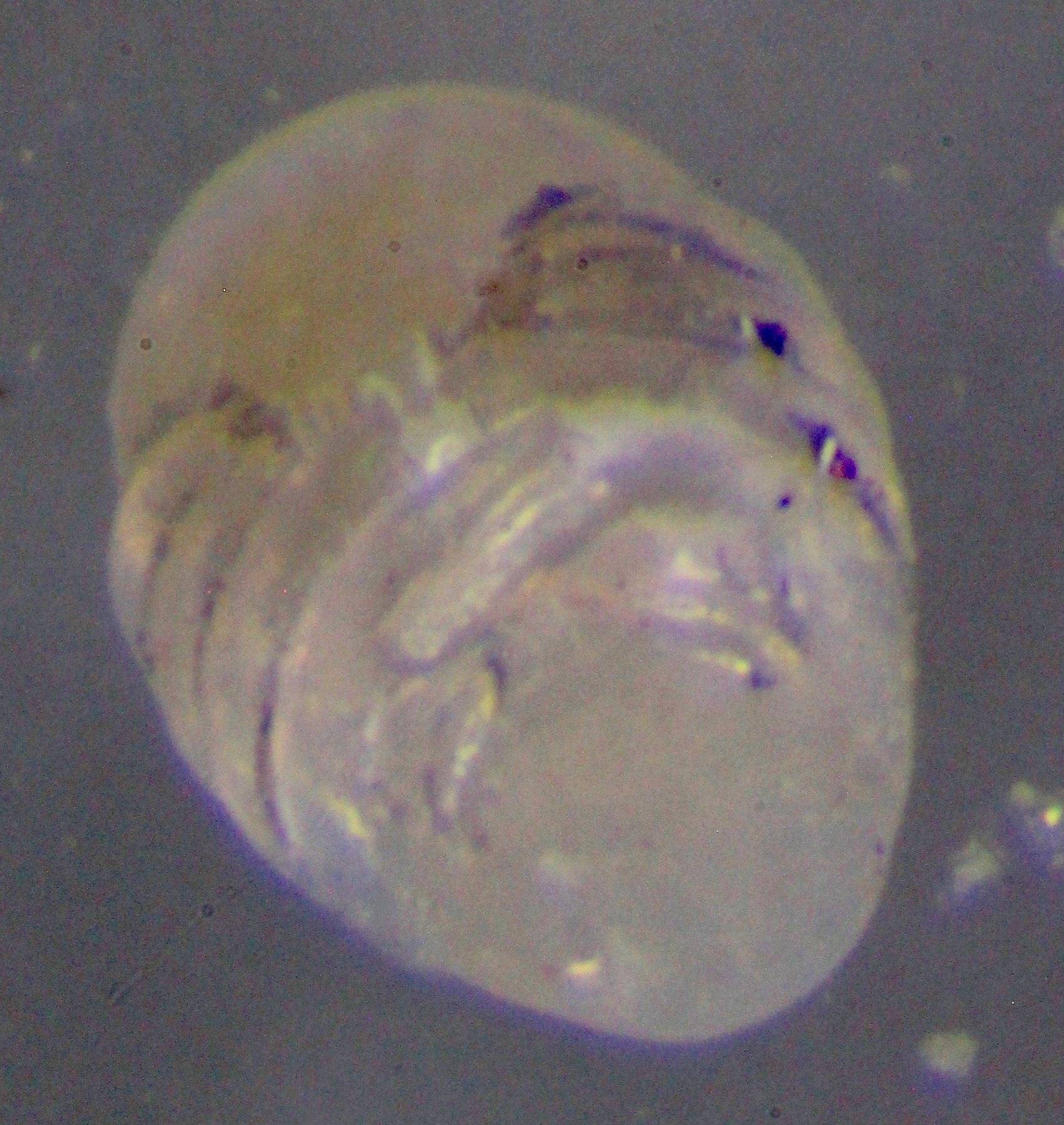
Our new development in spider development is pretty basic stuff. We’re dechorionating embryos! That is, stripping off a thin membrane surrounding the embryo, so we can do staining and fixation and various other things. It’s a standard invertebrate technique — it turns out you can remove it by just washing them in bleach. Look, it works! This is a Parasteatoda embryo.

We’re still tinkering with the timing of the treatment. Five minutes is way too long, which basically dissolved the whole embryo. All it takes is a brief wash to break the chorion down. We’re also working out methods for manipulating them — they’re tiny! Just pipetting them into a solution is a great way to lose them. We’re now using a cut off microfuge tube to make a cylinder that we cap with a sheet of fine nylon mesh, to lower them into the solution. Of course, then we have to separate the embryos from the mesh. Fortunately, we opened up one egg sac and 140 embryos rolled out, so we have lots of material to experiment on.

The next question is whether they survive our abuse. We’ve got some of them sitting under a microscope, time-lapsing their response. We’ll see if they grow…or die and fall apart.

Ending the legacies!

Conservatives cheered the Supreme Court decision to eliminate consideration of race in university admissions. I have to wonder if they’ll be so happy about this other change at the University of Minnesota.

Admissions officers working on the U’s Twin Cities campus, which typically enrolls about 55,000 students, say they have long used a “holistic review” process that places the greatest weight on an applicant’s academic track record. But it also allowed them to report 10 additional attributes that were sometimes used to distinguish between otherwise similar candidates.

The university announced late last week that it would stop considering an applicant’s race, ethnicity or ties to U alumni or faculty — though it would still ask “for this optional information for recruitment and communication purposes about programs and services offered.”

Undergraduate student government leaders said Tuesday that they welcomed the effort to eliminate legacy admissions, noting some other colleges had already done so. But they wanted to know more about the plan to stop considering race and ethnicity, saying they believe it’s crucial to have a diverse campus.

Oh god yes. End the legacy admissions. If you’re going to eliminate biases in admissions, the first place you should start is ending the privileges that give preferential status to children of alumni. The only reason to benefit them is the hope that alumni will give them more money.

I don’t think Republican businesspeople and professionals realized how much of an advantage they’ve had, and now it’s going to be gone (optimistically — I don’t believe someone who donates money for a building on campus is going to find their kids rejected, not matter how unqualified they are. After all, our appointed interim president brings nothing to the school except his affiliation with Hormel.)

It’ll be interesting to see how this works out.

Gosh, I sure hope Marjorie Taylor Greene keeps working for the Biden campaign

I worried that this ad by Joe Biden that quotes Marjorie Taylor Greene saying favorable things about him was a quote mine. I’m so used to creationists pulling out short quotes that mean something completely different from what the author intended that I was afraid the Democrats might be pulling the same dishonest stunt, because we know she hates him. But MTG words do make a pretty good campaign ad.

So I looked a little deeper. She actually said those things in a speech to TPUSA; she actually thought these things are bad for the country.

“Joe Biden had the largest public investment in social infrastructure and environmental programs,” Greene says in the ad, while images of the president smiling in various locations are shown as upbeat music plays. “That is actually finishing what FDR started, that LBJ expanded on and Joe Biden is attempting to complete.”

“Programs to address education, medical care, urban problems, rural poverty, transportation, Medicare, Medicaid. And he is still working on it,” she continues just before a Biden/Harris campaign logo appears on screen to end the video.

WTF? “education, medical care, urban problems, rural poverty, transportation, Medicare, Medicaid” are unpopular, awful programs for a president to promote, so she seeks to saddle him with that? FDR was one of our greatest presidents, and that’s a comparison she wants to make? That’s nuts, but it’s actually what she thinks.

Clinching it, MJT posted a response to Biden’s ad, and it’s a different excerpt from her TPUSA speech, filling in the gaps in Biden’s thoroughly edited version. What she was trying to communicate, poorly, was that Biden is a big fat socialist.

Lyndon B. Johnson is very similar to Joe Biden. How are they the same?

They’re both Democrat Socialists.

Lyndon B. Johnson was the majority leader in the Senate. Does that sound familiar?

He was Vice President to Kennedy. Joe was Vice President to Obama.

He was appointed as the president after JFK was assassinated, then he was elected.

His big socialist programs were the Great Society.

The Great Society were big government programs to address education, medical care, urban problems, rural poverty, transportation, Medicare, Medicaid, food stamps, and welfare, the Office of Economic Opportunity, and big labor and labor unions.

Now, LBJ had the Great Society, but Joe Biden had Build Back Better, and he still is working on it.

The largest public investment in social infrastructure and environmental programs that is actually finishing what FDR started that LBJ expanded on, and Joe Biden is attempting to complete, socialism.

Biden is not a socialist, not even a Democrat Socialist. He is not trying to complete socialism, whatever that means. If the Great Society programs were socialism, then hooray for socialism, give us more of that, please.

Clearly, MTG was trying to put down Biden by chanting socialism, socialism, socialism at him, but by spelling out what socialism means to her, she’s basically educating everyone on what a good thing socialism can be.

Pay attention, Biden. Greene is actually telling you what works.

Burying the dead

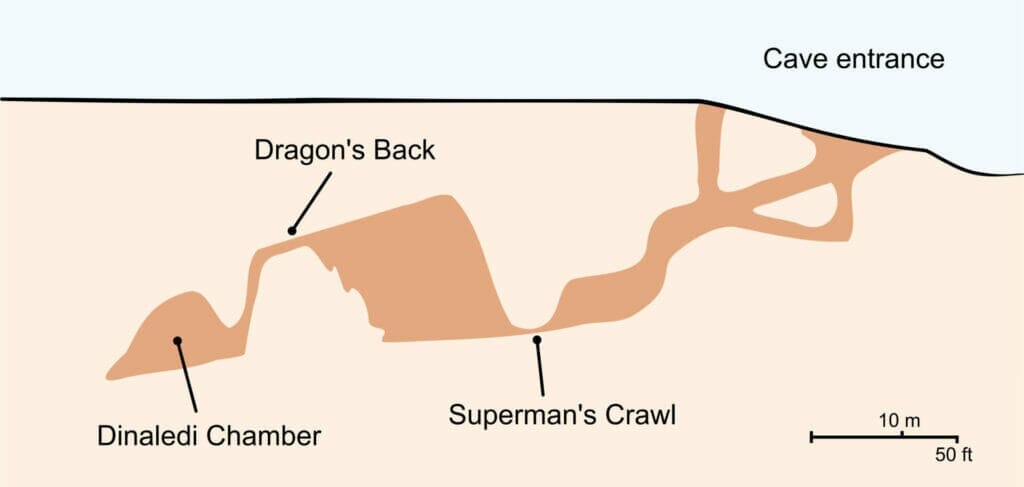
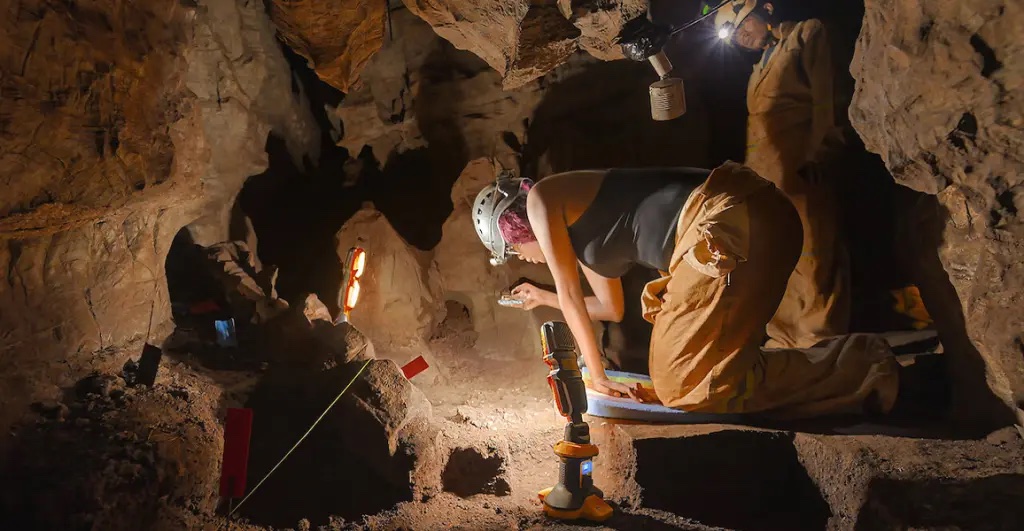
If you have a subscription to Netflix, you might want to watch Unknown: Cave of Bones, about the discovery of Homo naledi in the Rising Star cave system. It’s spectacular.

On the other hand, if you’re claustrophobic, you might want to skip it. I’m not particularly, but I watched the video of those women wriggling their way down a narrow crack to reach the Dinaledi Chamber gave me a rising sense of panic. There’s no way I could put myself in that position without having a screaming heebie-jeebie fit.

If you can get past that, though, it’s worth it to watch the adventure of science.

Yes, please: death to the lawn!

If only everyone would pay attention to this video.

Lawns are deserts for living things. Rip ’em up and replace them with diverse species, even the “weedy” ones. We’re trying to evolve our yard away from the boring monoculture, but doing so gradually; Mary has been actively planting a lot of things that are not turf grass, like milkweed.

Also, I work at a so-called ‘green’ university, which is green in some ways and terribly destructively traditional in other ways. We’ve got vast empty grassy lawns, which I suppose are great for scenic views of students playing frisbee, but not much else. I recently found out that those nice fields of grass are regularly sprayed with Q4, and a few years ago I discovered that we were hosing the shrubbery with an insecticide, specifically to kill the grass spiders that would accidentally end up in the buildings. Could we not? Could we maybe let wild nature take over? We’ve got some areas planted with native prairie grasses and forbs, and they are freakin’ gorgeous — the campus would be so much more attractive if the whole place were covered in exuberant foliage, rather than the stubby boring green stuff.

The spiders would be much happier, too.

Exploring underground

It wasn’t quite as thrilling/perilous as a D&D dungeon crawl, but we did walk through the steam tunnels beneath campus, and survived. I think we saw two living spiders, a moth, a few mud dauber nests, and some ghastly slime, but that’s about it.

It is impressive how extensive the tunnels are…and we never really notice them. Apparently we can get to every building on campus without stepping outside, except that most of the access doors are locked for safety reasons: there are asbestos covered pipes everywhere, cables snaking around the ceiling, and hot metal supports that it would be unwise to touch.

But now I know how to get into them whenever I want!