It’s only about 200 years old, pulling a DNA sequence out of a hair sample is a piece of cake. So Beethoven’s DNA has been sequenced. He even gave permission!
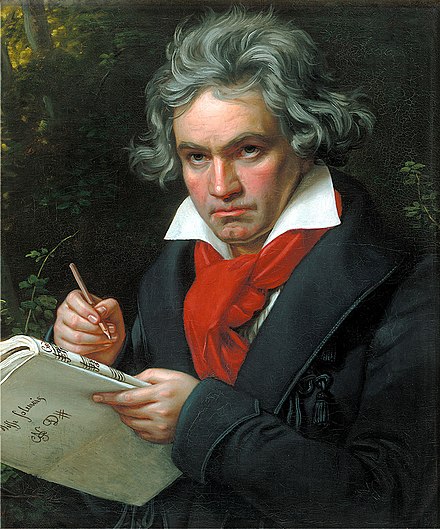
In 1802, German composer Ludwig van Beethoven wrote a heart-wrenching letter to his brothers, describing the deafness that forced him to “live like an exile” and yearn for death. Beethoven kept going for another 25 years, propelled by his music, but he begged them to have his hearing loss studied and publicized, so that “so far as possible, the world may be reconciled to me after my death.”
Two centuries later, a team of international researchers has answered that plea by sequencing Beethoven’s DNA, preserved in locks of his hair that collaborators and fans collected as treasured keepsakes.
The central ailment of Beethoven’s life was his hearing loss, which began in his mid-20s. He also suffered from debilitating gastrointestinal symptoms and attacks of jaundice. An autopsy revealed that he had cirrhosis of the liver, pancreatitis and a swollen spleen. Medical biographers have debated what killed him and whether his liver disease was the result of excessive drinking or some other cause.
There are limits to what you can do with DNA. They found no genetic evidence for his hearing loss. They did find signs of a susceptibility to liver disease, and that he had hepatitis B. There is absolutely no indication of a genetic source for his musical talent. I’d go so far as to say it is silly to select a 19th century person for a genetic analysis on the basis of musical ability, which is mostly going to be due to circumstance, rather than intrinsic nature (there may be exceptions, like the heritability of perfect pitch, but even that is pretty wobbly.
They did discover something that ol’ Ludwig Van would not have anticipated and probably wouldn’t want advertized.
The analysis also yielded a surprise: Beethoven’s Y chromosome didn’t match those from living relatives. The common relative they all share was Aert van Beethoven, who lived in the 16th century. Somewhere in the seven generations between Aert and Ludwig van Beethoven, a woman in the family tree had a child with an unknown man, and Beethoven seems to be a descendant of that pairing.
We’ve probably all got evidence of ancestral indiscretions in our genes, though, so that shouldn’t reflect on Beethoven, or on his unidentified female ancestor.