The difference between science and porn…

…seems to be the number and size of the cameras, and their location. “Scientists” (who are not named, nor is any published work cited) placed tiny cameras on a penis and inside a vagina and recorded intercourse between two people. Why, I don’t know. There doesn’t seem to be any question asked or answered. It also seems to perpetuate a lot of invalid myths, like that sex in the missionary position is better for conception, and generalizes stories about the G spot to all women.

Although extremely explicit (do not watch it at work!), it’s also the most unsexy thing I’ve seen in ages. All it made me wonder about was how they kept fluids from sliming up the camera lens.

By the way, a hint to future “investigators”: dubbing in cheesy porn-style music over the action doesn’t make you look any more serious — it suggests something about the background of the people making the movie, actually. Also, if it’s science, the first thing I want to see is a hypothesis that is being tested, and no, “how close can I get a camera to this woman’s vulva” is not a particularly interesting question.

An honest appraisal of evo devo

In a review of a new book edited by Alan Love, The evolution of “evo-devo”, Adam Wilkins makes a few telling criticisms of the sub-field I enjoy.

Evo-devo has come a long way since 1981 though the Dahlem Conference laid some of the important groundwork for what followed and was, indeed, widely appreciated as having done so. Yet, troublingly, the field remains, for many evolutionary biologists, something of a side-show, a “boutique” subject within evolutionary biology as a whole. Several of us, in the 1990s, warned that this might happen. This is in contrast to some of the early expectations, which involved positing a coming central role for this discipline within evolutionary biology as a whole. A few of the contributors evidently feel that it has achieved such a position but I think that a broad survey within biology would reveal that not to be the case. If it failed to develop its full potential, why? Opinions will vary but my own hunch is that one factor is that the field has largely avoided incorporating much of the rich material that developmental genetics offers for understanding developmental and morphological change. The one general concession to such genetics, noted in passing in one of the chapters, is the insistence that most developmental change in evolution involves alterations in cis-regulatory elements for regulatory genes. There is, of course, good evidence for this but it is not the whole story and ignores both other mechanisms and the possible dynamics of the incorporation of such change in populations. That last thought, however, introduces what is, in my view, the second weakness of the field: evo-devo remains largely a zone devoid of population thinking. The great strength of classical evolutionary biology was that it focused on the nature of transformation of populations over time – both genetically and phenotypically – and provided a crude general mechanism for understanding such transformations. Its corresponding failing was that it largely ignored the details of the source materials for such change. Evo-devo’s main strength and weakness are just the reverse. These reciprocal differences in emphasis amount to perceptual and intellectual differences about what is important in considering evolutionary change. Such differences in attitude continue to create a divide between evo-devo and classical evolutionary biology. This volume does not address this issue at all and I think that is a regrettable omission.

I’ve highlighted the two key points, although I think they’re both rooted in the same problem. 1) I think there is a superficial focus on developmental genetics, but what we’re missing is the experimental perspective. 2) True enough that there is a lack of population studies (I can think of the stickleback work on recent evolution of small populations as a counter-example), but there the problem is that if you’re focusing on the great grand questions of evolution, like where the notochord came from, you’re simply not going to find much variation within extant groups. All fish have notochords. All zebrafish populations have notochords. You’re just not going to have any material to work with if you try to study how the expression of notochords vary in a population that is over half a billion years removed from an ancestral population that did have interesting differences in a nascent structure.

The key problem is that the field has long been interested in morphological and molecular differences at the phylum and class level. What we need to do is ask better questions that are appropriate on a smaller scale, and are more amenable to experiment and genetic analysis. Narrow the scope, more work on differences in fruit fly wings and in the circuitry of tissue specification in closely related species of echinoderms, for instance.

Of course, the appeal of evo-devo is often in those gigantic huge intractable questions that involve comparing fruit flies and echinoderms. Evo-devo without the grandiosity is harder to market.


Wilkins AS (2015) The evolution of “evo-devo”. BioEssays 37(12):1258–1260.

Building a chordate: the notochord

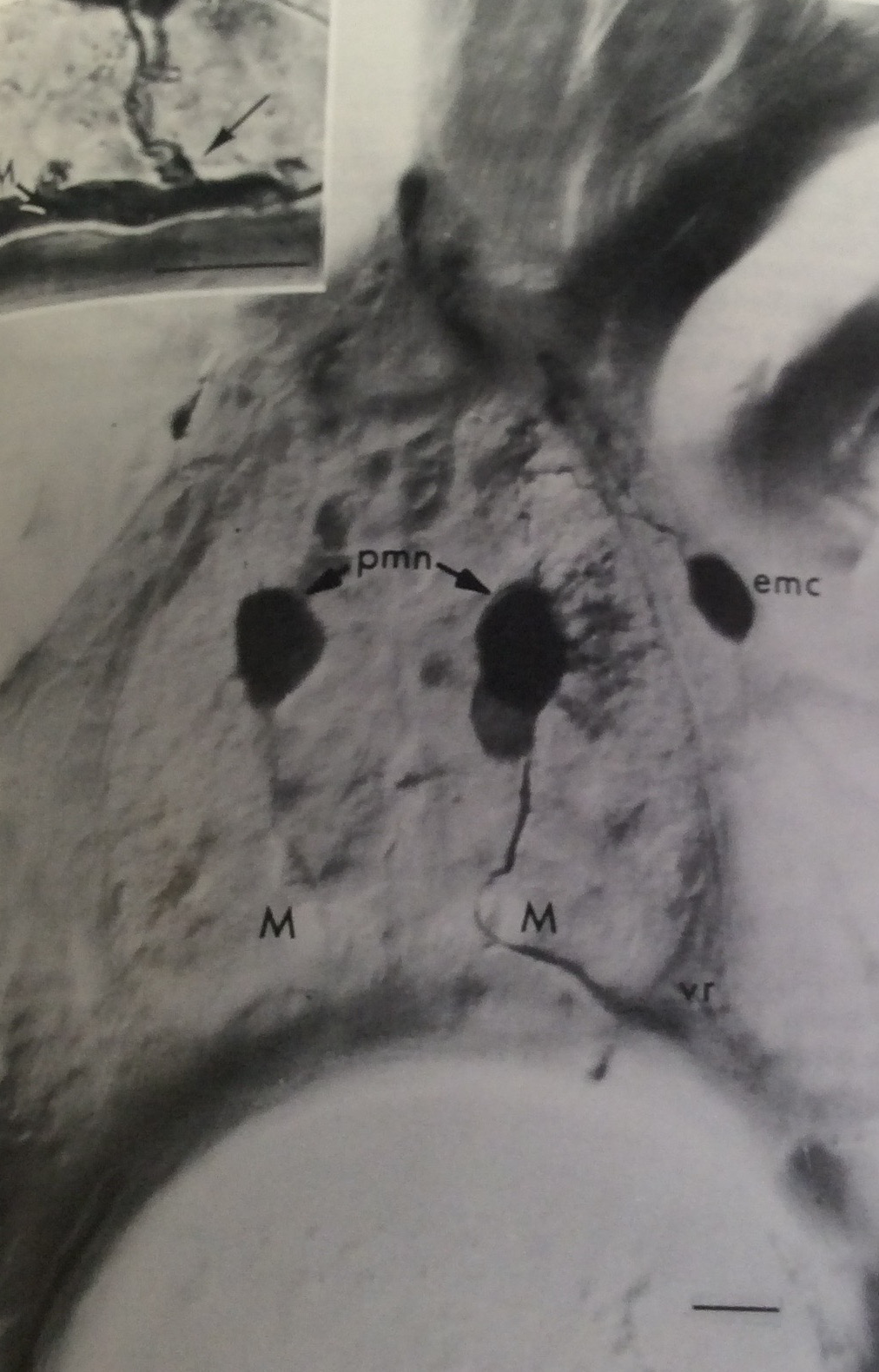
pmn

I know this is a horrible photo — I just snapped a picture of the journal hardcopy, which I own, instead of grabbing a PDF from the web, because it’s from 1985 and I’d have to pay to get a copy of my own paper — but this is what I was doing in grad school. I started as somebody who was interested in neurons and the nervous system, so what you’re seeing is a transverse section of the spinal cord of a zebrafish, with a couple of motoneurons labeled black with a tracer enzyme. I spent most of my time teasing apart how those cells grew and made connections.

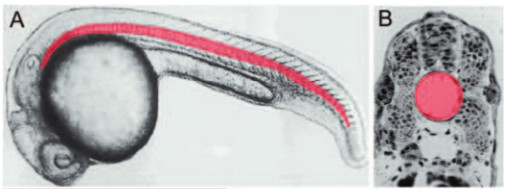
But all the while there was this one prominent feature of the animal that kept trying to distract me. See that big clear white space below the spinal cord? That’s the notochord. It’s huge, a long transparent cylinder built like a stack of glass coins, running from the neighborhood of the hindbrain all the way back to the tip of the tail. The image from Stemple below is much clearer, since the notochord has been painted pink.

pinknoto

Its superficial function is obvious: it’s a springy rod that the muscles of the fish’s body act upon for swimming and escape behaviors. While I was just doing neural circuitry work, that was sufficient — it’s part of the motor apparatus. Neurons make muscles twitch which flexes the notochord and generates the back and forth motion that propels the animal through the water. Case solved.

[Read more…]

Japan and the awesome Christmas miracle

Toyama Bay got a visit from a mythological being, all dressed in red, on Christmas day. It was beautiful.

It seems to be Architeuthis dux, and is about 4 meters long. It just cruised in, ambled about, and the authorities plan to just let it swim away. If it can — giant squid on the surface tend to be sick and unhappy. But still…! I’m waiting for the day one swims up the Pomme de Terre river to bring me presents.

There’s more discussion about this squid (in English!) on TONMO.

Spider gastrulation

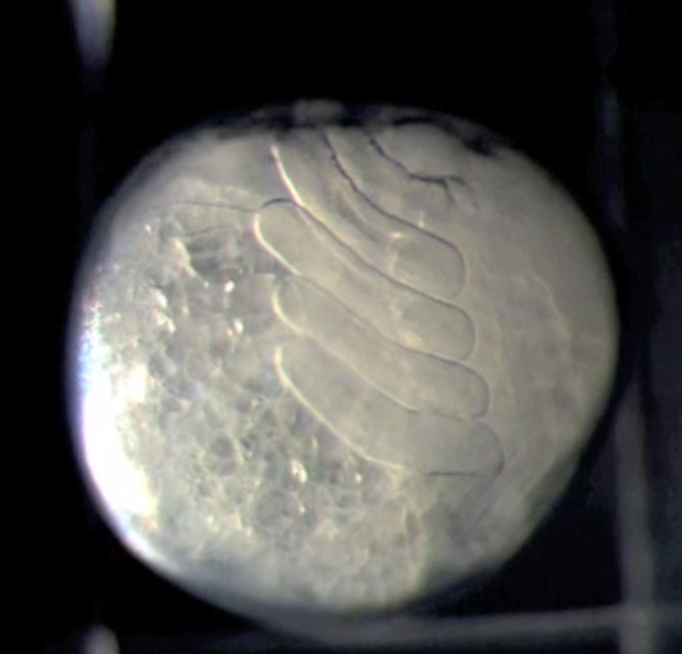
spiderembryo

It’s my first completely free day of Christmas break! Grades are all submitted, nothing is hanging over my head, but I still got up at 5:30am and needed to do something, so I learned about spider gastrulation.

This was a disgraceful gap in my knowledge — I’ve worked on insects and on vertebrates, and am fairly familiar with gastrulation in those kinds of organisms, but one thing I did know is that there’s a lot of variation in the details of gastrulation, so every new clade seems to exhibit some novel way of tucking cells in to the early embryo. Spiders do it in a cool way.

[Read more…]

Gwen Pearson just ruined Christmas for everyone

The war on Christmas is over. Everyone just gave up in disgust. They read this story about reindeer parasites, complete with burrowing snot flies, vaginal maggot guns, and people picking maggots out of their eyes, and decided it just wasn’t worth it any more.

What kind of gun should I get to pick off flying reindeer? I’m thinking of spending Christmas Eve patrolling the neighborhood and making sure none of those diseased vermin get anywhere near my house.

Amazing what you can accomplish with misleading chart design!

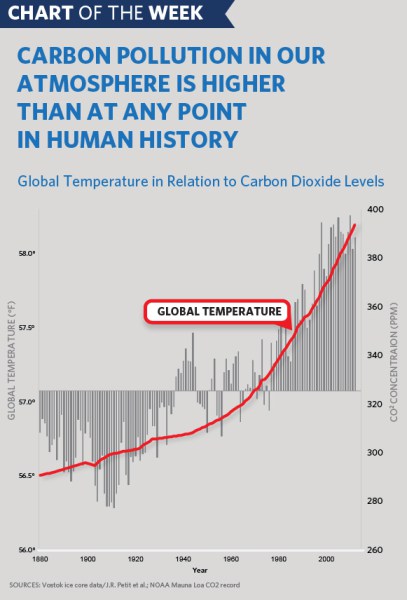
That’s a direct quote from Minnesota’s own Powerline Blog, and I don’t think they were aware of the irony. I think they think they were referring to this chart, which demonstrates the correlation between CO2 levels and global temperature change over the last century or so.

120715_chart_120315_co2

Thats actually good chart design: axes are appropriate, a lot of data is packed into it very cleanly, and you can see the relationships clearly. Powerline doesn’t like that.

Looks pretty persuasive, doesn’t it? The casual observer would think that we are looking at record levels of CO2–which is not a pollutant, but rather makes like on Earth possible–and record high temperatures. How can anyone dispute the causal connection?

[Read more…]

Elon Musk is a terrible human being

elon-musk-mars-plan

He’s very concerned about World War III…but not because of the horrific loss of life or the destruction of civilization, but because it might set back plans to colonize Mars. Therefore, we have to hurry up and get humankind into space before we blow ourselves up.

I don’t think we can discount the possibility of a third World War. You know, in 1912 they were proclaiming a new age of peace and prosperity, saying that it was a golden age, war was over. And then you had World War I followed by World War II followed by the Cold War. So I think we need to acknowledge that there’s certainly a possibility of a third World War, and if that does occur it could be far worse than anything that’s happened before. Let’s say nuclear weapons are used. I mean, there could be a very powerful social movement that’s anti-technology.

[Read more…]

But wait…solar energy isn’t consequence-free!

solarfarm

Everyone is talking about that stupid town that voted against solar energy because it would suck up the energy of the sun. So I read the story from the local paper, and hey, it wasn’t as stupid as it was made out to be, and there are actually valid arguments against solar farms.

I’m entirely in favor of more wind and solar power, but let’s not pretend there are no problems with them. The residents of Woodland, NC brought up real concerns.

[Read more…]