
The death of movements

The death of atheism

According to local mythology,* the atheist movement of ~2007-2015 was torn apart by the feminist wars. Back in the day, everyone was standing shoulder to shoulder, promoting the secular agenda.  Then we took a bite of the elevator, and our eyes were opened.  Some of these people we were standing next to were terrible actually.  Why were we on the same side?  Were we ever on the same side?

*This mythology may or may not be accurate, but for this post I’m rolling with it.

In the atheist feminist wars, there is one moment that sticks with me more than anything else.  It’s in 2012, when DJ Grothe complained that there weren’t enough women at TAM (a conference run by Grothe’s organization), because women were warning each other about harassment.

Last year we had 40% women attendees, something I’m really happy about. But this year only about 18% of TAM registrants so far are women, a significant and alarming decrease, and judging from dozens of emails we have received from women on our lists, this may be due to the messaging that some women receive from various quarters that going to TAM or other similar conferences means they will be accosted or harassed.

Grothe was blaming women for warning each other about going to TAM.  But if women are being harassed, that seems like pretty good justification for the warnings!  And if the organizers believe no harassment is occurring, that’s the very opposite of reassuring.
[Read more…]

The modal ontological argument

The king of all useless arguments

Arguments for the existence of God are, generally agreed, not very compelling, and irrelevant to any real political arguments associated religion. And the ontological argument is king of the junk heap, as it is especially unconvincing and irrelevant. The ontological argument attempts to prove God’s existence a priori, with all the certainty of a mathematical theorem. Most people would say this is overly ambitious, and doomed from the start.

The ontological argument presents a deep and enduring mystery: who actually says this stuff? Does anyone say this stuff? What’s their deal?

The number of people who advocate the ontological argument is nonzero, but it’s quite rare in practice.  Let’s round down to zero and say nobody actually says this stuff. Theistic readers may proceed unthreatened, knowing that I’m talking about an argument that none of them actually advocate.

[Read more…]

Agnostic atheism and other hairsplitting terms

Atheism is associated with a handful of hairsplitting terms: agnosticism, agnostic atheism, ignosticism, apatheism, and so on. These terms describe some technicalities about one’s relationship to belief. For instance, “ignostic” refers to the viewpoint that god is too meaningless and ill-defined to believe one way or another. “Apatheist” describes someone who doesn’t care about belief in god.

“Hairsplitting” is a derogatory way to describe it, but I mean it fondly. I love hairsplitting. I’m involved in asexual communities, it comes with the territory. Asexuality is associated with a far greater number of hairsplitting terms, like graysexuality, demisexuality, all the romantic orientation terms (heteroromantic, homoromantic, biromantic, panromantic, aromantic).

And those are just the common ones! Asexuality has also been host to a tradition where people just coin terms left and right. This is a tradition I will vociferously defend, but do not personally partake. In terms of my personal identity, I follow a more reserved practice of adopting just a few common terms. If asked, I will tell you that I am gay gray-A, with the additional clarification that I do *not* describe myself as homoromantic except in specific contexts. See? I’m reserved.

Do you get what I’m saying? Within asexuality, there is an overton window that ranges from hairsplitting to very very hairsplitting. Within atheism, there is an overton window that ranges from hairsplitting to not very hairsplitting at all.

[Read more…]

Deconversion Narrativization

It’s said that the world is made of stories. But, if that were true, why is translating a personal experience into a story so lossy? Invariably, you must choose where the story starts and ends, which pieces of context to include or exclude, which events to highlight as important. You must choose the “moral” of the story, or lack thereof. You must adjust the story based on who you tell it to (unless, you know, you’re a bad storyteller). If you want your story to be 100% objective and accurate, my advice is don’t tell a story at all; just live it, and then your life will be 100% accurate to itself.

In atheist circles, we occasionally circulate deconversion stories. They’re probably most common among people who recently left religion, and then after enough time people stop caring so much any more. I wrote a deconversion story back in 2009, so long ago that I don’t even remember it. It’s not a story I need to tell over and over, even if it would be new to most readers.  But I might still tell it occasionally, perhaps with different goals in mind than I had back then.

What sort of goals do we have when telling a deconversion story?

[Read more…]

Atheists who can’t even talk to theists

A Recurring Character

Among my many years participating in university atheist student groups, there was often someone who played the role of the asshole.

Atheists are, of course, stereotyped as angry assholes, although a lot of this is based on online activity. It’s very easy to be “internet angry”, when you’re merely energetic, enthusiastic, or opinionated. Plenty of people are loud in writing but soft-spoken in person. But I’m talking about atheists who were not merely internet angry, but IRL angry at religion, or otherwise assholes about it. It sometimes reached a point where other atheist students would whisper, “What’s up with them? Are they okay?”

I mean, everyone is an asshole to one degree or another. But mentally, I drew a line in the sand with this question: what if a theist walked through that door? Would this person be able to talk normally with them? Or would they try aggressively argue with them, or otherwise be a jerk?
[Read more…]

Terrible graphs of agnostic atheism

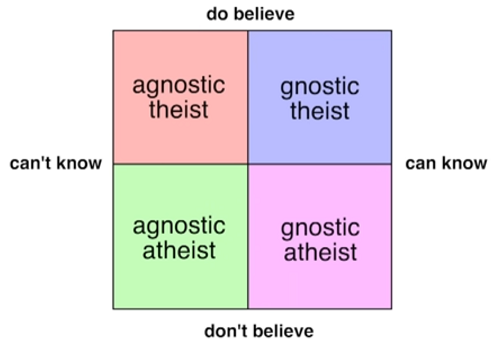
Rebecca Watson, unfortunately, reminded me of a meme from the old days of new atheism. It’s those agnostic atheism diagrams.

A diagram showing agnostic theist, gnostic theist, agnostic atheist, and gnostic atheist as four quadrants

Credit: Skepchick

I have a rant in me about these diagrams. Agnosticism and atheism are political terms, and whether you identify with them has more to do with what you find useful in your social context than the literal definitions of these terms. This diagram became popular because it explains and justifies a particular choice in identification labels, but it is not an appropriate framework to understand more broadly why people do or do not identify as agnostic. Thus, as a meme, this diagram is a barrier to empathy and understanding of fellow nontheistic folks of diverse label preferences. Also it’s just kind of incoherent.

[Read more…]

Review: The Rift

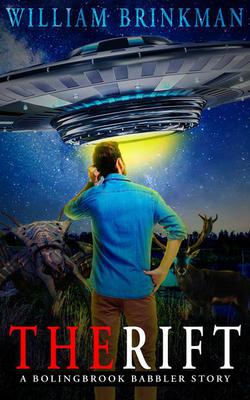
The Rift is a short novel by fellow FTBer William Brinkman. It’s a fictionalized version of the feminist wars in skepticism, one where the skeptics work for the aliens. I was provided with a review copy.

The Rift book cover

I admit I’m not very familiar with Brinkman’s Bolingbrook Babbler, but I know Brinkman has been writing it since 1998, and that he has perfected a style of satirical fiction where real (often political) events are mixed with the fantastical. Like The Onion, you might say, but long form.  I also know that some of it is quite topical, covering issues in atheism and skepticism.

The specific focus on skepticism produces interesting results, where the skeptical movement is juxtaposed with the reality of the paranormal. It’s delightfully absurd, but also hints at deeper interpretations. It implies a dilemma: do you side with the skeptics, who conceal the truth even as they fight for it, or do you speak the unbelievable truth? It explores, in a metaphorical way, the faults of the skeptical movement—something that can be quite difficult to talk about in a non-fictional context, if I do say so myself!

[Read more…]