Who the hell is @Becky_Garrison?

And how can a journalist have so little regard for the truth? Stephanie Zvan documents her bizarre behavior — apparently she was deeply offended by the fact that someone briefly put her on the block_bot a few months ago, and now she’s fully bought into this myth that FreethoughtBlogs is out to get her by sending our shadowy agents at the block_bot and Atheism+ to harass her.

I have no idea who she is, nor do I care.

But I did learn something from her ill-founded accusations and weird evasions, I think.

There are people who get really, really upset if you don’t pay attention to them — it’s an ego thing. I heard secondhand, for instance, that Thunderf00t had triumphantly announced that he was teaching me a lesson by blocking me on twitter — to which I could only say, “WTF?” I have no problem at all with people blocking me, or not reading my blog, or deleting my comments elsewhere. I have no sense of entitlement that says anyone is required to pay any attention to me. Go ahead!

So the block_bot is of zero concern to me. I could be put on it, and I’d shrug my shoulders and bravely soldier on. I don’t use it, so I’m doubly unconcerned. Atheism+ has some good goals, I think it’s great that they’re promoting their cause, but if I were banned there (and I could be, someday — I’ve been criticized by people on Atheism+ before), I would be unperturbed, and I’d still think what they were trying to do is good.

I’ve said all that before. It’s not what I learned from Becky Garrison’s disconnected discomfiture. I got some insight into a tactic being used.

These Ego Warriors are desperately trying to connect the dots. They don’t like being on the block_bot, and they have this vague unease about not fitting in with the community on Atheism+ — so they must be the same thing! Throw them into the pot!

And then FreethoughtBlogs…it has a loud voice, it has members who share some common ideals with Atheism+ — never mind that no one on FtB has anything to do with the block_bot, and I don’t know that any of us even use it, and none of us seem to be particularly active on the Atheism+ forums, even if Greta and Jen were instrumental in inspiring a greater focus on social justice — toss them in the pot, too! Anyone who is ever critical of the Big Names in Atheism must be in cahoots to destroy the godless community (Love It Unquestioningly or Leave It could be the Ego Warriors motto), so, in true conspiracy theorist fashion, they must all be working together, and someone must be pulling the puppet strings.

Here’s what they see as a win:win situation, though. Either we’ll all unreservedly announce that yes, We Are All One, We Are The Freethought Borg, your suspicions are all confirmed, or we’ll start throwing people under the bus. We’ll disown Atheism+ or the block_bot, and thereby use our loud voice to put down those terrible individuals who crush their ego by not listening to them.

Listen, Becky Garrison and all the other clowns who throw around the term “FtBullies”, and wrap your biased little brains around this: I do neither. I am not going to fit into the twisted dichotomy that you so deeply desire.

I support Atheism+, the block_bot, American Atheists, American Humanists, the IHEU, the Freedom From Religion Foundation, CFI, Americans United for Separation of Church and State, and the National Center for Science Education. That does not mean I own or control any of those groups. They do not even ask me for advice, I do not have any official input into their operations, and sometimes, even often, they may disagree with me, and I may criticize them. And when I do criticize them, it’s because I generally support them, and have opinions (which they rarely share) about how they can better do their job.

FreethoughtBlogs is not controlled in any way by any of those organizations, or the Democrats, or the Republicans, or the Libertarians, or the UUs, or the Mormon Church. We are a completely independent entity, containing a diverse group of writers who don’t even completely agree with each other, although we do tend to skew our selection for membership in the direction of supporting progressive values. We are not the propaganda arm of any organization, we eke out a small amount of money to keep ourselves going with ads (and soon we’ll be offering a subscription service), and are beholden to no one, which means we are free to disagree with just about everyone. Also, need I mention, I do not run FtB, and the other bloggers here can disagree with me on just about anything. And we like it that way.

So please, stop trying to fit a complex set of diverse voices into your pathetic, simplistic narrative. And if you find something we say bruises your fragile ego, just stop reading us. We won’t mind. Actually, we’d prefer it if you freaking narcissists would take a hike and leave us alone.

Guest post: Fighting for refugee and migrant rights

[This is a guest post from Walton. Trigger warnings: violence, sexual abuse, child abuse and neglect, hyperskepticism, racism.]

In January 2013, Jackie Nanyonjo was forcibly returned to Uganda on a charter flight, escorted by guards from the private security contractor Reliance. Jackie was a lesbian woman from Uganda who had come to the UK to claim asylum, fleeing the wave of horrifying anti-gay violence in her home country. In common with many other LGBT asylum-seekers, her claim was rejected, authorities refusing to believe that she was “really” a lesbian. She was detained, and eventually put on a plane back to Uganda. With no options left to her, she resisted – and was beaten so badly by her security escort that she later died of her injuries.

[Read more…]

Sean B. Carroll talking to atheists

This morning, in 45 minutes, I’ll be tuning in to AM950 to listen to Sean B. Carroll on Atheists Talk radio. He’s going to be talking about his new book, Brave Genius: A Scientist, a Philosopher, and Their Daring Adventures from the French Resistance to the Nobel Prize, the story of Jacques Monod and Albert Camus. Bringing the Two Cultures together!

Alabama football prayer poll

Boy, when you see those four words strung together in the title, you know exactly what you expect to see: sophisticated theology. They certainly do parse the temporal options finely to conceal the fact that they are proposing to to use the public school system to promote sectarian religious practice.

When do you think prayer is appropriate in high school football?

Over the public address system  33.77%

In the locker room  20.65%

At midfield after the game  19.44%

Before or after practice  17.44%

Not at all  8.7%

They left out “Whenever the opposing team scores a goal” and “When the cheerleaders do those high kicks” and “Someone ought to be constantly praying to make sure the earth doesn’t open up beneath us and tumble us down into Hell.”

One cat, finally in repose

I’ve tried. This busy little cat we’re fostering simply will not sit still for a good photograph. This week we tried torture: she was sent off to the vet for a day where they applied needles and knives to her, injecting her with vaccines and doing tests and snipping various organs. I was sure she’d come home worn out and sore and tired, but no — she’s running around the place, jumping on me, chasing dust bunnies as if she hadn’t had her belly sliced open and both forelegs shaved for the various needles she was stuck with. This was getting ridiculous.

Then, moments ago, she found a good book and curled up with it. Unbelievable.

ivy_relaxes

She’s a developmental biologist. Either that or she’s a Wolpert fan.

I’m thinking of trying the ultimate test, and leaving out a copy of The Happy Atheist. All cats are godless, right?

You want her? Contact the Stevens Community Humane Society. Tell them you want to save Ivy. I’ll even throw in a developmental biology textbook to sweeten the deal. I wouldn’t want her to get bored.

Justine

Justine has story of sexual assault in the tech industry. Long story short, she was at a Ruby conference (they apparently have a reputation for boozing it up at Ruby events), she was drinking, her boss was drinking, he took their mutual inebriation as an excuse to take serious liberties with her, she said “no”, he wouldn’t take no for an answer, and another person had to step in and peel him away. The event was serious enough that her boss was subject to a later HR investigation and was fired.

All of these events have been thoroughly corroborated by a witness, and by the guy who stepped in. The assaulter has announced that he was in “funemployment”, of course expressing no remorse or guilt — you wouldn’t know it from what he wrote that he stuck his hand down an employees pants and his tongue down her throat while she vocally protested.

The problem is the aftermath. She liked and respected her boss before this incident, and now she’s wracked with guilt and self-recrimination and just general stress.

Joe O’Brien’s sexual assault on me impacted my life then and still continues to this day. Initially I went through a period of self-punishment. Convinced there was something I did wrong that made this assault happen to me. Did I wear something wrong? Did I lead someone on? Hugs hand forehead kisses have always been a big part of my relationships with my co-workers. We were always a tight knit family. But now I felt it was all wrong. Every day I went to work I second guessed what I was wearing. I kept my mouth shut for fear I’d say something wrong or misleading. In the worst case I stopped eating and lost 30 pounds in two months. People were worried but again, for the most part left me alone. Maybe out of awkwardness, maybe because they didn’t know what to say, maybe because they had no clue what was going on because nobody was notified.

These issues still affected me months later. I went months without eating. My boyfriend at the time witnessed me turn from a voluptuous woman to what he called a skeleton in just two short months. I couldn’t stand to be touched by him anymore. Our relationship fell apart within just a few weeks. I came home every night and drank myself stupid just so I didn’t have to think about the anxiety I felt having to go back to the office the next morning. Friday nights and Saturdays were mostly fine but pretty much on the dot, 8:00pm on a Sunday I would start hyperventilating, crying and binge drinking so I didn’t have to think about going back to the office the following morning.

These are appropriate responses to an event she took very seriously and found extremely traumatic — which also conflicted with her career and the community she was working within. This is how she reacted to an occasion when she was disempowered and manhandled and made to feel helpless by a person she had trusted, and no one else can tell her how she should feel about it.

But they do. Oh, they do.

Do not read the comments on Justine’s post unless you really want to lose all faith in humanity. I repeat, do not read the comments. They are the true horror here.

They tell her that she’s weak and she needs to toughen up. She’s a loser. “Bitch deserved it.” She should have called the cops! Because she didn’t call the cops, it was clearly not a major problem. She should be ashamed for costing a guy his job when his offense didn’t even rise to a level that would justify calling the cops. She’s an attention whore. “I hope you get raped tomorrow you dumb slut”. She enjoyed getting her vagina fingered, if they’d just gotten a room and had sex she’d be happy now. She overreacted. There are “people dying in Africa,” she should shut up. She’s playing the victim. She was drunk, so she deserved it. “another example how a woman can destroy a man’s life at a whim with a rape accusation.” She’s a whore. Women “simply don’t have the mental tools to survive outside the kitchen”.

Weirdly, Richard Stallman shows up to lecture everyone on how to properly refer to GNU/Linux.

There are rape threats. There are death threats. “Men are men” and “there is no rape culture.”

There are people with men’s names and people with women’s names shrieking at her — I even recognized some of them as people who have been banned here.

Don’t read that horrible comment thread. But if you do, recognize it for what it is: evidence of the truth that our culture has a sick attitude towards women.

Uh-oh, SciAm

A few new twists on that story about DNLee and the sexist snub from biology online.

I was wondering why it wasn’t posted on DNLee’s own blog, The Urban Scientist, but that I was seeing it echoed all over the place. Turns out it was; but Scientific American removed it.

Mariette DiChristina ‏@mdichristina
Re blog inquiry: @sciam is a publication for discovering science. The post was not appropriate for this area & was therefore removed.

First uh-oh. So SciAm is in the business of policing blog writers now?

Second uh-oh. Scientific American and biology online have partnered on subscriptions.

So not only are they restricting what their bloggers can write, they are censoring them when they criticize organizations they partner with?

Where’s Bora? This is a scandal brewing. Bora knows how blogs work, he’d better fix it fast.

microRNAs and cancer

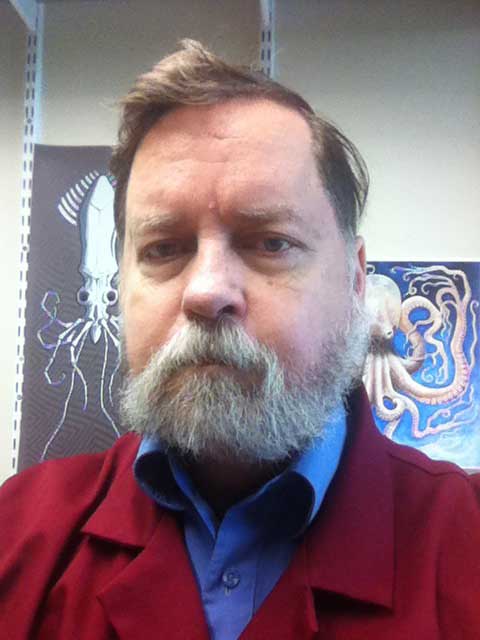
I’m trying to raise money for the The Leukemia & Lymphoma Society, and I promised to do a few things if we reached certain goals. I said I’d write a post microRNAs and cancer if you raised $7500. And you did, so I did. I kept my clothes on this time, though, so here’s a more serious picture of yours truly: this is what my students see, which is slightly less terrifying, nicht wahr?

seriously

If you want more, go to my Light the Night fundraising page and throw money at it. If we reach our goal of $10,000, I’ll organize a Google+ Hangout to talk about cancer. Note that we’re also getting matching funds from the Todd Stiefel Foundation, so join in, it’s a good deal.

It’s all epigenetics. Now I’ve gone and done it: I’ve used the “e” word, epigenetics. Nothing seems to fire off well-meaning misconceptions from otherwise sensible pro-science folks than epigenetics — it’s a major new revolution in evolution! It changes everything! It’s a way to get inheritance of acquired characteristics!

Nope.

Epigenetics is routine and has been taken for granted by cell biologists for at least 6 decades. It is simply a principle of gene regulation — switching genes off and on — that persists over multiple cell generations. You aren’t surprised that when liver cells divide, they produce more liver cells, are you? They’ve simply inherited transcription factors and patterns of modification of DNA from their parent cell that restricts their cell fates. There are also patterns of gene expression induced in gametes within parents that modulate initial patterns of gene expression in the fertilized zygote — that is, the state of the parental cells affects the state of the embryo’s cells — which is exactly what you’d expect.

What seems to set people off is that it is an effect of the environment on the state of the genome, and there is this bizarre bias floating around that that can’t happen. Of course it can! Every summer when you get a tan, every winter when you put on another five pounds, every time stress at work makes you prone to get sick…those are environmental factors influencing your biology.

In previous installments of this series, I told you about oncogenes, genes that when over-expressed or over-active switch on cellular processes (like proliferation) that promote cancer, and tumor suppressor genes, which protect against cancer, and which in cancers, are often found to be inactivated or down-regulated. Over-expressed? Down-regulated? That sounds like the sorts of things epigenetic changes can do.

transcription-translation

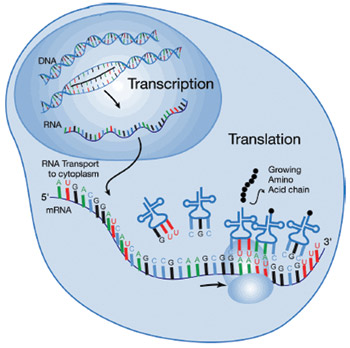
Further, here’s an interesting observation. Everyone knows the standard pathway: genes in DNA are transcribed into RNA which is then translated into protein. One might naively imagine, then, that the amount of RNA produced would be roughly correlated with the amount of protein produced. It’s not. In analyses of cancers, only 20% of the mRNAs involved showed any correlation between the quantity of mRNA and the quantity of protein — there is something else that is modulating either the amount of translation or the turnover of proteins in the cell, and the fact that 80% of the genes playing a role in cancer show such variation tells us that these kinds of regulatory effects are important.

There must be something stepping in and interfering somewhere between transcription of the gene into messenger RNA, and translation of messenger RNA into protein. One of the somethings is microRNA.

These are tiny little snippets of RNA, typically 22 nucleotides long, that have complementary sequences to their target gene mRNA — they bind to matching RNAs and inhibit translation. Thousands of these microRNAs have been discovered in the last few years, and they’ve also been found to play important roles in regulating gene expression in blood cell lineages, brain activity, insulin secretion, and fat cell development…and in cancer.

As you might guess from the previous articles in this series, there are obvious ways microRNAs could promote cancers. A microRNA that blocks tumor suppressor genes from being expressed could be modified to be produced at a higher level, or a microRNA that would hamper an oncogene’s activity could be mutated to be unable to recognize its target. Easy! Simple! Well, except that this is biology, and nothing is simple in biology (trust me, if you don’t enjoy problems blowing up in your face and getting harder and harder, don’t become a biologist.)

One reason this is complicated is that there are so many details to be worked out — swarms of microRNAs are involved, we don’t know the majority of them, and we don’t know what we’ll learn as we discover more. As Weinberg says,

…the discovery of hundreds of distinct regulatory microRNAs has already led to profound changes in our under- standing of the genetic control mechanisms that operate in health and disease. By now dozens of microRNAs have been implicated in various tumor phenotypes, and yet these only scratch the surface of the real complexity, as the functions of hundreds of microRNAs known to be present in our cells and altered in expression in different forms of cancer remain total mysteries. Here again, we are unclear as to whether future progress will cause fundamental shifts in our understanding of the pathogenetic mechanisms of cancer or only add detail to the elaborate regulatory circuits that have already been mapped out.

But also, we’ve learned that it’s not simply a matter of a few short bits of RNA getting transcribed and dumped into the cytoplasm — there is a whole elaborate cellular apparatus dedicated to microRNA processing. Behold!

oncomirs

Don’t panic, I’ll hold your hand and we’ll walk through it. miRNA genes are first transcribed into RNA by RNA polymerase II; notice that the transcript, which is called a pri-miRNA (or primary microRNA) contains some long stretches of internal complementarity, and that the RNA folds into a hairpin loop. This RNA is grabbed by an RNA binding protein, Pasha, and an RNA cutting enzyme, Drosha, which snips off some excess bits to produce a smaller stem-loop structure about 70 nucleotides long, which is partially double stranded RNA. It also gets a new name: Pre-miRNA. Pre-miRNA is then exported out of the nucleus and into the cytoplasm by a channel protein, Exportin-5.

Once in the cytoplasm, another RNA cutting enzyme, aptly named Dicer, snips off a few more bits to reduce it to two very roughly complementary RNA strands, now called the miRNA:miRNA* duplex. One of these strands is then loaded into a set of proteins to form the miRNA-associated multiprotein RNA-induced silencing complex, thankfully called miRISC for short.

The short, 22-nucleotide long strand of RNA in the miRISC is what gives it specificity — the miRISC proteins carry it along as a template to match against messenger RNAs they encounter. If the miRNA makes a perfect match to some unfortunate strand of messenger RNA, the miRISC cuts up the mRNA to destroy it. If it’s an imperfect match over just some significant fraction of the 22-nucleotide sequence, it it just locks up the RNA and represses its translation.

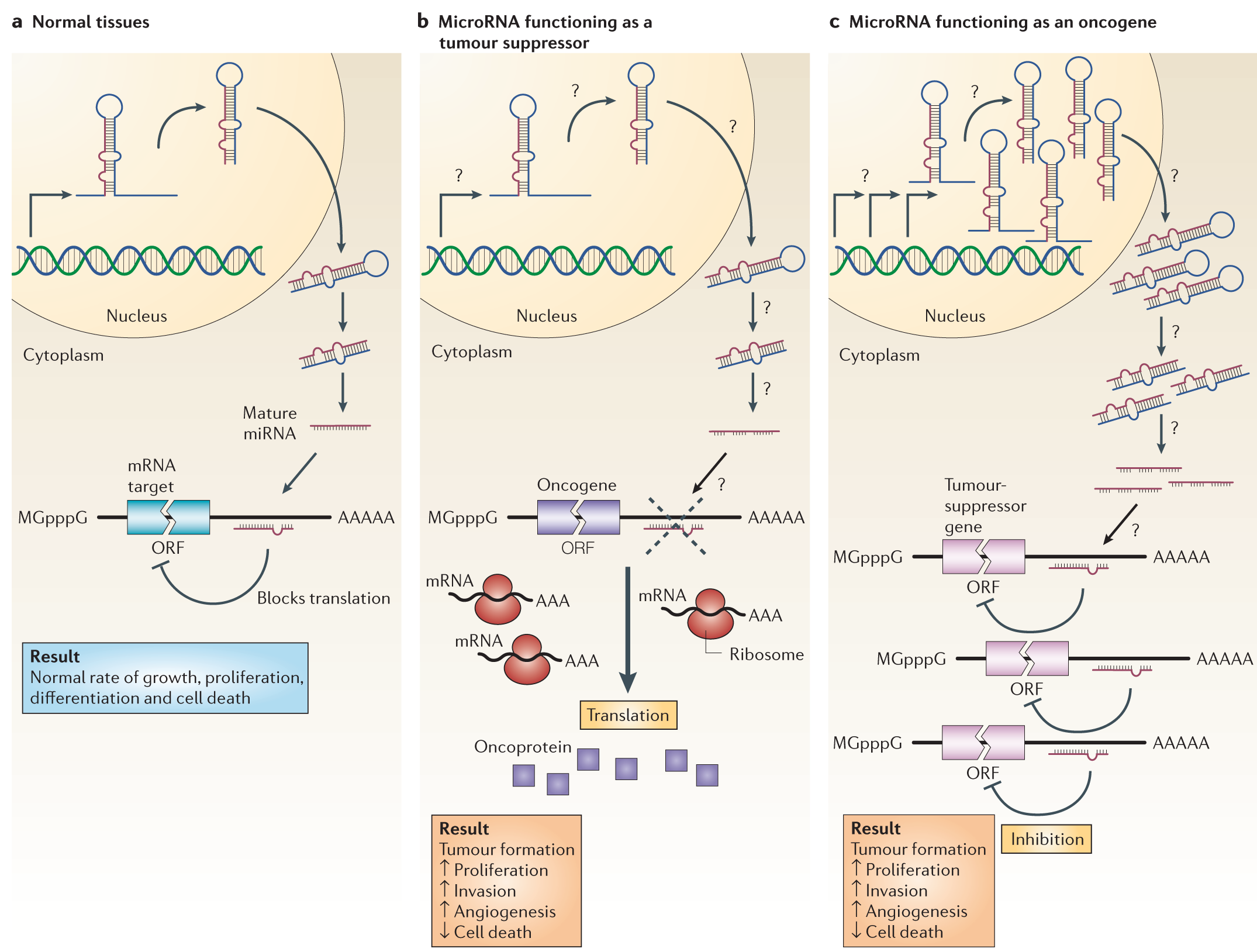
The way these can affect cancer is illustrated below. If a microRNA that inhibits an oncogene is mutated (b), that oncogene will increase the amount of protein produced from the available RNA; the oncogene could even be normal in sequence and function, and just the boost in its signal could contribute to tumorigenesis. Alternatively, a mutation in a microRNA gene that affects a tumor suppressor could amplify its production (c), producing a greater inhibition of a healthy gene that acts to prevent tumorigenesis.

MicroRNAs can function as tumour suppressors and oncogenes. a | In normal tissues, proper microRNA (miRNA) transcription, processing and binding to complementary sequences on the target mRNA results in the repression of target-gene expression through a block in protein translation or altered mRNA stability (not shown). The overall result is normal rates of cellular growth, proliferation, differentiation and cell death. b | The reduction or deletion of a miRNA that functions as a tumour suppressor leads to tumour formation. A reduction in or elimination of mature miRNA levels can occur because of defects at any stage of miRNA biogenesis (indicated by question marks) and ultimately leads to the inappropriate expression of the miRNA-target oncoprotein (purple squares). The overall outcome might involve increased proliferation, invasiveness or angiogenesis, decreased levels of apoptosis, or undifferentiated or de-differentiated tissue, ultimately leading to tumour formation. c | The amplification or overexpression of a miRNA that has an oncogenic role would also result in tumour formation. In this situation, increased amounts of a miRNA, which might be produced at inappropriate times or in the wrong tissues, would eliminate the expression of a miRNA-target tumour-suppressor gene (pink) and lead to cancer progression. Increased levels of mature miRNA might occur because of amplification of the miRNA gene, a constitutively active promoter, increased efficiency in miRNA processing or increased stability of the miRNA (indicated by question marks). ORF, open reading frame.


MicroRNAs can function as tumour suppressors and oncogenes. a | In normal tissues, proper microRNA (miRNA) transcription, processing and binding to complementary sequences on the target mRNA results in the repression of target-gene expression through a block in protein translation or altered mRNA stability (not shown). The overall result is normal rates of cellular growth, proliferation, differentiation and cell death. b | The reduction or deletion of a miRNA that functions as a tumour suppressor leads to tumour formation. A reduction in or elimination of mature miRNA levels can occur because of defects at any stage of miRNA biogenesis (indicated by question marks) and ultimately leads to the inappropriate expression of the miRNA-target oncoprotein (purple squares). The overall outcome might involve increased proliferation, invasiveness or angiogenesis, decreased levels of apoptosis, or undifferentiated or de-differentiated tissue, ultimately leading to tumour formation. c | The amplification or overexpression of a miRNA that has an oncogenic role would also result in tumour formation. In this situation, increased amounts of a miRNA, which might be produced at inappropriate times or in the wrong tissues, would eliminate the expression of a miRNA-target tumour-suppressor gene (pink) and lead to cancer progression. Increased levels of mature miRNA might occur because of amplification of the miRNA gene, a constitutively active promoter, increased efficiency in miRNA processing or increased stability of the miRNA (indicated by question marks). ORF, open reading frame.

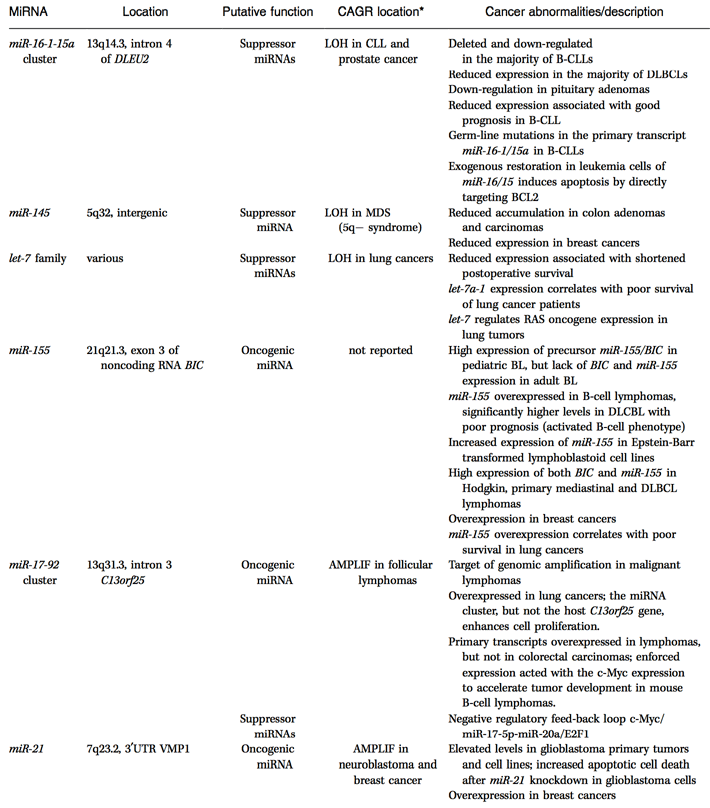
This is not simply a hypothetical possibility, either. Dozens of miRNA genes have been implicated in human cancers — they show abnormal variations in expression in specific cancers and also have known oncogene/tumor suppressor targets.

miCancer

These microRNAs are a relatively new scientific phenomenon — they weren’t even a blip on the radar when I was a graduate student, and when I did start hearing about them in the 1990s, they were thought of as a weird mechanism found in highly derived nematodes. Now we’re seeing them everywhere, and beginning to recognize their importance in controlling all kinds of genes. The process of developing tools to control miRNAs is underway in the laboratory, but it has a long way to go before we have effective clinical tools to combat cancer with miRNAs or antagonists to miRNAs. At the very least, it’ll be another tool we can use.


Calin GA, Croce CM (2006) MicroRNA-cancer connection: the beginning of a new tale. Cancer Res. 66(15):7390-4.

Esquela-Kerscher A, Slack FJ (2006) Oncomirs – microRNAs with a role in cancer. Nat Rev Cancer 6(4):259-69.

Hanahan D, Weinberg RA (2011) Hallmarks of cancer: the next generation. Cell 144(5):646-74.

Interesting recruiting technique

The editor of biology online went off looking for new bloggers to join his group. I’ve been there, on both sides now — the usual approach is to tell the blogger you’re interested in their work, think they’d be a valuable addition to the roster, and here’s what we offer you: there’s usually some share of revenues, a list of the other people you’d be rubbing shoulders with, an altruistic appeal to sharing your ideas with the world.

Ofek the editor didn’t do that when he went courting DNLee. The only card he played was to say that they got 1.6 million monthly visitors — a respectable number, although I suspect most of their traffic is driven by their forum, which consists largely of people asking for help on their biology homework — and when asked, offered no remuneration at all. The whole exchange was very polite, until DNLee turned him down.

DNLee runs a blog on the Scientific American network called The Urban Scientist. She’s a working biologist, she already has a public platform for sharing her ideas, and it’s a bit higher profile than a network that gets 25,000 visitors a day. Ofek didn’t offer her anything but extra work, so here’s what she said:

Thank you very much for your reply.

But I will have to decline your offer.

Have a great day.

That’s all very professional. Here’s how Ofek replied.

Because we don’t pay for blog entries?

Are you an urban scientist or an urban whore?

Wow. You’d have to be nuts to want to work with that guy. And the news is spreading everywhere about biology online and their aggressively insulting editor, so I think he has just managed to destroy any interest other potential participants might have in his network. It’s too bad, too, since he already has a few people writing for it, who aren’t going to deserve the opprobrium that Ofek has just earned.