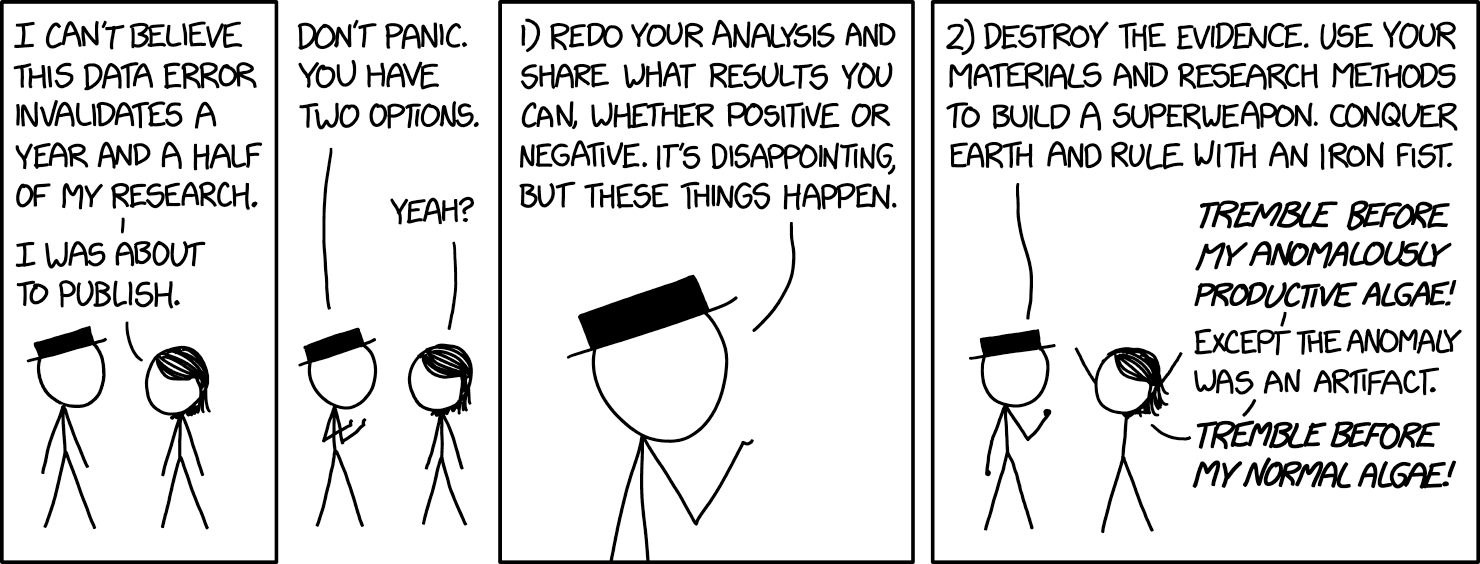
Why couldn’t this have come out earlier in the semester?

At the beginning of the term, I was constantly repeating the mantra, “your data is your data” to the students — they came in expecting that science experiments had a foreordained conclusion, like a recipe that you followed and at the end you got cake. If there was no cake it’s a failure! That’s not true, though, that even if it doesn’t end up as you expected, it was still data. Unexpected data just takes more work to interpret (they don’t like that part) or that you need to do more experiments to puzzle out how it happened (they like that even less).

I’m grading lab reports now, and can say that they seem to have figured it out. They’ve stopped judging their results and are instead asking questions and analyzing, which is all I really want.

This would have been a good comic to include in their training early on, though.
Thinking about Xmas presents for the family, on a budget

You know, you have to love the look of joy on their faces when they open a surprise box. I imagine it would be like the Australians who opened a box intended for nesting opossums and saw this:

I know I’d be excited. Wouldn’t you?

Unfortunately, there’s a shortage of Huntsman spiders here in Minnesota. We’ve got lots of Pholcus, though. I’m thinking of going down into the basement and scooping up a swarm of cellar spiders, putting them in a gift-wrapped box with a ribbon, and mailing them off to the grandkids.

How can they not be delighted?

The Spherical Spider

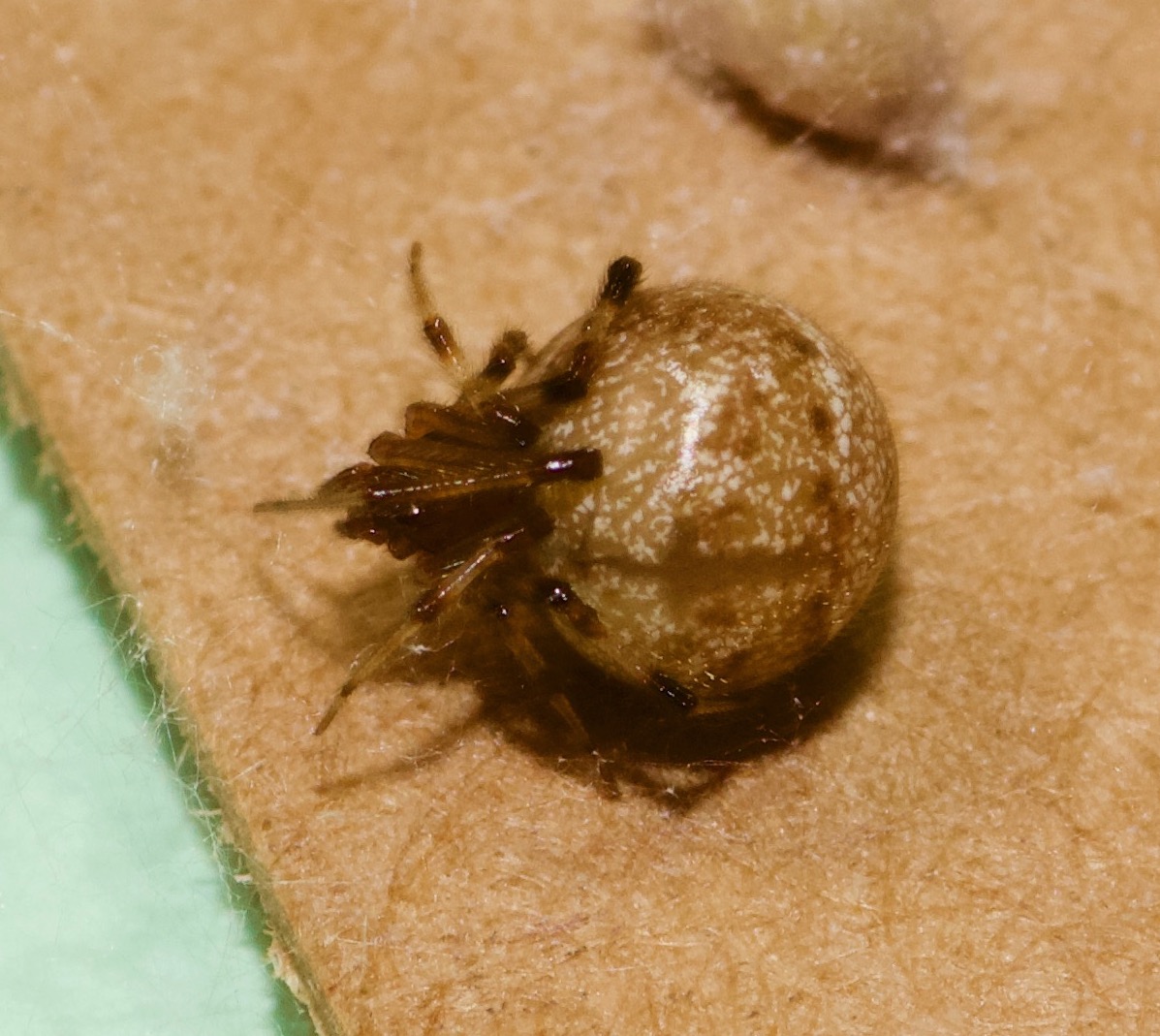
I have not been advertising this aspect of my research, but I have been striving towards developing a Perfectly Spherical Spider. Here’s my first success.

What good is a spherical spider, you might ask. The benefits are legion. For one, think of their utility in physics problems.

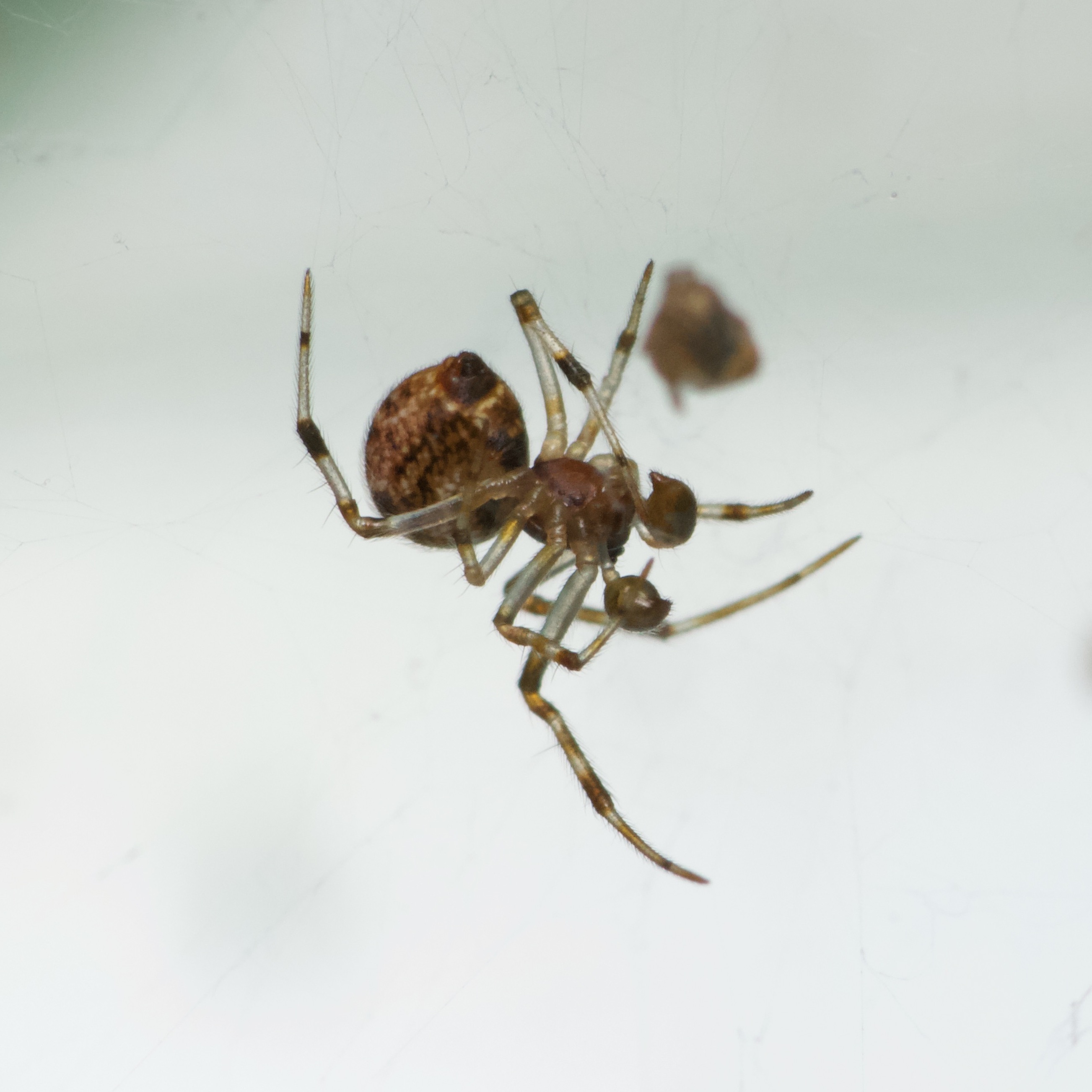
Actually, what happened is that I’ve started trying to breed the spiders with my impoverished bunch of small, young males, and because I was concerned about preventing nuptial cannibalism, I gave the lovely females a big banquet on their wedding night, and boy did they eat. It may have worked against me, because a) this female hasn’t budged in a couple of days, and I don’t think she can move, and b) the male I put in her cage gave every appearance of being fascinated and terrified, and orbited her at a distance of 5-10 cm. I’m hoping he might have darted in at some point over the weekend and done the deed, but who knows? I’ve pulled him out now and will place him with a possibly less intimidating female.

Isn’t she lovely, though?

Physicists: they make silken draglines, you could probably use spherical spiders in pendulum problems, too. You can’t do that with spherical cows!

George Church has a fancy hammer. You’re all looking a bit like nails right now

George Church is a smart and interesting guy, and now he’s been featured on 60 Minutes. It’s a strange interview, though, and I don’t believe a lot of his claims.

Yeah, right, a dating app based on your genes. I don’t believe it, except as an ambitious eugenics program to give scientists an excuse to do social engineering with fallacious premises. There is such a thing already, as in, for instance, screening in some Jewish communities for lethal alleles; beyond that specific use, though, I don’t see much point in caring about minor variations…unless you want to suppress them. That was only a small part of the program, though, highlighted by CBS because it is so radical and sensational. One thing he does go on at length about is his biomedical goals: “Today, his lab is working to make humans immune to all viruses, eliminate genetic diseases, and reverse the effects of time.”

I have two objections to his dream.

  • I think he’s forgotten about this phenomenon called evolution. Viruses are going to be evolving much more rapidly than he can engineer humans; humans are going to mutate faster than he can tweak their genes.
  • He disregards multifactorial interactions, and seems to think there’s a straightforward linear scale of gene effects that can be optimized. We don’t know whether, for instance, increasing longevity genetically is going to have secondary undesirable genetic effects. It’s definitely going to have horrible effects socially, but those don’t exist in Church’s world.

None of that is an argument for stopping his kind of research, which I think has great benefits as well. I just don’t think he’s very good at thinking outside of an imagined linear progression.

Also troubling was his response to one question. On everything else, he’s glib and confident, and then he got asked about the ethics of accepting money from Jeffrey Epstein…and suddenly he’s hesitating and stammering and clearly trying to think of a way out of this question. His answer is that he can’t be expected to screen donors that rigorously, and that tainted money can be used for good ends, as, for instance, the way tobacco money was used to sponsor legitimate research.

Does he stop to consider that there’s a problem in a system that allows large corporations to thrive on lies and addicting innocent people to dangerous chemicals, and that maybe such organizations are not the best to control what sciences get funding? No.

His is a lab that thrives on huge donations from extremely wealthy people, and getting featured on 60 Minutes is going to raise his profile and probably bring in more donations from extremely wealthy people. That ought to be raising all kinds of concerns about the nature of a system that relies on excesses of wealth in certain classes of people who then have the privilege of distributing some of that wealth in a pattern of personal patronage. That he is the current recipient of such largesse apparently makes it impossible for him to see the flaws in that system.

AAAAAAH! Monsters! Monsters in the basement!

Mary and I went on a spider safari. In our house. It started out fine; we didn’t find much in the living spaces of our home, but then we decided to dive down into…the basement.

We found MONSTERS!

Oh, wait. That’s just one thing from my son’s old Dungeons & Dragons collection. What we actually found was Pholcus. Pholcus everywhere. We took a few photos before fleeing.

[Read more…]

The conversation begins at 2pm

I said I was going to do it, and I’m going to. I’ll start shortly.

One thing I should mention is that I’m going to stop after one hour. I’ve seen some of these videos go on for hour after hour, and you can only do that if you’re talking about substanceless drama. Or creationism…those twits are obstinate and persistent. I will draw the line at 3:00 Central, which means I most probably not talk about all of these things. That’s OK, I can continue on a different day.

Can new species evolve from cancers?

How Many Genes Do Cells Need? Maybe Almost All of Them

Light-regulated collective contractility in a multicellular choanoflagellate

The Early Ediacaran Caveasphaera Foreshadows the Evolutionary Origin of Animal-like Embryology

Developing an integrated understanding of the evolution of arthropod segmentation using fossils and evo-devo

That last one is a long, difficult paper anyway.

Also, if people ask me questions about other things, we can go off on a tangent. That’s OK, too, but I’m still going to insist on cutting off at an hour.

Disappointing sexual performance

I planned to start mating spiders today, and got my first disappointment: I waited too long, I think, because several of the males had died. I think maybe they pined away with blue pedipalps. The males are definitely more fragile.

So then I fed a couple of mighty females so they wouldn’t be tempted to snack on the boys, and then introduced them to males. The males immediately scampered to the far side of the cage. No mating today, at least not that I’ve seen. I’ve left them together and hope the guys make it through the night.

A casual conversation about science

Hey, friends! How about if I try another shot at this YouTube thing? I’m going to try to go live tomorrow, Saturday 7 December, at 2pm Central for what I’m calling A Casual Conversation About Science. I figure I’ll just start talking about what I’ve been reading about lately, or at least what I’ve been reading that maybe you’d find interesting.

There is no homework — this is casual, informal, all that stuff — but here’s a reading list. I figure I’ll just start at the top and work my way down, without an expectation that I’ll get to everything within an hour or so. I’ll take questions, and if there’s a lot of clamor for something, I can change up the order or talk about something completely different. I’m going in with an intent for some structure, but I can ramble if necessary. The reading list is mostly about genes and evolution.

Can new species evolve from cancers?

How Many Genes Do Cells Need? Maybe Almost All of Them

Light-regulated collective contractility in a multicellular choanoflagellate

The Early Ediacaran Caveasphaera Foreshadows the Evolutionary Origin of Animal-like Embryology

Developing an integrated understanding of the evolution of arthropod segmentation using fossils and evo-devo

I put the stuff I’m sure everyone can read first, but then the paywalls start going up in the last three. If you haven’t read it, don’t feel frustrated, we can still talk about it and I’ll try to explain it.

Note also: no spiders. OK, maybe a tiny bit about arachnid evolution in the last paper, but otherwise, this is mostly a spider-free session. Maybe we can have a spider conversation some other time.