Cancer: bad genes or bad luck?

If there is one cause of cancer, it would be genetic damage to somatic cells. So all we have to do to cure cancer is prevent all genetic damage! That’s not a very useful prescription, unfortunately; it’s rather like saying that all we have to do to prevent accidental deaths is prohibit all potential causes of injury. The causes of genetic damage are ubiquitous.

We’re familiar with some. Smoking, for instance, irritates and damages the cells of the lung epithelium, and increases the rate of cancer incidence. UV radiation damages DNA, so prolonged exposure to the sun increases the rate of skin cancer. Chimney sweeps would get covered in the carcinogenic compounds present in soot, which would accumulate in folds of skin, and had phenomenal rates of scrotal cancer. So don’t clamber around in chimneys, stay in the dark all the time, and never start smoking, and you won’t get cancer, right? Wrong. You’ve eliminated some factors that increase the incidence of cancer, but not all. You might think that if we just eliminated every cause of genetic damage we’d be safe, except that there’s one we can’t get away from.


[Read more…]

Who’s the whitest of them all? And who cares?

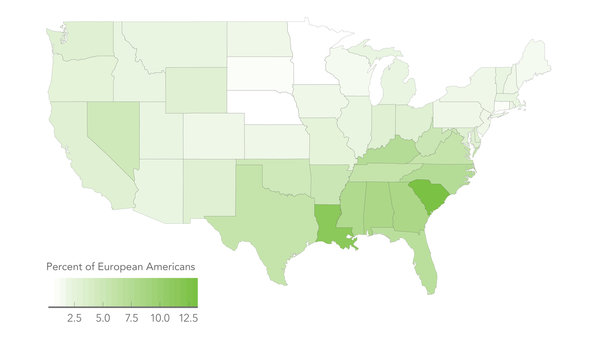
Carl Zimmer writes about the muddled genetic state of race in the United States. We’re a mongrel nation, even if many people don’t want to admit it — but a recent analysis of data from the 23andme program shows a substantial mixing of races in the US. Well, except for Minnesota. Look how white we are up here!

The percentage of self-identified European Americans who have one percent or more of African ancestry.

The percentage of self-identified European Americans who have one percent or more of African ancestry.

[Read more…]

Let’s slap ENCODE around some more

Since we still have someone arguing poorly for the virtues of the ENCODE project, I thought it might be worthwhile to go straight to the source and and cite an ENCODE project paper, Defining functional DNA elements in the human genome. It is a bizarre thing that actually makes the case for rejecting the idea of high degrees of functionality, which is a good approach, since it demonstrates that they’ve at least seen the arguments against them. But then it sails blithely past those objections to basically declare that we should just ignore the evolutionary evidence.

[Read more…]