Archive for the 'Evolution'

The Genetic Code is not a synonym for the Bible Code

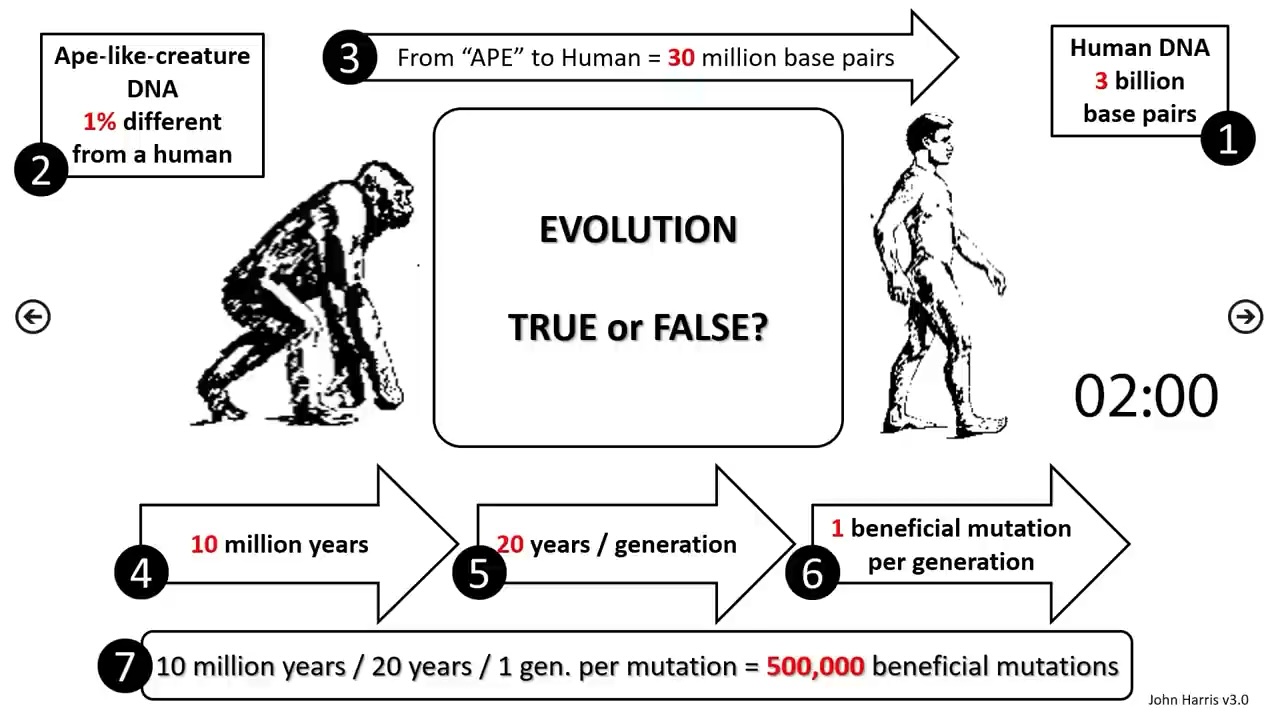
Oh, boy. The Intelligent Design creationists are all excited about a new paper that purports to have identified an intelligent signal in the genetic code. Here’s a new paper that can be added to the growing stack of intelligent-design articles in peer-reviewed journals. Even though the authors do not use the phrase “intelligent design,” their reasoning centers on the detection of an intelligent signal embedded in the genetic code — a mathematical and semantic message that cannot be accounted for by a natural cause, “be it Darwinian, Lamarckian,” chemical affinities or energetics, or any other. I’ve read the paper by ShCherbak and Makukov, and by golly, the Discovery Institute flack really has accurately summarized the paper: it does explicitly and clearly claim to have identified evidence of design in the genetic code! That’s newsworthy in itself, that the creationists can accurately summarize a scientific paper…as long as the results conform to their ideological expectations. Unfortunately, what they’ve so honestly described is good old honest garbage. Here’s the short summary of what they do: they jigger the identities of the amino acids coded for by each codon into a number, a nucleon sum. What is that, you might ask? It’s determined by adding up the number of protons and neutrons in the amino acid, which is simply the mass number of the compound. Further, you can distinguish the amino acid into it’s R group, and the atoms that make up the peptide chain proper, which he calls the B group, for standard block. The mass number of the B group is always 74, except for proline, so he transfers a hydrogen from the R group to the proline B group to bring it up to 74, and by the way, did you notice that 74 is two times 37, which is a prime number? Now if you take all the three-digit decimals with identical digits (111, 222, 333…999), and sum their digits (111=3, 222=6, 333=9,...
Read more

What I taught today: molecular biology of bat wings

My students are also blogging here: My undergrad encounters Developmental Biology Miles’ Devo Blog Tavis Grorud’s Blog for Developmental Biology Thang’s Blog Heidi’s blog for Developmental Biology Chelsae blog Stacy’s Strange World of Developmental Biology Thoughts of Developmental Biology Biology~ Hard to believe, I know, but this class actually hangs together and has a plan. A while back, we talked about the whole cis vs. trans debate, and on Monday we went through another prolonged exercise in epistatic analysis in which the students wondered why we don’t just do genetic engineering and sequence analysis to figure out how things work, so today we reviewed a primary research paper by Chris Cretekos (pdf) that teased apart the role of one regulatory element to one gene, Prx1, in modifying the length of limbs. It’s a cool paper, you should read it. It’s kind of hard to replicate the teaching experience in a blog post, though, because what I did most of the hour was ask questions and coax the students into explaining methods and figures and charts. I’m afraid that what you’re going to have to do is apply for admission to UMM, register for classes, and take one of my upper level courses. I always have students read papers direct from the scientific literature, and then I torture them with questions until they extract meaning from them. It’s fun! Although…it would also be cool to have a scientific-paper reading and analysis session at a conference, now wouldn’t it? Especially if it could be done over beer.

What’s Jimmie Walker’s favorite arthropod?

“TRI-LO-BIIITE!” Oh, no, that was a terrible opening. You’ll only know what the heck I’m talking about if you remember JJ from the television show Good Times, and it’s such a pathetic joke it’s only going to appeal to grade schoolers. So if you’re a time-traveling 8 year old from the 1970s, you’ll appreciate the reference. How many of those are reading this right now? Maybe this will work better. Here’s a small chip of shale I keep at my desk. My son Alaric and I collected that on a trip to Delta, Utah over 20 years ago. We had permission from the owner of a commercial dig site to rummage around in their tailings*, and we ambled about picking up chunks of rock and splitting them with a hammer. Everywhere we looked were trilobites. We brought home a good haul, chiefly Elrathia, like that one, and lots of Peronopsis. I keep it at my desk as a token of a good memory, and also because it’s about half a billion years old. I can reach over and touch a half billion year old fossil at will, which I find to be an awesome thrill. That it’s also from a subphylum that was so successful, swarming in our oceans for about 300 million years, yet that ended so finally in the Permian extinction, is humbling. Puny ephemeral humans — we can only dream of achieving the glories of the Trilobite empire. Summary of the evolutionary history of the major trilobite clades plotted against stratigraphic time. The y-axis scale approximates a log scale to permit the more detailed illustration of the Cambrian and Ordovician diversifications. Numbers refer to age in millions of years (Ma). Although the spread along the x axis approximates the morphological diversity within a clade at any given stratigraphic level, horizontal distances between groups should not be interpreted to suggest degrees of phenetic difference. The diagram is not meant to imply that maximal phenetic variance was present in the early part...
Read more

ENCODE gets a public reaming

I rarely laugh out loud when reading science papers, but sometimes one comes along that triggers the response automatically. Although, in this case, it wasn’t so much a belly laugh as an evil chortle, and an occasional grim snicker. Dan Graur and his colleagues have written a rebuttal to the claims of the ENCODE research consortium — the group that claimed to have identified function in 80% of the genome, but actually discovered that a formula of 80% hype gets you the attention of the world press. It was a sad event: a huge amount of work on analyzing the genome by hundreds of labs got sidetracked by a few clueless statements made up front in the primary paper, making it look like they were led by ignoramuses who had no conception of the biology behind their project. Now Graur and friends haven’t just poked a hole in the balloon, they’ve set it on fire (the humanity!), pissed on the ashes, and dumped them in a cesspit. At times it feels a bit…excessive, you know, but still, they make some very strong arguments. And look, you can read the whole article, On the immortality of television sets: “function” in the human genome according to the evolution-free gospel of ENCODE, for free — it’s open source. So I’ll just mention a few of the highlights. I’d originally criticized it because the ENCODE argument was patently ridiculous. Their claim to have assigned ‘function’ to 80% (and Ewan Birney even expected it to converge on 100%) of the genome boiled down to this: The vast majority (80.4%) of the human genome participates in at least one biochemical RNA- and/or chromatin-associated event in at least one cell type. So if ever a transcription factor ever, in any cell, bound however briefly to a stretch of DNA, they declared it to be functional. That’s nonsense. The activity of the cell is biochemical: it’s stochastic. Individual proteins will adhere to any isolated stretch of DNA...
Read more

Show your work, @JoseCanseco!

The baseball player Jose Canseco made a remarkable series of tweets yesterday. I may not be 100% right but think about it. How else could 30 foot leather birds fly? The land was farther away from the core and had much less gravity so bigness could develop and dominate My theory is the core of the planet shifted when single continent formed to keep us in a balanced spin Gravity had to be weaker to make dinosaurs nimble Animal tissue of muscles and ligaments could not support huge dinosaurs even standing up or pump blood up 60 foot necks elephants today eight tons supersaurs two hundred tons a totally different world. why? You ever wonder why nothing REALLY big exists today in nature Ancient gravity was much weaker Deja vu, man, deja vu. Any old regulars from the talk.origins usenet group will remember this one: Ted Holden and his endless arguments for Velikovskian catastrophism. Holden also claimed that earth’s gravity had to have been much lower for dinosaurs to stand up. Ted Holden has been repeatedly posting the claim that sauropod dinosaurs were too large to have existed in 1g acceleration. His argument is based on simple square-cube scaling of human weightlifter performance (in particular, the performance of Bill Kazmaier). His conclusion is that nothing larger than an elephant is possible in 1g. His proposed solution is a “reduction in the felt effect of gravity” (by which he seems to mean the effective acceleration), due to a variant of Velikovskian Catastrophism, often called Saturnism. Ted’s materials in their current form can be found on his web pages dealing with catastrophism. For those not familiar with Velikovsky, he was a pseudoscientist whose claim to fame was that he so nimbly straddled two disciplines and befuddled people on either side. He was a classical scholar who used his interpretations of ancient texts to claim there was evidence of astronomical catastrophes in Biblical times (his scholarship there...
Read more