I thought the rough clip I mentioned earlier was horrifying, but take a look at the official Showtime promo for Sacha Baron Cohen’s show.
Pharyngula
Evolution, development, and random biological ejaculations from a godless liberal

I thought the rough clip I mentioned earlier was horrifying, but take a look at the official Showtime promo for Sacha Baron Cohen’s show.

Knut is just standing there, looking cool with his grandma.

That’s his latest trick — standing. He’s pretty impressed with himself.

Unfortunately for him, he’s only got two more days with this grandma, since she’s got to come home to take care of me for a while. He will be flying to Korea to spend some time with his other grandma later this summer, though.

Some excerpts from Sacha Baron Cohen’s next show are leaking out. watch this bit if you want to see the gun lobby willingly exposing their delusional ideas about putting guns into the hands of kids.
The intensive 3 week Kinder Guardian course introduces specially selected children from 12 to 4 years old to pistols, rifles, semi-automatics, and rudimentary knowledge of mortars. In less than a month — less than a month! — a first grader can become a first grenadier.
Ha ha, Joe Walsh, very clever. Of course he has an excuse.
Like accused sexual predator Roy Moore, who threatened to sue Baron Cohen this week, Walsh was invited to receive an award in Washington, D.C., for being a friend to Israel and while he was there sat for an interview in which a documentary crew asked him to endorse various Israeli innovations—including the idea of arming four-year-olds to defend themselves against terrorists.
His excuse is that if Israel thought it was a good idea, then arming pre-school kids must be a good idea. He now says that he was duped, and that he said some really stupid things, but it hasn’t yet sunk in that maybe he should question his own beliefs that make it easy for him to be duped and say stupid things.

I’ve sniped at Jordan Peterson a few times. I’ve tended to focus on just a few of his overtly and demonstrably wrong claims, because I don’t want to study the long-winded stream of garbage that he spews out on the internet — the very last thing I want to do with my life is become a Jordan Peterson authority. He is simply not worth it, a property that works in his favor, because no one with any sense wants to dwell for long in his mansion of madness, so only his True Believers immerse themselves in his toxic verbosity. Nathan Robinson did a great job with an overview, but all I’ve done is laughed at a few fragments of obvious absurdity.
But now to the list of people who’ve really looked at the big picture of Jordan Peterson’s career, we can add the fabulous Laurie Penny. She goes right to the heart of the Peterson oeuvre.
Over the past 12 months, and especially since the publication of his internationally-bestselling self-help book 12 Rules for Life: An Antidote to Chaos, Peterson’s work has been dissected, discussed, and debated on talk shows and in reputable publications across the same Western civilizations whose decline he diagnoses in a manner more lucrative than lucid. Few have led with the obvious fact that neither the man nor the message make coherent sense. 12 Rules disproves, by its very success, one of its central tenets: the idea that we live in anything resembling a meritocracy. The book is messy as hell. It is full of insipid platitudes, trite homilies, and self-regarding detours delivered with the assurance of a man who fully expects to see his childhood finger paintings in a museum someday. At best, he sounds like someone who wandered off into the Desert of the Real without a sunhat. There is, in short, absolutely no way this would be taken remotely seriously if anyone who wasn’t a white guy had written it.
I have to disagree mildly with that last bit, and mention Deepak Chopra and Camille Paglia as counter-examples…but perhaps counter-examples that prove the rule. You can write popular, successful word salad as a non-white-man as long as it doesn’t threaten the dominance of white men. But otherwise, yes — it’s badly written hash of the sort that, once upon a time, skeptics would have scornfully ripped to shreds and spat upon the tatters (now, unfortunately, skeptics line up to pay money to hear the Great Man speak).
Peterson’s anxious army of acolytes would claim that if you don’t understand his work it’s not necessarily because you’re an idiot, but because you haven’t read every single word in every comment thread and watched every single grainy video of Peterson pontificating about lobsters. Because what you really need to consider — and here’s the chorus that repeats — is the context.
Oh god yes. As I said, I’ve only touched on a few things, like his claim that modern lobster behavior is somehow relevant and evolutionarily related to human behavior, or his claim that ancient Chinese scholars somehow knew something about the biochemical structure of deoxyribonucleic acid and portrayed it in metaphors of divinity, but all I hear from Peterson bros is two words: “strawman” and “context”. It doesn’t matter that I quote him literally or include a video, I’m misinterpreting him, and if I would only listen to 50 hours of his YouTube videos, I would see that he’s right.
No. I do check out the immediate context of the controversial statement, and they don’t help him at all. But Penny points out that there is an even bigger context that explains, but does not justify his popularity.
Yes, absolutely. Context is vital. But what is the context that actually matters here?
* * *
The context is despair. The context is cultural civil war. The context is two thousand years of violent religious patriarchy, five centuries of brutal capitalist biopolitics, and a decade of punishing austerity that has left a great many young men quaking in the ruins of their own promised glory, drowning in unmet expectations. The context is a profoundly impoverished intellectual and political climate where the feeling of truth is more meaningful than truth itself. That’s the context in which Peterson’s ascendency was as predictable as it is humiliating for anyone clinging on to the idea that there might be a few drops left at the bottom of the barrel of moderate conservative thought. Outside that context, it would make no sense.
So the context is that Peterson has forged an identity that appeals deeply to losers, people who are resentful about lost opportunities and loss of status. They’ve tumbled down the hierarchy that Peterson loves so much. The really bad news is that he’s tapping into a huge and growing group, and yeah, society should do something to restore dignity to everyone. The even worse news is that Peterson’s philosophy is all about trashing cooperative group behavior and feeding the self-destructive resentment even more. But he and his followers don’t see that. They are all true believers.
Peterson is playing a role, but he’s not a grifter. On the contrary, his hallucinogenic body of work suggests that he has been liberally sampling his own product. He believes what he’s saying, and in this intellectual climate that sort of authenticity carries weight, even if what you’re actually saying is a paranoid mess of evolutionary psychology, horrified homophobic superstition, and religious mysticism.
Many of Peterson’s fans reassure themselves that there’s a seam of genius here buried beyond their reach, that there’s so much damn context that even a true believer can only ever see it all through a glass, darkly. Those demands for context are a cop-out: rummage around on Reddit for ten minutes and you can find enough evidence to garnish any crank’s crockpot.
But this has always been the problem: the truly damaging prophets aren’t the ones running an open con, but the ones who are absolutely confident that they bear the truth. This has been the case throughout history, that there are people so certain of their beliefs that they’ll send men off to their deaths in war, or even march straight to their own martyrdom. It doesn’t justify it or make it less contemptible to say that the prophet truly believes deep in his heart everything that he says. Intent isn’t magic, as all the kids say.
It explains his success…
Peterson has worked out the secret to monetizing his own persecution complex: If your audience is angry and lonely and you tell them that’s justifiable, you can take that muddle of meaning, blend it, and serve it through a candy-colored straw to those who are prepared to swallow anything and call it a juice cleanse. You can go quite far in the gig economy of modern entrepreneurial proto-fascism by talking to young men as if their feelings matter.
…but his motives don’t excuse the end result.
Writing in the LA Times, Cathy Young says that “for all his flaws, Peterson is tapping into a very real frustration,” and that even if they don’t like what he has to say, feminists should pay attention to Peterson’s fans and engage with their feelings.
The problem is that we already are. Constantly. Angry white male entitlement is the elevator music of our age. Speaking personally, as a feminist-identified person on the internet, my Twitter mentions are full of practically nothing else. I’ve spent far too much of my one life trying to listen and understand and offer suggestions in good faith, before concluding that it’s not actually my job to manage the hurt feelings of men who are prepared to mortgage the entire future of the species to buy back their misplaced pride. It never was. That’s not what feminism is about.
There are plenty of reasons why society treats the pain of young white men as a public concern. A great many of us learned from an early age that bad things happen when white men have hurt feelings. Children of color learn, often painfully, the importance of making the white people around them feel comfortable. Little girls are taught not to “provoke” their male peers into attacking or harassing them. This can get confusing for white boys, bless their hearts: when everyone else treats your hurt feelings as immovable facts that have to be managed by those around you, some confusion is understandable. That’s how we got to a position where male pain is intolerable, but everyone else’s pain is par for the course. I’m throwing truth-bombs, but you’re crying victim. Fuck your feelings, but make gentle, empathetic love to mine.
The old guard is falling. We can understand why they’re unhappy about it, but it shouldn’t imply that we ought to prop them up. You better believe that I think white men have an earned place in the culture — we just have to learn that it is not automatically the top spot, and that all the Proud Boys and neo-Nazis actively damage the status we should earn. We also don’t accomplish anything by scurrying backwards to embrace bad ideas that we think help our cause. Bad ideas like evolutionary psychology.
How do you launder a bad idea to send it back to market? You bundle it up with some slightly better-sounding ones and repackage the whole deal as dazzling insight. Right now, the rhetoric of evolutionary psychology is a popular detergent, as it has been for the last two centuries. The enduring notion that civilization is merely an extension of men’s biological urge to battle it out for sexual access to the highest-quality women, that reproductive, racial, and economic injustice are both natural and morally just, is nothing new.
Anything goes for Peterson fans. They’re desperate. They’ll grab at anything they think will restore their supremacy, and Peterson’s secret is that he can serve any old garbage that will reinforce that nonsense, and they’ll gobble it up.
The people buying what Peterson has to sell are not doing so out of stupidity, or even ignorance. Plenty of information exists about, say, the limits of comparison between the complex lives of human beings and the simple ones of giant sea insects. Gently explaining that they’ve been sold a lot of horseshit does no good. “Tell the truth,” their guru exhorts them, “or at least don’t lie.” But what good does that do when you’ve been given license to experience your most embittered suspicions as cosmic wisdom, and liberty to define your own truth from a drop-down menu of superstition and conspiracy?
So what can we do?
We cannot continue to take Jordan Peterson seriously as a scholar and still respect the Western philosophical tradition in the morning. Jordan Peterson is a very silly man. He is also a very serious warning about how our intellectual culture has been downgraded. Engaging in any serious political conversation with him can only debase both our conversation and our politics. There is much to be gained, though, by seeing him clearly for what he is: the yammering sidewalk mystic of our age, the canary twittering madly to alert us to the imminent collapse of political coherence, with all that is solid melting into airtime.
Are you planning to debate Peterson, as his fans so often tell me to do? Don’t. I make the same recommendation to anyone planning to debate creationists — we’ve been doing it for decades, and all it does is reinforce their sense of entitlement and their belief that they should be taken seriously. You should know this by now, because creationists, like Peterson, love debate and beg to be invited into them. Stand apart. Tear into their arguments. Point out where they’re wrong. But don’t dignify these frauds with one-on-one engagements.
That’s the third most common taunt I get from Petersonions. 1: “Strawman!” 2: “Context!” 3: “Debate him!”. All are bogus.

I know I’m not. I’ve disliked the posturing phony from day one, so it just confirms my suspicions to learn Musk has been a major Republican donor — he just keeps quiet about it.
Tesla and SpaceX CEO Elon Musk has been revealed as a top donor to a Republican PAC aimed at keeping control of Congress. Filings published by ProPublica this weekend show Musk contributed $38,900 to the Protect the House PAC, joining the likes of casino magnate Sheldon Adelson and Houston Texans owner Robert McNair in the PAC’s top 50 donors. The PAC raised more than $8 million in the second quarter for Republican lawmakers hoping to fend off Democratic challengers. Musk has a history of donating to both parties, but contributions to the Republican Party raised eyebrows on Twitter, where many questioned how the “socially liberal” billionaire vowing to fight climate change could support the GOP’s platform.
I’m going to guess that Jon Rosenberg wasn’t fooled, either.
I’m also going to guess that people will pop into the comments to defend him by saying that the wealthy tend to donate to both parties all the time. I will ask…why? Doesn’t that tell you the system is broken already? It should also tell you that both parties tend to favor the rich, so the rich are happy to keep the wheels churning — they know that no matter who wins, the bankers and trust-fund babies and Wall Street will prosper, no matter how much the economy is wrecked otherwise.

Well, that was unpleasant. I caught a red-eye from SeaTac at about 1am last night — cranky already. I had a seat mate who had to keep getting up, so I didn’t get much sleep on the plane — crankier. Then I had my usual 3 hour drive from the airport to home, in this unpleasantly humid Minnesota weather — crankiest.
When I finally got home, I went to the office to pick up my mail backlog. I was sent a new book to review, one of those atheist books about morality and purpose which I would have thought has been done to death, but OK, I’ll take a look and see, maybe it’s new and inspiring. But then, blazoned on the cover, I saw…”Foreword by Michael Shermer”. Jesus fuck. People still go to that rapey guy for recommendations on morality? It’s like seeing a cookbook on cooking with subtlety and finesse, “Foreword by Guy Fieri”. Nope nope nope nope. I tossed that book straight in the trash.
Maximus crankiestiest.

Unpleasant stuff is trickling out of the Joint Meeting of Ichthyologists and Herpetologists.
This Professor Dick Vogt.
Today he got an award at for 'distinguished' scholarship at #JMIH18.
He celebrated by giving a talk including near naked pictures of students the organizers had to cover with blue dots.
He was talking about turtles. h/t @ThatPARCPriya #MeTooSTEM pic.twitter.com/CgvT56ni4f— Not Mrs McLNeuro (@McLNeuro) July 12, 2018
Vogt was talking with 2 colleagues at a herp conference in PA years ago. A Latina student approached & remarked how exciting it was to meet such famous biologists. Vogt looked her over and asked “have you ever f*cked a herpetologist”. 1/ https://t.co/zvOGVnogqJ
— Dr. Christopher Dick (@CwdickD) July 12, 2018
I'm not even at #JMIH18 rn and I know she's talking about Vogt.
It's no secret to female herpetologists that he is a person to avoid.
Before my 1st conference, my female PI talked to her female students for AN HOUR about his notoriously sketchy behavior & how to avoid him. https://t.co/iO6VsQsBTS— Sam H. Dean (@samdeanscience) July 12, 2018
Just because you study scaleys and slimies doesn’t mean you have to be slimy yourself.
The story has already made the news.
Adam Summers, an ichthyologist in attendance, wrote on Twitter: “Herp League decided the most distinguished herpetologist they could find was Dick Vogt. His talk included scantily clad female students. Blue box cover ups were added without Vogt’s knowledge.”
Showing scandalous slides, she said, “is something he’s been doing for 20 years. … There’s a big difference between what he does and just (pictures of) students in normal field garb.”
So the guy is notorious for doing this, he’s been doing it for decades, and women have been avoiding him…and yet the society still goes ahead and gives him an award.
Latest word: the award has been rescinded.
#JMIH18 the Herp League business meeting opened with an apology for the plenary lecture, rescinded the Award made to Dick Vogt, the president apologized for any offenses associated with the plenary, and they revised how the annual speaker is selected. #Progress.
— Maureen A. Donnelly (@Mo_Donnelly) July 13, 2018

This is my last day out here in Seattle, so I have to leave you with a memento of what Puget Sound is famous for: the Giant Pacific Octopus.
By the way, there is a petition to end octopus hunting at Alki, where this video was shot.

I watched scattered bits of the Strzok grilling yesterday (if you weren’t paying attention, Wonkette has the most interesting interpretation/”transcript” of the day). The one thing that struck me was how all the Republicans were hammering on one point: Strzok had his own opinions of Trump, and that his presence in any investigation means they were biased and unfair. It reminded of how the media goes flocking to “undecided voters” in every election, as if ignorance and vacillation and equivocation are some kind of ideal state of mind. As Strzok pointed out over and over, what matters is how he acts; does he act objectively, does he work with others who have different biases to reach a consensus? You are not going to find any intelligent person whose mind is devoid of opinions.
But there the Republicans sat, insisting that everyone who participates in any difficult analysis is not allowed to have any kind of independent perspective. There seems to be a total lack of understanding that everyone has biases, including goddamned Republicans, and that we have mechanisms to try and overcome them. But no, they want mindless lackeys doing all the work for them (which does, I admit, tend to give Republicans an edge in working for the government).
What we really have to worry about, though, is more mind-reading dentists running for congress.
Wow, they saved the stupidest part of the hearing for last. "I'm a dentist, Okay. So I read body language very, very well." https://t.co/puFFJFVdzn pic.twitter.com/ZmbzSzju8U
— Josh Marshall (@joshtpm) July 12, 2018
I had no idea dental schools were a predecessor to the Psi Corps.

But he’s such a holy man!
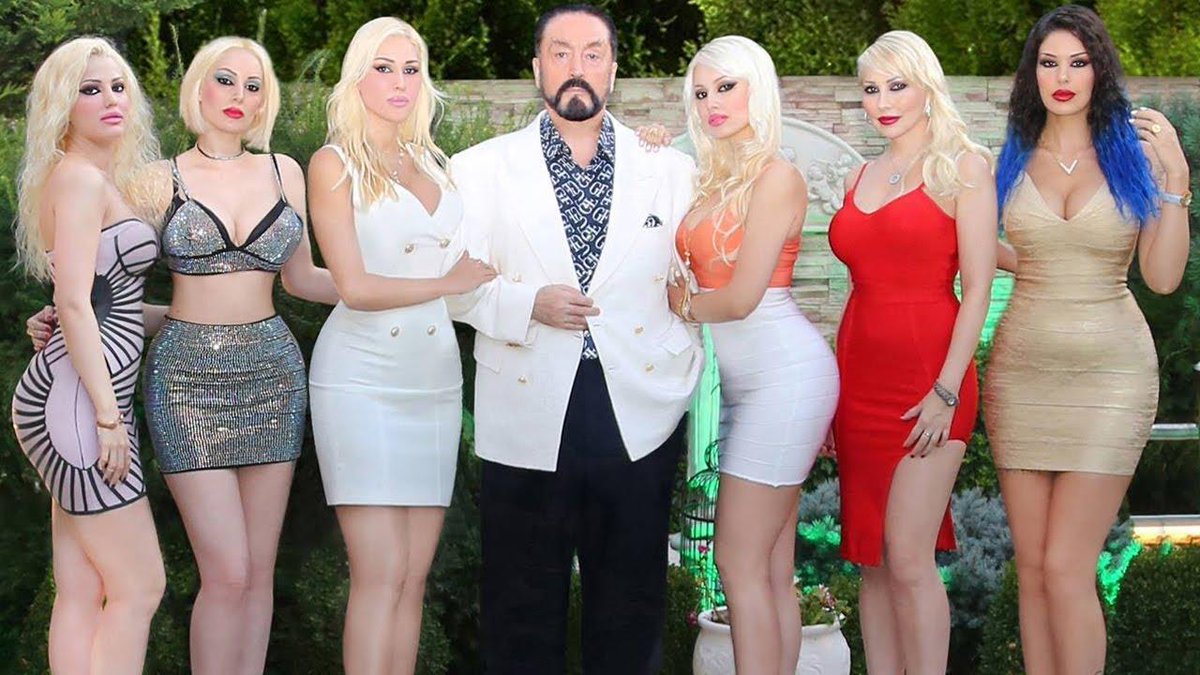
The guy who authored that genuinely bizarre creationist text, The Atlas of Creation, and who ran a weird television program featuring heavily made-up “kittens” robotically endorsing young earth creationism, seems to have fallen spectacularly in a bust by the Turkish government. Singing the praises of the Turkish dictator, Erdogan, doesn’t seem to have helped him.
Notorious Muslim televangelist Adnan Oktar, known for leading a cultish group, was arrested by Turkish police in Istanbul on Friday over a number of serious charges, including forming a criminal organisation, sexual abuse of children and sexual assault.
Police said they are conducting a widescale operation led by the financial services department spanning five Turkish provinces. Authorities are looking to detain 235 of Oktar’s followers, and police said they had detained around 150 so far.
It’s clearly not just the arrest of a single man, but a huge crackdown on the entire cult. I have no sympathy for Oktar and his perversity and foolish ideas, but I also don’t much care for tyrannies and totalitarian police states. He’s a crook and a fraud — fine, arrest him for financial improprieties. He’s running a sex cult — pick him up for human trafficking and assault. I’m not too keen on arresting him for violating religious purity.
Following the court ruling, the head of Turkey’s directorate of religious affairs, Ali Erbas, criticised his TV show.
“There are certain religious references [on his TV show] and he makes belly dancers dance. Is such a thing possible? He has most likely lost his mental balance. He now says he is a freemason but he was punished previously for his remarks about freemasonry,” Erbas said.
“He was also jailed for insulting [founder of modern Turkey Mustafa Kamal] Ataturk in the 1980s and 1990s, But now he speaks of himself as the greatest Kemalist. He’s a corrupted person.
“It is not right to watch a TV channel like his,” Erbas added.
You know, it’s not as if they lacked sufficient grounds to charge him on serious crimes without arresting him for featuring belly dancers.
Other charges Oktar faces are sexual intercourse with minors, kidnapping children, sexual harassment, blackmailing, holding people captive, menace, political and military espionage, fraud by exploiting religious feelings and beliefs, money laundering, violation of privacy, forgery of official documents, opposition to anti-terror law, coercion, slander, alienating citizens from mandatory military service, insulting, false incrimination, perjury, aggravated fraud, opposition to law against smuggling, opposition to tax regulation law, bribery, preventing one’s right to education and civil rights, torture, illegal recording of personal data, and violating the law on the protection of family and women.
Wow. Wouldn’t want to be him. I think we can now say that the biggest organization in Islamic creationism has been thoroughly crushed.