POWER TO THE BABIES!


POWER TO THE BABIES!

I had a nice, relaxing Christmas day yesterday. We had my oldest son Alaric over for dinner, and we did a little hangout online with Connlann, Ji, and Knut (he walks now! Watch out, world!), and and with Skatje, Kyle, and Iliana (who was quiet and wise throughout). Christmas has no religious associations at all for me, but the one thing it means is reconnecting with family, and a reminder that my greatest accomplishment in my life is producing three wonderful kids who have gone on to become admirable adults. And now there’s another generation coming along.
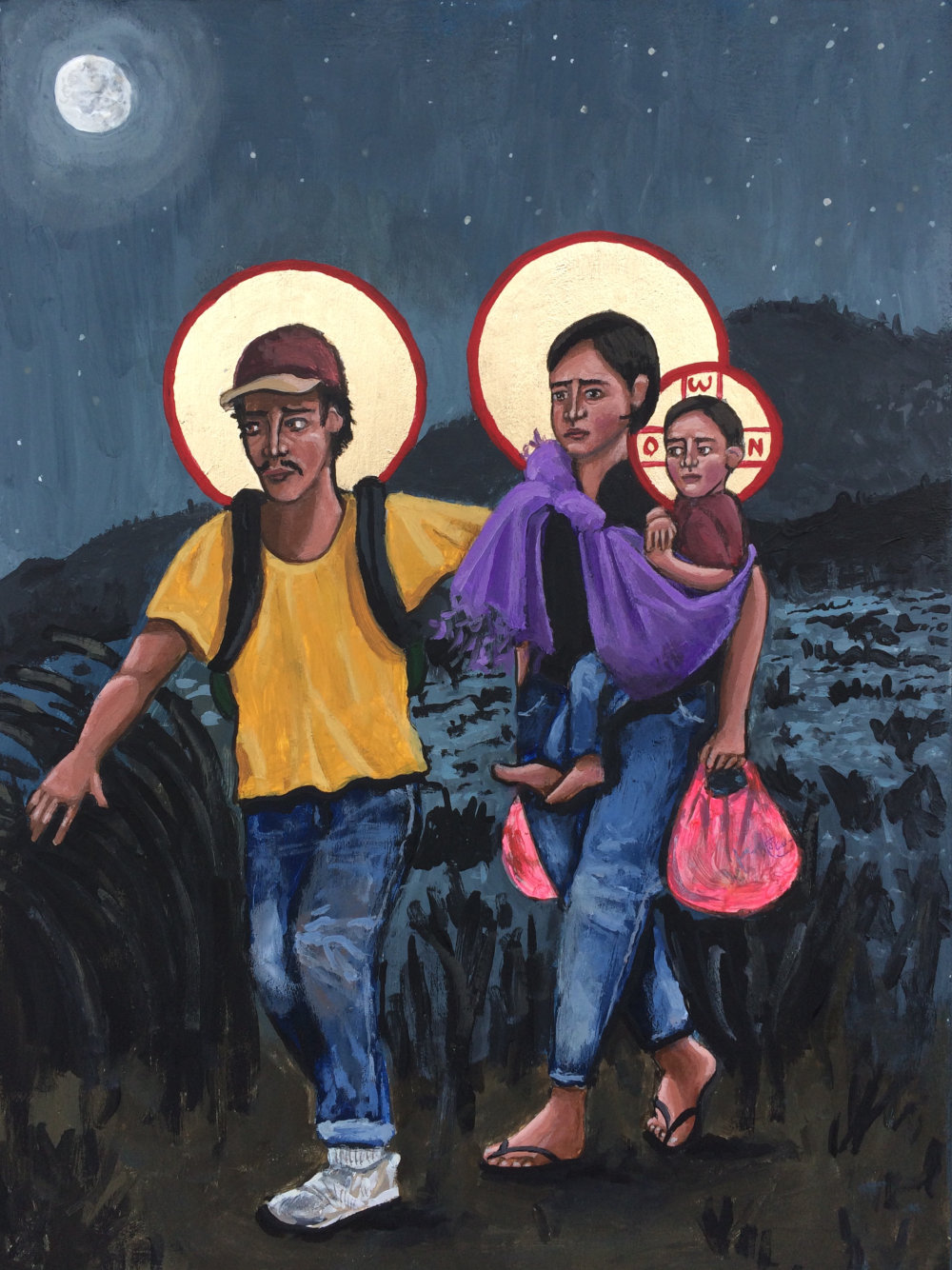
The worst thing you can tell me on Christmas, the thing that most violates my humanist, family-focused interpretation of the day, is to tell me that children are dying. So of course, once again, a young child has died in the custody of the US Customs and Border Patrol.
…an agent noticed Monday that the child had become ill. The boy and his father were taken to Gerald Champion Regional Medical Center in Alamogordo, N.M, where the boy was diagnosed with a cold, according to a CBP news release.
Later, he was found to have a fever and was held for an additional 90 minutes before he was released with prescriptions for an antibiotic and Ibuprofen.
But the child became more seriously ill Monday night, when he vomited, and was taken back to the hospital. He died shortly after midnight on Christmas Day.
Diagnosed with a cold, and given an antibiotic? That makes no sense. There was something more there in the child’s symptoms, which was basically ignored but for handing him a pill. Colds don’t make you vomit, or give you a fever. There was something seriously wrong with this boy (obviously, given that he died of it), and he got inadequate care.
You know, when you’re dealing with thousands of people, it is inevitable that some will fall ill, and some will die. I’m sure that children in the solicitous care of loving parents die every day. If the Border Patrol were thoroughly humane and careful in their treatment of people in their care, there would still be occasional deaths. But what matters is how well they actually do care for those people — do they take seriously the moral obligation imposed on anyone who takes responsibility for children? I don’t think they do.
That’s the thing about this wall obsession — it’s about building an excuse to deny responsibility for people on your doorstep. Even more children would die if they were isolated on the southern side of a wall, but we’d then get to pretend it wasn’t our fault, despite the fact that the reason there are migrants in the first place is the US has been working for decades to destabilize and wreck countries in Central America. We own that. And if we aren’t working to our utmost to help these people, the dead children are our fault.


I usually like a good fierce argument, but I’m afraid there would just be murmurs of agreement in my family if I tried these. Maybe yours is different? Maybe this would start a hot roaring fire at home?


The current spider egg case I was hoping to see hatch out with a new generation of spiders isn’t looking so good. I opened it up to find way too many dead eggs, and then made a time lapse to see babies just fading away. It’s sad and miserable. I’m putting it here to document my dismal Christmas eve.
I’m gonna have to cancel Christmas. There is no reason for anyone to celebrate.

You know the House Science, Space, and Technology Committee is packed with Republican science denialists, right? We ought to be embarrassed to be a technological society with government oversight provided by a gang of corrupt, miseducated yahoos who promote policy based on lies. The chair of that committee, Lamar Smith, is chummy with the Heartland Institute, that right-wing think-tank rich people use to promote anti-environmental propaganda.
That makes this story particularly interesting: while denying climate change and aiding the fossil fuel industry, Lamar Smith is himself filthy rich from oil extracted from his Texas “ranch”.
From 1986 until 2016, Smith made at least $2.4 million and as much as $11.1 million through business dealings affiliated with the ranch. Members of Congress report their income in ranges and bundle the types of income they receive. That practice makes it difficult to track sources of payment, business arrangements and specific dollar amounts in receipts.
Hey, I have an idea.
Let’s prohibit the rich from holding high political office. Put a cap on it: you can’t run for a political office if your household income is higher than, say, five times the American median household income. That’s around $60K, so if you’re making more than $300K, you don’t get to run. You don’t get to simultaneously hold political power and economic power. That’s a separation of powers for an egalitarian state I could get behind.
It’s not a flawless suggestion. I can guess already that some might put their money in a temporary trust while they’re in office, so while they’re actually rich in reality, they’re not on paper. The Koch brothers wouldn’t be stopped from their practice of buying up proxy goons (<cough>Scott Walker) to do their dirty work for them. But really, don’t you think every decision Lamar Smith made in Congress was tainted by his financial ties?
Also, since our country was founded by a mob of Rich White Guys with a constitution full of compromises to help Rich White Guys, I can imagine that such a proposal would be considered unconstitutional for religious reasons, our worship of the Founding Fathers.