We need to get rid of outmoded regulations on lawns. There’s a growing movement to restore native plants to our yards, and they have many virtues.
Homeowners with native gardens from Florida and Maryland to Missouri and Kentucky have gotten slapped with fines or even have their yards mowed without permission. The reason – taller native plants can get mistaken for weeds. Many cities don’t allow weeds to grow above a certain height, and they don’t have the time or staff to find out what’s what. But native plants have a lot of benefits for the planet. For one, they keep the land cooler. Indiana University biology professor Heather Reynolds says they use heat from their environment to pull water up from the soil and out their leaves.
That got me wondering…how do we define weeds? Is big bluestem ( Andropogon gerardi) a “weed”? That stuff grows to be 8 feet tall with roots diving down 10 feet — it was the native grass that grew all over the region I’m living in, which has since been mostly replaced by corn, which also grows to be 8 feet tall, but has much more shallow roots. Is corn a weed? I live in one of those cities that defines “weeds” by their height. The city of Morris has defined 8 inches as the acceptable height for plants in our yards.
SEC. 10.21. MAINTENANCE OF PRIVATE PROPERTY.
Subd. 1. It is the primary responsibility of any owner or occupant of any lot or
parcel of land to maintain any weeds or grass growing thereon at a height of not more than eight
(8”) inches (except for native grasses and wildflowers indigenous to Minnesota, planted and
maintained on any occupied lot or parcel of land, set back a minimum of ten (10’) feet from the
front property line as part of a garden or landscape treatment, which are exempt from being no
more than 8”); to remove all public health or safety hazards therefrom; to install or repair water
service lines upon any property which is improved with commercial or habitable structures; and
to treat or remove insect-infested or diseased trees thereon. It shall also be unlawful for any such
person or persons to cause, suffer or allow noxious weeds or plants identified and defined by the
Minnesota Department of Agriculture to grow on any such lot or parcel of land so as to endanger
the health, safety and welfare of the City.
I’m pleased with the exemption for native plants, as long as they’re not too close to the front of the property, but I’d like to see a different standard. Let’s call Kentucky bluegrass a weed. Let’s condemn any lawn that is too uniform, that doesn’t support species diversity, that is lacking in flowers to support pollinators.
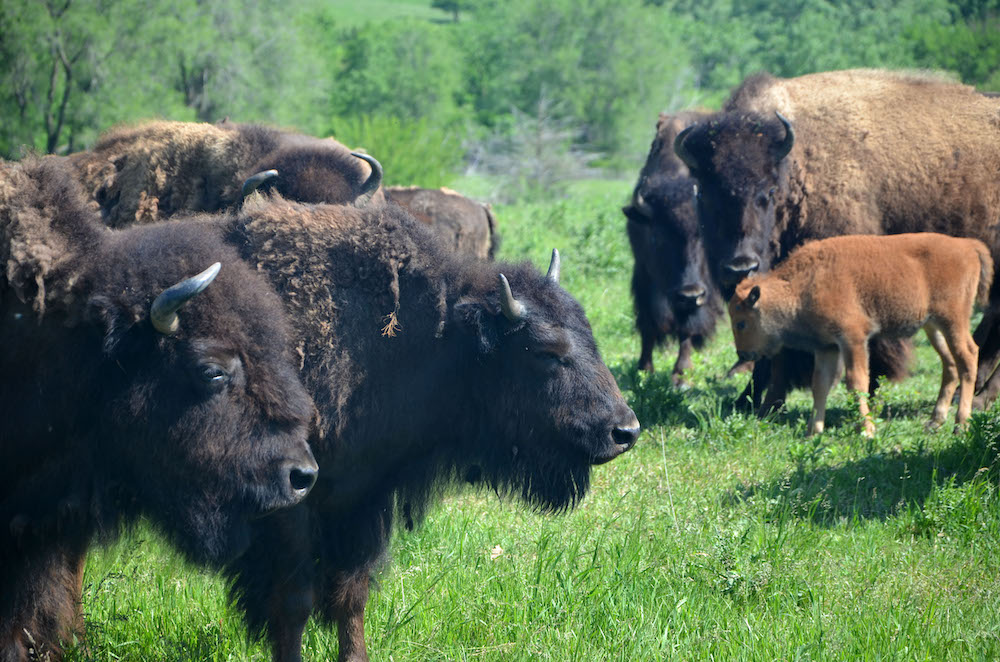
Who needs a privacy fence when your lawn is made up of grasses and forbs climbing up above window height? Think of all the interesting insects and spiders you’ll get, too, and the birds that will thrive in that environment. It might be a problem when the bison come back and start migrating through your yard, but I think that would be amazing. (Sorry, can’t come in to work today, I’ve got a small herd of a few thousand bison blocking my driveway.)