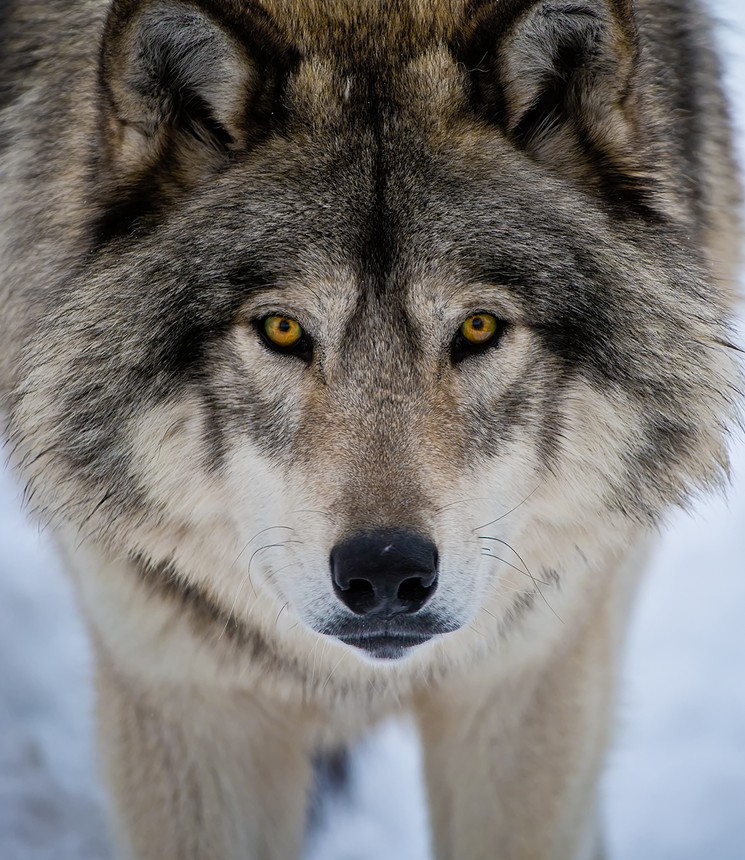
I have mixed feelings about this article about wolf behavior. It goes out of its way to cast its subject, a specific wolf called Twenty-one, as a heroic leader and kind of a male ideal: fierce but gentle, always victorious in battle but merciful to the vanquished, playful and affectionate with his cubs. It’s a lovely story, but I wondered how much the author was reading into the wolf’s behavior, and whether it was actually doing a disservice to the nature of the wolf. Then I read this, about the consequences of sparing a rival:
Wolves can’t foresee such plot twists any more than people can. But evolution does. Its calculus integrates long averages. By sparing the Casanova wolf, Twenty-one actually helped assure himself more surviving descendants. And in evolution, surviving descendants are the only currency that matters.
Yeah, I don’t think Twenty-one had been reading Hamilton about inclusive fitness in his spare time, and awareness of evolution is a recent (and often resisted) human phenomenon, so I’d suspect that there was more proximate thinking involved than long-term strategic consideration of Casanova’s potential contribution to the survival of Twenty-one’s offspring. I know, the author is saying that Twenty-one couldn’t foresee that, but then why throw in all this stuff about evolution? That would matter if we were discussing the successes of Twenty-one’s progeny, but this article doesn’t.
There’s a lot of stuff in the story that is all about imbuing this one wolf with the attributes of a human mythological ideal. They come right out and admit it.
“And if ever there was a perfect wolf,” Rick says, “it was Twenty-one. He was like a fictional character. But he was real.”
This is why scientists strive for a measure of objectivity in observing animal behavior. There’s always the potential for reading into it something that is not there, or missing something that drives the animal’s behavior that is not present in the observer’s species. Or being selective and untrustworthy in your observations because you want to preserve the Myth of Twenty-one. It’s the Great Man version of history written into the story of a wolf pack, and just as I don’t trust that model in people, I don’t trust it in wolves, either.
But then again…
The second most common cause of wolf death in the Rockies is getting killed by other wolves. (Getting killed by humans is first.) Twenty-one distinguished himself in two ways: He never lost a fight, and he never killed a vanquished wolf.
The story is about the Yellowstone wolves who live in a protected reserve, yet it’s full of incidents of wolves being illegally shot and humans are the primary cause of death in wolves, who almost always die violently. Maybe a little anthropomorphizing is necessary to get humans to be a bit less stupidly destructive.